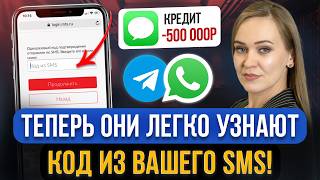
Scammers Steal SMS Codes by Looking at Your Phone
45sReveals a shocking new scam method where fraudsters see SMS codes via screen sharing, creating immediate urgency and curiosity.
▶ Play Clip Юристы «Делу Время». Помощь с долгами! Банкротство
"Title accurately describes the new scam and provides actionable advice, though slightly sensationalized."
This video explains a new scam where fraudsters trick victims into sharing their smartphone screen via messenger apps, allowing them to see SMS confirmation codes. The lawyer provides steps to protect yourself and what to do if a loan is fraudulently taken in your name.
Fraudsters remotely view SMS codes by tricking victims into enabling screen sharing during a call via WhatsApp or Telegram.
Scammers use leaked databases to tailor their stories, e.g., pensioners hear about pension fund payments, young people about new apps.
While distracting the victim, scammers request a password reset code for government services, which appears on screen and is seen by the scammer.
The primary protection is to never turn on screen sharing on your smartphone, regardless of promises or offers.
As a precaution, disable SMS notifications in phone settings so codes don't pop up during a call, though this may cause inconvenience.
Report to police, send a letter to the microfinance company demanding an internal investigation, request loan documents and transaction details, and if needed, file a court claim.
Financial companies often drop claims after an internal investigation, and courts usually rule in favor of victims if evidence shows the loan was not taken by them.
If you actually applied for the loan yourself and transferred money to scammers, proving innocence is extremely difficult and debt may be legally recoverable.
To avoid this scam, never share your screen with strangers and consider disabling SMS notifications. If scammers take a loan in your name, report it to police and demand an investigation from the lender; courts typically side with victims.
How do fraudsters gain access to SMS codes in this new scam?
They trick victims into enabling screen sharing during a call via WhatsApp or Telegram, allowing them to see SMS codes as they appear.
01:01
What is the primary protection against this scam?
Never turn on screen sharing on your smartphone, no matter what you are promised.
02:54
What additional precaution can you take to prevent SMS codes from being seen?
Disable SMS notifications in your phone settings so they don't appear on screen during a call.
03:09
What should you do first if a loan is fraudulently taken in your name?
Report it to the police to initiate a criminal case and obtain a victim recognition decision.
03:22
What information should you request from the microfinance company in your letter?
Request an internal investigation, photos and documents of the person who took the loan, IP address, loan agreement, and account statement showing where money was transferred.
04:02
What is the typical outcome when a victim sends a demand letter to the lender?
Financial companies usually conduct an internal investigation and refuse to pursue claims under the fraudulent loan agreement.
04:54
In what situation is it extremely difficult to prove innocence regarding a fraudulent loan?
If you actually applied for the loan yourself and transferred money to scammers.
05:48
New Screen Sharing Scam
Reveals a novel method where scammers remotely view SMS codes via screen sharing, bypassing traditional code theft.
01:01Key Protection: No Screen Sharing
Simple, actionable advice that directly prevents the scam.
02:54Step-by-Step Response to Fraudulent Loan
Provides a clear legal procedure for victims to dispute fraudulent loans and avoid liability.
03:22High Success Rate in Court
Assures victims that courts typically side with them if they provide evidence, increasing confidence to fight back.
04:54[00:02] SMS codes, which is strictly prohibited to do so that they do not gain access to SMS. What to do if fraudsters took out a loan in your name. A new way to steal your money. Fraudsters no longer ask for codes from SMS, they just look at your phone.
[00:18] Sounds incredible. Today we will talk about how fraudsters gain access to your personal SMS and how to protect yourself from a new fraudulent scheme. Hello everyone, my
[00:30] experienced lawyer, managing partner of the company. It's time here, we talk in simple terms about your rights. Watch the video to the end and find out. What to do to prevent fraudsters from finding out the code from your SMS and what is the solution if
[00:46] fraudsters have already issued a loan in your name. Subscribe to the channel here. Useful videos about your rights are released every week. Be sure to like and we'll start [music].
[01:01] Fraudsters have learned to remotely find out codes from SMS that are used to confirm entry into a ban or to government services. Moreover, they no longer try to figure out in more detail. How exactly it
[01:15] works. The scammers all start with a call via WhatsApp, Telegram, or any other messenger. Please note that a regular phone call via a cellular connection is not dangerous in this scheme. In the described scheme, they
[01:28] call Lenny via messenger using the "show screen" button. The most interesting thing is that they will not say a word about the code or SMS. An individual approach to each victim begins. A pensioner with a smartphone will be told about new payments from the
[01:43] pension fund that he can set up himself. A young person about a new convenient application. Fraudsters use leaked databases and know quite a lot about us, so it is easy to adapt to the interests of
[01:57] each person. What happens when you press the "show screen" button? A full broadcast of your smartphone's screen begins. The fraudster sees absolutely everything that happens on the application screen, messages, and of course, all
[02:11] SMS that come at that moment. Imagine that during a conversation about settings, an SMS with a code from government services suddenly appears on the screen. Of course, it was not you who asked for the code. The scammers did this while distracting you with a conversation. They
[02:24] request an SMS with a password recovery code for your government services. The code is displayed on the screen for only a few seconds, and the fraudster already sees it and continues. you personally encountered telephone scammers? What methods of
[02:40] story in the comments. This will help other viewers of the channel not to fall into a similar trap. Or perhaps scammers have already taken out a loan for someone. The question arises, what to do? The answer is simple: never turn on screen sharing on your
[02:54] smartphone, no matter what they promise you or whoever offers to help you. What else can you do? There is a way to prevent SMS from appearing on the screen. You need to go to your phone's settings and disable notifications. SMS will not
[03:09] disappear, you can read them simply by opening the application. Of course, this is not very convenient. You can miss important messages, but the scammer will not see anything, even if you are convinced to turn on screen sharing. What should you do if scammers
[03:22] took out a loan online in your name? First, you need to report it to the police. This is important so that they begin an investigation based on your statement and initiate a criminal case, because with the decision to recognize you as a victim, this is what you will take to court and so that
[03:36] your case is considered further. If you are planning bankruptcy, the following is also true for this matter. What we do is send a letter to the microfinance company. Or to another creditor. In general, everyone involved in this
[03:49] process must indicate in this application: "I request that an internal investigation be conducted based on the results of my application; let me know the results of this investigation." We proceed further. You can demand information from the credit institution about
[04:02] where exactly and how the fraudster took out the loan. The company must provide a photo of the person with copies of the documents provided by this person. In addition, the IP address and its location. You can request information about the exact
[04:15] method by which the person who received the loan was identified, who applied on your behalf. Well, thirdly, I require that you be provided with the full text of the original loan agreement, which was drawn up with all additional agreements and
[04:28] schedules. Fourthly, I require a statement from the financial institution's account, to whom exactly and to what details, what amounts were transferred. At the end of the application, you write that you voluntarily waive your company's demands. Under this loan
[04:42] agreement, in order to avoid further legal disputes and participation in a criminal case, I ask for assistance in the criminal case, which is already being investigated, and send me a written response to this application. What will be the point of
[04:54] these efforts of yours? Believe me, financial companies almost always, upon receiving such a statement from you, conduct an internal investigation and refuse to accept claims under these loan agreements. It's not that difficult to establish that the money
[05:07] was not transferred to you at all. Therefore, there's no point in the company demanding anything from you. Moreover, they risk losing the case in court. But if the creditor insists that the loan was issued, don't despair. Feel free to take
[05:21] the documents and file a claim with the court. In practice, your chances of success are high. The main thing is to provide all possible evidence. This could be children's testimony, video recordings, and even transport tickets that can confirm
[05:34] loan at the time you allegedly signed the agreement. You were on the road. The court will recognize that the agreement was not concluded, and the bank's claims will cease. Now the creditor will have to reimburse legal costs, that is, the amount
[05:48] you spent on legal services and the courts. But it's important to understand that if you actually fell for the scammers and applied for the loan yourself. And even transferred money to them, then proving your innocence is extremely difficult. In most
[06:00] cases, this is generally impossible, and such debts can be legally recovered. I would like to remind you that if among our viewers there are those who are already tormented by loans and microloans and you are completely unable to
[06:13] pay them, and the total debt is more than 300,000 rubles, you can get our help and also find out whether you can legally write off your debts. Sign up for a WhatsApp or Telegram. We work throughout Russia and have been successfully helping
[06:28] citizens legally write off debts for 9 years. We will definitely help. And you will find a link to sign up in the description and comments below. So, never show your screen to strangers in messengers, regularly check your credit history and
[06:42] be careful with personal data. And in general, answer the phone less often from encountered fraud or you need help in solving debt problems, contact our lawyers directly. We know how to protect your rights. And what
[06:56] changes have occurred in government services? Why you need to urgently open access to your data. To protect yourself from fraudsters, watch our new video on the channel. The link is here on the screen. And for today, all this is a must. Share the video with
[07:09] your friends to protect them. Write your questions in the comments below about this new type of fraud. Leave a like for the benefit and subscribe to the channel so you don't miss videos about your rights. Take care of yourself and your wallet. See you soon.
[07:21] Take care of yourself and your wallet. See you soon.
⚡ Saved you 0h 07m reading this? Transcribe any YouTube video for free — no signup needed.