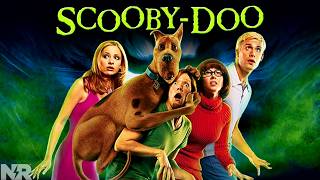

Scooby-Doo Was Originally Rated R!
38sShocking revelation that a kids' movie was almost R-rated sparks curiosity and debate.
▶ Play Clip"The title promises a deep dive into the making of Scooby-Doo, and the video delivers with extensive behind-the-scenes details, though it includes a lengthy sponsor segment."
This video explores the making of the 2002 live-action Scooby-Doo movie, detailing its origins, the various scripts and casting choices, the challenges of creating a CGI Scooby, and the film's lasting legacy. It covers the franchise's history from the 1969 cartoon to the 2002 film, including behind-the-scenes stories and the movie's cultural impact.
Sets the scene for 2002 with pop culture references (Brittany/Justin, J-Lo/Ben, Kelly Clarkson) and notes Warner Bros.' biggest June opening weekend with Scooby-Doo.
The movie was originally rated R, with a very different film envisioned, including the possibility of Jim Carrey as Shaggy.
Fred Silverman commissioned Hanna-Barbera to create a new show, leading to 'Mystery Spy' with characters Jeff, Mike, Kelly, Linda, and W.W., and a dog named Too Much.
Inspired by Frank Sinatra's 'Doobie Doobie Doo,' Silverman renamed the dog Scooby-Doo and the show 'Scooby-Doo, Where Are You!' which debuted September 13, 1969.
In 1979, Scrappy-Doo was introduced, and in the 1980s, Fred, Daphne, and Velma were dropped from the main cast, focusing on Scrappy.
Turner Broadcasting bought Hanna-Barbera for $320 million in 1991, leading to the launch of Cartoon Network in 1992, which kept Scooby-Doo in reruns.
Producer Charles Roven began developing a live-action film in 1994, hiring Craig Titley to write a script that was an origin story with Jim Carrey attached to Shaggy.
Raja Gosnell was hired to direct, and James Gunn was brought in for a page-one rewrite, which was originally rated R by the MPAA due to adult humor.
Several scenes were cut, including a locker room scene, Daphne's spirit thingy, flashbacks, and an animated opening, due to pacing or content concerns.
James Gunn revealed that Velma's homosexuality was watered down, and cleavage was digitally covered up in post-production.
James Gunn made Scrappy the villain because he hated what Scrappy did to the franchise.
The cast included Freddie Prinze Jr., Sarah Michelle Gellar, Matthew Lillard, Linda Cardellini, Isla Fisher, Rowan Atkinson, and Neil Fanning as Scooby.
Neil Fanning, a theme park entertainer, recorded a demo CD and got the role of Scooby's voice, beating out the original voice actor who refused to come to Australia.
The film used CGI for Scooby, with actors performing against stand-ins like stuffed animals and tennis balls; a life-size puppet was abandoned.
Rhythm & Hues created Scooby's 375 shots, and Giant Killer Robots spent 8 months on 120 shots for the soul sequence.
The soundtrack featured artists like Lil' Romeo, Simple Plan, Sugar Ray, Outkast, and Shaggy, peaking at #24 on the Billboard 200.
Despite negative reviews, the movie became a cult classic, and Matthew Lillard took over voicing Shaggy for a generation.
The 2002 Scooby-Doo movie, despite its troubled production and censorship, succeeded as a faithful and fun adaptation, becoming a cult classic that embraced the franchise's campy spirit.
James Gunn
person
Raja Gosnell
person
Neil Fanning
person
Matthew Lillard
person
Freddie Prinze Jr.
person
Sarah Michelle Gellar
person
Linda Cardellini
person
Isla Fisher
person
Rowan Atkinson
person
Charles Roven
person
Craig Titley
person
Mike Myers
person
Jim Carrey
person
Outkast
person
Sugar Ray
person
Shaggy
person
Tokyo Treat
service
Sakuraco
service
R-Rated Scooby-Doo
Reveals the original script was rated R, showing a drastically different, adult-oriented vision for the film.
07:10Neil Fanning's Demo
A simple demo CD landed Neil Fanning the iconic role, highlighting the unpredictable nature of casting.
15:25CGI Challenges
The production's struggle to create a believable CGI Scooby illustrates the technical limitations of early 2000s filmmaking.
17:22Soundtrack Success
The soundtrack's chart performance and eclectic mix show how integral music was to the movie's cultural impact.
20:16Cult Classic Status
Despite negative reviews, the film's enduring popularity demonstrates the power of nostalgia and faithful adaptation.
24:12[00:00] The year is 2002, Brittany and Justin just broke up, J-Lo and Ben just got together, Kelly Clarkson won the very first season of American Idol, and Warner Bros. Pictures had their biggest June opening weekend in U.S. history with the line-action movie,
[00:12] Mr. E! I'm Velma, and today I'm taking some of you back down memory lane on a far-out adventure with your best buddies to 2002's Scooby-Doo. A project to some, a Hail Mary to others, you could argue this movie was always destined to be a success.
[00:26] After all, Mr. E! has a fanbase spanning over three generations. But like most movies, this one wasn't always meant to be the movie we saw today. Not only was this movie originally rated R, but it was also very, very, very much a totally different film.
[00:38] We could have even gotten Jim Carrey as Shaggy. So let's talk about the making of Scooby-Doo. This is the winning hour on New Rock Stars. It's crazy to think that next year will be Scooby-Doo's 25th anniversary.
[00:51] 25 years since the live-action Scooby-Doo, but we all know it didn't begin there. Of course not, because Mystery Inc. bid it on lines even before that. Let's go through this little timeline of just how important Scooby-Doo really is to all of us. In 1968, up the heels of the Archie show, CBS executive in charge of daytime programming, Fred Silverman,
[01:07] was searching for a new cartoon for his Saturday morning lineup. He picked the idea of producers William Hanna and Joseph Barbera about creating a new show. Yes, the Hanna-Barbera, the legendary animation duo behind the Flintstones, the Smurfs, Top Cat, Johnny Quest,
[01:20] the Yogi Bear Show, Super Friends, Tom and Jerry, and the Huckleberry Hound Show. They tasked the idea of the show about a teenage rock group who solved mysteries between gigs of Joe Ruby, Ken Spears, and character designer Iwa Takamato. The concept was then called Mystery Spy, following five teams, Jeff, Mike, Kelly, Linda, and Linda's brother, W.W., along with a dog named Too Mike.
[01:38] To avoid comparisons to the Archies, who had a sheepdog named Hot Dog, they decided to make Too Much a Great Dane. After the show was pitched, it was named Who's Scared? And the characters were also changed. Jeff and Mike became Ronnie, who was later named Fred, Kelly became Daphne, Linda became Velma, and W.W., now called Shaggy, was no longer Velma's brother.
[01:57] Inspired by Frank Sinatra's Doobie Doobie Doo at the end of Strangers in the Night, Silverman renamed the dog Scooby Doo and the show Scooby Doo Will Are You. CBS then approved it for production. It debuted on Saturday, September 13th, 1969 with What a Night for a Night.
[02:11] 17 episodes were produced in 1969, and the show was a major success. It was renewed for a second season in 1970, and by 1972, Scooby-Doo had launched into a full hour with the new Scooby-Doo movies. Each episode had a different celebrity guest, from the Harlem Globetrotters, Three Stooges, to Don Knotts and Batman and Robin.
[02:28] Some of these guests, like Batman and Robin and the Harlem Globetrotters, actually appeared at least twice. After two seasons and 24 episodes, the show returned to reruns until Scooby moved to ABC in 1976. In 1976 to 1977, new Scooby episodes were paired with Dog Wonder as the Scooby-Doo Dino-Mut Hour.
[02:45] That eventually evolved into Scooby's All-Star Lap Olympics in 1977-78 and Scooby's All-Stars in 78-79, and these seasons were later reworked for syndication as the Scooby-Doo Show. By 1979, Scooby's nephew Scrappy-Doo was introduced, and in the 1980s, the show was overhauled to focus more on Scrappy.
[03:01] Fred, Daphne, and Velma were actually dropped from the main cast, and the format continued through 1983. Then, in 1985, the 13 Ghosts of Scooby-Doo debuted featuring Daphne, Shaggy, Scooby, Scrappy, and a new character named Swim Slam and Vincent Van Vool, who was based on and voiced by Vincent Price.
[03:17] The series was canceled in 1986 with the 13th Ghost never being caught, but that cliffhanger would come back to be solved in 2019 with the directed video film Scooby-Doo and the Curse of the 13th Ghost. That era kind of closed with a pup named Scooby-Doo, which ran successfully for four seasons from 1988 to 1991.
[03:34] and let me tell you, I am a huge fan of A Pup Named Scooby-Doo. I watched it every day as a rerun. But what really kept Scooby-Doo fresh in all of our minds was actually the reruns. The show had been in syndication since the mid-1980s on TV at Superstation
[03:46] until 1989 in USA Network's Cartoon Express from 1990 to 1994. In 1991, Turner Broadcasting System bought out Hanna-Barbera Productions for $320 million, outbidding MCA and Hallmark.
[04:00] That's like $750 million a day. So basically, Turner spent nearly $1 billion to get their hands on what I think is America's greatest cartoon goldmine. But what is interesting about this was they weren't just buying this to own the characters,
[04:12] they were using it to launch a dedicated animation channel. And on October 1st, 1992, that channel became Cartoon Network, with Hanna-Barbera's classic shows as the lineup. And this is why we all love Scooby-Doo, and why a lot of us actually know a lot of Hanna-Barbera cartoons.
[04:25] We're just watching the reruns on a dedicated channel playing this over and over again. And let me tell you, it was working. In 1993, Scooby-Doo became the exclusive property of Cartoon Network and its sister station, Boomerang.
[04:37] By the late 1990s, the studio was doing direct-to-video films every year, the first and best being Scooby-Doo on Zombie Island in 1998. But here's where Warner Bros. enters the picture. Because in 1996, Time Warner acquired Turner Broadcasting,
[04:51] bringing Turner's assets, including Hanna-Barbera and Cartoon Network, under the same kind of corporate umbrella as Warner Bros. The companies began combining their animation libraries and operations with Warner Bros. eventually just taking over much of Hanna-Barbera's production and distribution.
[05:05] So by the time Warner Bros. wanted to make a live-action Scooby-Doo movie in 2002, it wasn't some random outside studio trying to use the character. Warner Bros. and Turner were now part of the same larger company, and with 13 TV series, 46 different versions of movies, over a dozen comics, and 20 video games, and the endless amounts of crossovers, Warner Bros. was ready to go live-action.
[05:25] The idea of making a live action actually began in 1994 with producer Charles Roven, the president and co-founder of Atlas Entertainment. His best film at the time was Cadillac Man, however, he went on to produce the Dark Knight Trilogy, 12 Monkeys, and even Disney Marvel's What If series.
[05:40] Roven hired Craig Titley, who wrote Cheaper by the Dozen, and Percy Jackson. He was hired to write the first draft of Scooby-Doo, the movie, in 1996. Craig's version was more of an origin story of how Mystery Inc. met in college and had to save the world
[05:55] and in it Fred and Daphne finally end up together Scooby goes through some existential crisis and Shaggy got into a relationship with a woman named Candy who was the inventor of the Scooby Snack in it they had a cameo from Josie and the Pussycats allegedly
[06:07] and also a little easter egg from the Jetsons on a TV this version I think was the version that allegedly had Jim Carrey attached to play Shaggy who had inevitably just had to pull out due to production delays and his schedule no longer lining up After having finished that first script, remember Warner Brothers acquired Turner Broadcasting
[06:22] for basically the people who had originally developed Titley's version of the script were no longer running the project after the corporate change. By 1998 Variety announced that Frasier and The Simpsons writer Jake Hogan and Mike Myers were working on a Scooby script with Mike Myers reportedly set to play Shaggy By 2000 the film was dreamlit and it was announced that Raja Gosmal whose previous films included Home Alone 3 and Never Been Kissed had been hired to
[06:43] direct. Mike Myers eventually had to leave the project, but Jay stayed on to help revise the script. The original script written by Craig and his version were kind of, not like a lot different, but enough different from what we got in the final cut. Although, they both still received
[06:57] the story credit on the final movie. After the change in ownership, Cogin was brought on for a page one rewrite and the script was eventually revised again by James Gunn, who had movies like The Toxic Avenger, Class Nukem High, and Millennial Juliet at the time. In 2017, James Gunn actually
[07:10] revealed that his version of Scooby-Doo was originally rated R, but that doesn't mean he and the filmmakers were actually setting out to make a rated R Scooby-Doo movie. Gunn had explained that they all approached the film as a PG-13 movie, essentially treating it like the Brady Bunch movie
[07:23] or what like Austin Powers is to James Bond. Although this version of Scooby-Doo was intended to appeal more to adult fans or just like an older audience that grew up with it, the problem was the MPLA apparently took some of the jokes and dull humor
[07:35] more literally than everyone else expected and slapped the movie with a rated R rating. The studio obviously wasn't interested in releasing an R-rated Scooby-Doo, so the film was reworked and ultimately brought down to a PG rating eventually. But from what I can tell, they didn't necessarily shoot everything James Gunn wrote.
[07:50] Some material was likely cut or changed during production, which is pretty normal, while other scenes were actually filmed and later removed during editing and test screenings. Thankfully, a lot of those deleted scenes ended up on the DVD special features, giving us a pretty good idea of just how different this movie was going to be. Take
[08:03] the locker room scene for an example. It was cut after the test audiences apparently perceived the women as dancing in their underwear rather than their swimsuits, so instead of risking confusion over what the audience was looking at, the studio decided it was easier to cut the entire sequence.
[08:16] Then there's Daphne's spirit thingy, which was apparently considered too intense for younger reviewers and was removed entirely. Other cuts were less about censorship and more about the pacing. The characters originally had flashbacks before reuniting at the airport and heading to
[08:28] Fuji Island, but those were removed because they slowed down the story. Even the really cool animated opening sequence was cut for the same reason, and the homage from that opening sequence was in Craig's script as well. And then there's the cleavage. Yes, even some of that was apparently
[08:42] too much for the MPAA. Gunn has said that the cleavage was literally digitally covered up in post-production. There were also other major moments removed, like Velma being obviously gay, to which James Gunn said that he tried, but the studio just kept watering it down until eventually
[08:56] it was gone. Allegedly, this version included demons and souls with more cult-like antagonists that may have carried over from Craig's original version. It was kind of in there, but the studio reportedly wanted them to be monsters, respectfully, and not anything too demonic. There were also jokes
[09:11] involving drugs, risque humor about sexuality and gender identity, and a soul-swapping scene where Velma and Daphne actually made out to get their souls back into the right bodies. Velma was apparently very gay for Daphne, so there were scenes where she would drift off into daydreams
[09:24] about Daphne and her body, and Fred may have even been bisexual in this version. And honestly, it sounds fun in retrospect. I support the idea of this movie just maybe made a little bit later, when the culture and the filmmakers were a little more prepared for it, because the idea of a bunch
[09:39] of guys writing an early 2000s corny Scooby-Doo movie, I'm good. I'm good. I'll just watch Drawn together. But while all those things were removed, what wasn't removed was Scrappy being the villain, and if you made it this far in my video, in what world would we want to make Scrappy nephew of
[09:53] Scooby-Doo the villain? Well, simply because James Gunn hated Scrappy-Doo and what he did for the franchise, so that's why he was the villain in this movie. So, when you think about the 2002 Scooby-Doo, the first thing people will congratulate it for is its casting. Freddie Prince Jr. as Fred,
[10:07] Sarah Michelle Gellar as Daphne, Matthew Lillard as Shaggy, Linda Cardellini as Velma, Isla Fisher as Mary Jane, Rowan Atkinson as Emile Monteverius, and of course, Neil Fanny, voice in Scooby-Doo. October is right around the corner, and our whole office is already debating what the
[10:21] best Halloween candies and treats are. And sure, we all got our favorites, but then the October boxes from Sakurako and Tokyo Treats showed up at the office, and there are some all-time contenders for tastiest treats in here. In case you don't already know, Tokyo Treats features fun, modern Japanese snacks, while
[10:36] Sakurako focuses on traditional artisan snacks, tea, and tableware. Many of these are seasonal or snacks you can only get in Japan, so you're getting things that can be hard to find. Plus, each box comes with a cultural booklet. In addition to giving you cultural context for the month's theme, it also has descriptions and allergy information for all the snacks in each box.
[10:54] Each box has a monthly theme, and for October, Tokyo Treat has a spooktacular selection of limited edition Halloween-inspired Japanese snacks, like spooky chewy candy, wicked donut sticks, monster bubble gum, and more exclusive Japanese snacks to enjoy straight from Japan.
[11:09] Plus these limited edition Kit Kats! And for a special surprise, each box includes one of two limited edition Kit Kat collaborations. Either a Kit Kat New York Cheesecake Spider-Man, or Bax and Robin Chocolate Mint Ice Cream Kit Kat.
[11:21] They know us all too well and hooked us up with the web slinger. Okay, so let's give this New York Cheesecake flavor a try. So there's actually a secret way you should actually eat Kit Kats. What you do, you bite off the end. All right, you bite off the other end.
[11:34] Okay, and then nibble down this side. Hmm, hmm, okay. Okay, and nibble down the other side. No, no, no. All right. And then, now that the chocolate's gone, you free the bottom layer of the wafer, then the top layer of the wafer, and you leave yourself the tastiest, crispiest part.
[11:51] Just the wafer. That was great. I had a full slice of cheesecake there. You should try it. It's the best way to eat a Kit Kat. Sakurako's October box is called Echoes of Yuriko-E. It's a mix of sweet and savory treats, such as chestnut-filled cake and curry rice crackers.
[12:06] Plus, Sakurako always has incredible tea, like this month's Kuromame tea made from black soybeans. Brian was so nice to brew me a cup of this stuff. Ooh, that's very satisfying and actually quite earthy and quite nice.
[12:20] And to make this tea party complete, Sakurako also has this traditional Japanese kitchen cloth, which just adds a really nice touch to the tea time experience. Make your day more special with Tokyo Treat and Sakurako's limited edition snacks and tea straight from Japan.
[12:34] It's a fun way to experience a little bit of Japan from the comfort of your own home. Check out the latest boxes through the link below and use my code NEWROCKSTARS to get $5 off your first box. Huge thanks to Tokyo Treat and Sakura Co. for sponsoring this video. Of course, it wasn't as simple as just picking the actors we know and love.
[12:49] As most of you know, casting is a fickle process, and the studios rarely announce which actors auditioned and who didn't get the role or why the certain choices were made. And there are millions of reasons for that. Sometimes deals just fall through, sometimes someone else becomes the runner-up, or the studio simply just doesn't want to get the details out.
[13:04] So while a lot of people auditioned for these roles only some of them ended up talking about it years later Now keep in mind there were let say three different versions of this script floating around okay So that means different actors probably fit the roles best depending on which version
[13:18] of the movie they were auditioning for. A lot of these details have been mixed together over the years, but alas, let's get into it. For Shaggy, we had the option of having Jim Carrey, Mike Myers, and Lachlan Monroe. The role eventually went to Matthew Lewis. For Velma, we had Alexis Bledel,
[13:32] Carla Gugino, Alyssa Milano, and Christina Ricci, with the role eventually going to Linda Cardellini. For Daphne, Jennifer Aniston, Isla Fisher, Jennifer Love Hewitt, with the role eventually going to Sarah Michelle Gellar. Sarah then allayed that Freddie Prinze Jr. was interested in playing Fred, and well, that's how we got our Fred.
[13:48] Scooby was originally going to be voiced by Scott Innes, but the role ultimately went to Neil Fanning, and as for Isla Fisher, who became a fan favorite during the casting process, she was eventually offered the role of Mary Jane instead of Daphne. Then on January 30th, 2001, it was announced that Rowan Atkinson was in talks to play the villain, Emil Monteverius.
[14:04] And while it's really fun to hear about the other actors who auditioned, I think the real star of the audition process was Neil Fanning, the voice of Scooby-Doo. And I'm going to get into that story a little bit right now because it's kind of crazy and a little tea.
[14:16] By February 2001, production had moved to Queensland, Australia, and most of the film was shot there, including six weeks at Tagluma? I probably pronounced that wrong and I'm so sorry. The resort that would eventually become Spooky Island. Not only did they have the Australian film crew members helping out, but they also were flying in crew from America,
[14:31] so once the Americans touched down, everyone just had to hit the ground running. And quickly, they realized they needed someone who could not only stand in for Scooby, but actually talk for him too. And since they were already in Australia, what better idea than to cast someone who was already working at the Warner Bros. theme park?
[14:44] Neil Canning began his career as an opening day entertainer in June 1991. He went on to perform for 14 years in the highly successful, number one rated police academy stud show at Warner Bros. Movie World on the Gold Coast in Queensland, Australia. In 1997, he was actually even named the theme park employee of the year.
[14:59] Then, in 2001, Scooby-Doo came along, and this ended up being Neil's big door opening moment. At the time, he was at the studio filming Queen of the Damned, and there were about eight people hanging around, most of them voice actors, and one of Neil's friends had a script for Scooby-Doo, and the role was to be the on-set voice of Scooby-Doo.
[15:13] While they were waiting around, everyone started doing their best Scooby-Doo impressions, and people around him immediately reacted with like, and one of his friends told him, So during lunch, Neil went to the engineer and asked if he could record about 30 seconds of his voice
[15:25] and pass it along to the casting director, Todd McSweeney, whom you already knew. They put the CD down, and Neil recorded around 45 seconds of Scooby-Doo material, including lines he remembered from the cartoon show, and a couple of lines from the other voice actor's script that he could remember.
[15:37] He left the CD on Todd's desk with a sticky note, and a simple recording got him into the audition process. Eventually, it came down to Neil and the friend who originally auditioned, and Neil ultimately got the role, and from that point on, whenever Scooby was needed on set, he was there.
[15:50] Neil was recorded live during filming, providing the guide track and making sure Scooby's dialogue was clean. They originally approached the current voice actor of Scooby-Doo about the role, but for whatever reason, he reportedly said he would do the final cut and he did not want to come to Australia.
[16:03] So the production team needed someone local who could perform Scooby throughout filming, and Neil became that voice. By the end of filming, everyone seemed excited about Neil's performance. The only problem was the other actor that was originally going to be the voice of Scooby-Doo
[16:15] that just didn't want to come to Australia was going to be the final voice. So the plan was to fly that actor out, have him record his version, have you record his version and then decide which performance they like best. Neal had a good reason to be hopeful because some of his unscripted lines
[16:28] had already made it into the movie and he believed he had a really good shot at keeping the role. He had to wait for a month and then his agent called and said he got it. That is too much. That's insanity. He kind of, not in a mean way, kind of messed up that guy that was
[16:40] originally auditioning, kind of took that role from under his friend's feet. But I also think it's just really interesting how everything in Hollywood is so messy because what do you mean you're going to fly out the original guy and me and make us compete? That seems kind of crazy.
[16:52] And just so there's no confusion, Neil wasn't the final voice of Scrappy, he was simply the on-set voice who helped the actress perform alongside Scrappy. The good news out of this though for Neil is that Neil and Matthew became very close friends after making these two movies,
[17:04] so much so that they're actually apparently planning some kind of Scooby-Doo and Shaggy project together. We don't know exactly what it is yet, but I believe it's supposed to be announced or talked about more next year during the movie's 25th anniversary. So, once casting was finalized, the production had to figure out how to actually shoot a live-action movie with a completely CGI Scooby-Doo.
[17:22] And remember, this was 2001. CGI characters interacting with live-action actors were becoming more common, but this was still a pretty new undertaking, especially when your main character is a giant talking dog who needs to be in almost every scene. The movie was filmed in Australia with locations including Warner Brothers, Movie World, Village Roadshow Studios, and the resort on Margin Island.
[17:40] A lot of the resort's interiors were actually recreated on studio sets, allowing the filmmakers to build this crazy cool world. But the biggest challenge was obviously making Scooby himself. At one point, a life-size Scooby puppet was built by Jim Henson's Creature Shop.
[17:53] However, the production eventually abandoned the practical puppet and decided to create Scooby through CGI. That meant that the actors had to perform alongside a character who literally wasn't there. To help with that, the crew used a combination of a giant stuffed animal, a stuffed Scooby head, tennis balls, and other stand-ins.
[18:07] If Matthew Luehler had to hold Scooby, they would sometimes give him just a giant stuffed bag to represent the dog's weight. In group scenes, a little person named Chris Cresceng even wore a full Scooby suit so the actors would have something physical to react to.
[18:19] And the idea was eventually shelved because it just wasn't working really well. But Chris remained in the movie and was given another role. This is him. This is the tiny henchman. Crazy. Since Scooby was going to be created later in CGI, Neil, the voice of Scooby, essentially had to bring the character to set himself.
[18:33] As Neil explained, it's very difficult to act opposite of nothing. so he would stand off camera and deliver Scooby's lines and character while the actors performed their scenes. Behind the scenes, the visual effects team had an equally difficult job.
[18:45] All of Scooby's roughly 375 shots were created digitally by rhythm and views, along with several of the movie's other creature effects. There were no animatronic Scooby elements used in this final film. The challenge of figuring out how to make Scooby look like a believable Great Dane
[18:58] while still keeping that exaggerated proportions and personality of the cartoon character, The animators studied the original 1969 series along with the later animated movies like Scooby-Doo on Zombie Island, Scooby-Doo and the Witch's Ghost, and Scooby-Doo and the Cyber Chase.
[19:11] They were looking for the character's movements, its charm, and comedic timing, while also trying to give him realistic weight, fur, and facial expressions, and just being a dog. And Scooby wasn't the only thing created in post-production. The monsters, the captured souls, part of Scooby Island, and several other effects that were also built digitally.
[19:26] The soul sequence alone was a massive deal. A visual effects company, Giant Killer Robots spent around 8 months working on roughly 120 shots involving the cauldron of souls. That included the floating heads the ectoplasm inside the cauldron the fireballs and the trails left behind when the souls were reunited with their bodies And while the technical crew was dealing with all of that the cast was apparently having the time of their lives in Australia James Gunn had talked about how Freddie Prinze Jr and Sarah Michelle Gellar rented a huge
[19:52] mostly unfurled house on the ocean, and the cast and some crew members and Gunn would have massive Nerf gun fights there throughout the house running around for hours trying to take each other out. So the production of Scooby-Doo was a strange combination of technical chaos
[20:04] and the cast having an absolute blast, and the funny thing is, it did not stop there. the celebrity cameos and soundtracks only added more fun to the shoot days. The soundtrack to Scooby-Doo is genuinely so freaking good,
[20:16] like this movie had no business having a soundtrack this good. You got Lil' Romeo, Simple Plan, Sugar Ray, Outkast, and naturally, Shaggy himself. It's this insane, like, completely chaotic mix of pop-punk, hip-hop, reggae,
[20:28] and like early 2000s radio hits, and it was a hit. And honestly, the soundtrack fits the movie perfectly, because Scooby-Doo was always pulling out celebrity cameos, so why wouldn't the live-action movie do the exact same thing? The soundtrack was released on June 4, 2002 through Lava Records and Atlantic Records.
[20:42] It ended up peaking at number 24 on the Billboard 200, number 49 on the Top R&B and Hip-Hop Albums chart, and number 4 on the Top Soundtracks chart. So yeah, this wasn't just a random collection of songs thrown together for a movie.
[20:55] This was a really, really good, really early 2000s movie soundtrack moment. And one of the funniest examples of that is Sugar Ray. Mark McGrath and the band appear in the movie as themselves before eventually becoming possessed by monsters. On paper, that sounds insane.
[21:07] and also not on paper that still sounds insane. The director explained, which is true, the big movies back then were expected to have a soundtrack and the production already had a scene where James Gunn had written in a band so the question became, can we get a real band to play and who better than Sugar Ray?
[21:21] The band performs Words to Me during the movie before all hell breaks loose. Mark McGrath has also talked about how much he loved the experience. Since he grew up watching TV during the 70s, he described being part of the live action movie as the biggest highlight of his Sugar Ray career.
[21:33] But apparently the filming experience was also one of the most chaotic vacations imaginable because Sugar Ray filmed their scenes on Morton Island off the Gold Coast, where the production had filled Spooky Island with Australian background actors playing spring breakers.
[21:46] So according to McGrath, the shoot lasted about a week and turned into seven days of the most insane party he had ever experienced. And considering everything we've already heard about the cast party in Australia, I don't believe them. As for the main theme song, the one was always going to be shaggy.
[22:00] Director Raja joked that having the reggae artist perform the theme was basically inevitable, because if you're making a live-action Scooby-Doo movie in 2002 and you have a song called Shaggy, the man is going to get involved with it, you know what I'm saying?
[22:12] There was no way around it. But the most phenomenal song on the soundtrack that I know you know is Outkast's Random Million Drums. The song was created specifically for the movie after the soundtrack supervisors approached Andre 3000 and Big Boy.
[22:24] In a 2002 interview with MTV, Andre 3000 explained that the duo was invited to watch early tests of the film so that they could figure out where the song might fit naturally, and the process led to A Land of a Million Drums. And the music video is basically a mini Scooby-Doo production of its own.
[22:39] It features the Mystery Machine, Scooby, and Matthew Lillard Shaggy. Then naturally, the video ends with like a classic unmasking revealing Scooby Brown as the villain. The song and music video are filled with references to being under the influence. Now, I can't prove this, so take it as a theory,
[22:53] but I do wonder if OutKast was shown some version of the original edgier cut of the movie before making the song. Because remember, James Gunn's earlier screenplay was much more adult and openly drug related. So the final movie still has plenty of leftover references for that version,
[23:07] and the Land of a Million Drums feels like it fits the original tone and a little more closely to that, you know, edgier adult kind of version than the squeaky clean version of Scooby-Doo we ultimately got. That's just a theory, but it would explain why the song feels so specifically connected to the movie
[23:20] Stranger, More Adult Roots, because there is definitely a scene where Shaggy gets out of a vehicle and it is smoking. And there's also this like funny full circle detail here, because Andre the Thousand is set to appear in Netflix's upcoming Scooby-Doo Origins series,
[23:33] meaning he's returning to the franchise more than 20 years after helping create one of the most memorable songs from the original live-action movie. So between Sugar Ray turning into a demon monster, Shaggy performing the same song, OutKast creating a completely original track, and a soundtrack that somehow charted alongside all of this,
[23:48] the music of Scooby-Doo is another example of just how aggressively early 2000s this movie really was, but also how insanely great it was at the same time. So now what? What is their legacy? Well, the movie was released and received mostly negative reviews, but I'm not even going to spend too much time on that because despite the reviews, Scooby-Doo became a cult classic, and over time, it has made way more money through home videos, television, and residuals than anyone probably expected, and the cast continued to win.
[24:12] And while Casey Kasem eventually stopped voicing Shaggy, Matthew Rueck basically took over the role for an entire generation. He began voicing Shaggy in Scooby-Doo Mystery Incorporated, where Linda Cardellini also voiced Hot Dog Water, who was, of course, connected to Velma.
[24:24] So the live-acting cast continue to have this weird little legacy within the franchise. The success of the movie also paved the way for a sequel, Scooby-Doo 2 Monsters Unleashed, which I will not be talking about because I didn't really like that one. But that movie also didn't perform as well, and I think the difference between the two is pretty important
[24:39] because even after the studio tore apart the original, more adult version of the first movie, this is still what I wanted from a Scooby-Doo movie. I wanted to be kooky. The humor needs to be silly. I love that the characters aren't trying to be overly hot, overly cool, or completely reinvented
[24:52] for like, I don't know, a 2000s audience. They're wearing the right clothes, they have the right personalities, and they exist to the status quo that we recognize from the cartoon. The movie is campy, the cast clearly have chemistry, and of course, it is incredibly fun to rewatch.
[25:04] So overall, I think Scooby-Doo is faithful enough to the cartoons, that I'm comfortable lining it up alongside a pup named Scooby-Doo, or even the versions where Scrappy takes over. Because that's the thing about Scooby-Doo, there are millions of versions of this franchise,
[25:16] and they can all feel completely different. The 2002 movie is just another version of that. And that's it for my video on the 2002 live-action Scooby-Doo. Again, I love this movie, and I will watch it a million and two times.
[25:28] Comment down below with your thoughts on the movie. Did you watch it? Were you alive when it came out? You better have been, because I am old enough to be old. Thank you. A special thanks to one of our new Rockstar Underground subscribers, Michael Horowitz, for supporting us at the executive producer level.
[25:40] Get all of the exclusive bonus content by clicking the link in the description below or going to nrunderground.supercast.com. Thank you to Studio Tech, Brian Kemp, few Rockstar editors, Joshua Stephen Hurd,
[25:52] and Abby Friel, and all the supporting editors for their work on this video. Follow me at Lulu underscore Clemens. Hit that subscribe button. Thanks for watching. Ruh-roh.
[26:16] you
⚡ Saved you 0h 26m reading this? Transcribe any YouTube video for free — no signup needed.