
99% of People Do SEO Wrong in 2026
40sOpens with a bold, controversial claim that grabs attention and challenges common practices.
▶ Play Clip"Title is slightly exaggerated but delivers a solid, actionable strategy for modern SEO."
The video argues that 99% of people are doing SEO wrong in 2026 by focusing solely on Google, while user behavior has shifted to AI tools and multiple platforms. The speaker, who built and sold two businesses on SEO, presents a strategy called 'search everywhere optimization' to dominate across Google, YouTube, Amazon, Reddit, and AI chatbots.
Most people still focus on Google, but the biggest change is at the user level: more people use AI tools like ChatGPT, and Google's search share has declined.
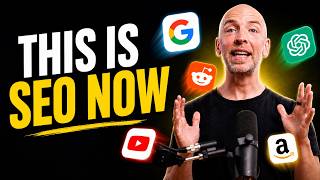
To dominate SEO, you need to be everywhere your audience searches: Google, YouTube, Amazon, Reddit, and AI tools. Example: True Beauty brand appears across multiple platforms.
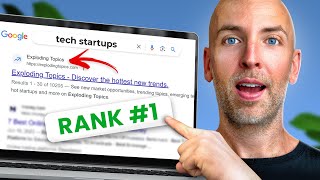
Ask existing customers how they found you and what they did before buying. For Exploding Topics, they discovered customers were investors searching for 'alternative data providers'.
The journey has three stages: discovery, comparison, and action. People first hear about a concept, then compare tools, then look for reviews before buying.
Identify where your brand is absent in the journey. Exploding Topics found trend content on Substack, so they started a newsletter that grew to 155k subscribers and drove 25% of ARR.
Discovery stage: educational content. Comparison stage: comparison pages. Action stage: product pages, case studies, and examples.
The key to SEO in 2026 is to shift from Google-only to a multi-platform strategy, mapping the customer journey and creating content for each stage. Execution is the final step.
What is the main change in user behavior affecting SEO in 2026?
More people use AI tools like ChatGPT, and Google's search share has declined.
What is 'search everywhere optimization'?
A strategy to show up on all platforms where your audience searches, not just Google.
01:30
What are the three stages of the customer journey mentioned?
Discovery, comparison, and action.
04:00
How did Exploding Topics identify their audience?
By asking existing customers how they found the company and what they did before buying.
02:45
What platform did Exploding Topics find they were missing on?
Substack (newsletters).
05:30
What type of content works best for the discovery stage?
Educational content.
07:00
What percentage of ARR did the Exploding Topics newsletter drive?
Around 25%.
05:30
SEO is changing
Highlights the shift from Google-only to multi-platform search behavior.
Search Everywhere Optimization
Introduces the core strategy of the video.
01:30Identify your audience
Practical first step using customer interviews.
02:45Find missing touchpoints
Example of discovering Substack as a key platform.
05:30[00:00] Fact, 99% of people in 2026 are doing SEO completely wrong. SEO has changed dramatically, but they're still following the same old playbook. Or worse yet, letting AI optimize everything without any oversight. So, why should you listen to me? Well, I built and sold not one but two businesses on the back of SEO. And in this video, I'm going to show you how to do SEO the right way in 2026. No hacks, no shortcuts, just the specific
[00:26] strategies that are working great right now. Now, unfortunately, most people are still 100% focused on Google. But the biggest change isn't happening inside of Google. It's happening at the user level. The number of people using AI tools like Chachabt has generally increased. The share of people searching on Google is significantly smaller than just a few years ago. To dominate in SEO today, you need to be everywhere, not just Google. Let's say that you need to buy
[00:51] some aftershave oil. You might start by searching for aftershave oil on Amazon and you see the brand True Beauty, which you've never heard of. A few minutes later, you search for best aftershave oil on YouTube. And again, you see True Beauty. Well, it's time to go to Reddit to see some unfiltered, honest opinions. Once again, True Beauty shows up in the results. If you're an SEO, there's a clear takeaway here. You need to show up wherever
[01:17] your audience searches. And this is exactly what True Beauty figured out. They leveled up search engine optimization to search everywhere optimization and it's working amazingly well. The first step of search everywhere optimization is to figure out who is actually searching for your product. The easiest place to start here is with your existing customers. Ask them how they found you and what they did before deciding to buy. For example, I did this exact thing a while back
[01:43] for my SAS company, Exploding Topics, and right away we noticed sort of a strange pattern. A lot of people told us that they found us when searching for alternative data providers in Google and on YouTube. It told us that a lot of our customers were investors looking for an edge, which is something we're honestly kind of clueless about. In fact, we ended up creating content specifically for people searching for alternative data, which brought in a nice
[02:09] pipeline of new customers. Step two is mapping out how someone first hears about your product to actually buying it. First, you have discovery. Then there's comparison. And finally, you've got action. Someone might first hear about the concept of a dedicated trend spotting tool in a YouTube video. Then they'd Google something like trend research tools or alternative data providers to see what's out there. After that, they'd look up reviews, comparisons, or Reddit discussions to see whether a
[02:34] specific tool is any good. And obviously, they'll use AI tools like Chat GBT at all of these stages throughout the process. But yeah, only after all that stuff would someone actually visit our site and try the product. The major takeaway is that you need to learn where your customers are searching so you can get in front of them in those key places. Which brings us to step number three. Figuring out where you're missing in that journey.
[03:00] Figure out where your brand is and where it should be. When I did this step at Exploding Topics, I noticed something pretty interesting. A lot of trend related content was published in newsletters and discussed on email platforms like Substack. So, we decided to start a weekly newsletter called Exploding Topics Tuesday. The newsletter ended up growing to over 155,000 subscribers and was responsible for around 25% of our ARR. The key point here is that you're not trying
[03:26] to be everywhere. Instead, you're trying to find the top places where your customers search for solutions and make sure your brand shows up there. The next step is creating content for those specific platforms. For example, when you're in the discovery stage, you're usually trying to understand a problem or explore different solutions that are out there. And that's where educational content tends to work best. Then there's content for the comparison stage. At Exploring Topics, we create content
[03:51] around terms like trend research tools and alternative data tools. These pages explain how different tools work and where exploding topics fit into the landscape. Finally, there's the action stage for exploding topics. That meant having clear product pages, examples of trends that we discovered early on our platform, and case studies showing how businesses use our data to find trends early on. So yeah, now that you have this strategy ready to go, the only thing left to do
[04:17] is execute it. So close out this video and get to work.
⚡ Saved you 0h 04m reading this? Transcribe any YouTube video for free — no signup needed.