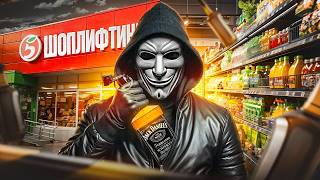

Shoplifting in 2026 is a full-time job?!
44sOpening claim that professional shoplifters use equipment and communities instantly hooks viewers.
▶ Play Clip"Delivers on its promise of an inside look at 2026 shoplifting, though padded with promos and repetitive warnings."
This video is a first-person exposé of the professional shoplifting industry in 2026. It reveals how organized thieves operate, what they steal, how they sell goods, and the advanced security measures they evade. The narrator interviews a former shoplifter and breaks down the economics and legal loopholes behind this shadow economy.
The video claims that thousands of people shoplift daily in 2026, taking goods worth hundreds of thousands of rubles per month. These are not amateurs but professionals with equipment, strategies, and communities.
Shoplifters are not just hungry or thrill-seeking individuals; professionals treat it as a job. The term dates back to the 1940s when self-service stores first appeared in America.
Russian stores lose about 600 billion rubles annually to theft, an amount comparable to a city's budget, and losses keep increasing every year.
Amateurs: kleptomaniacs, addicts, homeless, and schoolkids. Professionals: those who steal systematically with plans and gadgets.
In 2007, poor camera quality, lack of sensors, and relied-on guards made theft easy. In 2026, stores have AI cameras, sensors on goods, and exit frames.
Smart systems recognize previously caught shoplifters when they enter, alerting guards or automatically triggering exit alarms.
Professionals use demagnetizers (from 500 rubles) to remove tags, frame jammers to block signals, and shielded bags lined with carbon/foil to hide items.
Anonymous interview subject 'Dmitry' shares his background, including how he started by studying guides in Telegram chats and his advice to newcomers.
Household chemicals lead, followed by perfumes, clothes, alcohol, food, and baby formula. Unusual items include motorcycle helmets and mink coats.
Stolen goods are sold in Telegram chats, offline markets, and platforms like Avito, Ozon, and WB, at 30-50% below market price. Some goods even return to the same chains.
Pros earn 200,000-400,000 rubles per month, sometimes making 'tours' to other cities to hit multiple stores.
Theft under 2,500 rubles is an administrative offense (fine or 15 days arrest); above that it's criminal (up to 2 years), but 'active repentance' often closes cases.
Stores add an 8% 'theft tax' to prices, and employees may be fined from their own salaries, affecting ordinary people.
The former shoplifter and narrator strongly advise against entering this vertical due to high risks and low rewards.
Shoplifting in 2026 is a sophisticated, organized crime that ultimately raises prices for everyone. Even seasoned practitioners admit that the risks now outweigh the rewards, making it a dead-end path.
What annual losses do Russian stores suffer from shoplifting?
About 600 billion rubles per year.
01:27
What are the two main types of shoplifters?
Amateurs (kleptomaniacs, addicts, schoolkids) and professionals who steal systematically.
02:11
What is a demagnetizer used for?
Removes magnetic tags from items; costs from 500 rubles.
04:24
How do frame jammers work?
They block the signal of anti-theft gates, allowing passage without alarm.
04:39
What material lines shielded bags to hide goods?
Carbon fabric or foil; they shield signals from detectors.
05:08
Which products are most commonly stolen by professionals?
Household chemicals, perfumes/cosmetics, clothes/shoes, alcohol, and baby formula.
08:30
How do shoplifters typically sell stolen goods?
Through Telegram chats, offline markets, and online platforms like Avito, Ozon, and WB, at 30-50% below market price.
10:26
What is the monthly earning range for professional shoplifters?
200,000 to 400,000 rubles per month.
12:01
What is the legal threshold for shoplifting to be considered administrative rather than criminal?
Up to 2,500 rubles; above that it can be criminal with up to 2 years imprisonment.
12:56
Why do stores often not call the police after catching a shoplifter?
Because of bureaucracy and wasted time; they usually send threatening messages via messengers like Telegram.
13:11
What is the '8% theft tax'?
Stores add about 8% to prices to cover losses from theft.
14:07
600 billion rubles lost annually
Quantifies the massive scale of retail theft in Russia.
01:27AI blacklists for repeat offenders
Shows how retail security has advanced with AI facial recognition.
03:13Professionals target high-value resellable goods
Explains the economic logic behind what thieves choose to steal.
08:30The 2,500-ruble loophole
Reveals the legal gap that encourages petty shoplifting.
12:56Consumers and employees bear the cost
Highlights the overlooked social consequences of theft.
14:07[00:02] супермаркет. Камеры следят за каждым движением. Security guards are on duty, and anti-theft alarms at the exit are ready to beep at the slightest suspicious activity. И, кажется, здесь невозможно ничего украсть, правда? But what if I
[00:16] ничего украсть, правда? But what if I told you that right now, in 2026, thousands of people are doing this every day, taking out goods worth hundreds of thousands of rubles a month. And they're not just amateur thieves, they're professionals with equipment,
[00:29] strategies, and even entire communities. Today we'll dive into the dark world of shoplifting from a first-person perspective, with real stories and shocking facts, just the way you like them. Если вы думаете, что знаете, как работают магазины, приготовьтесь
[00:44] удивиться. Stay with me until the end, because in the finale I'll reveal how much shoplifters really make and why they almost never get caught. Let's go. Let's start with dreams. Who are shoplifters? Это не просто люди,
[00:59] которые иногда прикорманивают какую-то шоколадочку из-за голода или адреналина. No, shoplifters are real professionals for whom shoplifting has literally become a job. Термин родом из сороковых годов, когда в
[01:14] Америке появились первые касса самообслуживания. Товары стали гораздо ближе к покупателям, ну, буквально на расстоянии вытянутой руке. So, a situation has arisen where it is possible to simply put something in your
[01:27] pocket and leave, and in Russia this has turned into a huge industry. has turned into a huge industry. Every year, stores lose about 600 billion rubles. from Crash. Every day, hundreds and thousands of goods are stolen.
[01:41] Представьте просто эту сумму. It's like the budget of an entire city. And the losses of the stores only increase from year to year. Every year, large communities emerge that literally promote shoplifting as a primary activity. That is, you
[01:56] steal from stores, then resell these goods and make money from it . Но об этом мы ещё немного дальше поговорим. Shoplifters are divided into types: amateurs who steal for fun or simply out of need. То есть это какие-то
[02:11] клиптоманы, которых банально тянет к самому процессу. наркоманы, бомжи, которые хватают еду, лишь бы сожрать, школьники, которые ищут адреналина и так далее. And the professionals are those who do this systematically and methodically with
[02:27] plans, gadgets, and so on. By the way, as strange as it may sound, this is how they do it. Let's take it step by step. In 2007, everything was much simpler. Were the cameras of poor quality or were they simply non-existent? Just try
[02:43] to remember what video surveillance was like back in the 2010s. In addition to all this, stores almost never had e- sensors at the exit. Nowadays, they are available at the exit of every store, but back then, they were n’t. The guards then relied only
[02:59] on their intuition and on Baba Zina's orders, who would start shouting that some thief had stolen the goods. The shoelifter could simply hide the goods in his pocket or bag and leave, that's all. Well, what about 2026? Stores have
[03:13] Artificial intelligence in CCTV cameras, sensors on goods, exit frames. I'll even tell you more: there are smart systems that remember shoplifters who have been caught before. That is, it is a kind of blacklist.
[03:29] And believe me, anyone, even a professional shoplifter, will eventually be caught at least once. And how does it all work? Как только этот человек заходит в магазин, искусственный интеллект его распознаёт и даёт либо же
[03:42] наводку охранникам, чтобы за ним следили, либо же автоматически включает рамки в момент выхода его из магазина. It's not even necessary for him to situations from happening to you, be sure to visit our Telegram channel. There
[03:57] is a post there with verified works on the Internet, with all the screenshots and proof. You can find the post under the hashtag Navigator or under the hashtag work. It also hangs in the channel fastening. Let's move on. In contrast to stores, which
[04:11] evolved, shoplifters evolved much faster. They started using special equipment that can be bought [music] on regular marketplaces for pennies for such activities.
[04:24] For example, a demagnetizer is a small device that removes magnetic tags from items, like those at a checkout. Price from 500 rubles. I think it's clear to everyone that this investment will pay for itself from the very first job. But here's the problem:
[04:39] not everything can be demagnetized. This is where frame jammers come into play, they block the signal, and you can pass by calmly as if nothing happened. But there is also a small problem here, that this kind of equipment costs from 200 to 1,000
[04:54] dollars plus, where for 200 bucks I still, well, wouldn’t buy. This is primarily about the shoplifter's safety, and almost no one buys such cheap equipment. [music] And here too there is a replacement, as with everything
[05:08] previous. Special bags lined with carbon fabric or foil. They shield signals, making the product, well, literally invisible to detectors. These bags are disguised as regular backpacks or bags, so no one will suspect that you are
[05:23] taking goods out of the store. And these are far from all the ways to hide goods. More importantly, how did you prepare before taking the goods out of the store? This plays a major role in shoplifting. Further in the video, I talked to a real
[05:37] shoplifter. Obviously anonymous, so the voice will be changed. Let's call him Dmitry. Hello. How did you even come up with the idea to get into shoplifting? I started by studying guides in TG chats. Там
[05:51] тысячи юзеров делятся советами, как найти слепые зоны в Пятёрочке или "Магните, как вести себя перед персоналом, чтобы не вызвать подозрений. Я вообще сейчас не работаю, поэтому свободно могу это говорить, но годика
[06:06] так три назад молчал бы". We've edited out all the interesting bits of dialogue and left only the highlights to make this video more engaging for you . What advice would you give to newcomers who want to enter this vertical?
[06:20] Worth it, not worth it. The main thing is not to fuss. Look at the product as if you were choosing it, not taking it at random. И если ты первый раз что-то хочешь украсть из магазина, иди в большие сети, как лента, Пятёрочка,
[06:33] лента, Пятёрочка, когда просто куча людей, час пик, э, в магазине, поверь, шанс того, что именно за тобой будут следить в шопе, ну, он практически равен нулю. Uh, believe me, nobody
[06:47] needs you. But the question, frankly speaking, is posed in a strange way. I won’t advise anything posed in a strange way. I won’t advise anything , because, well, as for me, this is , because, well, as for me, this is already a dead topic. About 10 years ago, yes, we
[07:00] could work without any problems, but now the lifespan and service life of shaplitters is, well, lifespan and service life of shaplitters is, well, [ __ ] short, because of all the cameras [ __ ] short, because of all the cameras and just more security
[07:14] watching you. All this has a super impact on the efficiency and profitability of work. the efficiency and profitability of work. Oh, you mentioned the cameras. Tell me, tell me more information about the cameras. This is the bold part of the video.
[07:28] Well, what about the cameras? The cameras are still the same as before. It's just analyze all the people who enter the store. Well, this is kindergarten, because it’s really easy to get around them. That is, you put on glasses with projection
[07:43] lenses and without reading your eyes, for example, well, that’s it, you don’t get in front of the cameras. Well, what I want to say is that you just change your appearance minimally, put on glasses, a mustache, and some kind of low hat . Uh, you can come in wearing a mask,
[08:01] norm now. This will, as it were, get rid of this masquerade problem. But still, the risks are simply enormous. If
[08:13] you've been caught doing this at least once, or if you're listed somewhere as a constantly flying shiplifter, then the next time might be the last one, so to speak. That's why I left. Now let's get to the most interesting part. What are they stealing? This is not
[08:30] some small change, not chewing gum, not chocolate. Top-of-the-line items are those that are easy to hide and expensive and, most importantly, can be sold quickly later. Household chemicals are in first place. These are expensive powders and cleaning products. They are simply
[08:45] stolen in droves every day. Then comes perfumes and cosmetics. That is, bottles of some perfume for 1,000 rubles. Believe me, they will fly away immediately after leaving the store on the secondary market. Next are clothes and shoes. Especially the
[09:00] more branded ones. This is Nizara or some H&M, as they put it out. Shoelifters usually go to fitting rooms, put them on under their own clothes and go out. The following products are alcohol. Obviously some kind of elite one.
[09:15] Most often it comes in bottles with sensors, but with a demagnetizer this is not a problem at all. As for food, it’s sausage, meat, cheese, tea, coffee and blah-blah-blah. And the
[09:27] most interesting and unusual thing is baby formula. This is a gold mine. Their mothers then buy them instantly at the wholesale market for half price. Unusual items often include motorcycle helmets, child seats, and
[09:43] even mink coats. I honestly don't know how people put up with motorcycle helmets. Well, let's say, if it's with a child seat, I can still more or less understand, you can come with a child, seat the child and go, few people will say anything to you, but with a
[09:56] motorcycle helmet. Questions. If you have any ideas, please write in the comments. It will be interesting to count. Against this backdrop, there are numerous cases where thieves simply took the cash register from behind a table in a shopping center in some store, that is, they simply yank out the
[10:11] drawer and run off with the money. Well, it doesn't seem strange anymore. This is where they take out baby strollers and motorcycle helmets. But still, stealing is only half the battle. Where to put the goods afterwards? What's the point of stealing if you can't
[10:26] sell it? This is where the real shadow economy begins. Shoplifters sell all this stuff mainly through Telegram chats. There are now simply thousands of them with tens of thousands of subscribers. Everything there is divided into sections: clothes, alcohol,
[10:40] food, and even books are sold there. The price is usually from -30 to -50% of market prices. For example, a bottle of whiskey cost 5,000 rubles. in the store, and they sell it
[10:52] for one and a half to 2,000. If you want to buy something wholesale, [music] that is, you are some kind of large client and order, say, 1,000 tubes of toothpaste, then the price [music] can drop even further. Offline sellers, like Valery from the market,
[11:06] take stolen goods with both hands. They get a thrill from buying something 50% cheaper and then selling it individually. For example, tea in 150g packs, that is, a ruble per gram, coffee in cans, the same thing . And the most ironic thing is that
[11:21] shoplifters sell their goods back to the same chains. That is, situations are not uncommon when suppliers for stores sometimes purchase from the same shoplifters. Just imagine, it’s much more profitable for them to buy goods 40-50% cheaper and
[11:36] to buy goods 40-50% cheaper and resell them with a 20-30% margin than to work there for the ridiculous percentages that they actually earn. They also sell all this stuff on online platforms, such as
[11:49] Avito. Ozone, VB. Here, of course, the risks are higher, but shoplifters disguise themselves with ordinary advertisements. That is, it’s a new product, but I’ll sell it cheap and voila. And all
[12:01] this stuff flies away through the mail. Let's talk about earnings. Pros charge between 200,000 and 400,000 rubles. per month. In 1 month they can do, for example, a city tour. eh, they buy a ticket to a neighboring region,
[12:15] rob a bunch of stores, and on top of that, they leave reviews in various chats. That is, they go to a conditional chat called Yekaterinburg, Samara, lists of vulnerable people, shopping centers. And believe me, such chats exist. And there are frequent comments
[12:28] like: "The cameras in Greenwich are weak, the Sovietsky district is a walk-through courtyard. They easily make double their profit on the tour." And, I repeat, there are literally hundreds of such chats with
[12:40] comments. Now let's talk about the risks. Why aren't they afraid? Because all shoplifters know a simple loophole. Theft up to 2,500 rubles. - this is a simple administrative matter. A fine of five times the value or 15 days
[12:56] of arrest. And everything is literal. If it’s more than that , then yes, there could be a criminal sentence of up to 2 years. But as everywhere, there is active repentance here. That is, return the goods, apologize, and the case will most likely be closed if this is your first conviction. Stores most often don't call the police. It’s
[13:11] if this is your first conviction. Stores most often don't call the police. It’s bureaucracy, wasted time, and so on and so forth. Instead, they use so-called chain letters in messenger. They often just
[13:24] text you on Telegram: "Return the product or you'll get sued." Security guards often use Telegram bots to identify thieves. They [music] throw up a bunch of faces there. But as for facial recognition, we've already said that they often simply
[13:38] change their appearance or move to another city. There is competition in this business too . In small towns, thieves literally turn each other in. It's a pretty normal story, when a guy called his friend, well, in a bunch of places, of course,
[13:52] they were caught at Pyaterochka. The young man paid 20,000 rubles. bribes, and the second pro simply did not return them. That is, roughly speaking, he went on to resolve the issues. The bribe simply went to the second person. But let's be honest, shoplifting is not
[14:07] just [music] about story thieves and so on. This is about all of us. Stores add an 8% theft tax to prices to cover their losses. Employees pay fines from their own salaries. These are ordinary honest people who work hard for
[14:23] pennies. That is, an ordinary mother who works in a store can pay for some, excuse me, jerk who wants to cheat the system and resell sausage for half the price or eat it, excuse me, for free. I didn't want to be
[14:37] biased towards this kind of activity because, well, I don't have that habit, but in this case, I have an extremely negative attitude towards this activity. And here's the best advice from the Dark Archive channel. If you
[14:50] really want to go into this kind of vertical, please reconsider. It's definitely not worth it. You'll most likely just waste your time, or at worst, end up on the bottle. No matter how they treat you, or
[15:04] tell you that you can bypass the cameras, with the right approach you can avoid becoming a drunk. These are all stories for schoolchildren, so calm down. Even that very interview with the person that I conducted earlier in this
[15:17] video ended with him not working now for a simple reason. These are stupid risks. Not just like that. It's not just like that. This is a person who has worked in shoplifting for more than 5 years and has simply, well, colossal experience, if I may
[15:33] say so. But he doesn't work in shoplifting. I think you can draw your own conclusions. Work and training for a percentage is on your screen, a link to a video. Be sure to follow along and subscribe. also on this YouTube channel.
[15:45] also on this YouTube channel. Great luck to everyone. Take care of yourself.




⚡ Saved you 0h 15m reading this? Transcribe any YouTube video for free — no signup needed.