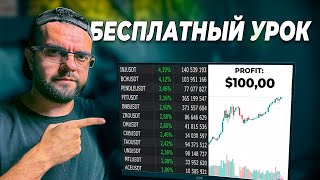

Что такое скальпинг криптовалют?
45sБыстрое объяснение популярной торговой стратегии с четким определением привлекает новичков.
▶ Play Clip"Title accurately promises a complete scalping guide; video delivers on tools, strategies, and risk management."
This video is a complete guide to cryptocurrency scalping, covering the basic principles, necessary tools, market analysis, and risk management. The creator explains that scalping involves making multiple trades within a day to profit from small price movements, emphasizing the importance of discipline and self-control.
Scalping is a type of trading involving many trades per day to profit from small movements. It helps develop chart vision and can lead to medium-term trading.
Advantage: earn on small movements without waiting weeks. Disadvantage: requires high discipline and self-control due to constant stress.
Use Tiger Brokers with Binance exchange. Workspace includes quotes, chart, and two order books (Spot and USD-M). Customize columns to show turnover and percentage change.
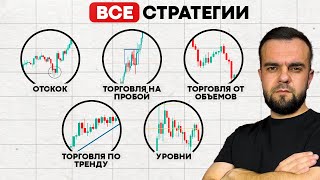
Basic strategies: trading from densities (horizontal levels), trend trading, and rebounds. Beginners should focus on rebounds from trend and horizontal levels.
Focus on liquid coins with turnover over $150-200 million. Look for coins with clear trends and volume.
Adjust position size based on stop-loss percentage. Avoid large leverage. Do not chase counter-trend moves.
Practice with small amounts, not demo accounts. Focus on learning consistent trading, not quick profits.
Scalping is a skill that requires practice, emotional stability, and discipline. Start with small amounts, use simple strategies like rebounds, and gradually build consistency.
What is scalping in cryptocurrency trading?
A type of trading involving many trades per day to profit from small price movements.
00:01
What is the main disadvantage of scalping?
It requires high discipline and self-control due to constant stress.
01:53
What columns should be kept in the quotes list for scalping?
Ticker, turnover, and percentage change.
07:01
What is the recommended minimum turnover for a coin to be considered liquid?
$150-200 million.
13:04
What is 'trading from densities'?
A strategy involving rebounds, breakouts, and false breakouts from horizontal levels (densities).
11:14
What is the recommended strategy for beginners?
Trend trading: rebounds from trend lines and horizontal levels.
12:09
How should a trader enter a position when trading a rebound?
In three parts: minimal part in advance, then at the level, and wait for a pinch (confirmation).
17:37
What is the key rule about leverage in scalping?
Do not open positions with large leverage; adjust position size based on stop-loss percentage.
24:08
Why should beginners avoid counter-trend reversals?
They can lead to emotional swings and large losses, and require experience to manage.
25:34
What is the most important skill in scalping according to the video?
The ability to do nothing when there is no situation according to your trading strategy.
16:12
Scalping Definition
Defines scalping as a type of trading with many daily trades, not a strategy.
00:01Advantage of Scalping
Ability to earn on small movements without waiting weeks.
01:53Do Nothing Skill
Emphasizes the importance of not trading when there is no setup.
16:12Risk Management Principle
Adjust position size based on stop-loss percentage to control risk.
22:28Practice with Real Money
Advises using small real money amounts instead of demo accounts to learn emotional control.
27:29[00:01] you what cryptocurrency scalping is. This is a complete guide for those who want to master this type of trading and gradually start making money on it. We will analyze the basic principles of scalping, analyze the tools that we need in order to
[00:16] fully work and eventually earn money, how to analyze the market, in what vector to move, what is worth paying attention to, what is not worth it, that is, I will set a complete vector for your training so that you do not deviate and you do
[00:32] not have porridge in your head, subscribe to this channel, like this video, and we will immediately begin. So, initially, you need to understand what scalping is. Scalping is a type of trading, many call it a strategy. But these are
[00:45] many call it a strategy. But these are people who apparently have not been involved in scalping trading. Yes, to long-term and
[00:57] medium-term because the market is fractal, this is what is wonderful about scalping in that you get the hang of it, and after scalping, it will be easier for you to move on to medium-term trading. You will have a vision of the chart that is gained
[01:10] every day by scalpers, an eye for the market charts. maximum, and backed by practice. So, scalping is a type of trading that involves making many trades during the day. Of course, this is a
[01:25] flexible concept. You can have one trade. Yes, and maybe 21. No one will guess here, depending on what the market will be like. But the essence itself is making several trades during the day. These trades can be for a
[01:40] small percentage, but in total, you get a very pleasant profit, and vice versa. Maybe you hit one trade, caught a coin on a drain or on a pump, and pulled out good percentages. Why do you need to make more trades? And here, right away, the second
[01:53] advantage of scalping is the ability to earn on small movements. That is, you don’t need to wait a week or two or so until your trade takes place, which you considered there, set stop-losses, opened a situation, and wait there for
[02:08] some time. In scalping, we act right now, and as a rule, these are fast trades compared to other types of trading, but here, right away, there is a disadvantage. Discipline and self-control are very important here. That is, when we collect
[02:23] short movements, we constantly experience stress, which is associated with the fact that the coin is Not only does it move in our direction within the range of our stop-loss and take-profit, it can go both into the minus and into the plus, they can be
[02:36] closed by a stop, and transactions also happen much more often, so we are constantly under stress in this and the complexity and this is covered only by our Discipline and self-control, so for some this is a minus, but I was able, I think that
[02:50] you too can cope and learn to follow some basic rules and keep yourself under control so as not to cheat. Yes, there is such a word, it comes from the word ludo ma No, but we use it a little differently. Tinkering is
[03:04] going where you shouldn’t, not according to your strategy, trying to fight back and just start opening and closing trades without your trading strategy, that is, losing control - this is ludo, as we call it in trading. Yes, to
[03:17] avoid this, you need to train this very control, what you will need for scalping, you need tools, understanding, what strategies to consider and reaction, discipline and the ability to work under market pressure. So now the question is Where
[03:33] to trade and for scalping, of course, there are different drives, there are drives, browser versions of drives have already appeared. For example, stano Yes, not advertising, just knows what it is, I haven't
[03:47] used it myself. But this is an example. They have already appeared in browsers, that is, essentially, a super-powerful computer is not needed, you need the Internet, but we will not talk about it. I am just saying this. Look, I use the broker Tiger Brokers, their drive, and through their broker I
[04:03] trade on the Binance exchange in conjunction with the drive, that is, we connect the broker to our drive and it turns out that we trade on Binance. A video on how to connect and create all this. You can watch on my channel, there were lessons with a
[04:18] student, and in the first or second lesson, we create this, here somewhere the video will appear, this is the picture. You can go and watch. And by the way, guys, I want to tell you about getx, real professionals in promoting Trading and
[04:31] Crypto projects, they will help you pump up your YouTube, develop an effective strategy for earning money and relieve a lot of headaches. I like the individual approach and their real results. All links and contacts can
[04:43] be found in the description, watch under this video. Don't miss the opportunity. If you want to start your YouTube channel and develop in it and earn further, who is trying on If I were to choose an exchange, I would choose Binance if you have
[04:59] no restrictions. If there are any restrictions and you are from Russia. Yes, I restrictions and you are from Russia. Yes, I make all medium-term transactions and p2p trading, that is, depositing and withdrawing cryptocurrency through the Bybit exchange. You will also
[05:13] find a link in the description, there are many bonuses, discounts, and other things. Follow this link, as with Tiger Broker, and use these options. But of course, for full-fledged scalping, this is a drive and a connected exchange. Why
[05:27] you will find out further and why it is a priority over Bybit, you will also find out further where we will analyze strategies. So, guys, now let's move on to organizing your workspace. So that you have everything ready for full-fledged trading, that is,
[05:43] after this moment, you will have everything completely ready and as convenient as possible. In will open, close, and so on with one click of the mouse. So, guys, you can see my workspace. It looks exactly like this.
[05:59] We have a list of quotes here, that is, we are monitoring our list, which we are monitoring. Where we can filter coins by volume by price change further. We have a chart, that is, We open any coin, we immediately have a glass and
[06:14] charts, which I think is the most convenient and we have two glasses, Spot and Yur, now we will create all this here in a new tab, we close it all, that is, after you have installed the drive, you have this
[06:30] situation happening, yes, installed, connected, what do we do next, click connected, what do we do next, click open. We need two glasses, a glass, a open. We need two glasses, a glass, a glass chart and quotes, we need these little
[06:44] things, where will we start, let's start with quotes, we move, you and select binan, select again here, open the arrow, select
[07:01] usdm, spot, we don't need, click on, this list appears, a whole list with a bunch of unnecessary columns, right-click here on any of these lines and see that we have here, remove everything and leave the turnover and
[07:19] remove everything and leave the turnover and percentage changes A And the ticker, the ticker is the name of the coins. That is, now we have a complete list of coins that we can filter by price changes, that
[07:34] is, the leaders of growth, the leaders of decline, and simply yes without We can do the same with the turnover, that is, with Bitcoin, starting and then the most liquid coins with the largest volume today and in descending order. What we do
[07:49] next, you see, we have glasses here, we need to open coins, we can do this manually, but I do this through quotes. We need to select a quote and so that we open glasses and the graph of this coin, that's
[08:04] right, look here, we need to select the same color for all select the same color for all these elements B, here I select, select, these elements B, here I select, select, select, the same, everything. And now look,
[08:18] select, the same, everything. And now look, I open a coin and start placing I open a coin and start placing graphs. We have a graph here in the graphs. We have a graph here in the center, we place it on the side, then
[08:30] center, we place it on the side, then take a glass, place it on the side, take another glass, place it on the side like this. Now you see, by the sizes, everything is unclear. Go to the windows, align the sizes like this, I
[08:46] aligned it. Now we adjust everything as we need. We don't need wide quotes, just so that the information is visible. You can make it a little wider here, like this, and narrower here. Next, the
[09:02] use them, I remove them. Removed. I removed all these settings here. You can also place them as you like due to the fact that I don’t use a chart cluster. You can make everything bigger, that is, choose one color. We placed everything to the left, left, right, right, right, removed, aligned
[09:18] and adjusted the sizes. Everything is elementary. Just put 5 minutes here, 5 minutes here, and one of the glasses. Depending on which side you will use, click on the letter F and the spot appears. Further and further. Here you
[09:35] see different lines, you can right -click on the chart parameters, horizontal, display vertical lines, if they bother you, you can remove them. In fact, your entire space is
[09:49] ready. Then you configure the glasses and the like. How to configure everything in detail, each setting, hot keys, etc., in general, everything to make it comfortable to work will be in our training modules, a large training
[10:05] that I am preparing for you, and we continue further. And then, guys, we need to decide with you. What to trade now, what to do. What to do first. You need to understand that in scalping, the majority of people, including myself,
[10:18] use only a few trading strategies that you will need to choose. Just one of them that you like more, I'll tell you later which ones are more suitable for beginners and what is comfortable to use at the start,
[10:32] guys, I want to remind you that for active scalping, I use Tiger Broker in order to save on commissions. I get 35% cashback on the commission from each trading session the next day, any operations with
[10:46] crypto, as well as medium-term transactions. I open on the Bybit exchange, these are my two main tools for trading. If you don't have an account yet, be sure to follow the links in the description, create one for yourself and get maximum
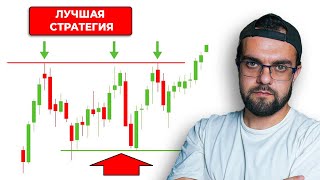
[10:59] bonuses using my links. So, the first thing and why you need a good glass setting is trading from densities. One of the basic trading strategies that is very basic trading strategies that is very clear with a certain and very easy
[11:14] risk management is when we place a stop there behind the density and before the density we open a position, there is a rebound from it, yes, or there can also be erosion from it, that is, trading from density is the following - This is everything that is connected with horizontal
[11:27] - This is everything that is connected with horizontal levels, this is a breakout, a rebound, a false breakout, these are the options. That is, once again a rebound from the level. Yes, a breakout and false breakout and
[11:39] then this is trend trading, these are the same rebounds, only along the trend, someone calls this structure. Yes, an ascending descending structure is a breakout of this trend, yes, a trend breakdown, a structure breakdown, then there is a retest of these
[11:55] structures by the break. That is, trading along the trend, according to the structure, trading from horizontal levels, trading from densities, this is all you should pay attention to and not get into the rest, this is a scalper base. You can look at
[12:09] 1,000 channels, everyone trades on them. But everyone calls them differently, you need to decide on one of what I recommend for beginners is trend trading, that is, trading from the slope to the trend rebound from the trend rebound from
[12:23] horizontal levels and rebound from densities, that is, these are the options because I couldn’t trade breakouts at the beginning, but then on the streams in front of you, I collected statistics where everything was fine. But now I still
[12:36] use more rebounds. You can see the situations that I trade in the Telegram channel. I often share them now after you You know the trading strategies that are worth paying attention to and perhaps have already chosen one of
[12:49] them by which we will search and select coins. As you understand, we are already moving on to the point of selecting coins. Look, sometimes when the market is good and there are situations, and in principle, initially I look at situations on liquid coins. Yes,
[13:04] which I recommend, of course, to you because it is more dangerous on liquid ones. But with experience, you can take a closer look at them. That is, the turnover I write here is 200 million dollars. So, for the coin to be traded, you can
[13:18] set, say, 150, this is also quite good. That is, these are the accepted standards that are considered adequate. Yes, and we begin to look for some coins. For example, a salon is open with us, it is now constantly in third place. Yes,
[13:34] here we can see a local local trend. Yes, an ascending one. What would I do? I would set this local trend. We see a structure, yes, an ascending one, more globally. Let me remove the horizontal line. We see that
[13:48] the coin is in a trend, locally in an ascending trend, more globally in an ascending trend. Yes, but if more globally in an ascending trend. Yes, but if you open, for example, a four-hour one, the
[14:01] open it. I use the ASD hotkeys for the five-minute chart to quickly change the timeframe, and on the five-minute chart we can see this slope, where we could take a rebound, and here, if I'm not mistaken, I took something. But it doesn't matter.
[14:16] Okay, but the coin is moving weakly today, you can see by the changes. Yes, that's why I wanted to say here that in this point you need to look at initially liquid coins, and it's
[14:31] volume. And then we look at which of them moved well. Here's a bit-time, for example, here's a bit-time, and yesterday I tried to take a rebound, but the coin stalled, and I decided to close the position here. You can see. Yes, we see the coin is
[14:46] see the coin is growing, which we can note here, and some have a slope, but the slope here is very sharp, that is, they shouldn't be like this, sharp, that is, they shouldn't be like this, and some levels are lays, perhaps, yes, that is, we
[14:59] look, it depends on what situation we have for a breakout, let's say there's nothing here yet. That is, the coin is not interesting for a rebound. Well, there is a lay, let's say for a rebound, yes, we'll look in more detail in the glass I
[15:13] marked the local lows for a rebound on F1, I pressed and set the level. If there is something, for example, here I would take a rebound, mark a coin for myself, set signal levels using the y key at values 117-1180. From here I would set
[15:30] signal levels for myself. I would scatter them like this so that a coin would signal me when it comes here in order to take a rebound, and then we scroll, scroll, look for rebound, and then we scroll, scroll, look for situations according to our trading strategy. Here you
[15:42] see, I took a false breakout, and after a false breakout, I took a coin, it pricked and began to roll in, forming a global trend reversal, that is, the coin can
[15:55] go to the opposite levels. Here, too, I just took a small short SCP. And here it came out from the middle. If my orders are there, there are 1.5%, I also posted this processing in Telegram. And we go on like this, or we set, we see, it depends on
[16:12] what strategy you have chosen. What do we do if there is no situation, we do nothing, this is an important skill, an important skill, the ability to do nothing when there is no situation according to our trading strategy, to climb Picking because the coin falls and rises. This is
[16:27] wrong to do this. You will be in the red because you cannot adjust your trading. You can adjust consistently constant actions. Random actions are not adjusted because you do not know
[16:40] why. What you are doing, but stable ones, for example, you take. Enter a rebound from the second approach to a level from a round number with density at the level. We enter, record the trade, it worked in the red, analyze what was wrong, there was no
[16:55] analyze what was wrong, there was no density. It is clear that there was a second approach, not a lot to the entry point. And when the lot is where it should have entered, I got a stop-loss there. This should not be the case, that is, Often we
[17:10] look, let's say there was a High here, here, and I wanted to take a rebound from it, but the price did not reach it. And it left without me, and for example, I am afraid of this and enter in advance. Well, if it had reached it, I would already have a Stop Loss of 0.2 more. You need to
[17:25] wait, wait, a lot will not reach it, but on the contrary, and then you need to open in parts, for example, in a rebound. That's it, but you need to enter where it came to
[17:37] where we are. We are waiting for a rebound. There is no need to try in advance. It is better to take a little bit of a pinch than to enter in advance. This is a good rule. I often enter in three parts in advance into the level and for a pinch, but in advance with a minimal part. That is, in this
[17:54] way, we select coins according to our trading strategy. Next, guys. Here is an example of a rebound. Yes, with the pinch that I just told you about, the coin that I just told you about, the coin dox entered in advance, a little bit, a little bit in
[18:08] advance, entered the level itself practically. Yes, I entered the level here, why did I enter the level like this? Because there is a big tail here. You see, here, in fact, the level is such a range, but I will not note this, as if I keep it in my
[18:24] head. You understand, yes, what are we talking about. That is why several ticks did not reach here. But this is considered to be the level here. It did not reach there, there is 0.1% and a little for a pinch, and look how clearly the pinch is taken by the last part. That is, and then we
[18:40] only have a stop-loss. There can be no averaging further. Three parts when opening a position, after which the coin twitches here. It would seem that the movement is small, but due to the fact that The main volume is accumulated in this range, then
[18:54] our Profit is already here. That is, if we count from here. Yes, from here to we count from here. Yes, from here to Profit 1% and I will now show this situation Profit 1% and I will now show this situation in the diary. No, here it turned out 0.8. I am deceiving you, I am deceiving you.
[19:06] But here it turned out 0.8%. That's how it is, it's a minute, we open a minute, we open a five-minute period and see 0.8%. Here the price went further, but you understand, trading $10,000 and immediately receiving
[19:21] $80 Profit in 3 minutes. Of course, I just take them and go look for a further situation. As an example, I followed the situation with the Central Bank, a false breakout. Here we had a level. You can see the local level after which I went into a
[19:36] local level after which I went into a cut. I open a position once or twice, well, counting on a false breakout for a price reversal. The price goes down. I immediately close the position at 1.2% and after that the price returns. Why did I close it? Because I
[19:51] came to a retest of another local level. So I closed the position and, as practice has shown, after the retest of this local level, the price began to recover, that is, two transactions. 2% please, here's your scalping. So, guys, there's a
[20:08] more complex trading strategy in which it's very difficult to adhere to risk management. Why I stopped talking about it. Because there's too talking about it. Because there's too much going on and I need to explain, but I'll
[20:21] say it briefly. This is trading from the zones of buyers and sellers. This trading strategy is, of course, cleaner and works better on higher timeframes, but nevertheless, it also works on five-minute and the like.
[20:34] That is, trading from the zones of buyers and sellers implies a situation where there was a balance. Let me open Bitcoin and show you an example. It implies better while I'm opening it. I'll tell you the theory. When we have an
[20:48] imbalance between buyers and sellers, that is, we have a balance zone, this is a pro-torg zone in which everyone is happy with the price. An equal number of buyers and sellers are formed. After which a buyer or seller appears
[21:03] who pushes the price out of balance and we create an imbalance. This isn't smartmoney, where there is an imbalance or something else. It's just that there is a price balance and an imbalance when there is a just that there is a price balance and an imbalance when there is a flight from the pro-torg zone. So, after
[21:16] that, this buyer who pushed the price and created an imbalance then protects his position. Volumes. When approaching this price next, he protects and gives reaction, that is, a rebound from here there is a zone of buyers and sellers. So, friends,
[21:31] look at the example of what I'm talking about. We have this zone now, I'll open the hourly chart. We have this zone from which the price is pushed out, after which the price which the price is pushed out, after which the price returned back and jumped out from here again. This
[21:45] is the protection of these volumes. We can also see the volumes at the exit from the zone, the volume approaching the zone, on the approach to the zone, reverse purchases began. That is, this is a on five-minute charts, but I will not
[21:59] analyze it in detail here. Come in, study, understand. It's simple. As an example of a more complex trading strategy, which. Well, in principle, it is not needed if you understand the levels and the like. Levels and trend lines are just the basis.
[22:13] Trading should be simple. It is routine and boring, but at the same time simple. This is important to understand. Everyone is trying to complicate things, come up with heavy mathematics, but everything is not risk- management basic trading strategies bring results So
[22:28] decide on is of course risk management and risk management here stop losses because there is no correct stop loss I want to cut off the same thought right away What stop loss to set in each situation is
[22:43] different I have a video on the channel about stop losses You can go and watch and differently in different situations If you take, for example, a rebound from a slope Yes, here I will take here I even took a rebound from a slope You see Yes, here is the
[22:58] trend where I would put my stop loss for this Low I would set a stop loss for this Low I would set a stop loss whatever it was 0.72 if this is more than my stop loss I reduce the volumes in money with which I enter the position That
[23:11] is, if my stop loss is 0.5 - this is the norm, I have 10,000 dollars Then I will enter 88,000 dollars in order to increase my stop loss in percentage and not lose more money due to this, you understand, yes. That's the point and in
[23:24] place stop-loss differently here, where I would place a stop-loss when entering a level. Because when crossing a level, there is a chance that the stop-loss will jump back. What would happen if I had a stop-loss here, I would have lowered it by about 1%, that is,
[23:39] I would have entered at 7,000 dollars. Instead of 10, due to this, I reduce the loss of money. The profit suits me and the loss of money suits me too, that is, I am ready to accept these losses and thus you need to learn to
[23:53] balance the volume of entry into a position and the size of the stop-loss, that is, the volatility of the movement. You understand, stop-loss percentage. No, this is too much. We lower the volume due to this we lose less money. Further advice on
[24:08] risk management. Firstly, do not open positions with large leverage. And if you open positions with large leverage, many people there in the chat use it and write to me. The volume and size of the leverage does not affect the loss of money. This is if you trade, you
[24:22] understand. My words are taken out of context and are presented as their own. That is, they are pinning a mistake on me, but I am talking about what I do. For me, leverage is on my deposit, for them, leverage is a percentage
[24:37] of the deposit, that is, they enter from $1,000 to $100, but with the tenth leverage. In total, they seem to enter the first leverage anyway with their deposit, you understand, yes, the point is that I always use my deposit and am guided by it. Half of the leverage is
[24:50] there, it’s $5,000 or $50,000 - this is the fifth leverage, that’s how it is. And therefore, I want to say that I told you the context of how I trade and from here I give you advice. If you do the same, then never increase leverage, do not
[25:06] strive to make a quick buck, increase your deposit in one trade, no, you should have gradually growing statistics, sometimes with dips, with some kind of non- global ones. When everything goes down there, but just growth, dip, growth, dip,
[25:21] and your chart should look like this: your volumes, do not get into reversals, or catch some kind of Counter-trend movements
[25:34] If you are a beginner, it is not safe. That is, you can Yes, catch and drag out 5-10 pro there. But this will be luck, that is, you need to be able to catch such movements. And what is more important is to catch, then you can catch. But
[25:48] if you do not catch, close in the minus, this is what you most likely will not be able to do when you are unwound, that is, be able to close quickly, determination. What is most important is that. That is, you may not dare to close the minus,
[26:00] this is dangerous, you fall into a strong emotional trap, that is, avoid trading that can lead you into some kind of emotional swings. These are counter-trend reversals, overpowering. That is, all this knocks you down
[26:14] your own trading strategy with stop-loss yourself and nothing can upset you. If you know that some knife that can drag you into a serious minus can upset you, you do not get into it. And thus you feel
[26:28] good because you say to yourself in your head, I was able not to trade. This is a very important skill, just sit and be glad that this Knife went without you because And even better if you see that where you wanted to enter, he flew against you and
[26:44] Imagine yourself in the situation If you opened a position and your liquidation was and most likely it would have liquidated you, but the worst thing is if you
[26:58] want to go into a knife and he goes to work without you and you try later when he worked to take another one and then he smears you, this will be a serious blow to your psyche, so be careful, so do not get into a trade
[27:13] that can shake you emotionally. And there are many such situations, so trade calmly, trade in a rebound with short stops from understandable horizontal levels or from trend scalping, as I said at the beginning, this is a matter that
[27:29] requires a stable emotional state and determination from you. That is, to open and close a position, you must decisively do all your actions, that is, relaxed, peaceful,
[27:54] told you how to minimize risks. What strategies to use, how to set up your workspace, in fact, you are completely ready for scalping. You must understand that without practice, nothing good will happen. Therefore, further It's up to
[28:08] you to just practice, decide on a strategy and get the hang of it. The most important thing is not to rush to earn money. You need to hurry to learn how to trade consistently. To consolidate the results, you need to practice, of course. Use
[28:22] small amounts. This is very important. Don't mess around with a demo account, firstly, because there's no psychological state there. You lost a million in a demo account. So what? Losing 10 dollars is not a demo account, it's already unpleasant, so you need small
[28:36] amounts and practice so that you feel the emotional component of emotional component of scalping and, plus, understand your trading from the point of view of real money. Friends, if you liked this video,
[28:50] please subscribe to the channel, like it, write comments, and also go to our free Telegram channel and watch very useful videos in the previous ones on my channel. Remember that scalping is a skill that requires
[29:04] time, practice, and, unfortunately, an emotionally stable state, which is not so easy to achieve. Yes, everyone has a life, everyone has their own problems, worries, and the like. And unfortunately, this sometimes affects our
[29:17] trading even worse when we ruin our own mood with trading. You shouldn't do this, so it's all done in a hurry to grab A cutlet of money at once in small amounts will not happen, you will kill yourself emotionally, do not
[29:31] give up, continue to study with me, see you soon, good luck in me, see you soon, good luck in trading for now
⚡ Saved you 0h 29m reading this? Transcribe any YouTube video for free — no signup needed.