
AI Summary
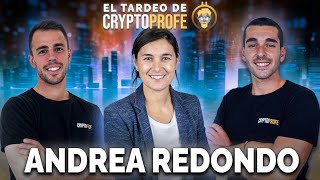
In this interview, Andrea Redondo, founder of the Investment Club, shares her journey to financial freedom, achieved before age 30. She discusses the importance of discipline, patience, and learning from mistakes, and offers insights into her diversified investment portfolio, including stocks, real estate, and cryptocurrencies.
Chapters
Andrea Redondo founded the Investment Club in 2017 to share her investing experience. She has degrees in law, economics, and finance, and achieved financial freedom before turning 30.
Financial freedom is when passive income equals or exceeds your salary, adjusted for your standard of living. It's about living comfortably without deprivation, not just generating a small passive income.
Discipline is the path to financial freedom, especially during market downturns. Patience is also crucial, as market cycles take time. Combining both is essential for success.
Overconfidence, especially when starting young, is a serious mistake. Not controlling emotions, particularly in volatile markets like crypto, is another. Learn from others' mistakes and avoid media noise.
Andrea found only about 5% of her university studies directly useful for investing, but the discipline and rigor were valuable. She encourages education adapted to personal interests, noting that practical training could have accelerated her progress.
Andrea is optimistic about markets long-term, despite potential recessions. She advises against keeping all money idle, as inflation erodes purchasing power. She recommends investing beyond an emergency fund of 3-12 months of expenses.
Andrea is a buyer and accumulator of cryptocurrencies, especially Bitcoin, viewing it as a convex strategy with limited downside and high upside. She sees interesting months ahead due to halving cycles.
Approximately 35% in stocks (indices, dividends, technical analysis), 30-35% in real estate, and the rest in cryptocurrencies, alternative investments (whiskey, wine, precious metals), and startups.
Start with one investment line, master it, then move to the next. Know your risk profile before investing. Patience and compound interest are key.
Investing is for everyone, regardless of gender. Women may be more reflective and less impulsive, which can be an advantage. Self-confidence is more important than gender.
REITs (or SOCIMIs in Spain) are listed real estate companies that distribute high dividends. They offer accessibility and diversification, allowing investment in properties like hospitals and shopping centers with small amounts.
Europe is close to approving Bitcoin ETFs, which could change institutional investor mindsets and drive prices up, especially if coinciding with the halving. Caution against FOMO is advised.
Andrea Redondo's journey underscores that financial freedom is a process built on discipline, patience, and continuous learning. Diversification across asset classes and income streams, combined with a long-term perspective, are key to achieving and sustaining financial independence.
Mentioned in this Video
Study Flashcards (8)
What is Andrea Redondo's definition of financial freedom?
easy
Click to reveal answer
What is Andrea Redondo's definition of financial freedom?
When passive income equals or exceeds your salary, adjusted for your standard of living.
04:15
What are the two key habits Andrea attributes to her success?
easy
Click to reveal answer
What are the two key habits Andrea attributes to her success?
Discipline and patience.
07:09
What was Andrea's biggest mistake at the beginning of her investing career?
medium
Click to reveal answer
What was Andrea's biggest mistake at the beginning of her investing career?
Overconfidence, thinking she was smarter than others.
10:15
What percentage of her university studies did Andrea find directly useful for investing?
medium
Click to reveal answer
What percentage of her university studies did Andrea find directly useful for investing?
About 5%.
14:42
What is the recommended size of an emergency fund according to Andrea?
medium
Click to reveal answer
What is the recommended size of an emergency fund according to Andrea?
Between three, six, and twelve months of expenses.
23:56
What is Andrea's approximate allocation to stocks?
medium
Click to reveal answer
What is Andrea's approximate allocation to stocks?
Around 35% of her assets.
26:33
What is a REIT (or SOCIMI in Spain)?
medium
Click to reveal answer
What is a REIT (or SOCIMI in Spain)?
A listed real estate company that distributes a high percentage of profits as dividends.
38:13
What is Andrea's view on Bitcoin ETFs?
hard
Click to reveal answer
What is Andrea's view on Bitcoin ETFs?
Europe is close to approving them, which could change institutional investor mindsets and drive prices up.
40:05
💡 Key Takeaways
Objective Definition of Financial Freedom
Provides a clear, measurable definition that counters common misconceptions.
04:15Discipline as the Path
Emphasizes discipline over luck, a core principle for long-term investing success.
07:09Overconfidence as a Pitfall
Highlights a common psychological trap that can derail new investors.
10:15Emergency Fund Guidance
Offers practical, actionable advice on cash reserves versus investing.
23:56Diversified Portfolio Breakdown
Provides a concrete example of asset allocation across multiple classes.
26:33Full Transcript
[00:04] Hey everyone, how's it going? We're live again! It seems like it's another Wednesday, and as always, we're discussing Quito today, Professor. As you know, we also have a excited to have you here. We actually did a live stream on your channel
[00:18] to do another one so that we're with Kevin and Andrea Redondo. Welcome to the first two of you! Thank you so much! Okay, so as always, we'll have a
[00:33] pleasant and relaxed chat with Andrea so you can get to know her a little better. watching live! You know who's in the chat, so you can ask anything you a like so
[00:45] appreciate it. Now let's get on with the interview. First of all, welcome, Andrea! And for those who don't know you, who is Andrea, and what do you do? Well, first of all, thank you for the interview. Yes, you
[00:59] while, and I think it was a very popular interview. I hope this one will be well-received by your community. So, my name is Andrea Redondo, and I founded my project, called the Investment Club, in 2017,
[01:13] partly to share my experience investing in numerous different assets that allowed me to achieve financial freedom before turning 30. I have a degree in law, economics, and
[01:28] finance. I started investing quite young, which is something we can talk about, not the advantages of starting early. Through the share my successes so that others can replicate them and also
[01:42] learn from my own mistakes to save time and money. Along the way, I've also written two best-selling books and received the Randia Award for Best Communicator. I'm also a certified
[01:57] accredited by the CNMV (Spanish National Securities Market Commission). So, in short, with all your studies in investment and
[02:10] everything you're telling us, at what point did you have that change of heart and say, "Okay, I'm going to start..." I started creating content and I was going to teach everyone what I know. Well, the truth is, it happened
[02:23] very naturally. There are many content creators who have appeared since the pandemic, but I did it very naturally. As I mentioned, back in 2017, I was coming from a time when
[02:37] Andrea, how do you do it? I have to go to the office and you're there with your garden, or you go out on your bike, or I don't know what. How do you do it?" And well, I would and in the end, they'd say, "Hey, how inefficient to have to explain the same thing
[02:51] the idea to start a blog. I had no prior knowledge, and I said, "Well, I'm going to take the plunge and start a YouTube channel." Because I saw that of content, but I did it more to share my
[03:06] knowledge with my people, and what a surprise it was when I started to see that people who didn't know me at all were starting to consult that content, which you can when I said Hey, maybe there's real interest. So I started
[03:20] doing it regularly, publishing a newsletter every week. Well, six years have passed since then, and I have n't missed a single week with my audience. And we've grown to a pretty big size of 250,000
[03:34] followers. So, sharing regularly, honestly, and transparently—which is kind of the hallmark of the company—and always with the aim of it being an educational project that contributes to others on this path of
[03:47] financial freedom through different investments. You also mentioned a concept at the beginning, and you came back to the achieved financial freedom. I'd like to know two things. One, it seems that
[04:00] financial freedom isn't what everyone's talking about, and two, at what age did you achieve it? Well, financial freedom is a pretty misused concept these days
[04:15] me, it's a pretty objective concept: when the passive income you have from your investments equals, or even exceeds, your salary. But above all, you have to... Compare it to your standard of living. If you
[04:31] because you also have to consider those perspectives with your income— then you're considered to have achieved financial freedom. And in called not freedom of purpose, but economic freedom and
[04:46] geographical freedom. So, of course, that's the people who say, "No, I already generate 200 euros of passive income, I'm already financially free." Because, if I'm in the early fire movement, where they
[05:01] the concept. For me, it's really about living a comfortable life without deprivation, and living it the way you want. And that does imply having a higher level of
[05:13] passive income. Regarding your second question, which was when I achieved it, I always say it was before 30, but I don't give a specific age because I really don't know, and I'll explain why. Because for me, it happened
[05:27] working, generating passive income, and I wasn't measuring it, comparing to see if I was reaching that level or not. No, I... I liked my
[05:39] job and I was investing little by little, and then, well, one day I said, "That's it, we've reached the end." I mean, I knew I had more than I needed, I was going to take the leap. So you could consider that moment,
[05:51] but I don't really like to think of it that way because financial freedom is considered an event, and it's not an event, it's a process that had been brewing for years. So that's why there's no specific age, but you could
[06:04] say it was before thirty, without a doubt. And I'm going to ask you a question: Did your life change a lot the moment you said, "I have it now"? I mean, have you changed a lot in the way you study, how you spend your
[06:16] time since you achieved that financial freedom? Well, yes, financial freedom? Well, yes, in the sense that I no longer have to go to an office. I used to work in one of those American law firms you
[06:29] see in movies, until the wee hours of the morning. And well, you had to keep up with them. So, in that sense, no, not at all. My office hours... well, what you see here in the background...
[06:42] In that sense, yes, it has changed a lot. But on the other hand, I already had the certainty of being able to quit my job whenever I wanted, so I already had that certainty before. But the day-to-day, obviously, has
[06:56] And speaking of this whole process you're talking about, what do you think have been your habits or actions that have allowed you to achieve
[07:09] I would say mainly one, which is discipline. For me, it's the path to financial freedom. It's not a bed of roses; it's a path full of obstacles, especially. Well, for those
[07:23] in the world of cryptocurrencies, more than anyone knows, there are bull markets and bear markets, and also, many things come up every day. So what allows you to persevere is that discipline: saying, "Okay, I'm going through
[07:35] a bad time, but my goal is to get there, and I'm going to persevere. Every day I'm going to do this: have your list of actions and go for them no matter what." So, discipline is undoubtedly an indispensable habit, and also
[07:48] patience, which... A little bit of patience, not that we should get impatient because Patience, give it time, the market cycles. And combining both things, I think, is a very important part of success,
[08:02] absolutely. And this goes hand in hand with trying, as you mentioned, to make financial freedom can come if you hit it big. In fact, we always explain to people: If you come to the crypto world to hit it big
[08:18] and make a lot of money in a short time, this isn't the place for you, at least. Or at least our academy isn't. That's not going to happen to you. It happens in 0.00x% of cases, and it happens to people who then get a lot of attention in the news or on
[08:33] social media, and people think it's normal, but it's very difficult, as you say. It's discipline, constant work, and progress that leads you to that financial freedom, which I think is the goal of many people. Yes,
[08:46] absolutely. In fact, I consider that I've only had one big hit, which was with Ripple around 2017 when I made over a thousand. 1200 percent, whatever it was in
[08:58] 34 weeks, but that's the only big win. Everything else is much more boring, much longer-term, but that doesn't mean it isn't profitable enough to reach the goals.
[09:15] enough capital, of having recurring income from different sources, different areas, different sectors, whatever, 100%, haven't achieved it in six months, or a year, or three. So here I am, almost.
[09:28] 100% Argentinian, listening to, "It's okay if you fall once, a year, a year and a half, three years. If you're what you say, disciplined, you stick to your very come someday." Obviously, you have to put in a lot of work and go through a lot, having a
[09:45] surely the day will come when you achieve it. Related to this, it's often more from mistakes than from successes, and I wanted to ask: What do you think, or what
[09:58] biggest mistakes you've made in all these years? Regarding my experience in the investment sector, well, I'm of the opinion that you either win or you learn, right? But, well, I think the biggest mistake was probably the one I
[10:15] made at the beginning, which is overconfidence, especially when you start investing young. Well, you think you're smarter than everyone else, you say, "Well, I'm already here, so why should I listen to people who
[10:29] have been trading here for a long time? I'm going to go with my instinct, I'm sure I'll do it right." But time and the markets put everyone in their place, and if you don't have the necessary knowledge, you might get
[10:43] lucky, which is like a flute, in a couple of trades, but you're not going to sustainably. So I think that overconfidence, thinking you're smarter than everyone else, is a very serious mistake, and another one is not controlling your
[10:59] volatile as cryptocurrencies. But it's not just cryptocurrencies; the stock market, for example, also needs to be a factor. You have to know yourself very well and understand that the more time you spend in the market, the more you become emotionally driven. So you
[11:13] have to know how to control them very well. It's not as difficult as it seems. I know it's difficult, but it's not that difficult. As it seems, it's simply a bit like what you were saying, not about ignoring what the media says all the time
[11:25] because they're looking for news stories that will make headlines, that will be clickbait. But that's not reality. So I think those are two mistakes to avoid at all costs, and in that sense, I
[11:37] mentioned earlier that the investment club was born out of wanting to share my successes, but also my mistakes and failures. People say you have to make mistakes to learn, and it's true that you learn, but I'm of the opinion that it's
[11:51] but I'm of the opinion that it's really learn from those who openly acknowledge that they've made mistakes because many times you see them on social media, especially, and you say, "Wow, this person never misses a beat, they get everything right." Well,
[12:04] no, because they're only showing you part of the story. How great! And following this, how did you overcome what you mentioned about not
[12:16] I'm in my first few months and I think I know everything. And also, how did you learn to Two more important points: How did you make that leap? How did you make that leap?
[12:34] investment strategies. I wouldn't even call them investment strategies; I was buying and selling kind of haphazardly, going with the flow. And when I realized that was anywhere, I said, "Wait, let's see who's succeeding in the stock market."
[12:50] So I researched it, and luckily, there are So I thought, "Well, I'm very fortunate to have access to the minds of some great investors, some who are still alive, others who aren't." I'm going to read books,
[13:05] so I started reading and applying what I learned from them to develop good investment strategies. And the emotional aspect is more practical because there are some very good books on that subject,
[13:20] very good books on that subject, but it's more about testing yourself and trying to set limits. For example, if you don't want to be tempted, don't have the trading app on your phone, so you
[13:33] constantly checking it. Little habits like that are important to cultivate. And once you've got it down, I already have the app there. I only look at it rest of the time I'm not constantly checking it. I mean, really,
[13:49] for those here who might not know you that well, I've been doing some research. I did n't do any research when we were going to do the interview, and I think you're a role model because, well, what I'm saying is, I have a
[14:01] because, well, what I'm saying is, I have a some merit, not only in Spain but also from outside of Spain. I think it's incredible. I mean, there are very few people who really have this
[14:13] that you're here. This is to begin with, but having said that, nowadays there's a strong current of people who say, "Yes, yes, 100% universities," and a current of people who say university isn't so necessary. How do you
[14:27] see it, someone who has gone through so many studies, even outside of Spain? What feedback or what do you Well, here I'm going to talk about my own personal experience because,
[14:42] logically, each field is different. I mean, you ca n't expect to be a doctor if you haven't studied medicine. So That 's pretty obvious as far as I'm concerned. Well, I studied economics, law, and finance, graduating with honors,
[14:56] law, and finance, graduating with honors, a lot. But of everything I learned from those three degrees, I'd say maybe 5% is actually useful for investing. So in
[15:12] that sense, you could say, "Well, you've wasted seven years of your life studying." Many people see it that way, but I don't. The truth is, at least the subjects I studied—
[15:25] directly useful for investing. But of course, if you're going to invest in a startup someday, and you need to know exactly how to capital increases can happen, all those things, then commercial law,
[15:40] for example, is extremely useful. Or if you're going to invest in fixed income, bonds, or corporate finance, specifically, you learn formulas that you might think you'll never use, but you can use
[15:52] those formulas to estimate the fair price of a bond, for example. So, I personally think that, useful for me, although I could have probably progressed faster with more
[16:09] practical training. That said, I think this is a bit like when people of my generation, for example, boys all wanted to be footballers or girls all wanted to be singers because, of course, those were the role
[16:22] models. Today, yes, there are still some very well-known footballers, influencer because that's what's fashionable, right? And you can be an influencer without having any qualifications whatsoever, and is that good or bad? Well, yes, it can
[16:35] probably make you a lot of money, but of course, that's a very, very small proportion of the population. On the one hand, and on the other hand, what happens if tomorrow Instagram closes those people's accounts and they can't continue? How are they going to
[16:48] live? They don't have a professional career to go back to. So, personally, I am inclined to encourage education, but of course, adapted to what interests each person.
[17:10] that side of things—I'm not in finance, but I'm in engineering, and it's true that at least I'm involved in investing. And well, also the entrepreneurial side, and maybe not. I didn't get anything out of Tijuana, not the technical
[17:23] engineering stuff, but I did get a lot of discipline, from having to study for exams and prepare myself, to being self-sufficient in the sense that they threw you into the void and you had to fend for yourself. I think those are
[17:35] things that, while I didn't study how to invest in cryptocurrency or how to do an analysis, I did study the thousand ways to find a tool that gives you more
[17:47] information about it. So I think that's also important, something that's sometimes undervalued. Let me make a small aside, a compliment for you: I remember in the interview I did with you, when I asked you about the metaverse, you were
[18:00] asked you about the metaverse, you were gave me, how should I say, a concrete application of the metaverse. I remember you were telling me about the automotive industry, how they're doing
[18:13] trials, and as I was listening, I was thinking, "Wow! Finally, someone who knows what they're talking about because they've experienced it firsthand." And that came precisely from your degree. And from your previous experience, well,
[18:26] another example that something has been useful to you too. useful to you too. Yes, absolutely. I did
[18:39] of Spain in London, but have you also studied in Spain? Yes, okay. And that's why I wanted to ask if you've noticed a difference, because often there's this
[18:56] studies in Spain are better, that you come out better prepared outside of Spain. Is that true? That's a reality. Again, I'm talking about the fields I know, and they're more in the humanities than in the sciences. I know many
[19:11] science-minded friends, but I don't know exactly what the career paths are. Yes, there are, I mean, I've the Complutense University of Madrid, and at the Hormone University in Paris and the University of London, and they are three very, very different systems. In Spain, the way things are done
[19:26] is by rote learning, so I study everything and then, let's say, I've done it for the exam, and that's a breeding ground for forgetting it after three months. Then the French system, for example, is also based on memorization, but at least I'll give you
[19:39] a practical example. So it's a bit better. You remember it for maybe not for a year, but it's more of the same. And the English system, what's very interesting is that they do open-book exams, which means you bring your books and they present you with
[19:53] practical cases, but of course, there's much more thinking involved, and I see that as more related to everyday life. In this sense, when I study and then work in anything else, and at
[20:08] studying biology and then becoming a lawyer?" I never practical side of things. And you say, "Hey, well..." Yes, because what's important is what you just mentioned: that discipline, that rigor, that knowledge. Searching for information.
[20:23] And so, well, I don't think that's bad at all. Having said that, the Spanish system has many merits: great academics, great professionals. So I think it doesn't depend so much on the system itself, but on the use you
[20:39] system itself, but on the use you want to give it and your ambitions. you finish these studies, there are interesting opportunities in Spain or if you have to go abroad. But well, in any case, that would be another debate. Okay, let's move on to
[20:53] the investment part. You have expert investment experience; you've been investing in the markets for over 20 years. So, I want to see, first of all, what your current macro view of the markets is, not in light of all this
[21:05] uncertainty, but how you see it right now, and what you foresee more macro level. Look, I never pretended to have a crystal ball, so I won't be able to pull it out for this interview.
[21:18] By nature, you're an optimistic person, over at a macro level. It's true that central banks are still there, raising
[21:30] interest rates, in fact, more aggressively than they had been. In recent months, what sometimes happens is that inflation that in the end, you achieve the opposite: a recession. I don't
[21:47] rule out a recession, but I do n't think it will be as severe as many media outlets seem to believe. So, personally, I'm optimistic. I mean, I don't know where we'll be in six months or a year, but for me, that's
[22:02] quite short-sighted. For my investors, I always look at the long term, 35 years ahead, sometimes even longer. I have investments that are almost 15 or 20 years old that I haven't sold because I have that vision. So, it's a bit like how I
[22:16] see things evolving, but I'm not too worried because the point is to have investment strategies that are somewhat all-rounders, so that no matter what happens, you continue to generate passive income streams or can take
[22:29] advantage of downturns to generate greater capital gains. And what would you say to all these people who, because of the fear published on a very big recession is coming, prefer to keep all their money sitting idle in
[22:45] everything just sitting there, I think it's the best option. What would you say to those people? It's the best option, right? Well, now it's not so noticeable, but last year when inflation was at 10%, it was quite indicative that if you do
[23:00] nothing, you're sure to lose 10%. So, if you do even the smallest thing, you'll be better off than losing 10%. I mean, in the stock market, for example, in 10%. I mean, in the stock market, for example, in 2022 the S&P 500 fell by about 20%, and
[23:15] people might say, "Look, you would have lost more," but of course, in 2023 it rebounded and is close to all-time highs. So yes, you'll sleep better, you'll have the same amount of money in the bank, but you'll have
[23:28] less purchasing power. I think that's very short-sighted and very naive. So, I personally don't see it that way. Logically, it's not about investing and making a quick profit now without knowing where the markets are going. I would do that:
[23:43] investments, and that way, if it goes well, you've already bought. buy more. I mean, at a lower price. So, I
[23:56] really don't. I mean, I do want to clarify here that I do think you need to have a safety or emergency fund in the bank. That's undoubtedly between three, six, and twelve months of expenses, but beyond that, you have to invest it. At the very least,
[24:10] you can find investments that pay out, and nowadays there are institutions that are already giving you three or four percent. So, at the very least, but ideally more. And you don't need to risky things; there are quite calm investment strategies that don't require
[24:25] much time or knowledge and with a fairly contained risk of loss. and with a fairly contained risk of loss.
[24:40] what do you want from the sector at a fundamental level? Don't you think it has fundamental level? Don't you think it has potential? Does it have potential? No? Yes? Yes?
[24:53] shown one of my two books, which is precisely about cryptocurrencies. And here's a little anecdote: people tell me, " Wow, you've written a book about cryptocurrencies! You must recommend it to
[25:05] everyone!" And I tell them, "No, it has nothing to do with that. It's a book designed so that..." cryptocurrencies are for and who they aren't, but having said that, with good investment strategies and by investing in the right people, I think it's for
[25:17] practically everyone because it's a convex strategy. If you do it right, with risk management, you can—I mean, if it goes badly you lose little, but if it goes well you can end up winning a lot. So yes, without a doubt, I invest in
[25:31] So yes, without a doubt, I invest in cryptocurrencies. I 'm more of a buyer than a seller; I like to accumulate, and in fact, this is a time to really make a killing right now if you have that vision
[25:45] that, well, at least Bitcoin—we're not talking about smaller ones here— Bitcoin, when you understand how it works, how the halving goes, the market cycles, because of the phase we've gone through, I think we have
[26:01] some very, very interesting months ahead of us in the world of crypto. So yes, I am accumulating positions. We like—excuse me, we like—that optimism so I suppose people will also be happy about it. I wanted to
[26:16] ask you what you're invested in. We know that you're invested in cryptocurrencies, yes, we know we also know something that's very curious: people You'll be surprised by your ask you later, but generally speaking, what do you invest in besides cryptocurrencies?
[26:33] invest in besides cryptocurrencies? Well, around 35% of my assets are in the stock market: part invested in long-term indices, part invested in dividend-paying companies, and another part
[26:47] bit more—that's for playing around, but with a cool head, applying technical analysis. Then I also have real estate investments, around 30-35%, also have real estate investments, around 30-35%, to generate passive income. And everything
[27:01] to generate passive income. And everything else, well, obviously, cryptocurrencies. An interesting percentage here, because the price of cryptocurrencies fluctuates a lot, it's difficult to give a percentage of my assets because it
[27:14] fluctuates. I also have alternative investments: estate (including real estate startups), blockchain,
[27:26] raw materials in precious metals (gold, silver, platinum), silver, platinum), startups, and, well, the one you said you were going to ask me about, that investment in whiskey, also in wine and things like that, a
[27:40] bit more exotic, right? Exactly. That was the question. Why right? Exactly. That was the question. Why invest in whiskey? Well, always with a diversification perspective. When you already have a certain amount of wealth, it's
[27:54] terms of assets but also in geographical areas and currencies. So, for example, I make this investment in pounds sterling, and I remember when plummet," well, it hasn't held up very well and is giving a
[28:09] very, very good return. So that's why... I simply don't drink whisky; I don't like it at all. I'm not a huge expert either. But anyway, if you know a little bit about how to combine malt with grain, different distilleries, and you find
[28:24] good platforms to do it, then it's an interesting investment to have in your portfolio. Not a significant percentage, but something that does offer returns over time.
[28:43] in the sense of investing, not just starting to listen to us and get that little bug, that itch to start in the sector, what would you recommend besides following you and being involved in investing?
[28:56] Well, look, I think the first thing... I know it can be overwhelming, but this girl... I mean, I don't know how many... I mean, I have more than 105 different income streams, more than 20 different investment lines, and I know that can be
[29:10] convey is that I didn't start with all of them. I started with one, and once I mastered that one, I moved on to the next, then the next, and the next, and it gets easier each time. At the beginning, you invest and you just sit there watching, wondering
[29:24] why it's not going up over time. As you accumulate more, the effect of compound interest makes it grow exponentially. So, patience is key, and everything in its own time. That's one thing. On the other hand, not everyone is the
[29:36] other hand, not everyone is the same. We don't all have the same risk tolerance, the same age, the same family responsibilities, or the same ambitions. So, it's very, very important to know our
[29:49] risk profile to know which are best suited to our own profile. Only once we do that might be the most interesting. I think
[30:13] income streams in the chat, people commented that it seemed like a lot. because we might be at this point tomorrow, but maybe the top 10 income streams? I'd like to see if you could make a
[30:28] like to see if you could make a ranking. because if you manage it well, you can get very good cash flows. So, get very good cash flows. So, real estate is the way to go. And then, well,
[30:43] for example, going back to cryptocurrencies, with Lenin staking, I get interesting passive income. So, those could maybe be in the top 10. And some companies that distribute dividends—I'm not going to say
[31:00] which ones—but there's a catch. I mean, because I know that if I mention one, people will still buy it, and maybe it's not the right time to buy those example, Warren Buffett bought Coca-Cola in '86, and people say, "He has Coca-Cola, I'm
[31:15] time it was a wonderful investment, and now it's almost a terrible investment for dividends, not for other things. So, that's why. But that's more or less the top. Well, it's incredible. I really like how you
[31:30] approach it. I'm going to ask you one last question, and then we'll go through the series of time, we'll answer some of the questions in the chat. And I'd like to see some interesting ones too. I'm going to ask you at the end. I like you
[31:44] first girl I think has asked a teacher a question, and I wanted to ask you: do you think there are
[31:56] sense? Because I think it's important to motivate people to see that everyone is equal when it comes to investing, and in fact, we have many women who invest within the academy, so we also wanted to offer that perspective.
[32:12] to investments. The only thing is that it's true that men generally have a higher risk tolerance. So that's something you tend to see more. I mean, in the world of crypto, it's
[32:27] clearly a much more male-dominated world, but for example, if you go to the real estate sector, I don't know if there aren't almost more women than men investing. It's a bit difficult to measure, but my perception is that there aren't
[32:42] many differences. It's more about self-confidence, and maybe also about self-confidence, and maybe also about self-confidence, but beyond that, you shouldn't think about numbers. This isn't for me because investments are about
[32:54] numbers, but it doesn't make you... You don't need quantum physics or advanced mathematics to succeed. So, don't let yourself be
[33:06] many men, because, well, they are just the visible ones, because men or women are often much more self-conscious about, "Hey, what are they going to think? I'm all done up like this." But the fact is, there are many women
[33:20] in fact, going back a bit to the topic of emotions, from what I've seen and also read in scientific studies, they say that women tend to be more reflective and less impulsive. So,
[33:33] sometimes for certain assets, they can make better decisions because they think twice. I don't know if it's true or not, but anyway, both men and women, if they do things right, can be
[33:48] women, if they do things right, can be very successful with investments. Don't be afraid because of the fact that, let's just say, only he and Kevin are 100% afraid,
[34:04] all of us. Because of this change of question, Kevin, go for it! Because of this change of question, Kevin, go for it! battery of questions, and then we'll have something for the chat. So, now what As
[34:18] a series of short questions, short answers, and straight to the point. Okay, so the first question I wanted to ask is, what's your favorite asset to is, what's your favorite asset to invest in? I'd
[34:36] n't say all of them, no, if I can't say all of them, I'd say stocks. Do asset with the highest percentage gain you 've had in crypto?
[34:53] Great! Cryptocurrencies or high- risk startups? Cryptocurrencies,
[35:07] say stocks. That's great. You mentioned it briefly before, but do you think there will be a new Bitcoin bull run? I think so, and much sooner than most people think. Okay,
[35:26] starting out, what would you invest your first thousand euros in?
[35:38] 're a content creator and you've reached the top: what do you prefer, a like or a subscription to your channel? Whatever they feel like,
[35:50] choose one, I'd say a subscription. But hey, a like for this channel too, guys! Both! Both, just so you don't look left out. Hey, well, that's it for the series of questions, Andrea. I don't know. If you want to make
[36:03] moving on to any questions we have here or any topic you want to discuss, well, I'm not watching the chat, but we'll move on to that now.
[36:15] But if there are people who say, or rather, ask themselves, " Okay, I want to invest, but I do n't know where," I mentioned the investor profile. There are many out there that you can do for free on many websites. We ourselves have some in the
[36:29] printing club. And if anyone is interested, a few questions to get to know themselves better. And I think it's fundamental to know yourself before taking the step, and really, don't be afraid, don't let yourselves be swayed by the
[36:44] media. I've been on a media diet for more than five years and I'm media diet for more than five years and I'm happy. And really, do it. Be carefully consider the information you put into your mind. Because if you put in
[37:00] losing purchasing power and missing out on a life that can be very good, with money as a tool, not the end goal. Yes, in order to have a fuller, more fulfilling, and happier life
[37:15] by avoiding excessive media, because I really liked the concept. I think there's a frightening level of information overload in the media today, so you have to critical as possible with all the information you receive. Because just like 50,
[37:31] 20, or 30 years ago, there wasn't as much information, and that was a problem. critique it, as you say. You've also mentioned the Investment Club, and we'll
[37:44] follow you. I imagine you also have the survey there so people can see it. I was going to ask if, right here you see a dot that says " comments," and all the
[37:58] Okay, I'm going to pick one and ask you a question, but I'm saying this so you have it handy. Look, there was an interesting question about whether we can talk About REITs or How to Invest in Them. You
[38:13] real estate. So, could you give a brief overview of what a rating is? Of course, for brief overview of what a rating is? Of course, for those who don't know about REITs, it's true that the equivalent in Spain are
[38:26] OMIS, which are basically real estate companies. But I mean companies in the real estate agencies that are listed on the stock exchange. And here's the idea: Well, the answer is yes, yes,
[38:38] fact, REITs are very interesting, for example, for obtaining dividends because by law they are required to distribute a very high percentage of their profits to shareholders. So, yes, yes, of course there are REITs in my portfolio, and
[38:53] here's what's interesting, apart from the fact that it makes real estate investments much more accessible because you can start with a few tens or hundreds of euros or dollars compared to several thousand or tens of thousands of euros when you invest
[39:06] directly in real estate, there's also diversification because with one transaction you can already be investing in properties in the United States, Canada, Mexico, Europe, Asia. So,
[39:20] geographical diversification, and it also allows you to access types of properties that you couldn't as an individual. I'm referring here to centers. Logistics distribution, hospitals, shopping centers, cinemas, things like that. As an individual, you can't,
[39:36] but these structures, since they move so much money, do have portfolios. So, without a doubt, yes, the investment we
[39:52] starting to move things around and see what's out there. And the truth is, well, I had heard about options, so we'll take note. Later, there's another question Noel asked: what's your opinion on Bitcoin ETFs? Do you think they'll
[40:05] eventually arrive? And I'm going to ask you an extra question: How do you think... And they affect us. Well, in Europe we're very, very close to it becoming a reality, and here, curiously, against all odds, Europe is much more advanced than the United States in that
[40:20] sense. I mean, I think we're just a few months away from think we're just a few months away from this becoming a reality, and as such for individuals, but there are other
[40:34] products that are very similar to ETFs that offer packages of the top 10 cryptocurrencies. How will this change? I think it will change, above all, the mindset of
[40:48] institutional investors, who are often reluctant because the invest in unregulated assets. So, if they already have a financial asset as a base to invest in, I think that helps a lot. And of course, we're
[41:02] not talking about, well, one hundred thousand people in Spain buying, and others in France. We're not talking about investment funds like Vanguard, Trap, BlackRock, giants that move
[41:19] make a transaction, due to supply and demand, that should drive the price upwards. If that coincides with the timing of the halving, I think that could really lead to a very rapid increase. Up, but well, we
[41:35] know that what goes up very fast comes down very fast. So, be cautious, beware of FOMO, but I think there could be a very interesting moment, and I think it won't be long before it arrives. It's a
[41:48] real call to risk management, which I think is something you're talking about, so it's very important, and certainly not to close yourself off to the idea that, hey, maybe there's interesting opportunity in the next year and a half. So, at least get some
[42:00] training in this sector and understand if it's interesting, so you can then decide whether to interesting, so you can then decide whether to invest or not. Anyway, we're about to wrap up. So, first, I also wanted to say that I know you love to travel, I know you've
[42:13] achieved it thanks to all this work you've put in for years and years, so I hope you enjoy it much more, for as long as you want, and get moving. Thank you so much, Andrea, for coming and for sharing this
[42:28] incredible pleasure, and thank you very much to everyone who asked questions and commented. I saw several people congratulating you and thanking you for the... This interview has
[42:42] Thank you so much to you all. And to the audience who's been watching, thank you for having me in your home. Congratulations to you as well for your wonderful project, talking about cryptocurrencies intelligently
[42:55] and not trying to make a quick buck. So, congratulations to the whole Crypto Profe team, you do a wonderful job, just like you. So, as I said, it's been a pleasure. Many thanks to your family for
[43:07] thanks, Andrea, and I hope to see you soon. Big hug. See you soon.