
¿Riesgo del 70% APY?
60sExplica el riesgo de altos rendimientos con criptomonedas volátiles, un tema controvertido que genera debate.
▶ Play Clip"Delivers a solid comparison of staking rates across major exchanges, though it pads runtime with repeated warnings and personal tangents."
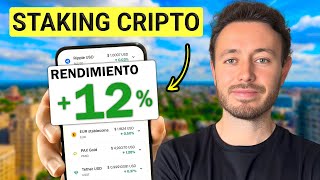
This video compares the best cryptocurrency staking platforms, explaining how to earn interest on holdings like Bitcoin, Ethereum, and stablecoins. The creator walks through specific exchanges—Bitget, Binance, Bybit, Nexo, BINX, and Coindepo—highlighting rates, terms, and practical steps for beginners.
The video opens with a question about the best crypto staking sites and introduces a 'criptomapa' (crypto map) that categorizes features by user needs (beginner, regulated, staking, low fees). A link is provided in the description.
Staking, earning, farming, and yielding all refer to the same idea: holding crypto on an exchange and earning more of that crypto. Options include flexible terms (withdraw anytime) and fixed terms (locked for 30, 60 days, etc.) that typically pay slightly higher rates.
Stablecoins like USDC and USDT (pegged to the dollar) usually pay better rates than major coins like Bitcoin or Ethereum. Smaller coins may offer high APRs (e.g., 70%) but carry high volatility risk—a coin could drop 70% in a month, negating the interest.
Bitget pays 9.3% annual on the first 500 USDC, then 3.5% on amounts above that. The rate is paid daily or monthly depending on flexible vs. fixed terms. The creator demonstrates navigating to the Earn section and Simple Earn.
Bitget's USDC tier 1 (0–500 USDC) pays 9% APR, while amounts up to 1 million USDC earn 3%. The creator emphasizes checking the exact breakdown before subscribing, as rates change frequently.
On Binance, Bitcoin pays only 0.27% APR, while USDC offers a range depending on flexible vs. locked terms. The creator shows how to access Simple Earn and view the rate breakdown.
Steps include creating an account, depositing euros, converting to USDC, then subscribing to a product. There is no minimum, and up to 8,000 USDC earns 4.9% APR.
Bitget's 9.3% on first 500 USDC is better than Binance's 4.9% for small amounts, but the creator notes that using an existing exchange like Bybit (where you already have funds) may be more convenient even if the rate is lower (e.g., 7%).
Bybit offers 3% APR for a 10-day locked USDC term and 4% for 30 days. The creator warns that these are annual rates—you only earn the proportional amount for the lock period.
The creator uses a trading bot on Bybit for Bitcoin and Nexo for stablecoins. Nexo pays 7% on the basic plan, but as a Platinum member (holding NEXO tokens), he earns 9% on USDC. He notes Nexo may not accept new Spanish users due to regulation.
Cryptam, a Spanish-regulated platform, pays up to 7.5% on USDC. The creator has a series of videos about it and provides links.
BINX pays up to 10.5% APR on the first 0.01 BTC (about $1,000 at $100k/BTC) in flexible staking. This is notably higher than other exchanges. New users also get a 100% APR on USDT for the first week, but only on up to 100 USDT and proportionally.
Coindepo, operating since 2021 and protected by Fireblocks, offers 18% APR on flexible USDC/USDT, up to 24% on locked terms, and 12% flexible on Bitcoin (up to 18% fixed). The creator is testing it and confirms deposits and withdrawals work.
The video provides a practical comparison of staking rates across multiple exchanges, emphasizing that rates are annualized and often tiered. For beginners, starting with stablecoins on a user-friendly platform like Bitget or Coindepo can yield attractive returns, but always verify current rates and terms before committing funds.
What is the difference between flexible and fixed staking terms?
Flexible staking allows you to withdraw anytime, while fixed terms lock your funds for a set period (e.g., 30 days) and typically pay a slightly higher rate.
00:53
Why do stablecoins like USDC generally pay higher staking rates than Bitcoin?
Stablecoins are pegged to the dollar and have lower volatility, so exchanges can offer higher interest rates without the risk of price swings affecting the principal.
01:24
What is the APR on Bitget for the first 500 USDC?
9.3% annual percentage rate (APR), paid proportionally each day or month depending on the term.
02:07
How does Binance's USDC rate compare to Bitget's for small amounts?
Binance pays 4.9% on up to 8,000 USDC, while Bitget pays 9.3% on the first 500 USDC, making Bitget more attractive for small balances.
06:15
What is the key warning about high APR offers like 100% on new user promotions?
These rates are annualized; you only earn the proportional amount for the actual lock period (e.g., 7 days), and there may be caps on the amount eligible.
11:24
What is the maximum APR BINX offers on Bitcoin and what is the cap?
BINX offers up to 10.5% APR on the first 0.01 BTC (about $1,000 at $100k/BTC) in flexible staking.
12:13
What rates does Coindepo offer on stablecoins and Bitcoin?
Coindepo pays 18% APR on flexible USDC/USDT, up to 24% on locked terms, and 12% flexible on Bitcoin (up to 18% fixed).
13:50
Why might a user choose a lower-rate exchange like Bybit over Bitget?
Convenience: if you already hold funds and use other features (e.g., trading bots, cards) on Bybit, the slightly lower staking rate may be worth avoiding the hassle of a new account.
06:48
Volatility risk outweighs high APR
High APR on small coins can be negated by a sharp price drop, a crucial risk principle for crypto investors.
01:39Tiered rates are common
Exchanges often pay higher rates on smaller balances, so users must check the full breakdown before subscribing.
03:20APR is always annualized
Many beginners confuse annual rates with short-term returns; understanding this prevents unrealistic expectations.
08:03New platforms can offer better yields
Coindepo's higher rates (18-24% on stablecoins) show that less popular platforms may provide promotional yields to attract users.
13:05[00:00] ¿Cuáles son los mejores sitios donde hacer staking de criptomonedas? ¿Cuáles son esos features? Para eso vamos a seguir este esquema que he hecho yo mismo de unos diseños que tengo de lo que yo llamo el criptomapa,
[00:13] donde explico cuáles son los mejores features de criptomonedas dependiendo de lo que estés buscando. Si eres principiante, si buscas que estés regulado, si quieres hacer staking, que es lo que hablaremos en este vídeo, por bajas comisiones, etc.
[00:25] Te dejo este link en la descripción de este vídeo para que le eches un ojo tranquilamente y tienes mis links de afiliado con descuentos y todo eso, y cuando abras esto no te pedirán ningún email ni que te resistas ni nada, lo tengo aquí puesto gratis para que todo el mundo le eche un ojo.
[00:38] Bien, pues vamos a seguir con esa estructura. Para empezar, a veces esto se llama staking, a veces se llama earning, farming, yielding, cosas así, pero al final es todo el mismo concepto de, ya que tienes unas criptomonedas, las tienes en un exchange,
[00:53] y solo por tenerlas ahí se van a estar pagando más de esas criptomonedas y algunas de ellas son en plazo flexible que puedes retirar en cualquier momento y otras son en plazo fijo para dejarlas 30 días, 60 días o lo que sea
[01:06] donde normalmente pagan un poquito más pero que es para dejarlo bloqueado durante ese tiempo. Bien, y la segunda cosa a diferenciar es que puedes hacer staking y earning todo esto con stablecoins que son USDC o USDT, que un USDC siempre vale lo mismo que un dólar,
[01:24] lo mismo con USDT, y normalmente esto paga algo mejor, las rentabilidades son algo más altas que si lo haces con criptomonedas grandes como Bitcoin o Ethereum. Luego es verdad que si te vas a criptomonedas más pequeñas, entonces sí que puede ser que lo paguen bastante
[01:39] bien, que las rentabilidades sean altas, pero entonces corres más riesgo de que esa criptomoneda baje mucho de precio. ¿De qué te sirve que te paguen un 70% anual si esa criptomoneda en un mes te puede caer ese 70%?
[01:53] ¿Sabes? Por ahí van los tiros. Yo lo que me he enfocado es en investigar más con Bitcoin, algo de Ethereum también, y con Steadicons. Y aquí pues veo el resumen y tienes el link para abrir esto y verlo. Pero vamos a ver algunos ejemplos para que sepas
[02:07] cómo mirar esto y cómo hacerlo. ¿Vale? Por si acaso eres principiante con esto. Mira, por ejemplo, haremos algunos de estos ejemplos. Tenemos BitGate que pagan un 9,3% anual, aunque no hace falta esperar todo un año, sino que te lo van pagando cada día o cada mes, depende si es plazo flexible o no, pero solo hasta los primeros 500 USDC.
[02:28] Si pones 550 USDC, pues los primeros 500 sí que te lo pagan bien, pero luego los siguientes algo menos, un 3,5. Vamos a verlo. Por ejemplo, entro en BitGate y siempre ves el menú y aquí hay un apartado que pone Earn.
[02:43] Normalmente pone el apartado Earn, pero puede ser que ponga Staking o Wealth o Growth, así palabras en inglés o algo así. Pero siempre está por alguna de estas secciones. Y así voy a Earn, me voy a Simple Earn.
[02:56] porque a veces hay unos productos más complejos que ahora mismo no entenderás o hay que entender otros riesgos que no es bien bien un staking, yielding, earning, todo esto. En fin, que cuando a veces sale una lista, como te decía,
[03:08] algunas criptomonedas más grandes, otras más pequeñas, al final nos centramos en Bitcoin, por ejemplo, que suele pagar menos, por ejemplo, un 0,5%, pero si nos vamos a USDC ves que sale esto.
[03:20] Al final no te guíes solo por este numerito, sino que tienes que saber esta información. Aqu en este caso ya si pongo el rat ya me lo desglosa donde el Tier 1 como nivel 1 es que si pones entre 0 y 500 USDC porque estamos viendo esta l de USDC entonces te lo pagan un 9 y si pones m hasta en este caso te dejan un mill pues entonces te lo pagan un 3 Que ojo est s bien pero aqu lo m interesante es ese primer 9 Si no te saliese aqu entonces a lo mejor tienes que crearte una cuenta con un email
[03:55] lo digo por si quieres ver otros exchanges o si esa información ha cambiado. Piensa que los exchanges van actualizando estos porcentajes, así que cuando miras este vídeo no te enfades si estos números no son exactamente iguales porque lo pueden ir cambiando un poco, ¿vale?
[04:08] yo igualmente lo iré actualizando, de hecho aquí arriba normalmente tengo una imagen de decir, mira, criptomapa de Ricky Ruiz, última actualización, pues ese día de este año. Entonces más o menos una vez al mes o algo así, yo lo actualizo para que sea útil, aunque veas este vídeo dos meses después de que lo haya publicado.
[04:27] Volviendo a BitCAD, que si no tienes cuenta o algo así y no ves los números bien, entonces tienes que quedarte una cuenta, o si ves otros sitios que hacen lo mismo, entonces le das a suscríbete ahora y aquí te sale más información por si acaso antes no te salía, ¿vale?
[04:40] Por ejemplo, aquí puedes ver los niveles de APR, Annual Percentage Rate, donde hemos visto esto, ¿no? Los primeros 500, 9,3%. Vale, vamos a ver otros ejemplos. Por ejemplo, vamos al típico Binance.
[04:53] Estoy hablando de UFSE, pero luego también tenemos Bitcoin, por ejemplo, en BitGet, ya que estamos en el ejemplo, que es 0,5%. Si tiro para atrás, puedo ver cómo Bitcoin pagan al 0,5% anual, pero pagan la parte proporcional, ya sabes, cada día, porque es staking flexible en este caso.
[05:10] Lo dicho, vamos a ver, por ejemplo, en Binance para que tengas algún ejemplo más. En Binance, para ir más arriba, te vas a Earn, ves a Simple Earn, se te abre esto y aquí puedes ver el desglose. Por ejemplo, en Bitcoin no pagan mucho, 0,27%, es normal, con Bitcoin suelen pagar poco.
[05:26] pero tenemos USDC donde salen como un rango, depende de si es flexible, bloqueado o cuánto vayas a poner. Por ejemplo, si doy a suscribirse veremos un poco mejor la información.
[05:38] Que por cierto, también como se hace, primero tienes que, imagínate, con Binance, ejemplo es de cero, te creas una cuenta, envías dinero, una transferencia en euros, una vez tienes los euros en Binance,
[05:50] entonces los conviertes de euros a USDC, tengo otros vídeos por ahí, aunque es bastante intuitivo, es bastante fácil, una vez ya tienes los VCC entonces aquí te saldrán los disponibles que tengas y aquí te pide
[06:02] no hay mínimo, bueno, sea como a 0 un VCC o sea un centimo, por ejemplo puedes poner 10, puedes poner más y aquí también te dice de 0 hasta 8000 VCC, hasta 8000 dólares pagan al 4,9%
[06:15] un 5, bueno no está mal, pero si solo ibas a poner un elemento 400 dólares, porque estás probando con eso, entonces mira este criptomapa donde te sale mejor por ejemplo bitget un 9,3% hasta los primeros 500 dólares aunque aquí
[06:32] es donde tienes que entrar tú a valorar si te da pereza que lo puede entender tener otro exchange sólo para eso quiero decir que si tú ya tienes por ejemplo Bybit es el que yo uso principalmente si ahí ya tienes diferentes cosas por ejemplo inversiones en criptomonedas tienes algún bot
[06:48] de trading que por cierto dejo un vídeo sobre eso que yo hago y lo comparto gratis si además utilizas la tarjeta de Bybit que da un 2%, pues a lo mejor aprovechas de hacer un poco de staking a un 7%, que no es un 9,3%,
[07:01] es decir, es menos, pero por la comodidad de ya tenerlo ahí. O, me parece totalmente genial también, te creas una nueva cuenta en un nuevo exchange para aprovecharte de este 9,3 500 euros. ¿Vale?
[07:13] Ya que estamos, vamos a ver Bybit también, que lo tengo por aquí, así se muestra algún ejemplo más y ya está. En Bybit lo mismo, te vas a por aquí, finanzas vas a ir y te sale esta p donde si clicas en las fechitas para que te des un ojo cuanto pagan voy a ver usc cu es exactamente ver los detalles y aqu puedo ver est bien que veamos esto que si lo dejo 10 d bloqueado el usc
[07:37] clic estación, entonces puedo poner hasta, por aquí está 500.000 usc, por ejemplo, pones, no sé, 200, aunque ahora mismo no los tengo disponibles aquí, pero eso significa que vas a tener que los usc dejarlos aquí durante 10 días,
[07:51] no los vas a poder sacar antes es el trato, ok, estás aceptando eso si quieres, pero te van a pagar un 3% anual no es que te den un 3% en 10 días, que esto
[08:03] mucha gente se confunde, siempre estos porcentajes son anuales sacas la proporción de cuánto son en 10 días y eso es lo que te van a pagar te lo quieres dejar un poco más de tiempo porque no los vas a usar durante un mes
[08:15] pues tienes esta opción de 30 días, entonces tienes que preparar un poco mejor, 4% que por cierto entonces aquí tengo que cambiarlo porque ya no es un 7% sino que lo han bajado un 4%.
[08:27] Ahí ya está. Si me preguntas a mí, por curiosidad, donde estoy haciendo más staking ahora mismo no es con Bitcoin, para eso utilizo un bot una comprando y vendiendo que solo tengo en Bybit y tengo bastante también,
[08:39] pero eso es un tema aparte, no es puramente un staking, sino que utilizo Nexo. Aunque creo que ya no aceptan a nuevos usuarios españoles por temas de regulación, regulación que sea estricta y tal pero puede ser que habrá más adelante pero si no eres de España
[08:53] y te interesa Nexo pues le puedes echar un ojo yo por ejemplo aquí tengo la cuenta donde tengo unos 10.000 aquí puestos en USC aunque también tienes que tener algo de su token Nexo en el caso que quieras ser como Platino que es como un nivel superior el más superior y pues estás expuesto
[09:10] a los tokens esto pero también tienen como el plan básico que es decir que no hay que pagar nada de eso porque no hace falta que tengas ningún otro toque sólo usb y entonces te para lo mejor creo que es un 7% anual por eso trae sólo aquí un 7% pero si te fijas también están pagando más si
[09:27] clic aquí ves que pueden pagar hasta un 13 por ciento pero a mí en este caso me están pagando un 9% porque el 13 es si quieres que te paguen en otro token que es el token nexo pero yo aquí me dejo o hago menos líos, tengo
[09:40] USC, unos 9000 y pico me lo dan a un 9% anual en USC y ya está, pero porque yo soy platino, porque sí que tengo unos tokens de nexo o sea, para que veas que algunas plataformas si eres un poco más leal a la
[09:52] plataforma, compras un token, pues puedes hacer mejores condiciones, pero para nada tienes que hacer esto y si estás hablando de o te planteas menos de 1000 pues no te hace falta obviamente todo este rollo es solo por darte opciones
[10:05] o explicarte un poco como funciona dentro del mundo cripto todo esto de staking que hay como cosas simples y fáciles y luego siempre puedes ir a buscar como más detallitos otra si por ejemplo te interesa que esté regulado en España, que sea español
[10:17] y tal, es Cryptam donde pagan hasta un 7,5% en USDC y tengo una serie como de 3 o 4 vídeos de Cryptam donde lo explico todo que también te lo voy a dejar por aquí o en la descripción por aquí abajo tienes lo mismo como hacer
[10:30] staking, earning con Bitcoin donde te deja los siguientes porcentajes aunque ten en cuenta que como te decía, puede ser que cambie un poco y has visto que en Bitcoin siempre paga menos, pero he encontrado
[10:43] un caso que pagan bastante bien que es BINX, donde dan hasta un 10,5% hasta 0,01 Bitcoins, pero 0,01 Bitcoins son bastantes de hecho vamos a verlo, tengo por aquí una de mis cuentas
[10:55] de BINX y si vamos a WELF, ves nos llama ERNO, no sé qué, se llama WELF clico ahí, clico en ALL para verlo, se me abre esta pantalla todo esto es USB-T
[11:07] que ahora mismo no nos interesa pero ves como si eres nuevo usuario solo durante la primera semana entonces est en 100 de USB pero no es que te vayan a doblar tu dinero Eso ser si pudieses tenerlo durante todo un a Este 100 es Annual Percentage Rate siempre es anual
[11:24] Sino que coge la parte proporcional 7 días. Y además tienes que ver si hay algún tipo de límite. A ver, le doy a Subscribe. Y parece ser al menos que no hay un límite, no me sale de momento. Por ejemplo, si pusiese, tengo aquí como 1.600, ¿no?
[11:37] Pues si pongo 1.500, así, mira. Que sabe que como mucho, 100. Ves como algunas cositas suenan como muy bien, pero hasta que no estás en el último paso, como que no te enteras realmente de las condiciones, ¿ves? Por ejemplo, aquí solo me dejarían, si eres nuevo usuario, puedes poner hasta 100 UST y durante los primeros 7 días te van a pagar como un 100% de rentabilidad anual. Pero como ya he dicho varias veces, que me repito, tienes que sacar la parte proporcional.
[12:01] pero no te voy a enseñar esto sino que en Bitcoin en este caso sí que está muy bien, fíjate que va del 0,7 hasta el 10,5% anual, que es más de lo que normalmente he visto en muchos otros exchanges, ves, aquí encima
[12:13] en flexible, así que muy bien, ni siquiera tienes que bloquearlo, puedes retirarlo en cualquier momento y aquí está puedes poner hasta los primeros 0,01 Bitcoins te pagan al 10,5% anual
[12:25] que es brutal y no es que sea solo 27,10 o algo así, sino lo puedes dejar. Y 0,01 Bitcoin no es poca cosa. A ver, no es infinito, pero supongamos un precio de 100.000 dólares
[12:37] el Bitcoin, por hacer números redondos, entonces son 1.000 dólares que puedes tener. O sea que no son solo 100, como puedes tener otras cosas. Así que este es una buena opción. Si tienes algo de Bitcoin, si tienes menos de 0,01
[12:49] Bitcoin, de mientras lo puedes dejar aquí y te pagan un 10% anual. Así que eso está bien, por eso te he dejado esta buena opción por aquí. Y disculpa que grabe esto otro día, pero es que hace poco he descubierto una nueva plataforma muy interesante donde poner en staking tus criptomonedas.
[13:05] Se trata de Coindepo, que también tienes mi link en la descripción, y fíjate que llevan operando desde 2021, protegido por Fireblocks y auditado por diferentes entidades de reputación en el sector cripto. Y que últimamente están creciendo mucho, podemos ver estos números,
[13:20] y al ser una plataforma algo más nueva o no la más popular para hacer staking, a cambio tienen mejores ofertas y están pagando más por las criptomonedas que dejemos aquí, cosa que podemos aprovechar como a modo de oferta, aunque esto no es que sea por tiempo limitado,
[13:36] pero oye, yo de mientras ya la estoy probando, me he quedado en la cuenta, he podido primero tanto depositar criptomonedas como retearlas, siempre pruebo eso al principio para asegurar que está todo bien, y está todo bien, y fijémonos en las rentabilidades, voy a clicar en ver tarifas,
[13:50] Y deslizando hacia abajo podemos ver la sección de stablecoins, donde tanto USDT como USDC en plazo flexible pagan un 18% anual, la parte proporcional cada día.
[14:03] Y si lo dejamos bloqueado, por ejemplo, mensual o trimestral, yo ya no lo bloquearía más tiempo por si acaso, es solo una opinión personal, pero podemos llegar a 21% e incluso hasta 24% anual con stablecoins, sin estar expuesta a la volatilidad de las criptomonedas.
[14:19] o si tenemos exposición, queremos obviamente tener Bitcoin, Ethereum, pues aquí nos lo están pagando, fíjate, en flexible a un 12% y llegando en periodos fijos hasta un 18%.
[14:31] No quería acabar este vídeo sin mencionar tampoco esta oportunidad de Coin Depot, que tienes un link también en la descripción. Dicho esto, continuamos con el vídeo. En fin, te dejo esto para que curioses tú mismo, que lo tienes en la descripción.
[14:44] Destroja el botón de like si crees que esto ha sido útil Piensa que es un trabajazo al final irte exchange por exchange a mirarlos todos Y hay muchos más Pero deja también cualquier duda que tengas en los comentarios Que respondo tantos como pueda
[14:57] Y nos vemos en los próximos vídeos Muchas gracias




⚡ Saved you 0h 15m reading this? Transcribe any YouTube video for free — no signup needed.