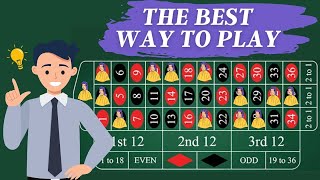

Fibonacci Roulette Strategy: Why You're Doing It Wrong
45sHigh engagement from challenging common knowledge, promising a game-changing strategy for skilled players.
▶ Play Clip"Title promises the best Fibonacci method; video delivers a well-reasoned improvement with math and practical tips."
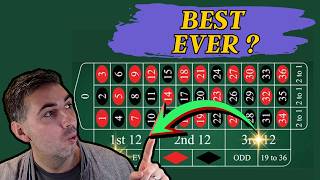
This video presents an improved Fibonacci roulette strategy that bets on 13 numbers (a number and its six neighbors on the wheel) instead of dozens or columns. By covering 13 numbers, the probability of losing each spin drops from 67.5% to 64.8%, significantly reducing the chance of hitting a losing streak that hits the table limit. The strategy yields a 2.77x return on winning bets, which still completes the Fibonacci progression profitably.
The video claims a better way to use Fibonacci in roulette than betting on even chances or dozens, focusing on covering 13 numbers for higher win probability.
The Fibonacci sequence is created by adding the previous two numbers. In betting, you move forward on a loss and reset on a win. With a 2-to-1 payout, winnings cover previous losses plus profit.
A 2.77x return (instead of 3x) still makes the Fibonacci progression profitable, as shown by an example where a win on the 7th bet (13 units) returns 36 units, covering 20 units of losses and yielding 3 units profit.
Bet on a number and its six neighbors on the wheel (13 numbers total). A $13 bet returns $36 on a win, giving 2.77x odds. This covers 13 of 37 numbers on a single-zero wheel.
Betting on a dozen has 25 losing numbers (67.5% loss probability), while 13 numbers has 24 losing numbers (64.8% loss probability). This small difference dramatically reduces the chance of hitting a losing streak that hits the table limit.
With a dozen, the chance of losing 11 bets in a row is 1.3% (1 in 77). With 13 numbers, it drops to 0.84% (1 in 119). This makes the system much safer.
Betting $89 on each of 13 numbers totals $1,157 per spin. However, online casinos allow bets as low as 1 cent, so the strategy can be scaled to a $30 bankroll.
Experienced players can spot spin bias—dealers consistently spinning into a wheel section. If detected, you can bet on those 13 numbers to increase win probability. A free sheet from Mr. Kick Happy helps identify bias.
The improved Fibonacci strategy reduces risk by betting on 13 numbers instead of a dozen, lowering the probability of a catastrophic losing streak. With proper bankroll management and optional spin bias detection, it offers a more robust approach to roulette.
What is the Fibonacci sequence in roulette betting?
You move along the sequence (1,1,2,3,5,8,13,...) after each loss and reset to the start after a win.
01:03
What payout does betting on a dozen or column give?
3x return (2 to 1 odds).
02:11
How many numbers does the improved Fibonacci strategy cover?
13 numbers (a number and its six neighbors on the wheel).
03:42
What is the return on a winning bet when covering 13 numbers?
2.77x (bet $13, return $36).
03:42
What is the probability of losing a single spin when betting on a dozen?
67.5% (25 losing numbers out of 37).
04:52
What is the probability of losing a single spin when betting on 13 numbers?
64.8% (24 losing numbers out of 37).
04:52
What is the chance of losing 11 bets in a row with the dozen strategy?
1.3% (1 in 77).
06:23
What is the chance of losing 11 bets in a row with the 13-number strategy?
0.84% (1 in 119).
06:36
What table limit ratio is recommended for this strategy?
100 to 1 (e.g., min $1, max $100).
05:21
What is spin bias?
When a dealer consistently spins the ball into a certain section of the wheel.
07:48
Lower payout still profitable
Shows that a 2.77x return (instead of 3x) still completes the Fibonacci progression profitably, which is counterintuitive.
01:42Small probability difference, big impact
A 2.7% reduction in loss probability per spin dramatically lowers the chance of hitting a table limit.
04:24Risk reduction quantified
The chance of an 11-loss streak drops from 1 in 77 to 1 in 119, a 38% reduction.
06:23Spin bias as a skill element
Introduces a way to further improve the strategy by observing dealer patterns.
07:48[00:00] in this video I'm going to share with you the best way to use the Fibonacci sequence when playing roulette and if you're a skilled roulette player with a key knife of detail then this strategy could be an absolute Game Changer the
[00:12] most popular video on my Channel with almost 1 million views is a video explaining how players were using the Fibonacci roulette system all wrong by betting on the even chance bets and I pointed out that if you lose more than
[00:24] three spins in a row when doing this that you are practically guaranteed to lose money as the sequence would never allow you to recoup your losses in that video I suggest betting on either the dozens or columns because they have a 2
[00:38] to1 payout which allows you to make a profit when you eventually hit a winning bet whilst following the Fibonacci progression but now a year on after studying roulette strategies I think there's a better way and I think you'll
[00:51] agree after watching this video and you'll definitely agree if you're particularly perspicacious with winning roulette numbers a quick reminder on what the Fibonacci Sequence looks like before I jump into the best way to use
[01:03] it the sequence is simply made by adding the previous two numbers together and adding it to the end of the sequence 12 numbers into the Fibonacci sequence would look like this when transforming this sequence into a betting system at
[01:17] the roulette table we simply move along the sequence each time we lose and then reset back to the start when we hit a winner if we are paid two to one on our bets the winnings will cover our previous losses and some addition profit
[01:30] receive more profit the further down the sequence we go almost as if we're being rewarded for our bravery but interestingly we don't need a payout of
[01:42] 2 to one for our Fibonacci sequence to be profitable I'm proposing that we can reduce our profits in exchange for a higher probability of winning and that would be the most optimal way of playing the Fibonacci sequence on roulette to
[01:56] show you what I mean let's convert this 2 to1 payout into a decimal Sports bets will be familiar with this concept but 2 to1 odds can also be written as odds of 3x in other words the amount you bet multiplied by three is the amount that
[02:11] you will be returned so if you were to bet $1 on a 3X you would be returned $3 $1 is your original bet $2 is your profit AKA 2 to1 odds instead of a 3X
[02:25] return on your money what about a 2.77 x return on your bet don't worry I've not just picked that number out of the sky I'll explain in a moment how we can get these odd veterans at the roulette table might already know the answer to this so
[02:40] how would a 2.77 x return on your money perform when playing the Fibonacci sequence for example purposes let's assume we lose six bets and win our seventh bet so we will have lost 1 one 2 3 5 8 and then we win on the seventh
[02:57] progression which is 13 13 multiplied a 2.77 return equals 36 remember this is a return of 36 so with an original bet of 13 that gives us a profit of 23 if we
[03:13] add up our previous losses this only totals 20 therefore we have won three units over the entire Fibonacci progression and no matter where you are on the Fibonacci sequence a return of 2.77 X on your bet will complete your
[03:28] Fibonacci Sequence turning into a profitable one so now there's two obvious questions how in the world do we get a 2.77 x return on roulette and wouldn't it be better to have a 3X return as we will win more money to
[03:42] answer the first question we simply need to bet on 13 of the 37 numbers and I suggest we do this by betting on the neighbor bets a number and its neighbors by six means that we are betting on that number and the six numbers either side
[03:56] of it on the roulette wheel so for example 0o the six numbers to its left and the six numbers to its right giving us a total of 13 numbers covered placing $1 each on these 13 numbers would be a total bet of $13 if any of these 13
[04:12] numbers land we will be returned $36 $13 bet with a $36 return is a 2.77 return so now let's answer the second question why don't we just bet on a
[04:24] dozen or a column where the payout is 3x rather than 2.77 x let's run the numbers 13 numbers that are winners means that 24 of them are losers if you're playing
[04:36] on a0o roulette table then you have 25 losing numbers but please don't play double zero roulette there are single zero tables available no matter where in roulette at you can take the quick 2-minute quiz using the link in the
[04:52] description assuming you are playing at a single zero roulette table with 24 losing numbers that means you have a 64.8% probability of losing compare this to betting on a dozen where you have 25 losing numbers giving you a
[05:07] 67.5% probability of losing now that might not sound like a big difference but when we consider the only way the Fibonacci roulette system loses money is when we either run out of our bank roll or hit the table maximum bets this
[05:21] seemingly small difference can have a massive impact let me show you with an example I'll assume we are playing at a good roulette table with good table limit ratios of 100 to1 for example if the minimum bet is $1 on a straightup
[05:36] number then the maximum bet is $100 casinos will have different ratios and as a generalization a table with bigger ratios are better to play on but let's stick with this 100 to1 table limit ratio for our example going back
[05:50] to our Fibonacci Sequence this means that after we bet 89 on a straight up bet then we are blocked by the table maximum bet to increase up to the 44 the progression suggests and being blocked the system fails and we can't recoup our
[06:05] losses to get to the point where we lose our $89 bet we will have had to lose 11 bets in a row the probability of losing 11 bets in a row whil betting on 12 of the 37 numbers is 1.3% that's calculated by multiplying our 67.5% probability of
[06:23] losing each spin to the power of 11 however if we move to this improved Fibonacci system best on 13 numbers and a probability of losing each spin at just 64.8% our chances of losing 11 bets in a
[06:36] row has now reduced to just 0.84% in other words there is a 1 in 77 chance of hitting an adverse sequence and being stopped by the table limit using the original system and just a 1 in 1119 chance of the same situation
[06:52] happening to us by betting on our 13 numbers both systems return a profit when we eventually hit a winner and complete the sequence one of them reduces our probability of losing dramatically before I explain how you
[07:06] can use skill to make this improve Fibonacci Sequence even better let's address its negative aspect and that's the bank roll you might need as these bets are the amounts you are betting on each of the 13 numbers if you are
[07:19] betting $89 on 13 numbers that would be a total bet of $1,157 and that's after a total loss of $1,800 $159 from your previous bets not
[07:33] many of us have $33,000 to take to the roulette table but not to worry there are online casinos that you can bet as little as 1 cent on the number so you could scale this Fibonacci strategy down to a bank roll of just $30 if you would
[07:48] like help finding those online casinos feel free to take the quiz now for the skill part many experienced players will be familiar with spin bias this is when roulette dealers spin the ball into a certain section of the wheel more often
[08:02] than not it can usually be found with completely new dealers trying to spin the ball as fast as they possibly can every time or really experienced dealers that are unknowingly consistent in their spins if you can spot a spin bias then
[08:17] you could use the Fibonacci betting sequence to cover the 13 numbers in the section of the wheel the dealer is likely to hit spin bias is rare to find and extremely difficult to spot but friend of the Channel Mr kick happy has
[08:31] created a sheet that can help us identify spin bias depending on when you're watching this video you can watch a live example of this sheet in action while choosing the strategy right here to download this helpful resource
[08:43] completely free come and join the Discord using the link in the description
⚡ Saved you 0h 08m reading this? Transcribe any YouTube video for free — no signup needed.