
CIA's Ghost Murmur: Can it really detect heartbeats from miles away?
50sThe dramatic rescue narrative and the mysterious 'Ghost Murmur' technology immediately grab attention, sparking curiosity and debate.
▶ Play Clip"Title implies the tech is bad, but video debunks it as likely fake, not just 'worst'."
The video investigates the New York Post's claim that the CIA used a device called 'Ghost Murmur' to detect a pilot's heartbeat from kilometers away during a 2026 rescue in Iran. It explores the science of magnetocardiography, NV diamond magnetometers, and the plausibility of such technology, concluding the story is likely fiction.
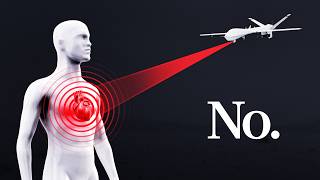
A New York Post article claimed the CIA used a device called Ghost Murmur to detect a downed pilot's heartbeat from kilometers away in Iran, enabling rescue within 40 hours.
The heart produces the strongest magnetic field in the body, around 50-100 pT, but it's 10-100 times weaker than Earth's magnetic field.
SQUIDs developed in the 1970s could detect femtotesla fields but required shielded rooms and couldn't handle large dynamic range, limiting field use.
Nitrogen-vacancy centers in synthetic diamonds can sense magnetic fields at room temperature, offering a robust solid-state sensor.
In 2022, researchers detected a rat's heartbeat with an NV diamond only 2 mm away. The human heart's field drops with the cube of distance, making kilometer-range detection implausible.
At 50-100 km, the heart's magnetic field would be ~10^-30 T, requiring 18 orders of magnitude more sensitivity than current NV sensors.
The carrot myth during WWII was likely a cover for radar. The Ghost Murmur story may be a similar deception to protect actual intelligence methods.
NV magnetometers are more likely used for navigation without GPS, leveraging Earth's magnetic field patterns.
While NV diamond magnetometers are real and have military applications, detecting a heartbeat from kilometers away is physically implausible given current sensitivity limits. The Ghost Murmur story is likely a fabrication or cover story.
What is the strength of the heart's magnetic field?
50 to 100 pT.
03:36
What does NV stand for in NV diamond?
Nitrogen-vacancy.
08:01
How does an NV diamond magnetometer measure magnetic field?
By measuring the splitting of microwave absorption lines due to Zeeman effect.
14:42
What is the band gap of pure diamond?
5.5 electron volts.
10:47
Why does a pure diamond appear transparent?
Its band gap is large, so visible light photons lack energy to excite electrons.
10:47
What is the spin magnetic quantum number (MS) for the lowest energy state of an NV center?
MS = 0.
12:25
How does the magnetic field from the heart scale with distance?
It falls off with the cube of the distance.
16:49
What was the carrot myth during WWII likely a cover for?
Radar on British planes.
19:39
What is a real potential military application of NV magnetometers?
Navigation without GPS using Earth's magnetic field.
20:20
What is the sensitivity of the most sensitive measurement at heartbeat frequencies?
10^-15 Tesla in a shielded room.
17:20
Ghost Murmur named
The dramatic name 'Ghost Murmur' is introduced, sparking media frenzy.
01:48Carrot myth origin
Reveals that the carrot myth for night vision was likely a cover for radar, a fascinating historical deception.
19:39Sensitivity gap explained
The staggering 18 orders of magnitude gap between current tech and needed sensitivity makes the claim absurd.
17:46[00:01] heartbeat from kilometers away? On April 3rd, 2026, Iranian forces shot down an American fighter plane just over Isfahan. Inside were a pilot and a weapon system officer, and both ejected successfully.
[00:16] The US forces located the pilot quickly and rescued him only 7 hours after the but they couldn't rescue the weapon system officer. He landed elsewhere, deep within hostile territory, and worst of all, he was injured.
[00:30] officer needed to hide quickly, so he disappeared into the mountains. This launched the US and Iran into a race to find him. To rescue an aviator buried deep behind
[00:42] enemy lines. Fortunately, the officer had a rescue beacon that could signal his location to the US. The problem was that he not only had to step out of his hiding spot to transmit the signal, Iran could potentially intercept it and get
[00:54] to him first. So, he could only use the beacon sparingly. With enemy forces getting closer every hour, how is the US going to pinpoint his location inside desert? >> Comparable to hunting for a single grain
[01:07] of sand in the middle of a desert. A blind sweep of the entire area could take days or even weeks. But surprisingly, just 40 hours after the crash, the US announced the officer was rescued. Still invisible to the enemy,
[01:19] but not to the CIA. So, how did they do it? article, the CIA deployed a futuristic device to rescue him. Reportedly, they were able to detect the magnetic field produced by his heartbeat from
[01:33] Such a device would have to overcome the magnetic signatures from other soldiers, vehicles, and animals in the region, let alone Earth's magnetic field. It's like listening for a murmur in a crowd. So, the technology was appropriately
[01:48] called Ghost Murmur. Immediately, this kicked off a media >> Ghost Murmur. >> Did you hear about what the CIA tech >> Called the ghost murmur? All of this sounds too good to be true and there
[02:03] seem to be no other sources beyond this New York Post article. So, we dug deep to find out whether this supposed technology really exists and what its limits are. I very rarely believe things I read in the New York Post.
[02:16] >> I find it extremely difficult to believe. Many of these researchers in the NV diamond area are having to sign NDAs. The fact that the CIA is involved in leveraging technologies is consistent with their mission and their charter.
[02:29] So, is ghost [music] murmur fact or fiction? Post article that hint at what this device [music] could be. First, normally this signal is so weak that it can only be measured in a
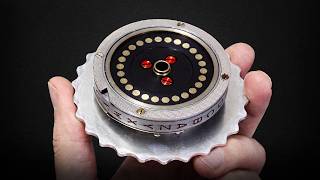
[02:42] hospital setting with sensors [music] pressed nearly against the chest, the But, advances in a field known as quantum magnetometry, specifically sensors built around microscopic defects [music] in synthetic diamonds, have
[02:55] these signals at dramatically greater >> [music] >> First, does the heart actually create detectable magnetic fields? Second, what are these synthetic diamonds that could
[03:09] potentially [music] detect them? And third, is it all possible at these Let's start with the heart. Now, if you type heart magnetic field into Google images, you will get a bunch of questionable looking graphs.
[03:24] Well, whenever current flows through a conductor, it generates a magnetic field run on electrical impulses traveling through neurons, our tissues and organs
[03:36] generate faint magnetic signals. But, because the heart muscles fire in a coordinated way, the magnetic field they produce is the strongest [music] in the body. It's around 50 to 100 pT. 10 to 100
[03:49] produced by the brain. times weaker than Earth's magnetic field. So, it's no surprise that we only detected the magnetic field of the heart in 1963.
[04:03] It had to be done in a remote field away from the magnetic noise produced by lab equipment, elevators, and cars. And the setup had to be incredibly still. Even would corrupt the measurement. [music] Not something that could work on a
[04:16] helicopter or a military drone. But pretty soon magnetometers got better. By the 1970s, we got superconducting quantum interference devices, or SQUIDs. These magnetometers were incredibly
[04:29] sensitive, detecting fields as weak as a few femtotesla. To no surprise, the US military quickly strapped these SQUIDs to planes and helicopters, and they magnetic signatures, like submarines in the ocean.
[04:44] But the project never really picked up. Nonetheless, SQUIDs also made it easier to detect the heart's magnetic field, but with a key caveat. They typically need to be operated in a very small very tightly controlled
[04:57] conditions, often inside of shielded rooms. They can't handle large dynamic range of background fields and electromagnetic interference. Future magnetometers offered solutions, but they also had their own drawbacks. There
[05:09] were always issues with either shielding or sensitivity or dynamic range that heartbeats out in the field. Until the 1990s, when physicists started looking into diamonds that might eventually be able to sense magnetic
[05:24] fields, while potentially getting around the drawbacks. These new quantum magnetometers work at room temperature operation, and that's what's really exciting [music] about them. They're also a solid-state sensor,
[05:37] which, you know, uh is can be very practical for [music] for some applications and can be made into like a more robust kind of sensor. These are the diamonds mentioned in the New York Post article. So, how do they
[05:49] work? Now, the overall coverage of the story this tech is supposedly classified, whether what's being reported is actually real. And depending on which
[06:01] outlet you see first, you might arrive at completely different conclusions. For example, if you saw this headline first, you might be really impressed with the technology, but this one you'd be a bit more skeptical. And the last one might
[06:13] not even make you care about the tech. So, three headlines, three completely different conclusions. And that's where today's sponsor, Ground News, comes in. They're a website and an app designed to make reading the news easier and more
[06:25] data-driven. Each day, they round up stories from thousands of outlets all breakdown of the story, including its political leaning, factuality rating, and even ownership, all backed by
[06:37] ratings from three independent media monitoring organizations. In case of this ghost murmur story, you can see that it's been reported on by 65 sources, but the coverage is pretty lopsided. So, if you only get your news
[06:49] chance you've seen the story, but if you only get it from the left, there's a can also see the factuality rating and the ownerships of the sources. They also highlights stories like the ghost murmur one that were underreported on by either
[07:05] side of the political spectrum. Staying up-to-date and well-informed with full-time job, and that's where Ground News's approach is so valuable. They and accessible, and you can see all of the information within moments, not
[07:20] Veritasium, care about getting to the truth, you can go to ground.news/ve or scan this QR code, and our link will get you 40% off their vantage plan. So, sponsoring this part of the video, and now let's go figure out how those
[07:34] fields. Well, for something to function as a magnetic field in a way that we can detect. >> Now, a pure diamond is just an ordered lattice of carbon atoms, so it doesn't
[07:47] way. But, this changes when you start adding to the lattice. You can replace one of the carbon atoms And if you remove one of the carbons next to it completely, well, that
[08:01] creates a vacancy. This defect is called a nitrogen vacancy or an NV center. And these NV centers become particularly useful when they trap two unpaired electrons. That's
[08:15] property called spin. A simple and flawed analogy is that spin gives electrons their own magnetic signature, and it can point either up or down. So, when an electron is exposed to an
[08:30] external magnetic field, [music] this magnetic signature will either align itself with the field or against it. Also note that particles that have no net spin will not respond to an external magnetic field.
[08:42] Now, the [music] two trapped electrons can arrange their spins in the following They could both point up, which would give you a spin magnetic quantum number >> They could both point down for a quantum number of minus one, or they could point
[08:57] in opposite directions for a quantum number of zero. We'll denote this spin magnetic quantum number with MS, and it essentially acts as a bar magnet for the whole NV center. And just like for individual electrons, this bar magnet is
[09:11] also sensitive to external magnetic fields. So, now that we've created a diamond that responds to magnetic fields, [music] the challenge is, how do we measure this response to detect a heartbeat?
[09:25] Okay. So, I reached out to experts to try and figure this out. Uh but, that I sent, I only got a few responses. But, then I got an impromptu call from one of these experts who said that many of these researchers in the envy diamond
[09:38] area are having to sign NDAs. This is getting a lot more interesting, but with how secretive everyone was being, I had to use publicly available research. And I think the key idea is to figure out how diamonds respond to magnetic fields,
[09:51] you have to use light. When you shine light at an atom, the atom can either absorb the light or ignore it. An absorbed photon of light will excite an electron within the atom to a higher energy level.
[10:03] discrete platforms that the electrons [music] can jump between, just like in a All atoms of the same element, for example carbon, have the same energy levels when the atoms are far enough apart. But when you bring them together,
[10:18] like inside a diamond lattice, their energy levels shift. They come together to form a series of closely [music] spaced energy levels or an energy band. Now, an electron will only ever absorb a photon if the photon has enough energy
[10:32] to move the electron across the gap to a higher band. This gap between the last electron occupied band and the first empty band above it is called [music] the band gap. In a pure diamond, it's big. It's around 5.5 electron volts,
[10:47] which means that only ultraviolet photons have enough energy to excite the electrons. All lower energy light, including visible light, will mostly be through. This is why a perfect pure diamond
[11:00] absorb any of the light. But if you start adding defects, they disrupt that organized lattice. The defects unlock different energy levels, secret platforms within this band gap for nearby electrons to jump
[11:14] A boron defect, for example, creates a low energy level at only 0.37 electron This is a platform that electrons can jump to by absorbing infrared or red light. And with enough boron defects, a significant amount of red light gets
[11:29] absorbed this way. The rest of the visible spectrum mostly makes it through, so without this red, the diamond appears blue. Similarly, a nitrogen vacancy defect unlocks other secret platforms,
[11:42] >> and these can help us detect how the NV center responds to a magnetic field. At first glance, it looks like the nitrogen vacancy generates a few unique levels, and these are exclusive to the two unpaired electrons trapped within
[11:55] But, if you look closer at, for example, the lowest level, you'll notice that it actually contains three closely spaced, but separate, energy levels. The second and third levels are actually at the same height, but we'll draw them
[12:09] separately. And the fact [music] that there are three isn't a coincidence. Remember, the NV center can adopt one of three MS numbers: 0, -1, or 1, depending inside are arranged. If you think of the two spins as bar
[12:25] magnets, the most relaxed, lowest energy way for them to sit is this: one pointing up, and the other down. This is analogous to the MS = 0 state, which [music] is why it has the lowest energy. Forcing both magnets to point down
[12:39] together or up together, like [music] the MS = 1 or -1 states, requires more energy. They oppose you, so [music] these two states are at an equal, slightly higher energy sub-level. These differences are tiny. Jumping from
[12:53] requires [music] only a small amount of energy. A microwave photon of 10.4 cm Now, these secret energy platforms of NV centers were mapped out by the '90s,
[13:06] but for a long time, no one thought to use them as magnetometers. It was a a bunch of us to think about them as sensors. It takes a mindset switch to think differently, and once you do, you
[13:18] useful." So, let's apply a magnetic field to this diamond and see what happens. If we slowly turn up the field strength, one levels are starting to [music] shift.
[13:32] To understand why, we can use a compass needle as an analogy. Naturally, a compass needle will align itself with the magnetic field of the >> and this is the lowest energy relaxed state that the needle can be in. And
[13:46] it's analogous to the behavior of the system [music] in the ms equals minus one state, which is why its energy level drops slightly. But, if ms is one, >> the system flips. This would be like taking an external magnet and applying
[14:00] it to this compass needle, flipping it 180° >> and then if I'm careful in retracting this magnet, I can actually get the needle to stay [music] in this place. And this is the highest energy this
[14:13] needle can have [music] sitting in this unstable position. back. It's possible, but it's a higher energy state. So, the ms equals one level slightly rises.
[14:26] react to the field, which is why this level hasn't changed. field strength, you'll notice that the levels get further and further apart. splitting. [music] It's described by a simple formula that gives you a direct
[14:42] link between the energy split and the magnetic field strength. So, in the presence of a periodic magnetic field like that generated by the heart, we would theoretically see a rhythmic separation of these lines.
[14:54] >> And these two energy levels absorb light at two different microwave wavelengths, of the field. [music] So, what we can actually measure is which microwave wavelengths the diamond is absorbing. When there's no magnetic
[15:09] a single absorption line at the wavelength of 10.4 [music] cm. But, when there's an external magnetic field, they produce two separate absorption lines. Now, we've simplified it a bit, but by measuring how spaced apart these lines
[15:24] are, you get the field strength. This is how an NV diamond magnetometer Was the diamond magnetometer ever used to detect a heartbeat? So, what has been done for sure, this I know for certain, is detection of magnetic fields
[15:38] generated by neurons. You know, I mean, which is to some extent connected to the my knowledge, has been first seen in 2015. Okay. Well, that's uh wow, that's impressive. So, could it pick up a
[15:53] heartbeat from kilometers away? Well, in 2022, researchers were able to pick up the magnetic field of a rat's heart, but it was done using a thoracotomy, which means the rat's chest was open and the diamond was less than 2
[16:05] mm away from the heart. Okay, but the human heart produces a the CIA might have deployed could be decades ahead of what is publicly known. >> [music] >> worked in the Middle East, right? So,
[16:21] what was your first reaction to this news? Well, the fact that the CIA is involved in leveraging technology is consistent with their mission and their charter, but I defer to smarter people in engineering and science like yourself
[16:35] to figure out the exact technique that might be used, but the processes, of done. We can't say for sure whether the CIA estimate how sensitive it would need to be.
[16:49] falls [music] off with the cube of the distance from the source. So, if the magnetic field of the heart, when measured at the chest, is 50 pT, or 5 * 10 ^ -11 T, well, then just 100 m away, this falls
[17:04] off [music] by a factor of a billion to 5 * 10 ^ -20 T. And at 50 to 100 km, this could drop to as little as 10 ^ -30 T. T. The most sensitive measurement ever made at the frequencies that the human
[17:20] heartbeat work at is at the 10 to the minus 15 Tesla level and that's in a minus 15 Tesla level and that's in a shielded room. So, you need a system that is 15 orders of magnitude more sensitive than the superconducting
[17:34] quantum interference devices [music] and 18 orders of magnitude more sensitive than diamond NV sensors. 18 orders of magnitude is a lot. Sounds
[17:46] quite unfeasible. It's not like the hills of Iran are devoid of of animal They also have heartbeats and possibly larger hearts than humans. drone or the helicopter the device might
[18:01] be mounted on and finally there's the fact that a magnetic field of 10 to the negative 30 Tesla is weaker than a magnetic field an electron will give you a meter away. The New York Post is notoriously a very
[18:15] good place for amusing fiction. On the day before we saw this article, we also saw an article about how they had a technology where it was a a beeper. The airman had sent out a beacon and that [music] was one way that they
[18:31] and that [music] was one way that they were able to detect him. And these are things that we know about already. We also know that there may well have been other intelligence methods used, but this isn't really
[18:45] necessary. And then that brings you to the point of like why would they make this up? The New York Post is known to print a lot of stuff. I'm not a real fan of the credibility of the press to report
[18:58] things having seen reality and then seeing what the press reports. How about deception stories and like false narratives published by not only the CIA but but other agencies? Is this often the case? If you look historically, the
[19:12] idea of fooling your enemy, particularly when you have something a vulnerability to protect, goes back thousands of years. frequently attacked Britain at night, and to retaliate, the British would fly
[19:26] up to intercept and somehow kept finding these bombers in the dark [music] and would attack them. Now, UK officials told the press that they ate a lot of carrots, which was improving their vision at night. But,
[19:39] some experts believe that this was actually a cover story meant to distract the Germans from the fact the British installed radars on their planes. Is that where the idea that carrots give you good eyesight comes from? I think
[19:52] so. I think this is the original, yeah, the original myth. That is crazy. Yeah. But, okay, there's one thing that still bothers me. If this is likely fake, then why is everyone saying no comment and declining to talk? There must be
[20:06] Well, these NV centers in diamonds are but the more interesting, probably confidential way they could be used is [music] as navigation devices. The Earth's magnetic field creates a unique
[20:20] pattern all across the globe. Then, you place an object um into this map, and if >> um perturbations and inhomogeneities, you can infer where you are without any having any any GPS reception anymore.
[20:36] >> With the rise of GPS spoofing and jamming over the last couple of years, that could be incredibly powerful. [music] So, NV magnetometers do exist with these synthetic diamonds, and they do have potential military applications.
[20:50] It's just that detecting heartbeats kilometers away probably isn't one of kilometers away probably isn't one of them. Scientific American article on this story by Denny Bashard that initially
[21:04] expressed skepticism in Ghost Whisper as a potential technology. It's a great a potential technology. It's a great read and you should check it out.
⚡ Saved you 0h 21m reading this? Transcribe any YouTube video for free — no signup needed.