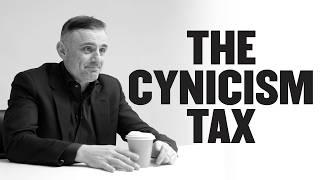

The Cynicism Tax: Saying No Costs Everything
42sThis clip opens with a vivid, relatable story about missing out on a $150,000 investment due to cynicism, immediately hooking viewers with a tangible example of regret.
▶ Play Clip"The title promises a definition and explanation of the 'cynicism tax,' and the video delivers exactly that with clear examples and actionable insights."
Gary Vaynerchuk discusses the 'cynicism tax'—the cost of saying no to opportunities due to fear and negativity. He contrasts this with 'practical optimism,' a mindset of saying 'maybe' and putting in the effort to explore possibilities, which he credits for his success. He also criticizes the term 'toxic positivity' as a mislabel for delusion, arguing that true optimism is grounded in accountability and work ethic.
The cynicism tax is deploying a perspective of 'no' without putting in the effort to see if it's a 'maybe,' thus eliminating the chance to find upside that others don't see.
Gary advocates saying 'maybe' to everything and having the humility to 'waste time' exploring hypotheses. This curiosity led him to be early on email marketing, websites, Google AdWords, influencer marketing, and mobile.
Gary argues 'toxic positivity' is a weaponized term for delusion. He distinguishes practical optimism from delusion by emphasizing accountability and the market being always right.
People use cynicism to protect themselves from losing publicly. They label optimistic people as 'toxic positive' to feel like they're doing something while actually doing nothing.
The worst feeling is believing in something but letting fear stop you, then seeing it succeed. The regret of not acting is worse than the pain of failure.
Cynicism is not the same as being thoughtful. Thoughtfulness evaluates risks neutrally; cynicism assumes bad motives and focuses on past failures.
To shift from 'no' to 'maybe,' people need to experience small failures to learn that losing isn't as bad as the regret of not trying. It's like dragging someone to the gym.
Gary compares spending hours online criticizing others to a disease of insecurity. He predicts it will be recognized as a serious issue, like alcoholism.
Gary can spot extreme cynicism or optimism quickly. He has learned not to hire 'charity cases'—people he tries to fix—as it blends charitable work with professional needs.
Gary attributes a substantial double-digit percentage (20-30% or more) of his success to his practical optimism framework, which allows serendipity and opportunity.
Gary Vaynerchuk emphasizes that the cynicism tax—saying no out of fear—prevents people from achieving their potential. He advocates for practical optimism, grounded in effort and accountability, as a key driver of success and happiness.
What is the 'cynicism tax'?
Deploying a perspective of 'no' without putting in the effort to see if it's a 'maybe,' thus eliminating the chance to find upside.
What is 'practical optimism'?
Saying 'maybe' to everything and having the humility to waste time exploring hypotheses, leading to discovering truths that create economic and emotional happiness.
00:30
How does Gary distinguish practical optimism from delusion?
Practical optimism is grounded in accountability and the market being always right; delusion lacks work ethic and ignores reality.
01:00
What is the worst feeling according to Gary?
Believing in something but letting fear stop you, then seeing it succeed—the regret of inaction is worse than the pain of failure.
04:00
What does Gary compare spending hours criticizing others online to?
A disease of insecurity, similar to alcoholism, that will be recognized as a serious issue.
06:30
What percentage of his success does Gary attribute to practical optimism?
A substantial double-digit percentage, 20-30% or more, possibly all of it.
08:00
What is the difference between cynicism and thoughtfulness?
Cynicism assumes bad motives and focuses on past failures; thoughtfulness evaluates risks neutrally without assuming ill intent.
03:00
What practical step does Gary suggest to overcome cynicism?
Experience small failures to learn that losing isn't as bad as the regret of not trying—like dragging someone to the gym.
05:30
What does Gary say about the term 'toxic positivity'?
It's a weaponized term for delusion; positivity and delusion are not the same, and using the term ruins opportunities for a generation.
01:00
How does Gary spot cynicism in interviews?
He can sense extreme negativity viscerally, like an animal sensing danger, and avoids hiring 'charity cases' he tries to fix.
07:00
Cynicism Tax Definition
Core concept of the video: saying no without effort eliminates upside.
Practical Optimism Examples
Gary credits this mindset for his early success in multiple digital trends.
00:30Toxic Positivity Critique
Gary argues the term is misused to attack optimism, confusing it with delusion.
01:00Regret vs. Failure
Highlights that regret of inaction is more painful than failure.
04:00Online Negativity as Disease
Compares chronic online criticism to a disease, predicting future recognition.
06:30[00:00] You believe it's a good investment to put $15,000 into a group fund with 10 other buddies to buy a single family home for $150,000 and make money off the derivative. You believe it. You say no. They go on and do it. And by [ __ ] year three, they're already paid back and making money for the rest of their life. You're [ __ ] dead inside cuz you believed yes, but you allowed cynicism and fear to make you go no.
[00:29] That is the cynicism tax. >> The cynicism tax. Why being realistic isn't as real as real as you think. So, stop mistaking negativity for reality and start using optimism to get things done. And I just wanted to get your definition of what a cynicism tax is. >> A cynicism tax is defined in my mind of you're deploying a perspective of no without putting in the efforts to see if it's a maybe. Thus rendering you having no
[00:58] capacity to ever find upside that others don't see or even few see or the masses don't see. When you're in a practical optimism framework, you're saying maybe to everything. And when you say maybe to everything and you you have the humility to quote unquote waste your time, aka use your time, to potentially say yes to something that most will say no to. How do you think I found myself being right about email marketing, about having a
[01:27] website, around Google Adwords, influencer marketing, mobile? Like everything that I've watched anyone who's innovated is met with knows I am in practical optimism which oh by the way let me address this because I saw a piece of content this weekend where it said that I'm the king of uh toxic positivity and I was laughing with how many people you know and you know this a lot of people are trying to weaponize this term right it. Nothing
[01:56] could be more interesting to me than people have decided to create a term called toxic positivity and try to weaponize it against humans. It's it's truly one of the saddest things I've seen in the world. Here's why. Toxic positivity is really just slang term for delusion, right? >> Or a dream, right? If that word didn't exist, they'd be like, Gary's just selling them a fake dream, right? For me, all I talk about is practical truths. All
[02:25] I believe in is accountability. The market is always right. People are confusing practical optimism with toxic positivity or delusion because they don't know the difference between trying for a little while or wasting all your time and money on it forever. I am the king of what some people would say wasting minutes and hours and days on hypotheses that end up not being true. But that level of curiosity and practical optimism has also led me to 40
[02:54] things that are so true that the upside of those 40 truths has created remarkable economic and emotional happiness. The tax on cynicism is none of the people that deploy it, Sammy, >> could have ever discovered the gold at the other side of the rainbow because they never slid down the rainbow. because they never they don't even try because they're not even they're not even in the game. >> And like real talk, if you are trying to
[03:23] accomplish something but you've already talked yourself out of it and you're not doing it, doesn't that actually render it 100% impossible? >> The end. >> Take the you miss 100% of the shots you don't take or what was that quote? And people are so scared and are so believing the negativity in the world that they choose to weaponize cynicism as a protection mechanism. And then if that's not enough, they go and try to deploy toxic positivity
[03:52] on people that are practically optimistic. I I I cannot laugh more about that. I also think it's really I also think >> people are fearful based. >> Yes, that's exactly what's happening. They're so feared that they're in misery loves company and they try to deploy cynicism and labels to make sure everyone else doesn't do anything either. >> What about when it's like sometimes like your family like my family are immigrants, right? And it's all like protection
[04:21] because it's like I love you so much that I don't want you like we need to be like protected from these risks. We did all these risks and now like protect yourself. >> Makes sense. How old are you? >> I'm 31. >> Great. Tell your parents you're 31. >> Like when people ask me like what do I do Gary with that? I'm like you know like I get it. Like I I didn't ride a bike. I'm
[04:50] scared of dogs as a kid and I was scared of swimming because my mom was scared I was gonna get drowned and bit by a dog. I know what fear is. I have no judgment. Unlike, you know, it's funny. Unlike people that are affected by my optimism and want to sling toxic positivity, I I don't call it toxic cynicism. I don't call it toxic fear. Notice what I called it, the citism tax. >> I don't even
[05:19] want to like I always laugh when people want to hurt. I don't want to I don't even want to use that word toxic because I don't want to hurt people's feelings. But do I believe that most of the people that read this article or watch this clip have a cynicism tax? Yes, I do. I think most people do not achieve. Now to the Let me counter myself. Let me join the ranks. Do I think that there
[05:48] are people that are downright delusional? Like delusional? Sure. I meet them all the time. You know, they those people do gravitate to me. Just you know, it's funny. I get both sides. You know who gravitates to me? The extreme cynics that are like so tired and are 10 years into their cynicism that they're actually ready for my practical optimism. They're not in year one where they're going to leave a comment toxic king of toxic positivity. They're
[06:17] in year seven where like clearly my way didn't work. I want to actually know what this guy's been talking about for the last 20 years. And then there's people that a lot of those people are making fun of and think exist, which is like delusional people, which is why Sammy Matt, I always talk about work ethic, accountability, the market is the market. Mhm. >> Yes, you should quit after four and a half years of sucking at
[06:46] the same thing over and over like like you know like >> it's almost like for the delusional but it's almost like the reps are the proof right of like that thing that you're striving for sports you put in like you're saying you put in that work that work ethic is the proof >> it's sports >> of that yeah >> I laugh when people want to take shots I'm like have you looked at my baseball card turn
[07:15] it to the back do you understand what I've done it's it's your world I'm here with Steve from Vayner Speakers. Like I told Steve and Zach like as early as I met them. When I met Steve I was already somewhere. Zach got me a little bit earlier. But you actually That's right. Steve like right. Steve knew of me and like like like like I told everybody I was going to be a very successful speaker whether I
[07:44] was brash and delusional or posit if I was deploying toxic positivity on myself or not or you know Steve was like or Zach thought a little too brash or too much cursing or not professional enough or yeah I just don't get it which is like super valid like I've been wrong about people all the time. It didn't really matter in 2011 what I thought or what they thought. It just plays out. It just plays out. And
[08:13] so, um, I would just tell everybody who's reading this that if you're willing to be quiet and really understand, are you on the side of paying a cynicism tax? If you're on the side of the other side of the pillow, delusion at scale, try to find this middle, which is grounded in maybe. I'm a maybe trying to find yes guy. I'm not yes at everything. But [ __ ] man. Boy, do I see the world loaded with people
[08:42] that are no one. I mean, my father literally says no to everything on get. >> Sorry. I like that cuz I was a bar. I was like, "Let him cook." I was like, "Yeah, keep going." >> You know, that's it. I I just I just How could you possibly achieve something if you've killed it before you started? >> And then that's what got me down. Now I'll give you the insight of my career. >> That's what
[09:11] then got me to why are people doing this? Oh, wait. People are saying no to protect themselves from losing publicly. Think about how safe it is. I'm gonna [ __ ] on people like Gary and others who are positive and say they're toxic positivity. That makes me feel like I'm doing something because in real life I'm doing nothing. >> And now the comment section too. It's so easy to be able to do that cuz you feel like you're
[09:40] you're >> and you feel like you did something like yay I got 15 like on my this post that I'm like talking about this weekend. 900 people agreed with me. See Gary, you're wrong. I'm like okay see you on the other side. Can't wait. Like let's see how this plays out. There's really no logic. like no actual practical logic to be a queen of cynicism. Optimism is not the same word as delusion and cynicism is not
[10:09] the same word as thoughtful. It's good to be thoughtful so you don't buy a million dollar lottery ticket. Like you don't want to be right. Mhm. >> But again, I think people think cynicism is the same as like, "Well, Gary, if I wasn't cynical, I would have invested in that beachfront property in Peru and with my neighbors and we all lost our money." Like, that's not cynicism. That's being thoughtful. Cynicism is deep. What's the definition? What's
[10:38] the Webster's definition of cynicism team? >> An inclination to believe that people are motivated purely by self-interest. Skepticism. That would be like the people selling us the beachfront property in Peru aren't just selling a beachfront property and letting us make a decision. They're trying to trick us to take our money and it's going to be bad for us. That's different than this is a neutral business deal and should we the four of us, you know, should
[11:07] we all pile in our dollars? We got a new friend here. Can you add 20 bucks to it and can we buy this property? The cynics will point to the nine times it doesn't work out. I'll speak to the time where I bought beachfront Malibu property for 100,000. It's worth 40 million. I didn't do that. I'm just saying good examples and understanding that we are not talking about thoughtfulness and delusion. It's very important you weave that
[11:36] in. Like I want to make a very strong point. There's a reason cynicism exists as a word and there's a reason why thoughtful or whatever. What's the what's the opposite of cynicism? I I use thoughtful at first to mine, but there's other good words, I'm sure. >> I think optimism is kind of >> it. Yeah. >> Yeah. So, these are the cousins, right? So, right to me, I use optimism, but that's not delusion. In fact, actually
[12:05] chat GBT, what's the difference between optimism and delusion's good? What's the difference between cynicism and thoughtfulness? I think are like really good prompts. That's my point. the general public when they hear cynicism and optimism or positivity. I mean, the concept that there is even an ability to be toxically positive is so stupid. It's a misunderstanding of of positive. What they're trying to say is delusion. It's sad that we're we should kill that word. It's going to
[12:34] ruin the world. Stop saying toxic positivity. start saying delusional cuz positivity and delusion are not the same. But you're tricking the kids. I'm [ __ ] pissed about this. I've decided I'm pissed about this. You're [ __ ] ruining an entire generation's opportunity because of your own hurt and loserness. [ __ ] that [ __ ] We're not letting that happen. >> Putting it on a t-shirt. Doing it. >> I think that's good. That's perfect for this article and then we'll have it all
[13:03] finished up. Um, Matthew, do you have one? >> When does this when you run into somebody who's in a no mindset? Um, a a scarcity mindset, what are like the first t tactical steps you take to getting them to skew or toward at least maybe >> by actually saying yes to something they want to say no to to see how not bad it is and to tell them that this will likely not work out, but this
[13:32] is just practice. Most people need to know what it feels like to lose $15,000 when they can't afully they can afford it. Like they're not dead, but it's a [ __ ] ding. Because once if you really believed it, you're going to feel better than you think. That's the part that most people don't understand that if you actually believed it, here's the let me break down the scenario if you want to use example. You believe it's a good
[14:01] exa investment to put $15,000 into a group fund with 10 other buddies to buy a single family home for $150,000 and make money off the derivative. You believe it. You say no. They go on and do it and by [ __ ] year three they're already paid back and making money for the rest of their life. You're [ __ ] dead inside cuz you believed yes, but you allowed cynicism and fear to make you go no. That is the cynicism
[14:30] tax. You go and put that 15,000 and it does not work out. You don't feel as bad as the first example. That is what I have to teach people to go through. Got it? How do you do it? It's different. It's just like working out. How do you get someone to work out? You physically drag their [ __ ] ass out of their bed and bring them downstairs and go to the gym. Like, until they do it, you
[14:59] can't do it. And they'll fight you tooth and nail. It's like an alcoholic. >> I just wanted to kind of follow up on that cuz the things I'm getting is like it's either the worst feeling is like the regret of not doing it or like the worst feeling is the fear before you even start. Like which one do you think >> the worst feeling? The worst feeling is you fully believe something and you go against your
[15:28] feelings because you let fear stop you. But in your true heart, like real talk, have you not done something in your life that you knew you wish you did? You wanted to, but fear stopped you and then it played out in a way that was good and you wish you were associated with that good. Do you know what that feels like? It feels the worst. Like you wish you dated that boy and said yes. You wish
[15:57] you bought that thing. You wish you invested in that stock. You wish you took that job. Like it's it's the worst feeling. The worst feeling is your soul is telling you yes and your brain fear when you let that overpower your gut. Yes. You let your brain fear and then you and then it like like the the let me give you so it works out. You're upset. Let me give you the reverse. Your brain fear says
[16:26] don't do it. Your heart and soul says do it. You take your brain and the thing does not work out. It doesn't feel as good as you think it does. The highs are much bigger on success than the lows feel in not success. And the highs are much higher than the gra than the than the good feeling of your no worked out. You're like, okay. Like some people get off on it. See, he told you you
[16:55] nine friends are suckers. like you get your high on that but there's no you didn't win this is what I keep telling people you didn't win like think about is that what you want your life to be that you make fun of your nine friends who took a chance like is that fulfilling so like again like what like this is real talk this makes sense like is that what you want your life to be like your
[17:24] nine buddies failed their restaurant investment failed and what you just be like haha I was the only smart like what are you doing like what is that I'd rather lose with my buddies. Like the drinking nights of like making fun of us. Like remember when we TRIED TO BUY A CHINESE RESTAURANT in Alabama? Like like that 15 times you have that story over beers is worth the $15,000 that I like, you know. And again, everything's relative
[17:53] and money's important. Like I'm not saying that. I'm saying soul your soul. I'm saying like >> I mean >> you can get at the end of the road and then you're going to look back and you're gonna see everything regrets you're not there with like your buddies anymore. >> People have become people have become intoxicated with like labeling everyone else without realizing has nothing to do with their life. When the [ __ ] did we all decide that
[18:22] we were God? People are literally walking around Earth like they think their [ __ ] opinions are the [ __ ] end all beall and they need to [ __ ] spread it near and wide on everyone's comment. Now, I put out a lot of content, but I'm passionate about perspectives, but I'm not trying to impose my will on people. Like, I'm not going around the internet and being like, "You're wrong, you're wrong, you're wrong, you're wrong, you're wrong, you're wrong." I'm
[18:51] just putting out what I believe and like let the chips fall. That's very, very, very different. I'm out here doing things and letting the chips fall and living life. Other people are going around and just [ __ ] on things, cynical armies, and they think they're doing something. They're not doing anything. They're reacting to other people's doing. And they think the [ __ ] on it is their contribution. They're doing nothing. And they're going to wake up soon and be
[19:20] like 50, 60, 70, 80, 90, and be like, "Oh, wow. I did nothing. I've watched this happen preocial media. I had a family of two very opposites. People are about to get to 70 80 years olds and realize they did nothing in their life besides [ __ ] on other people's dreams. That's great. Congrats. Hope you enjoyed that run on your only time on Earth. What a [ __ ] pathetic point of view. You said that this is before social
[19:48] media because I'm wondering too like even on TV shows now like I feel like TV shows there's team this one or team this one and the comment section is so opinionated that it like informs like even the show and do you think you said it's preocial media cuz I was going to ask do you think it is social media that we all have an ability to leave a comment. >> We we all had our opinions they
[20:17] used to just sit in the kitchen table. All of our great grandmas had all sorts of opinions. They were just confined to the park and their other two lady friends, the dinner table, right? The PTA. Now we're contributing to the ether. But I don't think people understand like here's one thing that I'm fascinated by the cynics. They're accomplishing absolutely nothing. What do you think makes them fake? Because clearly like it's still feeding it. So they're still
[20:46] doing it. The cycle like something must be feeding that validation that they're getting, right? >> Yeah. They think they're doing something. They're confused. You know how are confused? An alcoholic, a drug addict, a narcissist. I have really bad news for people. If you spend your life going around and [ __ ] on people around the internet, you have a disease. It's called insecurity. Like it's a like it's going to be widely understood as a massive disease. People spend
[21:15] five, six hours a night going around the internet and [ __ ] on people. That's a very hurt person. >> We didn't know alcoholism was a problem. You know that, right? Like we knew, but like we didn't know. Do you know what I mean? Like we're like, "Ah, he's a drunk." You know, like like we do not understand this. And I am going to yell at the top of my lungs about this. This will be diagnosed in due
[21:44] time. It's a really bad thing. And cancel culture, like tearing down the establishment because of your own pain, became it's just it just does not work. It has never worked. It just leads to a very dark and angry place because you're just in a cocoon of dark toxic posit. Do you know how insane toxic positivity is? As if positivity is like a problem. It's one thing if you don't try and you shut your [ __ ] mouth and
[22:13] you talk to no one and you're not trying by yourself within yourself, right? Like you're just sitting at home, you're not trying and you're not bothering anyone. I kind of am like, you know, my heart pours for that person. I'm like, yo, I hope I can find them and be like, you should try. It's a whole another thing >> to not try and spend all your time what you should be doing and trying to tear down
[22:42] everyone else who's trying. That's called cancel culture. That's called comment keyboard warriors. That's called a bunch of punk ass [ __ ] >> That's a disease, right? >> That's a disease. when you're interviewing say an executive is this something that you can sort of spot in someone? >> Yeah, sometimes only if by the way only in the extremes in interviewing only the extremes. I knew in 5 seconds that Claude was awesome. Only if you're like in the top
[23:11] 10% to the extremes like all of you. I couldn't really I'm just talk like you have to be like top 10 like delusionally like like almost like a Buddha like me. I think like a lot of people can read me early even before I was me like you just kind of know when you meet people like oh wow that's like a lot of positive energy like and then you watch quickly and they can back it up
[23:40] right Brandon I knew that about Brandon in 5 seconds it's why I still know him 40 years later first day of high school I knew knew and then I went to a baseball card show with him six weeks in and he worked hard and like I literally told my father I'm going to hire this guy for the store in October my freshman year of high school. Didn't work for us for eight years from that. Like knew
[24:09] that all the way to the other side. There have definitely been people I've known like I sometimes get like visceral human like goosebumps like turn in my stomach when someone's very negative like like an animal, you know, like animals like run away. Like I run away from people. It's been a great gift of my life. Run away. Where I've gotten caught is sometimes I know someone's hurt. not and I see them as a charity project. I've
[24:38] hired a lot of those. That's where I've hired poorly. They're not complete visceral poison. They're a charity project for me. And I've blended my charitable work in my professional job and I want to stop doing that. And I've stopped doing that. Like good news, all four of you are fairly new. None of you were hired as a charity case. Whereas like no [ __ ] somebody could have gotten your jobs that was half as good as you in
[25:07] my subjective opinion interviewing because I wasn't able to detach my charitable energy from my operational energy especially when there it tends to always map similar to my dad like deeply insecure which is always the tell usually older you know like some of the characters that are still around like fit that I just haven't fully reconciled yet, but I'm not adding anymore. >> How much of your um success, very generally speaking, doesn't have to be anything specific,
[25:36] just generally, do you think has to do with having >> this conversation >> um skewed toward toward maybe towards some of that optimism, allowing serendipity to to sort of just play out >> way more than you could ever imagine. >> Way more. Like if I had to put a percentage on it, a number that would make your head spin. There is a potential. My practical optimism framework, the fact that I approach almost everything with a maybe
[26:05] with an effort to get to yes, has a substantial double figure 20% 30%. Maybe more. Maybe I can't even see it. That's how much I know how big it is. Maybe all of it. It's really a big deal. That's why I'm passionate about it.
⚡ Saved you 0h 26m reading this? Transcribe any YouTube video for free — no signup needed.