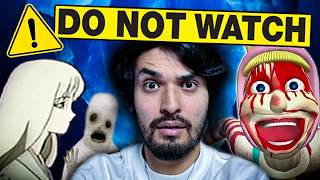
AI Summary
This video explores the deepest, most obscure, and disturbing layers of the 'anime iceberg,' focusing on entries that are rarely discussed or known. The creator provides a rapid overview of higher layers before diving into the bottom tiers, covering short films, experimental works, and lost media. The goal is to explain why these shows exist and why most viewers will never need to watch them.
Chapters
The video focuses on the bottom layers of the anime iceberg, covering obscure and disturbing shows that most people will never watch.
The creator speedruns higher layers: Goku (normie), JoJo (beginner weeb), Violet Evergarden (confident fan), and deeper layers like fan translators and industry veterans.
A 20-minute short film based on Kafka's 'A Country Doctor,' directed by Nakamura Koji. It's a surreal, disturbing experience with crude but detailed animation.
A 1973 erotic psychedelic film from Mushi Productions, part of the Animerama trilogy. It's a commercial failure that led to the studio's bankruptcy, but is visually stunning and thematically heavy.
A 6-minute short by Yoshiro Yasiro, made as a university project. It's weird and confusing, with influences from the game Myst.
A 2-minute indie animation by Nishi Daisuke, promoting an art exhibit. Cute and wholesome, but not much substance.
A CGI children's series (2000-2003) known for its off-putting visuals and disturbing content, often called a 'trauma anime.'
A compilation of seven short films by renowned directors like Masaaki Yuasa and Shinichiro Watanabe. Each film is unique and showcases the directors' styles.
A 3-episode CGI OVA about a sex robot in a post-apocalyptic city. Written by Chiaki Konaka (Serial Experiments Lain), it has a dark sci-fi story but poor visuals.
A brand of interchangeable figurines that spawned a 2-episode OVA. The anime is a generic mid-2000s slice-of-life advertisement.
An independent short by Wada Atsushi, focusing on the Japanese concept of 'ma' (tension between movements). The creator found it unremarkable.
A 2-episode OVA from 1987, described as the anime version of The Twilight Zone but more convoluted. The second episode was directed by Mamoru Oshii.
An 8-minute short about a boy and girl in a desolate city. It's a touching story about loneliness and connection, with no dialogue.
A 1-minute short about a vending machine prank involving sweet red bean soup. Simple and funny.
An experimental film about a cat in space, with a bizarre narrative involving cults and reincarnation. It's visually trippy and has a great soundtrack.
A 3-minute short that is actually a JAV (Japanese adult video) involving fish and stop motion. The creator questions why it's on the iceberg.
An avant-garde animator known for erotic and psychedelic shorts. Her highest-rated work is 'What Happens Before War,' an anti-war animation.
A late 80s mecha OVA that is a proto-Evangelion clone. It has psychological themes but is ultimately forgettable.
A 1993 film that is a dumbed-down version of Nausicaä. It has poor audio mixing and a convoluted plot involving Atlantis.
A children's anime about koalas, created during the 'koala frenzy' in Japan. It aired on Nickelodeon in the US.
A 1975 adventure comedy series by Tatsunoko Productions. It's a silly, episodic show that was a huge success in Japan.
A 1990s children's anime about hobbit-like creatures on Coral Island. It features a young Sakamoto Maaya's voice acting debut.
An obscure Tezuka manga-turned-anime about a dog searching for his parents. It was the last series produced by Mushi Productions before bankruptcy.
A two-episode OVA often called one of the worst anime ever. The creator found it boring due to excessive exposition.
A lost 10-minute OVA from 2006. The creator could not find a copy and only found a Japanese website selling the DVD.
Another lost media entry: an 8-minute omnibus animation from 2012. The creator found only a defunct website and a trailer that requires Flash.
Covers early Japanese animation like Namakura Gatana (1917) and Katsudo Shashin (1907-1912). Also mentions Momotaro's Sacred Soldiers (1941) and Hakujaden (1958).
A 1962 avant-garde short by Yoji Kuri, considered lost until 2021. It's a combination of animation and live-action, dealing with dementia.
A 1986 OVA of short gag skits featuring a cute creature. It's charming and well-animated, still funny today.
A 1987 avant-garde film created on an MSX2 computer. It's a proto-vaporwave aesthetic experience with a pixelated, trippy style.
A 2003 short that evokes a strange, curious sensation using supernatural elements and Japanese summer themes. It feels like a fever dream.
A 2012 stop-motion claymation short about a meatball-like creature created from angel urine. It's weird and boring.
A collection of short films by Japanese animators reinterpreting the Frank comic strip. The creator found it weird for the sake of being weird.
A 2-minute flip-book style morph animation by Japanese comedian Tekken. It's a showcase of his animation skills.
The godfather of the Japanese Animation Association, his early works are trippy and experimental. Examples include 'Headspoon' and 'Comics.'
An experimental horror short by Kurosaka Keita, featuring a faceless girl and disturbing imagery. The creator calls it trauma-inducing.
A 10-minute Korean stop-motion animation made entirely with noodles. It has a touching story and music by Sigur Rós and Gorillaz.
An obscure independent creator whose works are mostly lost or unremarkable. His highest-rated short is 'Hakumakua' (Daytime Maze).
A 1-minute music video for Space Shower TV, featuring trippy morph animations.
A leading figure of Japanese pop art and psychedelic art. His works are overly pretentious and faux-deep, with many appearing in the creator's worst anime list.
A modern abstract animator. His highest-rated work is 'Biblomania' (6.93 on MAL). 'Wonder' is a 365-day project with 8,700 hand-drawn pictures.
A 4-minute short by Okamoto Tadanari, winner of the Noburō Ōfuji Award. It's an anti-establishment rant about modern society.
An independent animator known for sketchbook-style black-and-white animations. 'The Place Where We Were' has an onion-skin effect.
A 2-minute short that is 95% blue flashing images. The creator reads a review that gives it a 7/10 despite criticism.
A 90-second tech demo by Adobe Creative Cloud Japan, showcasing various animation styles using Adobe products.
A YouTube channel for student animations. The most viewed is 'People Who Are Eating' (11 million views).
A 5-minute short by Geidai alumnus Okada Dior, featuring morphing black figures to a piano track.
A 1968 short about the Hiroshima bombing. It contrasts uplifting music with disturbing imagery, creating a powerful anti-war message.
A Geidai student film about menstruation taboos in ancient Japan. It's a disturbing PMS nightmare with ghostly imagery.
An animator from the 1960s known for weird shorts like 'Scrap Diary' and 'Fetish Doll.' Many appear in the creator's worst anime list.
A 3-minute morph animation by Imazuyosski, depicting the origin of humanity and the cycle of life. It's the image used for the lowest iceberg layer.
A long-running NHK children's TV program (since 1961) that plays short songs. It's a huge part of Japanese childhoods.
A short found with only 45 views on YouTube. It resembles a CAT scan with Joy Division aesthetics. The creator felt it was a waste of time.
A 3-minute short about hands, made by a creator with a finger fetish. He used the art excuse to collect hand photos.
A rare horror anime from the 1970s-80s, considered lost until 2023. It's a 45-minute social commentary on authoritarian school systems, ending in a student massacre.
An infamous lost media anime about girls trapped in a bathroom committing suicide. The creator believes it's an urban legend, as no proof exists after 10+ years of searching.
The creator argues that 'deep web anime' is mostly a myth. Disturbing anime like Genocyber are easily accessible on the clear web.
The video concludes that while many obscure and disturbing anime exist, the concept of 'deep web anime' is largely overblown. The creator encourages viewers to explore the mentioned works if curious, but warns that most are not worth the effort.
Clickbait Check
85% Legit"The title promises disturbing bottom layers, and the video delivers exactly that with detailed coverage of obscure and unsettling anime."
Mentioned in this Video
Nakamura Koji
person
Osamu Tezuka
person
Mamoru Oshii
person
Chiaki Konaka
person
Sawako Kabuki
person
Taku Furukawa
person
Keiichi Tanaami
person
Mizui Mi
person
Tadanari Okamoto
person
Noyuki Suji
person
Norihiro Ihara
person
Hiroshi Harada
person
Patreon
link
Persona 5: The Phantom X
link
Geidai Animation YouTube Channel
link
Limitless Paradise on YouTube
link
Study Flashcards (10)
What is the name of the 1973 anime film that was the third entry in Mushi Productions' Animerama trilogy?
medium
Click to reveal answer
What is the name of the 1973 anime film that was the third entry in Mushi Productions' Animerama trilogy?
Belladonna of Sadness
09:51
Who wrote the story for Malice@Doll and also wrote Serial Experiments Lain?
hard
Click to reveal answer
Who wrote the story for Malice@Doll and also wrote Serial Experiments Lain?
Chiaki Konaka
28:02
What is the name of the 1987 OVA series described as the anime version of The Twilight Zone?
medium
Click to reveal answer
What is the name of the 1987 OVA series described as the anime version of The Twilight Zone?
Twilight Q
32:26
Which 1962 avant-garde short by Yoji Kuri was considered lost until 2021?
hard
Click to reveal answer
Which 1962 avant-garde short by Yoji Kuri was considered lost until 2021?
Aoi (Aochi)
01:15:55
What is the name of the 1968 short film about the Hiroshima bombing?
medium
Click to reveal answer
What is the name of the 1968 short film about the Hiroshima bombing?
Kage (Shadow)
01:46:23
Which lost media anime from the 1970s-80s was found in 2023 and is a social commentary on authoritarian school systems?
hard
Click to reveal answer
Which lost media anime from the 1970s-80s was found in 2023 and is a social commentary on authoritarian school systems?
Limitless Paradise
01:55:59
What is the name of the infamous lost media anime about girls trapped in a bathroom?
hard
Click to reveal answer
What is the name of the infamous lost media anime about girls trapped in a bathroom?
Saki Sanobashi (Go for a Punch)
02:03:49
Which anime studio produced Belladonna of Sadness and went bankrupt the same year?
medium
Click to reveal answer
Which anime studio produced Belladonna of Sadness and went bankrupt the same year?
Mushi Productions
14:05
What is the name of the 1975 adventure comedy series by Tatsunoko Productions?
easy
Click to reveal answer
What is the name of the 1975 adventure comedy series by Tatsunoko Productions?
Time Bokan
57:58
Which animator is known for works like 'Headspoon' and 'Comics' and is the representative director of the Japanese Animation Association?
hard
Click to reveal answer
Which animator is known for works like 'Headspoon' and 'Comics' and is the representative director of the Japanese Animation Association?
Taku Furukawa
01:27:37
💡 Key Takeaways
Belladonna of Sadness Description
The creator describes the film as 'a literal 90-minute nightmare' and compares it to Pink Floyd's The Wall, highlighting its unique psychedelic and erotic style.
09:51Poppy the Performer's Trauma
The creator admits that Poppy the Performer triggered a childhood trauma he didn't know he had, calling it a 'trauma anime' with disturbing visuals.
17:21Limitless Paradise Discovery
The creator details the discovery of this lost media anime after years of searching, calling it a 'fantastic piece of Japanese social commentary.'
01:55:59Full Transcript
[00:02] the anime subreddit titled Updated Anime Iceberg by Reddit user Niss Niss Nissy probably seen a million and a half of these kinds of videos on YouTube
[00:15] already, especially those dealing in the anime medium, but I feel that most people when watching these iceberg explanation videos really only care about like the bottom tiers because let's be real, everyone and their
[00:29] grandmother already knows about Dragon Ball and One Piece and Death Note and even the most pseudo intellectual weebs on the dark crevices of the internet could tell you a thing or to about quote unquote obscure middle layer anime like
[00:45] Monster or Vampire Hunter D or an Astro Boy like this should not be obscure Tesuka Osamu rolling in his grave. So instead, I'm going to do myself and every other massochistic bastard who clicked on this video a solid and today
[01:02] only cover the deepest and dankst and probably most disturbing layers of the anime iceberg and tell you a little thing or two about why these shows exist and why you most likely will never have to go out of your way to watch them
[01:17] yourself. because I'm about to do all of that for you and present it in a neat probably 2hour long video package. So get on your spelunking gear and turn on your cave lights because this is the disturbing bottom of the anime iceberg
[01:33] explained. Hey boys, I'm on the road right now and I know you're about to throughout this very long video. But before we do, let me tell you about great deal of time on and never get bored of. It's the sponsor for today's
[01:47] video, Persona 5: The Phantom X. P5X is the latest installment to the Persona video game franchise and the first mobile and first live service title in the Persona franchise as well. It takes place in the world of Persona 5, but
[02:01] Thieves. And if you've played the original Persona 5, then you'll be happy to know that the story for P5X is also different. In P5X, we now have a world where desire is being sucked away from people's souls, and the Phantom Thieves
[02:15] have to bring back the light of desire. It brings back that classic Persona 5 turnbased combat, but now with even more strategic options than before. We also characters as well. We have a protagonist, Wonder Vel, which is this
[02:31] certain humans. We also have Wond's classmate like Closer and an entirely new concept to the Persona series, Phantom Idols, which basically allows you more options than ever before to customize your party for battle. And
[02:45] best of all, even though P5X is a mobile game, you can also play it on PC as well. So, regardless of if you want to play it on mobile or on PC or both, check out Persona 5: The Phantom X down in the description below. Checking out
[02:58] the game with my link especially helps me out and the channel out as well so I can make bigger, cooler videos like this one. A big thank you to Sega for sponsoring today's video. Now, let's move on to the show. Now, before we do
[03:10] begin this deep dive into the obscure and unknown waters of the weeb ocean, let me give you a quick little speedrun of the other high layers in this iceberg to give a little more context as to what kind of sea monsters actually dwell at
[03:26] the bottom of this ocean. The first Goku layer is what I like to define as the I'm not necessarily a huge fan of anime, but these shows are my childhood, so I still kind of [\h__\h] with it layer. You know, the shows that most people will
[03:40] probably define as the normie shows, and knowing them will get you absolutely zero street cred in certain internet forums. But it's just enough for them to be part of the basic anime conversation. Like, if you ask an average internet
[03:54] dwelling weeb, these people are not even standing at the start line. They're just a spectator in the bleaches pretending like they're part of the actual experience. The next JoJo layer is the FisherPrice My First Weeb Experience
[04:07] layer, where now you can finally say that you like anime enough to go beyond the Fortnite roster of shows and actually start watching a bit of variation in the medium, but you're still not quite ready for anything that
[04:20] is rated lower than a seven on my anime list. The Violet Everg Garden layer after that is what I like to call secretly my favorite content creators are annotubers layer where you not only were most likely born before the year
[04:34] 2000 and somehow still haven't fallen off of your enjoyment of these Japanese say you can start to confidently call yourself an anime fan without feeling any kind of embarrassment because the self-confidence in the amount of
[04:48] knowledge you have on the medium is becoming paramount. the fully cooly layer. Below that is the my secret second job is writing reviews on my anime list layer. At this point, you've pretty much made anime and everything
[05:01] adjacent to it close to your entire personality, and it's starting to get to the point where you're scaring the hose away from your sheer lack of open-mindedness to anything that is not Japanese animation. The lane layer below
[05:13] that is the I write fan translations as a hobby layer. You are now balls deep into this weird and wacky world of Japanese cartoons. So much so that you are now on your fifth attempt at a 30-day duallingingo streak, have
[05:28] probably applied for the Jet program at least once and failed miserably and fantasize about having a cute Japanese wife in your humble abode. And finally, we come down to the ganguo layer, or as I like to call it, the I used to work in
[05:42] the anime industry, you know, layer. Contrary to the name of this layer, however, you don't actually have to have had worked in the anime industry. Maybe Instead, you most likely had to have been born before 1990 and instead had
[05:56] the experience of purchasing VHS tapes of obscure Japanese cartoons from the internet and spent countless days in your basement watching these shows with a translated transcript of the dialogue in your hand that you found from a
[06:09] random internet forum to try and decode these funny Japanese words into something that you can understand. And yet, after all of that, as you can see from this image right here, there are still a few more layers of this iceberg
[06:23] that go Ultra Instinct or go even further beyond. So, from here, let's start breaking them down bit by bit. Now, mind you, some of these shows on this iceberg I actually already covered quite extensively in my 100 worst rated
[06:38] anime ever video. So, the ones that actually appear on this video, I'll be skipping over entirely in this current video that you're watching right now. So, if you want my insightful thoughts into the ones that I'm skipping over,
[06:51] right, that you can click the card up there, links in the description, you get how it is. All right, without any further ado, though, let's dive into the further ado, though, let's dive into the pits of the anime iceberg lands. Okay,
[07:04] what I'm going to assume is talking about this show, Einstein, or Inaka Isha as it's called in Japanese, which I am a lot more fond of as a language than German, I think, which is a 20-minute short film based on the short story
[07:19] Country Doctor by none other than famous German surrealist author France Kofka. You know, just in case you're a little skeptical on how obscure these lower fans, this ain't your waifu we're
[07:32] enough, you can actually watch the entirety of this on YouTube. And uh let's just say uh it was probably the weirdest acid trip of a short film I've seen in a while. The story is told from the perspective of this country doctor,
[07:45] obviously, who is asked to treat a sick patient in the middle of the night, but it doesn't end up like your standard visit to your local GM. Instead, it turns into the most existential nightmare scenario that makes you
[07:58] happening in the story is real or part of someone's imagination. Now, if you've read any of Kafka's past works, you'll know that this is a pretty standard practice. But when it gets turned into
[08:10] animation, it really brings to light just how absurd and disturbing all of the Kafka-esque imagery really is. And listen, uh, I don't want to be that guy right from the beginning of this video here, but, uh, I weirdly kind of enjoyed
[08:27] this one. I mean, look, I've read a few of Kafka's works in the past and enjoyed them to varying degrees. And while I had never actually heard of Country Doctor here, I knew that it was going to be a creepy and unpleasant experience. But
[08:40] nothing could have actually prepared me for whatever the [\h__\h] this was. The animation is crudely handdrawn, but incredibly detailed at the same time as it warps and weaves like a really bad mushroom trip with some truly bizarre
[08:55] and absurd imagery. And the combination of all of that with the unsettling music and the voice acting and the sound effects makes for easily the creepiest yet overly confusing anime experience you'll most likely ever have. The short
[09:09] film was created by a man called Nakamura Koji, a Japanese animator who was heavily inspired by many European animators of his time and actually became quite a success story in the world of underground animation with this
[09:22] particular short film winning a number of prestigious anime awards and he even had another short film he made which was nominated for an Academy Award for best nominated for an Academy Award for best animated short film back in 2002. Bottom
[09:36] line, weird and trippy animation with an even weirder and creepy Kafka-esque story. So, if you're not into your absurdest literature, uh, then then why not check this out? Belladona, also known as Bellaona of Sadness. This is an
[09:51] known as Bellaona of Sadness. This is an anime film from 1973 produced by Mushi Productions, which is the anime studio founded by the legendary father of manga, Tzak Samu. It's the third and final entry in Mushi Productions
[10:05] final entry in Mushi Productions adultoriented trilogy called Anime Rama. The other two films being a thousand1 nights and Cleopatra respectively. Now personally being a huge fan of Tzuka, I'm almost ashamed that I wasn't even
[10:18] aware of this particular movie up until now, let alone this production studio that he supposedly founded. But hey, I guess uh that's what these icebergs are for, right? You learn something new every day. So, you're probably thinking,
[10:31] what does an adultoriented Tesica film from the 70s vibe like? Well, I think the best way to explain all of that is by taking a look at some of my reactions
[10:43] to me watching this movie for the first time. I see. euphemism. Oh, that's a giant penis. Every cut of
[11:00] this film could be an album cover. It's really really pretty. This is like I'm I'm so glad I'm not on acid right now cuz I would actually be freaking the
[11:12] now cuz I would actually be freaking the [\h__\h] out. I can absolutely see why this By the way, if you want to see some of my full reactions to some of the more notable and weirder entries in this video, and trust me, there's going to be
[11:25] quite a handful of those in this video. You can check all of them out uncut and uncensored by going to my Patreon links in the description below. Not only can definitely cannot show you on the internet or on YouTube for that matter,
[11:39] in the process. So, if you want to see more content like this, then head on over there and support your boy. Thank you. Love you. Now, right off the gate, I will say that this might honestly be one of the coolest yet still trippiest
[11:53] experiences I've had with older anime. I wouldn't so much call this an anime film as more of like a contemporary art piece that deals with controversial topics like misogyny and moral compasses and rebellion and religion in very
[12:08] unorthodox and let's just say um uncosher ways. I'd say the best comparison to this movie would be Pink Floyd's The Wall. You know, the film adaptation of the band's seminal 1980 album. Great album, by the way. Please
[12:21] listen to it. in that both movies use songs and music accompanied with these trippy visuals to aid in not just the narrative but also in the emotion one should be feeling towards a certain character or moment or plot twist. I
[12:35] that it's clearly inspired heavily from the ' 60s psychedelic movement, but adds a lot more uh erotic and grotesque flare to make a truly creepy yet still awe
[12:47] inspiring animation experience. Oh, and for those of you who care, the movie, by the way, is loosely based on this particular book here, Jules Michellet's particular book here, Jules Michellet's 1862 non-fiction novel, Satanism and
[12:59] Witchcraft, which I am not going to even pretend I know anything about. Listen, if there's anything that scares me more than pre-900's literature, it's pre-1900's French literature. Also, apparently, this is the only film in
[13:12] that anime Rama trilogy I was telling you about that wasn't written or co-directed by Tzuka. So maybe that explains why this is a literal 90-minute nightmare. But again, I'm not going to pretend to hate on this because it's old
[13:26] and it's weird and it's deep in the bottom layers of the anime iceberg because I'm not going to lie, I was absolutely fascinated with this film. Nay, dare I say enjoyed the experience that this film gave me. I mean, look,
[13:39] some of the scenes do drag out a little bit, especially the musical numbers and the trippy psychedelic fever dream sections, but you got to admit, this is a pretty uniquely gorgeous film for something that was made over 50 years
[13:52] ago. Like legit, you could take any still frame from this movie and it could end up being a really cool album cover that just hits stiff. But it is also sad and slightly hilarious to think that this film was such a commercial failure
[14:05] for Mushie Production that they officially went bankrupt by the end of that year, ultimately pushing this film and pretty much the entirety of Mushi Productions catalog into obscurity. Honestly though, this just kind of makes
[14:17] me want to go check out those other movies that they made. I don't know. Don't call me a goona just because it's like an erotic film, okay? It's it's it was actually really good. Trust me. Kikumana. This is a six-inute short
[14:30] Kikumana. This is a six-inute short anime film about uh well I'm not too sure actually. In fact, not even its sole creator, Yoshiro Yasiro knows what Kikumana is actually about. Wonderful. According to Studio Rocker's
[14:46] Kikumana was made by Yoshiro back in 2001 during his time at university with the sole intention being that he quote wanted to make something with the spirit
[14:58] of a body of work. Okay, long story short, basically this is his first attempt at fully making something that resembles an anime and experimenting with things like scene flow, early 2000 CGI, and shot
[15:14] composition, ultimately making it more of a bunch of sketchbook entries than an actual anime work. Regardless of all this, however, Kikamandanda ended up actually winning multiple awards and set Yoshi's career basically into full
[15:28] motion. In fact, if you actually decided to go down this anime iceberg from top to bottom in order, you would have actually already watched Yoshi's most well-known work just one layer above. This one right here, Pale Cocoon, a
[15:43] beautiful 20inute anime short about the importance of the Earth and its irreplaceable value that not even technology can replace. It's actually a recommend you check it out. On the other hand, Kikumana is uh just weird. Simply
[15:58] put, it has a lot of confusing elements that make me feel kind of uneasy and uncomfortable while watching it, but I just can't really explain to you why it makes me feel that way. Apparently, the biggest influence of Kikumana was the
[16:13] legendary point andclick video game Mist, which I actually grew up playing definitely feel some sense of kinship in that regard. Shout out to all the Mist lovers in the audience. all all all seven of you. But yeah, if I had to sum
[16:26] up this entry in one word, um, weird, which I'm sure will not be the last time I say that in this video, recalling monochrome. From what I can gather, this is a 2minute long indie animation project by a university student called
[16:40] project by a university student called Nishi Dioske under the name Disaster Production, which according to this Crunch article back in 2012 was supposedly made to promote some kind of art exhibit. I mean, look, the art style
[16:53] is pretty cute, and the plot, if you can call it that, is basically if you just replaced Mario in Paper Mario Color Splash with instead a cute anime girl who is weirdly really good at drawing with a heavy splatling from Splatoon.
[17:07] It's cute. It's wholesome. I hope the art exhibit that this was attached to went well, because that's really all I can tell you about this, and I honestly have no idea how it ended up in this anime iceberg at all. Poppy the
[17:21] performer. You know when you ask people who have no idea about what Japan is actually like in real life on how they view Japanese culture and they're most likely very quick to point out all of the lol random trippy [\h__\h] balls to the
[17:36] walls weird stuff. You know, like your LSD dream simulators and your really unhinged Japanese commercials that make no sense. Well, Poppy the performer over here might be another reason why that stereotype exists. Because what in the
[17:50] stereotype exists. Because what in the holy mother of did I just watch? To put it simply, Poppy the Performer was a threeseason, 29 episode CGI animation series that was aimed towards children that ran on the Japanese satellite TV
[18:05] station Kids Station between 2000 and 2003. As you can see from the chart, it is the face of this particular layer in the anime iceberg because this is no
[18:17] No. In fact, within the Japanese internet culture, Popular Performer here has been called a trauma anime and an anime that quote should never be searched online due to its incredibly off-putting visuals that have aged like
[18:33] off-putting visuals that have aged like spoiled milk and its many times that it unnecessarily uses of things like violence and unintentional visual horror. It's basically the equivalent to western children's shows
[18:47] like the Teletubbies where parents today look at it and go, "Jesus Christ, they showed this [\h__\h] to kids. What What were they thinking?" I actually managed to find the entire catalog of episodes on YouTube and tried to watch through it as
[19:01] you can see if you again go to my Patreon links in the description. But uh yeah, I just I I just couldn't do it. Like, not to brag or anything, but I'm usually pretty unfazed by these like off-putting and disturbing anime series.
[19:14] I mean, God knows I've seen so many different variations of this just doing videos like this on my channel, but I don't know, man. Um, Poppy the performer here triggers a childhood trauma that I didn't even know I possessed. The story,
[19:31] of mainly two characters. Uh firstly, we have Poppy, our titular character, and have Poppy, our titular character, and this weird wolf man thing wearing a mask that changes to a bunch of different emotions, which I later found out in the
[19:46] show is called ketamono, which is literally the Japanese word for beast. And uh if I were to summarize every episode, uh it goes something like this. Ketamono and Poppy do some kind of activity together. Uh, Kenamono does
[20:02] said activity better than Poppy ever could. Poppy then becomes incredibly jealous of Kenamono in one way or another and decides that it's time to bully and torture and do all sorts of absolutely terrible things to this poor
[20:19] child right here until he's basically put in his right place. Moral of the story, at least from how I am gathering it, is if someone is doing something better than you, bully them until they stop. Wow, what a great message to teach
[20:34] disturbing part of this entire series is that there are so many elements thrown in just kind of randomly that are either really disturbing or just outright terrifying. Like Poppy's facial expressions that randomly turn into this
[20:49] horrific thing. uh these disturbing forms of body horror and eerie sound effects and and this music that is placed in like these randomly unnecessary situations that make a rather harmless scene on the surface
[21:03] vibe like an analog horror YouTube short. I mean, first and foremost, is it even fair to call this an anime? I have absolutely no idea what series creator Master Duichi was thinking when he made this show, but all I can say is that I
[21:17] couldn't be happier that it's over and no longer on television and instead has fallen into the darkest corners of anime obscurity. No more childhood trauma from Poppy the Performer. Throw the [\h__\h] in jail so we can never see
[21:32] him again. Genius Party. This is kind of a unique entry as it's basically a compilation work of seven anime films written and directed by seven geniuses of the anime world. Hence why it's called Genius Party. Now, that might
[21:46] seem a little egotistical of a title at first until you realize who these seven supposed geniuses actually are. You have a few lesserk known yet still notable and talented directors such as Fukushima Artsko who was an active key animation
[22:00] director for classics like Akira, Ashanjour and the latest Jibli movie. You got Kimra Shinji who was a prominent art director responsible for shows like Doro Hidoro, Kek Kai Sensen and Kaiju Number Eight. And we've got Nimra
[22:13] Hideki, who was a key animator for amazing shows like Perfect Blue, Vampire Hunter D, and directed the elusive '90s Jojo OVAs. So, those are already impressive as is, but then we get some serious giants in the animation world
[22:27] that even some of the more surface level anime fans that are stuck on the Goku layer up here would know to some degree. Like for example, we've got Kawamorei Shooui who just so happened to create this tiny tiny underground anime that
[22:43] was called Macros and Esaflon and is basically responsible for not only every basically responsible for not only every transforming robot trope in media from that point onward, but also created one Lin Min, which if you guys don't know is
[22:58] credited as being the first ever virtual idol in existence. Basically, if you love Transformers and you love Holive, none of these would exist without this man. So, please thank him appropriately. You also have a man here called Masaki
[23:12] favorite anime directors of all time, but is also responsible for some seminal shows like Ping Pong, Tatami Galaxy, and Devil Man Crybaby. Oh, and of course, how could I be so rude? Uh, let's not
[23:25] forget to mention this small indie director right here by the name of Watanab Shiro. you know, the guy who brought us Cowboy Bebop and Samurai him, but he's kind of a big deal in the world of anime.
[23:39] >> So, as you can see right here, uh, we've got a pretty sizable lineup of creators that I wouldn't necessarily be mad to call geniuses to varying degrees, but what kind of party did they manage to conjure up? Well, let's just say uh this
[23:52] isn't your average sweet 16 because there's a a lot of weird [\h__\h] happening at this party. We got a real BaskinRobins situation here where we get every possible flavor of animation from some bizarre out of the world
[24:05] psychedelic music videos to some of the most eyeopening philosophical concepts about the circle of life and the journey of self-discovery. While each movie is completely unrelated to each other narrative-wise, they all bring an
[24:19] incredibly unique take on animation and storytelling that if you know anything about each of the directors at work here, really show off their particular style and vibe to the fullest extent. Look, in my opinion, these films are all
[24:33] great, but probably a bit of a steep slope for a first timer to anime. Uh the the appreciation for this works will probably be better felt if you're aware of these director's past works and styles. So here you go. Here's all the
[24:45] notable works that I just mentioned earlier. So go go check those out and right. Rain check. Malice stole. This is a 3 episode CGI anime OVA whose plot is um interesting to say the least. It revolves around Malice, who is a sex
[25:02] robot living in a post-apocalyptic humanless city, who after being viciously attacked by an unknown tentacle monster, realizes that she has now become a human and can pass on her humanity onto other similar robots by
[25:18] having sex with them. Already narratively, you might think it sounds a Ghost in the Shell. Except the biggest difference is that this came out way after Ghost in the Shell and instead was directed by a man named Moltoaga Ketaro,
[25:33] who unsurprising to anyone used to be a renowned director of a bunch of hentai series. This fact becomes especially apparent after you learn the titles of the three episodes. Starting with episode one, Hard Fresh, which I'm not
[25:48] sure, is it supposed to be like like flesh and they just got a little stereotypically Japanese or am I just a little racist? Episode two has the little racist? Episode two has the incredible title uh oral infection after
[26:01] Malice, the main character here, realizes that her kiss can directly cause machines to turn into humans just like herself. And the third and final episode being it's called it's called perverted
[26:16] it's called it's called perverted orgasm. first of all is not proper English at all, but is still a [\h__\h] amazing it, maybe it's supposed to be like a play on words on the word orgasm and
[26:31] organism, which if it is absolute genius. Uh, where was this man's inclusion in Genius Party? Now, I did watch the entire series and actually one on my Patreon, which you can go check out. And I will say that I uh I I
[26:48] think I was misjudging this one. I I weirdly enjoyed this one way more than I thought I would. This is a really dark and twisted look at the post-apocalyptic sci-fi world that reminds me a lot of series like Erggo Proxy and Technolyze,
[27:05] which I know is incredibly pretentious to like, but [\h__\h] you, man. I like them. All right, I'd say the only downside to this series is in its visuals because uh I mean, just look at these graphics, man.
[27:19] They're just kind of bad. Look, I get it. This anime came out in 2001 when CGI was barely an established thing. But this looks like one of those, you know, those like banner ads you see on adult websites for those really crappy 3D
[27:33] hentai games that's basically not a hentai game, but instead an elaborate cosplay of 20 viruses dressed in a trench coat. The story, however, is unique and will definitely give a rush of excitement to those who love their
[27:47] dark sci-fi apocalyptic stories. But it is also just a visually difficult series to sit through. Oh, and here's the kicker that I found out after watching it. Uh, Malistol here was actually written by a woman called Konaka Chiaki,
[28:02] which I thought, huh, that sounds kind of a a familiar name until I realized of a a familiar name until I realized it's the same woman who wrote Serial Experiments Lane. Yes, that's Serial Experiments Lane. One of my favorite
[28:14] anime series ever made. Oh, and here's another fun fact just to end this entry off. Uh, she also single-handedly wrote the story to Digimon Tamers.
[28:26] You think you know someone and then they pull this [\h__\h] on you. Pinky Street. Okay, so this is kind of like a weird entry as technically speaking, it's not really an anime at all. Pinky Street actually refers to a brand of Japanese
[28:41] plastic figures developed by Baby Sue and manufactured by the Vance Project, which I'm sure a bunch of millennials watching this video just got a flashbang of nostalgia for. The biggest selling point at the time of their release was
[28:55] these interchangeable parts on the figurines, which was a huge deal back in 2003 because this concept was invented 3 years before the introduction of Nenderoids. You know, the thing that most people associate anime figurines
[29:09] with interchangeable parts with. They had this lineup of original characters to start with and then after that extending the catalog into a number of extending the catalog into a number of anime IPs like Ivangelon, Suzumi Haruki,
[29:21] Shakugan Lushana, and Fruits Basket. Jesus, I can feel my knees cracking just looking at this lineup. For all of you Gen Z kids out there who have no idea what a Suzumia or a Shakugan Noana is, uh, Pinky Street was the pinky [\h__\h] in
[29:36] the otaku streets back in the day, spawning so much success that it warranted not only a Pinky Street manga, a drama CD series called Showtime, two Nintendo DS games, and most importantly for today's video, a 2 episode OVA anime
[29:54] series. Look, I say all of this to say that the anime series is nothing special. It's basically your standard mid2000s comedy slice of life with that set on a hana yomeesque studio gonzo look to it that screams I'm a
[30:08] 30-year-old anime fan now. Oh god, my knees. Which then uh weirdly halfway through the episode transitions into this like mid2000s CGI anime every time a character gets isekaied into the Pinky Street figurine world. I mean, look,
[30:23] basically all this anime is is an advertisement on the mainline Pinky Street figures and how awesome and cute being a Pinky Street collector is in the minds of those who are way too deep into said rabbit hole. And and look, all of
[30:36] this must have worked to some extent because the brand is still alive and you don't care about Pinky Street as a concept or a brand, all this is is just another generic mid-2000s slice of life OVA. And let's just say the market for
[30:52] that is getting uh a little more niche by the month. Yellow. Okay. So, finding information about this particular entry here was pretty difficult. Uh, not just here was pretty difficult. Uh, not just because of its generic colorbased title,
[31:05] but from what I could find, Yellow or Kironto is an independent animation short created by one Wada Atsushi who according to his own website quote began to create the short animation works in self-study from 2002 like to make
[31:22] comfortable movements and is always thinking about the Japanese traditional concept called ma, the tension produced between movements.
[31:34] not to throw it all away because it's just another artsy fartsy animator type [\h__\h] because I I try I try to respect all forms of art regardless of how I personally feel about it or not, but this one
[31:46] this one ain't it. Look, he supposedly won a number of pretty prestigious awards for his short films at various film festivals. And this particular yellow anime he made has a deeper meaning to it, which look, I I fully
[31:58] meaning to it, which look, I I fully understand, but is it necessary to watch as an anime fan? I unfortunately have to say no to that dog. I mean, look, if you like your strange avantgard animations,
[32:11] I guess go and give Yellow and all of his other short animations a go. Uh, but if you're just here to see me freak out about the weird [\h__\h] on this iceberg chart, uh, just stick around because it's just going to get worse from here.
[32:26] it's just going to get worse from here. Twilight Q. This is a 2 episode OVA series from 1987 that is basically the anime version of the Twilight Zone, but if it smoked way too much DMT. There are a lot of pieces of media that have
[32:41] incredibly convoluted stories that make you feel like a dumbass for not fully comprehending. You know, think of movies like Donny Darko or Moholland Drive. Twilight Q over here is certainly another helping of that, trying to tell
[32:54] incredibly convoluted mysteries to the watcher without understanding the concept of holding the viewer's hand whatsoever. The first episode is called Time Not Reflection and follows the story of two girls at the beach. One of
[33:08] them finds an old camera and a whole bunch of extremely convoluted time travel and time paradox [\h__\h] ensues. And when I say convoluted time travel and time paradox [\h__\h] I I really mean convoluted. I mean this 30inut OVA here
[33:23] makes the time travel concept of Kingdom Hearts look simple, which is definitely first episode has completely lost you, the convolutedness gets even more out of
[33:35] whack in the second episode, which is called Mystery Article File 538. That it? This one, weirdly enough, is actually written and directed by legendary director Oshi Mamamoru, who famously directed Ghost in the Shell.
[33:50] And I'm I'm just going to say right now, this is the most Oshi pill mystery story I've ever freaking seen. You see this face I'm making right now during my reaction? Uh, this this is basically what I look like for 30 minutes straight
[34:04] to the point where I I was just starting to get a little bit pissed off. Look, maybe I'm just like mega dumbbrain and couldn't understand the story in any way, but I I can see why Twilight Q here is so far down on the anime iceberg
[34:18] because if you showed this to any anime newbie, they would instantly turn that [\h__\h] off before their brain blows out of their ear holes. Although visually speaking, yes, it is quite pretty with that classic8s anime look and vibe to it
[34:32] that works pretty well with all the trippy mystery and sci-fi elements strewn throughout. But the only thing that stops me from enjoying this fully is again its narrative elements, which makes me feel like I have a dent in my
[34:48] mystery stories and trippy narratives in your8s anime, give Twilight Cure a go. But if you don't want to feel like the biggest dumbass on planet Earth, maybe do yourself a favor and skip over this one. Shid. This is an independent short
[35:03] film directed by Kawasaki Kenji that's about 8 minutes long. And although the YouTube upload of this is at a maximum of 360p, this short gave me more of an emotional gut punch than most 12 episode anime I've seen today without the use of
[35:18] any dialogue whatsoever. The story follows a boy and a girl roaming around a desolate, lifeless city with only one purpose. The boy needs something to drink before he is parched to death. And the girl needs to sell some of these
[35:31] apples which she put love and care into growing. At least that's how I interpret it. uh there's really no explanation as to who these kids are and why they're in their respective situations, but I think this open-endedness is done on purpose
[35:46] to draw your own conclusions to what this story might be trying to say. Since interpretation after watching it, and it's that this short is telling a story about personal struggles and the overwhelming sensation that loneliness
[36:00] gives to those who are dealing with said struggles. After the girl gets beaten up for trying to sell her apples that have now turned gross and rotten, she starts to cry a literal river. Her emotions burst through the seams as she hits her
[36:15] breaking point. This river of tears then travels through the streets reaching the boy to which he proceeds to literally drink the tears out of her eyes. And although that sentence out of context is insane in context in this short, it's
[36:31] actually really touching and beautiful. I think it's supposed to be this idea that one person's struggles can possibly cure anothers and that by reaching out to others, a lot of things can be resolved all at once. The boy needed
[36:46] life while the girl needed love. And this concept is beautifully portrayed through this really short yet sweet animation. Although Chudity is near the bottom of this particular iceberg, the YouTube upload currently sits at 4.3
[37:01] million views with an overwhelming amount of positive comments. So, I'm not sure if it's just something that I've personally never heard of, but let's just say I became an instant fan of Kawasaki Kenjian's works. And this is
[37:14] actually a short I definitely recommend you all go check out. you all go check out. No, you dumbass weeb. Not Oshino. But we talking about oshiduko, which is the Japanese word for sweet red bean soup.
[37:29] It's a pretty common and love soup you can buy from stores and vending machines that people like drinking in the winter time because let me tell you firsthand, ladies and gentlemen, that [\h__\h] will warm your [\h__\h] up real quick. And
[37:41] everyone who's accidentally had oshiduko on a stinking hot Japanese summer day will tell you how painful that experience is. It's like pouring lava on top of a burning hot stove. This 1 minute short is the unfortunate
[37:55] stinking Japanese summer day because some troll before you tampered with the vending machine and you fell right into the obvious trap. Even through the lack of dialogue, the premise is simple and easy to understand and is pretty
[38:09] hilarious and it got a silly little giggle out of me. So, uh yeah, for any of you uh prankster channels out there, you know what to do on your next visit you know what to do on your next visit to Japan. Tamala 2010, also known as
[38:21] to Japan. Tamala 2010, also known as Tamala 2010, a punk cat in space. This is an experimental anime film made back in 2002 that is directed, written, and animated fully by basically two dudes who named themselves T or Trees of Life.
[38:38] Ooh, the mystery. For years, the anime film was shrouded in obscurity until October of 2024, where the licensing company Deaf Crocodile reissued the movie as a Blu-ray release, which I just so happened to rent out through
[38:53] YouTube's movies and TV channel to watch this in its entirety in full HD and also Legitimately, I didn't think the first time I would use uh movie renting on YouTube would be for for this, but here we are. As you can see from my various
[39:09] uh reactions uh while watching the film that you can go check out on my Patreon, the Avongard label really fits with this particular entry on the iceberg because man, what the [\h__\h] This was without a shadow
[39:25] what the [\h__\h] This was without a shadow of a doubt the trippiest, weirdest, most what the [\h__\h] inducing 90 minutes of anime I have ever seen. And if you've watched my previous videos, you would know that I have seen a lot of weird
[39:39] [\h__\h] I don't even want to call this an anime. You know, it's it's kind of the restaurant. You know what I mean? Because the movie flip-flops between Because the movie flip-flops between this Astro Boyesque 60s anime inspired
[39:52] black and white macromedia flash styled animation and this weirdly full HD animation and this weirdly full HD rendered ghost in the shell looking CGI animation. And all of this is intermixed with the the strangest narrative I've
[40:08] ever tried to wrap my puny dumb brain around for days now. So allow me for the next few minutes to try and explain the plot of this movie to the best of my knowledge and brain capacity. Tamala 2010 revolves around our titular
[40:23] character Tamala, an anthropomorphized cat who leaves her city from boredom and crash lands on planet Q and finds herself in a place called Hate City, a city overrun by dogs who have a very strong hatred towards cats. Naturally,
[40:39] there she meets another cat, Michelangelo, who I guess becomes like her boyfriend, lover, I'm not too sure. And then for some reason they're chased down by this sadistic maniacal police dog who you see
[40:53] torturing this naked mouse in all sorts of really inappropriate ways for god knows what reason. Who then ultimately chases down Tamala and Michelangelo, chases down Tamala and Michelangelo, captures Tamala, kills her, and eats
[41:08] her. Mind you, we're only halfway through the movie at this point. Time professor dog is giving a lecture about the true state of the galaxy, citing the
[41:20] postal service company Katty and Co. who by the way we establish right from the beginning of the movie is responsible for like 97% of the galaxy's GDP is actually surprise a coverup company for Manurva, an ancient cult that is set on
[41:36] spreading the word of destruction and rebirth. And it's basically the reason why the cat galaxy is completely [\h__\h] and why people or I guess creatures all over the galaxy are seeing these weird dreams of this cat robot looking thing
[41:50] which I guess explains like the weird CGI elements of this movie. And somehow all of this all of this is connected to Tamala because she is actually an Jesus Christ. She's actually an immortal one-year-old born in Orion's belt, who
[42:07] one-year-old born in Orion's belt, who is the secret mascot of Katy and Co. and the reincarnation of the goddess Manurva. Did I just do thing? Is this what crackheads sound like? Look, movies like this just make
[42:20] me feel like I'm going insane because if you actually watch the film, uh it is full of just really weird dialogue and imagery that almost has nothing to do with the actual plot. and uh is what I can only think a distraction from trying
[42:35] to understand the narrative because the creators were on some really strong [\h__\h] that I am afraid to search up on my browser. Now, if I can give any positive feedback to this movie, uh I will say that the movie is pretty well animated
[42:49] for a 2002 independent film that supposedly was only made by two people. And if this were ever uploaded to sites like Newgrounds back in the day, it legendary status. Also, uh the soundtrack is pretty good, which I heard
[43:03] is also composed by the two creators. Uh it weirdly goes really [\h__\h] hard. Like they they they did not have to cook this hard on a movie like this. If I keep talking about this movie, I I feel like I'm just going to go insane. So,
[43:17] all I'm going to say to finish off this entry is this. There are actually several sequels to this movie. And if you are just so curious to watch it, then I have a reaction to the full movie over on my Patreon. Uh fair warning, I
[43:33] breakdown in this video. So if you decide to join me on that adventure, I guarantee you will as well. Nami. All right, so I'm not going to lie. Um, I really struggled to find any information on this entry because when you search up
[43:48] Nami anime on Google, you're going to get a bunch of this like weird orange head anime girl who appears in some underground anime I've never heard of. Anyway, after what felt like a [\h__\h] eternity, I finally managed to find what
[44:02] eternity, I finally managed to find what I think is the Nami anime that the OP of the iceberg was intending for. Except after watching this 3minut short anime, I'm not sure anymore because this is absolutely
[44:16] positively not an anime in any stretch of the word. I cannot even show you most of this short because it's literally just a Jav involving fish and stop motion. Um, yeah, just just try and imagine that [\h__\h] Also, I had this
[44:31] really strange Slum Dog Millionaire moment after watching the first minute because I had this weird feeling that I've actually watched this before. And sure enough, when you go down to the comments on this video, uh there is this
[44:45] familiar YouTuber's name that is plastered all over. Uh my partner Aki actually made a video about this years ago. So, I guess if you want a more comprehensive breakdown of this quote unquote anime, then uh there you go.
[44:59] that out. Look, either way, this is not an anime. I don't know why it's on this iceberg. I never want to see it or talk about it again. Thank you. Sawako Kabuki's anime. Sawako Kabuki is a Japanese artist, illustrator, and
[45:13] animator best known for her various avantgard, erotic, and psychedelic animation styles, which have won multiple awards and gained international she's actually a pretty big deal in the world of animation. I mean, she's done a
[45:26] bunch of animation shorts and commercials for Adult Swim and Cup commercials for Adult Swim and Cup Noodle, the NHK, Amazon Music. However, I preface this by saying that we actually covered a number of Sako
[45:38] Kabuki's works in my last uh 100 worst rated anime ever video because unfortunately uh my anime list does not [\h__\h] with her works. like uh for example
[45:50] the wonderfully titled Anal Juke Anal Juice or uh my my personal favorite Summer's Puke in Winter's Delight. Lovely. So, since we've already seen her
[46:03] lowest rated works, I instead for this video decided to watch her highest rated works on my anime list, which just so happens to be a short called What Happens Before War, which is currently rated on my anime list at a pretty
[46:17] substantial 6.36, which for reference is around the same score as the first around the same score as the first season of Girls Bravo. You know, everyone's favorite anime from 2004. Remember what happens before war is, as
[46:31] the name might suggest, an anti-war animation based on the picture book of the same name made back in 2004 that was then aired publicly at an event hall in Tokyo for several days in 2015. Not only is the narrative extremely
[46:46] self-explanatory and obviously a sentiment that I and everybody else watching this video should agree with, but the animation really drives home the message in an interesting visual style that keeps it engaging. all throughout.
[46:59] And after watching it all, it's pretty obvious as to why this is Celico Kabuki's highest rated work. Uh probably because it doesn't have any egregious and disturbing eroticism and unnecessary nudity plasted all over it. Wow, who
[47:15] would have thought that not gooning is the correct answer sometimes? Regardless of all of the weird and disturbing shorts she's made over her career, it's obvious that Sako Kabuki's style is distinct and instantly recognizable for
[47:29] better or worse and has this sort of universal appeal that has led her to collaborate with so many big and notable brands and companies. So, you know what? Clap it up. Let's clap it up for for Good on you, Sico. Good on you, Sako.
[47:43] Keep being the weird little [\h__\h] that you love to be. Hades Project Zero Rhyr. This is a mecha anime OVA series from the late 80s that was directed by Hiro Toshki, the same man who directed all of the recent Baky anime adaptations,
[47:58] weirdly enough. And at first, I looked at this entry and went, "So, wait, what what is supposed to be interesting or unique about this? I mean, this just looks like your typical '8s Mecca anime that became another forgotten relic to
[48:12] time." And well, after watching it all, uh, it seems that my assessment was in fact 100% correct. Let me just tell you, this is just the most what the [\h__\h] ever anime I've seen on the entire iceberg so far, which I would argue, by the way, is
[48:27] a bigger sin than actually being terrible. You know, at least terrible things are memorable to an extent. The basic premise of Zero Rhyr follows our protagonist, Atsu Masato, who is illuminied away almost immediately by a
[48:40] government organization and is told, "Hey, you you're no longer a regular high school student like the rest of these freaking plebs. You're the last ditch effort to pilot the legendary Mecca robot Zerimer of the heavens."
[48:54] first, you know, being kidnapped and all. And uh his mood is ruined even more when he finds out that not only did his parents accept money from this organization and basically snitched on his scrawny little ass, but also these
[49:09] his scrawny little ass, but also these are actually not his real parents. Yay. In fact, it's revealed that he's actually just a test tube baby built in the labs and groomed to become the pilot of the Zero Rhyr from the very
[49:23] beginning. There's also this other girl called Miku who is already a part of the organization who helps Masa to come to terms with the fact that you know his whole life was a lie basically. And even though they barely ever interact in the
[49:36] actual show, she falls for him and they grow a somewhat like organic or what's supposed to be this organic romantic relationship with each other just kind of out of nowhere. Oh, also the uh bad guys in the show is a similar
[49:51] organization that is apparently the biggest organization in China. So yeah, uh I I don't know if there's any like weird geopolitical undertones to that decision, but uh I'm not even going to touch that with a 10-ft pole. Now, you
[50:05] probably heard all of that plot that I tried to describe and thought to yourself, "Huh, sounds awfully familiar." And that's because you're right. It's pretty damn similar to another show called Neon
[50:17] Genesis Evangelion. I mean, think about it. Akitu is essentially just a combination of Shinji and Ray put together. Uh Miku is basically just a younger version of Misato. And wow, look at that. They even have like a
[50:30] the time. This one's called Okie, but it's basically just I Gando. Also, much like in Evangelion, all the characters in Zero, including all of the villains, have a lot of psychological issues and emotional baggage that they struggle to
[50:45] deal with, which I would say is one of the more interesting and actually well-ritten parts of this entire OVA series. Also, uh I managed to find the series. Also, uh I managed to find the English dub of this OVA on YouTube, and
[50:57] uh you know what? It's surprisingly not as bad as you might expect, which was uh unexpected to say the least. Why did I say those terrible things to Meiku? >> Look, bottom line, uh, Zero Rhyr is just your average proto Evangelion '8s Mega
[51:10] OVA that you can finish in less than 2 hours. So, I would only really recommend this show if you truly have nothing else to watch or you just really really are desperate to watch some anime that is basically just a clone of Evangelion.
[51:26] basically just a clone of Evangelion. Eyes of Mars, also known as Mother Saigon Shojo IU, is a 70-minute anime film made in 1993, directed by Suzuki Iku, who, if you didn't know, also directed the infamous and absolutely
[51:41] horrendous anime Dark Cat, which I covered in my 100 worst anime ever video. Unlike Dark Cat, however, Eyes of Mars, Ees of Mars, I don't know which one it is, seem to have a much better rating on MA. So, I thought maybe, just
[51:56] maybe, this might be a somewhat interesting entry on this list. Uh, perhaps even good entry on this list. Uh, boy, was I wrong. If I were to sum up Eyes of Mars in just a few words, I would describe it as Nikica for Dummies.
[52:14] The movie centers around this idea that Mars has a polluted city that is too late for salvation. And the only way to save it is to awaken this unknown entity called the Messenger, who was the ancestor that essentially built the city
[52:29] in Mars 25,000 years ago. A member of the rebellion called Doo goes to a secret underground forest facility called the EES Institution. Ooh, title reference. and encounters Eve, a girl with ndlike psychic abilities who is
[52:44] tasked with summoning the messenger to basically save all of humanity. Along the way, they go face to face with this absolute vixen whose name is Sarah, who is a spy student at the institution who is secretly working with the government
[52:57] to control Eve and make sure she doesn't side with, you know, the rebellion side with, you know, the rebellion group, who also, for no reason, uh, is just constantly exuding an insane amount of sexual tension with Eve right from
[53:10] amnesia and doesn't remember anything about the world. But after meeting up about the world. But after meeting up with Doo, she uh kid you not, she uh dives into her subconsciousness and has
[53:24] a literal slum dog millionaire moment, remembering everything basically uh remembering everything basically uh because basically she's a n user. After finally encountering the messenger, who tells them of humanity's past and the
[53:37] potential destruction, the Mars government reveals that the city they were living in, Psych, was actually a giant spaceship called the Ark that is used for interplanetary migration. But uh wher, the Ark crashes, essentially
[53:52] killing all of humanity on Mars. So, what I thought was going to be like the what I thought was going to be like the bad end version of Nosa then just in the last 2 minutes suddenly pivots and reveals that all of the humans who just
[54:07] died in this terrible arc crash on Mars basically come back in like this spirit form who then with the power of humanity the [\h__\h] they said it was I don't remember they teleport themselves to
[54:23] this new planet called Earth and eventually, get this, eventually become eventually, get this, eventually become the Lost City of Atlantis. Yes, this entire [\h__\h] anime is essentially a prequel to Atlantis: The Lost City,
[54:40] because why not? So yeah, Eyes of Mars is not only an incredibly generic and way too on then story about anti-technology pro- environmentalist sci-fi stories like Nelka of the Valley of the Wind, but the concepts thrown in
[54:54] are so just incredibly boring and uninspired. On top of that, the audio mixing is absolute [\h__\h] Like they were literally hurting my ears when I was reacting to it on my Patreon. Like the sound effects are just so like tiny and
[55:10] they're recording their lines on a goddamn headset through a COD zombies lobby.
[55:22] I was expecting from a man who directed again one of the worst anime series ever made. But uh this this was also not worth the watch. Honestly, just go and watch now of the Valley of the Wind if you haven't. If you haven't, then that's
[55:35] absolutely crazy because the messaging and the narrative is essentially the same but just done way more tastefully and with just way more interesting execution. Newles, also known in Japanese as Shina Blinky. This is a
[55:50] children's anime that aired on Nickelodeon in the US around the mid80s. Now, for all you fellow Aussies watching this video, no this is not the same this video, no this is not the same Blinky as our national icon Blinky Bill,
[56:02] although they started airing at similar times. Fisha Quada Blinky or Nooles is a proper Japanese-made anime series that has a super actually interesting history to it that I was not expecting before going into researching this. Basically,
[56:17] the reason why this anime exists is because of Japanese zoos. For decades and still even now, Australia has been incredibly protective of their unique wildlife such as kangaroos, koalas, ikidnas, you get it. But in the 80s, as
[56:33] relations, the Australian government sent a bunch of koalas to Japan for them to put into their zoos. And the Japanese population lost theiring minds. This
[56:45] move actually sparked a phenomenon that became known as the koala frenzy in Japan and spawned the creation of not only nooles right here, but also another koala themed anime called Koala Boy Cocki, which oh wow, look at that. Also
[56:59] just happens to be on this anime iceberg. So, uh, might as well just talk series would eventually make their way onto Nickelodeon Jr. a few years later, airing on Japanese television. Now, I couldn't find any actual episodes of
[57:14] Newles online, but I did manage to find this 1 minute promo of Newsles that aired on Nick Jr. And uh it's pretty obvious that this is just an innocent children's show about a cute koala and his cute koala adventures. Look, I know
[57:29] when I am not the intended audience for a certain piece of entertainment, so I'm not going to go out of my way to [\h__\h] on this because this is probably really freaking nostalgic for a certain number of you and I respect that nostalgia. I
[57:42] will, however, forever die on the blinky bill of niche koala based children's basically going to end this entry off. Let's move on. Time fighters. Let's take Let's move on. Time fighters. Let's take it all the way back to 1975 with Time
[57:58] Bang, or as it's known in English, Time Fighters in the land of fantasy. This is an adventure comedy series with 61 whole episodes created by legendary anime studio Tatanoko Productions who not only created some of the most beloved anime
[58:14] series from the 60s and 70s like Speedraer, Hakshon, and Gachaman, but impressive production credit list with series like Precure, Sket Dance, Full
[58:26] Metal Panic Fumor Fu, Ping Pong the Animation, and Neon Genesis of Evangelion, just to name a few. Okay, so now that we've got the the crash course of the studio down, how does Time Book on here fare when consumed by a
[58:39] pretentious anime nerd more than 60 years later? Well, let's just say this show is just silly. And there's really no better way to describe it. The story is stupidly simple. Basically, this wacky scientist dude called Dr. Kater
[58:52] invents these time machines called the time bookon and who after doing some tests with his own body with his newly invented invention ends up missing somewhere in time and space and instead we are left with this thing called the
[59:08] diamond which is the most powerful and valuable jewel in the entire world. So now it's up to TPE Dr. Kater's assistant and Junko Dr. Kada's granddaughter to
[59:20] travel through time and space to find Dr. Kada and fight off the various villains that are after the extremely valuable Diamond. It's basically your typical episodic slapstick comedy adventure show where the villains get
[59:33] thwarted by the protagonist in various circumstances, which doesn't seem all because it's probably just been done to death, especially in children's shows. But you have to remember that this is 1975. Pioneering shows like Astro Boy
[59:49] were only made about a decade ago at this point. And regardless of how we view it today, 60 years later, Time Book here was a huge success in Japan. So much so that the series ended up getting a number of spin-off shows and was a
[1:00:05] huge part of many Japanese childhoods in the '7s. So, I guess this is kind of Japan's equivalent to stuff like Looney Tunes or Hannah Barbara cartoons. It's just, you know, your good old fun cartoons that people of all ages could
[1:00:19] enjoy. And honestly, there ain't nothing wrong with that. Little Twins. This is yet another adorable children's anime that aired in the early '9s based on a series of picture books of the same name by Tsushida Isada that basically
[1:00:33] revolves around these two hobbit creatures, Tiffl and Tuffle, who go on lightigh-hearted little adventures around their home of Coral Island. It kind of reminds me a little bit of shows like Mumen in its art style and
[1:00:46] narrative theme, but maybe with a little less interesting aspects and a surprising voice acting debut by Sakamoto Maya, who was only 12 years old at the time of this anime and would later go on to become a very
[1:01:01] wellrespected and renowned voice actress in the anime world. Hell yeah, you go, girl. This show also ended up getting some airing time in the West on channels of you watching this video who potentially grew up with this show. And
[1:01:15] if that's the case, hey man, happy for you. Wakung. If you're looking at this kind of familiar, it's probably because this is based off a manga series by this is based off a manga series by legendary manga artist Tesco. And onakun
[1:01:29] is most certainly one of the Tesa shows of all time. This series falls into the category of what I like to call obscure Tesica manga turned anime. Because even though Tesa is one of the most legendary manga artists of all time, who is known
[1:01:43] for a number of mediumbdefining shows like Astro Boy, Blackjack, and Phoenix, just to name a few. He actually throughout his entire career managed to throughout his entire career managed to create over 700 different manga series,
[1:01:58] which considering he only lived for 60 years and started his career at the age years and started his career at the age of 19 means that on average he was creating 12 new manga series every single year, which seems absolutely
[1:02:13] insane, because it is. But quantity doesn't always mean quality. And in Tesica's case, there were most certainly a lot of series that didn't quite reach the mainstream success of other works in his catalog. Onakun here being a great
[1:02:30] example of this. The series follows this dog called Wansa who after being sold off to what is essentially the Guantanamo Bay for dogs, one day escapes from his facility, to which he wanders the streets in search of his parents.
[1:02:44] So, basically, this is Tzuka's way of taking another crack at the success of Kimber the White Lion, but this time with a dog in some urban environment instead of a lion in a jungle environment. I mean, look, the series is
[1:02:58] like fine, I guess. I mean, it's definitely your typical Tesica story of self-discovery using anthropomorphized animals. So, if you like that, then I guess you can check this one out. But uh yeah, I honestly would just rather stick
[1:03:12] to Kimber to be completely honest. Also, uh here's a fun fact. Uh the design of Wakun here was actually created originally to be a mascot character for a giant bank in Osaka called the Sunwa Bank, which by the way is where he got
[1:03:26] the name Wanser from. He just, you know, rearranged the letters of Sanwa and became Wansa. Yeah, really original. I know. And I guess Tesica thought the design was just too good to be just used and thrown away as a mascot character.
[1:03:39] So, he squeezed a manga story out of it which ultimately didn't even end up finishing its serialization. Also, uh remember Mushi production, you know, the the anime studio spearheaded by Tesica that I I talked about way earlier in the
[1:03:53] video. Well, the anime for one right here was actually the last series they made before they went bankrupt. Yeah, imagine this [\h__\h] being the reason you're out of a job. I would legitimately see nightmares for the rest
[1:04:06] of my life if I was involved in the production of this show. The Dark Myth. This is a show that I was actually aware of before diving head first into this iceberg, but by name only. Because if there is one reason why this show is
[1:04:21] kind of infamous in the world of obscure anime, it's that for quite a while now, it's actually been dubbed in the anime community as one of the worst anime ever
[1:04:33] made. Now look, I'm sure you've heard that claim to fame for a lot of different shows. Mars of Destruction, Skeletor Heaven, Xarm. I mean, [\h__\h] I already. How many times do I have to shout out this video? Go watch it,
[1:04:46] please. But there was one reason why I was kind of scared to test this claim on was kind of scared to test this claim on a show like The Dark Myth, and it's that I don't know a single person who's even watched this show before. Most of the
[1:05:00] time, the title for worst anime ever gets put on a show that people watch and make memes out of, which, you know, further spreads its namesake in a weird way, which then muddies the actual critiques around said show. Not to say
[1:05:14] that it's not a bad show, but you know, we all know that it can always get worse. For the longest time, I thought The Dark Myth might actually be a show that could rival crapcake shows like Mars of Destruction or even Exarm. Hell,
[1:05:29] maybe it could potentially be worse than any of those shows combined. So, I went ahead and watched both episodes in its entirety. And uh oh my [\h__\h] god. Look, listen. It's It's like It's not even that bad. It's
[1:05:45] just really boring. Like I originally planned to actually upload a reaction video to it, but I legitimately was just honk shoeing like not even 15 minutes into the show. The biggest issue with The
[1:06:00] Dark Myth is in its plot structure, as in it breaks the number one rule of storytelling in a visual medium, and that's through prolonged exposition. People have to understand that this is an anime, not a [\h__\h] dictionary. If
[1:06:14] the only way you can coherently tell a story is by letting a character in said story rattle off the law and details in a wall of dialogue, then you, my good ma'am or sir, have basically failed at the most basic form of storytelling.
[1:06:29] Now, you might be saying to yourself, "Well, Joey, isn't your favorite anime ever, the Monogatari series, basically doing the same thing?" Well, yes, you are technically correct in that assessment. Also, [\h__\h] you. But the one
[1:06:42] thing that The Dark Myth does very frequently that the Monogatari series and similar actual good shows don't do is that they give these prolonged is that they give these prolonged expositions which explain
[1:06:55] absolutely nothing and makes the already confusing plot become even more pissed me off about The Dark Myth is that everything you do actually manage that everything you do actually manage to make sense of it's just extremely
[1:07:09] tell you what the story is about. Okay, it follows the protagonist, this kid called Shogo, who becomes the centerpiece of this lost civilization centerpiece of this lost civilization occultic mythological story involving
[1:07:24] occultic mythological story involving Yamatana Orochi, the Jon Empire, and a bunch of secret societies and government agencies that use these relics and ancient scriptures to control said mythical powers. At least that's what I
[1:07:39] think this [\h__\h] means. Basically, if you've seen obscure [\h__\h] house anime like Gazi's Wing, for example, then you'll know exactly the vibe of this show. Uh, it's unnecessarily cerebral. It's it's faux deep and honestly just so
[1:07:55] boring that it's forgetful. Truly, the trifecta of turd quality anime. Is it the worst anime ever made? I wouldn't necessarily say so, but it's definitely one that you don't have to watch. Beyond the train tracks. So, this might
[1:08:10] actually be the first instance in this video of an anime that possibly falls under the not only could I not find any rip of this supposed 10-minute OVA from 2006, but I could also barely find any
[1:08:27] information on it. Not only do sites like My Anime List have any idea as to where you can actually find and watch this anime, but we're not entirely sure who is responsible for making this either. The names
[1:08:41] and Okab Masaki are thrown around when talking about this anime, but there is pretty much little to no info on these people out there as far as I'm concerned. However, after much internet digging, I did finally manage to find a
[1:08:55] Japanese website that's supposedly selling the DVD of this short for around selling the DVD of this short for around 3,000 yen with a simple explanation as to what it's about. According to the website, it says here that this is the
[1:09:08] first collection of works by the emerging independent CG anime creator Tayuta Mikag, who has received rave reviews and attention in various reviews and attention in various contests, including NHK's
[1:09:21] A gateway for aspiring filmmakers with high contrast artistic visuals and a mysterious storytelling style. Mikag showcases extraordinary talent. I would believe you if I can actually watch the goddamn thing, but okay, let's move on.
[1:09:35] At a station where time stops, a boy meets the shadow of his father. Will the boy be able to meet his father again? A film projectionist, as usual, boards a train to show a film to a station attendant. Using film, he can rewind or
[1:09:49] fast forward time, seeing the boy waiting endlessly at the station for his father. The projectionist speaks to him. Who is the father the boy says he saw? Now listen, if I were a hyperdedicated anime historian, I would probably throw
[1:10:03] down some money here to get a copy of this supposed independent anime film. But um you know what? I I I got to be real with you, dog. I couldn't be [\h__\h] at this point. I've seen so many obscure, weird, and frankly boring anime
[1:10:17] and anime short films, and I have a slight suspicion that Beyond the Train tracks here isn't something that's going to be blowing my mind anytime soon. So, if anyone is actually dedicated enough to possibly get their hands on some
[1:10:31] potential obscure lost anime media, uh, I've done the footwork for you. The the website is in the description. I will leave it up to your tadori. All right, so here's another problem with entries like this. Uh when
[1:10:46] you go on to search engines and type in Tadanori anime or something along those lines, you're not going to get an obscure anime right from the first page. You're going to instead get every anime character whose name is Tadonori, which
[1:11:00] according to the internet, the most popular one is Sombay Tadori from Glyir. So that's [\h__\h] useful. So yeah, uh bottom line, I couldn't find an anime called Tardonori. I don't know what anime the OP is referring to in this
[1:11:14] one. So if anyone has any idea as to what this entry could mean, feel free to let me know in the comments and tell me how much of a dum dum I am. Gift from the sky. Similar to Beyond the Train tracks, which we just talked about, this
[1:11:27] is another piece of animation media that is so obscure and underground that again, it's basically become lost media. Not only does it not have a My Anime list entry at all, but there is nowhere on the internet where you can watch it,
[1:11:41] at least according to my research. Only clue I managed to find about the existence of this anime was on the Japanese film database website that lists it as an 8-minute omnibus animation released in 2012 by a director
[1:11:58] called Asai Yasushi. And although the trailer for it is listed on the website right here, unfortunately Adobe Flash Player is a relic of the past. I'm going to assume uh that Omame, which by the way, this actual show is called Omame, A
[1:12:14] Gift from the Sky or something along those lines. Omame, by the way, means in Japanese, is in reference to this like cute little white bean-like creature that stars in the animation. And apparently the creator dug this
[1:12:29] little character so much that he made a sequel to this called United Colors of Bean, which I don't care who you are, is a [\h__\h] hilarious title. Apparently,
[1:12:41] this is some kind of independent animation film made by a company called Polar Circle, but when I went to their website, I guess they're no longer active considering the website is defunct now. Yeah, I don't know. Um I'm
[1:12:54] defunct now. Yeah, I don't know. Um I'm I'm out of clues. weird bean anime, the more you know. Pre-1960s anime. This is a pretty broad part of anime history to cover, so let me just do a quick overview of this entry to get you up to
[1:13:08] speed. No, this does not include Astro Boy, although it was most likely created and developed sometime during the ' 50s, the anime itself didn't actually air on the anime itself didn't actually air on Japanese television until 1963. So
[1:13:22] essentially, we have to go older than what is conventionally recognized as one of the first ever anime aired on TV. Luckily for you, I know exactly which anime that is because I just so happened to make an entire video on it like 8
[1:13:38] years ago. Damn, I'm [\h__\h] good. It's called Namakura Gatana. And if you want more info on it, then go check out that 8-year-old video on my channel. Instead, let's cover another piece of animation that many will argue is actually even
[1:13:52] older than this one, and it's called Katudo Shashin. It's a 3se secondond long 50 frame animation of a young boy in a sailor suit who writes the title of
[1:14:04] the animation on a blackboard, turns to the camera, removes his hat, and bows. And that's it. It was actually accidentally discovered back in 2005 and the creator of it is unknown to this day and evidence suggests that it was made
[1:14:19] and evidence suggests that it was made sometime between 1907 and 1912 making it even older than the previously mentioned Namakuragatana that was made back in Namakuragatana that was made back in 1917 5 years later. Now look, I know it
[1:14:32] might seem like a huge stretch to call this thing an anime. So, let me rattle off a few more pre-1960s anime so that you can go check it out if you're you can go check it out if you're curious. Mot Sacred Soldiers was made in
[1:14:46] 1941 and is often considered Japan's first fulllength animated feature film and uh Surprise was a propaganda film spearheaded by the Japanese Imperial Navy that is essentially a retelling of the famous folk story of Motaro. But
[1:15:02] instead of originally going to fight demons on Demon Island, Monto instead leads a group of animal soldiers to go fight the uh enemies of Japan during fight the uh enemies of Japan during World War II. Lovely. Hakuaden or White
[1:15:16] Snake was made in 1958 and is considered one of the first fullcolor anime films and helped Tolli Animation establish themselves as a titan in the animation department for years to come. Funny to think that Tollway went from a Chinese
[1:15:30] folklore anime to One Piece in the span of 50some years. So, it's something to think about. There's a bunch of other short films and single episode works, but you honestly don't really need to watch them unless you plan to, I don't
[1:15:42] know, write a thesis paper on Japanese anime or something, in which case, please feel free to use this video as a reference. Aikochi. No, not this Achoi. As much as I low-key [\h__\h] with it because it's absolutely
[1:15:55] adorable, today we're talking about this Archie instead. The 25minute avongguard anime from 1962, which for the longest time was actually considered.
[1:16:07] We knew for a long time that this anime existed and was made by Kuri Yoji, who figures in the early stages of independent anime due to his strange cerebral approach to animation. Basically, you can think this dandy ass
[1:16:21] independent anime works you've been seeing all throughout the video. I mentioned earlier that this was considered lost media, but in 2021, someone actually managed to finally unearth it and upload its entirety onto
[1:16:35] YouTube. So, naturally, I was curious to check it out. And uh I'm kind of regretting that curiosity because again, this is uh barely an anime. It's a combination of animation and liveaction in a music concrete style, which is
[1:16:51] basically a fancy way of saying pretentious and weird indie film. Supposedly, it's uh about dementia and the effects that dementia has on people. But I have no clue how people are coming to that conclusion because I don't know.
[1:17:03] of a brain to figure it out myself. You want to hear how my anime list describes this work as it contrasts between opposites as encapsulated by the title between liveaction space and animated space between mundane sounds of daily
[1:17:18] life and bizarre noises and the war between the sexes a signature theme in Yorgi Cur's works are also palpable in the juosition of music concrete and scat singing I mean sure uh but again unless you're
[1:17:34] planning to make a thesis paper on music concrete in ' 60s anime from Japan. Uh my opinion. But hey, would you look at that? That's it for the second from the
[1:17:46] bottom layer. Yes. Can you believe, ladies and gentlemen, that there is in ladies and gentlemen, that there is in fact a layer that's even further below the one we were just on? If you thought everything I talked about up until this
[1:17:58] point was weird and bizarre, uh, you better buckle up because we are now about to enter what is really the true Twilight Zone of Japanese cartoons. Shows that only the most deadly curious anime obsessed morons in the internet
[1:18:15] will even think about adventuring into. Yes, that was supposed to be self-deprecating. So, grab a drink, curl up in a blankie, and let's jump into this deep sea submarine to see what monstrosities await at the very bottom
[1:18:30] monstrosities await at the very bottom of the anime iceberg. GBA GBA Showtime. This is a single episode OVA created back in 1986 by one Kinosa Denzor who was an incredibly notable figure in the early anime world having worked on
[1:18:44] early anime world having worked on legendary anime like no and even Astro Boy who one day decided hey I'm going to make GBA Gibba Showtime which for lack of the better words is a bunch of short four panel gag manga styled skits
[1:18:58] featuring this strange and oddly cute little creature getting into all sorts of weird high jinks and absurd situations. Funnily enough, I actually managed to find a laser disc rip of this on YouTube, which uh for you Zoomer kids
[1:19:13] who don't know what a laser disc is, think of a giant DVD before DVDs were a thing. And although this anime is basically almost 40 years old at this point, it's still actually quite charming and dare I say, even funny at
[1:19:27] some parts. Not only is it surprisingly well animated and well-mixed audio-wise, the jokes can get kind of unexpected, yet still staying in the familyfriendly realm enough where I would actually have no problem playing this in front of my
[1:19:41] kids today. I mean, not that I would necessarily, but but you know what I mean. So, well done, Kinoshasan. Round of applause to a legend and uh you know, a rest in peace to a legend as well. Absolute goat. Flying Luna Clipper. This
[1:19:55] is a 60-minute avongguard film made in 1987, which I wouldn't necessarily call an anime in the traditional meaning. Rather, it's a strangely pixelated animation that is essentially vapor wave before vapor wave was ever a thing. I
[1:20:12] relate to this comparison, but hear me out. You you know when you would go to house or something and they would be playing like this really weird and trippy educational game on the computer that you have never seen or heard of
[1:20:27] before and can't quite figure out the context of while watching them play it because they're most likely more than halfway into said game already. You just can't look away from it because visually speaking, it just perfectly scratches
[1:20:41] that part of the brain that nothing else can scratch. That's this anime in a nutshell. The entire anime was actually created on an MSX2 computer. And from what I could find, this is basically the first ever fully digitally created anime
[1:20:58] with you, big dog. Uh, even though I could barely understand what was happening in terms of the narrative, I really [\h__\h] with this entry. Probably because I personally love this kind of proto vapor wave aesthetic just so much.
[1:21:13] And with the comeback of the, you know, the vintage digital aesthetic during going to be quite a few people watching this particular video who are really going to [\h__\h] with the visuals of this. All I'm gonna say is the moment that the
[1:21:26] vapor wave community finds out about this anime, you're going to be seeing it probably everywhere. Kaidang, this is another short 6-minute independent anime made back in 2003. And although the title is called Ghost
[1:21:41] Story, its main purpose isn't necessarily to scare the poopies out of the Watcher, but rather to evoke a strange and curious sensation using the addition of supernatural elements and the overall theme of a Japanese summer,
[1:21:56] which uh for those of you who don't know, is a season in Japanese culture that is closely linked to supernatural stuff. Don't ask me why. That's I don't make up the rules. The digitally processed and chopped sounds of cicadas
[1:22:08] all throughout the short combined with the bizarre art style and seemingly random animation effects really makes you feel like you're watching somebody's fever dream than any kind of coherent story. But I think it does actually a
[1:22:21] pretty good job of giving you that strange sensation and feeling of unease and curiosity. I have absolutely no freaking idea as to the background context of this short as the mal entry for this is pretty bare bones, but
[1:22:34] whoever was responsible for it either loves [\h__\h] with people or licked one too many frogs, if you get what I'm saying. Coron. Okay, you know we're getting into some giga obscure [\h__\h] when you take one look
[1:22:49] at this meatball looking ass and realize that the only way you could have watched this back in 2012 is not only just by living in Japan at the time, but living in Japan at the time, but specifically tuning into TV Kanagawa,
[1:23:02] which is only available in the Kanagawa Prefecture right next to Tokyo. to address the huge meatball-shaped elephant in the room. No, this is not an anime in the traditional sense, but rather a 3minut stop motion claymation
[1:23:16] piece that was produced for a program called The Earth and Children of Tomorrow, Pray for Happiness. And the only way to watch it today is from this shily filmed handy cam video that reminds me of a late 2000's Minecraft
[1:23:31] playthrough. The short starts off with I I I shoot you not a a an angel kid pissing off the side of a cloud. The piss then falls all the way down to the earth, landing in a pile of mud, which springs to life the titular character of
[1:23:46] the show, Doron Cordon, who goes around exploring the city, encountering creatures like a worm and a bird, and then finally settling down in the countryside where he spends the rest of his meatball days relishing in the
[1:24:01] natural world around him or something. I'm not entirely sure what the messaging of this is supposed to be other than apparently the piss from an angel is powerful enough to create life, but uh the fact that this short is supposedly
[1:24:14] dedicated to the Earth and Children of tomorrow, I can't help but think that the uh creator is literally literally taking the piss out of the whole situation. Um yeah, it's weird. It's honestly boring. It's obscure. Let's
[1:24:30] move on. Visions of Frank. Although this sounds like a potential filthy Frank horror film, it's actually a collection of short films by a number of Japanese animators doing their own reinterpretations of the Frank comic
[1:24:45] strips created by one Jim Woodring. Uh, listen, I may know quite a bit about manga and anime, but uh, I know very, very little about Western comics, let alone a comic that's simply titled Frank, which features this like weird
[1:25:00] anthropomorphic animal that, according to its creator, is not any particular animal at all and is described as a generic anthropomorph. So, I had a lot to unpack when diving into this entry. Visions of Frank involved every style of
[1:25:15] animation under the sun. We're talking traditional cell animations, CGI animations, stop motion, and even sand painting in my anime. And uh I'm going to be real with you guys. Um this was a hot mess. Not only was the
[1:25:29] clearest rip of this anime in 240p, which basically makes it impossible to see anything, but I feel it's just weird for the sake of being weird, which look, if you want to be weird as [\h__\h] go for it. You know, I'm not your dad, but if
[1:25:44] you're going to make something weird, at least make it enjoyable and weird. I have no idea if these are supposed to be stories from the comics that got an original stories made by their respective animators, but to be honest,
[1:25:58] I I don't care. This [\h__\h] was just weird. It It was really boring a lot of the time, and I feel like I'm slowly chipping away at my sanity the longer I watch shows like this. I mean, not even the show wants you to watch the show
[1:26:11] because the end of the first episode literally ends with the text, "Show's over. Go home." Which, you know what? You don't have to tell me twice. Sketch. This is yet another 2-minute short independent animation by a man called
[1:26:27] Tekken. Yeah, like like the fighting game, who is actually a Japanese comedian I remember watching on TV when I was younger and weirdly enjoying even though he looks like a uh WWE wrestler from hell. His signature style of comedy
[1:26:41] revolved around using these flip book animations to tell stories and jokes with. And this is a flip bookstyled morph animation piece that doesn't necessarily have any coherent story or anything, but is rather a simple
[1:26:53] showcase of Tekken's flip book animation styles and skills, which I would say he has a lot of. I'm quite a big fan of these morph animations, and this was of these transitions are pretty impressive and quite unexpected, but
[1:27:09] come together really cleanly in quite a wholesome way as well. Again, is it safe to call this an anime? because it's a piece of animation created by a Japanese Look, I'm just going to stop asking questions like this because trust me,
[1:27:24] it's it's just going to keep getting weirder from here. Furukawa's anime. Furugawataku is an illustrator and author and is currently a representative director of the JAA or the Japanese Animation Association, which is
[1:27:37] basically the big boy group that controls most if not all forms of Japanese animation both domestically and internationally. Basically, the reason why the anime industry in Japan does what they do and has done what they have
[1:27:51] done for better or worse is because of this association. And this man is basically the godfather of it all. But boys, he is not just in this position by pure chance. No, no, no. In fact, he himself has made a number of anime in
[1:28:05] the past before managing to climb his way up to this high status. And uh they're all pretty ass. For example, we have Headspoon, a 4-minute short have Headspoon, a 4-minute short animation made back in 1972 about uh
[1:28:19] yeah, well, I'm I'm not too sure. of Humpty Dumpty going on a DMT trip, I guess. Or or what about the aptly titled Comics, a 3minut short film made in 1979 about uh comics? Man, I don't remember comics
[1:28:35] looking and sounding like this. Do you? >> I could keep going on with the extensive idea. Furugawataku's works mostly consisted of very trippy avod and very experimental pieces of animation that I guess was trying to evoke some sort of
[1:28:50] guess was trying to evoke some sort of message or meaning or emotion behind but ultimately failed to do so because surprise not everyone in the anime community has immediate access to psychedelics. Listen, I don't want to
[1:29:02] openly be [\h__\h] on the godfather of the anime industry like this because uh who knows, I might be seeing a red dot on my forehead if I keep going on like this, but I just don't get it. Like, I I really don't. I'm not even going to
[1:29:16] pretend to get stuff like this. And frankly, you shouldn't either. Hey kids, are you ready to watch a fun little anime about a girl playing hide and seek with her friends only for then see that the girl has no face?
[1:29:31] whatsoever. Followed by the loudest sound known to man slamming into your poor eard drums to which we are treated to two straight minutes of these hideous nightmare inducing morphing faces accompanied by what sounds like my
[1:29:44] stomach gurgling after a midnight chipotle run then look no further than Watino guaranteed to induce some sort of long-term trauma in your children. Okay, seriously, this is an experimental horror short by Kurosaka Keta, who we've
[1:29:59] actually covered in the 100 worstrated anime video via another one of his anime called Mochib, which is just as traumainducing and frankly a terrible viewing experience as this one. I've seen quite a few people online,
[1:30:13] try to gaslight you into saying that this is actually deep and profound and with a real hidden message behind it. But just don't let them do that to you. Okay? I'm I'm saying don't let them get to you because there is nothing deep
[1:30:29] about this. In fact, the only deep thing about this is the deepseated nightmares that I am going to have right after I watch this [\h__\h] before bed. And if you're watching this particular video before bed, I'm so terribly sorry. Beli,
[1:30:45] also known as Bologoi story. God, I'm hoping I'm pronouncing that correctly. This is a 10-minute Korean stop motion animation that, get this, is made entirely with noodles.
[1:31:00] What even is anime anymore? Now, when I first read up on the premise of this animation style, I chocked it up to just being another weird experimental pseudo anime that my anime list includes on their website, despite their very strict
[1:31:13] rule set, because they want to pretend to be an all-encompassing of the definition of the word anime. But once I actually started watching Bologie Story, I was immediately impressed. Listen, I can't animate in any capacity.
[1:31:27] You couldn't pay me to animate in any capacity. But I do know how difficult it is with simple pen and paper and frames, let alone with a single light source and a buttfuckload of noodles to create contrast and shapes. And Belji's story
[1:31:44] here is genuinely impressive to watch as just a piece of stop motion animation. And best of all, there's an actual story here that makes perfect sense with this touching ending and features music from bands like Cigaros and the Gorillas,
[1:31:59] weirdly enough, which, you know, is an interesting choice yet a very welcome one as a fellow Cigaros and Gorillas fan. Again, look, as hard as it is to justify this as an anime, it was still pretty cool and proves to me that at
[1:32:13] this point, literally anything can be used to make animation if you're skilled and dedicated enough. Shankai Taro's Anime. This is yet another infamous name about obscure and experimental
[1:32:26] independent anime creators that as far as I'm aware doesn't actually have that big of a catalog and according to his My Anime List page isn't exactly known to have made stuff that people love unconditionally with his highest rated
[1:32:40] unconditionally with his highest rated show only being just shy of five out of 10. I actually covered his lowest rated show Ember in my again 100 worst rated anime video. So, for this video, I'm going to be covering his one and only
[1:32:54] going to be covering his one and only unrated entry simply called Fantasm. Or at least I tried to. But it seems like since 2015, the original video has been deleted and is now considered to be Lost Media. The only thing I could find was
[1:33:06] by going back to 2015 on the Way Back Machine and find the trailer to Fantasm, which I actually couldn't even get working. But hey, at least we know it's there. It existed. I just don't know what it looks like or what it's like.
[1:33:20] His highest rated short, on the other hand, is called Haku Makeu and is about in any stretch of the way. It's just this 5minute short about uh uh something. I'm sure. I mean, the title directly translates to daytime maze, so
[1:33:36] I assume it's supposed to be some deep meaning about subconsciousness or the illusion of one's mind or whatever, but I'm I'm I'm just so tired. I'm just so just don't want to I just don't want to talk about it anymore. Let's Let's just
[1:33:51] move on. The Ghost of Cartoon. Hey, whoa, would you look at that? It's another one minute independent short anime made by some random dude for a random purpose. Seriously, who is finding these? And for
[1:34:05] what purpose? Like, like this one is a music video of sorts that was made for music video of sorts that was made for the apparently Space Shower TV station. And it's yet another example of these weird and trippy morph animations uh
[1:34:20] that were made for the sake of being trippy and weird. I guess nothing more. Listen, boys, I love contemporary art as much as the next snobby art enthusiast, but what more do you want me to say about this? Like my review of this is
[1:34:36] longer than the actual anime itself. Tanami Kichi's anime. Tanami Kayichi was a Japanese artist, graphic designer, and animation filmmaker who became the leading figure of pop art and psychedelic art in Japan during the
[1:34:49] psychedelic art in Japan during the 1960s and 1970s. Funnily enough, he 1960s and 1970s. Funnily enough, he makes not only one, not just two, but 10 makes not only one, not just two, but 10 appearances in my 100 worst rated anime
[1:35:01] ever video. So, that should immediately be sending huge red flags to you. And the broader anime community for feeling this way because again, all it is is
[1:35:13] this overly pretentious and faux deep [\h__\h] that barely qualifies as an anime. Look, I get that to your average contemporary art enjoyer, this dude is supposed to be the goat. But I I I just don't I just don't get it, man. And
[1:35:27] trust me, I've tried multiple times, even in my 100 worst rated anime video and again for this video. But no matter how many times I try to change the angle or go into it with a little bit more of an open mind, I I just feel like my
[1:35:41] brain is slowly being hacked away by a [\h__\h] ice pick. And that's just the rated anime we're talking about in his catalog. Let's not even get into the unrated anime by this guy, which by the way, as you can see, there is a lot of.
[1:35:55] I mean, look, call me a party pooper. I just can't get excited about named just can't get excited about named entries like Jampot and Noise or my favorite title of them all, [\h__\h] I mean, look, rest in peace to a clearly
[1:36:10] passionate man, but uh it's it's a it's a big fat no from me, dog. Mizu Mi's anime. Now, let's take a more modern interpretation of the affforementioned Tanami Kichi's body of work with a fresh new face appearing in the abstract
[1:36:24] animation scene. Mizu Mi, another artist I touched upon in my 100 worst anime video with his work, The Embryo Develops into a fetus. No matter how many times I say that title, it always just gives me a slight shiver down my spine, which is
[1:36:40] actually one of the few entries in that video I thought was way better than what when I saw his name again in this iceberg chart, my hopes were a lot had to slog my way through to get to
[1:36:54] this point. In fact, his highest rated entry, Biblomania, scores at a very respectable 6.93 on my anime list. And while I personally think it's maybe slightly overrated for my tastes, it does combine a number of different
[1:37:09] animation styles and soundsscapes to create this really bizarre yet still quite enjoyable trip of an animation piece, which I'm sure a lot of people who like this kind of style will [\h__\h] with. Another one of his works that gets
[1:37:22] thrown around a lot is one called Wonder, which some people have even claimed as being Mizoi's magnum opus. And uh you know, while the concept of it being made over the course of 365 days with 8,700 something pictures or
[1:37:37] whatever it was, all handdrawn and handc colored by Mizway himself is, you know, an applause worthy act of dedication. I just feel the uh the music choice could have been better. I don't know. Could have been a little less annoying
[1:37:53] than whatever the [\h__\h] this is that's playing right now. Like this sounds like what I would imagine the inside of a Disney adult's brain to sound like. And although I try not to be genre phobic with my music, it's kind of difficult to
[1:38:08] listen to this for 8 minutes straight. You know what I mean? Overall, Muay Mai's works are trippy. They're abstract and dare I say mindbending for its lack of structure and sheer creative will. So you know what? Props to you Miz. You do
[1:38:23] booooiz also known as be quiet please. This is a 4-minute short animation by Okamoto Tadonari, an independent animator who Tadonari, an independent animator who has won the coveted NOR Fuji Award at
[1:38:37] the Minichi Shinun annual film awards more than any other person in the prizes history, which if you didn't understand any of what I just said, all you need to know is that that is kind of a big deal because this isn't just your average
[1:38:51] crunchy roll anime award. This is an award that is given to really select works that honor excellence and innovation in Japanese animation with some of the most well-known animators and animation works winning this award
[1:39:06] in the past. And standing above all of these people and all of these works is this guy right here. So naturally after hearing this I was curious to see if his namesake actually stands up to his reputation. Simply put, Oshi right here
[1:39:23] is essentially the old man yelling at cloud meme where the narrator machine gunfires a frantic saliloquy complaining about how modern society is so loud and rowdy and getting dumber and more stupid. And then amidst all that
[1:39:38] complaining, he goes on a ramble that is very anti-establishment and very anti- capitalism, very anti-modernism. Like real quick, like it literally just comes out of nowhere. I guess this is supposed to make people reflect on modern society
[1:39:53] and the dystopian direction that it's heading in. But similar to how I compared Eyes of Mars to the dumbed down version of Naiga, I feel the overall message of Oshi Kanye has already been done better and more interestingly than
[1:40:08] was made back in 1980 and was independently created, but it seems just kind of overly pretentious and preachy in this day and age. I'm sure Okamoto Tatanari has other works that justify
[1:40:20] his goated status in the anime industry. I I just don't think Oshi right here is a great example of that. Suji Nouyuki's anime. And from the top ropes, here comes yet another independent animator joining the WWE Frey. And boy, does he
[1:40:36] have a weird aesthetic and vibe to him. Sushi Yuki takes the concept of handdrawn anime as literal as you could possibly make it with his works essentially just being sketchbook drawing quality that is still in black
[1:40:49] and white to I guess I don't know evoke a raw and unsettling vibe to his works. This is very well accentuated in his work called The Place Where We Were. A 6-minute short animation done entirely on pencil and paper with an animation
[1:41:04] style that looks like each previous frame is like leaving a ghostly apparition behind, kind of creating this strange onion skin-like effect. I have no freaking idea what the story is supposed to mean or what the deeper
[1:41:17] meanings of it are supposed to mean, but the vibes are most certainly present. the same style and vibe with minimal to no dialogue and a quiet music track hovering in the background to establish said vibe. I mean, look, it's
[1:41:31] respectable, but yeah, there's there's there's more interesting things you could be watching instead. Let's just say that. This is not blue. Hey, speaking of more interesting things you could be watching instead, this is most
[1:41:44] certainly not one of them. In fact, this is not blue probably gets the award for the most misleading title in this entire video because not only does the entire video because not only does the entire 2minut short consist of 95% blue colored
[1:41:59] things violently flashing in your [\h__\h] face, but it's also not even an anime. Since I don't want to give you guys watching this video epilepsy, I'm instead going to read the one and only review I found on this anime. How is
[1:42:14] this an anime, though? Sorry to get philosophical, but how is it an anime? I think about it every day on how it succeeds the requirements, but every attempt I try and make it pass as an anime, it fails. There are no
[1:42:26] characters, so no character development, no world, so no world building. Story spoilers. The anime shows a lot of objects and animals, but the plot twist is it's all blue. Then they show a clown. Hm, he must be blue. No, he has
[1:42:42] yellow hair. I can't believe they lied to I feel so gullible now. Reviewers to I feel so gullible now. Reviewers rating seven. Just the fact that after this barrage of cynicism and criticism that this person ended up still giving
[1:42:55] this a 7 out of 10 is the most malcore [\h__\h] I've ever [\h__\h] seen. Yeah, just just don't watch this one, man. Let's move on. Idoru Akuma. Okay, this entry
[1:43:07] is kind of an interesting one because this is an anime that was created by none other than the Adobe Creative Clouds Japan division to basically promote their software suite all the way back in 2015. Yes, that Adobe, the
[1:43:22] creator of Photoshop and the program that we are literally using to edit this very video. It's 90 seconds long and again difficult to define as an anime as it's more of a tech demo showing what you can do with Adobe programs, which
[1:43:36] again for someone like me that actually uses Adobe products quite often to make things is a pretty dope thing to see. The anime covers various animation styles from various animators, and it's genuinely impressive and inspiring to
[1:43:50] see all these styles being made with essentially the same programs. So, thank you Adobe. Very cool. Please keep taking my hard-earned money. Animator High School/col project. This entry is in reference to a
[1:44:03] YouTube channel called Gedai Animation, also known as the Tokyo University of Arts and the Animation Department. It's essentially a dumping ground for all of the GDA University students animation works that they worked on during their
[1:44:17] studying years. I mean, look, firstly, it's a pretty cool way to not only check out some fresh off the press and potentially upcoming animators in the scene, but I think it's also just really cool gesture by the university to make
[1:44:30] these animators works be found in a really easy to access place like a that many animators here who graduated from the university and left their works on this YouTube channel have probably scored some kind of job through this
[1:44:45] since some of these animations get hundreds and thousands, sometimes millions of views with the most viewed one currently sitting at 11 million views. It's called People Who Are Eating, which is a trippy twominute
[1:44:58] animation about a bunch of people eating and then slowly morphing into all sorts of creatures in a very almost jibileyesque way. Honestly, there's so many different works I could cover here that range from weird to beautiful to
[1:45:12] saying is if you're into your check out the Gedai Animation channel. You'll honestly be hooked on it for a while. Animal dance. And hey, would you look at that? Speaking of Gdai
[1:45:25] University, here we have a work from one of its alumni, Okalada Dior, with his work Animal Dance, a 5-minute short film consisting of a flurrying piano track accompanying a bunch of black figures morphing and shapeshifting into various
[1:45:40] animals like wolves and cows, chickens, and whatever the [\h__\h] these things are. My only criticism of this is that although the animation style is kind of unique for anime, it doesn't really warrant the 5minute runtime in my
[1:45:54] opinion because this [\h__\h] kind of gets old really quickly. I mean, there's no plot, there's no real story, there's no real notable characters. It's just another narrativeless animation showcase with some music attached to it. So, I
[1:46:08] then go nuts. Uh, otherwise, yeah, let's just move on. Kag. Okay, this is where just move on. Kag. Okay, this is where the tone of the video shifts to a much much darker and more disturbing tone. If it hasn't already been disturbing up
[1:46:23] until this point, trust me, we're only still scratching the surface. Kag or shadow is a 4-minute short animation made all the way back in 1968 by a person called Hayashi Seichi, which deals with the nuclear bombing of
[1:46:39] Hiroshima during World War II. And unsurprisingly, it's uh pretty damn haunting to watch. The first 50 seconds starts in complete silence with the approach of a plane and infrequent flashes of a man and a woman
[1:46:55] and a black shadow of a fallen person. Then out of nowhere, all of a sudden, an old 60s Japanese pop song about love and loneliness plays as we see more visuals of shadows, death, and the passage of time, creating this contrasting feeling
[1:47:12] between the uplifting music and the depressing imagery. It goes on like this really spooked me the first time I watched this happens in the last 30 seconds because the upbeat and almost optimistic melancholy of the song
[1:47:29] abruptly cuts and we're left with complete silence yet again and an image of a fallen shadow to which it ends fading to black. Now, unlike a lot of the other short anime works we've seen throughout this video, I really connect
[1:47:46] with this one a lot. Not just because the messaging is clearcut and obvious, the messaging is clearcut and obvious, but Kag doesn't seem as pretentious as Maybe because it deals with a much heavier and more real subject that I
[1:48:01] myself have a lot of somber thoughts on, especially after my personal interview with an atomic bomb survivor, which you can go check out after this video. But because the way that the music comes in and out with these disturbing visuals is
[1:48:17] and out with these disturbing visuals is so simple yet so effective on really showing you the true devastation of this truly terrible time in Japanese history. So yeah, this is powerful stuff. Um, props to the creator. Go and check it
[1:48:32] out if you're interested. Oku. But hey, let's switch gears and uh look at yet another GDA University alumni work. But unlike Animal Farm and a lot of the other works on the channel, Fussimano Oku or Behind the Curtain is way darker
[1:48:49] and way more disturbing than any other animation on that channel. I mean, you get the much darker vibes almost immediately just within the first few opening seconds, which reads as follows. Since ancient Japan, women's blood from
[1:49:03] ministration and childbirth, called red pollutant, was considered impure. During their unclean period, women would have to stay in a special village hut away from their homes. [\h__\h] yikes. The only way I can
[1:49:18] describe this anime is a PMS nightmare with ghostly whispering chatter, distorted and disturbing facial contortions, paper doors, shutting jump scares, and highly artistic yet raw and very disturbing imagery that you don't
[1:49:33] really have to be a rocket science to figure out the meaning of. I think the craziest thing out of all of this is the fact that a group of Japanese girls in their early 20s came together one day and went, "Hey, you know what?
[1:49:47] Let's make something really [\h__\h] up." Cuz man, if that was their goal, then then they definitely succeeded with this one. Ahara Noah's anime. Now, this is a man that I myself am all too familiar with as being someone who's yet again
[1:50:02] made some messed up and weird short animations, many of which ended up on yet again my 100 worstrated anime video. Similar to Tanami Kichi, which we talked about earlier in the video, IHara Nohiro is another animator born during the
[1:50:16] early animation boom of the 1960s and decided to just make some of the weirdest [\h__\h] that a single human being can conjure up without somehow losing their sanity. Just look at shorts like Scrap Diary, Memory of Red, Dreams, and
[1:50:31] my personal favorite, Fetish Doll. By the way, I talk about all of these in the 100 worst rated anime video. Uh, so I'm not going to cover them here. Bottom line, weird dude who made really weird animations aimed towards a weird
[1:50:45] demographic. End of story. Atomic World. All right. After all this time, we have finally figured out now the origin of the lowest layers image that they have used for this iceberg. Yes, these gentlemen here are from this particular
[1:51:00] anime titled Atomic World by Imazuyosski. It's a threeinute long animation that again I would most definitely not qualify as an anime, but alas it's on my anime list and here we
[1:51:14] finally are. This quote unquote anime is basically a frantic morph animation styled gauntlet of the origin of humanity, the birth and death of mundane life that humans go through every day, the surging rise of capitalism, and the
[1:51:30] inevitable return to origin that the universe goes through in its life cycle. I honestly I find it kind of fitting that this anime was chosen to represent this lowest level on the iceberg. Because if there's one thing that all of
[1:51:43] these entries have made me think of after experiencing them is why the hell am I doing this? Am I literally just sitting here watching all of these goddamn anime that aren't even anime and talking about it for literally the past
[1:51:57] hour or so just for my own self-satisfaction? What is the meaning of life anymore? Yeah, some serious existential [\h__\h] I've been going through with this video. And boys, we haven't even gotten to the true terrors yet,
[1:52:10] But hey, before we get into the true one. At first, I was kind of confused as to why this show is so low on the iceberg chart, because this is a pretty commonly recognized show amongst
[1:52:23] children and parents who grew up with Japanese TV like I did. But then again, I guess not very many people in the Western anime community are aware of children's TV programs on Japanese TV. So, allow me to recap it for you.
[1:52:36] Minotauta or everyone's songs is a children's TV and radio program hosted by the NHK that plays several times a day for five minutes at a time. Primarily being used as a filler program in between shows and focusing on
[1:52:51] introducing songs and singers as well as upcoming and currently relevant animators to a much broader demographic. And I guess the uh NHK and the Japanese population freaking love this show because it's been continuing daily since
[1:53:04] because it's been continuing daily since its debut in 1961, making it the longest running TV program in NHK history. I mean, just look at the sheer amount of songs that has been on this show. Do do you honestly expect me to talk about
[1:53:20] every single one of these in this video? Hell [\h__\h] no. Just know that this show is a huge part of many Japanese childhoods, including my own, and a great example of what good filler content can actually look like.
[1:53:34] I should not, I spent days, literal days, trying to find this anime and any information on it. And I'm glad to say that after all this time, I finally
[1:53:46] finally managed to find it in the deep [\h__\h] of YouTube with a rip of it clocking in at just 45 views. And I am also glad to say that after watching sick sort, I felt like I had wasted my
[1:54:03] life away. This anime is basically what happens when you watch someone getting a CAT scan while looking at the album cover to Joy Division's Unknown Pleasures and going, "Yo, that goes hard as fuck." At times it almost almost
[1:54:19] Ghost in the Shell, especially with the cat scan like animations of the hand. But I feel like that's giving this thing way too much credit. I don't know who it. I don't know who decided it was a good idea to include it in the my anime
[1:54:35] list page. I don't know. I'm I'm I'm just pissed off at myself for putting way too much effort to come to this pretty dog [\h__\h] conclusion. So, thank you sick sortai for wasting away days that I will probably never be able to
[1:54:49] get back. This is yet another independent 3inut short anime whose English name, The Devil Between My Fingers, should give you an idea on what to expect. It's basically these slightly trippy segments
[1:55:04] of someone's hands floating around in a green space like his [\h__\h] master hand and crazy hand or something with all sorts of creatures and objects traveling through the fingers and palms. It was made by a dude called Otani Tarafu who
[1:55:17] according to the description of the YouTube video said that the main reason he made this is because he himself has a fetish for fingers and that if he used fetish for fingers and that if he used the excuse of making art, he could use
[1:55:31] that excuse to ask a bunch of people to take pictures and videos of their hands to create said work. Now, if that isn't the most unintentionally creepy reason to make an anime, I don't know what is. Oh, and a fun fact. This guy also worked
[1:55:46] on a Duron anime back in 2020. So, uh, yeah. Look, I'm not saying someone should check his hard drives or anything, but maybe just just keep an eye on this guy. You know, could it could potentially turn into a slippery
[1:55:59] slope. Limitless Paradise. We are now hitting the very very bottom of the anime iceberg. And what better way to kick it off than with this one, Limitless Paradise. This is an extremely rare horror anime by Hara the Hiroshi,
[1:56:16] made sometime between the 1970s and early 1980s and was the subject to a lot of rumor for the longest time on the internet with many people labeling it as lost media for years now. I know I've been throwing around the word lost media
[1:56:31] quite a bit in this video, but this one was actually kind of a big deal. I mean, it all started on the r/los media subreddit back in 2020 with this post which said this. This is a rare horror anime by Hiroshi Harada. It has been
[1:56:45] considered lost, but there are few people who have a copy. The evidence that it exists belongs to this YouTube video including a song from the movie. The owner of the channel said that he owns the tape, but it's otherwise
[1:56:57] difficult to find a working video on. proceeding then to link a YouTube video called Limitless Paradise Kagiri Naki Dakuen 1977 to 1982 from a channel
[1:57:09] called Forest AI. It's a 2 and 1/2 minute video of a static image of a Tokyo cityscape with a very crusty quality audio track that supposedly belongs to this mysterious Limitless Paradise movie. For years, people
[1:57:24] speculated if the song was actually from the movie at all. But then people started digging up old websites supposedly run by the creator himself, highlighting info and giving a little more context to the film, of course,
[1:57:38] without actually releasing it himself. I guess the creator was also having fun with how frantic the internet was going for his tiny little film and wanted to well. Now, if you've seen a bunch of videos covering lost media like this,
[1:57:52] you'd probably expect this to be the end of the story. But surprisingly enough, of the story. But surprisingly enough, on November the 7th, 2023, somebody finally managed to get a copy of Limitless Paradise and uploaded a
[1:58:06] digitized version to YouTube, confirming once and for all the existence of this previously lost anime film. And as someone who is a huge advocate for like uncovering lost media, I had to watch this. So I sat back, I booted it up, and
[1:58:24] was ready to witness one of the most underground anime in existence today. And man, this one was an experience. If you want to see the full reaction to me watching Limitless Paradise, it's on my Patreon,
[1:58:38] as I've mentioned multiple times. But you're probably asking yourself at this point, okay, so what the hell is this movie even about? All right, well, where do I begin? First and foremost, let's address a couple of things. One, this is
[1:58:51] most definitely a horror anime. Although not so much in the traditional sense, it still includes a bunch of gore and slight bit of nudity, but the most horrific elements of this film comes in its narrative messaging and its use of
[1:59:05] subtle imagery. The story of Limitless Paradise revolves around our nameless main character, who I'm going to assume is its creator, Harada himself. He's a student at a regular high school in the GMA Prefecture in the early 1980s. Now,
[1:59:20] at first, it seems like just a regular high schooler's life being portrayed, but very slowly, we start to see the cracks form in this so-called normal student life. He gets bullied by the delinquents from the students on the way
[1:59:33] home. There's this constant battle between students to get on the school between students to get on the school bus that evolves into very violent situations. The teachers at the school are abusive and overly authoritarian
[1:59:46] over every aspect of the students school lives. Many of which seemingly have nothing to do with the success in their studies. All the while, Harda's best president, sees that this is all starting to get a little bit out of hand
[2:00:01] and asks his council members if they would like to join him in creating a declaration of opposition, if you will, against the school board and the school systems to give students their freedom and dignity back. However,
[2:00:13] unfortunately, this act backfires and forces the teachers and school systems to become even more strict and authoritarian than ever before. Essentially taking away all of the free speech from any students with strict and
[2:00:27] pretty violent consequences if broken. Meanwhile, Harada goes home after again and dreams of a peaceful countryside where the hills roll and the sheep frolic. Basically, it's like what
[2:00:40] Wales looks like to Welsh people. Now, with the students tied at the ankles in every aspect of their lives, some of the students, unfortunately, start to take their own lives. And this is shown in quite graphic detail. But what does the
[2:00:55] school do about it? Absolutely nothing, actually. Instead, they're more worried about the school's reputation and branding being diminished from these quote low-willed students running away from their problems instead of facing
[2:01:08] them. Absolute lack of mental well-being causes the student council president to basically snap. Enough is finally enough and the student body launches a full-blown coup d'etatar against the school, locking themselves in the
[2:01:22] building and demanding their freedom back. This causes the teachers instead to go into full-on martial law and gets the riot police involved to stop the students. And it's from this point on that all hell basically breaks loose.
[2:01:37] We're talking arson, violent oppression, killing, and murder in again quite graphic and quite scary detail. Finally, the bomb squad comes in to completely blow up and destroy the school building, killing all the students inside,
[2:01:51] including our main character, who wakes up in that dreamlike countryside where he can finally be free to live the rest of his life in paradise. So, that's the entire movie, 45 minutes long. And although the YouTube rip of this was
[2:02:06] rather rough around the edges in terms of audio mixing and video quality, considering that this was made on 8 mm film originally, the narrative integrity and the way that the film tackles heavy subject matters revolving around the
[2:02:20] political aspects of Japanese traditionalist culture is what makes traditionalist culture is what makes this movie actually really good. I was disturbed and distressed the pretty much the entire time while watching this, but
[2:02:32] I can say that this was actually quite an excellent piece of social commentary in anime form. Not only is a lot of this social commentary based on actual events that apparently the creator Harihi was going through at the time of creating
[2:02:48] Limitless Paradise, but unfortunately a lot of this social commentary about overressed students and you know an overly controlling school system is still permeating a lot of Japanese school systems to this very day, almost
[2:03:04] 50 years later. If I had to compare this with anything, I would say that this is kind of like the underground anime equivalent to the first Rage Against the Machine album, which, you know, both are a product of its time that unfortunately
[2:03:19] Look, honestly, I'm just glad I got to watch and experience this incredibly rare and unique part of anime history that we can now finally close the books on because the mystery surrounding this once lost piece of anime media is a
[2:03:34] mystery no more. and is actually a fantastic piece of Japanese social commentary which I would recommend you to check out. Saki Sanobashi. Okay, wait. It's finally time to talk about potentially one of the most infamous
[2:03:49] potentially one of the most infamous lost media anime in the entire history seriously, if you've never heard of this entry, you either started watching anime during the pandemic or you naively continue to meander the top layers of
[2:04:04] the internet. Either way, I'm slightly jealous of you because my god, does this rabbit hole get [\h__\h] deep. Now, as much as I could theoretically talk about this entry for pretty much an entire video's length, I'm not going to do that
[2:04:17] because one, this video is, as you can see, already far too long. And two, there have already been countless videos on YouTube that go into detail about this, frankly, that do a better job than I ever could. So, if you're still
[2:04:32] interested in this entry after I finish talking about it, I highly implore you to go check out those videos yourself. But before that, let me get you started on the basics. Saki Sanobashi, or its original title, Go for a Punch, is a
[2:04:46] supposed lost media anime that to this day has still not been found, regardless of the countless amount of dedicated forums, subreddits, and communities it has spawned since. This all started back in 2015 on 4chan's Xboard, which is
[2:05:04] basically a board where people talk about paranormal stuff where a user asked a simple question, "What's the most messed up thing you've seen on the deep web?" To which an anonymous user started recounting a certain anime that
[2:05:18] they had watched in the past. some weird anime about naked girls stuck in a large bathroom without doors, having a philosophical debate about never getting out of the room. After losing hope and starving for some days, everything goes
[2:05:31] downhill. They just start screaming and yelling. They then all commit suicide, either by smashing their heads on the floor or scratching their necks to bloody pieces. One girl helped the other drown in the sink because she asked her
[2:05:44] to hold her because she couldn't do it. I cried myself to sleep right after watching that vid because I just didn't even know anymore. Why would anyone draw that with such precision? It was goddamn horrifying. Looked 80ish in quality.
[2:06:00] horrifying. Looked 80ish in quality. Audio, too. Japanese sub, English subs. Lasted for about 30 minutes. No credits, but it seemed ripped. Voices sounded very young, but eh, Japanese sound young in their 50s. Haven't found or seen it
[2:06:14] since. The name of the vid was something along the lines of go for a punch or something. Naturally, if you tell the internet that there is a possibility of a really messed up anime that has been lost to the tides of time and obscurity
[2:06:29] lost to the tides of time and obscurity existing somewhere out there on the deep web, you're going to get a bunch of curious cats who are willing to search day and night to uncover it and reveal it to the world. And well, that's
[2:06:43] exactly what happened. The title of Saki Sanobashi was later picked up from a different post after users asked the 4chan anime board for any leads, claiming that there was a character called Saki in said show. However,
[2:06:57] called Saki in said show. However, despite all of this vivid, excruciating detail, there is no actual footage, screenshots, or any credible proof that this supposed deep web anime actually exists. and seeing everything about it
[2:07:13] myself, I can't help but think that the original poster of this anime on that original poster of this anime on that Xboard back in 2015 just made up the whole thing and that Saki Sanobashi is nothing but an urban legend blown up by
[2:07:30] the internet. Listen, listen. I know it sounds like I'm bashing the prospects of Saki Sanabashi ever existing and that I'm discrediting all the hardworking internet sleuths who are to this very day still tirelessly searching for this
[2:07:45] elusive so-called anime. But I don't know, I just don't really believe the story. Not only again has there been zero proof of the anime after more than 10 years of searching with countless people cave diving into the ass crack of
[2:08:01] the deep and even the dark web to look for it. But I just don't believe in for it. But I just don't believe in there being such a thing as deep web or dark web anime in general. Which perfectly segus us into the final
[2:08:15] entries on this anime iceberg. deep web anime and dark web anime. Listen, I know I'm going to sound like a real party pooper here, but this whole prospect of
[2:08:27] deep web anime or dark web anime just seems really dumb to me. Because for those of you who don't know, the deep web is basically everything on the internet that isn't indexed by search engines like Google for example. This
[2:08:43] includes things like academic databases, private forums, and paywalled content private forums, and paywalled content like Patreon, among other pretty normal things for all intents and purposes. Meanwhile, the dark web is a part of the
[2:08:56] deep web that can only be accessed by special tools like the tour browser, where a lot of not normal and rather unsanitary [\h__\h] happens like like really illegal stuff that I don't even want to discuss. Now, let's get one thing
[2:09:11] straight here. Yes, you can find anime on the deep web and on the dark web, but not in the way that you might be thinking. The anime that you can find on these platforms is most likely the same anime that can be accessed by the clear
[2:09:28] web, but distributed and shared in unconventional ways through things like illegal streaming and pirating. Like it's not hidden knowledge of any kind that the dark web is chocked full of these pirate forums and filesharing hubs
[2:09:42] that are used for all sorts of [\h__\h] up and sometimes not [\h__\h] up ways. And it wouldn't be surprising to anyone if media like anime for instance is also shared through these platforms. I mean, sure, there have been some stories
[2:09:56] thrown around about people claiming to have found unreleased obscured anime that hasn't made its way onto the clearet for one reason or another. But we're not talking about things like Saki Son or Bashi. No. If anything, they're
[2:10:10] probably talking about, I don't know, different versions of an anime that people know the existence of on the clear net in one way or another. Maybe it was a different localization or maybe a director's cut of a different anime,
[2:10:24] but it's not an entirely new, completely unknown anime. Now, yes, it is also true that there are some pretty messed up anime that exist out there. Ask anyone who's dived in a little bit too deep into the obscure anime and lost media
[2:10:40] rabbit hole and they can tell you that there are some anime out there that truly make you question if humanity is even worth fighting for. I mean, just look at anime like Shot Tubaki or Violence Jack or Genocyber or any of
[2:10:55] these hyperviolent, disturbing, and deeply obscure anime from the 80s and '90s. As disturbing as all of these shows are in the traditional sense, even with all the legal implications that surround some of them through things
[2:11:09] like censorship and distribution limitations, this still made it onto the clearet in one way or another. The fact that people have watched these and talk about these and make YouTube videos of them goes to show you that they are very
[2:11:24] much well accessible for anybody. Basically, what I'm trying to say is fortunately or unfortunately, depending on who you ask, we don't need the deep web or the dark web to find and access truly disturbing anime. They're really
[2:11:39] only a simple Google search away. Listen, I'm a man who likes to dream, scratching away at my beard, looking all serious, contemplating, saying, "Isn't the internet mysterious?" But I just have a hard time believing in these
[2:11:52] creepy pasta-like anime supposedly existing on the deep and dark web. And look, I might be completely wrong in all of this. There might honestly be a Saki Sanobashi hiding out there. And who knows, in a couple years time when and
[2:12:08] if they find a Saki Sanobashi on the deeper dark web and this video is going to age horrendously, then you know what? I will bite my tongue down and swallow I will bite my tongue down and swallow those words and take the L. But just
[2:12:22] knowing how the internet works and knowing how anime works, I just don't believe that any of that crap exists and it's just been blown way way out of proportion. I really think this just comes from just a bunch of really just
[2:12:38] comes from just a bunch of really just terminally online people who just want a deep or dark web anime to actually exist. But I I just I just don't buy it, man. I really don't. And honestly, I don't know, man. Even if it does exist,
[2:12:53] already lost my mind watching all of these other shows that appear on the anime iceberg. What makes you think that I would enjoy watching something that comes from the dark web? All right, but rant over. Hey, would you look at that,
[2:13:08] boys? We finally made it to the very bottom of the anime iceberg. Hey. All I hope you guys are uh not checked into a hospital yet because congratulations,
[2:13:20] you have survived. Daddy is very proud of you. Also, I'm sorry if the ending of this iceberg was kind of uh antilimactic. Uh look, I'm just being real with you guys and you are more than welcome to believe me or not believe me.
[2:13:34] Let your imagination run wild. I don't care. I'm not your dad. I'm just glad these hyper obscure anime anymore and can finally move on from this anime iceberg. I think look, it was fun while it lasted, but I think it's time we can
[2:13:49] finally put this to rest. So, let me know your thoughts about any of the anime I talked about today. And uh, you know, leave a like, sub if you want to see me do more in-depth anime videos like this again. As much as this video
[2:14:03] chipped away at my sanity over the course of several weeks, uh, I did actually have a lot of fun with this video, and I hope you guys had fun watching me lose my mind. Again, if you'd like to check out all of the
[2:14:15] reactions to a bunch of the anime that I talked about in this video, fully uncut, fully uncensored, with some of my commentary and thoughts that eventually led to me making this video. And if you'd also like to just support this
[2:14:29] over to patreon.com/theanimeman. I appreciate your support. But yeah, um I think this is actually the longest video I have ever made thus far. Uh you guys seem to really like these like super deep dive videos that I do on more
[2:14:43] obscure anime. So that might honestly be a direction I'm going to go from from here on out. Uh so again, if you like that and want to see more of that, then uh yeah, leave a like, leave a comment, sub if you want. I don't care. And I'll
[2:14:57] see you guys in the next video. [Music]