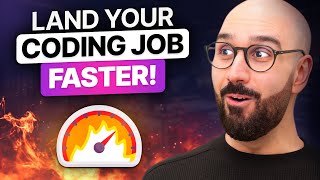

From $28k to $90k in 6 Months
43sReal-life success story with a dramatic salary jump creates an irresistible hook for aspiring coders.
▶ Play Clip"Delivers a solid step-by-step guide, but the 'fastest' claim is subjective and the video includes motivational fluff."
This video presents a step-by-step system for learning to code and landing a developer job within a year, even without a computer science degree. It uses success stories of former electrician and engineer to illustrate the potential, then outlines a structured approach covering language selection, learning strategies, practice, interview preparation, and job applications.
John, a former aviation electrician earning $28k, learned to code in 6 months and became a frontend developer earning $55k, later $90k as full stack. Francisco, an electronics engineer, became a software architect earning 2.5x his previous salary within a year.
Beginners often try to learn multiple popular languages (Python, JavaScript) without a clear goal. This is ineffective because languages have specific purposes and are used in different job roles.
Decide what you want to build (websites, mobile apps, games, etc.) to determine what to learn. For web development, learn HTML, CSS, JavaScript, and more. Search for learning paths like 'game development learning path'.
Watching random disconnected tutorials on YouTube and taking super long Udemy courses are common mistakes. Instead, find a structured course you can commit to and finish, with an instructor whose style you like.
Coding is about solving new problems, not memorizing. Use ChatGPT to get exercise or project ideas tailored to your skill level. Practice naturally helps you memorize what you need.
GitHub serves as an online resume for developers. Put your projects there to show employers, get feedback from the community, and learn from millions of existing projects.
Coding interviews are a separate challenge, especially at top tech companies. They often ask about data structures and algorithms (e.g., reverse a linked list). Study these topics even if not used daily, as they build problem-solving skills.
Use LeetCode to practice interview questions, filtering by complexity or company. Also consider mock interviews with experienced developers to get feedback on weak spots.
Expect to apply to 100 jobs, get 10-20 responses, and 5 interviews. Don't take rejection personally; persist and connect with recruiters on LinkedIn until you land your first job.
The video emphasizes that breaking into coding is achievable within a year with a structured approach: choose a path, learn with a structured course, practice consistently, prepare for interviews, and persist in job applications. The first job is the hardest, but subsequent opportunities become easier.
What was John's salary before and after learning to code?
He earned $28,000 as an aviation electrician, then $55,000 as a frontend developer, and later $90,000 as a full stack developer.
00:02
What is the common mistake beginners make when learning to code?
They try to learn multiple popular languages (like Python and JavaScript) without a clear goal, which doesn't prepare them for any specific job.
00:55
What should you do first when starting to learn coding?
Decide what you want to build (websites, mobile apps, games, etc.) to determine what to learn.
01:22
What are two common learning mistakes mentioned?
Watching random disconnected tutorials on YouTube and taking super long courses on platforms like Udemy that you never finish.
02:04
How can you practice coding effectively?
Ask ChatGPT for exercise or project ideas tailored to your skill level.
02:55
Why is GitHub important for developers?
It serves as an online resume, allows you to show your code to employers, get feedback, and learn from others' code.
03:21
What topics are often asked in coding interviews at top tech companies?
Data structures and algorithms, such as reversing a linked list.
03:48
What is a useful website to practice interview questions?
LeetCode, where you can filter questions by complexity or company.
04:26
What is the typical response rate when applying for developer jobs?
You may apply to 100 jobs, get 10-20 responses, and 5 interviews.
04:52
Real-world success stories
Provides concrete examples of career changers who succeeded, making the advice relatable and motivating.
00:02Avoid learning too many languages
Highlights a common pitfall that wastes time and energy, steering beginners toward a focused approach.
00:55Structured learning beats random tutorials
Emphasizes the importance of completing a structured course over consuming scattered content, which is a key to efficient learning.
02:04Practice with ChatGPT
Suggests a modern, accessible tool for generating practice exercises, making skill-building more interactive.
02:55Interviews require separate preparation
Distinguishes coding ability from interview performance, stressing the need to study algorithms even if not used daily.
03:48[00:02] a coding job in a year even without a computer science degree meet my student John he used to work as an aviation electrician earning $28,000 a year he dedicated 6 months to learn to code and landed his first developer job as a
[00:15] frontend developer boosting his salary to $552,000 now he's a full stack developer earning $90,000 a year John story is outstanding and quite frankly not everyone can get a job so quickly but
[00:29] transform their careers through coding in a year this is Francisco he was an electronics engineer he learned to code and landed his first developer job within a year now he's a software architect earning 2 and a half times
[00:42] more than his previous job so are you curious how they did it and if you can achieve the same results in this video I'm sharing a stepbystep system plus actionable tips to help you break into the world of coding even if you are
[00:55] the world of coding even if you are starting from see beginners make is that they try to learn a bunch of languages like Python and JavaScript because somebody on YouTube told them they are popular so
[01:09] they assume that simply learning a few popular languages automatically makes them hirable but it doesn't work that way these languages have specific purposes and are often used in different kinds of jobs some of these languages
[01:22] are also unrelated so learning all of them together doesn't really prepare you for any kind of job so instead of focusing on Pro programming languages dream take job do you want to build beautiful websites mobile apps games
[01:37] this decision will tell you what exactly you need to learn so you wouldn't waste time learning things that you're not going to use the next step is finding a want to do for example for web development you need to learn HTML CSS
[01:52] JavaScript and a bunch of other stuff now this applies to everything if game development gets you pumped that's a whole different set of tools so just do a simple search like game development learning path or data science learning
[02:04] path there are tons of road maps online the next step is learning and this is where I've seen a lot of people make common mistakes that slow them down the first mistake is that they go on YouTube and watch random disconnected tutorials
[02:18] trying to learn bits and pieces it takes far longer to learn something properly this way the other common mistake I see is people go on platforms like udemy and take these super long courses thinking that more hours means they will learn
[02:31] more but in reality they often never finish up those courses and all those unfinished courses pile up and make them feel less motivated here's the right way to learn find a properly structured course you think you can commit to and
[02:43] finish there's so many excellent options out there pick an instructor whose teaching style you like and then dedicate yourself to actually finishing each course now simply watching videos is not enough coding is about solving
[02:55] new problems so you have to constantly practice and that's what I love love about coding that's what inspired me to become a software engineer and not a medical doctor or lawyer because I wasn't great at memorizing but with
[03:07] coding you don't need to memorize much you need analytical and problem solving skills and with practice you will naturally memorize the stuff you need to know now the best way to practice is asking chat GPT for exercise or project
[03:21] ideas just tell it what you're learning and your skill level and it can suggest some options if the suggestions are too complex just ask for simpler ones it's a great way to find exercises and projects that will actually challenge you and
[03:34] help your progress now as you build projects make sure to put them on GitHub GitHub is like an online resume for developers you can put your code there and show it to potential employers plus you can get feedback from others in the
[03:48] community and improve your code there are also millions of projects on GitHub so you can look at other people's code and learn from them now let's talk about interviews a common mistake I see people make is not prepar ing for those coding
[04:01] interviews you can be a fantastic coder but interviews are their own Beast especially at those top tech companies like Google Facebook and so on they often ask you tricky questions about data structures and algorithms like how
[04:14] to reverse a link list this is one of the topics taught to computer science students so if you don't have a computer science degree make sure to study this topic in reality you might never use these algorithms in your day-to-day work
[04:26] but studying them helps you build your problem solving skill skills and stand out in interviews so along with all the things you have in your learning path make sure to take a course on data structures and algorithms to prepare for
[04:39] interviews a very useful website you can use to practice these interview questions is lead code you can filter questions by complexity or companies and so on it's a very useful website also there are websites that offer mock
[04:52] interviews with experienced developers so you can do a mock interview and get feedback about your weak spots and where you got to improve Pro all right once you're confident in your skills start applying for jobs but keep in mind you
[05:04] may apply for 100 jobs only here back from 10 to 20 and get five interviews it's totally normal don't take it personally and definitely don't let it discourage you remember you're not the only one applying the key here is
[05:18] persistence keep applying for new jobs and also connect with Recruiters on until you land your first job quite frankly Landing the first job can be the hardest part but once you get your first
[05:31] job and have some real life experience under your belt finding those next opportunities becomes a whole lot easier now if you have any questions let me know in the comments below I'm here to help you and if you found this video
[05:43] helpful give it a like And subscribe for more useful content


⚡ Saved you 0h 05m reading this? Transcribe any YouTube video for free — no signup needed.