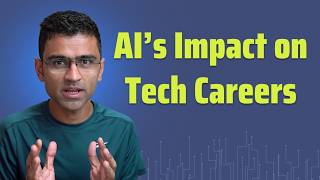

A senior dev hasn't handwritten code in a month
60sA firsthand account of a Silicon Valley engineer relying entirely on AI for production code instantly shifts viewers' perspective on coding jobs.
▶ Play Clip"An honestly titled live stream that lives up to its promise — real anecdotes and career advice, though it repeats itself and could be far shorter."
In this candid live stream, the CodeBasics founders share how AI tools like Claude Code and Cursor transformed their own 24-person company, enabling non-engineers to build production software. They unpack what the shift means for data analysts, engineers, and freshers, offering a mix of blunt warnings and practical advice: keep learning daily, master AI-first tools, develop communication and distribution skills, and stay high-agency. They argue jobs won't vanish overnight, but the era of mass hiring and narrow technical roles is ending.
The hosts note that releases like Codex and Opus 4.6 are making people ask how AI will affect their careers, prompting this candid live discussion.
A friend at a US fintech admitted he hadn't written code by hand in a month; he was creating 1,000–2,000 line pull requests with AI and deploying them to production.
Hemanand used Claude Code to build production-grade internal tools, moving the team from AI-assisted coding to AI-first development.
During a 45-day builder sprint, a data analyst, marketing people, and learning-experience staff built SaaS products; an app that would have taken the engineering team months was built in four days.
The company has only 4–5 engineers; the remaining 20, including the finance person, can use vibe coding to build serious applications, so the host told everyone to 'lose your titles'.
Because software can be built faster with AI, the differentiator becomes the quality of the end product, distribution, and orchestration — not the ability to code.
AI development moves so fast that every day in this timeline equals about six months of tech advancement, but companies adopt slowly — giving professionals a window to adapt.
Use IDEs like Antigravity and Cursor with the best models — Opus 4.6 or Codex — and ignore biases from earlier weak AI code; try free tiers like Kimi first.
The hosts rate in-person communication as one of the most valuable skills; they recommend training, practicing in front of a mirror, and platforms like Toastmasters.
Interviews will still ask fundamentals; syntax doesn't matter because AI handles it, but adopting a problem-solving mindset and multiple skills is increasingly important.
The hosts predict AI might take 1,000 jobs and create 500, so the question is how to position yourself among the survivors by learning daily and staying adaptable.
The most future-proof skills are relentless attitude and high agency — taking initiative without waiting for permission, combined with the ability to build, distribute, and orchestrate.
The recap: keep learning every day, learn to build, communicate in person, understand distribution, and be a high-agency person.
Instead of toy projects, build something genuinely useful for an NGO or a relative; pick one boring problem and solve it properly — that's what earns credibility and revenue.
Claude Code
tool
Cursor
tool
Antigravity
tool
Claude Opus 4.6
tool
OpenAI Codex
tool
Kimi
tool
Gemini
tool
Dialogflow
tool
Ollama
tool
Power BI
tool
Naukri.com
service
Toastmasters
service
AtliQ
service
CodeBasics
service
GitHub
service
How to Win Friends and Influence People
book
Naval Ravikant
person
What did the friend at a US fintech company reveal about his coding habits in December?
He had not written any code by hand for a month; he was just vibe coding, creating 1,000–2,000 line pull requests and deploying to production.
04:15
According to the stream, which AI model produces the highest-quality code?
Claude Opus 4.6 — they call it the best model; Gemini and others don't produce high-quality code.
16:01
What free alternative to paid AI coding assistants was mentioned?
Kimi is free for now; also try the Claude free tier, then get a paid subscription if possible.
16:56
How many people are in the CodeBasics company, and how many are engineers?
24 people, with about four or five engineers; the remaining 20, including the finance person, can build applications using vibe coding.
07:33
What did Hemanand expect the split between AI and his own coding to be, and what actually happened?
He expected 80% done by Claude Code and 20% by himself, but 100% of the coding ended up being done by Claude Code.
08:44
What is the 'tsunami' analogy used in the stream?
The AI shift is a tsunami coming; CodeBasics is building a boat to reach high ground and wants to take learners along to ride through the change.
14:46
What does the speaker say about the future of mass campus hiring by big IT services companies like TCS?
The time of mass hiring (e.g., TCS hiring 200–300 from campus) is over; total technology jobs will likely shrink, but freelancers and solopreneurs may increase.
46:57
What are the five major takeaways summarized at the end?
Keep learning every day; learn to build; communicate in person; understand distribution; be a high-agency person.
48:06
What security issue did the CTO point out in Hemanand's internal assessment tool?
It had a major security flaw that Claude was not able to find.
11:01
What book was recommended for improving soft skills and influencing people?
How to Win Friends and Influence People.
36:01
Building stops being a differentiator
This shift in leverage reframes what actually matters in a career — from coding skill to product judgement and distribution.
11:26AI capability outpaces company adoption
This observation explains why jobs haven't vanished yet and gives professionals a concrete but limited window to adapt.
12:08Use AI-first IDEs and top models
A practical, actionable recommendation for anyone ready to start building with AI today.
15:32What becomes easy becomes valueless
The mental model that human uniqueness, physical presence, and hard-to-replicate skills gain premium value as AI commoditizes content and code.
19:38High agency and relentless attitude win
The hosts distill career survival into an attitude: don't wait for permission, keep building, and keep adapting.
45:36[00:05] I hope you all can hear us okay if you can please post in the chat post can please post in the chat post from where you are joining your name so far you can start
[00:19] talking in the chat so that we know you are you are able to hear us.
[00:43] my screen by the way so I stopped sharing so that you can see our faces again. So folks
[00:55] we did not have a live stream in a long time so we thought we'll just interact with you we'll update you with what's going on in the market and we'll answer any questions that you may have from us.
[01:09] questions that you may have from us. I can see we have Harshil Patel from Netherlands it's a sunny day nice it helps if it's sunny in the cold weather then Shivam
[01:23] then Shivam we have others Rahul Um Kemcho yes Majama we have Vaibhav All right
[01:36] Great some of the people are from our courses Okay so we'll we'll get the session started folks so you are following internet social media
[01:50] so obviously you are hearing lot of things about the impact of AI impact of new models which are released, Codex, Codex, uh GPT Codex 5.3, Opus 4.6,
[02:04] etc. Uh and you might have questions on uh these latest advancements are going to have impact on your career.
[02:17] So, we thought we will just go live. We'll just uh share our candid and honest perspective. Come on, do you want to say anything? Yes, hello folks. Nice to see you all
[02:30] been quite a while since we have done this. So, first of all, everyone joining watch this video later, the recorded version, please know that this is uh
[02:43] to talk now is it's it's very unfiltered. We are going to discuss the exact same things that we will discuss with our you know, with our brother with our family and
[02:55] Like whatever is there, we'll just say it to you so that you can make the best sense out of it. And also, don't think that we are going to create some fear and make you feel worried. That's not the intention.
[03:08] We are going to tell the truth, but the truth might be fearful. And I mean, in fact, it would fear the entire world, not just not just you, me, it's important to see that. It's like the tsunami is coming and we don't want
[03:21] you to close the eyes. We want you to say, "Hey, look, there's a tsunami." We'll try our best, you know, to teach you how to slide during this time. That's that's the thing we are going to do now.
[03:35] Yep. All right. So, let's get this started. We We have been following all these advancements closely. I have posted videos on Cursor,
[03:48] Anti-Gravity, Byte Coding. I talk about my friend and other folks who are using vibe coding, especially in Silicon Valley, and how things are
[04:00] transform transforming. Not just across tech industry, but across many other industries as well. I think you should tell the entire story from December until now. Starting from there.
[04:15] Yes. So, friend in December friends in So, friend in December friends in December, I went to my friend's home who is working for one of the big tech company, a fintech company in US. And
[04:28] me that in last 1 month he has not written any code by hand. He is just vibe coding. I couldn't believe it in the first instance because my perspective was that it's good for prototyping, but not for
[04:44] serious projects. And he actually showed me how they use it. He was creating thousand line PR or let's say 2000 line pull request. And he's also deploying the code in
[04:57] production. It's working. So, then I immediately called Hemanand. And I told him that we need to start using this tool in our own engineering We have an engineering team which takes care of codebasic.io website
[05:12] and many other tools that we have built for our learning ecosystem. We thought that this will be a huge productivity boost for our team. And then they started using it. But they were still still using it in a
[05:28] fashion that it's AI assisted coding, not AI first development. At some point the this came to Hemanand, the fever of vibe
[05:42] coding was caught by Hemanand. He Claude board to build certain tools which were serious like production ready tools.
[05:54] He spent few days and then he he told me that, "Okay, I need to come and see it uh with my own eyes uh like like how how it is going to impact us as a company and rest of the world."
[06:10] So, I was coming to India anyway, so I planned my Hyderabad trip and I uh spent last four days. Actually, I came back from Hyderabad just yesterday. We spent four days in something called
[06:23] builder sprint. The builder sprint actually started. We are having this 45-day uh builder sprint and I joined somewhere somewhere in first phase itself. In my last four days, what I have seen
[06:37] In my last four days, what I have seen and what I have experienced firsthand, it has opened up whole new perspective. I feel like I'm living in an alternate I feel like I'm living in an alternate reality because we have data analyst, we
[06:50] have marketing people, we have uh learner experience team executives. They are all building tools, the SaaS products. For uh for example, we build mobile app. Uh
[07:03] I mean, I started building mobile app. Usually, our engineering team would have taken 6 months maybe for this. I I built it in like four days. Then we have some other tools, interview preparation platform, practice rooms.
[07:18] preparation platform, practice rooms. Uh these tools that uh my team built, uh it would have taken our engineering team probably 2 years, 3 years to build and So, now uh we have a 24-people company
[07:33] engineer. Out of 24, we have probably four engineers or five engineers. But now, remaining 20 people including our finance person, they can do live code. They can build serious
[07:47] applications. Yes. So then we were thinking about our learners and even people who have bought our boot camps and courses etc. Okay, what is going to be the impact of this new wave
[08:02] of AI advancement on their career? How our learning content should change to accommodate the new needs? And therefore we we thought that it's better that we do a live stream. These things are hard to express over a
[08:16] LinkedIn post. So we thought we'll do live interaction. >> the reason we are here. Hemant, I I would I would like to see your perspective as well. Yeah, I mean folks when we say that we
[08:30] important point to note here is like when I started building something uh data background, right? I've been in the data industry for a long time. Uh but I don't I I'm not a coder. I'm not in a weak coder. So when I started using this
[08:44] Claude code, what I thought is like okay, 80% Claude will do and 20% I will do. I will do some coding, you know. But uh it turned out to be 100% of coding is done by Claude code. That's when I I got like wow, this is
[08:58] great. And uh it's it's more like, you know, uh Claude code is developing the code and I'm getting the feedback instantly. product and I'm getting feedback from there also.
[09:12] And it's instantly I'm giving uh the answer uh you know, for the questions. like feature after feature we are building super fast. Normally that would take like 5 days. So this is when I felt
[09:26] fundamentally and uh we need to do this with our team. When we started do we started doing this with the team. So what I told to our that okay, Now, there are some people in our team
[09:39] distribution. There are some people in the team who are focusing on building are some people in the team who are mostly into orchestration, like mostly into orchestration, like orchestrating people or orchestrating uh
[09:52] how to say, the tools. I told my team now everybody lose your titles. There is about your title. Just assume that everybody is a builder now. Everybody can build. Every single person in this room can build stuff. And uh you can
[10:07] you want. And it's it's it's it's it's something you can you you just have to have the understanding of the end product. And uh either you can become a builder plus distributor or builder plus orchestrator or you can become the
[10:21] builder, orchestrator, and distributor all three. So, this is the combination. So, we are in day 18 today. Even even today uh I was reviewing some of the are uh you know, pushing it to production. But at the same time, I want
[10:33] building something and you can easily push push that to production. Of course, engineers. We are taking support from our principal software engineers, our our CTO. All these people we are taking support because they put the guardrails.
[10:47] They make sure that uh the compliance, securities, those are taken care because and I gave it to my team. I built an internal LLM LMS assessment tool. And uh I pushed it to production. People took the assessment. Everybody was happy.
[11:01] Then I showed this to my CTO. He told me that uh hey uh it's all good, but there is a major security flaw. And Claude was not able to find it. So, there are certain things like this, but we are in the you know, we can see that
[11:13] every week or every 2 days, there is some new advancement coming in Claude or Antigravity or Codex. They are pushing it very hard. So, we might reach to a stage where building will not be a leverage anymore. Building website or
[11:26] building softwares, uh that might not be a leverage. But that doesn't mean software engineers are going to lose jobs. It's more like, okay, what is the So, building can be done faster now.
[11:39] How fine you can build stuff, right? How How How the end product that you're from other products. That is That is the major thing. And definitely I thought and AI engineers. See, one thing you have to understand is
[11:54] the technology is growing at a very, very fast rate, which is So, we have to now. We are living in this AI timeline, which means every single day in this timeline is equivalent to maybe 6 months of advancement in the
[12:08] the technology, if I don't want to exaggerate. But, the companies, they are still not in the same timeline. The adoption rate is not same as the development rate. So, which gives us all Which gives all of
[12:22] you time. Whoever is watching this video, which gives all of us time. So, I would say in the next 6 months, you have to learn how to you know, you have to learn and navigate. If you are going to ask me, okay, what I should
[12:34] learn? That is something you can know only every day, because things are changing every day. Things are updating every day. And we, how CodeBasics we are going to learn. We are learning like crazy, you know. The last 15 days, our
[12:47] team has hardly slept, because we made sure whatever is coming out new, we will learn that very, very fast. And we are going to convert that to, you know, thing we will do is put it in YouTube, so that everybody gets access to it. And
[13:01] whatever, you know, whatever changes that might come. I can't say for sure that in 6 months' time that oh, all the data analyst jobs will change or it will yet, because we don't know yet how fast the companies can adopt adopt. Because
[13:15] we are talking about $1 trillion economy. It's It's like a massive economy of the world. It's like the change in world order. So, we can't expect those changes to happen like today, but learning can happen today.
[13:28] That is the important takeaway for you from this call. So, do not panic. Do not the data analyst role? What is going to happen to the data engineer role?" Do to be a problem-solver, and you might have to use whatever skills you have.
[13:42] See, I'm a data person. I used all my data skills, and I built a very I built three other products as well, which you will see soon in the CodeBasics website. So, now you have to take every single
[13:55] leverage that you've got, and combine that with this new AI things that's And that's that's going to be your moat. The single most important moat for you today is like learning every day.
[14:08] Staying curious, learning every day. If you are doing that, you are going to If you are waiting until Oh, this Let the tsunami hit my face. Let the water splash on my face.
[14:20] Then I think about something. Then, my friends, there is a big risk, you know, the world is going to be slightly brutal, and it won't give you enough time. So, just make sure you are researching and
[14:34] learning things constantly. Right? So, that's the most important message I want to give today. So, that's all by over to you. As you all know, we love analogies on CodeBasics. So, the analogy that we are
[14:46] there is this massive shift in technology, and you can consider it as a tsunami. So, a tsunami is coming. What we are doing as team CodeBasics is we are building a boat. We are building a boat so that we can go
[15:01] to a place which is on the high grounds, and we can uh we can be saved from what's coming. In that process, while we are learning how to how to build this boat and how to navigate, we want to take our learners
[15:18] navigate, we want to take our learners uh everybody uh uh, who is in this field to kind of ride along with us on this boat. Okay, so let's let's keep that analogy in the context and let's think about the next steps. So, many of you
[15:32] should do?" Okay, what what is the exact thing that you should be doing? First thing I would say is learn to write code. Antigravity, cursor,
[15:46] these are the tools that you can use. These are IDEs, but the model uh, should be either Opus 4.5, 4.6, or Codex. If you think about other models,
[16:01] Gemini and all that, I mean, they're good, but they don't produce high-quality code. High-quality code is produced by Opus 4.6. Opus 4.6 is the model we have been trying. It is the best model. And if you
[16:17] compare that with the previous models, there is a exponential difference There is a huge gap, actually. So, if you have tried writing code initially and you have this view that no AI is not good, it is making mistake,
[16:30] then forget, you know, forget all the biases. Try Opus 4.6. We don't have any collaborations with like we are >> an important question from you know,
[16:42] like, "Okay, they're they're paid models, right? Of course, it's not It's not going to be easy for everyone to afford that." I'm going to say guys like, if possible, try to get a subscription because it is
[16:56] worth it. If not, I think Kimi is free for now. You can try Kimi and you can try Claude, both. So, see, first of all, try whatever is the free. In the free tier, whatever is the best, try that,
[17:09] right? And then, if possible, create something with that. And that's what we going We have some crazy ideas. Like, if you're wondering like, we are going to So, how you can make money as a freelancer? How you can make money as a
[17:22] built some product which for which we already know that there is demand. 10-person team. We can we don't even need to use our distribution. We can So, we are going to pick those products and put it here so that you can learn
[17:37] from that. So, how you can make some money from that? Because the economy is are following Naval Ravikant. He always says that if there are 7 billion people in the world, there is a possibility of having 7 billion businesses because
[17:51] okay, what's going to happen? Then people will exchange services instead of exchanging money. And it's going to be like a new barter system. Like earlier people used to exchange fruits, apples,
[18:03] Now we can exchange services. So, that kind of world is still a possibility. You have to understand how to build a product, number one. Second thing, we always say that you are a product, right? It's it's like if you're building
[18:18] a product, it's something that still people can duplicate. But if you are a product, if you if they know this product is coming from this person or if nobody can duplicate that. It's going to be unique. So, you have to understand
[18:31] how you have to make yourself a product. And I can also say when I was a data analyst, there were so many data analysts back there, but I think I did what made me very successful, very unique in my career.
[18:43] do, just make sure that you're adding that uniqueness from your experiences, number one. And second thing, learn to distribute. You should all know how to create content, how to write post. Writing is very important. And don't be
[18:58] shy to put yourself in front of camera. That is going to be very important. Yeah, AI can create some, you know, faces and stuff like that. But if you you can put yourself out in the public and speak, That's going to be a super
[19:14] to crave for personal experiences in the coming time. anybody can create a YouTube channel, 100 YouTube channel today, and automate all the channels, and put some kind of content, and get some kind of views.
[19:26] If anything, there is one mental model I've always known that if anything is becoming so easy, then it will not have any value. People will always pay money or find something valuable that is tough to do,
[19:38] that is difficult to do. If something is becoming so easy, if everybody can create so many channels and create content like which is kind of happening now, it's not going to have any value. So, you'll have to still use your face,
[19:50] have to appear in a physical space, talk, those kind of things. So, especially people who are watching from India, and especially in the you know, I
[20:02] communication is not given a lot of a lot of importance. A lot of importance solving maths, solving physics, those kind of stuff, and lot of academics is If if the number two takeaway that takeaway
[20:17] said for this call is like you should learn every day. communicate. Learn to speak in public. I know, including myself, if you take me 15 years back, I was not a confident
[20:32] public speaker. I could not speak in front of anybody. now I can say that is the most important skill that I've learned because if you cannot put yourself in public and cannot express your ideas clearly,
[20:44] major. So, all of you watching this, 227 people watching this video, please make sure you are able to stand in front of people clearly. Do whatever you need to do to train on
[20:59] mirror, you can watch a lot of YouTube videos, you can go to things like Toastmasters. This is going to be a very very important skill. And number three I want to say is try to learn multiple things.
[21:13] disagree with me. Earlier it was most like people should become an expert, right? Even we said sometime in the past like we should have at least one expertise, right? Currently I feel like it's okay if
[21:26] you're not an expert in something, but if you have multiple skills, if you are like jack of many jack of many trades, I think that is going to be super useful Because for for for the lack of expertise you can use AI, but you should
[21:40] you should know something about real estate, you should know something about idea about everything out there. You should have a little bit idea about created, what is distribution, what is marketing, what is SEO, what is PPC. If
[21:55] even work with the AI. AI cannot do things for you automatically, magically. You still it still needs an orchestrator, right? So that I would say. Yes, now I will take couple of questions
[22:10] which is related to what Herman mentioned. So how learning should be approached? Should one follow conventional path of ML, DL, NLP, GNAI coding? So let's understand what's going to
[22:25] happen in next 6 months, 1 year, 2 year and so on. If you go to नौकरी.com today, you we still have jobs. It's not like binary. Okay, all data analyst job appeared. Folks try this. Go to नौकरी.com or
[22:39] whatever job portal. Search for AI engineer job. Search for data engineer job. Search for data analyst job. You will find tons of jobs. Jobs are there. They will remain. Okay, in the time period which is going to
[22:54] come, the capability of model coding things is there. That is one thing. But the adoption is not that high.
[23:06] Companies like finance and health care, which are heavily regulated, they don't which are heavily regulated, they don't want to use this AI models aggressively. They are concerned about their data
[23:18] So the jobs are going to remain. It's not like not like Thanos, uh, you know, disappearing. We have to understand that. So to Kushal, uh, Kushal's question, how
[23:34] learning should be approached, I would say you still need to learn Python, ML, DL, etc. because if you're going for uh, an interview, AI engineer interview, months, what what
[23:49] what what will the interviewer ask you? They will ask you some fundamental questions, okay? I would say look do not worry about syntax at all because
[24:02] with AI now you can syntax is taken care of, okay? Do not worry about going too much into detail. See, eventually we will see a point where even if you don't need even if you don't learn Python, ML, DL, GenAI, it should be okay because
[24:18] Python coding is done by AI. But I'm talking about immediate future. interview, the interviewer is going to ask you questions. So learning those things will help you
[24:31] is one thing. But that long-term future can be after 6 months or after 2 years, I don't know how how fast these things are going to be going to go. Uh,
[24:46] long-term future is that you will not have to learn all this. You will not need to know ML, DL. Maybe you know some concepts, okay? Maybe you know concepts, you you develop some judgement. You develop an ability to have a debate
[25:02] on architecture with cloud code model. Maybe that might be helpful when you're building customized solutions. Or when you're building solutions which requires a total autonomous not autonomous, but let's say
[25:16] clients athletic if you don't know athletic is my data and AI consulting And there are clients where they specifically ask us not to use AI for
[25:28] writing code etc. because they're concerned about their IP. They're concerned about their product idea being shared on cloud code server. If you're running locally less on Olama, they're fine, but these are
[25:42] have, okay? So in that case, you still need to hand code, but that percentage of hand coding is going to reduce drastically. So if you're learning today, I would say Let's say you you're learning, right?
[25:56] And some some somebody else asked this question others, what about the folks who recently purchased the boot camp? Does that become obsolete already? No, it is not obsolete because as I said, you go to naukri.com today, you look at
[26:11] the skills. They will still ask you for power BI SQL. They will ask you for pytorch whatever. So it's not obsolete folks, okay? Things don't work like that. Once capability gets developed, it takes time to adopt.
[26:25] And while that adoption is taking place, what we are doing, right? See, it's our moral responsibility of all the students who are learning from us. It can be Either you're learning from free videos or through our boot camp. It is our
[26:39] moral responsibility to guide you in a right direction. So if you're a boot camp student, do not worry. We are going to give you some updates. We are going to start some programs so that you can navigate in your career
[26:54] and and that requires that we also learn things fast and that is the reason we are having this 45 day sprint where we are just you know hitting hard on the
[27:06] capabilities of latest AI model. So last four days even I was I was sleeping late. Hemant was awake till like 6:00 7:00 in the there were some of our team team members did not sleep. We wanted to taste the limit of
[27:21] this models on what we can do and what where you know they have limitation. So that when we are sharing our perspective with you it is not like we have read some article we have watched some video. The perspective is based on the real
[27:35] experience that we have. All right so I hope that answers the question from Kushal and others. I would take one more question which is I think Luzime Chan in in our consultancy company what you
[27:52] question. In our company Atlic we build customized AI solutions. We help companies do AI implementation. So the CEO of my company
[28:05] Karan was in Dubai recently. So we we we we are having some clients in UAE area rest of our clients are in US. And we help them build rag based solutions. We have seen rag videos.
[28:21] solutions. We have seen rag videos. We help them build agentic AI solutions. These are the custom or tailor made solutions which adhere to their needs okay. And all these clients have needs which is okay
[28:35] they have security concerns they have a lot of domain knowledge based chatbot on it. They have some constraint on cost. You know that's where the consultancy uh That's where that the value of
[28:52] consultancy comes in play. So, we as a company, Atliik as a company, we are not Of course, we write code, but more than code, we are consultancy. We guide people on Okay, what should they use?
[29:04] Because see, right now there are so many tools out there in the market. And our clients who are business users, non-technical users, for them it is very very confusing which model they should
[29:18] use, what will be the cost. How exactly they should use it? How do they tackle security concerns? So, we provide consultancy on that. I mean, I think that is the main value that we deliver. Coding is
[29:31] probably the secondary part. Okay? So, I'll give you some examples. So, we built some sales automation solution for our client in UAE. I cannot share more details because we have NDAs, etc.
[29:46] I will just give you some general idea. Then we have built bunch of rag-based solutions for our clients in UK, US, and UAE. We are also We also built couple of chatbots
[30:02] for one of our US clients. We helped them build a chatbot. And you will be surprised it was based on Dialogflow plus some GenAI. You're wondering Dialogflow is dead, but not It's not. It's still alive. Then we
[30:16] had North America-based client for which we built a statistical ML solution. Folks, statistical ML is still relevant, I'm telling you. In Hyderabad, I met like I met a guy who works at the same floor. And he he he's
[30:30] working in time forecasting model. Okay? So, it's not like GenAI has come and and statistical ML is dead, you know. >> I said, there is a there is a shelf still there. That's that's the important point to take here. And not everything
[30:43] is changing today, but everything is available today. Things that are going to change are available today. That's what I want you know we want you folks to learn. And yeah, so that option is going to be
[30:55] similar questions right? Somebody is asking Shivang Shah is asking like help in the future as many as people say AI will take over jobs. Guys, first of herd mentality when people have as this mentality AI will take over jobs. See
[31:10] definitely take jobs. Right? Are you still asking this question in 2026? whenever see currently what's happening now is intelligence explosion. Right? Intelligence is exploding and AI will take some kind of jobs and it will also
[31:25] create some new jobs, but it might not take away 100 jobs and create 100 jobs. It might not be the case. Maybe it will take away 1,000 jobs and create 500 jobs. So your role now is to how do you be in that 500?
[31:38] How do you How do you make sure that you are part of that thing? So that is the only thing you need to check. Because the the thing is right lot of people of people won't even listen to things like this. They are in their own world.
[31:52] who works in a real estate company. He said like nothing can happen to us, you is change that can happen in the real estate also because real estate is a physical thing, but the work that is involved in creating
[32:06] the real estate, that is that is going to be changed with the help of AI. So if people are closing their eyes and not listening to stuff, they are going to listening to this. After listening to this, you take some action. You you
[32:20] create something. You do something. You start you start using you know any open yourself. That sort of action you need to make. Otherwise, you know, there is going to be trouble and do not do not really think about future like in
[32:35] what's going to happen in 2 years, 3 years, 2027? Don't think. So, again, I'd like to give an analogy, right? Like the other day I was It was Nothing was visible right in front of me, right?
[32:49] It was It was very dark and there is a fog and it was not dark. It was like 6:00 a.m. in the morning. And What happened is like I kept walking, What happened is like I kept walking, right? And every 10 steps I keep there
[33:02] stuff. So, that's when, you know, like if you compare this to the current situation, it's like a fog right in front of you. ahead. What is there 1 year ahead. You can't You can't really tell or see.
[33:15] That is the most important thing. Just if you keep each and every step, you can see that your visibility will improve. Your visibility will be clear. you reach, okay, from here I want to take left, I want to take right, I want
[33:28] to go straight, or I want to take a U-turn and then take left. All these moving forward. If you're standing there and thinking, oh, what is there, what will happen, you will never move. So, that kind of thing you folks should
[33:41] understand here. Okay? Don't stand at some place and don't get stuck. Keep moving. Keep moving forward. And be ready to unlearn everything. That is the fourth takeaway today. So, a lot of people in my team they they told me,
[33:53] right? Like it is because they are very super high intelligent coders. So, they were they always use their hands to code and now they have to use gloves to code and for them it was very difficult. It took them 2 or 3 days to unlearn and
[34:06] then try something different. So, just imagine people with 15, 20 years of they're ready to lose everything and learn something new. So, most of you watching this video, you folks are freshers, right? Don't really
[34:18] thing, will it be useful for me? I've learned that thing, will it be useful can't really say. Currently people are still using Excel. Excel is a tool that is created in 1992. People are still using it.
[34:30] it. But there can be a moment where people will use something different in in in instead of Excel, but the fundamental thinking, the fundamental problem solving will be the same. So, you need to have only that
[34:43] fundamental problem solver. I don't mind what tools I have to learn. You will having that mindset and if you're ready to unlearn and learn on any given point of the day, trust me, my friend, you will not have a problem. Whatever the AI
[34:57] wave might come, whatever might happen, you might have a turbulence. Yes, turbulence, right? Even we as a company can face turbulence. I told the same thing to my team, you know, you we might face turbulence because we we we are not
[35:09] exactly sure how the world is going to shape. We are going to watch it every single hour and we are going to respond accordingly. So, I will say the same So, don't don't think too much. All right, just see, okay, fine, today I'm
[35:22] going to learn this. Tomorrow and and just keep learning every day and keep solving problems. So, uh Zumichan is asking, I think, this question that I am from your
[35:35] course. I am not afraid of AI. I just want to make most of it and do freelancing and provide all the AI solutions. So, Zumichan, Hemant already answered the question. If you are just learning
[35:47] technology, that's not going to be enough. Soft skills are going to be super super important, folks. You need to know how to present, how to communicate in person. You need to know sales skills. You need to know how to
[36:01] influence people. There is a book, How to Win Friends and Influence People. If you have not read it, read it. These things will help you get freelancing projects. And Zumichan, I am I'm really happy you are thinking about
[36:15] freelancing because we don't we need to stop uh you know, thinking about this herd mindset, which is, okay, you go in a company which has 400,000 people working for it. Some of the IT services company in India, for
[36:30] example, TCS, Infosys, 400,000 people, 500,000 people. Stop thinking about, you know, joining these big companies because these companies may not exist in the future. In the future, there will be small
[36:43] companies, there will be solopreneurs, uh and of course, there there are going etc. >> be a solopreneur. Uh no, Sumit can can a product. So, somebody's saying, right? Like
[36:57] what what can you do in freelancing? You need again, you need to learn to build. Everybody should learn how to build. And apart from building, you need to learn put your content out there, how to put your product out there. Third thing is
[37:10] Whether it's orchestrating among people or orchestrating among tools. be a solopreneur. You can build your stuff, sell, and make some reasonable living. And and then we I mean, I also want to talk about one scenario where
[37:25] there is one possible scenario where there is a massive job loss. Like we are talking about these big companies, uh 500,000 people, 400,000 people companies. What if there is a massive massive job loss? Again, don't I'm not
[37:37] a possibility of this going to happen as well, right? So, in that case, what's government is going to intervene because if Think about this. If you're losing a job, right?
[37:51] More than you, the companies are going to get hurt because the companies thrive on consumers. If you're going to If everybody's going to lose a job, there are no consumers, who will buy? And and that that that will break the
[38:04] chaos. And it's like a it's like a internal war. It will a civil war will break out. So, to avoid that, the of course, the governments or companies, universal basic income. So, everybody gets some level of income and you know,
[38:18] they they still remain as a consumer. But again, that is still not, you know, for meaning. We always search to do something more. If you're getting respect that. You will want to do something more. So, that's why I'm
[38:32] sleep, just before sleeping 10 or 15 minutes think about it, okay? What is that I want to bring the uniqueness that you have in your soul. Every soul is unique, right? My soul is unique. The whole soul
[38:45] people watching here, you have a unique soul. Just try to understand what is world. Right? What is the thing you want to do in this world? And try to connect that with whatever you want to do. That will bring you know, a unique taste to
[39:01] what is going to be your boat. Okay? It doesn't matter you know, a lot of people move from non-technical fields like you know, I know we have we have an AI engineer in our team. He used to be a gym trainer.
[39:15] And if some AI engineer wants to become a gym trainer, I would appreciate that also. It's not a bad thing, you know? Whatever you do, just see whatever it fits your you know, interest. Right? Don't think that only these kind
[39:28] of jobs are going to be respectable. No. I'm telling my folks, mark my words, in in some time, maybe in 1 or 2 years, like the plumbers, electricians, these equally. Because they they are currently less in number. So, compared to software
[39:42] And but the demand for them will be more. in USA and Germany and countries like that because I lived in USA and I lived in Germany. So, there you can't get the appointment from the plumbers and
[39:56] person, but not from them because they Yes. My So, my take is uh combined take. Uh physical versus digital. So, on
[40:11] digital industry, anything that you can you you do on your laptop, that is being impacted by AI hard. But let's say if you have passion for something
[40:23] physical. For example, I my friend my my brother's friend was a project manager in a big IT company in Vadodara. Uh he started this dogs hostel. So basically dogs
[40:38] uh if you're going out on a vacation, if you want to keep your dogs to a place then that is the place. Uh so he started that business. Now he had passion for this kind of thing. Some people have passion for food, let's say. You want to
[40:51] you know how to cook well. You want to start a restaurant. Go for it. See you're gaining from technology. Let's say you you learn how to build a mobile
[41:03] app. You learn how to build uh analytics dashboard. You learn how to uh predictive model. That is going to help to go waste, folks. Because even if you are running a
[41:16] restaurant there is a technology enablement. You want to build a dashboard to track your business. That knowledge is going to help everywhere. It's like learning Excel. So learning all these tools by
[41:29] coding, building mobile apps uh building dashboards ML and AI models. These are going to be enabler in all the industries. No industry is left where AI will not have
[41:42] industry is left where AI will not have impact. So if you're learning all this useful. Second, remember that job is not the only way, folks. Stop thinking in terms of herd mentality. World is changing
[41:58] fast, very very fast. We will see many small companies, eight or 10 people companies, solopreneurs who will be making their living. who will be making their living. So just think about uh domain.
[42:11] particular domain. Let's say Let's say your father is a real He is in real estate. Your uncle is in health care. You have some family connection. You have a way to gain domain understanding of that particular field. Then do that.
[42:26] You know, try to gain understanding of the physical world of the domain. And the physical world of the domain. And then think how you can apply technology to create a business in that domain. Yes. Some Some people have asked
[42:39] question that okay um I think the the the They're asking about the boot camp, Yeah, that's what I mean. >> Uh
[42:53] Let Let me take another question. Vaibhav Trivedi is asking what does this mean for non-tech people trying to come into data field? question? Okay. So uh uh
[43:08] I I I don't see the question, but I understood the question. See >> 20 years back, right? When this Word was Word, Microsoft Word and PowerPoint was built there used to be a specialized person whose job is to only create Word
[43:21] specialized person who used to create only the PowerPoint presentations. This was 20 years back. Now what hap- what's happening, right? You won't have a one document, right? Like one person will do Word, PowerPoint, Excel, Power BI,
[43:35] everything. And we are putting them together as like a data data analyst or data engineer. And data engineer, of course, will will know more tooling. So be prepared for a near future that you might do all of the work of data
[43:49] analyst, data engineer, and uh maybe data scientist, AI engineer. It It to make everything easier. So you will is That is something you need to understand. They The roles will merge.
[44:04] matter is like how you're solving the problem. So, having analytical skills is going to help a lot. Having the understanding of to help a lot. So, but that alone, let's say you have
[44:18] I'm not saying it's happening right now. just Power BI and few other skills, you you can still get a job in today's job market. But I'm just envisioning a future which is
[44:31] just as close as 6 months or 9 months or even 12 months. will not be sufficient because already we see in some job descriptions that people are asking multiple things, but they they just ask it, but they won't
[44:44] future, in the near future, in the job currently in my job, I'm I'm using multiple skills to solve a problem. Some skills to solve a problem. They are data analysts, they are AI engineers.
[44:57] So, there are people like that already. So, this kind of And learning them is not difficult. Don't think you have to go to engineering college again to learn software engineering and then do 4 years
[45:10] 1 lakh boot camp. No. It's not going to happen. You can be a build dashboards, you can build software, you can build content also. So, just know that you need to be a builder by default. On top of that learn
[45:24] distribution and orchestration. The the the main question I think people are having is okay, what should I do? learn? Folks,
[45:36] I think this is a discussion we were having in our team. A relentless attitude and high agency are are going to be the high agency are are going to be the skills that will rule the world.
[45:49] You need to have relentless attitude, very high agency. Um See, why coding is like the most fundamental skill that you need to have tutorials. We have published a tutorial on anti-gravity.
[46:04] We have published a tutorial on cursor. The best models are of course Claude Opus 4.6. If you can buy $20 a month subscription, it is the best. You're going to run out of tokens soon.
[46:17] If you can afford and buy $100 a month subscription, let me tell you, it's a deal. 9,000 rupees is not a big price compared to what you can build out of it. So, just see and feel the power
[46:31] yourself. Now, let's say you have idea, you have an idea of building a mobile app or some solution, some predictive solution. some solution, some predictive solution. Just build it. And if you know uh people
[46:44] uh to whom you can sell it, then start thinking about your solo flip solopreneur journey from today. See, jobs, as I said again, jobs do not disappear just like that. Jobs are going to remain. The adoption is going to be
[46:57] slow. You will still find jobs. But, the time is over where, you know, TCS comes to your campus and hires 200 people, 300 people. That kind of mass hiring is gone.
[47:10] Total number of jobs, technology jobs are going to shrink most likely. Now, if you account for freelancers, solopreneurs, people who are building like products, then yes, total number of jobs may
[47:24] But, I think we need to shift this attitude that okay, my job is to learn I want to learn from this boot camp or this course, whatever, and I want to get hired in in some company.
[47:38] That will remain there, but just I'm just saying changing your mindset uh and thinking about solopreneurship, useful. Yeah, very useful, definitely.
[47:52] Okay, I think we have answered most of the questions. So, folks, many of you recording. The recording will be available in a minute. And uh takeaways, Dalbir. The first thing is like
[48:06] thing is keep learning every day. Right? That is the big single most important thing you should do in this time. Look out for research, and keep learning new stuff every day, and learn to build. The
[48:20] number second thing is you should learn how to communicate in front of people. Like in-person communication. You should be able to articulate your thoughts very skill. And number three, you should understand distribution, how
[48:32] distribution works, how you can put your content out there or put yourself out there and talk about your product or talk about your own skills. sometimes you have to be your own product. That will bring the uniqueness.
[48:46] And uh the number four thing is uh I think we spoke about being high agency. So, high agency means you are not someone who's waiting for others to tell you what to do. You're not like uh okay, only if this person tells I will do. You
[49:01] by yourself. You can You can think about some of your friends who are like this, themselves, and they will do it. They just check with other people, but they don't wait for the permission or approval to do stuff, to do the right
[49:15] you're high agency person, you will keep learning stuff yourself, and you will which is there. Okay? So, don't think too far. Don't think like, "Okay,
[49:30] Will I have a job Will I have my job for 5 years?" No. If you're asking that question, I will say no right away. But, is learning data skills important? Yes, have to combine that skills along with whatever is there with the AI world, and
[49:44] you will get something out of it. But, that alone will not give you a job. You know, maybe now, yes, maybe for the next 6 months, 9 months. what's going to happen beyond that, but learning these skills will help you to
[49:56] certain extent. But don't think that just by learning these skills, I will have I will have a job for next 10 15 years. No, that that world is gone. We are efficiently gone. Okay. So, these are the five major takeaways I have. You
[50:08] would like to add anything? No, no. No, I think I think you have covered. of live streams. We will keep on publishing content so we are keeping you up to date. We are also learning a lot of things, folks.
[50:24] Let me tell you it's it's a very interesting time. We are also not 100% sure what what's what's going to happen in the future, but of course we have some clues and we have we have direction actually. We we brainstormed a lot and
[50:39] watching all these advancements closely. We'll keep on sharing these things with you. During this time of uncertainty, I would suggest that you keep your mind calm. You look at the bright side of the thing as well. You can become a single
[50:55] person company. You can build a SaaS product. You are given a lot of power. Just imagine you are given a team of 10 IIT engineers who can work relentlessly with you.
[51:10] And those 10 IIT engineers are cloud board cloud board agents. Now, just think what can you build, okay? Just open up your mind. Don't like, okay, don't have this task-oriented approach.
[51:25] Just think bigger. Definitely. Folks, and have just one more important thing. I I don't think whenever you get into these kind of people don't say that. Today Today also I wrote the same thing as an email to my
[51:39] team. So, currently my team is uh doing high-performance stuff. They are they are in a very intense environment. So, including myself, what I've noticed is that like we are not taking we are not being mindful about our own health,
[51:51] right? We are just you know, eating anything and then sleeping at strange times. So, one thing you have to take care is that if you're losing your health, you're losing everything. We are in the war, but please make sure you're
[52:04] taking care of your health, right? So, when I say health, it's your mental health, physical health, your soul health and all of that. So, when it sure your food the morning food that you eat
[52:16] or any food, right? That you eat is very important. So, make sure you eat these things, you know, these are very important because this magnesium is very important to keep your brain stable. There is zinc. So, do a little bit
[52:30] research about that why people eat almonds, you know, figs, dates, those kind of things in the morning. It's it's very very important. And make sure you you know, make your feet moving, you know, that's that's super important
[52:43] because if you're not moving, your your brain and body's jammed. There is no flow. You need to have flow in the life. And uh mindfulness. Mindfulness means, you know, it's like it's close to awareness.
[52:57] if you have to get rid of your thoughts, you need to close your eyes and let your thoughts die. People call it meditation. That's what people term as meditation, you want, but just try to close your eyes and whatever thoughts come, let it
[53:12] thoughts die, you are aware. You are connecting with your soul. Your mind is get the real answers what you should do. Trust me, this exercise is so powerful. have found meaning in their life by doing this. So, please make sure you
[53:28] know, that you do all of this and you'll be sorted. And again, last love in your life and that love starts If you're not loving yourself, if you're not taking care of yourself,
[53:41] then don't expect others to love you. It It should start from within. Then then love in your life. So, thanks thanks folks for joining and to do one this coming Sunday as well. And
[53:55] we'll put our best efforts to to democrat knowledge. Whatever our team is doing, we'll put it out. Not just me and well, whatever they're doing. Our marketing person, she has built an app. Our
[54:11] finance person, she has built a website. She has built an app. Everybody, our learner experience team, our operations head is building a interview prep tool. And our learner experience lead, he has built a
[54:23] coaching app for through which people can train English. So, everything is in in in beta and it will comes soon to it soon. All right. So, all the best and for
[54:37] and watch the entire video. I'm pretty sure you'll find it useful. questions. So, Sumit Jan, your question is what
[54:50] projects you can build to prove yourself in front of client. As I said, like build something that is useful to somebody and add it to your portfolio. You can have a nice portfolio with GitHub code, etc. And build projects
[55:04] which are not toy, which are something that can be used by somebody. Go to an NGO, for example, and build a real solution for NGO. Or let's say your relative or whoever, if you have somebody who needs a real solution. Or
[55:19] somebody for free. So, that way it's a real project. I think Ankit Kumar is also asking the same question and so many people asking the same question, guys, I'll tell my real experience from IIT Roorkee when
[55:33] week. I think 10 days back. So, we saw around at least some 15 to 20 projects and which I would say some 12 projects are amazing. Eight projects are fancy project. These are the projects you should not do. Uh there was one
[55:47] project which I saw where the person is amazing, like amazing spirit and a lot of passion, but he tried to put too many things in one place and it is not It is trying to solve too many problems which other companies are solving and
[56:00] which other companies are solving and nobody will use that app because it has no specialization. So, when you are trying to build something, try to build solving that problem properly. So, if you're building a replica of Uber, you
[56:13] For example, I will tell you what problem I have with Uber. When I book cars. The cars are smelly or it's not having, you know, uh proper AC or things like that. If you're solving if you're doing
[56:26] problem. And uh whatever, if you're building a Swiggy, you're building something for rural development and health care, try to pick one problem and try to solve it properly and that will appeal to people. Okay?
[56:40] Some of the problems are, you know, boring problems. It it it will not be Right? It will be boring problems that people will not think about it. So, try solve it. You won't you won't you not only get
[56:54] of it. You can make revenue out of it. Okay? So, these are the projects you should consider. Great. So, guys, let us know how this session how do you like do it maybe even weekly we can do it because we want to
[57:06] because I'm telling to the by every every single day we live in this AI era are learning a lot of things. So, somehow we we would like to express that learning with you all. Okay? All right, folks. Thank you. Alby,
[57:19] anything else? Any closing comments? Nope. I I think some people are asking student asked me, "Okay, they have startup idea. What they should do?" Um my brother Bavin is running Yeah, man. My bro brother Bobby is
[57:33] running a the startup coaching program as well. And he's guiding a lot of startup founders. So, we are thinking of doing a live stream next weekend like on Sunday evening just for startups. In case if you are
[57:46] interested in that, so please keep an eye on it. We will share our best It's not like we are trying to sell us something. We we just genuinely want to help people. We love coaching. We love mentorship. So, we are going to do that
[58:01] session. And some I think some folks were asking me that I'm in India. Okay, am I going to do any meetups? See folks, we So, I'm in India right now. Generally, we do a lot of meetups, but this time the visit is little different.
[58:18] I I we did one meetup or program in IIT Roorkee. The other program that we are are having this AI day. And if you want to interact with me in person, then Vadodara, Gujarat is a
[58:33] place. I don't think I'm not sure if we'll be doing any meetups. Probably we'll be doing any meetups. Probably not. But let me put a put a link of the AI day here. So, I have I have added a link. In case if
[58:46] meet in person, we can talk. All right? Yes. All right. Thank you everyone and uh we're all in this together and hopefully we'll be able to build a boat big enough
[59:00] to accommodate everyone. All right. Bye-bye.

⚡ Saved you 0h 59m reading this? Transcribe any YouTube video for free — no signup needed.