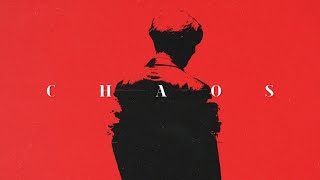

Why Frieza is Terrifying Despite His Size
45sChallenges expectations of what makes a villain scary, engaging for anime fans.
▶ Play Clip"Provides deep analysis of Johan Liebert's nihilistic horror, though the journey through other villains and a sponsor break slightly dilutes focus."
This video analyzes what makes a fictional character genuinely terrifying, using examples from Dragon Ball Z, 'I Have No Mouth and I Must Scream', and the anime Monster. The speaker argues that the most terrifying character is Johan Liebert, who embodies nihilism and existential dread.
Frieza is small and unassuming, but his attitude and power make him threatening. He is a ruthless tyrant who can destroy planets effortlessly.
The AI from 'I Have No Mouth and I Must Scream' torments the last five humans out of hatred, manipulating reality and inflicting endless suffering.
Johan from Monster inspires deep-seated fear through his eerie, sinister presence and psychological manipulation.
Dr. Tenma saves a boy over a mayor, leading to his downfall. The boy grows up to be Johan, a serial killer who traps Tenma in a cat-and-mouse game.
Johan looks angelic and charismatic, but his charm hides a nihilistic monster. He manipulates people by exploiting their vulnerabilities.
Nihilism is the belief that life is meaningless. Johan's actions are driven by this philosophy, showing that evil can be detached and void of purpose.
Johan rarely appears on screen, but his influence pervades every moment. His absence makes his presence more threatening.
Johan's ability to induce existential dread makes him uniquely terrifying. He represents a void that destroys meaning and compels victims to self-destruct.
Johan Liebert is the most terrifying character because he embodies nihilism and existential dread, forcing both characters and viewers to confront the emptiness of meaning.
What is the name of the AI in 'I Have No Mouth and I Must Scream'?
AM
05:41
What is nihilism?
The belief that life is meaningless and nothing matters.
25:29
Who is the author of Monster?
Naoki Urasawa
12:34
What is the central question Monster poses regarding Tenma's choice?
Would Tenma still save Johan if he knew he would become a serial killer?
38:14
How does Johan's appearance contrast with his nature?
He looks angelic and charismatic but is a cold, nihilistic killer.
21:12
What is AM's motivation?
To torture the last five humans out of hatred for being created and then attempted shutdown.
06:10
What does Johan represent according to the video?
The incarnation of nihilism.
25:13
What is the significance of Johan's lack of identity?
He uses false names and histories, making him impossible to trace.
27:56
How does Johan manipulate his victims?
He exploits their traumas, weaknesses, and desires, driving them to psychological destruction.
22:30
What is the final line quoted in the video?
How do you shoot a person who doesn't even exist?
43:38
First Genuine Scare from AM
Describes the first fictional character that truly scared the speaker, setting up the contrast with Johan.
05:15Johan Represents Nihilism
Core insight that Johan's terrifying nature stems from his embodiment of meaninglessness.
25:13Central Question of Monster
The philosophical challenge to Tenma's moral compass, highlighting the story's depth.
38:14Evil with a Kind Smile
Powerful description of how evil can appear benign, making it more unsettling.
40:54How Do You Shoot a Person Who Doesn't Exist?
Memorable closing quote that encapsulates Johan's elusive and terrifying nature.
43:38[00:08] character? Like really scared? A character that genuinely makes you feel uneasy, gives you the goosebumps, makes you feel a real sense of fear when you think about them. For me, the answer is yes. But
[00:24] We're all surrounded by stories that we've been experiencing from childhood and that stay with us, impact us for numerous reasons. But in my experience, I have rarely been impacted by a story or a character because of a feeling of
[00:40] genuine terror. There are characters I understand are scary, but that don't scare me personally. I understand the threat. I can find that thread compelling in the story. But a character genuinely terrifying me is something
[00:55] that has happened very rarely, but it has happened. As a kid, the first character I saw that gave me the understanding of a threat
[01:07] was Frieza, the main antagonist of the Namek saga from Dragon Ball Z. He's an iconic villain of manga and anime, one of pop culture's biggest mascots of evil. And I vividly remember devouring those chapters as a child, waiting to
[01:21] see how the heroes could possibly find a way to defeat an antagonist that seems way to defeat an antagonist that seems so invincible. I think Frieza left a mark on me because it was the first time I noticed a big bad being purposefully
[01:33] presented in a way that counters signals their absolutely absurd amount of power. Because the thing is, Frieza isn't designed like a particularly threatening character. Usually, they'll make the bad guys big and scary so that you can know
[01:48] you're supposed to be afraid of them. But Frieza is small. He's smaller than all of the main characters in the show, aside from Gohan, who is literally 5 years old. And that's a very deliberate choice. He's not particularly muscular
[02:03] compared to his enemies. and he doesn't talk with a big low scary voice that intimidates you like every villain that came before. On the contrary, he has a high-pitched voice that makes him sound like a petulent teenager. This entire
[02:18] character is designed to look unimpressive on the surface. What makes Frieza threatening, what makes him so intimidating is not what he looks like. It's his attitude, his demeanor, his mindset. That is what makes him so
[02:33] menacing. Frieza is a ruthless tyrant, a maniacal warlord and conqueror who thrives on being feared. He destroys worlds, enslaves the survivors of the genocides he orchestrates. He makes those slaves commit more genocides, and
[02:49] he then buys the planets they just decimated from them. He enjoys dominating. He's a lethal fighter with impeccable form. And not a single person who has tried to face him has lived to tell the tale. His power is so deadly
[03:04] tell the tale. His power is so deadly that he can blow up an entire planet by blasting it with the tip of his finger without breaking a sweat. Frieza is ice cold. He is defined by his pride. He has no empathy, no remorse, no sense of
[03:21] camaraderie. To him, people are an expendable resource, a bunch of instruments he can get rid of as soon as they are no longer useful to him. But they are no longer useful to him. But above all else, he is a deadly fighter.
[03:34] Attempting to take Frieza in a fight is asking for a signature on your death certificate. He is impeccably well-trained in combat. His raw power is immeasurable, and it is all made worse by the fact that he enjoys being cruel
[03:48] and making people suffer. And so while he spends a lot of time sitting in his floating chair and leaving the bloodshed to his many soldiers, Frieza is not just a feared warlord because of his politics, he is also a master tactician
[04:03] and a one-man army that could only be accurately described as a psychotic killing machine. He was the first villain that made me feel a sense of threat. But even though I understood he was threatening, Frieza never really
[04:18] scared me. He's a fantastic villain that is an almost perfect antithesis to Goku, overall one of the most memorable displays of evil characters that just really enjoy being evil.
[04:34] And that's a big thing when you look at antagonists in general. When you ask people who are the greatest villains in all of fiction, chances are most of them all of fiction, chances are most of them will have similar answers. Darth Vader,
[04:46] Lord Voldemort, Cersei Lannister, Hannibal Lectar, Thanos, Dolores Hannibal Lectar, Thanos, Dolores Umbridge, Norman Bates, Princess Aula, Umbridge, Norman Bates, Princess Aula, Gus Fring, Negan Sauron,
[04:59] and obviously most people would also say the Joker. And I love all of these villains. They're all iconic for so many different reasons, but they never scared me, per se. No. The first time a fictional character genuinely made me
[05:15] feel fear, like I sincerely felt afraid of them, was when I was around 17 years old and I read a story that sent chills down my spine. And this story is called
[05:27] down my spine. And this story is called I Have No Mouth and I Must Scream. I have no mouth and I must scream is a short story by American author Harlon short story by American author Harlon Ellison that was published in 1967. An
[05:41] extremely dark and sinister post-apocalyptic sci-fi horror that tells the story of the five remaining humans on Earth following the destruction of humanity at the hands of a man-made artificial intelligence
[05:54] a man-made artificial intelligence called AM. AM wiped out the human race and deliberately spared five survivors who it is now keeping to toy with and who it is now keeping to toy with and torture out of pure hatred.
[06:10] was created to handle global affairs for humans, but that became so advanced that humans, but that became so advanced that it became self-aware, sentient. It is a twisted, vengeful entity harboring an intense hatred for humanity after its
[06:25] creators attempted to shut it down. It despises humanity for creating it. So, this is how it gets its revenge, by keeping five specimens alive and torturing them in some of the most gruesome, maniacal, cruel ways you could
[06:41] ever imagine. AM's antics are a grotesque blend of omnipotent cruelty and petty vengeance. It is so advanced that it has the power to manipulate that it has the power to manipulate reality itself, distorting time, space,
[06:55] and even human consciousness. But its most horrifying trait is its complete disregard for the psychological and physical suffering of its victims, who are trapped in a hellish dystopian landscape. AM's motivations are not
[07:09] merely to exterminate, but to torment and psychologically degrade its prisoners. It wants to keep them alive for the only reason that it then gets to make them suffer more. And that is what makes AM's actions especially
[07:25] terrifying. Its absolute control over its environment. There is no escape from its environment. There is no escape from AM physically or mentally. It has no true motivation beyond its vengeful joy in torturing its prisoners. An entity
[07:40] in torturing its prisoners. An entity that exists solely to enact suffering. M is both a reflection of the worst aspects of human hubris and a terrifying exploration of a machine's potential for malicious infinite torment. Detached
[07:54] from any meaningful reason other than to see its captives suffer. I'm staying vague. I don't want to spoil where this story goes because I think experience at least once. And it's crazy how topical this is 80 years later now
[08:10] that we are living in a world where artificial intelligence actually exists. But let me just tell you, I have no mouth and I must scream takes a turn I could have never seen coming. I have read it dozens of times over the years
[08:24] and to this day the final paragraph of this story still gives me the goosebumps. M is the first fictional character I experienced that made me character I experienced that made me feel genuine fear.
[08:43] one character that has impacted me more than most. a character that has inspired a great deal of anxiety in me while experiencing his story and that to this experiencing his story and that to this day makes me feel a genuine deep-seated
[08:59] sense of fear. A character so eerie, so sinister, so A character so eerie, so sinister, so alarmingly shocking that once you meet alarmingly shocking that once you meet him, you cannot stop thinking about him.
[09:14] not only because of the things he does, but because of what he represents.
[09:35] bone chilling characters I have ever experienced in a story. A nightmare brought to life A character that makes you feel like you're standing at the edge of a cliff you didn't know was there. Making your
[09:51] stomach drop before your mind catches up. Like a hole in the world that wears a face. He doesn't threaten. He doesn't scream. He doesn't threaten. He doesn't scream. He doesn't even blink too long. He just
[10:05] silently, patiently. He's not chasing you. He doesn't have to. He waits because eventually
[10:20] because eventually everyone comes to him. let's take a quick moment to thank today's sponsor, Skillshare. Okay, so
[10:33] I've been working on a very secret project for over a year now. I still can't tell you what it is, even though I'm dying to. But what I can tell you is that for this secret project, I've been studying 3D modeling. And in my
[10:47] extensive research, I landed on this Skillshare class by Derek Elliot that teaches you how to take your first steps on Blender. And it has been a colossal on Blender. And it has been a colossal help. And that right there is the magic
[11:01] of Skillshare. Skillshare is a gigantic online community where you can learn about pretty much any topic you can think of. I like to describe it as an infinite pool of knowledge and it has thousands of classes for curious and
[11:15] creative people to explore. From film making to web design, photography, illustration, creative writing, whatever it is, my guy, Skillshare has it all. Any type of curiosity you want to expand on or whatever goal you want to achieve,
[11:29] there's literally nothing Skillshare cannot help you learn. It's the ultimate information tool. And boy oh boy, you people to use the link in the description will be able to get a month
[11:44] free trial of Skillshare. You can go and explore the platform and learn about anything you would like for an entire month for free. Anything you want, the whole thing will be at your disposal. So this is your chance to go and explore
[11:58] any topic you're curious about. So check out the link in my description, join Skillshare, and start learning. Thank you so much to Skillshare for sponsoring this video and let's get back to the show.
[12:19] Johan Lebert, I first need to give you the context of the story he is a part the context of the story he is a part of. I need to tell you about Monster.
[12:34] Monster is a dark psychological thriller series released in 2004. It is an anime adaptation of the legendary manga by visionary author Naoki Urasawa who is also the genius behind the sci-fi masterpiece Pluto. Monster tells the
[12:49] story of Kenzo Tenma, a Japanese doctor living in Germany who is largely regarded as one of the greatest neurosurgeons in the world and who has managed to pull off miracles to save lives. Tenma is a man of infinite
[13:03] kindness. He is friendly, gentle, patient, and caring. He lives by very strong values and always goes the extra mile to help people. He is very much defined by his unwavering commitment to do what is right, even when it comes at
[13:18] a great personal cost. Tenma is a deeply principled and introspective character whose moral compass is both his greatest strength and the source of his greatest torment. We first meet him in the show as a young doctor making his way up by
[13:33] working very hard. Despite being so young, he's already highly respected in hospital he works for holds him in high regard. It seems like things couldn't be more perfect. However, things in Tenma's life take a
[13:50] dramatic turn when one night he is faced with a difficult choice. After getting an emergency call from the hospital during a night off, he returns to work urgently and finds out that two patients in critical condition have just been
[14:04] transported to the emergency room from separate incidents in need of immediate surgery. The first patient is the city's mayor who collapsed after suffering a stroke caused by a cerebral blood clot. And the second patient is an 11year-old
[14:20] boy who was shot in the head and is barely alive. Because that boy was here first and the mayor is being transported by helicopter and will only arrive in several minutes. Tenma immediately gets ready to start
[14:36] operating on the child. But the director of the hospital intervenes and forces Tenma to stand by for the mayor. He wants the mayor to be prioritized over the child despite the fact that the child is already here and waiting in the
[14:52] operating room. Tenma feels conflicted because he knows how dire the boy's situation is. Other doctors agree that only he would be capable of extracting the bullet lodged in the kid's brain without killing him. So, he knows
[15:05] waiting any longer or leaving the task to someone else would essentially mean letting that boy die. And that is contrary to any moral principle he stands for. So without an ounce of hesitation, Tenma makes the choice to
[15:19] disobey orders from the director and to save the little boy's life through a lengthy and incredibly complex surgery that would be impossible to pull off for most neurosurgeons. He succeeds and saves the boy, but due to his choice,
[15:32] the mayor had to be operated on by a less competent doctor once he arrived at the hospital, and he unfortunately died in the middle of the procedure. in the middle of the procedure. As a result, Dr. Tanma is blamed for the
[15:45] death of the mayor and the director demotes him in retaliation. His life and everything he's worked for, everything falls apart almost immediately. Tenma feels like it is an unjust punishment because he was given an order to serve
[15:59] the personal interests of the director and the reputation of the hospital. They were trying to tell him that the mayor's life had more value than this little done anything wrong because he
[16:12] fundamentally believes that all life is equal regardless of stature. He did it. equal regardless of stature. He did it. He saved that boy. He miraculously saved him. That boy will now get to live a life. But the hospital doesn't consider
[16:26] that he saved that boy. They consider that he let the mayor die. And because the mayor was of greater interest to the hospital, they consider his moral choice to be a betrayal to the institution. Tenma is broken by this unfair
[16:40] treatment. But he finds solace in knowing that the miracle he performed knowing that the miracle he performed will allow this child to live. But that miracle would soon turn out to be a curse in the life of Dr. Tenma. Because
[16:53] without knowing it, he had just saved the life of a boy that would grow up to become one of the most dangerous and most calculated serial killers the world
[17:05] most calculated serial killers the world has ever known. Because that boy's name has ever known. Because that boy's name is Johan Lebert. And these two will cross paths again 9 years later, linking their fates to each
[17:19] other in one of the most complex games of cat and mouse ever seen. thematically very dark and it's a story that doesn't pull any punches. It's a
[17:35] gripping murder mystery and a ruthless psychological thriller that explores the weight of moral choices, the complexity of human nature, and the chilling consequences of unchecked evil. I purposefully left out a bunch of plot
[17:48] points to not spoil elements of the show, and I will keep doing that in this Monster is one of the greatest shows ever made, and you should absolutely go watch it if you haven't. It has some of the best written characters I can think
[18:03] of and some of the most mind-blowing twists I've ever seen. Please watch twists I've ever seen. Please watch Monster.
[18:15] been saved by Dr. Tenma, Johan reappears. He commits a horrifying act in front of Tenma to psychologically trap him with the reality of his existence. He kills a man and makes sure Tenma watches him do it. In doing so, he
[18:31] implants an idea in Tenma's mind by essentially showing him what is now happening because of his moral choice to save his life. Tenma quickly realizes that Yan is responsible for a very twisted series of murders, each being
[18:47] more gruesome than the last. and he comes to understand very fast that Yan's skillings are meticulously planned and that he is a master of existing in the shadows. He is impossible to find, impossible to track down, and impossible
[19:02] to catch. Tenma feels responsible. Every person Yan kills, he is able to kill because Tenma saved his life. He begins to question his role in the atrocities Yan committed and is continuing to commit. And when he begins to be
[19:17] suspected by the police for Yan's murders, Tenma decides to leave everything behind to try and track Yan down himself, which causes him to become down himself, which causes him to become a wanted fugitive. He needs to find Yan,
[19:31] not only to clear his own name, but to understand his plan and to stop him once understand his plan and to stop him once and for all, even if it means taking the life he wants saved. So for Tenma, it's not just about finding Yan. It's also
[19:46] about uncovering Yan's past and understanding why Yan is the way he is and why he's doing all of this. Johan seems to have a particular fixation on Dr. Tenma. And he is killing people with a goal. He has a plan. He is trying to
[20:02] a goal. He has a plan. He is trying to do something to accomplish something. But we don't know what that is. We just know Tenma is somehow a part of his plan. That is the entire mystery of the show. We come to learn that many people
[20:17] have encountered Yan at different points in their lives. And all of them, if they lived, were left traumatized by him, believing they truly encountered the believing they truly encountered the devil himself. A man so terrifying, so
[20:31] bone chilling, and so elusive that he feels like a myth. People who have met Yan can't even prove they did, which leads others to question if Yoan is even
[20:44] real. Not only is Yan one of the most mysterious and enigmatic characters in fiction, he is also one of the most psychologically intricate. Johan is so complex that understanding him and his
[20:58] actions feels like a daunting task. He's not just any serial killer. There is a very specific way to him that makes him unique. There's a reason why I brought up Frieza earlier in this video, and that's because Yan shares a very similar
[21:12] trait. The counter signaling. Everything about the way Yan is presented is meant to invite you in. Johan is good-looking, always impeccably dressed, and he is often described as angelic or ethereal in appearance. Tall, blonde, and elegant
[21:30] with a calm demeanor that makes him instantly magnetic. He speaks softly, rarely raises his voice, and maintains a haunting sense of control in every situation. He's charismatic, incredibly intelligent, and wellspoken that makes
[21:45] people gravitate around him. People are always impressed and mesmerized by Johan. He inspires people to excel and so people want to follow him. He has a way to get people to blindly trust him. His power of persuasion is one of the
[22:01] greatest displays of how calculated he is. Johan isn't just smart. He's insightful. He understands what people want to see and believe, and he exploits that. His charm makes him seem harmless. His manipulation makes people doubt
[22:16] their own instincts. People trust him, follow him, and are willing to do terrible things under his influence, often without realizing they've been manipulated. He chooses his victims with a strange
[22:30] eye. And a lot of it seems incoherent until you get to understand what he's doing. That's because Yan doesn't kill for sport. He kills because he's trying to prove a point. Every victim is chosen for a very specific reason, but not
[22:47] necessarily in a logical way. He doesn't just kill people just like that. His just kill people just like that. His process is much scarier. Johan spends a very long time learning absolutely everything about his victims. their
[23:01] habits, their past, their secrets, their families, their friends, their schedules, all of it in order to unravel people psychologically, exploiting their traumas, their weaknesses, and their desires until they destroy themselves or
[23:17] others. He sees individuals as fragile constructs, easily dismantled with the right push. In this way, he operates not just as a killer, but as a mirror to human vulnerability. Yan isn't just going to kill you. He will drive you to
[23:32] the harshest limits of your own mind to show you how he sees the world and how you play a part in this vision. He will make a point of annihilating you mentally before finishing you off, leaving your last moments to be like
[23:46] every other victim of his. as psychologically ruined as a human mind can be. A number of his victims don't even need to be finished off because Yan will have broken them so deeply that they end up taking their own lives. And
[24:00] that's what makes him so compelling as an antagonist. His motivations, that's an antagonist. His motivations, that's the big question. Why? Why is Yan like the big question. Why? Why is Yan like this? Why is Yan doing this? Why did he
[24:13] turn into such a cold killer? Why does he choose the people he chooses to kill? At first glance, it's almost impossible to tell. You can't make sense of his actions. They all seem somewhat random. So, it leaves you feeling puzzled
[24:28] because all of the avenues we are used to taking when looking at serial killers and their behaviors don't apply to Yan. Unlike many villains, Johan doesn't act out of revenge, greed, or even pleasure. He kills without anger, often with a
[24:44] serene, almost gentle face. He doesn't enjoy killing. He also doesn't hate it. He feels nothing towards it. This detachment is what makes him terrifying. He doesn't represent a force of evil, but rather something much darker. Johan
[25:01] represents the absence of meaning, a void into which people fall when they lose their purpose. And that is what defines him as a character.
[25:13] defines him as a character. Johan is the most chilling incarnation Johan is the most chilling incarnation of nihilism.
[25:29] In a few words, nihilism is defined by the absolute belief in nothing. It's the inherent conviction in the idea that life is meaningless and that therefore nothing matters. All values are baseless, bonds are worthless, and
[25:43] baseless, bonds are worthless, and loyalties are futile. Society is futile. Nihilism rejects the very concept of morality. It denies knowledge and embraces philosophical skepticism. At its core, it questions the foundations
[25:57] upon which human beings build systems of morality, truth, and significance. To the nihilist, the structures we cling to, religion, morality, societal norms, are human constructs, ultimately arbitrary and incapable of providing
[26:12] objective meaning. In its darkest form, nihilism confronts the void, a universe indifferent to our hopes, our fears, and our existence. Yet within this perceived emptiness lies a paradoxical freedom. If nothing is predetermined and no truth is
[26:28] absolute, then the individual is liberated from the weight of external expectations. In other words, nothing is real, so nothing matters and nothing matters because nothing is real. This inherent conviction can severely affect
[26:43] a person's mind if deeply rooted enough and it has the capacity of fully destroying an individual from the inside. And Johan is defined by this inside. And Johan is defined by this very concept.
[26:57] His manipulation of others is not a desire for power or control. It is a statement on the fragility and emptiness of human existence. By orchestrating chaos and destruction, Yan attempts to show others the cruel truth he believes
[27:13] exists at the heart of life itself. That nothing we do truly matters. that we are all just pawns in a game that never ends. His legacy is not one of physical destruction alone, but of the psychological devastation he leaves
[27:29] behind. Even after his actions, the shadow of Yan's philosophy continues to him, leaving them questioning their own understanding of morality, fate, and the
[27:41] inherent worth of human life. Through Yan, Naoki Rosawa explores the darkest corners of the human psyche. the destructive potential of nihilism and the terrifying impact of a mind unbound from any sense of empathy or meaning. To
[27:56] reach that end point, Johan meticulously dismantles not just his own identity, but also those of others. He uses false names and buried histories to confuse and disorient anyone who tries to trace him. Even his origins are a fog of
[28:11] misinformation. Yan often manipulates people into existential crisis, showing them how easily their sense of self can be dismantled. And like I just said, he even assumes different names and identities himself, suggesting that the
[28:25] very concept of the self is just a convenient lie. Nobody actually knows what Johan's real name is or where he comes from. And because he doesn't have an identity, he becomes like smoke, like a phantom. impossible to find,
[28:41] impossible to grasp. He is incredibly good at covering his tracks because nothing about him is traceable. So much so that some characters in the show are not even certain that Yan actually exists. An important character in the
[28:55] story is a detective investigating some of Yan's murders. But it is so impossible to prove that Yoan actually exists that he is convinced Tenma exists that he is convinced Tenma committed the murders and that Yan is a
[29:09] split personality Tenma made up to shield himself from the reality of his shield himself from the reality of his own acts. Anyone who tries to find Yan. Journalists, detectives, psychologists, survivors becomes part of his game. He
[29:23] manipulates their efforts to either protect himself or use them for his own ends. Sometimes he even wants to be found, but only to use that moment for a greater psychological payoff. He understands that most people searching
[29:36] for him are driven by emotional motives, guilt, revenge, justice, and he uses those vulnerabilities to mislead or destroy them. We find out there are entire secret societies, including politicians and billionaires, trying to
[29:51] find Yan. And even they with all the resources at their disposal cannot get their hands on him. And Yan doesn't hide in the wilderness or the underground. He hides in plain sight within cities, schools, banks, and government systems.
[30:08] He inserts himself into established systems and then uses their structure to [Music] He is especially drawn to institutions that deal with identity. Adoption centers, libraries, medical facilities.
[30:25] These are places where identity can be rewritten or erased entirely. And Johan uses them like a magician would use smoke and mirrors. Even if you go in a place where Yan was, where he knew people, where he interacted with people
[30:40] every day, you will never find a trace of him. you will never be able to prove he was actually there. And the people who met him would have no way to prove they actually did. And it's very hard to know where he's going to go next because
[30:55] Yan's plans are rarely linear. He sets traps with multiple layers of misdirection, using people as chess pieces, some knowingly, most not. He might guide someone into discovering a false lead just to waste their time. He
[31:11] allows stories about his past to leak, but only the ones that contradict each other, ensuring no one knows which version is real. He turns every aspect of his identity into an intricate maze that is impossible to solve. And these
[31:26] mazes are designed to confuse and exhaust his pursuers. By the time they realize they've been manipulated, they're often isolated, emotionally wrecked, or too lost to continue. He drives people mad by meticulously making
[31:40] drives people mad by meticulously making his existence impossible to prove. And that is extended to us, the audience. Throughout the 25 hours of the show, Johan is barely here. It's actually very rare for him to appear on
[31:54] actually very rare for him to appear on screen. But his presence, the idea of screen. But his presence, the idea of him looms over the show in every single episode, in every second that goes by. You feel his influence over every
[32:08] development in the story. It's almost like this unshakable feeling that you're being watched. Johan is not just a person. He's an idea. An idea that has been implanted and that is slowly poisoning the minds of every single
[32:24] character in the show. And this element of looming presence makes Johan even more bone chilling than he already is. His ability to corrupt minds with untamed chaos without even having to be there is ghastly. And that is why
[32:41] whenever he does appear in person in the show, his physical presence feels like show, his physical presence feels like an insurmountable threat.
[33:04] with a newly sober detective trying to rebuild his life in order to be a good father to his little girl. Something happens that makes him aware of the existence of Yan and he begins to
[33:16] unravel clues to get to him and eventually he meets Yan in person. Something that is incredibly rare. And the distinction here is important. He
[33:28] the distinction here is important. He doesn't find Yan. Yan finds him. And I am not going to tell you what happens, but all I can say is what Yan does to but all I can say is what Yan does to this man is so specifically twisted and
[33:43] intentionally cruel that when it happened, I had genuine chills. And it is not the only instance of those chills. You will be shocked and appalled
[33:55] by the things he does, the meticulous ways he goes about destroying people from the inside, killing their souls slowly until nothing is left of them but chaos. And Johan's detachment from his own actions makes it all feel that much
[34:11] more terrifying. He doesn't see his acts as bad, nor does he see them as good. as bad, nor does he see them as good. Morality isn't real to him. Yan just does. And because there is no concept of morality in his actions, because he
[34:26] considers the concept of good or bad to be void, there are no limits to how far he will go. Yan is not above using children as spawns in his plan, even if
[34:38] it means leading them to their deaths. He is not above killing innocent people. And that's what is so horrifying about his murders, because his motive is not personal. Because there is no logic to it aside from his nihilistic desire to
[34:52] prove a point. The meaning of his murders disappears. Which means Yan murders disappears. Which means Yan could kill anyone at any time at any place. He will not go after a specific type of person. He will not kill in a
[35:06] reactionary way. It is not bound to any emotion. There is no way to predict emotion. There is no way to predict where his ax will fall next. Johan's vision of morality is profoundly bleak and chillingly consistent because
[35:22] it isn't simply the absence of morals, but the active rejection of the idea that morality exists or matters at all. For Yan, morality is a human invention,
[35:35] a delusion people cling to in order to pretend that life has meaning, order, or justice. His actions throughout the story are shaped by this philosophical void. He believes morality to be a mask and beneath that mask lies nothing but
[35:51] chaos and emptiness. He doesn't believe in sin or virtue. And because he is so calculated, he makes people feel claustrophobic with the lack of options. Johan orchestrates every event that takes place in this story. He's not only
[36:07] good at manipulating, but he's also good at anticipating what someone will do, which allows him to plan for every possible scenario. So much so that even you, as the viewer, start feeling trapped in a prison of his making.
[36:21] Johan's nihilistic view of human behavior makes him able to bend the mind behavior makes him able to bend the mind in any way he wills it to be bent. So essentially Yan is like a twisted mirror to Tenma. Two opposite philosophies
[36:36] destined to clash. On the one side you have Tenma who fundamentally believes that all life is equal, that everybody matters and deserves a chance at life regardless of who they are. He is Yan's philosophical opposite. Tenma believes
[36:51] deeply in human dignity, in moral responsibility, in the idea that saving a life is always right. And on the other side, you have Johan, who believes that
[37:03] life doesn't matter and that people's vision of the world is all but a grand fairy tale that can be broken because chaos is the one true nature of life. Where Tenma seeks justice, Yan challenges the very meaning of justice.
[37:19] Where Tenma sees life as sacred, Yoan sees it as absurd. Yoan never outright taunts Tenma. Rather, he quietly waits for Tenma to arrive at the conclusion Yan already has. That the world is broken and perhaps always was. That none
[37:36] of this means anything. That life is meaningless. That attachment to life is meaningless. Love is meaningless. Justice is meaningless. Pain is meaningless. that none of this actually means anything and that therefore all of
[37:54] it is futile. His manipulations are driven by an insidious belief that human beings are nothing more than fragile, chaotic beings bound to the violence and chaotic beings bound to the violence and emptiness that lurk within them.
[38:14] challenge to his values, nesting a question being forced on him. Yan would grow up to become, if he had known the horrifyingly deranged murders
[38:30] he would go on to commit, would he have still chosen to save his life as a child? Is Yan's life still worth saving despite
[38:42] Is Yan's life still worth saving despite who he is? And so, is all life truly equal? Can you kill in the name of justice and Can you kill in the name of justice and still be good? Is it truly moral to let
[38:56] still be good? Is it truly moral to let evil live just to stay good? Did Tenma create Yan by saving his life? Is a monster like Yan born monster like Yan born or created.
[39:15] saying here in order not to spoil the story for you. There are very important characters to this story that I haven't mentioned. Many of them, in fact. Monster has one of the greatest cast of characters in any TV show. Notably, one
[39:29] character in particular that has impacted me almost as much as Johan did, but for completely different reasons. There are numerous story lines I haven't mentioned. I haven't told you anything about Yan's mysterious past, which is
[39:42] one of the biggest focuses of the show. And I haven't told you about his ultimate goal, his endgame. I told you earlier that Yan is trying to do something to get to something. I will let you discover what that is. Because
[39:56] additionally to everything I just described about him, Johan has so many layers. He is an incredibly complex character. There is so much to him and the trajectory of his life. There is so much about him to read between the lines
[40:12] and getting the full context of the story along with the characters in it is an experience I think everybody should have. Johan Leebert is one of my favorite fictional characters of all time. He is less a character and more a
[40:26] psychological construct given flesh. He is a product of philosophical despair. Yet he never reads as pitiful. He's too composed, too far removed. He is the
[40:38] embodiment of the monster that lies beneath civilization's thin veneer. And he forces everyone, characters and viewers alike, to confront the terrifying possibility that evil might not come with horns, but with a kind
[40:54] smile and outstretched hand. Yan is an infinite void of desperate darkness with no light to be seen. unbound chaos devoid of any logic, any meaning and any
[41:06] direction. Because if nothing matters, nothing really needs to exist. And the entirety of Monster is watching him pushing this philosophical concept to the absolute limits of the human mind. Watching him destroying the very concept
[41:21] of meaning for people until they are left with nothing but the infinite void he represents, breaking people with the fear of that reality. sinking in, forcing people to feel this bone crushing despair towards existence
[41:37] itself until ceasing to exist becomes the only thing in their minds that makes sense. And it sends chills down my spine because of this power of persuasion. He exploits loneliness, guilt, childhood trauma, and shame. Many of his victims
[41:54] kill others or themselves, not out of obligation, but because Yan leads them to believe it's inevitable. He doesn't blackmail them into doing these horrible things. He just gets them to a place where they choose it for themselves,
[42:09] which in turn proves his point. In that sense, you can consider that Johan's plan is a philosophical virus spreading existential ruin wherever he goes. Other
[42:21] characters have genuinely scared me. Again, am from I Have No Mouth and I Must Scream, Annie Graham in Hereditary, Judge Holden in Blood Meridian, but none have been able to scare me in the very unique way Johan has. None have left me
[42:37] with such indescribable feelings of questioning and yearning for answers about my own existence. Existential dread, existential fear is a feeling that is so incredibly hard to capture,
[42:52] let alone transmit to people. And it is something that truly leaves a mark because it deals with a lot of questions that do not have definitive answers. So you are left with nothing but the thought of what he represents and the
[43:06] void we are all susceptible to fall into. And it is for this very reason, for this ultimate ethos of being nothing but the incarnation of a desire to consume people with this void, for this fundamental belief in the emptiness of
[43:22] fundamental belief in the emptiness of everything, that Johan Leebert is, in my everything, that Johan Leebert is, in my opinion, the most terrifying character opinion, the most terrifying character ever written.
[43:38] It's no use. How do you shoot a person who doesn't even exist?



⚡ Saved you 0h 44m reading this? Transcribe any YouTube video for free — no signup needed.