Honda Passport vs. 4Runner & Bronco
45sDirect comparison to popular off-roaders creates debate and taps into existing car culture rivalries.
▶ Play Clip"Title accurately reflects the video's core argument that the Passport is a compromise, though it doesn't mention the detailed review and quirks."
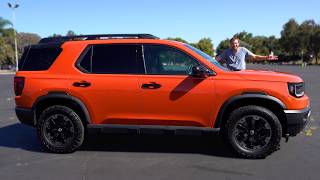
The 2026 Honda Passport is Honda's attempt to enter the rugged off-road SUV segment, competing with the Jeep Wrangler, Toyota 4Runner, and Ford Bronco. However, the reviewer argues that it falls short due to its unibody construction, lack of low-range gearing and locking differentials, and cosmetic off-road upgrades that don't match true off-roaders. The Passport is essentially a smaller, two-row version of the Pilot with marketing-driven ruggedness, leaving it in a compromised position.
The Passport is Honda's new rugged SUV meant to compete with the Jeep Wrangler, Toyota 4Runner, and Ford Bronco, but it falls short of all of them.
The Passport first came out in 2019 as a smaller version of the Pilot with two-row seating. For 2026, Honda doubles down on ruggedness to compete in the mid-size off-road SUV segment.
The 4Runner sells 120-150k units/year, Bronco ~120k, Wrangler up to 200k, while the Passport sells under 40k units/year. Rivals have body-on-frame construction, locking differentials, low-range gearing, and more ground clearance.
Honda claims they want a balanced off-roader that doesn't sacrifice comfort, but the market prefers capability. The real reason is Honda's conservative approach and reluctance to invest in a body-on-frame SUV.
The TrailSport model includes recovery hooks, a front skid plate, and all-terrain tires. These are genuine upgrades but limited compared to rivals.
Most off-road changes are cosmetic: orange DRLs, a non-functional hood scoop, plastic rear bumper styled as a skid plate, and terrain trim inside. These do not add capability.
The Passport has a naturally aspirated V6 with 285 hp, but the 4Runner's turbo four-cylinder has similar power (280 hp) and better fuel economy (20 mpg vs. 4Runner's higher mpg). The 4Runner also offers a hybrid with 325 hp.
The Passport starts around $46,000 (RTL) and $50,000 (TrailSport), similar to the more capable 4Runner and the larger Pilot. No significant discount despite being smaller and less capable.
The reviewer likes the boxy, rugged styling and the high-quality interior with supportive seats, good materials, and excellent ergonomics typical of Honda.
The infotainment system is responsive with configurable shortcuts. Climate controls are separate physical buttons, a welcome feature. The gauge cluster is configurable.
A dedicated camera button on the wiper stalk provides quick access to multiple camera angles, useful for parking and off-road visibility.
Features include a storage compartment above the glove box, door pocket cup holders, and a button-based gear selector. The backseat is spacious with no transmission tunnel hump.
The cargo area is large, square, and flat with side pockets, a hidden underfloor bin, and a household power port. However, rear seats cannot be folded from the cargo area.
The Passport drives smoothly and quietly, typical of a unibody crossover. The all-terrain tires add some noise but are tolerable. The ride is comfortable, but the vehicle lacks true off-road capability.
The Passport scores higher than the Pilot in weekend (off-road) capability but lower than the Bronco and 4Runner. In daily driving, it scores lower than the Pilot and Telluride. Overall, it's a compromise that doesn't excel in either category.
The 2026 Honda Passport is a well-built, comfortable SUV with a nice interior and smooth ride, but its off-road capability is compromised by Honda's reluctance to build a true off-roader. It lacks a clear advantage over the Pilot, CR-V, or rivals like the 4Runner, making it a difficult vehicle to recommend.
What is the base price of the 2026 Honda Passport TrailSport?
Around $50,000.
10:27
How much horsepower does the Passport's naturally aspirated V6 produce?
285 horsepower.
09:16
What is the fuel economy of the Passport TrailSport?
About 20 miles per gallon combined.
09:57
What type of construction do the Toyota 4Runner, Ford Bronco, and Jeep Wrangler use?
Body-on-frame (truck-based) construction.
03:14
What is the ground clearance of the Passport?
About 8.5 inches.
03:45
How many units per year does the Passport typically sell?
Under 40,000 units per year.
03:01
What are the two off-road drive modes available in the Passport TrailSport?
Sand mode and trail mode.
14:00
What is the main reason Honda does not build a body-on-frame off-roader?
Honda is conservative and does not want to invest in a new platform that might not sustain long-term sales.
04:58
What feature does the Passport lack that true off-roaders have?
Locking differentials and low-range gearing.
03:29
What is the 'walk-away' function in the Passport's cargo area?
A button that closes the tailgate automatically when you walk away.
21:13
Sales Disparity
Highlights the market's clear preference for true off-roaders over marketing-based ones.
02:35Honda's Conservative Strategy
Explains why Honda avoids investing in a true off-roader despite segment success.
04:12Cosmetic vs. Real Upgrades
Illustrates how Honda prioritizes appearance over actual capability.
07:00Powertrain Comparison
Shows the Passport's V6 is less efficient and not more powerful than rivals' turbo engines.
09:00Doug Score Analysis
Quantifies the Passport's compromise: neither top in off-road nor daily driving.
26:50[00:04] This is the new 2026 Honda Passport and it's Honda's rugged new SUV meant to take on the popular off-roader segment that includes vehicles like the Jeep Wrangler, Toyota 4Runner, and Ford Bronco. The Passport is nice, but it
[00:19] falls short of all of those. And today, I'm going to review it and explain why. And I'll show you all of its quirks and features.
[00:33] Passport review with an update on my 1973 F-250. So, if you haven't tuned into this Car Pod lately, I inherited this F-250 from my late father-in-law. work on it, but he wasn't quite able to finish it. And so, with the help of
[00:47] AutoZone, we're finishing the rescue. So, today we're replacing her front and oldie, we have to make sure that it's a right fit. Luckily, all I had to do was model, and our friendly AutoZoner here found exactly the shocks we need at a
[01:02] To make the switch, we're going to need a spring compressor, which I don't have, but AutoZone does. And lucky for me, I can borrow theirs through their Loan-A-Tool Program. And since I'm at AutoZone, it seemed like a good time to
[01:15] oil, an oil filter, and some shop floor coolant and additive just to be on the safe side. And we'll also grab these. Keep following Cars and Bids to see what we tackle next with the help of AutoZone.
[01:34] [laughter] And I'm going to start by explaining why I think this vehicle falls short of where Honda hoped it would land. So, let's start with a little history. The Passport first came out back in 2019. And back then, it was
[01:48] basically just a smaller version of the Pilot, but with two-row seating. Now, at the time, Honda tried to market that Passport as sort of a rugged off-roader type vehicle, but nobody really believed them. And so, for the 2026 model year,
[02:03] there's a brand new Passport, this car, and Honda is doubling down on the ruggedness. Now, it's very clear that Honda's doing this, the off-roady Passport, because they've noticed the massive success of the mid-size off-road
[02:20] SUV segment with the Toyota 4Runner, the Ford Bronco, the Jeep Wrangler, and others. And they want to get in on that for themselves. But, there's just one problem. They're not really going about it the right way. Allow me to explain.
[02:35] The 4Runner, for the last 10-plus years, has sold around 120 to 150,000 units per year. The Bronco, since it was revived a few years ago, has sold around
[02:47] 120,000 units per year. And the Jeep Wrangler, in its very best years, can beat 200,000 sales per year. Meanwhile, the Passport, sales per year. Meanwhile, the Passport, since it came out back in 2019, has sold
[03:01] since it came out back in 2019, has sold under 40,000 units a year in most years. And what's the reason for that? The simple truth is, those cars have far simple truth is, those cars have far more credibility among real, actual
[03:14] off-roaders who want to go places and do things. All of those vehicles are body-on-frame, sort of a truck-based, tough platform. Whereas, this is a unibody, car-based design. Those cars offer locking differentials, sometimes
[03:29] multiple lockers. They have selectable four-wheel drive with low-range gearing. This doesn't have locking diffs or low range. And those vehicles all have more ground clearance than the Passport, too. This has about 8 and 1/2 inches of
[03:45] ground clearance. The 4Runner is up to 10 inches. The Bronco can go up to 13 inches with the right trim. They are just far more capable off-roaders than
[03:57] the Passport, which is based on the Honda Pilot mid-size family crossover. it's pretty clear that the market prefers the true off-roaders like the 4Runner and the Bronco to the sort of marketing-based off-roaders like the
[04:12] Passport. So, the question then is, why doesn't Honda develop one of those? I told me they wanted to make an off-roader that had a more balanced feel that didn't sacrifice comfort or ride
[04:27] quality in the name of off-road capability, which most people don't use all that often. However, it's very clear that the market wants to make that sacrifice. They're selling a half million 4Runners, Broncos, and Wranglers
[04:42] every year to people who don't mind sacrificing that stuff for the capability of an off-road SUV. The truth, the real reason why Honda doesn't want to make the investment in one of those vehicles because they're worried
[04:58] that the market might slow down, that off-roaders might not last forever. And it's a lot cheaper to create a smaller version of the Honda Pilot and give it a version of the Honda Pilot and give it a few off-roady touches rather than go all
[05:10] in on a body-on-frame, low-range, locker, full off-road SUV. It is typical conservative Honda to watch from the sidelines and not make any big
[05:22] investments in new products outside their core six vehicles, even though this off-roader segment has been so successful and so profitable for rivals. The result is that the Passport ends up in this weird kind of compromised
[05:37] position where it's really just a smaller version of the Honda Pilot with two-row seating where the Pilot has three-row seating. Plus, the Passport three-row seating. Plus, the Passport has a few off-road upgrades, the easy
[05:51] affordable upgrades, but it also has a lot of adventurous marketing to try to lot of adventurous marketing to try to make people think it can go anywhere and do anything. I'm going to start by showing you the real off-road upgrades.
[06:04] One is up here. You have these recovery hooks. They are painted orange to emphasize how recovery they are, and Honda demonstrated just how capable these hooks are by dangling several Passports from a crane out in
[06:20] the desert just to show that the hooks could, I guess, handle that much weight. Kind of interesting and kind of a nice touch. This particular Passport, the touch. This particular Passport, the TrailSport model, also has a skid plate
[06:33] up front. You can see, look under, there is a real skid plate under here to protect mechanical components in front of the vehicle from getting damaged while you're off-roading. And the TrailSport also comes with these
[06:45] all-terrain tires, and you can see they are more aggressive than your standard street tire, which comes on the base model version of the Passport, the RTL trim. The TrailSport gives you the all-terrains, so you can go anywhere, or
[07:00] somewhere. Now, beyond those upgrades, most of the other off-roady changes to the Passport are cosmetic marketing changes. For example, up front you have
[07:12] Passport stamped into the front bumper area to make it seem tough and trucky. And you also have that in back. You can see Passport stamped into the rear, sort
[07:24] of recalling old '70s and '80s tough, durable pickup trucks that had their name stamped into the tailgate. Another cosmetic upgrade to the Passport, if you get the off-roady TrailSport model, you get orange daytime running lights
[07:38] instead of your typical white daytime running lights. Orange has kind of community that you're capable. The Bronco Raptor has it and various other off-roaders, so this has it as well. Of course, it doesn't actually add to the
[07:52] capability. Same deal, by the way, with the hood scoop. You can see there is a hood scoop up front to suck air into the powertrain. Really get you going off the pavement. Except the Passport shares its engine with the Pilot and doesn't have a
[08:07] hood scoop. So, it's probably not really necessary, but it's there and it looks cool. And speaking of cosmetic upgrades, how about in back where the rear bumper looks like it's a skid plate, but on closer examination, it's actually
[08:21] plastic. And if you go under that rear bumper, you will discover there isn't a rear skid plate in the Passport TrailSport. Instead, you just have one up front. In back, it just sort of looks like you do. Now, also in back, you will
[08:35] notice the badge for the TrailSport includes an image of a mountain that this vehicle surely cannot climb, but it makes you think that it can. And another
[08:47] cosmetic upgrade, another big one inside, you can see all this terrain trim in the center console. It looks like an off-roady terrain. Makes you feel especially capable. And it's also here in this little storage compartment
[09:00] on the passenger side. More terrain trim to make you feel like you can go anywhere in your Passport. Another rather interesting quirk of the Passport is its powertrain. Honda was proud to tell me this has a naturally aspirated
[09:16] tell me this has a naturally aspirated V6. About 285 horsepower. And I think that will appeal to some enthusiasts, especially because rival off-roaders have gone turbocharged instead of naturally aspirated or, in the case of
[09:28] naturally aspirated or, in the case of the 4Runner, ditched the V6 altogether. The problem is the NA V6 doesn't really benefit the Passport all that much, at least on paper. 285 horses, but the Forerunner's base turbo four-cylinder
[09:43] Forerunner's base turbo four-cylinder powertrain has about 280 horses. So, boost. And in the Forerunner, you can upgrade to a more powerful turbo hybrid upgrade to a more powerful turbo hybrid four-cylinder with 325 horses. More
[09:57] importantly, the Passport only gets about 20 miles per gallon in combined city and highway driving if you get the Trail Sport model. And the Forerunner beats that with both of its powertrains. The one that has the same power and the
[10:12] one that has more power actually gets a better fuel economy. So, the Forerunner has more power, better fuel economy. This does still have the NAV6, but you kind of start to wonder why when you look at those numbers. And it's the
[10:27] same deal with pricing. The Passport starts around $46,000, a little above that for the base level RTL model. This one, the Trail Sport, RTL model. This one, the Trail Sport, starts around $50,000, which is pretty
[10:40] similar in pricing to both the Forerunner, which is more capable, and the Pilot, which is larger with that extra third-row seat. So, you don't get a big discount by buying the Passport, even though it's smaller than the Pilot
[10:53] and less capable than the Forerunner. So, that explains why I'm a little skeptical of the Passport, but now let me go through its quirks and features, including some stuff about this vehicle I really like, including its styling. I
[11:07] really like how the Passport looks. I like the boxy, squared-off design. I think it looks rugged and tough and distinctive, not like a generic crossover, like Honda's own CRV can look at times. I think this has a nice,
[11:21] rugged, fun look to it. It gives it the off-road feel that, well, it doesn't necessarily actually have. I could do without the wheels, which sort of look like Honda's version of aftermarket off-road wheels. They're not necessarily
[11:36] the greatest, the most attractive, but the overall profile and style of this car, I think, looks really nice for a mid-size crossover. And the same goes for the interior. You get in here, and this is a nice interior where you have
[11:51] nice materials basically everywhere you look. Specifically, I want to start with the seats, which really look great. Not only are they supportive and well bolstered, but they have this nice perforated leather, two-tone with nice
[12:03] stitching on the bolsters, as you can see. Really attractive, almost luxury car-looking seats in here. And even though I'm not necessarily in love with the Passport, it's worth pointing out you get inside and you're in a Honda.
[12:15] And that is always a good thing in terms of interior layout and materials quality, reliability, and durability. And you can see that looking around this interior. A lot of shared stuff with other Honda models, but generally
[12:29] means it's tried and tested, it works, and it's almost always well laid out and placed exactly where you'd expect. The ergonomics of this interior are fantastic, just like in the Pilot, the
[12:41] CRV, and other Honda models. This interior is a nice place to spend time and a well-designed, well-executed cabin. As for specifics, let's start with the infotainment system, since you'll be interacting with it a lot. It
[12:55] pops up out of the dash and it's very easy to see and figure out, very responsive to the touch, high-res, obviously full-color, easy to use. And I like the little side panel over here on the left, which kind of always stays
[13:07] put, so you can go to one of your shortcuts, which are configurable, by the way. You can choose the things you use the most and then stick them over there, so you have an easy way to get to them on the screen at all times, which
[13:20] is neat. Also a good idea in this car, the climate controls are fully separate from the infotainment system, which means you have all buttons and switches for the climate controls. You don't have to go into some menu like you do in so
[13:33] many other cars in order to turn on or turn up your climate controls, which is really nice. Now, unfortunately, the rear lock button that you see here in the center control stack, that's for the rear climate control, not a rear locking
[13:47] rear climate control, not a rear locking differential. Oh, but we can dream. Now, you go into the center and you can see the drive mode switch, which by the way is orange in the Trail Sport model to
[14:00] emphasize the off-road sportiness. You have the drive mode switch, and there are several off-roady drive modes. Specifically, there's a sand mode and there's a trail mode, which in theory make this car relatively capable off the
[14:14] pavement, although I have my doubts compared to a car with low-range gearing and a front or rear locking differential. Nonetheless, you do have those modes to choose from, and as you can see, you dial them up in the gauge
[14:26] cluster screen, which is also a pretty nice piece of technology in this car. It's not the very best in the industry. You can't do like a full-screen map or make it quite as configurable as I would like, but you do have a good amount of
[14:39] configurability on the left and right sides of the screen, so you can dial up basically whatever information you want to see and have it showing there in the gauge screen, which is nice to see that level of configuration. Now, one other
[14:51] thing I really like in this car and other Honda models is the ease of pulling up the camera system. Obviously, by law, you go into reverse, the backup reverse, you sometimes still want a camera parking in a tight spot, and this
[15:05] car makes it easy. Just push this button at the end of the wiper stock that says camera, and instantly the cameras pop up in the center control stack, and so you have access to the cameras. You push it again, and you get even more camera
[15:18] angles to show like if If parking in a tight place, you're not sure where the edges are, it's nice to be able to quickly dial up the camera and have that without having to go through some touchscreen menu to access the camera
[15:31] system. And next up a few other interesting quirks in here. For one, the word Passport sort of imprinted in the plastic in the center of the dashboard. I believe that is an attempted nod at Toyota putting the giant Toyota
[15:45] lettering on the dashboard of its TRD Pro vehicles, which is massive and ridiculous. And I think they've tried to emulate that here, but sort of on a lesser scale, which is fitting with the car. Same deal, by the way, with the
[15:58] trim in the center. You can see it's sort of an attempt at the digital camo that you get in the TRD Pro versions of the 4Runner, the Sequoia, the Tundra. as well, and you can see it also on the door panel. Not quite as camouflaged
[16:13] like you have in the Toyotas, but it is an attempt, I think, to get to the same kind of trim. Again, a nod to Toyota and their big success in this segment. Couple other things I like in this interior. For one, this storage
[16:26] compartment above the glove box. I mentioned earlier, it's terrain trim on the bottom, which is whatever, but the storage compartment itself is nice to have a little extra storage on the passenger side in addition to the glove
[16:38] box, which is nice. I also love the cup holders mounted in the door pockets. You can see them here. That's in addition to central cup holders. So, you have a lot of cup holder solutions in this car, and it's nice to have that extra door pocket
[16:52] easy to reach and well-placed in the door. The other interesting quirk in this interior is undoubtedly the gear in the center. You have buttons and switches to go into gear. Park is a
[17:05] button on top, drive on the bottom surrounded by chrome trim. Reverse is a little switch you push in in the center, and they all light up with different which gear you've selected. Definitely a quirky way to do your gear selector, but
[17:21] it works. And next up, we move on to the backseat in the Passport, which is big, quite big in fact. I'm surprised just how much space there is here. Legroom, hip room, headroom for a tall adult. There's a lot of space. I think in part
[17:35] because you're not competing for space with a third row in the back since the Passport is only two-row. And if you want that third row, you get the Pilot. But there's good space front and rear seats here. And an added bonus, there is
[17:48] no hump in the floor where you normally have like a drivetrain, a transmission tunnel going through the middle of the car. You don't get that here. Even though the Passport comes standard with all-wheel drive, so this one has it, you
[18:00] do not have that drive line. That makes the middle seat a lot more usable than it is in a lot of rival mid-size SUVs. More clever packaging from Honda. And this backseat is a nice place to spend time beyond it just being big cuz
[18:14] here. For instance, you have rear seat climate control as you can see. You can adjust the temperature, [clears throat] the fan speed, and you even have heated that, you have a couple of power ports, two USB-Cs to charge devices, and you
[18:29] have a household-style power port, which is always nice to see in the backseat and not just the cargo area like some cars have it. Other nice benefits back here, you have built-in sunshades in the windows to kind of keep the sun off your
[18:43] face or off a toddler if you're out rock crawling on some pebbles >> and it's really sunny. That's nice to have. And I also really love the fact that you have those indoor cup holders even in the back. You can see cup
[18:57] holders molded into the door panel in the back on both sides for cups back here. That's especially nice because most cars have cup holders in the center armrest. And this one does too. Fold it down and there's cup holders there, but
[19:11] that means you often have to choose between a center passenger or a cup holder. Here, you don't have to make that choice because of those cup holders that they've integrated that feature. More clever packaging in the Passport.
[19:24] Now, here finally, we move on to the cargo area in the Passport. Pop open the power tailgate, and you can see back here the cargo area has a lot to like starting with it's huge. Again, you're not contending with a third row seat.
[19:37] You have a lot of cargo space in back, and owing to the design of this car, it's square, it's flat, it's tall. There's no tapered roof line stealing cargo space here. You got a lot of storage. And it's nice to see extra
[19:50] storage on the side. You have this pocket over on this side, and over on the other side, and also another pocket over here. It is always nice to have those storage compartments in cargo areas, especially in an off-roady
[20:03] vehicle, to store gear like hooks or tow straps. I like to see that. And if you want even more storage, you put your hand into this little cubby, you lift up storage compartment down here like a big
[20:17] bin next to the spare tire where you have even more storage capability for exactly that kind of stuff. A tire compressor to pump up the air, whatever. It's nice to see all that space and all those little spaces in this cargo area.
[20:31] Also worth pointing out another great benefit back here. There's a power port, and it's a household port. So, you have one in the back seat and in the cargo area, which is fantastic to see. Adds hugely to your convenience, especially
[20:44] again for plugging in an air compressor to fill up your tires, or basically anything else. Love to see two household ports in this car. Beyond that, a couple of minor drawbacks in the cargo area. For one, you cannot fold the rear seats
[20:58] latch back here you pull and fold them down. You got to go individually to the rear seats to get them folded. However, there is one clever feature here, and that's the walk-away function. It's this button inside the cargo area. You press
[21:13] it's supposed to close when you walk away. So, if you press it and then have full, it will close for you automatically without you pressing the button again once you've grabbed all your stuff, which is a pretty cool idea.
[21:29] So, there you go, the quirks and features of the Passport. Overall, it's a good car, but I suspect most people would probably prefer the Pilot with its three-row seating or the CR-V with its smaller size and better efficiency or
[21:43] the 4Runner with its added capabilities rather than kind of a compromised blend of all three. Regardless, let's get it out on the road and see how it drives. All right, driving the Passport TrailSport.
[22:01] off-roady feel, and there's a lot of marketing that goes into making this car seem off-roady, but the simple truth is it just is not particularly off-roady. Now, I want to start this drive by saying I actually
[22:15] like this car. I really like the way it looks. I think it's one of the best-looking crossovers, and I like the way it drives. I think it's great. I just don't really understand why anyone
[22:28] [laughter] would buy it. The thing of it is is that um for similar money, you can buy a Pilot, which has three-row seating. And if you don't need three-row seating, for less money you can buy a CR-V, which is no
[22:42] longer the tiny SUV that it was. It's like now quite roomy inside and gets way like now quite roomy inside and gets way better fuel economy. And so, that leaves to be the off-road capability, but it doesn't really have that either.
[22:55] >> It's It's better than a Pilot, but it's, you know, you can go get a 4Runner for about the same money or less, you can get better resale value, better off-road can get a Wrangler. [clears throat] So, if off-roading is what you want, there's
[23:08] other options, too. I'm just not quite sure exactly why anyone would really want to get this car, unless you like want the space of a Pilot but with two rows. Uh I guess, in which case just fold down the seat in case you want to
[23:20] use it ever. I It's just I just don't get it. But, I will say, from a driving perspective, even this TrailSport model is a surprisingly smooth ride. And that's because it's not a body-on-frame SUV like the 4Runner. And so, you get
[23:34] soft ride. The drawback of that, of course, is you don't have sort of the toughness and the rugged capability that you might in a vehicle that's surprised at how relatively nicely it drives. Everything else in here is is
[23:47] exactly what you'd expect. It's nice. It has a good seating position. You sit up comfortable. It is not particularly noisy. I will say that these tires are noisier than what you would have in a regular Passport or Pilot. I presume. I
[24:01] haven't driven a non uh TrailSport Passport. But, uh but my assumption is loud. That's what happens with all-terrain tires. You get an RTL with a little quieter. But, it's not so bad. It's totally tolerable in here.
[24:17] Um nice cabin, nice seating position, feels good. Like, it is generally a nice, well-done car. don't think it's really an off-roader. And I think Honda The other problem is, truthfully, Honda makes some seriously competent
[24:31] crossovers. The three core Honda SUVs, which are the HR-V, the CR-V, and of course, the Pilot, they're all just so good that I don't really see a great opportunity for another vehicle to come in and do anything better. And this
[24:46] vehicle proves that. Unless you actually go out and do something different, like the Bronco, there's not room to to on Honda's SUVs. That's why they sell so many of them. That's why they're so good
[24:59] and so popular. But, you know, regardless, from a driving perspective, good, fine, no complaints. It drives well. You're not really giving up anything over Pilot. Obviously, it feels a little bit quicker
[25:12] which has a kind of a a smaller four-cylinder that that's not as strong. You get nice smooth shifts from the transmission. Feels nice and smooth. No problems there. I generally think this is a pretty good vehicle. I
[25:25] really do. I just I don't think it's like good for the reasons that Honda says it is, the off-road capability. And with that in mind, I think there are other alternatives that are that are a little bit more desirable for a variety
[25:37] of reasons. But, you know, Honda makes a good car. There's no question about one. I just think it's a it's a little bit of a cop-out. Oh, we want to get into this off-road SUV craze, but we don't really
[25:49] go all the way for it. We're going to do this instead. I do think there's a lot to like in general with Honda's vehicles, Honda's products. I just I don't I having trouble finding the kind of the unique selling proposition of
[26:02] willing to commit to making it a little bit more, you know, capable like they bit more, you know, capable like they market it. And so, that's the 2026 Honda market it. And so, that's the 2026 Honda Passport. This is a nice SUV, but its
[26:16] primary advantage over the Pilot and the CRV are its off-road capabilities, which are compromised because Honda won't commit to making a true off-roader. As a result, it doesn't seem to have a primary advantage or benefit over the
[26:32] Pilot or the CRV, and it's not as capable as the 4Runner, making me wonder exactly why it's here. Anyway, now it's time to give the Passport a Doug score.
[26:50] 100, which puts it here against these similar cars. This score really illustrates the Passport's compromises. It earns a higher weekend score than the Pilot, but still falls far below segment leaders like the Ford Bronco and Toyota
[27:03] 4Runner. Meanwhile, it earns a higher daily score than those, but still loses out big time to the Pilot and Telluride. And overall, the Passport's total score sees it shine brightly in neither category. Honestly, the Passport isn't
[27:16] bad, but the 4Runner does it all better, and sales numbers show that's what most and sales numbers show that's what most buyers think, too.
⚡ Saved you 0h 27m reading this? Transcribe any YouTube video for free — no signup needed.