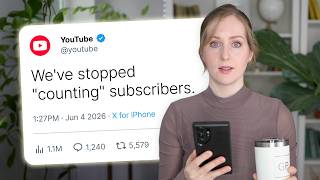

Subscribers Don't Matter Anymore on YouTube
60sThe shocking claim that subscriber counts no longer drive views taps into every creator's fear and hope, making it instantly shareable.
▶ Play Clip"Delivers on the title with actionable 2026 strategy, though it repeats itself and closes with a pitch for a free masterclass."
In 2026, YouTube's algorithm is now powered by AI, fundamentally changing how videos are tested and recommended. This video breaks down the biggest shifts—audience matching, a new performance trifecta, specificity, Shorts, TV/podcast viewing, AI, and trust—and offers actionable strategies for creators to grow in this new landscape.
YouTube has changed more than in the past nine years, largely because AI now powers the algorithm and creators use AI tools. The algorithm is functioning quite differently, and creators must adapt.
YouTube is no longer focused on growing channels. Subscriber count matters less because people often subscribe to an ideal version of themselves. The algorithm now matches individual videos to the right viewers.
YouTube tests videos with potential viewers and expands reach if they perform well. Big channels can't rely on subscribers, but small channels have a huge opportunity.
Make videos that strongly appeal to one type of person. Ask 'Who is this for?' and ensure the algorithm understands who the video is for.
YouTube now prioritizes click-through ratio, retention, and viewer satisfaction (likes, comments, session behavior, surveys).
Clickbait hurts viewer satisfaction. Make a clear promise in title/thumbnail and deliver on it fast; cut slow intros.
Success comes from making viewers feel their time was well spent so they watch your next video. This parallels email marketing, where who the email is from matters more than the subject line.
Niche, specific videos outperform broad content. Address specific stages, problems, or interests, such as 'how to get your first 10 customers with no ad budget.'
With suggested videos driving discovery more than search, titles and thumbnails can be specific and tailored to a defined audience rather than targeting broad keywords.
Shorts views are exploding, but they don't build a business or convert viewers into long-term subscribers. Use them to test ideas, attract new viewers, and bridge to long-form content.
People watch on TVs and listen as podcasts, so longer, less visually complex videos can perform extremely well. Prioritize audio quality, clear structure, and storytelling.
Low-effort, repetitive, generic AI content is being deprioritized. Viewers reward real experience, unique opinions, and genuine personality, so use AI as a partner but inject your own voice.
YouTube prioritizes content that viewers see as credible and experience-based: share specific numbers, timelines, real stories, and lessons learned. Avoid vague, broad advice.
In 2026, each video earns its own reach; specific content beats broad, satisfaction beats clicks, and quality beats posting volume.
The biggest takeaway: stop trying to game YouTube's algorithm. Instead, deeply understand and satisfy a specific group of viewers. When you earn their trust and deliver real value, the algorithm rewards you with reach.
What are the three components of YouTube's new 'trifecta' for ranking?
Click-through ratio, retention, and viewer satisfaction.
05:18
Why does YouTube now care less about subscriber count?
Because people subscribe based on their ideal self, not their actual behavior; actual watch behavior is a better signal.
01:42
How much lower is the conversion rate of Shorts viewers to subscribers compared to long-form viewers?
Less than 10% of the rate.
16:46
What is 'AI slop' and how does YouTube treat it?
Low-effort, repetitive, generic content created fully by AI; it is passively deprioritized because viewers respond poorly.
23:14
What viewing formats now make YouTube a bigger opportunity?
TV and podcasts; people watch in the background or listen, so longer videos can perform well.
18:52
What should creators do to increase viewer satisfaction?
Avoid clickbait, make a clear promise, deliver value quickly, and design videos that keep people watching.
06:54
How can Shorts help grow a channel?
Test video ideas, attract new viewers, and serve as a bridge to long-form content with calls to action.
15:54
What kind of content does YouTube's algorithm now prioritize for trust?
Content with specific numbers, timelines, real stories, lessons learned, and authenticity, rather than vague generic advice.
25:10
Each video is tested on its own merit
Small channels now have a real opportunity because YouTube promotes videos based on test-audience performance, not channel size.
02:51Viewer satisfaction is now a ranking signal
Beyond CTR and retention, YouTube measures likes, comments, session behavior, and surveys, so making viewers happy matters as much as clicks.
05:58Specificity beats broad appeal
Niche, specific videos strongly appeal to a defined viewer and perform far better than generic one-size-fits-all content.
11:27Trust rises as a ranking factor
Authentic, experience-based content with real numbers and stories is now systematically prioritized over surface-level advice.
25:10[00:02] nine years now, but I don't know if I've ever seen a year when YouTube has changed more than it has in 2026. And I think that that's mostly because AI is on the scene now. And creators are using AI more than they ever have in the past.
[00:15] And not just creators, but YouTube itself is using AI to power the algorithm. So, the algorithm is functioning quite differently than it used to. So today I want to share with you some of the biggest reasons that
[00:27] YouTube has changed and how the algorithm has changed so that you can work with it. Because if you have one takeaway today more than any other, it's that while YouTube has changed and while there are more creators on the platform
[00:42] than ever before, it's not necessarily any harder for you to grow. Because before, there's also more viewers than ever before. And this new AI powered algorithm can actually really work in your favor again if you know how to work
[00:58] your favor again if you know how to work with it. But a lot of people are still touting oldfashioned advice when it comes to YouTube. They are still trying to get you to play the keyword game and focus on SEO. And while those things
[01:12] still play a role, it's a much much smaller role than ever before. And so today I want to teach you some of the ways in which the algorithm has changed and help you see some of the biggest shifts that you should make with your
[01:27] content and with your channel strategy to be able to grow here on YouTube. So one of the very biggest shifts that has happened is that the algorithm has is now audience matching more than ever before. So YouTube is no longer really
[01:42] focused on growing channels. they've realized that that doesn't matter to them very much and especially that subscriber count doesn't matter because people choose to subscribe or they don't but they don't always choose to
[01:55] subscribe to kind of the right thing like people don't always know exactly what they want or what they really will choose to watch. It's kind of like how sometimes we buy things for kind of our ideal version of oursel. Like maybe buy
[02:09] a yoga mat because you want to be the sort of person who does yoga, but that might be different than the reality of who you are or what your schedule really has capacity for. Well, people do the same thing with YouTube where they
[02:22] subscribe to channels based on what they think that they want to watch or that YouTube has realized that what really matters and what really indicates what they choose to watch and how long they choose to watch it. And the things
[02:37] significant maybe like leaving a comment or clicking the like button. Those things a few years ago YouTube was paying zero attention to, but now they're actually paying a lot more attention to and it really can have a
[02:51] attention to and it really can have a big impact on your video's success. So, you do not need a big audience to get views anymore. Now, yes, a channel that has a lot of subscribers is going to get more views out of the gate because their
[03:05] videos will be recommended to more people. But whether you have a big audience or not, YouTube is going to be testing your video with potential testing your video with potential viewers. And if it performs well with
[03:17] those kind of test viewers, then it will show it to more and more people. And it's done this to some extent for a long time, but now it's really leaning heavily into this and there's just way more opportunity there than ever before.
[03:31] big channel, you can't really rely on your subscribers to just carry your content anymore. You got to make videos that stand on their own two feet. But it's obviously a huge opportunity for those of you with tiny channels. So, a
[03:45] lean into this and work with this aspect of the algorithm include, first of all, making sure that you do target a specific viewer. Okay? Make sure that your video will strongly appeal to one person or one type of person. Don't try
[04:01] to give it kind of broad market appeal because then it's not going to appeal very strongly to anyone. People won't click on it. People won't click that like button. It is just not going to go very far. You also can ask that right
[04:14] question which is exactly who is this for? If you aren't clear on that and you can't answer that question fast, then your video probably is not focused enough. And then finally, you need to make sure that the viewer is going to
[04:26] understand that it's for them, that the algorithm is going to understand who it's for. And this algorithm, it is smart in ways that we just can't fully wrap our mind around kind of the way. It's kind of weird how ChatGpt can kind
[04:39] of understand you. Well, now YouTube isn't just like listening to your video, which it's done for a while, but listening to your video for keywords. Now it can actually kind of understand what you are saying and who it's going
[04:52] to appeal to. And it's just getting better and better at doing that. So, that's the first thing that we see in 2026 is that the algorithm is really um
[05:04] testing each video based on its own merit rather than judging it based just on how your channel is performing overall. All right. Now, the second thing that we see that's working in 2026 and the
[05:18] second way in which the algorithm has changed is that now there's this new trifecta that the algorithm is focused on. It's a combination of click-through on. It's a combination of click-through ratio, retention, and satisfaction.
[05:31] So, for quite a while, many years now, everybody has known that click-through ratio, which is like the percent of people who click on your video when it is suggested to them. And then retention, how long people keep watching
[05:43] it, where the most important algorithm signals. And then if you can optimize will recommend your videos to more people. But now there is a new player in the game, a new important ingredient in the recipe, and that is viewer
[05:58] satisfaction. Now, YouTube is judging viewer satisfaction based off of some of the kind of obvious clues like whether they click that like button, whether based on how long they continue to watch it. but it's also judging things that we
[06:13] don't even know exactly how it's measuring. But for example, what the viewer chooses to do after watching your video and not even just immediately go on to watch another video from your channel or do they at least stay on
[06:26] channel or do they at least stay on YouTube, but also what they do for the lifespan of their session on YouTube. So, for as long as they're on YouTube, how did your video end up affecting their behavior? YouTube is also doing
[06:38] lots of like polls and surveys to ask people whether they are enjoying their experience on YouTube. And that can actually have an impact on the success and the reach that your video ends up getting. So, one way that this matters
[06:54] strategy is by really avoiding clickbait. Clickbait used to be the name of the game with YouTube. And clickbait, as I'm sure you know, is when a a as I'm sure you know, is when a a YouTuber uses a thumbnail and or a title
[07:08] to entice viewers to click, even if the video is not actually going to really um be appreciated by that viewer, right? Maybe the thing that was in the all. Or maybe it's a tiny part of the
[07:22] video three4s of the way through. Well, now that type of video is performing much more poorly on YouTube because the it's not going to give YouTube these viewer satisfaction signals that the algorithm is really looking for. People
[07:37] are not going to give that vid video a big thumbs up if they are not happy with it because it was a bait and switch. They're also not going to watch the They're also not going to watch the video through in a nicea continuous way
[07:51] that they're enjoying watching it. Instead, they're going to click around looking for that clickbait moment. So, what you need to do here is make a clear promise and deliver on it quickly in your video. So, this can be done by
[08:07] cutting down on slow intros and of course designing viewers to keep people I said that wrong. designing videos to keep people watching and feeling like their time was well spent, of course, but the most important thing is that you
[08:22] and you're giving it to them in a way that's easy for them to follow along with. And that is going to make them to just mean click that like button, but I mean really enjoy it and really get
[08:36] value out of it and want more from you. Think about it this way. It is not just about getting the click anymore. It is about getting the next click. This is something that I thought about for a long time with email marketing where a
[08:49] lot of the time when we are doing email marketing, people want to know what the best subject line is. What do I really need to put in that subject line? And of subject line, but what are winning subject lines? And sometimes there are
[09:03] even like resources or trainings on how to write a great subject line. But at the end of the day, while a subject line has an impact on whether or not someone clicks on and opens your email, the thing that matters much much more is who
[09:16] the email came from, right? Because it doesn't matter what the subject line is. If your best friend sends you an email, unless it looks like she got hacked or from her. Even actually if the subject line is blank. But on the other hand, if
[09:30] you get an email from a spammy marketing company or a company that obviously looks like they are just trying to sell you something, then you're not going to click on it, no matter how compelling or intriguing that subject line is. So,
[09:46] what really matters is who the message is from. Well, one way that you can impact that is when you get a new email subscriber, the emails that you send to them, it's going to educate them on who you are and whether the content you're
[10:02] sending them is valuable. That is going to make you become a sender that they want to open emails from or a sender they don't want to open emails from. So, it's really your past email and your past emails that end up affecting more
[10:17] than anything whether they are going to open your next email, not your subject line. Well, the same thing is happening on YouTube now. Now, instead of just trying to get this video, specifically this title and thumbnail to get people
[10:31] that we're designing videos that are giving people a great experience so that they then want to come back and watch another video from your channel. That another video from your channel. That has long been the strategy behind the
[10:45] scenes, you know, of creators who know what's up for growing their channel. But now, this is even essential just for getting each video to do well. Because the same things that you will do that would get a viewer to come back for more
[11:00] from your channel next week and next month and so on, those are the same signals that the algorithm is now looking for and deciding whether to looking for and deciding whether to promote your video based on.
[11:12] All right, so now we move on to the third shift in 2026 and that is that third shift in 2026 and that is that specificity is winning. Okay? Because the algorithm is really uh promoting each video based on its own merit and
[11:27] judging each video based on its own merit. And because there are more viewers and more creators than ever before, the more specific you are with each video you make and specifically specific about who that video is for,
[11:42] the better because it is going to much more strongly appeal to a specific type of person. If it is about something very specific, if it's about something niche, if it's about a cult classic of some sort. So, how you can do this with your
[11:58] content is to well, first of all, instead of thinking about these big broad topics and trying to appeal to as many people as possible, really dive deep in your specific interest. Don't be afraid to nerd out. Don't be afraid to
[12:12] get too technical or specific. If you are creating content maybe for an are creating content maybe for an advanced audience or for your business and you are appealing to trying to appeal to a specific type of target
[12:24] customers, you can also really address a specific stage that someone might be at. So maybe we're not talking about a super specific topic. Maybe it is something broader like fitness as we have here on this slide. But within fitness, exactly
[12:39] what stage is this person at? Are they just trying to start to put on some muscle or have they been at this for a long time and they're trying to increase long time and they're trying to increase their 5K running speed from 25 minutes
[12:52] down to 20 minutes? Something really specific like that. We also can get a lot more specific now with the packaging of the videos. Okay, so with the titles, with the thumbnails to get them to show that specific type of person that this
[13:05] to have to go pretty broad, especially with the titles, because we were trying to target keywords. So, we really needed to target a keyword that a lot of people would be searching for. But now that YouTube is more than ever focused on
[13:20] suggested videos and that's how people are finding the videos more than ever, now we don't have to focus so much on search. And so, we don't have to rely on looking for, just that people will know they're interested in when they see it.
[13:35] Now, we got another example here on the slide, which is that instead of just business tips, you could use something like how to get your first 10 customers with no ad budget. So, that's speaking to a clear stage, a clear problem, and a
[13:49] bottom, I don't know if you can see all of that, but it says, "The more specific your video is, the easier it is for YouTube to find the right viewer." And when YouTube does find the right viewer for you, the more likely they are to
[14:02] love your videos and send those signals to YouTube that they are really enjoying it. So those viewer satisfaction signals. All right, so now let's talk about shorts. Now shorts is not my main
[14:15] strategy when it comes to YouTube by any means because I'm kind of a person with like a single-minded focus for the most part. When it comes to YouTube, it's easiest for me if I've got one strategy. And for me, my strategy is long form.
[14:28] Always has been. It's just the way my brain works. But I'm kind of missing out because shorts are huge on YouTube right now. Shorts views have just been exploding over the past couple of years. YouTube really made a great move by
[14:42] bringing shorts onto their platform. And you can grow your channel faster if you use shorts as long as it doesn't take your eye off the ball. Okay? Because long- form videos, they are where it's at when it comes to growing a business.
[14:58] You can connect with viewers in such a deeper way. When you make long- form content like this, right, where we get to have a conversation for a much longer period of time. So, I definitely would not go all in on shorts if I were you,
[15:12] from shorts because ultimately they don't tend to lead to building a channel or to building a business. They don't tend to translate into sales or paying customers or even subscribers who are clicking on ads on your video. You're
[15:27] not going to earn as much ad revenue from shorts. But you can use shorts to from shorts. But you can use shorts to your advantage and take advantage of the literally millions of views that shorts
[15:40] are getting every month. So, here are a few specific ways. First of all, you can use shorts to test video ideas. it can be easier to pump out more shorts and it can have less of a detrimental effect on your channel to produce those shorts uh
[15:54] that might not perform as well rather than producing long- form videos on topics that it turns out your audience isn't interested in. So try testing out an idea with a short first and if it's a winner and it really takes off, then
[16:07] that's a sign that you should make a long form video on that topic. Another way you can use it is to attract new viewers because people are scrolling scrolling through a much higher volume of them than they are long- form videos.
[16:21] And so there's more opportunity there for someone to potentially discover your channel. Now, this works especially well if you do this last thing, which is where you use it as a bridge to long- form content. Now, technically that
[16:33] second thing, attracting new viewers, it can work even if you don't use it as a could watch your short and choose to subscribe. However, I've talked to several top shorts creators and they've told me that shorts viewers don't tend
[16:46] to convert into subscribers at very good rates at all. Like we're talking less than 10% the rate that long form viewers convert into subscribers. And that's not great, especially for trying to like build a sustainable channel over time.
[17:01] But what you can do is you can use them as a bridge to your long form content. So this is where at the end of the short you give them a call to action. You give action telling them basically that if they want to learn more or if they want
[17:14] to find out what happened then they can click the link in the top comment or click the link in the description and that they will be able to watch the full video. Now, I would say be careful with this because you still want to make sure
[17:28] that the short can stand on its own two feet and that it will be interesting and engaging and give some sort of value, even if it's just entertainment value, to the viewer without having to go watch the long form video. But for the people
[17:42] who really enjoyed it or are curious or want to learn more, it can be great to then redirect them over to that long- form video where they can get to know you on a much deeper level and become much more enamored with you and to come
[17:57] whether they end up clicking the subscribe button or not. Because as I was talking about earlier, subscriptions are really much less important than ever are really much less important than ever before. But that doesn't mean that we
[18:11] don't need to cultivate this trust with the subscribers, right? Or this trust with the viewers, which because that is what will lead them to watch more of your videos in the future and to potentially become your customers if you
[18:23] are working on building a business. So the kind of key idea here is that shorts will get you seen, but it is long form that builds your business. And so they are a great strategy to utilize to grow your channel more quickly. But again,
[18:38] don't take your eye off the ball. The ball is the long form content unless you're just chasing um those vanity metrics and the high view counts, right? But that's not what we're after. So now the next strategy here is to understand
[18:52] that YouTube is now being consumed as TV and also as podcasts. People are now watching YouTube on their televisions in the background and even more of them are listening to YouTube as podcasts. And we have seen more and more podcasts
[19:07] actually come on to YouTube because of this trend where they now realize that unlike in past years where longer YouTube videos did not perform well at all especially like long interviews but now they are performing fantastic many
[19:22] long form podcast style YouTube videos are getting millions and millions of views. Uh and so there's a huge opportunity there. Now what this means flexibility than ever before. Now you're not locked into having to make a 12 and
[19:36] a half minute video that performs really well and is very interesting visually. Now you can if you like make a 30 minute video or a 60inute video and it doesn't
[19:48] have to be very visually interesting. Now don't completely throw away the visuals because you do still need to look professional whatever that means to you. You know look polished look somehow attractive. It needs and that doesn't
[20:03] mean you need to wear a suit and tie of course but it does mean that when people look at it and they will that they need to be like find it appealing, right? background. It certainly is often with good lighting. That doesn't mean it
[20:18] needs to be like polished and professional and perfect, but yeah, it needs to look like something people will enjoy looking at. But what we don't need to do is have the 12 and a half minute video, have a lot of quick cuts, and
[20:32] certainly not a lot of graphics or B-roll. You still can add those things into your video, but it's okay if you don't. And there are lots of different days to appeal to people who are watching in different ways. And one
[20:47] thing to keep in mind is that your opportunity isn't just YouTube anymore. opportunity isn't just YouTube anymore. you're the the opportunity to compete with things like Netflix and Spotify and Apple Podcasts.
[21:02] You are in that marketplace now in addition to the YouTube marketplace. And so that's like a bigger opportunity than there ever has been before. Now, while there are still some vlog channels that defy the odds, vlogs as a whole are
[21:16] largely out. Like they're not a format that people are watching nearly as much as they used to. And part of this is because they don't work very well with an audio only format. A lot of the time they rely very heavily on visuals and
[21:31] they don't make that much sense to people who are just listening or even watching in the background. So if you love making vlogs and you're great at it, then go for it. But it's not as big of an opportunity as it used to be. Now
[21:45] some things that are really important though are first and foremost audio quality. So many people are listening with earbuds in these days and that makes audio quality more important. And also if they're not watching, they're
[21:57] only listening, then they are going to notice issues with the audio much more than they used to. So make sure that your audio quality is topnotch, just as absolutely good as it can possibly be. Second, having a clear structure to your
[22:14] videos. Whether they are short or long, they need to be easy for people to follow along with because now without the visual component, it is more important that they are structured in a logical way where people
[22:28] can follow along just with the audio element. But also now we need to make sure that with these longer format videos, people can follow along because you're rambling. Finally, you can use storytelling to
[22:45] work strategically with the length of your videos. Depth and that narrative, that like story structure can help keep the viewers watching, whereas short and choppy videos don't. So, those are just a few things to watch out for. Now,
[22:59] let's talk about AI. Okay, it's the elephant in the room, right? It's an incredible tool and it can certainly help us to make better quality content, help us to make better quality content, but AI slop is definitely out. AI slop
[23:14] does not perform well and YouTube is actively repressing it and not really um maybe actively is even the wrong word because it's not even having to try to repress it. People don't want it so they're not responding well to it.
[23:30] though it's automatically almost passively getting repressed or shut down. It certainly is being depprioritized though. And so we're talking about content that is created fully by AI and therefore is loweffort.
[23:43] fully by AI and therefore is loweffort. It's repetitive and it is generic. And really it's not the fact that it was created by AI. YouTube couldn't care less about whether a human created it or AI created it. They care about how the
[23:55] viewer is responding to it. and viewers just don't respond well to loweffort repetitive and generic content, right? So, what they do respond really well to is authenticity and of course interesting content. So, the problem is
[24:10] generic content really blends in and so it underperforms. People want to learn from people's real experience, their unique opinions and their genuine personality and I would say opinions here as well. And those things are
[24:23] standing out more than ever because they're becoming increasingly um they're becoming increasingly um increasingly rare in this sea of AI sameness. So you need to find the right balance here. It's not that we need to
[24:37] reject AI tools completely because AI really can save us tons and tons of time and it can help us come up with new creative angles that we might have never thought of. But we really need to use it as a partner and as a tool, but include
[24:54] a lot of our personal experience, a lot of real examples and definitely your honest opinions in every single video. And that's because that's what viewers and therefore the algorithm ultimately want and ultimately reward. So don't
[25:10] rely too heavily on AI. All right. And then the seventh thing, and I think this is, yeah, this is the last one we're going to be covering here, is that trust going to be covering here, is that trust is now a ranking factor. Okay, now not
[25:23] officially. Okay, YouTube is not going to there's not a source we can site to say that YouTube is specifically trying to figure out if viewers trust you and is going to rank your videos based on that. They're not. This is something
[25:36] that's happening in the background where when the viewers trust you, they are now longer. They're choosing to hit that like button. They're leaving you a comment because they perceive you to be a real person. And YouTube is actively
[25:49] prioritizing this type of content. Content that the viewers are seeing as credible and experiencedbased because of the way the viewers respond to it. And so what that means is that surface level vague generic or broad advice is being
[26:05] as it says here on the slide systematically deprioritized. Okay. Basically, what I mean here is that it is it is falling by the wayside because nobody wants it and so YouTube doesn't want it either. Trustworthy content
[26:20] looks like you sharing real results with specific numbers, specific timelines and dates, specific things that happened, specific outcomes because that is way more interesting than generic claims. Second, that you're using specific
[26:35] examples and telling real stories. And find, and finally, I'm running out of words to say here, that you admit the lessons that you learned. You admit things that went wrong and that you really let people into the inside of
[26:52] what's really happening because that really is where authenticity lives. And counterintuitive about that is that we we think that because AI is creating
[27:04] this like level, this standard that we can't even live up to, that we therefore need to be even more polished and perfect and create this content that is like almost robotic. But the reality is the opposite. that is making our flaws,
[27:19] our imperfections, and our real stories more beautiful, more compelling, more interesting than ever before because it shows the humanness of it. And people can relate to it and people find actually hearing about your challenges
[27:33] and the lessons you learned really relatable and really helpful because they are struggling too, right? We all are. So, make sure that you avoid vague advice that could apply to anyone or that people could just get from chat GBT
[27:48] that people could just get from chat GBT um along with recycled tips. And here it says overpromising without evidence to back it up, right? Okay. This kind of just falls right in line with that vague advice. We don't want content that
[28:01] sounds like it was written by Chad GBT or written for SEO. We want content that sounds like a conversation that you would have with a friend. your content feels, the more YouTube is going to promote it. And again, that's
[28:16] intentionally trying to do or that the algorithm is programmed for. It's just based off of how viewers respond to content now that AI is here and so much content is being generated by AI. So, here's like kind of a big picture recap
[28:32] of all of this. Um, in 2026, YouTube, it's not about gaming the algorithm. It is really about understanding people and making quality content for people. Okay.
[28:44] No longer is YouTube focused on growing channels. Now it's really focused on how each video performs. Each video gets to earn its own reach. So you can create a quality channel and grow your channel as quickly as possible, one video at a
[28:58] time. Second, that specific content is by far outperforming broad content. Third is that viewer satisfaction is being prioritized over clicks. And then finally that quality is definitely being prioritized over volume. There are
[29:15] channels that are just turnurning out endless AI content thinking that more posting is going to equal more views and more growth. But the reality is that more growth. But the reality is that posting less, however little, however
[29:28] infrequent you need to post to be able to make the best quality content you can create is really going to serve you in the long run. Now, if you want to learn even more about how the algorithm works and how
[29:42] you can work with it and specifically, you know, today we were just talking about like the newest of the new things, but there are a lot of tried and trueue basics that are still true on YouTube and are still important. I'll say rules,
[29:56] but I I really mean more like principles to follow to get your channel to grow as quickly as possible. Then what you can do is go to creatorfasttrack.com and you can watch my free master class that I have there. It's a one-hour
[30:09] master class and basically it just teaches you all the basics of how the YouTube algorithm works so that you can work with it to grow your channel as quickly as possible. We're going to talk about how to create a roadmap for your
[30:21] channel, including specific topics and titles and formats and a publishing strategy built around your goals to grow a channel that's really going to support a channel that's really going to support your goals, your your outcomes that
[30:35] channel. Because everybody starts YouTube for different reasons. And at really help you to understand how to apply this like what's working on
[30:47] YouTube in 2026 type of advice to your specific circumstances and to getting your channel started. So again, you can find that free class at All right, well that's everything that I have here for you today. Thank you so
[31:01] much for joining me for this session and I hope you got a lot of value out of it. And be sure to check out my YouTube channel, Gileian Perkins, where you can find a whole lot more videos all about YouTube strategy and what's working in
[31:15] YouTube strategy and what's working in 2026. Six.

⚡ Saved you 0h 31m reading this? Transcribe any YouTube video for free — no signup needed.