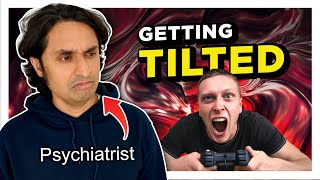

Why ADHD gamers rage harder
45sRelatable for millions of gamers who struggle with anger, especially those with ADHD.
▶ Play Clip"The title accurately reflects the content: a therapist explains ADHD and emotional dysregulation in gamers, delivering on the promise."
This video explores the link between ADHD and emotional dysregulation, particularly in the context of gaming. The speaker explains why individuals with ADHD experience intense anger and frustration while playing games like League of Legends, and discusses the neuroscience behind these reactions.
People with ADHD often experience emotional dysregulation, including mood lability, irritability, low frustration tolerance, and anger outbursts.
The original poster recognized their ADHD and researched emotional regulation, showing how understanding science can empower individuals.
Raging in video games is normal, but for those with ADHD, it is worse due to emotional dysregulation.
Clinically, emotional dysregulation in ADHD includes mood lability, irritability, anger outbursts, low frustration tolerance, and motivation deficits.
Emotional dysregulation is not exclusive to ADHD; there is overlap with the general population, but it is more severe in ADHD.
The gap between healthy and ADHD populations is shrinking due to societal trends like technology addiction, leading to more emotional dysregulation in the general population.
In the stop signal test, people with ADHD have difficulty stopping a task once started, indicating impulse control issues.
People with ADHD struggle with delayed gratification, preferring immediate rewards over larger future rewards.
ADHD brains are more sensitive to negative emotions due to frontal lobe dysfunction, amplifying frustration.
In ADHD, the more intense an emotion, the less aware the person becomes of it, leading to emotional overflow.
Video games offer immediate gratification, which ADHD brains overvalue, and the combination of low frustration tolerance, emotional blindness, and impulse control issues leads to rage.
The five steps are situation selection, situation modification, attentional deployment, reappraisal, and response modulation.
The first step to improving emotional regulation is to notice and understand your emotions, which can improve all five domains.
ADHD significantly impacts emotional regulation, making gaming rage more intense. The key to managing this is developing awareness of one's emotions, which can help improve emotional control over time.
What are the five attributes of emotional dysregulation in ADHD?
Mood lability, irritability, anger outbursts, low frustration tolerance, and motivation deficits.
01:24
What does the stop signal test reveal about ADHD?
People with ADHD have difficulty stopping a task once started, indicating impulse control issues.
04:36
How do people with ADHD perform on delayed gratification tests?
They struggle to choose delayed gratification, preferring immediate rewards over larger future rewards.
05:40
Why are ADHD brains more sensitive to negative emotions?
Due to frontal lobe dysfunction, which normally suppresses negative emotions, leading to amplified frustration.
07:20
What is the relationship between emotion intensity and awareness in ADHD?
The more intense the emotion, the less aware the person becomes, leading to emotional overflow.
08:16
What are the five steps of emotional regulation?
Situation selection, situation modification, attentional deployment, reappraisal, and response modulation.
11:45
What is the first step to improving emotional regulation in ADHD?
Noticing and understanding your emotions.
14:05
Five Attributes of Emotional Dysregulation
Provides a clear clinical framework for understanding emotional dysregulation in ADHD.
01:24Stop Signal Test
Illustrates a key difference in impulse control between ADHD and neurotypical brains.
04:36Emotional Blindness in ADHD
Highlights a counterintuitive phenomenon where intense emotions reduce awareness.
08:16Five Steps of Emotional Regulation
Offers a practical model for improving emotional control.
11:45[00:00] so
[00:01] let's start with this so anyone with
[00:03] adhd get overly angry at certain games
[00:06] so i get literal migraines when i lose
[00:08] at league if i lose two to three games
[00:10] my day is ruined until i go to sleep i
[00:12] did some research and recently found out
[00:14] that people with adhd have issues with
[00:16] emotional regulation wondering if anyone
[00:19] else has had this issue or if it's
[00:20] related or if it's not adhd related i
[00:23] love the game but the way it makes me
[00:24] feel after losses isn't normal i
[00:26] literally have to avoid my favorite game
[00:28] because of how angry i get so this is a
[00:30] really cool post not because this person
[00:32] unfortunately gets super angry when they
[00:34] play league but because first of all the
[00:36] person recognizes that they have adhd
[00:38] and they've done research about it and
[00:40] they've started to discover that oh like
[00:42] maybe my experience of life can be
[00:45] understood through like science and by
[00:48] understanding science maybe i can learn
[00:49] a little bit more about my situation and
[00:52] then like actually it can empower me to
[00:54] like move in the right direction so what
[00:56] we're gonna do today is talk a little
[00:58] bit about the relationship between adhd
[01:00] and emotional regulation so the first
[01:03] thing to understand is that people who
[01:05] play video games and rage in the video
[01:07] game that's completely normal if you've
[01:09] got adhd and it is worse for you than
[01:12] for other people there's plenty of
[01:14] evidence that one of the key features of
[01:16] attention deficit hyperactivity disorder
[01:19] is emotional dysregulation okay so if we
[01:21] think about adhd there are five
[01:24] attributes of emotional dysregulation
[01:27] that we kind of look for when we're
[01:28] thinking from a clinical perspective
[01:30] about adhd so that's mood lability and
[01:33] mood lability means high fluctuations in
[01:36] mood so what that sort of means is that
[01:38] one moment you're feeling this way and
[01:40] the next moment you're feeling a
[01:41] different way okay so it's fluctuating
[01:44] mood so a lot of people who say oh my
[01:46] god i'm so bipolar i'm happy one minute
[01:48] and then i play game of league and then
[01:49] i'm so pissed off i'm so bipolar that's
[01:52] not bipolar disorder that's mood
[01:53] mobility so rapidly fluctuating moods
[01:56] the second thing is irritability so one
[01:58] of the signs of of emotional
[02:00] dysregulation especially in adhd is that
[02:02] people are prone to a lot of
[02:03] irritability that can also turn into
[02:05] anger outbursts and what we call low
[02:08] frustration tolerance so your ability to
[02:10] tolerate things that are annoying is
[02:13] like quite low so people like it's easy
[02:15] to get under people's skin and this has
[02:16] been shown to correlate with adhd the
[02:19] last attribute of motivational i mean of
[02:21] emotional dysregulation is actually
[02:23] motivation deficits so in people who
[02:25] have adhd we see all five of these we
[02:27] see anger we see irritability we see low
[02:29] frustration tolerance we see rapidly
[02:30] fluctuating moods and we actually see
[02:32] motivational deficits as well and we'll
[02:34] get to that in a second in adhd
[02:36] unfortunately these things do somehow
[02:39] correlate with the disease and let's try
[02:40] to understand that for a second so when
[02:42] researchers look at emotional
[02:44] dysregulation within adhd the first
[02:46] thing that we that they kind of
[02:47] acknowledge is that these things happen
[02:50] in people with adhd but they're not
[02:52] exclusive to adhd and this is something
[02:54] that i've seen a lot whereas if you like
[02:56] if you look at like the normal
[02:58] population okay so let's just use paint
[03:00] for a second so let's say like here is
[03:03] the normal population in terms of
[03:05] emotional regulation and then here's
[03:07] like adhd
[03:09] so this is what it'll look like where
[03:11] emotion dysregulation is is worse in
[03:14] people with adhd than it is in the
[03:16] normal population but even in the normal
[03:18] population there's still this overlap
[03:20] over here of people who are
[03:22] maybe have adhd maybe normal but they
[03:24] have emotional dysregulation the more
[03:26] troubling thing is that we're seeing
[03:28] trends in society so the rate of adhd
[03:30] diagnosis is increasing even according
[03:32] to theories like ayurveda and stuff with
[03:34] technology addiction or vata is
[03:36] increasing i think what we're beginning
[03:38] to see
[03:39] is that the overlap between the regular
[03:42] population and the adhd population is
[03:45] shrinking
[03:46] so this is what it looks like now where
[03:48] there there's like the amount of overlap
[03:51] is increasing so these two curves are
[03:53] actually getting closer together this
[03:55] has been my experience so what i'm going
[03:57] to talk to you all about today about
[03:58] adhd and emotional regulation i'm going
[04:01] to cite studies and stuff from adhd
[04:03] research but it's been my experience and
[04:05] i think we sort of see this
[04:06] epidemiologically as well that the gap
[04:08] between healthy people and adhd people
[04:12] is shrinking that society as a whole is
[04:14] becoming more emotionally dysregulated
[04:17] that we're becoming our attention span
[04:19] seems to be shrinking we're having
[04:20] motivational problems and i think it has
[04:22] a lot to do with the effect of
[04:24] technology so let's try to dive in and
[04:25] understand a little bit about how this
[04:27] works so the first thing that i'm going
[04:28] to do is share with you all a couple of
[04:30] interesting tests that we use to study
[04:33] adhd so the first is the stop signal
[04:36] test which basically like you take
[04:38] someone with adhd and then you show them
[04:40] like a picture that'll say like go and
[04:42] when when the screen flashes with go
[04:45] they're supposed to start some task so
[04:46] start stacking blocks as soon as you see
[04:49] the screen flash go the screen flashes
[04:50] go people with adhd start they start
[04:52] stacking blocks and then what it does is
[04:54] it tells them to stop so then the
[04:55] screen's flashes stop and when you flash
[04:57] stop you're supposed to stop the task so
[04:59] if you look at the brain of someone with
[05:01] adhd versus the brain of someone who's
[05:03] normal or neurotypical let's say what
[05:06] you find is that both of them are really
[05:08] good at starting right away so as soon
[05:09] as you see the the screen flash go they
[05:12] everyone starts stacking blocks but then
[05:13] when the screen flashes stop a
[05:15] neurotypical person will stop right away
[05:17] whereas there's a lag time for the
[05:19] person with adhd so what people have
[05:21] discovered is that someone with adhd has
[05:24] difficulty restraining their impulses so
[05:27] you can start things easily but if you
[05:29] have to stop doing something and shift
[05:31] your attention somewhere else that's
[05:33] much more difficult in adhd the second
[05:35] thing that we're going to talk about for
[05:36] a second because this is going to relate
[05:37] to gaming okay second thing that we're
[05:39] going to talk about is the delayed
[05:40] gratification test so if you look at
[05:42] people with adhd they seem to have
[05:44] problems with executive function and so
[05:47] what executive function is the
[05:48] definition of executive function is
[05:50] self-directed actions needed to choose
[05:53] goals and to create and act and sustain
[05:56] actions towards those goals so basically
[05:58] what the internet is bad at right like
[06:00] the ability to self-direct create goals
[06:03] enact goals and sustain actions towards
[06:06] goals so people have found that their
[06:08] executive deficits and in researchers
[06:10] have found that their executive deficits
[06:12] and adhd right it's attentional problems
[06:15] so i'm not able to restrain my attention
[06:17] therefore i can't create goals and act
[06:19] towards them in a sustainable way so the
[06:21] way that we measure there's a there's a
[06:23] test here that becomes important as well
[06:24] which is like if you give someone with
[06:26] adhd let's say you say i'll give you a
[06:28] dollar now or i'll give you five dollars
[06:30] in five minutes for a neurotypical
[06:32] person it's easier for them to choose
[06:35] five dollars in five minutes it's easier
[06:37] for them to choose delayed gratification
[06:39] and for the person with adhd it's much
[06:41] harder to choose delayed gratification
[06:44] so there's something about the way that
[06:45] their brain kind of assesses choices
[06:49] that makes them default towards like
[06:51] instant gratification and this also gets
[06:53] explored in terms of impulsivity we're
[06:55] kind of not going to go into that
[06:56] because the neuroscience of adhd is like
[06:58] awesome and complicated it's so
[07:00] fascinating so these are kind of two
[07:01] tests that teach us a couple of
[07:03] important things the first is that
[07:04] people with adhd tend to go impulsively
[07:07] towards like easier things like low
[07:10] hanging fruit and secondly like their
[07:13] ability to restrain those impulses is
[07:15] relatively low so what does all this
[07:16] have to do with emotional dysregulation
[07:18] so let's talk about that very quickly
[07:20] okay we also know through research that
[07:22] people with adhd have difficulty
[07:24] regulating their emotions and there are
[07:25] a couple of important dimensions to this
[07:27] the first is that it appears that the
[07:29] brains of people with adhd are more
[07:31] sensitive to negative emotions so that
[07:34] means is that if something bad happens
[07:36] to two people and you have an adhd brain
[07:38] in their neurotypical brain that
[07:40] frustrating thing is more likely to feel
[07:44] worse in the brain of adhd and why is
[07:47] that that probably has to do with this
[07:49] executive dysfunction and this inability
[07:51] to like restrain impulses so there's
[07:53] some evidence that the frontal lobes are
[07:55] part of what restrains or suppresses our
[07:58] experience of negative emotion so when
[08:00] that pro that part of our brain isn't
[08:02] functioning what we sort of think of as
[08:04] neurotypically anytime an adhd person
[08:06] gets exposed to something that pisses
[08:08] them off like losing a game of league of
[08:10] legends their brain amplifies that
[08:12] negative emotion much more than a
[08:14] neurotypical brain the second thing
[08:16] about emotional regulation that's a
[08:17] little bit different for people with
[08:19] adhd is that they tend to be more
[08:22] unaware of their emotions so this is a
[08:24] really fascinating study that was
[08:26] published in neuropsychology about 20
[08:28] years ago but researchers essentially
[08:30] took neurotypical people and adhd people
[08:33] and they assessed their awareness of
[08:36] emotion and what they essentially found
[08:38] is that for a neurotypical person the
[08:41] more powerfully you feel an emotion the
[08:44] more aware you are that you feel it i
[08:46] know this sounds kind of weird but like
[08:47] if i lose a loved one as the intensity
[08:50] of my grief increases i'm more likely to
[08:52] be aware that like i'm grieving right so
[08:54] the more powerful the emotion is the
[08:57] more aware i am that i'm feeling it so
[08:59] like if i'm super super sad it's easier
[09:01] for me to detect sadness within myself
[09:03] so they found something really
[09:04] interesting which is that in adhd the
[09:06] more powerful the emotion is the more
[09:08] that the adhd brain becomes blinded to
[09:11] it okay which is a really interesting
[09:13] it's an interesting dichotomy and so
[09:15] it's a fascinating paper so this is this
[09:17] kind of becomes more important for adhd
[09:19] folks because as you begin to feel more
[09:22] intense emotion you kind of become
[09:23] blinded to it so like if you're playing
[09:25] a game of league of legends like even
[09:27] though you're starting to feel angry
[09:29] like you're not going to become aware of
[09:31] it the more angry you feel like it sort
[09:33] of like suppresses your ability to
[09:35] become aware of it and so what it does
[09:37] is kind of rises to the surface and then
[09:39] overflows like a volcano so this is
[09:41] really common in people with adhd who
[09:43] play video games is that their their
[09:44] sensitivity to the emotion is greater
[09:46] their ability to restrain the emotion
[09:48] from a frontal lobe standpoint and kind
[09:50] of like suppress it is weaker and their
[09:53] blindness to the emotion actually
[09:55] increases so it's really fascinating but
[09:57] it does appear like there are a lot of
[09:59] things about video games that really
[10:01] like interact with the adhd brain in a
[10:03] very specific and unique way so if we
[10:05] kind of go back to like delayed
[10:07] gratification and and that kind of stuff
[10:09] the stop signal test we can also see why
[10:11] people play league of legends and get
[10:13] really frustrated right so the adhd
[10:15] brain is like looking at my options for
[10:17] the day and like literally my brain is
[10:20] going to overvalue things that offer
[10:22] immediate gratification i'm more likely
[10:24] to be impulsive and not be able to
[10:26] restrain my decisions so i can apply for
[10:29] a job today which my brain is going to
[10:31] like devalue because of literally the
[10:33] way that it does calculations and it's
[10:34] going to emphasize things like playing
[10:36] video games because those have very
[10:38] immediate gratifications so that's why i
[10:41] start to play the game as i play the
[10:42] game and i start to get emotional
[10:44] remember that my brain is a little bit
[10:46] more prone to emotional dysregulation i
[10:49] have low frustration tolerance that
[10:51] probably has to do with my frontal lobes
[10:52] as well and then as i start to get angry
[10:55] i start to become blinded to that
[10:57] emotion which then lets me perpetuate
[11:00] and not restrain and adjust my behavior
[11:03] causes the anger to compot compound kind
[11:06] of builds on itself and then it kind of
[11:07] overflows and then you wind up with
[11:09] headaches so for this person who's
[11:11] saying is it normal like as have other
[11:13] people experience this like what you're
[11:15] experiencing is completely in line with
[11:18] what we understand about adhd in video
[11:20] games which is like low frustration
[11:22] tolerance blindness to your emotion and
[11:25] experiencing emotion and raging more
[11:27] than a neurotypical brain another
[11:29] important caveat to remember is that
[11:31] remember as is the difference between
[11:33] neurotypical and adhd starts to shrink
[11:35] we start to see people who may not have
[11:37] adhd start to manifest with some of
[11:39] these behaviors and so you know people
[11:41] will sort of ask okay like what do i do
[11:43] about it and this is interesting because
[11:45] the first thing that you have to do is
[11:47] understand the emotion that you
[11:48] experience there's a model of emotional
[11:50] regulation which basically breaks
[11:52] emotional regulation and the value of
[11:54] emotional regulation into five steps
[11:56] okay so what's the value of emotional
[11:59] regulation and like how do i get it the
[12:01] first step to emotional regulation is
[12:03] situation selection and this is where we
[12:06] are our emotions influence
[12:09] which situations we'll let ourselves go
[12:11] into situation modification which is
[12:14] changing relevant aspects of a situation
[12:17] based on how it could like how i could
[12:19] feel emotionally if i'm gonna be anxious
[12:21] by going to a party like i may not go to
[12:23] the party because other people are there
[12:24] i may go to a small gathering right so
[12:27] my emotions and my anticipation of how i
[12:29] feel emotionally will select the
[12:31] situation that i go into the second
[12:33] thing is situation modification so if i
[12:35] do go to a party and i'm anxious if i'm
[12:37] aware that i'm going to be anxious i may
[12:39] bring a friend with me so it reduces my
[12:41] anxiety attentional deployment is the
[12:43] third piece of kind of emotional
[12:45] regulation and that's once i'm at the
[12:47] party what am i going to choose to focus
[12:48] on because if you know this if you have
[12:50] social anxiety that your mind like is
[12:52] paying attention to the 20 people who
[12:54] are like who may be thinking things
[12:55] about you and what you're wearing and
[12:57] you can't restrain your attention and
[12:59] actually like attend to the conversation
[13:00] that you're having so that actually has
[13:02] to do with emotional regulation as well
[13:04] because our emotions will dictate where
[13:06] our attention is deployed another aspect
[13:08] of emotional regulation that's really
[13:09] important is reappraisal so this is
[13:11] altering the way that we think about a
[13:13] situation so that our emotions are not
[13:15] like really influencing it so if i'm not
[13:17] aware of emotions like if i'm filled
[13:19] with shame and i go and i like try to
[13:22] get a job and then i get i don't get the
[13:23] job what's going to happen is like that
[13:25] shame will appraise that situation in a
[13:28] particular way the way that i make
[13:29] judgments about that situation are going
[13:31] to be due to my emotional appraisal
[13:33] right so i'll conclude oh you know i'm a
[13:35] terrible person they're gonna have far
[13:37] more qualified candidates whereas like
[13:38] there are a thousand reasons why i may
[13:40] not get a job it may have nothing to do
[13:41] with me but i have to be aware of that
[13:42] emotional contribution to my judgments
[13:45] and then the fifth thing is response
[13:46] modulation so p people who have a high
[13:48] degree of emotional regulation can
[13:50] literally modulate their emotional
[13:52] responses when i rage in a game of
[13:54] league of legends like how do i regulate
[13:56] it how do i modulate that response so i
[13:58] don't get as upset so these are kind of
[13:59] the five components of emotional
[14:01] regulation and people with adhd tend to
[14:03] be not great at those and so the
[14:05] question becomes okay how do i fix this
[14:07] how do i like regulate my emotions and
[14:09] it all starts with being able to
[14:11] recognize emotions and so i know it
[14:12] sounds kind of unsatisfying but to a lot
[14:14] of people what i'll say is like just
[14:16] notice your emotions like you can't
[14:18] start anywhere except for noticing your
[14:20] emotions and there's good evidence that
[14:22] people who train themselves in
[14:24] understanding their emotions will
[14:26] improve in all five of those domains and
[14:28] this is what's kind of interesting is if
[14:30] you're listening to that solution and
[14:31] you're saying like that's not enough i
[14:33] need to modulate my emotions i'm not
[14:35] like understanding emotions feels
[14:37] insufficient that's probably your adhd
[14:40] brain like looking for a short term
[14:42] solution and devaluing like a long-term
[14:45] solution that doesn't appear to
[14:46] immediate gratification right so it's
[14:48] kind of interesting because even if you
[14:49] say that's not enough that's not what i
[14:51] want
[14:52] where is that judgment coming from
[14:56] [Music]
[15:02] you
⚡ Saved you 0h 15m reading this? Transcribe any YouTube video for free — no signup needed.