
Fireworks = 20 Cigarettes?!
43sShocking comparison between fireworks and cigarette smoking grabs attention and sparks debate.
▶ Play Clip"Delivers solid information on toxins but the title overpromises urgency; many practical tips provided."
In this podcast, Bryan Johnson, Kate Tolo, and Dr. Mike Malin discuss the pervasive presence of toxins in modern life, from fireworks and wildfires to PFAS chemicals. They explore how these toxins affect health and provide actionable strategies to reduce exposure and enhance detoxification.
Fireworks cause PM2.5 levels equivalent to smoking 20 cigarettes 12 hours after the show, with significant health risks.
Fireworks represent a non-consensual pollution of shared air, unlike personal choices like alcohol consumption.
Improving air quality in India would have a greater health impact than curing all cancers.
The LA wildfires introduced industrial toxins like phthalates and VOCs from burning homes, drastically increasing toxin levels.
Brian's HEMA levels (from vinyl chloride) increased fivefold after wildfires, to the 95th percentile.
PFAS are man-made chemicals with half-lives of years, reabsorbed by kidneys and linked to numerous health issues.
Higher PFAS levels are associated with a 40% lower fertility rate in women.
Brian's low PFAS levels are attributed to a reverse osmosis water filter, high-fiber diet, and no meat consumption.
A dry sauna at 200°F (93°C) for 20 minutes, 7 days a week, dramatically reduced toxin levels in 23 sessions.
A high-fiber diet helps bind PFAS in the gut and excrete them through stool.
What was the PM2.5 level equivalent to 12 hours after fireworks?
Equivalent to smoking 20 cigarettes.
03:27
What are PFAS also known as?
Forever chemicals.
22:10
What is the half-life of PFOA in humans?
1.5 to 5 years.
24:21
What health issue is linked to high PFAS levels in women?
40% lower fertility.
27:01
What toxin increased fivefold in Brian after the LA wildfires?
HEMA (from vinyl chloride).
18:50
What are three ways to reduce PFAS exposure mentioned?
Reverse osmosis water filter, avoid non-stick pans, avoid fast food wrappers.
33:21
What is the recommended sauna protocol for toxin removal?
200°F (93°C) dry sauna for 20 minutes, 7 days a week.
45:21
How many sauna sessions did Brian do to see dramatic toxin reduction?
23 sessions.
46:01
Fireworks Air Pollution
Quantifies the dramatic impact of fireworks on air quality, comparing to cigarettes.
03:27Air Quality vs Cancer Cure
Highlights that addressing air quality is more impactful than curing cancer for population health.
11:46PFAS Forever Chemicals
Explains why PFAS are so persistent and harmful due to their chemical structure.
22:10Sauna Protocol Efficacy
Demonstrates a practical intervention that significantly reduced toxin levels in a short time.
45:21Avoid Despair Over Toxins
Provides psychological comfort by acknowledging the ubiquity of toxins but encouraging focus on major interventions.
50:36[00:02] that are causing us harm, it's prudent to identify those things and then if we can make the cultural changes. The problem is those arguments lead people to this consiliatory mark where they conclude, well, I guess we continue on.
[00:16] And there's very few voices saying this is a bad idea. So, if I can populate the airwaves and be that voice in society, I think I would play that role. And and I know that I'm I'm Buzzkill Brian in this
[00:30] vector and I I fully own it and I'm sorry, but it's true. And so it just really is this thing that we've done where we've associated celebration and life with death practices. >> We're not trying to scare people.
[00:45] >> We're not trying to scare people. I mean, like I maybe a little Johnson podcast. Today I have with me my co-founder Kate Tolo and my lead doctor,
[00:58] Dr. Mike Malin. And today we are talking about toxins. It can be a scary topic, but we're going to approach it toxin by toxin and talk about where they're the body, and then also what you can do
[01:12] to prevent exposure and minimize the things that are already in your body. >> Brian, you're wearing AirPods today. >> I tried to remove them. I didn't want to wear a wired set and then the producer said I needed some kind of feedback. So,
[01:26] I'm asking for an earphone. But I know that every time I wear AirPods, people are going to be like, "Bro, you're going to blow your brain up with EMF." So, maybe we should do a deep dive on this and assess.
[01:38] want to know. So, let's look into the science. It might not have enough robust evidence out there to support it either way. Do it or not do it, but at least we brain's okay today >> and that if there's damage that there's
[01:51] some way out of it. >> Okay, let's get into this topic. This topic came about because we had Fourth of July. Brian and I actually spent the next day together on Saturday and we were trapped inside all day and it
[02:05] sucked because the air quality was atrocious. Like not worth exposing that? We got a lot of push back from it on Twitter cuz people were like, "Let us chastising us. like, can we just celebrate?
[02:18] >> Yeah, people were really upset with me because I I posted online that the fireworks were going to basically bathe the entire LA area with toxins and not
[02:30] just heavy metals, but a whole bunch of other toxins that we've imported from China. And we're now going to explode them in the air. Is going to bathe all of our family and friends and loved ones with these toxins during the fireworks
[02:43] show. And then for 24 hours afterwards, it's going to settle into our soil and water. And I was calling attention to the fact that this is kind of a weird tradition that we celebrate life by bathing ourselves in death. And people
[02:57] >> Yeah. Even when I was talking to a friend the next day and I was talking about the situation, he was like, "Kate, like, no, you can't take this away from us. Like, we need to celebrate. We need our fireworks." And I feel like when I
[03:13] think about that, I think people are just totally miseducated on the severity of the situation. There is always going to be a degree of um things we're we're like, "Okay, we'll spend a couple of points here." Fireworks really
[03:27] damaged the air quality for an entire 24-hour period. It was something like, 20 cigarettes the next day. >> That's right. During the fireworks show, it was equivalent to smoking one cigarette because you're you're
[03:40] cigarette because you're you're basically getting at 160 PM 2.5 and then 12 hours after we'll throw the map up here on screen, but in the purple areas it was equivalent to smoking 20 cigarettes. Yeah. Which is wild. So
[03:56] effect that has on the body and then we're going to talk about other types of toxins in the body. We had some feedback um in the comment section that folks And so to tee this up, we're going to talk about why fireworks are bad, why
[04:11] you should be with us and saying, "Let's make other traditions for Fourth of environment that you might not be aware of, and then how Brian has limited his exposure and also reverse some of the exposure that he has been exposed to.
[04:25] And so this includes things like PASS, um different toxins from your blood, and air quality, that kind of thing. >> The thing is that we're trying to call out is it's not that the the July 4th spike in toxins are going to kill you.
[04:39] It's that we routinely do things in life that kill us. And those things we have that kill us. And those things we have tried to color as living life or the tried to color as living life or the purpose of life or happiness. And I want
[04:54] not be true. And so there's there's definitely not a rule of the universe that one needs to kill oneself in order to feel happy or satisfied or content.
[05:06] And so if you're exposed to PM 2.5 on an annual basis, so let's say that you have a a an extra extra 15 points on the PM 2.5 scale for 20 hour 24 hours a day at 365 days a year. you're getting um
[05:22] 365 days a year. you're getting um exposure of 131,000 uh per year versus on a July 4th spike. It's about uh less than 1% of that. It's not hugely consequential, but it's really just a point of when we can identify things in
[05:36] our life that are causing us harm. It's prudent to identify those things and then if we can make the cultural changes. So, I hear you. Uh, you know, changes. So, I hear you. Uh, you know, big exploding things in the sky, it is
[05:50] exciting. They're loud and you feel the vibrations and that's cool. Kind of talks to our primitive brain like, you know, but also when we're taking children to a firework show and you're bathing the childrens in toxins, I'm not
[06:05] living life. I'm not sure if I'm if I'm a baby if I want to be bathed in toxins. And then again we get dosed again when they enter into our water and our food this? >> I guess I want to take like a slightly
[06:18] >> I guess I want to take like a slightly contrarian uh viewpoint um to you just in the sense that like I think if I were to choose interventions to improve air would not be to like take away fireworks. And I don't think that's what
[06:32] you're trying to point out that like, hey, we choose to do things that are as a way of celebrating life, which is just sort of ridiculous, which I don't makes a lot of sense. But when it comes to like what's going to have the
[06:45] greatest impact on your overall health, I think that there's there's a multitude of things that are higher on the list for me than fireworks. So, like these were talking about in that in that math
[06:58] situations have a very small total impact when you compare it to like living in LA 365 days a year. Like there's a huge impact from a moderate increase in PM2.5 as opposed to a relatively small impact from a large
[07:15] short duration increase of PM2.5. So, I don't know. I just tend to look at it from more of like a practical view of like where do I want to where do I want to put my effort in terms of improving human health. Um as opposed to you're
[07:27] guess idealistically in the sense that you're thinking about like why are we choosing things that are inherently bad for us which I I don't disagree with. remove the storytelling and the cultural significance, if you're an outside
[07:40] observer, if you're an alien and you can't see the the language of our society and the storytelling apparatus and you just see us as biochemical beings and you say, "What are those creatures doing bathing themselves in
[07:54] chemicals?" Like, what sort of ritual is that that makes any any kind of sense? someone's birthday. So, we go out and have a couple of alcoholic drinks and pizza and birthday cake. We're just like ingesting all of these things that kill
[08:09] us as a celebration of life. Like, uh, I don't know. It doesn't seem right. >> That's exactly right. And so, it's the same parallel and and I know that I'm I'm Buzzkill Brian in this vector and I I fully own it and I'm sorry, but it's
[08:24] true. like you if a birthday celebration comes, you basically stack up u metabolic disaster, right? So, it's alcohol and then it's sugar and then it's late nights. And so, it just really is this thing that we've done where
[08:39] is this thing that we've done where we've associated a celebration and life with death practices. And it it it will be viewed in the future. This will be viewed as insane. Like, there will be no way around it. Like, there's just it's
[08:52] paying the price at the end of your life, you're paying price in decreased deteriorates your health in all capacities. So, it really is detrimental. And I think that for me, I agree that Mike, if you were to take a
[09:09] more practical approach and be like, well, let's be reasonable. I guess like I want to create this contrast of clarity. It's not a good thing to bathe like I don't care what the what the reason is. It's just not that you
[09:24] definitely can celebrate life. You can do good things and feel good about uh to do it with death. >> If I could put words in your mouth, too, it's like people are choosing to do this as opposed to situations where we don't
[09:37] have a choice. Like the majority of toxins in our life are not things that we choose, right? They're the LA fires. They're chemicals that are in the water you really can't practically make a choice about. So, at least make good
[09:50] choices when you're given the opportunity to choose healthy or >> Yeah. And I I feel like I would want to give people the benefit of the doubt. I don't think they realize what they're choosing at all when they go about doing
[10:03] things. It increases inflammation and lungs causing asthma and lung cancer. crosses into the blood where it causes again increased inflammation and vessels leading to cardiovascular disease. It crosses the blood brain
[10:19] barrier causing neuroinflammation. So that can lead to neurogenerative went to India it was something like their lifespan was significantly impacted by poor air quality every day. Um so I'd say that and the other point
[10:33] about this is that this is a non-consensual pollution of our shared resource of air. And so I think that's also the thing that upsets me is like you go out and have a couple alcoholic drinks with your friends, that's your
[10:46] choice. But the general pollution of our shared environment and I I think that comes from misunderstanding and not being educated on the topic. So I do like with alcohol where we can push the narrative forward like let's have drone
[11:00] shows, not fireworks. Like very simple, easy to swap it out. We'll all enjoy it. We can put some speakers up and make some loud sounds at the same time. Yeah, Kate, the shared resource thing is true. Like when as you mentioned when
[11:14] you and I were basically we were trying to find an outdoor adventure on Saturday and we're like, "Oh man, like the day like there was this cloud of smoke. It was it it looked like there was fog in LA. It was so densely uh uh populated
[11:30] with smoke from the uh fireworks." Yeah. The stat that Kate mentioned was that The stat that Kate mentioned was that India would do more to improve the health of their citizens by addressing air quality than by curing cancer. So in
[11:46] that sense, air quality is a higher yield endeavor than solving all of cancer. It is this invisible force and we saw this firsthand when we were in India and then when we saw this in the LA fires. So I guess toxins really have
[11:59] the 4th of July happens and it's this acute exposure for 24 hours, I guess I'm now particularly attuned to toxins because we've been working on measuring them and removing them. And so to see all these urban areas across the United
[12:13] States just get bathed in toxins, it just like hurts my soul. Okay, fireworks like it's probably not going to kill us in the long term having one day in the year, but also it's a choice. It's a societal choice and maybe
[12:26] that Mike was saying was like the LA wildfires were really scary for everyone because it was something where it was imposed on us by the environment and we really were all exposed to some pretty intense um toxic chemicals. Mike, what's
[12:40] your take on what Brian was exposed to? >> We knew it would be bad. Wildfire exposure is bad in general. Um and that there was a lot of homes obviously tragically burnt uh during the the LA wildfires which expose us to other
[12:54] chemicals than you traditionally get from just a tree. um you know, organic matter to type of wildfire. So, we expected it to be bad. I don't think we expected it to be quite as bad as as it turned out based on Brian's results.
[13:06] Brian, why don't you share your your results with us? What what did you what performed after the LA wildfire? >> All right. If you look at this data, you just see red like down the line. And
[13:20] >> So, you got a baseline and then you got this is after. Is that right? Just to clarify. Okay, that's right. When the LA fires happened, I had measured a baseline toxin level before for a different uh therapy. So, I
[13:35] was potentially one of the only people in Los Angeles who was being measured for toxins and I got a before and after shot. So, I did the baseline uh I forget a month or two before and then I did this follow-up I think on like day five
[13:49] or six post when there when it was still ashing and it lists out like Michael was saying the various toxins like the industrial-grade toxins, all the stuff you you would see in burning homes and burning cars. And it just basically uh
[14:07] loaded up my body with every single toxin they measured to the like between toxin they measured to the like between the 75th and 95th percentile for um >> And what was really interesting is that the toxins that we saw elevated make
[14:22] perfect sense when we think about what was happening, right? So homes were burning. So, you were being exposed to things like phalates, um, which are plasticizers, which basically just means they're chemicals added to plastics to
[14:34] make them soft and more flexible. And these are things like MEHP, um, MBP, all things that we would see from burning homes. Uh, when when homes burn, tons of plastics are burning. We were seeing a lot of um increase in
[14:48] VOCC's again from other burning organic um, materials. Uh and these are uh things that we would also see from like burning solvents um from household household products like cleaners, foams and sprays. And both of these the
[15:03] and sprays. And both of these the plasticizers as well as the the VOCC's have lots of terrible effects on the body. So things like reproductive developmental issues, increased risk of developing asthma and allergies,
[15:17] um basically everything you can think of regarding inflammation affecting DNA, oxidative stress, these chemicals are going to do. And these went from, as you were mentioning, Brian, from like zero in your normal life to 95th percentile,
[15:32] meaning like we compare you to the rest of the population of, you know, out of a 100 people, you have higher levels than 95 of them, which is pretty pretty impressive. >> This of course is not meant to scare
[15:45] anybody. It is to say that there are various sources of toxins and when that what toxins are entering the body. So I guess like two layers one is if we can
[15:58] just baseline it's not a good idea to generate toxins in society that bathe all of us in toxins and then the second thing is when we do have events like fires which are out of our control then that's a second vector that gets to us
[16:13] as well. And so maybe we can bridge to what things were doing once we're exposed to these toxins. But keep in mind that when I had this exposure, I stayed inside for the majority of that time and I had multiple air filters and
[16:29] a MV 13 air filter on my HVAC system. So I was pretty decently prepared to cycle through toxins, but it, you know, it seems like it made a minimal difference. Now, if someone else was in the same environment and and was outside and had
[16:44] no air filtration systems in their in their home, then it could have been I want to comment on real quick. We're not trying to scare people. I mean, like maybe a little because maybe it's not we're trying to scare
[16:59] effect of knowledge in the situation because I think so many people don't understand about air pollution in general or even its effect. Like where I live, I have um friends that still sleep with their windows open when there's a
[17:13] wildfire nearby because they don't want to run their AC and they want it to cool off their house at night. And I'm like, what are you doing? You know, like knowledgeable, educated people are are not aware of the effect that air quality
[17:27] often has on their health. And um that's a problem we need to fix. And so to some like if some people get scared like I I don't know like not that big of a deal and helping them understand like how to take better care of themselves.
[17:41] >> Yeah. And what we're trying to do in society is say one there are things that are within your control our control collectively like fireworks. There are things that are outside of our control. Don't be scared of those things
[17:56] this has happened time and time again. The only difference here is that we know and we're going to learn from it. And three, using that information, we can try and test protocols for how we can go about preventing this cuz preventing the
[18:09] construction, it's probably going to be very difficult. But what we can learn from this is like if you are exposed to toxins, which is going to be inevitable going through life currently in society. Here's how maybe we can start to
[18:23] possible to remove these toxins from your body and how quickly and you know accessible is it going to be. We're trying to give a path for like let's actually like tackle these big problems. >> For those of you interested in the gory
[18:36] descriptors. >> You look happy. I mean, some people are going to want to hear this. One of the toxins that showed up in my
[18:50] body is uh called H EMA. And so, my levels went from undetectable And so, my levels went from undetectable to a fivefold increase, 95th percentile, uh 23 micrograms per gram. And so he is a derivative of vinyl chloride coming
[19:05] mostly from the fumes of burning synthetic floors, pipes and wirings PVC. Uh both vinyl chloride and ethanol oxide are known as carcinogens as well as long-term neurotoxins with acute effects including headache and dizziness. So I
[19:21] mean you can basically go chemical by chemical and say what's in a home? You've got pipes, you've got like, you know, plastic materials. And we just down the line, Mike started going through these. Every kind of PLA
[19:34] material that is used to build a home, you can now see in my body when I did >> Wow. >> So again, from undetectable to 95th percentile. So pretty amazing to get this data in real time. You know, DP,
[19:49] this is likely coming from the release of furniture and electronics. It's a a byproduct of a fire retardant, TPP. >> What was it like receiving the results? I mean, you work so hard um on your body and keeping everything perfect. So, what
[20:05] >> It was a pretty terrifying time. The fires were raging in Los Angeles. I did not know if the house would burn down. And uh I also had my son with me. We we talked about leaving town. We wondered if we'd be okay. We wondered if the
[20:20] fires could be contained. We we were not quite sure what to do in retrospect. I think the correct decision would have been to leave town uh for the toxins. But in that moment, I was really thinking more like are we going to lose
[20:32] the home and everything we've ever um you everything we have in those those things. But when I got the results, I mean, after things calm down, results, I mean, after things calm down, the fires um were out. Yeah. Seeing the
[20:44] toxins, it was obviously devastating because we are so meticulous with my health. like every single calorie that goes into my body, we've looked at bathe myself with chem with chemicals. That's the the sad part. But there is a
[21:00] a now a a next chapter that is actually positive that we can get into because once I got bathed in toxins, we said as a team, what can we do about the >> Yeah. Make make the most of it. >> Yeah. The first part of the podcast, you
[21:14] guys, we're going to go down the various categories of toxins. So we talked about categories of toxins. So we talked about VOCC's, phalates, industrial solvents, like all the stuff that that happened as a I mean in the wildfires, but that we
[21:27] fireworks. Another toxin that we recently tested is PAS. These are the forever chemicals and so these are the ones that you accumulate primarily in uh ones that you accumulate primarily in uh water, non-stick pans, um fast food
[21:42] wrappers. They accumulate in the body cannot eliminate them. They're a class cannot eliminate them. They're a class of 12,000 plus man-made chemicals used to make things again like in water um stain resistant, heat resistant kinds of
[21:55] >> So, Mike, what what are PAS? >> PAS are well, they're called forever excrete. And the reason for that, honestly, is just because our bodies didn't evolve to live with them, right? These are things that we created after
[22:10] our our system evolved to where it currently is. So, our our system's not prepared to manage them. our kidneys reabsorb them as as opposed to pee them handle them or break them down. The bonds in these chemicals are some of the
[22:23] strongest in nature and because of that we don't have a metabolic pathway to break those bonds to clear out those chemicals. So it turns out that the only way we can get rid of them is through like non-urinary excretion pathways. So
[22:36] things like sweating, breast milk, ministration, child birth, the gut, you can also um actually like excrete these through stool to some extent. So, the get rid of these chemicals are those that I mentioned with a few interesting
[22:51] opportunities around sweating, so sauna, which we'll talk about, as well as stool with um these fiber compounds that can help sort of bind these chemicals and through stool. But because they're so hard to get rid of, the halflife of
[23:06] years. So when you ingest that chemical, you're looking at like 2 4 6 8 years before you're actually going to get rid of the majority of that chemical. And the challenge that we have now in our in this world is that they are in every
[23:21] >> Like that's not an overstatement. >> At the very depths of the ocean, like literally everywhere. So the challenge becomes how do we prevent exposure and maximize the opportunity for clearance, which is which is not an easy one. It's
[23:36] worth noting that PAS contamination like you were mentioning in the oceans. So PFOS has a 41-year halflife in the ocean and PFOA has a 92year halflife. >> Gosh, that's wild. So it's like, right,
[23:52] Like we're going to be hanging out for a while. Like our kids are going to be hanging out with these chemicals. They're better at longevity than Brian. And those chemicals themselves disrupt the algae that um manages carbon dioxide
[24:06] in the ocean. So it's actually like >> oh gosh actually say that part or not. I'm worried about scaring Kate more. >> In the uh clinical studies the half- livives within uh humans looks like PFOS
[24:21] livives within uh humans looks like PFOS is 3.4 to 5.7 years. PFOA 1.5 to 5 years and PFHXS is 2.5 to 8.5. So Mike, just what you said, it's multiple years for a halfife. And because they're so disruptive and a teeny tiny amount is so
[24:35] with PAS. >> And I think if I'm not mistaken that don't quote me on this, but from Okay, maybe I shouldn't say this cuz I know
[24:47] >> Okay, I I literally have my fingers on the keyboard ready to quote you. >> immediately. I was going to say that I don't think there's been blood samples that haven't had peass found in them like that. It's it's in all of our
[25:02] >> right? Inescapable. >> Yeah, exactly. Given that and Brian, you've been meticulous as we know about really curious to see what your results came back as. Like would this be another
[25:15] wildfire situation where you were like all of us and were exposed to it or do you have um low levels? Yeah, I had the same questions because the effects are pretty bad. Lowers sperm count, disrupts thyroid hormones, suppresses the immune
[25:30] system, elevates cholesterol, creates liver damage, increases cancer risk, causes neurodedevelopmental issues, lower fertility in women. So, it really does wreak havoc on the body on all systems. And these are all things of
[25:42] course we measure on a routine basis. So, I was really in in a heightened state of awareness of what these results would come back. And Kate ordered the test before me. Then they sold out. And then Kate gave me her test in an act of
[25:56] >> For science. >> For science. You've since taken your >> I haven't got my results back. >> But no, you took it. here. >> You have taken it?
[26:08] >> I have a stack of fingerprint tests that I need to do, but yeah, I've got it everyone is like you, Brian, that can do. >> Okay. This is catastrophic. Can we talk about the psychological
[26:20] sitting on your desk? >> I need therapy on this. >> Kate, what's going on? >> I need help. >> Do I Do I need to be your testing uh verification partner?
[26:34] >> Okay, you know what? We're getting together for a few events today, right? Bring your test and we're going to do it together. been waiting for this moment because the other thing that I haven't done is my
[26:49] >> Yeah, >> I've got a few that I need to get caught >> Bring them on over. We will have a blood party. >> Also, on the low fertility stuff, um, something that stuck with me was that
[27:01] something that stuck with me was that higher levels of PAS are linked to a 40% woman. So, I know fertility is a really hot topic for people. People are having children later. And so that's a very scary and real statistic around why you
[27:15] chemicals. >> Yeah, these chemicals directly reduce steroid hormone production as well as thyroid hormone production. So they get stuck in our body, enter every cell, and not only are they causing some of the
[27:27] oxidative stress, increasing cholesterol by mimicking other fatty acids, but they're actually changing the way our DNA is expressed at the very like basic level of human health. Again, not trying to scare, just educate. Wait, can you
[27:42] try again for someone like myself who has no like what is steroid production? I've never even heard of that before. >> Yeah. So like testosterone, estrogen, >> any of the sex hormones. It's going to reduce the production and the um
[27:56] So not just like reducing production, but how it responds to a situation where your hormone should be higher or lower, which is obviously very important for changes throughout their month. that gets altered when you have higher levels
[28:10] >> Wild. Okay. So, Brian, drum roll. What were your results? >> Yeah. So, I was I'm just asking um an AI tool if there's PAS in fireworks.
[28:23] fireworks. I also just like sidebar, I don't understand fireworks. I don't get it. I don't get the appeal. Do you guys feel something when you watch fireworks? >> I think so. There. So, you see these huge explosions in the sky that are that
[28:36] are beautiful. You feel them. You hear them later than you see them. Like, it's like physics happening before your eyes. Admission. I took my kids to the the fireworks show >> on July 4th.
[28:50] >> We stayed up late because it's not till 10:00. Um, which is way past my bedtime. But I was feeling guilty as a like I'm a bad father. I'm not taking my kids to Our family doesn't stay up late. We're going to bed." And then I felt guilty.
[29:03] know, a mile and a half from the fireworks themselves. So I I'm not not confident they had any exposure whatsoever. But they were stoked. They you know, thing in the sky and it was
[29:18] don't know, >> Mike, you're you're safe here. >> I feel where people are coming from where it's like we can you can villain you literally can find a paper to villainize anything, right? Like if you
[29:31] So like at some point we have to make decisions around what's important for social interaction and connection and awe and wonder and what is reasonable to extract from that equation to improve our health. And I think that equation is
[29:45] that's okay. I don't think it has to be perfect. But I do like educating like you know hey if you're going to make this conscious decision to expose yourself to firework smoke at least know that it's bad for you right?
[29:58] as opposed to the decision most people are making currently which is uninformed. >> Yeah. And ultimately what we're saying is that fireworks we're not quite sure where it hits on the threshold and
[30:10] not willing to make it. And the point of conversation. We might collectively be like you know what totally worth it. fireworks. Like absolutely worth it. >> You guys populated the airwaves with
[30:24] certain way certain mental models. I'm going to populate the airwaves and say don't don't bathe yourself in chemicals on purpose and call it fun because there's so many voices that say oh in moderation
[30:38] oh have a little bit or like we want purpose and connection. It's all storytelling. We you as a human you can definitely thrive and be happy and feel connected and have fun and be a great family. Mike, this is not shaming you.
[30:53] Um, without without lathering each other up with chemicals. And I feel like the up with chemicals. And I feel like the the dominant voices in society want to path this thing down because it is it's a collective assessment of it's kind of
[31:08] like you can't change society on a dime. We do want to be socially inclusive. You understand all those arguments. that the problem is those arguments lead people to this consiliatory mark where they conclude well I guess we continue on and
[31:25] there's very few voices saying this is a bad idea like just full stop so if I can populate the airwaves and be that voice in society I think I would play that >> I think it's a worthwhile contribution >> okay my results so I got a a total PFA
[31:42] PFOS PFXs I got a full panel Pass and and this >> a lot of acronyms starting with P. That's the >> and the the summary is my my PFOA levels
[31:58] >> and the the summary is my my PFOA levels are in the lowest 25% for US men aged 20 to 49. They use that because it accumulates over time. And uh my PFOS and my PFXXS are in the lowest 25% compared to boys
[32:12] aged 12 to 19. And so, relatively speaking, my levels are low. This is kind of surprising to me because I just started Blueprint five years ago. Before that, I did not know that. I mean, I guess I was peripherilally aware that
[32:28] non-stick pans were bad because of various reasons, but otherwise, I have not had great water filtration systems. I've not been aware of these things surprised these results did not come back higher because my life has been a
[32:43] typical American uh lifestyle with all the toxins in our food supply and everything else, all the materials we have. So, very surprised. I wonder actually if what we've been doing with Blueprint over the past 5 years
[32:55] effectively lowered my levels in ways which we don't yet know. But I'm I'm really surprised. I should be a I should be on par with everybody else at this that differently from most. If if anything, I think many of my habits
[33:09] much worse than the average person. >> Well, there's probably multiple things that you've been doing recently at least that have improved these, right? Like, filtration system? It's years, right? >> Five five years now.
[33:21] >> Five years of water filtration. So, you effectively have and that's probably the largest source of POS for the majority of humans on Earth is water. So exclusively drinking or almost exclusively drinking from an adequate
[33:34] reverse osmosis system, you're likely significantly reducing your exposure. And then you're also doing lots of things to increase excretion. You like blueprint gives you lots of antioxidants. So you're you are going to
[33:47] be doing a better job of clearing toxins. Uh high-fiber diet, you're likely clearing more toxins through your stool because of that. So you know, you don't eat meat, which is another big source of pas. So, like there are things
[34:00] that I think have probably got you in this lower 25 percentile for sure. check to make sure that from my understanding, it's not non-stick pans construction of non-stick pans. So, it's not like you don't want to use non-stick
[34:14] pans in the home because there's microp or PAS in there. It's that the >> Both are true, I think. So manufacturing the products is the primary source of the the PAS that um PFOA which is the
[34:28] really bad one that everybody tries to avoid that was used to make teflon pans for a long time. But also teflon pans and non-stick pans when they get to a certain temperature they do start to release volatile compounds. While
[34:40] they're not as bad as the PFOA that was made to make the pan, they're still not necessarily good. So the teflon itself is relatively inert until you heat it to high levels or when you scratch it, things like that. So in general, they're
[34:53] think that they are. It's actually the process of making them that that creates bad for you. >> Cool. So still don't get them. Don't feed the economy and avoid having to expose yourself to them later on when
[35:07] >> So you can actually look this up online. You can look up um the uh PAS levels of every uh not every but almost every tested water um municipal water system
[35:19] calculator where you can put in how long you've lived in that place, your age I think and then the um the water municipal water supply you're using and it'll estimate your your serum pas levels and for me it was like almost
[35:33] perfect. I would like to indicate that I'm getting stressed by this conversation and I suspect that I'm no no I suspect I'm not alone in this if people so if you're listening bear with us I am with you. It is stressful.
[35:48] Can we talk about how to reduce toxins? >> Yeah, Kate just messaged me privately about the situation. >> I messaged Ryan. I was like I I don't have a water filtration. >> I responded easy to solve Kate. I've
[36:03] I've got you. We've got We'll get two tests done today. We'll get a water same one I have at the house. It will be an easy fix. Yeah, you're good. Mike has >> You got the full setup, Mike? >> Yeah, I got one off Amazon for like 300
[36:17] >> All right, let's get to the good stuff, please. Can we soothe our souls? news? The good news is that like I think Brian is an example of the opportunity
[36:31] to reduce toxin exposure. So Brian's done a good job of implementing tools in done a good job of implementing tools in his life to reduce exposure and also to help clear um the toxins in the first place. So there is like light at the end
[36:44] of the tunnel of this this chronic exposure of toxins that we're all dealing with in the world. >> Yeah. So the to pile on what Mike said this um it should give you hope that on several fronts. So, we mentioned this,
[36:57] several fronts. So, we mentioned this, my most recent microplastics test, I had one microplastic particle in the sample I provided, and that was in the lowest uh 1% of the 4,000 samples we've collected. So, a 93% reduction from my
[37:12] previous levels of microplastics. So, that was a big one. And then two is we did the same toxin test that we did post the LA fires. And after 20 or so sauna
[37:24] sessions, it annihilated those toxins. So there was also probably some natural tapering off of those toxins cuz they do cycle through the body, but also just a dramatic reduction in toxins in the body. So two really strong results. And
[37:39] then the PAS results I think were also very positive. The sauna is not going to remove PAS, but also like Mike was saying, the diet I maintain uh is a very saying, the diet I maintain uh is a very pro-toxin removal diet. So, these things
[37:53] what we talk about, you guys. You can piece this together. We've tried to be the most thoughtful group in the entire world on how you systematically address longevity. And so, everything we do from like the what you put into your mouth to
[38:06] the exercise protocols to sleep, um all of it has this holistic effect. So hopefully you feel encouraged that you hear the the conversation today is specifically about toxins, but more broadly we're trying to say that that
[38:20] the protocol we've built is I think best in world for approaching health overall. So a few things on the specifics. I have a a um that reverse osmosis water system a a um that reverse osmosis water system in my house. I paid $1,300 for it. It
[38:35] sits beneath the sink. Mike has one that's a few hundred. They're competitive in price. Kate, you will get yours, too. It's reverse osmosis and happens. So, that's a good way to eliminate a lot of toxins from uh water.
[38:51] I also have an air filtration system. So, I bought a commercial grade system. So, I bought a commercial grade system. I bought the IQ Air Health Pro Plus XE. It's a bit expensive. It's about $1,000 per filter. And I bought several of
[39:03] these to be throughout the house because we're trying to maintain uh perfect air quality in the house at all times. There's many other air filtration you do not need to spend that kind of money. But having a a high quality air
[39:17] filter in your house is good. Even more powerful is having a a high MV filter in your HVAC system. So if you can have a MV 13, that's ideal, but you need to
[39:30] make sure that your system is rated for whatever number you're going to have. Some systems can only take like a MV 8 or MV 9. The higher the number, the >> Can I just tell you guys a story about air filters?
[39:42] >> I live in Oregon, uh, in central Oregon. We get, uh, lots of fires, um, uh, near us that often blow over us. So, we get smoke plumes during CO um, was one of experienced. And the air quality outside for um threeish months or so was between
[40:01] for um threeish months or so was between like 200 and 300 um PM2.5 which is you like 200 and 300 um PM2.5 which is you know an average of at least like 2x LA >> 5x >> 5x sorry it was it was really bad.
[40:13] >> It's actually 5 to 10. That's that's incredibly high. purple air app that allows you to like check the air quality. We actually had purple air. literally. So, but it's and there are no
[40:28] air filtration systems available in stores or online. Like Amazon sold out, uh Home Depot sold out. So, I finally found some box fans. I borrowed box fans from friends and bought these HVAC
[40:43] filters and literally duct taped the taped them to the back of the H the um the box fans and made two of them. kept them in my house because my HVAC, even though I had a MV 13 like Brian's talking about, which is an ideal level
[40:56] for for air quality, it wasn't enough because it the air was just so bad outside. I mean, like I had to like I literally taped the doors. I had like saran wrap over the ventilation fans in the bathrooms cuz the smoke was like
[41:09] So, I built these I built these tools. Funny thing, now you can actually buy these pre-made. So, like on Amazon for like 70 bucks, you can buy a a box fan attachment for it that you put an HVAC filter on the back of. So, it's just
[41:25] sort of funny that like I like rigged this thing that then, you know, 5 years >> That's a very clever idea. >> There's lots of tools out there where you can get filtration for, you know, afford in affordable ways. Um, but the
[41:39] HVAC, Brian, is important. That's the best tool you can use to improve your HVAC. >> Mike, did you guys experience uh any kind of medium or long-term negative
[41:53] health effects from this? >> I'm sure 100%. Yeah. I mean, there there that I measured I didn't measure at the time, but had I had done one of the tests like you did, um I'm sure myself, everyone in my family, everyone in the
[42:07] area would have had similar exposures to similar types of chemicals. now is similar types of chemicals. now is predominantly wood burning, not homes. Um, so different sorts of exposures, but wood wood burning still has PM2.5 that's
[42:19] important um and and bad for health outcomes. So, I'm sure everyone had had bad and still does have bad effects from from this exposure. So, that's why it's while you're inside your home. >> And also, like your anecdotal
[42:31] experience, there's like two things there. one is you can get these free apps. So, at least you um can make appropriate decisions dayto-day on how for us with the wild with the fireworks, it was like, okay, today is a 150 p.m.
[42:47] um 2.5 day, so we're not going to go outside. We're not going to exercise outside. So, that's free free apps. And then filters are quite expensive. These well. And the other thing is you can get these um internal monitors. So, you can
[43:00] actually track are the interventions that I'm doing in my home space actually working um compared to outside air. >> It's worthwhile noting too that the the standards that the government the EPA sets for air quality are they're a touch
[43:15] suggests. So the research would suggest that basically once you get above 50 um There's many places like for example my hometown where kids sports still happen
[43:28] up to 200 just because the EPA hasn't directly come out and said that they need to not. So things are things are not necessarily to your benefit. >> That is not a good situation. >> Right now we're at 35. So to give an
[43:42] this kind of data at your fingertips. >> So all right next thing you can do. So we talked about a HVAC filter. We talked about an air filter inside the home. about an air filter inside the home. also uh other things for example like um
[43:56] wrappers for fast food. So there was a a study done that showed over half tested from major chains had it. So this is the grease resistant paper that's uh molded grease resistant paper that's uh molded fiber and uh this was
[44:10] fiber and uh this was uh is being pushed out in California but still the you don't want to mess with these uh they are potential camp contaminants of PAS. So, that's a good excuse to not eat fast food.
[44:24] I'll take that one, too. >> just in case you're still considering it. So, we've talked about reducing exposure. Now, let's cover how we can get rid of
[44:36] after having tested again. >> It's worth mentioning on our podcast on microplastics, we went over the steps of how you can minimize your exposure to microplastics on a daily basis. You're now toxin aare which is very positive.
[44:53] And now you can make uh choices on the few things you can do. You don't need to be overboard, but just these big ones, you know, water, air, avoiding things like non-stick plant uh pans, don't eat fast uh you know, fast food wrappers,
[45:07] some of the bigger ones, and you can make some big gains in reducing the >> So, Brian, we noticed a significant change um uh with sauna. Do you want to tell us a little bit about what happened when um you tested your tested your
[45:21] toxins uh after your sauna? >> We recently started this protocol. It's >> We recently started this protocol. It's 200 degrees Fahrenheit for 20 minutes. 200 degrees Fahrenheit for 20 minutes. That's 93° C and it's a dry sauna. We
[45:33] chose that because it has more compelling evidence and we were shocked compelling evidence and we were shocked at the efficacy of toxin removal. Mike, I think you mentioned you hadn't ever seen such a dramatic reduction of any
[45:47] kind of toxin removal therapy. >> No, I had not. I I mean, I had also never had anyone who like um religiously does exactly what I tell them to do. So, it might be just that you're uh you're actually doing the sauna 20 minutes uh 7
[46:01] days a week, 200 degrees. But it was I mean we you basically went um those results 95th percentile on what seven or eight markers to like virtually zero. >> And the time span, was it 3 weeks? >> Yep. Uh 23 sessions. So we'll throw up
[46:15] >> which is crazy. >> Yeah. And and I guess it could also be the case that the sauna was coupled up with the blueprint diet. So we're we're high in in the fiber, the antioxidants, and a lot of uh the nutrition. So I
[46:29] wonder if it's a combination of diet, exercise, sleep, sauna, like the competatory effects of a body running well. But it was it was a stunning but just to like rattle off some. And we had a 100% drop in MEP, 15% drop in MP
[46:46] had a 100% drop in MEP, 15% drop in MP BP, 100% drop in ME HP, which meant it was undetectable post sauna. We had 56% drop in NAP and H E MA, and 100% drop in
[46:59] perlate across the board. A mixture of somewhere probably between I would say at least 50% across most markers. So, wild change. And these are all of those compounds that were increased specifically from the LA fires and um
[47:15] >> There's other things that you were doing as well too worth worth mentioning these Brian like for example uh on the blueprint diet you're naturally getting high levels of antioxidants like vitamin C uh in acetylcyine uh lots of
[47:29] cruciferous vegetables like lots of sulfur containing compounds like garlic. So high levels of these antioxidants are going to help your body's natural defenses against toxins. So the body naturally manages toxins with the
[47:43] POS. And the way to help the body do that is a a diet that's high in antioxidants. So by getting these high levels of antioxidants, you're going to do a much better job of clearing quickly. So
[47:57] not just sauna by itself. And then you were still doing some Hbot, right? >> Yeah. HBO's likely going to have a similar effect. So, anti-inflammatory antioxidant effects that are going to basically support those systems, the
[48:10] anti-inflammatory antioxidant systems. It's going to allow your body to manage uh clearance of toxins a lot easier. >> Okay. So, we can sauna, we can boost antioxidants through diet and supplementation. We can boost um
[48:23] antioxidant anti-inflammatory defenses through HBOT. What else can people do? >> Yeah, and by the way, we should throw up on screen the don't die food guide. So, on screen the don't die food guide. So, eat foods from this uh menu. And then
[48:36] the blueprint stack has many of these things that we're talking about. So, if you want to do that, great. If you want to go out and buy your own, go do it. We're trying to make this easy for you guys on how you can do this, you know,
[48:48] in some kind of uh lowcost uh time manageable way. mention was um increasing your fiber intake in general to also be able to >> Yeah. And that's most significant for the for the POS chemicals as well. So
[49:03] the for the POS chemicals as well. So helping your body um helping your stool grab onto those PAS chemicals and excrete them. Um because otherwise they >> All right, you guys. There you have it. Um am I more emotionally soothed? I
[49:16] think so. It's definitely a scary topic. It makes me sad that we don't have better infrastructure to know what's affecting our bodies. But also I'm very happy that we're being really diligent even if it is an end of one that we get
[49:28] others. What do you guys think? >> I take Brian as an example that there is easy opportunity here for um for most people that is even relatively affordable in the sense of um water
[49:41] affordable in the sense of um water filtration as an easy tool to reduce exposure as well as just replacing your HVAC filter with one that's slightly stronger um or 13. like even if you did just those two things, you're having a
[49:54] really significant impact on your overall health and your overall toxin exposure. And that's um relatively approachable for most people, which is educate people that um these are things that they can do to take better care of
[50:07] themselves and uh and their loved ones. >> Yeah. And actually um again, like we which is like the basics of health end up covering off a lot of the majority benefits that you would get from this anyway. So um you know exercising,
[50:22] excreting through through sweat, having a fibrous diet. If you want to simplify out with this kind of stuff, just cover the basics and you're off to a much population, especially here in America. >> Yeah. And I also want to punch in and
[50:36] offer some words of comfort because I know this is very distressing. I mean, for example, I know we mentioned this on our podcast on microplastics. glass bottles have five to 50x the microplastics as plastic bottles and
[50:51] that can lead to a feeling of despair that no matter what you do, no matter how hard you try, it's just unavoidable. So therefore, yolo and just want to give you some encouragement that it really is about the journey. It's science is going
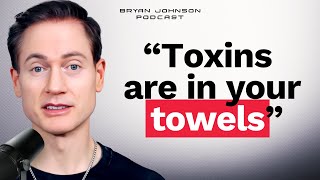
[51:06] here and there. I mean, I discovered this week that uh in doing the sauna, I was accidentally using a towel that was 15% polyester. So, I was accidentally
[51:20] 15% polyester. So, I was accidentally I was accidentally wiping my body with toxins when I was in the sauna to try to remove toxins. Good bit of uh humorous irony for you there, but it's going to happen and it's fine. So try to get the
[51:33] big ones in your life like we discussed uh clean water, clean air. Just try to avoid spikes of toxins where you have control. For example, fireworks. But a limited return on this of going too far. Just try to get the big ones right.
[51:50] vector for these kinds of things. So a few good decisions. And I would say that you there's two different versions of you. There's a version of you that is you. There's a version of you that is soberminded and wants to be your best
[52:03] self that hears these things and says, "I'm on board." And there's a version of you which is in the moment it's like, "I'm just going to eat the the fast food meal because of it's Saturday and I deserve a break." And you know, whatever
[52:16] your rationale is, try to channel your best self and your best moments and then make life choices. So this is what I did when I fired evening Brian. Evening Brian's the kind of guy who's gonna be like, honestly, PA fast is not that bad.
[52:31] can't avoid it, so you might as well. And I just said, even Brian, you can't this is very much like a psychological thing. It's very practical. So, I understand the complexity of this. So, I hope you don't feel overwhelmed. I hope
[52:45] you see this is like a nice positive step. We're doing this together. like collectively we're becoming much more aware of toxins and we will change culture as we make these changes together. So have hope we're going to be
[52:58] >> That was awesome. >> This is the Brian Johnson podcast. Special thanks to my co-hosts Kate Tolo and Dr. Mike Malin. For more science my YouTube channel. Follow the podcast on your favorite platform or follow me
[53:13] on your favorite platform or follow me on Instagram or XBrian Johnson.



⚡ Saved you 0h 53m reading this? Transcribe any YouTube video for free — no signup needed.