AI Summary
This video analyzes the anime and manga 'Takopi's Original Sin', exploring its dark themes of trauma, bullying, and the complexity of human suffering. The creator discusses how the story uses an alien character to highlight the failure of simplistic solutions to deep emotional pain, and praises the anime's use of stillness to enhance horror.
Chapters
The video opens with questions about love causing harm and good intentions leading to suffering.
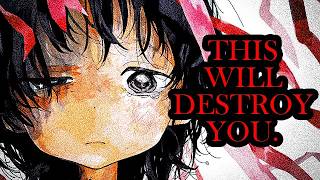
The creator discovered the manga in 2021, drawn by the cover of a crying girl with a painful expression.
Shizuka, a bullied girl, meets Takopi, an alien from the Happy Planet. She is depressed and hopeless.
Shizuka uses Takopi's ribbon to commit suicide, shocking the audience.
Takopi uses a camera to travel back in time to save Shizuka.
The anime effectively uses stillness and silence to let disturbing scenes sink in, unlike many horror anime.
The anime extends the suicide scene to 30 seconds of near silence, making it more impactful.
Takopi's repeated failures symbolize the complexity of emotional suffering, which cannot be fixed with simple solutions.
The story is a dark parody of Doraemon, with similar character names and gadgets but a tragic tone.
All child characters are victims of their environments; there is no clear hero or villain.
The creator cites Trainspotting as inspiration, particularly the theme 'Choose life' which parallels the ambiguous ending.
The story teaches that good intentions can cause harm, and the decision to continue living is personal and complex.
Takopi's Original Sin is a dark, thought-provoking story that uses an alien character to explore the complexities of trauma and the failure of simplistic solutions. Its ambiguous ending encourages viewers to 'choose life' despite the uncertainty.
Clickbait Check
85% Legit"The title promises emotional devastation, and the video delivers on that promise with analysis of a truly dark story."
Mentioned in this Video
Study Flashcards (10)
What is the name of the alien creature in Takopi's Original Sin?
easy
Click to reveal answer
What is the name of the alien creature in Takopi's Original Sin?
Takopi
03:38
What planet is Takopi from?
easy
Click to reveal answer
What planet is Takopi from?
Happy Planet
05:52
What is the name of the main human protagonist?
easy
Click to reveal answer
What is the name of the main human protagonist?
Shizuka
03:54
What does Shizuka use to commit suicide?
medium
Click to reveal answer
What does Shizuka use to commit suicide?
A ribbon given by Takopi
06:24
How does Takopi travel back in time?
medium
Click to reveal answer
How does Takopi travel back in time?
Using a special camera
07:38
What film does the creator cite as inspiration for the ending?
medium
Click to reveal answer
What film does the creator cite as inspiration for the ending?
Trainspotting
23:12
What is the name of the bully in the story?
easy
Click to reveal answer
What is the name of the bully in the story?
Marina
19:18
What is the name of the boy who takes the blame for murder?
medium
Click to reveal answer
What is the name of the boy who takes the blame for murder?
Azuma
19:49
What manga is Takopi's Original Sin a parody of?
hard
Click to reveal answer
What manga is Takopi's Original Sin a parody of?
Doraemon
17:38
What is the 'sin' referred to in the title?
hard
Click to reveal answer
What is the 'sin' referred to in the title?
The misunderstanding of the complexities of the human experience
20:51
💡 Key Takeaways
First Chapter Suicide
The sudden double-page spread of Shizuka's suicide shocks the audience and sets the dark tone.
06:53Extended Death Scene
The anime's 30-second near-silent depiction of the hanging is haunting and effective.
13:45Doraemon Parody Reveal
The realization that the story is a dark parody of a beloved children's series is both hilarious and disturbing.
17:38Full Transcript
[00:02] someone comes from love, but the damage runs deeper than the kindness can reach? Can good intentions cause human suffering? And if it's your love that is the reason for the hurt, then what can you do to fix it still?
[00:23] answer, but pretty important to consider considering that it's all a part of the flawed human experience. And there is an anime that, in my opinion, has achieved a level of controversy, discourse, and discussion that really brings to light
[00:38] these difficult questions. Yet at the same time, it's able to show the blissfully ignorant, helplessly tragic, and beautifully flawed aspects that make up the human species. This is an anime that not only hits incredibly hard, but
[00:53] it's an anime that will destroy you. So, let's talk about it. This is Taki's let's talk about it. This is Taki's original sin.
[01:09] sponsor of today's video, the good people over at Tokyo Treat. Tokyo Treat is a fun and exclusive monthly snack box packed with Japan's coolest and craziest treats. Each month, you'll get a rare KitKat flavor, limited edition chips,
[01:23] worldwide from Japan straight to your door. Each box comes with its own theme, and I'm sure the the box design and the color will probably give it away, but snacktacular Halloween. Oh, look at that. They even include a little picture
[01:38] of Shibuya Halloween, which is an absolutely crazy experience. As I mentioned, it comes with a little ramen packet here. This one is the spicy show inside of it. You know, that's going to slap. And of course, we have the
[01:51] flavored Kit Kats as well. This one here is the apple pie flavored KitKats. Okay, I got to try this out. Hang on. Ooh, it smells like apple pie. This is it right snacks to choose from. You're probably thinking to yourself, where do I even
[02:03] begin? Thankfully, every box here comes with its own booklet that gives you all sorts of information about the snacks in the box, including important stuff like information. And trust me, even as someone who has been living in Japan for
[02:16] lot of the stuff that comes in these Tokyo treat boxes is not the stuff that you can typically find in your Japanese convenience stores or supermarkets. So, holiday, but you want a little bit of that Japanese Halloween flare in your
[02:31] out Tokyo Tree by clicking the link down in the description below. You can also to get yourself a little bit of a discount at checkout. A big thank you to Tokyo Tree for sponsoring this video. Now, let's get on with the show. 2021,
[02:45] that was the year that I discovered this series in its original manga format. And it happened to be the same year that the first physical volume here was released in Japan at the peak of the co pandemic. I remember being immediately drawn into
[02:58] this front cover here. The image of this young and innocent looking girl with the river of tears flowing down her cheeks as she dawned this painful expression in her eyes. But the biggest thing that drew me to this cover was the fact that
[03:12] she almost looked like she was smiling through this pain. And this ambiguous expression gave me all sorts of expectations in an unsettling level of
[03:24] morbid curiosity. I mean, they say don't judge a book by its cover. And so, I bought this first volume, took it home, and started reading it. Almost immediately, I was treated to some incredibly unique visuals, especially on
[03:38] the second page here, which shows our titular character, the adorable octopus-like alien creature known as Takopi. Taki. These contrasting art styles between the realistic, painful, almost torn up face of our human
[03:54] protagonist, Shizuka, and this goofy ass Nick Tunes looking octopus protagonist that looks like it belongs to some longforgotten children's book that is probably now lost media immediately gave me this chill down my spine because it
[04:09] instantly reminded me of one of my favorite manga series ever written, Omeun. And if you know anything about this manga, let's just say that this uh chill down my spine wasn't exactly out of pure excitement or anything. The
[04:24] story of Taki starts innocently enough. We have our main human character, Shiza, who finds Takobi at the park after school. And instead of immediately freaking out and singing, who are you going to call Ghostbusters? She instead
[04:37] sits down and gives him some food for his starving little octopus tummy. In return, Tucker starts pulling out a bunch of quirky alien technology. And even though any other 9-year-old child would [\h__\h] their britches at the
[04:51] opportunity to fly through the skies with a tiny little pair of wings, Shizaka instead here coldly declines the offer, expressing that nothing will change even if I could fly. Clearly, there's something very wrong with this
[05:06] child. There is this dark, depressed, and bottled up doom that lingers and we as the audience quickly come to learn the source of this as she slowly starts to trust and open up to Takobi. Shizaka is unfortunately a victim to horrendous
[05:23] levels of bullying spearheaded by this girl called Mina. And for Shizaka, her only solless in her life that is parentless, friendless, and ultimately parentless, friendless, and ultimately hopeless is her pet dog, Chappie, which
[05:38] once again proves once and for all, and we are reminded every single time why dog is truly man's best friend. As we come to learn and slowly uncover Shiza's circumstances and its multifaceted reasons, we also come to learn that Taki
[05:52] doesn't really understand what she's going through. And not even in the slightest since he's an alien species from the appropriately named Happy Planet that is always so obnoxiously positive and affirming in every aspect
[06:07] of life. He doesn't understand that no matter how many happy items or gadgets he can present to Shiza, the solution isn't always that simple and can't always be fixed that easily. But after a truly horrible, horrible beating from
[06:24] what is supposedly the bullies and losing her only friend Chappie in the process, Shizuka finally accepts one of Taki's items, this ribbon item here. And in an incredibly sudden and tragic turn of events, we are exposed to this.
[06:53] saw this double page spread in the manga, I knew that this story was going to be something pretty special. Not in like a, oh man, my mom is gonna love watching this after she finishes Demon Slayer for the 12th time, but rather in
[07:07] the same way I felt towards other incredibly heavy yet lifealtering stories we occasionally see coming from the medium of anime and manga. Takopi the medium of anime and manga. Takopi knows now at this point that he has
[07:21] seriously screwed up. After all, it's his item that Shizuka used to ultimately take her own life. And the panic really starts setting into even Takobi's hyperoptimistic head. In desperation, he pulls out a special camera that allows
[07:38] him to travel back in time to when Shiza was still alive. And learning from his first huge grave mistake, decides that it is now his mission to save Shiza from
[07:50] her perilous predicament and to come to terms and to really learn the so-called human experience. Okay, so all of what I just told you happens just within the first chapter of the manga, and the story just keeps spiraling down from
[08:06] nitty-gritty details because truth be told, this story should be approached as blindly as possible if you want to experience it in its maximum emotionally tolling capacity. But in saying that, I will be discussing some key spoilers.
[08:21] So, if you haven't yet checked out this story, I highly implore you to pause the video because you're kind of epic like that, and go and check out the manga or the anime of Taki. Because if you thought the anime of Taki was going to
[08:38] make stomaching all of this easier, you're pretty damn wrong. Because this you're pretty damn wrong. Because this anime adaptation, God, what what can I even say about this anime adaptation? Listen, boys. I've always been a big big
[08:54] advocate for horror in manga. I mean, some of my favorite works have been staples in the horror or horror adjacent genres like psychological horror, human drama, coming of age, and overall tackles the concept of the horrifying
[09:09] elements of humanity in all sorts of gripping, enticing, and rather unique ways. But when a lot of these great horror manga eventually get adapted into
[09:21] horror manga eventually get adapted into horror anime, something just doesn't seem quite right. I mean, look at the recent readaptations of the Higurashi manga or the anime adaptation of every Junjiito work to ever exist. I mean,
[09:36] regardless of how you personally rate these, I think most of us can agree that if there is a manga counterpart, we mostly prefer to read it rather than watch it. And look, there's a variety of reasons why that is the case. I mean, I
[09:51] made an entire video years ago arguing the reasons why, for example, Juniito's anime adaptations have always sucked and will most likely continue to suck. And this was even before the recent Uzumaki anime came out, which by the way, I am
[10:07] slightly proud that I low-key called that [\h__\h] all those years ago. However, the very recent anime adaptation of Takupi's original sin is something completely different. Not only is it incredibly uncomfortable and disturbing
[10:21] and downright horrifying in a lot of its scenes, but some episodes even rival scenes, but some episodes even rival that of the original manga. and dare I say maybe even do a better job at expressing that horror onto screen than
[10:35] the manga did. And it's all because of one subtle yet important technique that we really don't see enough of in horror anime, and it has to do with the art of
[10:48] stillness. The biggest issue that so many psychological horror stories fail to convey in anime is this lingering sense of time. And what I mean by that is there's usually one big reason that a
[11:04] scary or creepy situation in a horror anime seems not all that scary in anime seems not all that scary in practice, and it's that everything just kind of feels rushed. This was one of my biggest gripes with the recent Uzumaki
[11:18] anime. Regardless of all of the jank JPEGs bouncing up and down in the frame, a lot of individual scenes and I would say the entire story just felt like a set of roadblocks that we had to go past to get to the next part of the story.
[11:33] Like I wasn't really given enough time to really sit with the situation that was presented to me. either because the scene just goes by way too damn fast or there were all of these visual or even auditory distractions in the scene that
[11:47] really shifted my attention away from the scary parts completely. Takobi's original sin, however, fully understands the subtlety of quietness and stillness. I mean, take the first chapter for example, specifically this scene where
[12:02] we see Shiza smiling for the first time to then immediately switch to this panel after a single page turn. What makes this page turn in particular so unsettling is not just the fact that we're seeing a 9-year-old girl having
[12:17] we're seeing a 9-year-old girl having been beaten mercilessly, but for me, it's the fact that this single shot is just so still and so so quiet. And you
[12:29] might be standing there thinking, "Well, yeah, dude, it's a manga. Of course, it's still and quiet." But to prove my point, let's check out how they did this point, let's check out how they did this exact scene in the anime adaptation.
[13:03] I don't know if you noticed, but it took a whole 10 seconds to show just these two panels because the story wants you to see this horrifying physical change to Shizika. with every second it can. They not only
[13:17] want to show you what happened, but they really want you to let it sink in by letting this scene hang for longer than you expected. And this sudden you expected. And this sudden introduction of the cicadas blaring in
[13:31] the background creates this unsettling contrast that you as the viewer can't escape from unless you back out of the window that you're watching the anime from. This point I'm trying to make couldn't be better amplified than in the
[13:45] controversial death scene that immediately follows this. In the manga, the sudden double spread page turn is what makes this scene truly horrifying. But in the anime, they ingeniously elongate this scene to a whopping 30
[14:03] seconds of near silence and stillness. Aside from the distant cicada cries, the creaking sound of the ribbon around Shizika's neck, and the incredibly subtle swaying of the body to almost signify that the end of a tragic act has
[14:20] only just happened before we walked in is all that we have to distract ourselves from this incredibly horrifying scene. It's the director saying to us, "Look at this. Really take it in. really let it consume you because
[14:37] the longer you look at this, the more it's going to mess with your head. And unfortunately, not enough horror anime understands this idea. And this stillness and contrast happens all throughout the two volumes
[14:51] of the manga and the six episodes of the anime. Whether it be tragic death anime. Whether it be tragic death scenes, moments where darkness and dread loom over a character, or to hang on a disturbing scene that you can't escape
[15:06] from. You know, when they say simple is best in this case, at least from a visual storytelling method, maybe simple really is best. It's the whole reason why things like liinal spaces and images of the uncanny valley are so terrifying
[15:21] to us. It it evokes this feeling of something being very wrong or very disturbing because they let you sit there and slowly let it take over you. It's giving the audience time to process the messed up situation that's happening
[15:37] in front of them, like a car crash that you can't walk away from. But of course, with every disturbing and messed up work of fiction that isn't just a cheap trick to shock you for the sake of shocking, you always have to ask yourself,
[15:50] what's the point? Why did someone decide to write a story like this? What am I supposed to take away from all of this? I think these are all important questions to ask, especially for a story like Takobe's original sin. I mean,
[16:04] after all, I think we can in one way or another empathize and relate to the core themes of bullying, domestic violence, broken families, and painfully flawed Maybe not so much the octopus alien thing, but you get the idea. For a piece
[16:20] of sci-fi storytelling, the core themes are disturbingly grounded in reality. And I think that's what makes the story so fascinating to dissect because it managed to pry open the harsh truth
[16:34] about the fragility of the human mind by using an alien creature that couldn't be further away from a human. The fact that Takopi fails time and time and time
[16:46] again to save a broken character from a negative situation only for Taki to then cause a chain reaction of other terrible and messed up situations is kind of the
[16:58] perfect metaphor for how complex emotional suffering is for different people. It's not the same as some broken machine that can be fixed by pressing the right combination of buttons or replacing its faulty parts. It's instead
[17:11] this deeply rooted, multifaceted, wild creature that doesn't just appear and disappear at will. It can grow, evolve, change, and even spread. And
[17:23] sometimes one person's act of kindness can result in hurt people just here's a fun little side tangent I kind of want to touch upon because I feel like nobody else has touched upon this. Takobe's original sin gives quite a few
[17:38] Takobe's original sin gives quite a few hints as to it being essentially a parody of another well-known manga, Doron. Now, hold up, stay with me, cuz seriously, think about it. Okay, think about it. Takobi is a nonhuman creature
[17:53] from another world that comes to Earth to save a single child, Shizaka, from her bullies, which not only is the exact same plot structure as Dion, who comes to save Novita from the bullies in except instead of a different planet,
[18:07] he's from the future, but also the fact that the main female character in Doron is this girl. And do you know what her name is? It's Minamoto Shizuka. You also
[18:20] get other subtle hints like the stack of concrete pipes that Takobi and Shiza frequently sit at or making numerous appearances in almost every single Don episode and chapter and the fact that a lot of Takobe's happy tools are
[18:35] basically indirect copies of Dimmon's secret tools. Not only do I think this quote unquote biting is kind of hilarious in concept, but I also think hilarious in concept, but I also think it's a beautifully done misdirection by
[18:48] the author to kind of lull unsuspecting audiences into thinking that we're going to be watching an innocent and cute children's show about a cute alien creature when in actuality it's possibly one of the most traumatic and dark
[19:02] stories ever conceived by a single human. This concept becomes even more interesting when you start to view our three child characters, Shiza, Marina, and Azimma, not only as fictional characters, but as personifications of a
[19:18] characters, but as personifications of a failed family system. A broken family, a cruel school environment, a society that looks away and ignores your problems. As we go further into the story, we learn that Martina isn't just a bully for no
[19:34] reason. She herself comes from an incredibly broken home with an overpossessive and controlling mother who goes insane due to Shizuka's mother cheating on Madina's dad. Azima feels an incredibly low level of self-esteem and
[19:49] societal pressure to achieve everything and anything when asked from him due to the tiger mom that oversees everything and expects too much from him. Hence why he even thinks that taking the bullet for Shiza after she basically asks him
[20:03] to fess up to the murder of Madina in her place goes a lot more swimmingly than most people were expecting. Taki's original sin is not your typical hero versus villain story. In fact, there is really no hero in this story. But at the
[20:19] same time, there is no villain either. Every child here is a victim of their environment that they never agreed to be born into. And Takopi, who at the beginning comes off as some sort of heroike creature to save the kids from
[20:34] their fate, ends up kind of becoming the villainlike position that keeps on digging further and further into this dark void of relentless dread and despair. The sin that Takopi commits as per the title of this show isn't just a
[20:51] single act of murder or manslaughter or memory eraser or time travel, but rather the misunderstanding of the complexities of the human experience and the almost
[21:03] naivity that he approaches the whole situation with. And as we learn about Takobe's past, the separate timeline of an older Madina being the main victim instead of the culprit, and of Takobe's acceptance to the situation he
[21:18] ultimately put himself into and dragged the children into, we encounter the final episode of the anime. Now, this final episode/chapter, see, I've been seeing that the ending of Takop's original sin has been slightly
[21:33] split in its verdict. Some people call it an overly confusing time travel mishmash that aims to confuse the watcher rather than tell a coherent conclusion, but others have praised it for its ambiguity and open-endedness,
[21:48] which kind of perfectly reflects on the uncertainties and fragility of the human emotion and trauma and the overall just experience of being a human. And to be honest, both are valid in their own right. But as I was researching the
[22:04] backstory behind this manga, I came across this page on, if you'd believe it or not, the Shonen Jump blog and news website, which I didn't even know existed until now. But anyway, this particular page was covering a number of
[22:18] new and upcoming manga artists. One of which is Tyizen 5, the creator of Takopi. It's a really short interview, but out of the three questions that were asked, one of the questions really stands out. Because when asked what kind
[22:31] of studying Tyizen 5 did towards creating their own manga, this is what the creator had to say. I watched as many different films as possible. Some of my favorite movies I repeatedly watched were Train Spotting and The Two
[22:46] Popes. The Two Popes, by the way, is a 2019 biographical drama film, which was most likely the main inspiration towards Tyizen 5's first one-off manga called
[22:58] Sanka, which by the way got them the attention from Shownen Jump before any serialization and is actually an amazing oneshot. I highly recommend you to read. As cool as that little tidbit is, it's the other film that's mentioned that's
[23:12] not only significant to this particular video, but is also crucial in understanding the true message behind Takopi's original sin. For those of you who don't watch Real People movies, let's do a quick rundown. Uh, Train
[23:26] Spotting is a British black comedy drama film made all the way back in 1996 about a group of heroinaddicted youths living in an economically disheveled part of Edinburgh as they try to come to terms with how to live their lives through all
[23:42] of the darkness and despair that follows them. I'm super excited that I even get to mention this film in video because not only is it one of my just favorite human drama films ever made and in my opinion one of the best films from the
[23:55] '90s, but it's also incredibly important to understanding the message behind Taki's original sin. Now, a quick warning and apology because I am going to slightly spoil the ending of the train spotting movie here. I mean, you
[24:08] literally have 30 years to watch it, so so don't blame me. But if if you do want to watch it, which again I highly recommend, you just pause this video right now. Go and watch it and then come back. All right, cool. We're all on the
[24:20] back. All right, cool. We're all on the same page. All right. The film opens and ends with our main character, Mark Reon, saying the exact same sentence. Choose life. This is an incredibly poignant statement because it can be
[24:35] seen with both an affirming and non-affirming subtext. The positive meaning can be seen as not choosing death as the answer. Because no matter how dark life can seem in the moment, it's always better to continue living
[24:50] and trying to see another day. Conversely, however, it can also have a slightly negative meaning in the form of conforming to the way things are. that there is no escape to the cycle and that it may just lead to choosing a different
[25:05] kind of life that is just as empty and meaningless as the one you're currently living in. I don't know about you guys, but um that sounds awfully similar to the ending of Takobi, doesn't it? At first,
[25:19] Takobi's sacrifice seems like Shiza and Madina were almost forced to choose life in the affirming meaning, coming to terms with each other's past pains, traumas, and sufferings under the shared experience of this octopuslike alien.
[25:36] Finally realizing that, hey, maybe they're more similar to each other than what they initially thought. But at the same time, the ambiguity of their shared experience and shared trauma may lead to the conclusion that Shizaka and Mina
[25:50] the conclusion that Shizaka and Mina have really no other choice but to choose life. And that there is really nothing stopping them from going down a nothing stopping them from going down a similar or god forbid a worse path than
[26:03] before. Because even if taki is there or not, the trauma is still around in one way or another. And it can come back and grow and evolve and spread just like at
[26:15] the beginning of the story. And that's why the I guess disappearance of taki is also important to understanding the ambiguity of the ending. It tells the message that sometimes the thing that causes great damage can also be the
[26:29] thing that makes you realize why you were hurt in the first place. Takop's Original Sin is a story about children, but not a story for children. It's a story about how good intentions can sometimes cause more suffering. How the
[26:45] desire to help can sometimes lead to darker feelings and how ultimately the decision for how one decides to continue living is multifaceted and also an living is multifaceted and also an entirely personal journey. In the same
[27:00] way that a meteor strike slightly warms up the earth, Taki ultimately became the up the earth, Taki ultimately became the impact that caused both the destruction and the hope for a better future. When I first discovered this manga during the
[27:14] co pandemic, we were all very uncertain about what the future was going to bring. Everything just seemed so dark and depressing, like the world was falling apart around us. But Takopi's original sin taught me that no matter
[27:28] how difficult life can get, it's a shared human experience. And that no matter what life throws at you, you should always choose life.