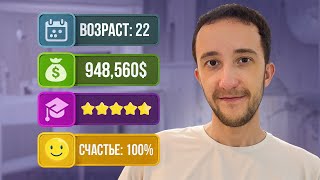

I Lost 30% of My Money in 1 Minute
60sThe raw, relatable story of a beginner losing a huge chunk of money on their first trade is highly engaging and emotionally charged.
▶ Play Clip"The title promises an honest story, and the video delivers a genuine, detailed account of the trader's journey, though it includes promotional content for his tools and channel."
A young trader shares his honest journey from losing 40% of his money on his first trade to becoming consistently profitable, emphasizing discipline, systematic strategy, and the importance of quality over quantity in trading.
Began trading with 10,000 rubles, skipping theory and demo accounts, which led to a significant loss on the first trade.
Bought a stock after it rose 20%, only to see it drop, resulting in a 20-30% loss of his entire capital within minutes.
Moved to cryptocurrency trading on Binance after suggestions from viewers, attracted by higher volatility and potential returns.
Studied breakouts and rebounds from levels via YouTube, but initially struggled with false breakouts and emotional decisions.
Lost 10% in the first week of crypto trading, but used this experience to develop a personal screener for better trade selection.
After losing 45% of his deposit in two months, considered quitting but decided to continue, leading to a strategic break and improved mindset.
Recovered all losses by the third month, then traded at breakeven for about eight months, focusing on risk management and strategy refinement.
Discovered that trading active coins with clear formations was the key to profitability, shifting focus from quantity to quality of trades.
After a year, monthly income reached $100; after 1.5 years, it grew to $1,000-$2,000 per month, and now earns tens of thousands per trade.
Emphasized that discipline and sticking to a tested strategy are crucial, and that traders should adapt strategies to their own psychology.
Warned against emotional trading, comparing oneself to others, and the need to remove emotions to achieve consistent results.
Discussed the importance of gradually increasing trade volumes to leave the comfort zone, using a stop-loss ratio of 1:3 or better.
Advises focusing on the quality of trades rather than the number, noting that even one good trade per day can yield 30% monthly profit.
Stressed the importance of having hobbies and activities outside trading to maintain mental clarity and improve trade quality.
Warned against abandoning a working strategy during drawdowns, as this is a common mistake that leads to losses.
The trader's journey underscores that success in trading comes from discipline, systematic strategy, and continuous self-improvement, not from quick wins or emotional decisions.
What was the trader's first trade loss percentage?
20-30% of his entire capital.
02:39
What platform did the trader use for crypto trading?
Binance.
05:22
What was the trader's loss in the first week of crypto trading?
10%.
11:03
What was the trader's loss in the first two months of crypto trading?
45% of his deposit.
13:18
What was the trader's monthly income after one year of trading?
Around 10,000 rubles (about $100).
19:58
What was the trader's monthly income after 1.5 years?
Hundreds of thousands of rubles ($1,000-$2,000 per month).
20:12
What is the recommended stop-loss ratio mentioned?
1:3 (stop to take profit).
31:23
What is the most common mistake traders make during drawdowns?
Abandoning a working strategy and hopping to new ones.
40:11
What is the key to profitability according to the trader?
Trading active coins with clear formations and focusing on quality over quantity.
19:32
Quality Over Quantity
This realization was the turning point that led to consistent profitability.
19:32Discipline is Key
Emphasizes that discipline and sticking to a strategy are more important than any single trade.
24:10Remove Emotions
Emotional trading leads to losses; systematic approach is essential.
26:30Scaling Up
Leaving the comfort zone by increasing volumes is necessary for growth.
29:58Avoid Strategy Hopping
A common mistake that prevents long-term success.
40:11[00:03] story about becoming a trader in one month. I really lost a lot, was stupid, freaked out, studied and tried again and again. And now I am a real trader with good results in trading. I'll tell you how it all started and give you the system that helped
[00:19] me become a profitable trader at 19 years old. No beautiful fairy tales, only truth and facts. Let's get started. I started not with theory, not with a demo of other people's signals, but with real money. All the money I had in the
[00:34] seventh or eighth grade. I was interested in developing and learning something new. I started reading books, watching a lot of educational videos on psychology and finance. I also watched a lot of different interviews and eventually came across
[00:48] interviews and eventually came across trading. Flew into the fund market. I will rob At first I started trading with the stock market, with shares. At that time, my
[01:02] financial situation was 10,000 rubles. And I immediately transferred them to the account and decided that I would only trade stocks. I started watching, studying it all and found the
[01:14] Beluga promotion. I watch a lot of different videos to see what everyone is thinking and what they are planning to do with this campaign. And this action, it went well in history. That is, there was something like 800% over the course of a year, then +50% in the last few weeks, then +40. Well, that is, he
[01:29] walks around actively like this. I think that since it is actively moving towards high percentages, then I need to rub my palms together and trade this stock too . I watched the video and that's it. On Monday I come to school, and just
[01:43] after school the stock market was already opening. At school I also watch videos, absorb information, and read various articles about this campaign. I think and that's all. I come about this campaign. I think and that's all. I come home. I have 10,000 rubles on my balance. And
[01:55] I decide that as soon as the market opens, I will buy this stock. The market opens and this stock immediately rises by 5%. I think, damn, it’s grown up somehow, it’s no longer profitable to buy. Then it grows by 10%. I think, damn, something is
[02:10] probably going to fall now. Then it's 15%. This already happens to me. It would have been possible to enter with at least 5% and already record a plus 10% . Then the stock rose by 20% . I can't stand it anymore and I buy it with all my money. As a result, as
[02:25] soon as I bought it, it immediately starts to fall and go against me. I see -5%, -10, -15-20. As a result, I closed this promotion at -2 dash, 3,000 rubles. This was a colossal loss for me
[02:39] . I couldn't stand it anymore, so I closed it. Just imagine, this is minus 20-30% of all my money. That's a lot. That's why I closed this promotion. And that’s it, in 1 minute I lost 20-30% of
[02:52] all my money. This was my first deal. And this is how it ended. By the way, when I was developing and decided to trade in general, I started running TikTok. I am 18 years old and
[03:05] I will soon finish school. Since I don’t want to work, but I need money, I decided to try trading. Is it even possible to make money from it and make it your main job? Follow me to find out if I can do
[03:18] it or not. And so, I recorded everything on TikTok, so that, firstly, I would be responsible to myself that I was had this thing where I would start something and then give up after a while.
[03:33] But I really enjoyed trading and it had the potential to make a lot of money. So, to make sure I didn't give up trading, I started recording everything on video. Well, plus I liked filming the videos themselves,
[03:45] taking photos, videos, that is, developing the media sphere . And so, along with this, I started making videos about trading. That is, I like the filming itself, plus the That's why I combined two in one and started filming about it. My name is Danil.
[04:01] earn trading with 10,000 rubles. I will trade in Tenkov Investments. I will trade in Tenkov Investments. the balance is replenished. Well, since it's the weekend and the stock exchange is closed, I'll go
[04:14] Subscribe to stay up-to-date on my journey as a beginner trader. And so, in short, I closed the first share. All. Then I started to study further. I think it's take stops, I need to fix myself, I need to
[04:28] work carefully with psychology, and not just wander around, chatter, go in with all my money, and immediately lose everything. No, it doesn't work that way. If you're just starting out, don't repeat my mistake. Don't use all your money at once and never transfer the entire
[04:41] amount to your balance. Share in the comments how your journey began. And I shoot videos of what I do, how I develop in trading, how I look at charts, analyze where I enter, where I exit. That is, I
[04:56] film and record the entire process on video. And someone in the comments suggested to me: "Why are you trading the stock market when there's crypto?" And crypto was gaining popularity at that time, and it was precisely this that was on everyone's lips. There, all the hamsters also
[05:09] lost their palms, the whole alta was pumped up, Toboshi was very popular. And so they wrote: "Look at crypto, it's trading at higher interest rates than the stock market. It's lighter, more volatile, and you can make more money on it." You wrote me
[05:22] cryptocurrency because the interest rates are higher there. Well, I actually looked at Binance. There are really high percentages here, 10-20% there, really harsh. And the . And in stocks, of course, there is less volatility and
[05:36] understand cryptocurrency and trade on Binance. Let me sort this out first, . Look, there's a lot of stuff here . So, I'll watch the training and first trades. Here. So subscribe so you don't miss out. I was
[05:50] like, "By the way, I didn't even know what crypto was. It was new to me ." Then I went to the exchange and looked: "Aha, indeed, the coins are working fine. Fingers like this are enough to inflate a big belly." I thought, okay, let's
[06:02] try crypto. I registered on Birshi and also deposited 10,000 rubles there. I earn trading with 10,000 rubles. Hi all. That's it, I registered on Binance and topped it up with 10,000 rubles. There is
[06:17] cool graphs. Robbery, robbery. I will show you all the deals, so subscribe and follow. And this is the money I collected from the dinners. Either they gave it to me as a gift, or I’ll save money somehow. And in the end I have 10,000 rubles. again
[06:33] and it turned out after a while. That is, I recorded that minus with the promotion. Then again, while I was trading, I traded at zero and then again I collected 10,000. I deposited them into the exchange, it was 130 dollars, and started trading cryptocurrency.
[06:48] Hello. That's it, I've installed CPE. Now I'll figure out what's what and start what's what and start trading. For some reason, Tiger Tiger Tiger Trade won't download for me. Here. Well, I wanted to download it first, but
[07:00] it wouldn't download. I figured out how to trade shorts. Here, buy short long. It trade shorts. Here, buy short long. It transfer money to this margin thing, balance and that's it. And this CC
[07:17] Scalp. Here I have already, in principle, figured out how to make these volumes. Now I'll figure out this one with the tape and these with the clusters and that's it. And it will be possible to trade. Hello. Please explain to me why if
[07:34] Please explain to me why if Mr. Bitcoin goes down, then other coins go down too. And this is up. Look,
[07:47] My first crypto trade was Pomanite Dogs, as far as I remember. Guys, look faster. Dog, dog, bitcoins. Look, a five-minute chart. She . Here we have, let's see, 8.5%. And now she fell like this
[08:00] . That's how far it fell. 5%. Volatility. Crazy volatility that you can profit from. This is our Great Dane dog. Oh. Oh, look, it's falling again. Look how she jumps. Ouch -ouch-ouch. Ouch-ouch-ouch. Dirt is just 2%. Ouch.
[08:16] hairy. If you buy it, then it’s really tough. It was possible to connect, yes, right here under this, on this peak, from here, yes, to here. This is our 22% from here, yes, to here. This is our 22% joke.
[08:33] There, too, he came up with some kind of formation that was out of his league, went into the minus immediately and closed. But there, by the way, I clearly noted the downsides. That is, I didn’t sit there, I had risk management, I allowed myself to risk something like 1 dash 2 dollars per transaction. Here. And,
[08:47] well, as soon as I came in, she immediately gave me a minus. I immediately closed the minus and exited at the stop loss. There I also watched videos on YouTube of various traders, showing who was trading what. Well, the most popular ones are breakouts and rebounds from levels. Well, I started trading them.
[09:01] Recently I realized that these mountains, yes, ascending, where the price rose and then fell sharply, yes, these are mafia levels. In short, there are feet behind them. And so I trade false breakouts, yes, and look, the price approaches the
[09:17] level. And then, well, of course, depending on the indicators, we also look further. Yeah, I broke the level. Here the feet grabbed everything, and she went higher, higher, higher. That is, it
[09:30] and she went higher, higher, higher. That is, it breaks through all these levels. And that's it, damn it. Oh, my head is spinning. Although I will also come up with something there, some kind of formation. Although even I myself don’t know what kind of formation this is. I'll go in, end up
[09:44] losing, and take the stop. That is such a trade. You come up with some facts for yourself, but in the end you lose them. This is also a real mess of trade. Hi all. Found a coin Matic. Right now its price is 0.81. I place a limit
[09:56] order at 0812 for $131. I click buy. That's it, the application has been successfully submitted. We bought it. Now I'm setting a stop. Here we have a channel of vanity. Let's draw a line. That is, we see at 0.79. We place a stop behind the channel. Warning 0795. Limit
[10:10] We place a stop behind the channel. Warning 0795. Limit at 0.79. Sell. We confirm. All. Stop limit is fixed. Here we will have a warning. And here we will have a stop behind the channel. All. As soon as I close the deal, I will let you know right away. So stay tuned
[10:23] . Boo. Okay, guys, the deal is closed. Minus. In short, I I wanted to put it here and figured out the functionality. That is, they bought it for $131 and sold it for $129 minus $2.50. The total balance was 10,000, now the
[10:37] balance is 9,583. Well, I lost $3 on that trade. This is somewhere around 200 lost $3 on that trade. This is somewhere around 200 rubles. Yes. Well, where are my other 220 rubles? Oh, somewhere around 50 rubles, probably a little less. Where else is my money?
[10:51] Where did they disappear to? If you know where my 200 rubles went, please write in the comments. Cool. I decided to find out how much you can earn trading with 10,000 rubles. So, in my first week of
[11:03] cryptocurrency trading, I lost -10%. During this time, I more or less mastered the functionality of the platform where I trade, that is, on Binance, and more or less decided on a strategy. Also, all this time I watched training videos on YouTube and
[11:17] traded there, thereby improving my skills. Subscribe and see what happens next. Boom. There was little information, so I had to learn from my own transactions and my own experience. This later became the impetus for
[11:31] creating my own screener to quickly and easily find the best formations on the market and the best coins for trading, because this is exactly what a beginner lacks. And I didn't know how to mark levels, how to find
[11:43] formations, coins, and there weren't even any apps to set to look at this during the day and monitor the situation. For example, even today I chose 40 coins. I chose three coins and posted them on the Telegram channel. Three coins
[11:56] worked at 10%, there were good breakouts of 10% , but I didn’t take them because I was n’t at the monitor. I thought the spill would be a little later and didn't even bother going to the terminal, but the spill happened without me, so I had to
[12:11] go from this manual information collection and routine to creating a screener to make it as convenient and effective as possible for everyone. Because if a beginner doesn't know how to mark a level, or a slope, then
[12:25] you can set the settings in the screener and that's it, it will mark everything correctly for you. Therefore, a beginner can even learn using a screener. Plus coin selection. You can enable active coin formations. That's it, active coins will now be shown, you
[12:38] just need to use them for trading. Trade only these coins because they are the best. All strategies work on them and they are the most optimal for trading, to achieve the most effective results. There were no
[12:50] sorting options, so I had to search manually. And automatically. That's why traders' results have increased. They began to spend less time on routine tasks and
[13:04] a result, their results earn more. The degash screener is very helpful for this. I'll leave a link to it in the description below the video. By the way, we also make merch like this. Little eye.
[13:18] Bam, fingers on the cleft. History repeated itself. Fast start and fast fall. In the first 2 months I lost 45% of my deposit, that is, all the money I had. And then, by the way, there was a turning point.
[13:32] I wanted to give up everything. I remember I was driving to the dacha and I was completely in a sweatshirt. I really thought that trading wasn't for me. Something doesn't work out, there are only some minuses, I lost almost half of all my money . So, why do I need all this?
[13:47] wind it up and wind it up. That's it, there are no results anymore and I don't want to do anything. But then I thought: "And you, big shot, why did you spend so much time on trading and do you really
[14:01] want to give it all up?" It even sounds kind of stupid, because before that I’ll start something, do it, do it, quit, find something new to do, do it, do it, quit, and so on. Ah, but with trading I didn't want that to happen again
[14:15] enjoyed trading. Plus, it had the potential to generate good income. That's why I continued trading. I took a short strategic break of one day, went to the dacha, and slept there. The
[14:28] next day was more or less calm, my head was back to normal. And with each such moment, when there were a large number of minuses, or large stops, or something was not working out, I reworked myself, I improved myself, I made myself
[14:44] stronger, I found my mistakes, eliminated these mistakes, structured my trading, added something new and so, step by step, I went and went, developing my trading strategy. I noticed that the more you trade, the more you
[14:59] noticed that the more you trade, the more you understand, your eye becomes sharper. That's it, understand, your eye becomes sharper. That's it, I wrote myself a clear take profit and stop. And for now, everyone on the market is still following Mr. Bitcoin. Now I've added
[15:12] every trade I ask myself: "Are you sure? If you're sure, then that's it, we enter without any questions. If you're not sure or you start to think, well, well, well, well, well, then that's it , we don't enter. This will limit the number of losing
[15:27] trades. I've also noticed that the market is completely cyclical. All movements repeat themselves, all formations work out the same way. The balance remains the same. Why is there no system and no consistency? That is,
[15:39] the system is to enter only good trades and open good patterns. And consistency, that is, not leaving the market and constantly sitting, monitoring all the formations and constantly trading, not leaving the market. That's all. And then there
[15:51] leaving the market. That's all. And then there will be a plus. I also analyzed my good money when Bitcoin loses its dominance and alts super breakouts and good money is made. I also make good
[16:05] today with Bitcoin, all the dominance and all the coins They're approaching their short levels and all shooting for Bitcoin together. So, there's a flood. This is . I tried
[16:18] trades, I just tried it out in my mind. It's also good to take volatile make money when no trades are going on at all. This is when Bitcoin dominates and Bitcoin is
[16:31] Coins don't seem to approach levels, or they approach weak levels and simply pin them down and roll them back. At this time, it's not even worth . That's how it is. I noticed this quite well. In fact, it's
[16:44] easy to make money this way. How can you just easily take these breakouts? You already know all the formations . You already know all the order books, what the situation needs to be for a what the situation needs to be for a breakout to occur. It's also the same with shorting.
[16:58] I'm just being really stupid, but it's very easy. You can do it, just take all these breakouts easily. It finally happened. I posted my first video on YouTube. Follow the link and watch. Tu-tu-tu-tu. My YouTube is already a week old
[17:13] videos. Well, of course, I will try to post every day or every other day. Here. Digarka, scalping. Follow the link turn on the bell so you don’t miss videos. Bye. And in the third month I already
[17:27] camebacked, got all my money back, and I had 10,000 rubles 130 dollars on my balance again. After that, for about a year, about eight months, I traded at breakeven. That is, one month + 10%, another month -10%, another month 0%, another
[17:44] month +5%, that is, about such a near- zero result. That is, I simply traded at breakeven. But this, by the way, is good, that a person trades as if at breakeven. that a person trades as if at breakeven. Here you need Eliminate mistakes and improve
[17:56] my trading. The main thing is that I had a well-developed risk management system, meaning I didn't take any huge "sit-outs." All my trades were closed if they were in the red, by a stop-loss order. A strategic stop-loss order of -1% of the deposit.
[18:10] So, to lose that, I had to really try to make 100 trades in the red or sit out some of them, which would be a huge loss. So, I didn't have any big losses, and I knew how to fix my losses, accept the
[18:23] this trade. And so, I tinkered around for a year , and in the end, something would work out, something wouldn't. Well, I was close to breaking even. That is, I did n't really have any results. Have you ever had periods when you were trading at
[18:37] breakeven? If you're in one now, don't give up on them. This is already a good indicator for a trader, because when you're trading at breakeven, it means you're following the rules. Risks, you follow the strategy, but something's missing. And
[18:52] what I was missing was that I was trading inactive coins. I'd enter some stable coin in some sideways market, and it'd be in some other low . So, those are the kind of silly coins. And it's clear that strategies
[19:05] won't work on illiquid, inactive coins . But I did enter them. Ultimately, the strategy itself is profitable, but I enter in the wrong places, on the wrong coins, and I lose. And when I trade active coins, I
[19:18] make money. When I trade inactive coins, some kind of hat, I lose. In the end, I'm broke even. And as soon as I realized this—that you need to trade active coins and clear formations, it's better to work on the quality of trades, not their
[19:32] quantity, it's better to under-earn than to lose, it's better to enter a trade when all the factors are met—then that was the turning point when I I started making money from trading. After the first year of active trading, the
[19:45] key achievement wasn't isolated successes, but the emergence of systematic results. And after a year of trading, after I realized this, I was already starting to make at least my first money from trading. After a
[19:58] year of trading, my monthly income was already around 10,000 rubles. That is, about $100. After a year and a half of trading, my monthly income was already hundreds of thousands of rubles. That is, $1,000 dash $2,000 per month. So, my results were
[20:12] constantly improving. My income grew and grew. And now, even from a single trade, I earn tens of thousands of dollars. Constantly working on trading discipline and improving my working system. My evolution as a trader
[20:27] developed in this format. I trade, trade, try to adhere to the strategy, then hop, I hit some stop and start looking for a mistake. What is it ? I watch a video analysis of my trade, I start looking for it, and aha, what
[20:42] happened? I'll look at my diary and start meticulously analyzing what's working and what's not, where I performed well and where I performed poorly. Also, if the coin is active and volatile, you
[20:55] need to build up your strength early. For example, the gains started at the 0.5 mark. They first eroded the density and substituted a new density as support. I was already building up from that density. Therefore, it's important to always analyze your trades,
[21:07] record them on video, then review them, keep a diary, and review them, keep a diary, and record these trades. You can even keep a diary with a pen or some kind of notebook. Be sure to also save screenshots of your
[21:20] trades, see which ones are working and which aren't. Look at the coin's characteristics, see which coins are good for trading and which aren't. And so, go through each trading criterion, determining what went right in
[21:34] the trade, what went wrong. And ultimately, identify weaknesses. Eliminate weaknesses, improve strengths, and the result will improve. The result will grow, and your income will increase. I went through each trade in this format,
[21:48] working on each one. And it turns out that I eliminated weaknesses and improved strengths. And so, little by little , progress was made. It's also very important to develop your own trading strategy, because each person has
[22:02] their own psychology, their own temperament, their own thoughts, their own time they are willing to devote to trading. It's different for everyone. Therefore, you can't simply pick a popular strategy, because it might not
[22:17] work for you. Therefore, it's important to determine your style: choose a timeframe, choose a strategy, whether the risk of the strategy is calm, medium, or risky. A style where you have time to think quickly or can think slowly. It
[22:32] depends on the timeframe. And you need to work through all this, create your own trading style. Then your results will also improve. And that's how I worked through it. Initially, I focused on level breakouts and rebounds from
[22:46] levels, then I began to focus solely on level breakouts and rebounds from densities. Then I started looking further. What other interesting strategies are there? Yeah, I found that, that. Then a breakout on impulse, then a breakout on a pull.
[23:01] Bam-bam-bam, and then I started improving it even more. I've already added a structure, a breakdown of the structure, worked it out, created my own strategy, created my own formations, which I trade,
[23:13] and gradually, gradually the results are improving, improving, and thus the income is also growing, growing. And if when I was just starting out in trading, I traded level breakouts, then I still trade them now. Only I've
[23:27] already optimized this strategy as much as possible for myself. And look at the results it brings. And if you want ready-made formations for trading, where scenarios for practicing are already marked, training videos on trading, a friendly team and
[23:41] 24/7 support, take the greenbacks and inflate your belly, then join our team of pot-bellied ones. I'll leave the link in the description under the video. And when I was just starting out, I had to find all the information myself, watch videos,
[23:55] read a bunch of articles, try it out myself. with my own examples. That's why I stood still for a long time. Therefore, the best and most effective way to learn trading is when you already have fully prepared material for it. If
[24:10] known what I needed to do. I wouldn't have made a bunch of unnecessary mistakes, but would have strategy, making money. The most important thing in trading is discipline. Stick to your trading strategy. But if the strategy is in the red,
[24:26] what will you stick to? Therefore, you need to take profitable strategies that have already been tested for you on history, which historically bring profit, and work with these strategies, adjust them to your needs, adapt them and apply them in
[24:40] trading, making money from trading. When I traded, I wasn't looking for a signal, I was looking for a way to eliminate noise. The main goal is to minimize unnecessary information in order to make a quick decision in scalping, where reaction speed is critical
[24:54] . In scalping, every second counts. And when I trade quick impulse trades, then, of course, I It's important for me to have everything running smoothly and accurately, so I know how to do everything. Therefore, before each trade, it's important to have a
[25:07] fully prepared trading template and know how you'll behave in each situation. What if news comes out? What if there's funding? What if something happens, or something freezes, or they start
[25:21] pushing the price up, pumping the coin? What will you do? And you should have an answer to every question, to every event, so you can make the right trading decision as automatically as possible. It's also important to
[25:34] filter the coins and formations you trade. We don't take some kind of far-fetched formations or some kind of, well, I doubt it, well, maybe it works, maybe not. Or my fingers are itching, I want to open a trade already.
[25:50] No, everything is structured according to strategy. It's important to remember this. And a screener is very helpful in this regard, finding an active coin and a high-quality formation. You can customize the screener to suit your needs. strategy, and it will show you the best coins
[26:04] and information. It will also send notifications. This way, you will always see the best and be up to date with all the events. Of course, with this approach, you will save a lot of time. And since you are trading only the best
[26:17] will accordingly increase. I will leave a link to the screenerdigash in the description under the video. By the way, another very important point about psychology. People make a lot of ill-considered decisions based on emotions. As soon as
[26:30] something inside them starts to play, they will start: "Aha, it's been a while since I've made a trade, I'll go for a trade." Aha, bam, stop, bam, tilt, bam, Foma. Why did I enter this trade? Why did I even touch this coin? Why was I just so
[26:45] happy? I need to make my life worse. Or, for example, he will look: "Aha, that guy made some decent money." Okay, I want that too." I'll start looking for patterns or increasing risks, increasing volumes. And, by the way, I had exactly the same thing. That
[26:59] is, I'll look at chats, channels, or whatever, and see who's trading next to me. Yeah, they're doing well. And I, for example, didn't have any trades today. Or, for example, I made 10 units today, and someone made 100 units. I have to
[27:15] catch up. I have to make more than them. Some kind of incomprehensible competition begins, then Foma, emotions, and in the end, you only lose on these emotions. And in the end, you end the day not with 10 units of profit, but with zero, or even
[27:29] worse, with a minus. That's why you need to remove emotions from trading. Only consistency and discipline bring results and profit in trading. And the screener has a psychology function specifically for this. There you can set notifications that will
[27:43] come and remind you to stick to the strategy, to comply with certain criteria in trading, that, What you need to do is control yourself, and always remember that the most important thing is
[27:57] discipline and systematic adherence to your strategy. That is, you can set up notifications for yourself; they will come and constantly remind you to be a systematic trader. This will, of course , improve your trading results
[28:09] and increase your income. When you 've learned not to lose, the most interesting part begins: the point of no return, the transition from survival to systematic development. This is where real growth occurs. Gradually, the mind of a trader
[28:24] Gradually, the mind of a trader begins to transform into a more structured consistency. If at the beginning of trading you think about how to make money quickly, how to line your pockets with money, how to
[28:37] overtake someone, how to compete with someone, how to take the best deal, then later you realize that why do you need all this? Trading is the same job, so here you need to follow the rules, there must
[28:51] be consistency, control, and in this smooth format you go, go, develop. And this whole pursuit of Big money, fast money. trading? For big and fast money, to... Yeah, right now,
[29:06] make a lot of money quickly. Then they get a spanking with a belt and, conversely, their money is taken away . And all this needs to be worked through so that you don't have such nonsense in your head. Trading is a system, trading is discipline, trading is work,
[29:19] trading is gradual results. You don't need to set yourself some kind of goal for a day, for a month. No, trading is a longer distance. You need to look at your results over six months, a year, and not for a day, for a month,
[29:32] because the market is different, and maybe your patterns don't exist. And what will you trade? Are you making things up, trying to force patterns? No, why do that? You will wait, save your money. And then, when the market activates,
[29:44] when good patterns appear, you will go in and earn your money, take your money, put it away in my pocket. Another very important detail: when I was already making money from trading, I reached a point where I froze at the same volumes,
[29:58] traded, traded the same volumes, that is, I was in my comfort zone. Therefore, financially, my income was the same, and there was no place, it seems, well, it seems normal, it seems you've gotten used to the same
[30:11] volumes, but development itself occurs through pain, through leaving the comfort zone. And then I started thinking, how can I so carefully and strategically increase the volumes, because I could afford a loss of $100 per trade
[30:25] , a loss of $300, and the profit was $500, $1,000. That is, I was stuck with these results, but these are not very good results, why should I sit on them. And I decided to increase the volumes. And by the way, the increase always
[30:38] trade is in the red. Well, of course, my first trade and in There were some minuses. There was some trade and I was closed at an increased loss. That is, instead of the $200 that I planned, I was closed at -600. I thought: "Aha, I
[30:52] need to immediately increase the volumes, because since I caught such a minus on the first trade , it means I need to increase." And then my system stop was already $500. Then I make, make trades, plus, plus accumulates, I trade
[31:07] according to the strategy. Op, I increase the stop to $1,000 strategically. Then I trade, it turns out, I increased the stop to 2,000. Then 3, 4, 5,000 stop. That emphasis on the stop. That is, I have a stop, I have a take profit.
[31:23] I maintain a ratio of one to three. Well, the more, the better. And so, for example, if the stop was 1,000, then, that means, to 3,000, 5,000. And in such a That's the format I used. That is, the bigger the stop, the bigger the hit, the bigger the volume. For some reason, I always
[31:38] started from the stop. That is, there is a loss that I can cover, that I can accept, and I work from there. And so, gradually, step by step, I left my comfort zone and increased the volumes. The main thing is not to be afraid, not to trade with your
[31:51] last money. And if you already know what you're doing, and you're making a profit, then calmly increase, increase. Of course, I increase sharply, but it's best to do it smoothly, gradually. That is, if you're trading $10,000, then you
[32:04] you're trading $10,000, then you increase it to $11,000, then to $12, to $ 13, to $15, and so on, smoothly, smoothly. But by the way, for me, such increases sometimes started rather abruptly. That is, for example, I'm down to
[32:16] $10,000, hop, jump to $20, then traded, traded for a week, hop, I jumped to 30, then 50. That is, well, with such rather abrupt approaches. yourself, adapt this aspect so that you feel comfortable. Then it will
[32:31] work out well. Specifically, this increase in volume. Because when you increase it, there's such a fear: "Aha, now I'll increase the volume, I'll increase it, I'll hit a stop, then tilt, a bunch of losses, I'll lose everything." So, if you have a clear strategy, you're a
[32:47] clear guy. If the strategy works statistically over time, you're in the black, so calmly increase it, make trades according to the strategy. And by the way, I also remembered a mistake. This was the mistake that when I traded with the same volumes, I got so
[33:02] used to them that I could make mistakes in trading, in consistency, that is, I could already enter some far-fetched formation or not according to the strategy, because the value of money was gradually declining, since I've
[33:16] already gotten used to these volumes and you're in a comfort zone. And when you start If you increase, then losses increase, and incomes increase, and the value of money increases, and you begin again, with renewed vigor, with renewed energy, to
[33:31] approach trading and to adhere to your strategy again, to maintain discipline again. Because if you screw up, you'll get a chip shot right away, and your money will be taken away . The market immediately punishes you for incorrect actions; it takes it away. Therefore, it is
[33:45] important to follow all the rules of your trading system. And it is useful to increase your volumes so that the value of money returns to a trader who is already in his comfort zone. This, by the way, also
[34:00] helped me a lot, namely, to develop, to increase volumes, income, and to trade, trade with renewed energy and strength interesting fact is that trading never got boring. That's it. That is, even now,
[34:12] I look at the charts every day, I want to trade, everything, of course, I control myself, I don't do stupid things, but I just want to. If I could give myself only one piece of advice a few years ago, it would be to focus on the quality of trades, not their
[34:25] quantity. Skill comes through patience and a systematic approach, and Not through a constant search for quick solutions. I also remember this mistake, that I tried to make a large number of trades. Why do they even need to be done? That is, are
[34:39] you completely brain-dead? Or what? Why do you need a large number of trades? You'd be better off working on quality. You can make a lot of money from one trade, move. And even if you take one trade every day, that's already 30
[34:55] trades a month. So even if in percentage terms, that's 30% profit per month. Well, think about it, why do you need quantity when it's better to work on quality? By the way, I gradually began to work on this, that is, on the
[35:07] quality itself, improving the trades themselves. I increased both the volume and the quality of trades, and thus, taken together, this actually brought good results. But, by the way, those people who have nothing to do, that is, they sit at
[35:20] home all day, trading, trading, then, of course, it's like , well, only trading is interesting to them, they don't have any other hobbies or activities, therefore It's just hard for them to work on quality. The human brain works in such a way that they
[35:32] look at the market, and if they don't find anything, don't get any results from it, then they feel like something's missing, like why did they waste time searching for a pattern, watching the market, for what purpose? And they didn't get anything. Of course
[35:48] , they'll want to make a trade, look for some incomprehensible patterns, and lose in them. Therefore, it's important to find a hobby, an activity, some entertainment. It could be sports, it could be some kind of walk,
[36:03] something else. That is, come up with an activity that you will do besides trading . It's very important that you don't sit like a zombie and scroll through these charts . No, you need to have an activity; you yourself as a person must develop.
[36:16] In general, a person should develop and acquire new information, improve their body and improve their finances. So, these are the three areas that need to be worked on. The financial area is closed. All this is trading. The other areas,
[36:29] new information, whatever it could be, books, videos, podcasts, interviews, Something else like that, maybe something new came out, analyzed on the street or somewhere else. Then the body, that's sports, doing things with yourself, improving.
[36:44] doing things with yourself, improving. Bam-bam-bam-bam-bambam. important. And then, when you have something to do, then you will be free from
[36:56] co-free trading. You will only trade better information, enter only into high-quality trades. Because as soon as I started doing other things, if before I was sitting like a zombie, trading all day at home, just
[37:08] sitting at home all day, looking at charts, order books, trading, trading, trading, the quality of trades dropped, and the number of trades increased, but the income decreased. But as soon as I added sports, as soon as I added books
[37:22] to read, as soon as I had my own things to do, then yeah, I no longer had time, no time left to trade some [ __ ], some far-fetched formations, questionable formations, in which I doubt the trades. I I
[37:38] simply stopped doing them, and all I had left were good formations and good trades. The quality of trades increased, the number of trades decreased, the volume of trades increased, my trading income
[37:50] increased, and it turns out I'm living my life. My body is improving, my mind is improving, and my finances are growing. That is, every area of my life is improving, and you're
[38:02] going with the flow everywhere, everything is fine. Therefore, this is a very important point in becoming a profitable trader. If you want to gain more experience and find excellent trading information, join my
[38:15] Telegram channel. I'll leave the link in the description under the video. Five years ago, I lost 40% of my entire money on my first trade. Now I trade consistently and help beginners. True progress is a path of trial and error, which is
[38:30] impossible to complete without your own drawdowns. The main condition for growth is not to stop after failures, but to use each pullback as a fulcrum for the next step. Consistency overcomes emotions. Trading is built on
[38:44] systematic repetition. working strategy. Development is a never-ending process. Here you can improve both strategies and yourself, your understanding, various approaches, entry points, stops, and take profits. How to behave in a position. You can improve everything and
[38:59] increase volumes too. But the basic principles, discipline, adherence to strategy, risk control, turning off emotions, a systematic approach—this always remains the foundation. Constant development is the source of life. Of course, like a
[39:14] traffic jam, if you sit in one place in your comfort zone, nothing will happen. Therefore, you need to improve, try something new. And if you already have a ready-made strategy, then increase volumes, improve your entry points, stops, and take profits, improve your entry
[39:29] points, increase take profits, decrease stops, increase volumes, increase profits, and so on, move towards your goal, towards what you really need as a person. Because for some, tens of thousands of
[39:43] dollars a month in income will be enough, for others that is not enough, for some, 100,000, billions. That is, of course, for everyone, Your own financial path. You don't need to look to others. It's important to always
[39:55] choose what's best for you and adapt it to your
[40:11] while, everything works out, and then there comes a point when nothing works out, they lose. And at that point, most traders start to wonder, "Could it be that my strategy has stopped working? Maybe
[40:27] something has changed? Maybe I can't make money from trading anymore And here's a turning point, because most traders start looking for new strategies, start looking for some new things to make money.
[40:41] They don't think that they need to wait this out , need to adapt, find some mistake, or that they're doing something wrong. No, they blame everything, something happened, everything doesn't work anymore, they start looking for something new, they start
[40:55] let's imagine that rebounds from levels are n't working right now. And a person who trades rebounds starts looking towards breakouts, levels, and starts going there. But since this is a new strategy for him, it doesn't work. And it turns out that
[41:10] instead of enjoying life, having fun, having a blast, he went to an unfamiliar place, lost money there, and then ultimately returned to his strategy of rebounding from levels and started making money on them. So, why should he
[41:25] create all this running around? This running from side to side, from strategy to Strategies, from style to style, when he can make money systematically, rather than focusing on the fact that there's no formation right now, that things aren't
[41:39] working out right now. And this is the most common mistake people make, by the way. They can't wait out that moment when something is n't working out for them; they can't process it, so they start trying something new, looking for something else. Ultimately, they fail here
[41:51] . The train has left the station, they missed the train there. There's no bottom line, no result. But it also doesn't happen that you consistently make a profit every day . No, some days there won't be any trades, some days there will be a loss, and some days there will be a
[42:06] profit that will offset everything, then the next day there's even more profit. And if you follow your strategy, you'll always make a profit over time. Therefore, it's important to look at results not just for one day, not for a month, but for
[42:18] six months, for a year, because the market changes, the market is different, the activity is different, the coins are different, different people come to trade, and different decisions can be made. Therefore, it's important to be able to adapt to this and understand how to
[42:33] behave. If a strategy works over time, then you 'll earn good money over time. But if you make a small profit, then start hesitating, ditch the strategy, and start
[42:46] looking elsewhere, where's the long-term impact? You're losing the long-term focus; you're only looking for short-term gains. That doesn't happen. Trading is work, it's a system, it's discipline, and you need to remember that. If you're interested in
[43:00] how these principles work in practice, then like and subscribe to the channel. Here I share my experience, analyze trades, and conduct trading. All useful links, including how to join the team of fatties, are in the description below the video.
[43:14] I wish you a steady income, a big belly, a good time, and a great time, so that everything goes well for you, a watching. Let's shake hands, enjoy, and have fun. Goodbye. Bye.
[43:30] Bam. Oh.

⚡ Saved you 0h 43m reading this? Transcribe any YouTube video for free — no signup needed.