

I Paid for This Game Myself—No Review Key!
42sTransparency about not receiving a review key builds trust and curiosity, a hot topic in gaming.
▶ Play Clip"The title promises a first impression, which is delivered, but the content is padded with personal anecdotes and speculation, making it feel less informative than expected."
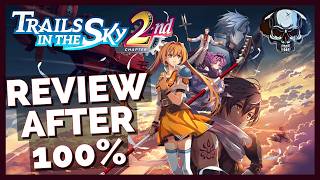
The video is a first-impressions review of the Trails in the Sky second chapter remake, a sequel to the first chapter's remake. The creator, Mortem, discusses the game's combat system, party mechanics, and narrative changes, noting that while the core gameplay remains similar, there are subtle tweaks and new features that enhance the experience. The review is based on about 15 hours of playtime, including time spent with the demo, and the creator expresses excitement for the full playthrough.
Mortem introduces the video as a first impression of the Trails in the Sky second chapter remake, sequel to the first chapter's remake. He mentions he paid for the game and used the demo to get a head start, playing about 12 hours of the demo before the full release.
The game's narrative feels similar to the original but with new elements, such as a companion choice between Agate and Shara early in the second chapter, which affects dialogue and interactions. The party system may be more permanent this time, with companions staying longer.
The combat system has incremental changes, including quicker access to abilities. Players build up a stun meter by attacking, which can stun enemies and lead to turn-based 'brave attacks' with options for burst, chain, or follow-up attacks, affecting team coordination and damage.
The game differentiates between 'crafts' (innate abilities that build up points through actions) and 'arts' (magic granted by orbments and courts). These systems affect stats and add unique combat depth, though the creator admits to mixing up names.
After about 15 hours, Mortem is enjoying the game and looks forward to the full playthrough. He notes the first game took around 70 hours, and he plans to complete this one, possibly before the release of 'Control Resonant' on the 24th, though he's not rushing.
The creator is having a great time with the Trails in the Sky second chapter remake, appreciating the familiar yet refined combat and narrative. He's curious about the party system's permanence and looks forward to the full experience, despite some uncertainty about the total playtime.
Narrative Evolution
The game introduces a companion choice that affects dialogue, showing a new layer of player agency not present in the original.
07:21Combat Depth
The stun meter and brave attacks add strategic depth, making combat more engaging than the original's system.
07:50Arts and Crafts System
The distinction between crafts and arts is crucial for understanding the game's unique combat mechanics.
08:43Player Engagement
The creator's enthusiasm and curiosity about the party system indicate the game's strong pull, which is a testament to its quality.
10:06[00:00] What's going on everybody, Mortem here, this time bringing you my first impression for Trails in the Sky second chapter, which is a sequel of course to first chapter, but also
[00:16] a remake of the original titles, and after having played the remake of the first one last year, I was actually very excited to jump into this one, because while it was a slow burn, the original over the course of it did really pull me in, and I've been looking
[00:29] forward to the continuation and story of this one ever since. With that in mind, this game launched, I think, technically today, but due to time zones, it was actually available last night, which is important because I did not receive a review key for this one. I did, in fact, pay for
[00:43] it. However, there is a demo that is available for this game that has been available for a couple of weeks, and all of your progress from that carries over. I spent, I think it was like 12 hours with that demo, and so I was able to jump right in where I left off at the end of the first chapter
[00:58] of the game, getting a bit of a move on. So in that way, I did have a head start that was available to everyone, should you choose to make use of it. But one of the reasons I was so excited to jump into this one is that while the Trail series is very large, something like 13-inch games,
[01:13] people that I've talked to really seemed enamored with the second one here, and I can kind of see why with the way they set it up in the original title. But with that said, as this is a direct sequel and everything, and the events play off of the first game, and there's going to be some
[01:27] spoilers for the original in here, and depending on how you feel about it, maybe some plot spoilers for the beginning of the second one here as well. But let's keep it moving. So, right at the end of the first game, Joshua leaves your party, so to speak, after some events become made clear that
[01:43] he used to be a sort of unwilling subject of a secret society, you could call it, and he is running off on his own to try to deal with that. But he leaves behind his partner, Estelle Bright, who, devastated by his loss, doesn't react well initially,
[01:58] and the prologue is kind of about her coming to grips with the fact that he really left, which I do enjoy how they dealt with. Because over the course of the prologue, as you see her reaction to this news unfold, they come up with a bit of a plan because they don't know where he went
[02:11] and have no way of really readily tracking him down. Estelle instead goes off to do some intensive training, while other characters go about chasing down some initial leads. and then when you get done with that, you start going through a couple of regions you have already been to
[02:26] as part of the first game in order to track down some of those leads, and that's how they sort of set up the story here. And I do really, really like what they did with the narrative there, and I'm already sort of getting a feel for why people seem to enjoy it so much in that regard.
[02:39] But speaking of narrative stuff, probably important to mention that if you played the first game, you can also import a bunch of stuff, like you can start at a higher level, they'll give you some good items right away. And the reason I mention that is because progression systems in sequels are always super interesting to me especially when they direct sequels where you playing like the same characters and everything because they have to deal with that thing all RPGs do where you probably got super powerful in the first game and now they need to
[03:06] depower you, so to speak, for the sequel to make any sense in terms of progression. Now, a lot of games choose one path or another here. Some games try to keep you feeling powerful, or just like
[03:18] adding on more abilities and stuff as you go. Others use some story method to depower you. But the reason I find it so interesting is because I recognize it as a necessity of, like, playing the game. At some point, you know, there has to be progression here
[03:32] or it's not going to hit the same. And how well or poorly any game handles that is fun for me to see. In the case of second chapter, I think they do a pretty good job with it overall because our ornaments, which we slot magical quartz into,
[03:46] which gives you your abilities are kind of the basis of a lot of the progression outside of just things like levels and I already mentioned you can start at a higher level depending on your save from the first game that you would have imported but the orbments is really where they try to
[03:59] depower you and they do this by basically introducing a new version of the orbments which means none of your old courts from the previous one were compatible and so you have to build up new ones but the upside to this is while you will lose some power in the short term this
[04:15] new version apparently has like new abilities and things for you to learn which adds that extra layer of progression because based on the courts you're equipped into the orbment determines your overall abilities and everything and so this way they both successfully depower you while
[04:28] potentially giving you new options to mess around with when you get that far which is another thing I think the game is handling well thus far but then there's the actual gameplay side of things now it's probably not much of a surprise given the nature of the remakes and the incremental
[04:42] progress they do between games, I believe, for this series, that it plays extremely similar to the original game, with a few added things, mainly around your level and stuff, and just giving you access to some abilities more quickly. But for the most part, running around and combat are pretty
[04:59] much the same as the original. With some minor tweaks, however, like for instance, when you are running around the game world, you can do a fishing minigame now, an ever-present JRPG classic, and they've connected that with other systems that were already present in the first game,
[05:13] like, you know, the crafting and the cooking, the in-game reward system, etc. But by and large, on every chapter, you're going to be confined to a general region, and you're going to go around completing side quests via the Bracer's Guild, as Othell is still a Bracer,
[05:28] effectively a mercenary who fights off threats to the realm, and a lot of the side quests take that form. There's also an investigative element to it, which is important for here in just a moment. but much of your gameplay is running around
[05:41] that area that you are in, doing those quests, fighting off monsters with the mix of more action-oriented stuff that then leads you into the proper turn battles which can be challenging but not really overwhelming thanks to the game weakening mechanic I guess you could say So if you lose a battle against an enemy you can
[05:59] continue to fight it without changing the difficulty. It'll just lower the stats of the enemy. So in that way, you can always kind of get through everything if you try hard enough. But the thing I really want to talk about here is a few of the quests. So a lot of the side quests
[06:11] thus far have been really fun. In fact, one of the ones you get if you choose to do some optional stuff right after the first chapter ends, is an investigation into an assault that happened on a local election campaign, which was really interesting. As it is like a full-on little
[06:26] investigation, you have to go interrogate a bunch of people, learn a bunch of clues, in order to find the discrepancies and actually figure out who did it and what happened there. I had a lot of fun with that, more so than I was expecting to, and it's not even the only one.
[06:39] There was another side quest to effectively go help a woman get her husband to stop gambling by out gambling him, which was a little cliche, but it did make me laugh. And then the first chapter, which is technically part of the demo, I thought was a little bit silly, but it was also like
[06:54] really funny. So that was still kind of positive. And what I mean by that, and spoilers for the first chapter of the game here, is that you're basically investigating some ghost sightings, more or less, in the area of Ruan. And having played through this area in the first game,
[07:08] and the fact that it was ghost sightings, I immediately went, oh, it's probably that haunted schoolhouse behind the other schoolhouse, but it's a video game, so you can't, of course, just go straight there, and you have to do all these investigations into these ghost sightings
[07:21] before, sure enough, it leads you to that schoolhouse, only for one of our companions from the original as well, Olivier, to get into an argument about the concept of beauty with said ghost, and it was very funny. So while much of the gameplay is the same narratively, it feels like
[07:36] they're doing some new stuff, and it's been even better than I was expecting, which kind of, I would say again makes sense why people seem to love this one so much. That said, the incremental changes that they made to the combat system are certainly not unwelcome. Like I said, they give you access
[07:50] to a lot of the abilities much more quickly, but in the end, you're still going to run up, beat a bunch of enemies. As you fill up a meter, you can then do some heavy attacks, so to speak, that will then stun that enemy, which you can use as then a really good transition into turn-based
[08:04] by activating your brave attacks, which allow you to do either a burst, chain, or follow-up, and basically determine how many members of your team are helping you with that attack. In order to do some extra damage, you can stun enemies as you build up a stun meter,
[08:18] which gives their turn. On everybody's turn, they can get bonuses based on where they are in the turn order, but by delaying enemies, etc., you can affect that. And then you can either do basic actions like attack, defend, use items,
[08:31] or use your arts and crafts. So I do tend to get the names mixed up, but if I'm not mistaken, crafts are like your innate abilities, so to speak, and you'll build up points to use these
[08:43] as you perform other actions and get hit etc and then you can spend those to use your abilities and some of them like your S skill i believe it called are like super strong and deal extra damage and whatnot now your arts are essentially your magic these are the abilities that are going to be granted by the way you set
[08:59] up your orbments and your courts which also has effects on your stats and that's where a lot of the i would say unique portions of combat come from but again if you've already played the first i think you'll pretty much immediately get what is going on here as there's just a couple of
[09:13] subtle tweaks. But one thing, sort of combat related, that I found really interesting was that in the original game, it was you and Joshua, and then you had like a rotating group of people who would follow you through certain areas and kind of come
[09:25] and go with the party as you move through them. Now, in second chapter here, early on, you get a choice between one of two companions that you will have messed around with as well, Agate and Shara. So, that was
[09:37] a choice you could make that would then affect things like dialogue, etc. throughout the next zone, but I did notice that when I went to the new zone for chapter two, I did keep everybody I had with me, which is to say you, your companion, in my case,
[09:51] Shara, that you went to the first place with, and then the two others you pick up along the zone. And so I am finding myself, once again, curious to see how they handle the party system. Like, is that going to be a little more permanent, or are they going to continue to rotate them out,
[10:06] and it just takes a little longer this time around? All things I will find out for myself soon enough, I am sure, alongside a handful of other things. But as far as the first impressions go after between this and the demo, roughly 15-ish hours,
[10:19] I'm already having a great time. I was really looking forward to this game, and I'm going to, I think, have a blast playing through it and seeing just everything they did here. With that in mind, as far as the full review goes, I'm not entirely sure.
[10:33] The first game, I think, if I recall correctly, took me around 70-ish hours. So I suppose we'll see how long this one winds up taking. I would prefer to have it done before Control Resonant drops on the 24th,
[10:45] but it might wind up overlapping with that a little bit, but we shall see what happens. I'm not really trying to rush through this one or anything like that, but I do have to beat it once and then go through, like, nightmare mode and stuff, but as I recall from the first game, it's actually easier than it sounds.
[10:59] Do the things like levels, etc., but that's a conversation for another time. But as for today, I'm having a good time, and I'm looking forward to playing through this whole thing, which is where we're going to leave this particular video. I'd love to know what you think about this one down in the comment section below.
[11:12] Do keep in mind I haven't played it, so please don't spoil it for me, but otherwise, feel free. And that, of course, does in fact mean to like, comment, subscribe, all the YouTube jazz. But regardless of any of that, truly, just thank you so much for watching.
[11:24] I really do appreciate it. May you wander in wisdom, and have an amazing day.
[11:39] you
⚡ Saved you 0h 11m reading this? Transcribe any YouTube video for free — no signup needed.