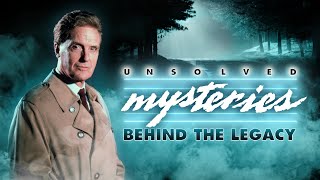

The Show That Created True Crime TV
45sIt explains the origin of the true crime genre, a topic with massive current appeal.
▶ Play Clip"The title promises a behind-the-scenes look, and the video delivers with rich anecdotes and insights, though it's more of a retrospective than a deep dive into the legacy's broader cultural impact."
This video features interviews with the creators, producers, and directors of the iconic television series 'Unsolved Mysteries,' offering an in-depth look at how the show was made, its impact on viewers, and the legacy it has built over decades. The speakers share behind-the-scenes stories about casting, special effects, and the emotional weight of solving real cases, highlighting the show's unique blend of true crime, mystery, and audience participation.
The show combined true crime with lost love stories, creating a new television format that was initially expected to last only a year or two but became a major hit.
'Unsolved Mysteries' became a household name, and the creators note that the show's success was fueled by its mystery element and the audience's engagement with updates.
Robert Stack was chosen for his deep, gravelly voice and gravitas, which made him an ideal narrator. His Hollywood icon status and personal charm contributed to the show's appeal.
Before the internet, producers found stories by calling police stations, using clipping services, and relying on viewer submissions, covering over 20 categories of mysteries including missing persons, UFOs, and legendary creatures.
A notable case involved a woman abducted from a phone booth; the show received many tips, including a detail about a fish decal on the truck, but the case remains unsolved.
Producers looked for twists, emotional resonance, and stories viewers could identify with, which made the show powerful and compelling.
The majority of stories were submitted by viewers, such as the case of Joyce from East Millinocket, Maine, which was only covered due to a petition from the town.
The show intentionally included scary or creepy elements because people enjoy being scared, as exemplified by the 'Unknown Arsonist' story where a man videotaped himself setting fires.
A story about a nurse who was murdered; a couple claimed she spoke from beyond the grave, leading to the identification of the killer, Allan Showery, which proved accurate.
The show's music was a key factor in its scariness, with viewers still reporting being scared by it 30 years later. The combination of music and Robert Stack's voice was crucial to its popularity.
The show shot on location in small towns, often receiving red-carpet treatment and help from local law enforcement, including helicopter support, which added authenticity but also risk.
Casting non-actors from small towns was tricky; sometimes people played themselves and were nervous, leading to underacting. Directors had to balance resemblance to real people with acting ability.
A story about a fugitive cast an actor who looked exactly like him; after airing, someone called in, and police arrested the actor. After that, actors were given letters to prove they weren't wanted.
Actors often lied about skills like driving a stick shift or riding a horse, leading to humorous incidents, such as an actor galloping away uncontrollably on a horse.
Many actors started their careers on the show, including Matthew McConaughey, who played a murder victim's relative and later referenced it as his first big break.
The show adapted from film to computers, with heavy equipment and lighting requirements, contrasting with today's simpler setups. This spurred creativity in recreations and special effects.
A story about firefighters who died in an explosion was recreated with real firefighter suits and explosions, aiming to convey the tragedy and danger they faced.
Renting the 'Harry and the Hendersons' Bigfoot costume led to a humorous moment when a bar patron chased the actor in costume, providing one of the best moments in the show's history.
A story about a church explosion was recreated with real dynamite, breaking windows for blocks, and nearly injuring a producer with flying debris.
A two-scale replica of a flying saucer was built for a Roswell story, with alien beings based on eyewitness accounts, making the director feel like he was making a movie.
A story about a possessed man required a wet set, waterproofing the living room, and rushing to dry the actor between takes, leading to a humorous hotel flooding incident.
Special effects included a stunt pilot flying a plane with an actor on the wing, and a reenactment of a boat hit-and-run that required building ramps in the water.
The show traveled worldwide, including filming in the Egyptian Museum's treasure room, the miracle at Fatima in Portugal, the Nazca Lines in Peru, and a story about Anastasia in Russia.
A story about a woman who claimed to be stalked and attacked for years, with no independent corroboration, leading to theories of dissociative identity disorder.
An episode featured psychic artist Coral Polge, who drew portraits of deceased people; a producer's mother recognized the portraits as her grandparents, which were used in the episode.
A story about spontaneous human combustion required a fire suit with flammable gel to set a stunt person on fire, which scared viewers who feared it could happen to them.
Robert Stack, who played Eliot Ness in 'The Untouchables,' identified with the crime fighter and brought gravitas to the story, which he loved doing.
The show's 800 number allowed viewers to report tips, leading to cases being solved, such as the recognition of fugitive Arthur Frankfurt and the identification of Gail Delano's body.
Solving a mystery was a powerful moment for the show, leading to scramble mode to update audiences quickly, and demonstrating that viewers had a stake in the show.
Updates involved pulling Robert Stack in, rearranging shows, and sending crews out for interviews, showing the extensive effort behind each update.
The show used a PO box and later an 800 number, with a warehouse-like Telecenter in Los Angeles where operators took tips, and red flags indicated veritable tips that could solve cases.
A fugitive was caught after a housekeeper recognized him from the show and found paper with his name, leading to his arrest.
A story about a woman who disappeared with a shady character led to a tip within minutes of broadcast, and the fugitive couple was arrested seven hours later, with the fugitive saying 'You must be from Unsolved Mysteries.'
Some fugitive captures were dramatic, including a 15-mile high-speed chase where the fugitive shot at police and then turned the gun on himself, after being identified from the show.
The show's success in solving cases was attributed to viewers, with 180 wanted fugitives brought to justice, and the show's updates highlighting that viewers solved the cases.
The 'Lost Loves' segment reunited people separated by adoption or war, with emotional, authentic reunions that moved the crew and viewers alike.
A woman wrongly convicted of killing her baby with antifreeze was exonerated after the show aired, with calls from physicians leading to a new trial and her release.
The show helped many people beyond entertainment, bringing comfort and solving cases, with updates continuing for stories aired years ago.
The show's popularity led to parodies, including an affectionate SNL parody, and the creators appreciate the homage, noting that 'you've got to take your knocks.'
Fans around the world are deeply devoted, with some wearing Unsolved Mysteries jackets and sharing how much the show meant to them, and the show has never been off the air.
The creators are proud that the show made a difference, and they believe it's the fans who are responsible for solving so many cases, with the tagline 'someone somewhere knows the truth.'
The video celebrates the enduring legacy of 'Unsolved Mysteries,' highlighting its innovative format, the crucial role of viewers in solving cases, and the emotional impact it has had on audiences worldwide. The creators express gratitude to fans and hope that more cases will continue to be solved, emphasizing the show's unique ability to engage viewers as active participants.
What was the initial expectation for how long 'Unsolved Mysteries' would last?
The creators thought it might last a year or two, but it became a big hit.
01:16
Why was Robert Stack chosen as the narrator?
He had a deep, gravelly voice and gravitas, making him an ideal choice.
04:45
How did producers find stories before the internet?
They called police stations, used clipping services, and relied on viewer submissions.
06:40
What was the outcome of the Angela Hammond case?
The case remains unsolved, despite many tips including a fish decal detail.
11:04
What happened with the actor who looked like a fugitive?
Police arrested him after a viewer called in, leading to the practice of giving actors letters proving they weren't wanted.
20:20
Which famous actor got his first big break on 'Unsolved Mysteries'?
Matthew McConaughey, who played a murder victim's relative.
23:18
What was the 'Lucky Choir' story about?
A church explosion where all members showed up late, and the reenactment broke windows for blocks.
28:28
How did the show recreate spontaneous human combustion?
They used a fire suit coated with flammable gel to set a stunt person on fire.
39:33
What was the Telecenter?
A warehouse in Los Angeles with operators taking tips via an 800 number.
43:43
How many wanted fugitives were brought to justice through the show?
180.
47:38
What was the 'Lost Loves' segment about?
Reuniting people separated by adoption or war, with emotional reunions.
47:53
What was the Patty Stallings case?
A woman wrongly convicted of killing her baby with antifreeze, exonerated after the show aired.
48:55
Household Name
The show's success was fueled by its mystery element and audience engagement, making it a cultural phenomenon.
01:44Robert Stack's Gravitas
Stack's voice and persona were crucial to the show's appeal, demonstrating the importance of a strong narrator.
04:45Pre-Internet Story Discovery
The methods used to find stories highlight how much the industry has changed with technology.
09:12Lookalike Mistake
A humorous yet serious incident that led to a policy change, showing the practical challenges of casting.
20:20Viewers Solve Cases
The show's success was attributed to viewers, emphasizing the power of audience participation.
47:23[00:11] somewhere who knows the truth. Perhaps it's you. [eerie music]
[00:45] [phone ringing] was really the first program that combined We were true crime, yes.
[01:01] We were also lost love. And there was really, at the time we were doing it, We were basically creating a new format.
[01:16] didn't think that it was going to last as long as it did. I think everybody kind of went, maybe a year, maybe two years, Suddenly, "Unsolved" was a big hit.
[01:31] First of all, it was about a mystery. If you look at the schedule, there's always a bunch of 'em. which makes that even better.
[01:44] that "Unsolved Mysteries" has become a household name. But now, more often than not, I hear them say, well, [eerie music]
[01:58] It was the first show of its kind that, you know, And it's what really fueled the success. we would do updates.
[02:12] Audiences watch it at night. So it just became really, like, water cooler TV. By the time we got to season four,
[02:26] We were typically-- it's certainly in the top 20 shows And we really had momentum.
[02:38] It set a certain kind of standard Because at that time, people weren't doing shows like this. I think that's why people still like the show today
[02:53] And people really respond to that. Well, it's something to me. [music playing]
[03:07] as a series was really a series of specials that John and Terry had done for NBC called People started to figure out, well, wait a second.
[03:22] We can do all sorts of stories that are mysteries that will fall under the umbrella of a show When we launched the weekly series in October of 1988,
[03:37] that NBC had put in different places all over their schedule. We were just kind of being tested out, I think,
[03:49] be interested enough in the show to try and find us. out of everybody because they did really well. from across the country.
[04:02] The whole Hollywood community, nobody had heard of us. Mysteries," who are you guys? TERRY DUNN MEURER: I really didn't know if the series
[04:17] come back each week to see stories But then what we started to see was that the show what cases have been solved or if there
[04:32] And it all just took off from there. [music playing] The dark?
[04:45] JOHN COSGROVE: Bob Stack was an ideal choice He had that deep, gravelly voice. He had gravitas, that feeling of whatever he says is true.
[05:00] You're on a dark, lonely road. That voice was just so perfect at telling the stories, And also, I think people really liked him as a person
[05:17] And he was a Hollywood icon. of "Unsolved Mysteries." on location and oftentimes at night to make it creepier,
[05:31] CREW: Clear the umbrella. But he was a real trooper. Join me for this intriguing new mystery as well as
[05:44] these fascinating cases. JOHN JOSEPH: Working with Bob Stack, as a director, and he obviously knew how to hit his mark
[05:56] We did have one time, though, that we I know. I know. JOHN JOSEPH: We had this scene where Bob had to hold a dog.
[06:11] the dog was squirming, and Bob Stack was having trouble. At the beginning, he was trying to be a trooper I'm sorry.
[06:26] Other than that, how'd you like the show, Mrs. Lincoln? [music playing] ask me is, how did you ever find all
[06:40] ROBERT STACK: When we return, a cold-blooded killer SHANNON MCGINN: It's hard for people to remember the tools and '90s were so different in making television.
[06:55] stories back in the day. We would just call up police stations, And we would just ask if there were stories that they had.
[07:09] and made contacts in those states. we'd call our contacts to help us flash them out. and missing persons and wanted fugitives.
[07:22] We wanted any kind of story imaginable-- missing heirs, treasure, lost loves, UFOs, even legendary creatures We had over 20 different categories of mysteries.
[07:35] we did was about three people who were driving Mama, what's that light? It's awful bright.
[07:48] They get out of the car to investigate, WOMAN: And I stood there, looking up to try to figure Mama, I'm sick.
[08:03] burns on their bodies, and they were totally traumatized. in the area that night. On one, you're there.
[08:17] [explosion] who claimed he was reincarnated from a World War II submariner
[08:30] MAN: I was in my bunk when the attack happened. about what had happened on the submarine
[08:42] down to what he was wearing, where he was in the submarine with the actual story of this man. emerged, details that appeared to come from the life
[08:57] I still can't understand how someone-- have such specific details and information knew and had died years before.
[09:12] You just cannot make this stuff up. Back in the days before there was an internet, the way we would find stories was through a clipping service.
[09:27] And what they did was they sent newspapers to people was to go through those papers, local newspapers, sent them, and literally cut those out of the newspaper,
[09:42] found a clipping with a great story, You would get goosebumps. did was the story of a young woman--
[09:57] while she was talking to her fiancee. circling around the block, an older model They keep circling around the block.
[10:11] BOYFRIEND (ON PHONE): He's probably not from around here. Anyway, do you still want to go to the lake this week? parked next to the phone booth.
[10:25] Uh, Rob, he's pulling up next to the phones. TERRY DUNN MEURER: And she gave a description of the guy. Mustache, beard, and glasses, and he's wearing overalls.
[10:38] I'm sure it's OK. [angela screaming] He rushes to get to this parking lot,
[10:52] And he watches his girlfriend being abducted and driving off. We received a lot of tips for the Angela Hammond story
[11:04] which was there was this fish decal on the back of the truck And even to this day, they're still out there is still unsolved.
[11:18] to Angela's terror and to her fiancee's desperation It was a sad story.
[11:31] to look for that would make a story really engaging One of those things is twists and turns. We look for the emotional.
[11:45] Our viewers could really identify And so I think that was a really powerful
[11:57] ROBERT STACK: The Wackers are quiet, unassuming people ROBERT STACK: Hardly the type to draw TERRY DUNN MEURER: One of the more popular stories we did
[12:10] was about a married couple that was being absolutely terrorized and even violent attacks. in that story was the fear that this couple felt,
[12:24] and never knowing when their assailant was [muffled screaming] of mail from viewers.
[12:37] But a lot of the letters were from viewers wanting I actually think the majority of the stories we produced were submitted by "Unsolved Mysteries" viewers.
[12:51] of East Millinocket, Maine was safe and secure, TERRY DUNN MEURER: We did a story And it's one of those stories that we might not have done,
[13:06] if the people in the town hadn't sent in a petition-- asking us to do this story. Her body looked like it had been beaten.
[13:21] Joyce's killer was identified. [music playing]
[13:34] GIRL: Please. to find stories that had a scary or creepy element to them
[13:47] because, let's face it, people do like to be scared. to go inside the mind of an arsonist. we did called "Unknown Arsonist," where a guy found
[14:02] out the videotape, played it.
[14:20] Like, he was watching the fire happen It was very creepy.
[14:34] And the police ended up solving it. like, 25 other fires. we produced was about a nurse by the name of Teresita Basa.
[14:53] But soon, the firemen made a grim discovery. and there were no suspects. A Chicago couple claimed that the victim Teresita Basa had
[15:09] speaking to them from beyond the grave. started going into trances, and she would speak in the voice of Teresita.
[15:23] You must go to the police. Tell them his name is Allan Showery. And it turned out she was right.
[15:38] And he was so freaked out by how police were able to track in the courtroom. [music playing]
[15:57] [eerie music] one of the key factors is the music. We get letters from people who say, it's been 30 years,
[16:13] and I'm still scared by the "Unsolved Mysteries" music. sets up the atmosphere of weirdness and scariness. able to tap into that feeling.
[16:28] What's surprising to me is, 35 years later, when people either that theme song. I remember that.
[16:40] That music scared me so much. I think that combination of that music and Robert Stack's voice were key elements on why the show was so popular.
[16:52] [music playing] Mysteries Specials," John and I were on location all the time. too busy to go out on the road.
[17:05] And they got to have all the fun. One of the best things of "Unsolved Mysteries" was that we shot on location, in the places with the people that
[17:19] And for some places, it was the first time And they would just roll the red carpet out. I mean, it's kind of hysterical to think today, with all
[17:35] But those days, it was very unusual sometimes for places more friendly, more helpful. TERRY DUNN MEURER: Law enforcement
[17:50] They'd give us helicopter support. for our recreations. But it was always a little bit risky.
[18:02] We probably had the entire police department helping And they got called to a real crime scene. But they eventually came back, and we
[18:16] [music playing] When you go to the small town, you
[18:29] sometimes from a major city. Excuse me. What section? - Bed-Stuy.
[18:42] What we found is that-- it got tricky because when it was an emotional story or something with a murder or somebody died, It was really hard to watch.
[18:55] and I'm afraid the results confirm SHANNON MCGINN: A lot of times we or certainly not good actors.
[19:09] people who are under acting, and people Sometimes people would even play themselves, because they'd be so nervous.
[19:22] The directors had a big challenge a lot of times, Would you like to come down to the station We would go into a small town to do a story,
[19:38] And they would all come from small theater groups. Who the hell is Fifi? WOMAN: Yeah, there was no reason for you to upset Ida like that.
[19:53] I love him too. You get enough time to spend with him. very interesting problem.
[20:05] that the actors looked like the real people, And their ability to act wasn't nearly as important. One time, we did a story about a fugitive who was on the lam,
[20:20] and we cast a guy who looked exactly like him. The show aired, and someone called in that the fugitive So they sent the police over, and they arrested him.
[20:34] So after that, we decided to start giving the actors who with them to prove to law enforcement and they were not a wanted fugitive.
[20:48] that we had to cast a scene where And we're calling people in to, you know, audition. So these two guys come in, and they do the improv.
[21:03] They, like, did the perfect robbery. They gave him a look and-- I said, how come you--
[21:15] So they got the part. the real people quite as well as we needed them to, we would use makeup and wigs to help create a better match.
[21:29] actually made matters worse, I think. they were just too funny. that one of our fans put together,
[21:41] of "Unsolved Mysteries." SHANNON MCGINN: Another funny part about the actors And any time we would ask an actor
[21:55] if they could do something, like drive a stick shift car or ride a horse or swim or drive a boat, So we did a story once about a couple,
[22:09] And so when we cast the lookalike actor, I've ridden officers all my life.
[22:21] riding alongside of the road. together to establish their love relationship. galloping away from the set.
[22:35] And you could see he had no idea how to control this horse. Luckily, the woman was a good horsewoman, stop the horse before he fell off and really hurt himself.
[22:49] Needless to say, there were no horse riding scenes with him Have you got the note? STUART SCHWARTZ: For the most part,
[23:03] starting out in their careers. would actually become really famous. He played the relative of a murder victim.
[23:18] She played the mother of a child who was I-- I-- she apparently had some sort of seizure
[23:30] MOM: It wasn't far. She was with the nanny. was Matthew McConaughey. - I want talk to him.
[23:43] victim in one of our stories. before Matthew even moved to LA. So the director told Matthew he could take
[23:58] Now Matthew McConaughey is very famous Tell him to give me the keys. If you don't leave, I'll call the police.
[24:13] a fairly robust death scene. He was working in his garage, and he was shot by a man
[24:25] ROBERT STACK: Larry had been shot four times in the chest STUART SCHWARTZ: Let's just say that his acting has come a long way since then.
[24:37] Show," and he referred to the "Unsolved Mysteries" story in that segment as his first big break in Hollywood. [music playing]
[24:52] I remember when computers came out, and you had-- its own suitcase, lugging it around and the first Motorola cell phones that were this brick that we were so excited
[25:05] And we also shot on film, which requires so much more lighting. lighting, and then you'd have the other half a day
[25:17] And now you put up one light, and you're ready to go. was that essentially, we were shooting and costumes and vehicles.
[25:33] And sometimes you'd end up with huge set pieces because it'd be a big crime or some kind of event happening.
[25:45] from the documentary world, where we were used to sitting back and just recording and documenting Suddenly, we've got actors.
[25:59] We've got period pieces. I think it really spurred the creativity because John no, don't do this, don't do that, do things this way.
[26:12] a great story because we trust your judgment. that I directed was a story called "KC Blast."
[26:26] who died while fighting a fire at a construction site. So as a director, I had to try to find a way to recreate feels that what the firefighters were up against
[26:42] So we try to make it as real as we could. them in firefighter suits. like firefighters getting blown away literally by the fire.
[27:01] and how tragic this event really was. Pumper 41 or Pumper 30.
[27:13] hit home for me because these were firefighters. and they died in the process. to hear those kinds of stories.
[27:31] There's some weird tracks. was "Bigfoot." We rented the Harry and the Hendersons Bigfoot costume,
[27:44] and we hired the 6 foot 7 inch actor to wear the costume. One of the sightings in the Bigfoot story in the morning when the crowd came out.
[27:59] and we're filming and the bar closes. clearly, they'd been imbibing most of the evening, A couple of people scream, and one of the guys
[28:15] actually jumped off the curb and chased the Bigfoot. Everybody broke up because it was just hysterical. It was one of the best moments in the 14 years
[28:28] On March 1st at exactly 7:27 PM, JOHN COSGROVE: There was a story we did called the "Lucky Choir" and it was a story about a church that had an explosion,
[28:44] SHANNON MCGINN: All 10 to 12 people showed up late that day. We found a little abandoned church in the state going to let us blow it up.
[28:59] And the director said don't go too far, we don't want to rattle the windows in the neighborhood. of dynamite and explosives inside the church.
[29:18] It was a huge explosion. It broke windows for about five or six blocks all around. but all these pieces of wood started flying and hitting
[29:33] the hut, and the producer almost got stabbed by a piece So I guess it was a second miracle that nobody was injured.
[29:47] on July 2nd 1947. RAYMOND BRIDGERS: As a director, probably my best memory We built a two scale replica of the flying saucer
[30:07] that someone claimed to have seen crashed in a gully We created alien beings based on eyewitness accounts. felt like I was making a movie.
[30:25] that I ever directed was a story called "Rainboy." This guy was possessed and he had the capacity If you're going to have it rain inside, you have to have
[30:41] what's called a wet set, which means that you build the water runs off into a trough that is then recovered. off camera in the ceiling.
[30:57] We had to waterproof the living room And then after each take quickly rush in it was like 35 or 40 minutes for the second take.
[31:13] The actor's wardrobe was wet. and our poor wardrobe supervisor really This is your fault. You made it rain in the living room.
[31:27] It's you, Danny. The pots and pans that were over the stove, they That's when I got levitated off the floor.
[31:42] the actor and a bungee rig to slingshot him across the room. It was like feeling it all over your body. was that on the morning we left, all the crew was
[31:58] And there was two inches of water in everyone's room, I called the hotel manager who said
[32:10] was nothing to explain it. was instigated by the Rainboy who, in fact, we had interviewed during the show, I'll leave it to you.
[32:25] we also employed special effects for things like car And those were very real because those were created JOHN JOSEPH: Well, you got a story where this guy lived
[32:40] he jumped on an airplane to leave the town. Now we're going to show this guy getting on a wing and the plane We had to have a stunt pilot who could fly the plane.
[32:55] be willing to get on the wing. and you couldn't see it on the camera. I mean, I did watch, but I can't believe we're doing this.
[33:09] You know what? The whole mystery was who was this guy him and find out what happened.
[33:26] we got more complex with stunts and with special effects and we were able to do much bigger stories. One that I produced was about a woman who had actually
[33:40] gotten run over by a boat on a lake, but it was a hit and run. So to do that reenactment, we actually had to jump like boats They had to build the ramp in the water.
[33:52] It took multiple nights of shooting. And I would just always be so happy when it was over
[34:04] You stay here. was burning. running around inside a burning trailer,
[34:16] And what they did was they piped the inside of the trailer that they could turn on and turn off.
[34:28] the fire would start, we'd run it Because we couldn't burn the walls because then it but it was a really tricky stunt.
[34:47] about Unsolved Mysteries for the audience and also for us as producers is that we traveled all over the world. directed was "Mummy's Curse."
[35:00] We spent two nights in the Egyptian Museum. We were in the treasure room with all the treasures that Howard Carter had pulled out of the tomb.
[35:12] The life mask of Tutankhamun is likely the most iconic artifact It was really awesome. and we did the miracle at "Fatima" in Portugal.
[35:28] "Nazca Lines" in Peru, and in the South Pacific We got Wallach. What's this stuff doing here?
[35:42] was about "Anastasia." This was in the early 90s and Russia had just opened up. Yes, but I would like to see the pictures.
[35:56] was so complex. and hired everybody else locally. few Russians spoke English.
[36:11] Is the body of Grand Duchess Anastasia where the rest of her family was found or did Anastasia somehow
[36:23] Only to emerge years later as the eccentric Anna Anderson. wasn't in the grave. And there was a number of women who had claimed to be Anastasia
[36:37] Suspect just exhumed these bodies and they literally laid out the entire family in this room We were ushered into this room.
[36:49] It was just like watching history. their own favorite Unsolved Mysteries case from the show.
[37:07] was about a woman named Cindy James years. He had a knife put through her hand.
[37:20] There was no independent corroboration. two, sometimes three people. found dead in the yard of an abandoned house.
[37:34] dissociative identity disorder. the source of the attacks. TERRY DUNN MEURER: Then the theory
[37:47] So the question was, did she really have an unknown assailant? SHANNON MCGINN: We did an episode about a psychic artist.
[38:02] Coral Polge has drawn more than 100,000 eerie portraits. and she would touch the person's hand. she would sketch a portrait of someone that had gone beyond,
[38:19] CORAL POLGE: And I honestly don't quite know how I do it. Also there is an element of what we call automatic control, as
[38:34] if somebody takes over my hand and gives me a certain amount of help in getting the drawings accurate. I asked if she could do a portrait for me.
[38:50] So she did one, it was an older lady, I didn't recognize it. Did another one, older man, didn't recognize him. And I went home and my mom said, "Those are my grandparents."
[39:06] And she went and got photos of my great grandparents And the pictures that she showed me They ended up using them in the episode against a photograph
[39:20] ROBERT STACK: Morning coffee at K and Mike Fletcher until the peculiar events of February 11th 1996.
[39:33] It happened just after 9:00 AM. did was about a phenomenon called When a perfectly normal person burst
[39:46] STUART SCHWARTZ: One of the challenges because we had to literally set somebody on fire. Well, we used something called a fire suit which a stunt person
[40:03] would put on and the fire suit was coated with a flammable gel One of the things that happened is when we aired the story, from viewers who were scared that that
[40:17] was going to happen to them. Eliot Ness became one of the most respected was about the real Eliot Ness.
[40:30] and Bob loved doing that story. TV ANNOUNCER: Tonight's episode, "The Waxey Gordon Story."
[40:42] Bob played the role of Eliot Ness in the Untouchables. And I think he really identified with Ness as a crime fighter. STUART SCHWARTZ: And he brought the gravitas of Eliot Ness
[40:59] RAYMOND BRIDGERS: He really loved this show. He loved the mysteries. He was a big proponent of the show
[41:14] and a big champion of the show. call our 800 number to report that they
[41:26] recognized Arthur Frankfurt. when cases started to be solved because people watching had a stake in the show.
[41:40] ROBERT STACK: June 21st 1986, Gail Delano to meet a blind date.
[41:52] was about a young woman in Maine named Gail Delano, ROBERT STACK: If anyone watching tonight has seen Gail Delano please contact the Maine State Police.
[42:08] was that she was answering personal ads that she connected with. in the morgue in a small town in Alabama
[42:23] recognized Gail's photograph from Unsolved Mysteries And that was the moment that I realized that this SHANNON MCGINN: The minute that we solved the mystery,
[42:38] It was unbelievable. CHRISTINE LENIG: Nobody loves anything more than hearing know a mystery has been solved.
[42:53] we really went into scramble mode. we wanted to update the audience as quickly as we could. We sent crews out to do interviews and to get footage,
[43:06] and we may have had a show that was all ready to go. And suddenly, we're rearranging everything because we need to free up 5 minutes of time.
[43:19] in and out of shows as needed. called me said that Peggy had seen me on television
[43:31] was to pull Bob Stack in. It was never just like, Oh, an update. There was a lot that went on behind the scenes
[43:43] viewers were told to write to a PO box Then we went to an 800 number where call that the Telecenter.
[43:57] the phone center has been an integral part of our operation. almost like a warehouse in Los Angeles. operators all sitting at desks each
[44:10] with a phone in front of them. TERRY DUNN MEURER: And when the show would air, start to come in with tips.
[44:23] were in the teller centers and if a veritable tip came in And every once in a while, you'd see like six or seven red flags
[44:36] A case could be solved that night and the audience loved it. always brings us great satisfaction.
[44:49] Thanks to your calls. who was wanted and on the run. from somebody who said that she was a housekeeper in a motel
[45:05] exactly like our suspect. Man he stood by the beds, in between the beds, They want you to make the beds, stuff like that.
[45:20] and she found paper with his name on it. and they caught up with him and arrested him. begins in 1985 in the small Maryland town of Hancock.
[45:36] named Missy Mundy. She got romantically involved with a man named of a shady character.
[45:51] We wanted to tell this story to try to recover Missy Mundy ROBERT STACK: Missy was swept off her feet by Jerry. ROBERT STACK: Within minutes of our broadcast,
[46:07] called the police to say they recognized Jerry Seven hours later, the police arrested the fugitive couple themselves watched the broadcast and were
[46:23] I figured the time was about seven hours and 15 minutes and he was in custody. he said "You must be from Unsolved Mysteries."
[46:38] and sat there and waited for the police to come up. about to push his head down so he could go in the police car. And he said, "That's my favorite show Unsolved Mysteries."
[46:53] were really quite dramatic there was one fugitive named Dennis and he led police on a 15 mile high speed chase. He shot at the police, and then he turned the gun on himself.
[47:10] as being the person that was on Unsolved Mysteries. ROBERT STACK: Update. saying we solved these cases.
[47:23] we didn't solve these cases, it was the viewers actually solve these cases. of all the cases we ever produced have been solved.
[47:38] And 180 were wanted fugitives who were brought to justice. And that's something we're very proud of. to do for us was what we call Lost Loves, where somebody was
[47:53] really important in their life. by adoption or maybe a war. thank you to someone who had had an impact on their lives.
[48:09] And when we did, we would put together a reunion that those people saw each other.
[48:21] Those were very emotional, very live, and caught on tape so to speak, really authentic. It wasn't emotional just for them.
[48:36] It was emotional for our crew, emotional for our viewers, The tears were flowing freely everywhere. it was an emotional end to 26 years of painful separation.
[48:55] for me that was solved was one that we ROBERT STACK: July 9th 1989 at Saint Louis, Missouri, TERRY DUNN MEURER: It was about a woman named Patty Stallings
[49:12] with antifreeze. had not killed her baby. to think that this woman could spend the rest of her life
[49:27] On the night the story aired, calls from physicians Patty Stallings new attorneys petitioned the court
[49:39] that she had previously received ineffectual counsel. was granted a new trial and released from prison.
[49:53] people were writing and calling and just I can't thank those people enough because, I mean, through all of that, wheels started turning
[50:07] TERRY DUNN MEURER: Medical experts and prosecutors died from a rare genetic disease, Unfortunately, we can't undo the suffering
[50:21] that the Stallings have endured during this entire ordeal. and for the state of Missouri. went beyond television because a lot of people
[50:36] were helped by this show. And this show brought some amount of comfort As long as this show has been on the air
[50:48] we're going to continue to do updates. aired five years ago, 10 years ago, 20 years ago,
[51:00] and we're still doing updates. What's your true Hollywood story?
[51:12] became a staple of television and also a household name. That led to a lot of parodying of Unsolved Mysteries Don't even get me started on Unsolved Mysteries.
[51:27] STUART SCHWARTZ: It was really an homage to the series and an affectionate parody and a compliment. I've come to appreciate all the hard work
[51:40] Saturday Night Live did a parody of Unsolved Mysteries. you've got to take your knocks.
[51:54] around the world whose lives are touched. sometimes wearing my Unsolved Mysteries jacket in airports.
[52:06] me how much it meant to them. is demanding to know who committed this horrible crime. There are no other viewers on television like them.
[52:22] were actually part of the show. you could never be a part of murder she wrote, BEN STASSEN: Unsolved Mysteries is simply
[52:35] and I've been doing this for 50 years. JOHN JOSEPH: I lost track of how many stories It was different.
[52:48] It was really astounding. the fact that Unsolved Mysteries has never been off the air. and it's still going and reruns.
[53:03] forever, and feels like it will always be on the air forever. It's like I Love Lucy except it's a little scarier.
[53:15] that the show made a difference, and it feels so great to have TERRY DUNN MEURER: We are so proud of all that and we hope that more cases will continue to be solved.
[53:29] But I truly believe that it's the Unsolved Mysteries fans We are overwhelmed by the love that they in solving so many cases.
[53:45] to be true, which is someone somewhere knows the truth. [theme music playing]
⚡ Saved you 0h 55m reading this? Transcribe any YouTube video for free — no signup needed.