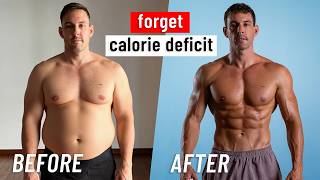

Forget Bulking and Cutting – Do This Instead
45sChallenges the common belief that you must bulk and cut separately, offering a more efficient approach.
▶ Play Clip"Title accurately describes content—video delivers a clear, step-by-step body recomposition plan exactly as promised."
Body recomposition—building muscle and losing fat simultaneously—is achievable without separate bulk and cut phases. This video outlines four key steps: heavy resistance training with progressive overload, nutrition near maintenance calories, high protein intake, and proper recovery.
Train 3-4 times/week with heavy resistance (bodyweight, dumbbells) until failure. Examples: push-ups, pull-ups, dips, squats. Use progressive overload—increase reps, sets, or weight over time.
Eat at maintenance calories (use a calculator) or slightly above/below (±20%). Avoid large deficits or surpluses to preserve muscle while losing fat or gain muscle without excess fat.
Consume 1 gram per pound (2 g per kg) of body weight daily. Example: 87 kg → ~200 g. Prioritize animal-based sources (meat, eggs, fish, dairy) for satiety and stable blood sugar.
Sleep 7-9 hours per night to balance hormones (testosterone, hunger). Manage stress to lower cortisol, which otherwise hinders fat loss and muscle gain. Use resistance training, proper diet, breathwork, or meditation.
Body recomposition is possible with consistent heavy training, maintenance-level nutrition, adequate protein, and good sleep/stress management. For a structured plan, use the speaker's app (link in description).
What is body recomposition?
Building muscle and losing fat simultaneously without separate bulk and cut phases.
How many times per week should you train for body recomposition?
3 to 4 times per week with heavy resistance training until failure.
00:29
What is progressive overload?
Increasing reps, sets, or weight over time to continue stimulating muscle growth.
01:12
What is the recommended calorie range for body recomposition?
Eat at maintenance or 20% above/below maintenance calories.
02:37
How much protein should you consume per day for body recomposition?
1 gram per pound (2 grams per kg) of body weight.
04:19
What are the recommended protein sources for body recomposition?
Animal-based sources: meat, eggs, fish, chicken, dairy.
04:50
How much sleep is recommended per night?
7 to 9 hours every night, waking up feeling rested.
07:01
What hormone is increased by stress and hinders fat loss?
Cortisol; high levels make the body hold on to fat and struggle to gain muscle.
08:10
Body Recomposition Defined
Challenges the traditional bulk/cut paradigm, offering a simultaneous fat loss and muscle gain approach.
Nutrition: Stay Near Maintenance
Provides a precise caloric strategy (±20%) to avoid muscle loss or excess fat gain.
02:37Protein Target: 1 g per Pound
Gives a specific, actionable protein intake goal to support muscle repair while cutting.
04:19Cortisol's Role in Fat Retention
Explains physiological link between stress, cortisol, and difficulty gaining muscle/losing fat.
08:10[00:00] Most people think that you need to bulk to gain muscle and cut to lose fat. But that's outdated. The truth is that you can build muscle and lose fat at the same time. That's called body recomposition. In this video I'm going to show you how to do exactly that in 4 simple steps.
[00:15] So now let's get into the first step and that is training to stimulate muscle growth. Muscle doesn't grow from random workouts or just lifting light weights. You need to be doing heavy resistance training and training until failure
[00:29] at least three to four times a week and when i say heavy resistance training that doesn't mean that you need to go to a gym yes the gym is going to be effective but you can do this at home with just your body weight or just a pair of dumbbells you can still use heavy resistance and you can still
[00:42] go all the way to failure just to give you a few examples of exercises that would be push-ups pull ups dips squats these are standard pillar exercises that you can do anywhere and it's very easy for you to go all the way until failure and start adding resistance so like when you're doing
[00:57] squats just add a few dumbbells or just do more sets right like that's how you increase the resistance let's take the example of push-ups if you're doing push-ups three times per week 20 push-ups and you're not increasing the amount over time you're never going to get stronger with the
[01:12] push-ups so the way to get stronger with your push-ups is to do more and more push-ups over time that's called progressive overload so you can either do more push-ups right so instead of doing 20 you start doing 25 and then 30 you could also add more sets to your push-ups you're doing
[01:26] 25 reps times three or four you can also start doing push-ups with more control right so thinking about the form doing it harder and progressing that way or you can start adding weight so you
[01:38] don't eventually reach like 60 60 70 push-ups per set where you just add a bit of weight and then you can start doing 10 push-ups 16 push-ups 20 push-ups and you increase the intensity and the resistance that way so there's many different ways so you can increase the resistance and how you can
[01:54] progressively overload. The thing here is that when you're just doing random workouts and you're not tracking anything, it's going to be very difficult for you to track your progression and to progressively overload. So following a program and tracking your progress is key if you want to keep stimulating
[02:08] and keep growing your muscles. So that's going to be the first part when it comes to training. So stop going to the gym and just doing random workouts and lifting random weights and stop turning on YouTube and doing a random video. Follow a program, progressively overload, stimulate your
[02:20] muscle all the way until failure and that's when you're gonna start seeing muscle growth. Now the next part for your body recomposition is nutrition When it comes to nutrition you want to stay near maintenance You don want to be starving and you don want to be bulking You don need to slash calories to burn fat and you
[02:37] don't need to dirty bulk to build muscle. What you want to do is to find your maintenance calories. For me, that's around 3,000 calories. You can use a simple calorie calculator to find out around where you are and then you want to be 20% above or 20% below your maintenance calories. As long
[02:53] Once you stay around those metrics, you're going to be able to build muscle. Yes, you're not going to be in a too much of a calorie deficit, where you don't have enough energy to actually build muscle, build or maintain muscle, which is one of the problems with crash diets, that you lose not only fat, but you also lose muscle.
[03:07] And if you're trying to gain weight and build muscle, you stay in a slight surplus, you'll have enough energy to build muscle, but you're not going to be in too much of a surplus that you start adding too much fat. So, too big of a deficit, and your body has no fuel to build muscle.
[03:22] and too big of a surplus you start adding fat the scale might not move much but your body composition will and this is one of the things that i tell my clients when we start working together and their goal is they want to add muscle to their frame sometimes you won't see the scale moving
[03:37] much but when you actually track with progress photos and you track with the strength metrics and the progressive overload you will see that they gained more strength and they've also gained more muscle. And you can see that by the photos because from the difference at the beginning
[03:52] and then the difference a few weeks later or a few months later. So when you're trying to recomposition your body, don't look at the scale as a way of measurement. What you want to use is your strength measurements and also just look at the mirror or take photos so you can see the
[04:07] progression over time. And trust me, you will see a difference. The next thing that we need to talk about, in order for the training and the nutrition to work, we need to be getting enough protein. So
[04:19] you want to aim for one gram per pound of gold body weight, or if we're talking about kilos, you just double that to two grams per kilo of body weight. So if we take an example, I'm 87 kilos, and I want to say 87 kilos, then I'm going to aim somewhere close to 200 grams of protein
[04:36] every single day. And this might sound like a lot, but trust me, when you follow an animal-based diet, when you're getting your protein from just animal-based sources and you flip the traditional food pyramid and stop eating a bunch of processed foods and focus on eating
[04:50] real food yeah things like meat eggs fish chicken and dairy then it becomes super easy to get that much protein And if you above your protein targets that nothing bad Actually protein health keeps you satiated and full So that also one of the things that my
[05:07] clients say, and that I know with myself, it's like, I'm never hungry. The way that I eat, even if I put myself in a slight calorie deficit, I'm not hungry and I don't have cravings. Because when you eat high-protein meals that come from animal-based sources, real food, your blood sugar
[05:23] stays stable for prolonged periods of time and it keeps your energy levels high and you don't have these up and down crashes that you regularly have when you eat processed proteins or protein bars
[05:35] or whey protein powders that have a bunch of artificial sweeteners and fillers and other things that's going to keep your blood sugar going haywire plus that you're getting all the micronutrients that you'll find in real food so when you follow an animal-based diet and eat
[05:49] enough protein you're going to be able to gain muscle yeah you're going to have enough protein to fuel your muscle to grow and feed it when you're stimulating it with your training you're also going to stay full yes you're not going to be hungry all the time and you're going to have
[06:02] the same energy levels 200 grams per day sounds like much for most guys it's going to be around 150 grams every single day but i made inside of my app i have meal plans that are personalized for your nutrition goals and your protein targets so if you're interested in just having a meal
[06:18] plan that is done for you together with a training program that is going to help you progressively overload over time, then just check out my app. You'll find the link for it in the description below. It's just going to help you take away all the guesswork when it comes to what to eat
[06:31] and how to train. And you'll be able to change your body composition without having to think. If you want to recomposition your body and see great results, I highly suggest that you check out the app in the description below. Now let's talk about the last step, which is recovery.
[06:45] When it comes to recovery, we need to talk about sleep and stress. You obviously know that you need to be sleeping. So sleep is extremely important. You could be doing all the things that we talked about, right? You could be doing your training right. You can be progressively overloading, training to failure.
[06:58] You can be hitting your protein target. If your sleep is messed up, you're never going to see any progress. So you need to be considering your sleep. And you want to be sleeping at least 7 to 9 hours every single night. The key here is you want to wake up feeling rested.
[07:12] and I've made a complete video on how you can optimize your sleep. You'll find it up here if you want to know more. But basically, when you sleep, that's when you balance out your hormones. Your testosterone gets balanced, your hunger hormones get balanced, and it's just going to
[07:25] make it way easier for you to make the right decisions when you awake if you had a full night good sleep So when you have bad sleep when your hormones get out of whack it becomes very difficult to make the right choices You can train as good as you would if you slept well
[07:40] You're not going to make the right food decisions, yeah, because your hunger, hormones get all messed up. So you're going to eat more or eat more of the bad stuff that you shouldn't be eating if you sleep bad. And another thing that has a high correlation with your sleep is to manage your stress.
[07:55] So if you have a lot of stress, that spikes your cortisol. Your cortisol messes up your sleep. So both of them are combined. There's also many other reasons why cortisol or having too much cortisol in our bodies all the time is bad for us.
[08:10] It's just to keep it simple, you don't want to be stressed all the time because high cortisol holds on to fat and you're going to struggle to gain muscle. So you want to manage your stress because too much stress equals high cortisol
[08:22] and that equals to your body holding on to more fat and is going to struggle to gain and grow muscle. So you want to find methods to help reduce and manage your stress.
[08:34] That could be working less, exercising more, but doing the right type of exercise, like doing too much cardio. If you're doing cardio every single day, that actually increases your cortisol levels, which then messes up with your sleep, so it can actually be bad for you.
[08:47] So you want to be doing resistance training. It's going to lower your cortisol. Eating the right foods. Yeah, it's going to keep your cortisol in check, sleeping well, and then if you're still very stressed, doing some breath work could be good for you.
[08:59] Meditation and other things is going to help lower your stress levels. Just find what works for you, but make sure that you manage that stress. To summarize, if you want to recomposition your body, or you want to gain muscle and lose fat at the same time,
[09:15] you need to train heavy with resistance close to failure. You want to eat around maintenance, not too high and not too low. And you want to prioritize protein every single day from animal-based sources.
[09:28] And then make sure to sleep well and keep your stress low. If you do this consistently, your body will lose fat and gain muscle at the same time. Now, if you need or want a program that is done for you so you can stop thinking,
[09:43] you just follow where you get progressive overload, where you'll train until failure, where you get workouts that stimulate muscle growth with a meal plan that is high in protein, high in animal-based protein, then make sure to check out my app, link in the description below.
[09:57] Now that's gonna be it for this video. Thank you for watching. I hope that you learned something and I'll see you in the next one.
⚡ Saved you 0h 10m reading this? Transcribe any YouTube video for free — no signup needed.