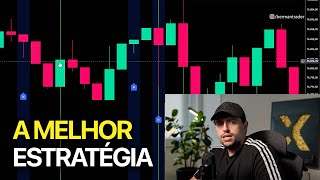
17 Consecutive Wins in Binary Options
45sHigh claim of consistent profits and a long win streak creates curiosity and controversy.
▶ Play Clip
[00:01] video is one of the best for those who want to consistently profit from binary options. It has been working for many years and will most likely continue to work. Take a look at the number of
[00:16] consecutive wins you could have achieved in Bitcoin right now using this strategy. 1 2 3 4 5 6 7 8 9 10 11 12 13 14 this strategy. 1 2 3 4 5 6 7 8 9 10 11 12 13 14 15 16 17 consecutive wins and only then will you have taken a stop loss. So it's a strategy that is really
[00:31] very effective, and the name of this strategy is the T5 strategy, known by many who follow me here on YouTube, because it became very famous because it almost broke the option. Just kidding, right?
[00:45] But many people also made a lot of money during the Cotex era, but as you know, I no longer trade on those brokers and currently I also consider that I no longer trade the binary options market because I trade new options. And
[00:58] at EBNEX, EBNEX is the only brokerage firm offering new options, the evolution of options, a slightly different way of trading. And I have a 100% free course explaining everything from beginner to advanced. If you'd like to participate, the link is in the
[01:11] description. We also have a group for live streams and live trading sessions, which is also in the description. Just click on it to join our group for signals and live trading sessions on IBNEX. So let's go to the computer screen and I'll
[01:26] explain how to use this strategy. To use the T5 strategy, you need to learn about these two candlestick patterns. It's the hammer pattern and the shooting star pattern , or in English, Hummer and Shuring
[01:41] Star. These patterns can be made with both red and green candles, as you can see here. What will differentiate between a hammer and a shooting star is where it is located on the chart. If you're in an
[01:54] located on the chart. If you're in an uptrend and a candlestick pattern appears that looks like a hammer, we won't take it into consideration, because within only look for shooting stars, and
[02:06] hammers are only looked for in a downtrend. How will you be downtrend. How will you be able to tell if it's an upward or downward trend? There's an analysis you can do, which is done
[02:19] another way, and I can do it yet another way. And what happens is that it doesn't become standardized. And we know very well that a good strategy is a standardized strategy. And that's why I really like using indicators in
[02:32] strategies, because that way, if I put in an indicator, for example, in this case, we're going to use a simple moving average , period 50. If I put it in, you put it in, everyone's chart will look exactly the same. So, it's either
[02:45] right or it's wrong. And that's why we can even do a backtest, which is precisely to take the data and see if the strategy was working or not, which these green lines to show when it would have been a win and when it would have been a
[02:58] strategy that you haven't backtested beforehand. So the T5 strategy is backtest and it's win or lose. He finished. So, all you have to do is profit or a loss in a specific period, on a specific asset,
[03:13] okay? So let's look for the hammer or shooting star. And on top of that, something important, as I've already said, I'll repeat it: the color of the candle doesn't matter. What determines whether it's a hammer pattern is if it appears within a
[03:26] downtrend, and in addition, it needs to have a shadow on the bottom, just like it has here on the top, without a shadow. And the size of the shadow on the bottom part has to be at least 2.5 times the size of the body,
[03:41] okay? In the case of a shooting star, the same thing applies, but the shadow is on the upper part. Beauty? So I'm going to show you here on the chart what a here, for example, we have a
[03:55] hammer here, OK? Another hammer, another hammer. Ah, but this one is strange because the body is too rectangular. It does n't matter, it's rectangular because that's how we're zooming in here. If I pull it this way, look, it becomes just like the
[04:09] example I showed you. And you can see these little houses here indicating where the standard is. So it is. I'm going to teach you how to use the T5 strategy in a virtually automated way. Simply
[04:21] go to tradeinview.com and add the indicators they provide that identify candlestick patterns. And in this way you can use this strategy in a very easy, simplified way, where they already do the
[04:35] filtering with the simple 50-period moving average. I'll click here. Just look 50-period moving average. I'll click here. Just look . Detecting the trend based on the . Detecting the trend based on the 50-period simple moving average (SMA50) is
[04:48] fine, right? So, it becomes much easier for you to identify you're going to do that. I'm going to delete it up here . I deleted it, I deleted it. You come here looking for technical indicators and signals , patterns. And then you look
[05:02] here for shooting star or shuring star. Clicked. And then there's also the hammer, or hammer, if it's in English. Hammer. Ready. So, it's already here. And it will already Ready. So, it's already here. And it will already show up by detecting it on a
[05:15] 50-period simple moving average. And now that you know how to identify which is the hammer and which is the shooting star, I'm going to show you how this strategy works and the management that needs to be used so that you can operate with this
[05:30] strategy, okay? So, pay very close attention here. Next, when you identify a hammer that is truly a hammer within the parameter of the 50-period simple moving average, automatically analyzed by TradingView, then you
[05:44] 'll take it into consideration. A shooting star has to show up there, you take that into consideration, okay? If it doesn't appear on TradingView, it's because it's not being filtered using the 50-period moving average, so you shouldn't take it into
[05:57] account. Beauty? You don't need to worry about whether it's red or green. I'll leave it in yellow up to this point, okay? What matters is that the hammer and the shooting star will be the ones to sound the whistle there. He finished. So, the color of the
[06:10] pattern doesn't matter. What will matter is the color of the next candle. Then, he identified the pattern. Hey, there will be tickets available . But not now. You need . But not now. You need to wait for the next candle. The next candle,
[06:23] to wait for the next candle. The next candle, if it's a green candle, we believe the next one will be red, it will be the reverse, right? So, we're going to make a trade at the very end of this green candle here, a
[06:38] sell trade predicting that the next candle will be red. If it were a red candle, it would be the opposite. So, after the pattern shows a red candle, at the very end of it you make a purchase, saying that the next one will be green. It's supposed to have
[06:52] a color change. So you wait for the pattern, observe the movement of the next one has to be red. But if it's a red candle, the next one has to be green. And we have three attempts. Wait, what do you mean by three attempts? Because we are
[07:06] going to use a recovery management strategy called martingale. So, starter, martingale 1, martingale 2, that is, three levels in total, okay? And you use this because this is a strategy that requires this type of management, okay?
[07:22] So I'm going to show you here in practice so you can understand. Seize this moment now. We had the hammer pattern indicated and the subsequent candle end of it we would say that the next one will be green. We
[07:38] would have bought this one and lost it, because we would have liked it to have been a green candle. That's what the strategy was talking about. But it was a you realize you're going to lose, that's when you buy again.
[07:51] chance. You will receive three entries until you win. You picked You see it's going to be a loss, grab the other one. Three attempts. If you lose all three, then it's a stop. When you stop using risk management, that's when you're screwed, okay? Because you're going to
[08:06] that's when you're screwed, okay? Because you're going to lose a lot. However, the low. There are people who use strategies like the T5, for example, and manage to go the whole month without taking a stop-loss order, okay? So,
[08:19] despite the unfavorable risk-return ratio in terms of management , it's a highly that the first operation would have resulted in defeat, but the second would have resulted in : "Wait, but where did I make a profit? If I won one, lost another, I
[08:33] 'm at 0-0, am I losing money?" A small loss, no, because the Martingale strategy is precisely designed for you to enter with larger amounts each time you try. So, if in the first trade you entered with
[08:47] the easy way to calculate, like entering with a risk-off bet, if you don't win, how much will you bet on the next trade ? You're going to bet with... And if you don't win, how much will you bet on your next entry? With $ it's
[09:02] how much will you bet on your next entry? With $ it's double and double, OK? So, in this way, you lost on the first attempt here, you made the buy entry, it resulted in a loss, you lost money, but on the second attempt you won the operation and
[09:17] ended up with a profit. If you win the 4-bet operation, it's the same thing, you recover the loss and still have a profit, okay? So, we need one of the next three candles after the subsequent candle in the pattern to be in accordance with the
[09:31] strategy. So this was a victory because of that. Here we had a hammer, it was a to be red. First-time victory, right? This one was a hammer, this one was green, red, which is the opposite, a first-round victory. OK? Here's an example of a
[09:46] shooting star. A shooting star, the candle was red, we want the next one to be the opposite. Green was a first-round victory, okay? Here's another example. Hammer, green candle. That should have been red, it was a defeat.
[10:00] would have caught a win with Martingel, recovered your losses, and ended up with a profit, okay? So here I want to show you an example of when to stop. Then a hammer pattern was identified. That was a green candle, and at the very
[10:14] end of it you would have entered a sell position, predicting that the next candle would show a drop. He suffered defeat after defeat and more defeat. He lost all three. That's the equivalent of approximately eight wins, depending on the payout.
[10:29] So, ideally, with a strategy like T5, you should have an accuracy rate T5, you should have an accuracy rate of at least 89-90% in order to make a profit. Yes, it does have that
[10:41] accuracy; you just need to do your own backtest and you'll see. And I'm going to show you here now, in a selection I've made of some opportunities. You can see that here you had the pattern, it was a red candle,
[10:53] then green, victory. Here's the pattern: green candle, then red, victory. Here's the pattern: green candle, then red, victory. Same here. First resulted in a loss, third attempt resulted in a victory. And you can see that throughout
[11:08] this entire journey it was all victory, victory, victory, victory, victory, victory , victory, victory, victory, victory , victory. And this is where that defeat happened. And then here, look, a whole bunch of victories. Let's see if there were
[11:20] any more opportunities during the recording of this video. Since the last recording of this video. Since the last loss, it's had 1 2 3 4 5 6 7 8 9. Nine winning trades in a row and here's 10, oh, another one, because it had the
[11:37] been green, but it wasn't. This one should have been green, it wasn't, but the last operation was successful. It's OK? So in this case, another successful operation and so far there have been no entries. This is a
[11:52] Ethereum. Currently, the best broker for trading Bitcoin and Ethereum using the options model is the new options platform within BNEX. The link is in the description so you can create your account and receive a R$25 gift from
[12:08] the brokerage firm right now, okay? As I said, it's a very simple strategy to use, but it should be used with caution. If you don't have emotional control, you'll use a martingale, and you
[12:21] numbers and use martingale, you're going to screw yourself over. You should be careful. It's very good in the hands of a trader who knows what they're doing. And if you want to
[12:33] learn more, I recommend you like this video so that YouTube will Subscribe to the channel if you haven't already, and stay tuned because we'll have more content coming soon. And I'll see you in the next video.
⚡ Saved you time reading this? Transcribe any YouTube video for free — no signup needed.