What Makes a Car Engine Go?
45sThe simple, visual explanation of how an engine converts heat into motion hooks viewers instantly, perfect for a fast-paced educational short.
▶ Play Clip Animated Engineering | Explore the World
"Title accurately describes the content: a clear explanation of how a car engine works."
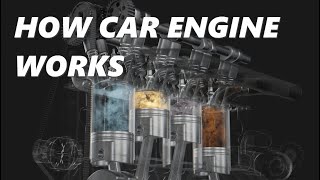
This video provides a detailed explanation of how a four-stroke internal combustion engine works, focusing on the four strokes: intake, compression, power, and exhaust. It describes the role of key components like pistons, valves, camshafts, and spark plugs in converting fuel into mechanical energy.
A car engine converts heat from combustion gas into force to turn the wheels.
Power is generated by igniting a compressed air-fuel mixture inside a sealed cylinder, causing rapid expansion.
The engine is called an internal combustion engine. The video examines a 4-stroke, inline 4-cylinder dual overhead camshaft engine common in sedans and hatchbacks.
The four strokes are intake, compression, power, and exhaust. The video explains each in a single cylinder.
Piston moves downward, intake valve open, exhaust valve closed. Partial vacuum pulls air-fuel mixture into cylinder.
Piston moves upward, both valves closed. Mixture is compressed, increasing pressure and temperature. Compression ratio is the volume difference between intake and compressed states.
Spark plug ignites compressed mixture, both valves closed. Expanding gases push piston downward, providing energy to drive the car via transmission and driveshaft.
Exhaust valve opens, intake closed. Piston moves upward, expelling residue gases (unburnt fuel and pollutants). Cycle repeats.
The four-stroke cycle continuously repeats to keep the engine running, converting chemical energy from fuel into mechanical motion.
What is the primary function of a car engine?
To convert heat from combustion gas into force that turns the wheels.
What are the four strokes of a four-stroke engine?
Intake, compression, power, and exhaust.
00:48
What happens during the intake stroke?
Piston moves downward, intake valve opens, exhaust valve closes, and air-fuel mixture is pulled into the cylinder due to partial vacuum.
01:00
What is compression ratio?
The difference between the volume of mixture sucked in during intake and the fully compressed volume.
02:01
What ignites the compressed air-fuel mixture in the power stroke?
An electrical spark from a spark plug.
02:18
What is the purpose of the exhaust stroke?
To expel residue gases (unburnt fuel and pollutants) from the cylinder.
02:48
Engine as Heat Converter
Fundamental definition of an engine's purpose.
Internal Combustion Engine Structure
Introduces the specific engine type examined.
00:31Intake Stroke Mechanism
Explains the vacuum-driven intake process.
01:00Compression Ratio Definition
Key concept for engine efficiency.
02:01Power Generation via Spark
Core of energy conversion in the engine.
02:18[00:00] How Car Engine Works Car engine is a machine designed to convert heat from combustion gas into the force that turns the wheels on the road.
[00:16] A car engine generates power by igniting a compressed air-fuel mixture inside a sealed cylinder and causing it to burn rapidly. As the air-fuel mixture burns, it expands, and provides energy to drive the car.
[00:31] Therefore, this machine is called an internal combustion engine. Let's look at the internal structure of a 4-stroke, inline 4-cylinder engine. Here is a dual overhead camshaft engine, which is commonly seen in most sedan and hatchback cars.
[00:48] The 4-stroke engine passes through 4 different strokes in one cycle, to generate power. the intake compression power and exhaust stroke here we will look at how a
[01:00] four-stroke engine works in a single cylinder intake stroke the piston moves downward from the top dead center to bottom dead center during an intake stroke the intake valve is open during the intake stroke to allow air-fuel
[01:16] mixture into the cylinder the exhaust valve remains closed during the intake Intake stroke. The camshafts are designed to open or close the valves, according to the corresponding strokes of each cylinder.
[01:29] As piston moves downward, it generates partial vacuum inside the cylinder, the pressure difference creates a suction, which pulls the air-fuel mixture into the cylinder. At the end of the intake stoke, the intake valve changes from open to closed.
[01:43] Compression stroke. In the compression stroke the piston moves upwards from bottom dead center to top dead center the intake and exhaust valves are closed This helps to isolate the combustion chamber from the outside air The upward motion of the piston compresses the air mixture encompassed in the cylinder which increases the pressure and temperature of
[02:01] the mixture. The difference between the volume of mixture sucked into the cylinder during an intake stroke and the fully compressed volume is called the compression ratio. For example, an engine with a compression ratio of 10 to 1, means an air-fuel mixture is reduced to 1 tenth
[02:18] of its original volume. Power stroke. In the power stroke, an electrical spark generated using a spark plug, is used to ignite the compressed air-fuel mixture. The intake and exhaust valve
[02:30] remain closed in the power stroke. As the air-fuel mixture burns, it expands, and pushes the piston downward. The thrust created due to the combustion of fuel, provides energy to drive the car. The energy is transmitted to the wheels via the car transmission and driveshaft.
[02:48] Exhaust stroke. Combustion of the air-fuel mixture produces residue gases with high pressure and temperature. The residue gases are made up of unburnt fuel particles plus harmful pollutants.
[03:01] During the exhaust stroke, the exhaust valve is open and the intake valve remains closed. The piston moves upward and drives the exhaust gases out. The four-stroke cycle would then repeat from the intake stroke, and keeps the engine running with power.
[03:41] you
⚡ Saved you 0h 03m reading this? Transcribe any YouTube video for free — no signup needed.