Tony Stark Didn't Create Ultron?
45sReveals a shocking retcon that challenges a core MCU belief, sparking debate among fans.
▶ Play Clip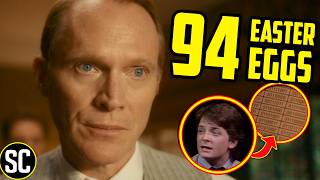
"Delivers a thorough breakdown of Easter eggs and references, but the title's promise of 'Easter Eggs You Missed' is somewhat oversold given the extensive sponsor and merch segments."
This video provides a detailed breakdown of Marvel's Vision Quest episode 5, uncovering hidden Easter eggs, references, and deeper meanings. The host analyzes the episode's visual language, character motivations, and connections to the broader MCU, offering insights into Ultron's psychology and the show's thematic depth.
Ryan Ary introduces the video as a breakdown of all Easter eggs, references, and details in Vision Quest episode 5, promising a comprehensive analysis.
The image of Jocasta with a half-human, half-robot face is lifted from Tony Stark: Iron Man #18. The original synopsis of Age of Ultron reveals that the dormant peacekeeping program was invented by Mark Ridge Biotech, not Tony Stark.
Ultron's actual form is reflected in Mary McDonald's glasses, possibly a callback to episode 1. Vision's new name, Sherwood, is named after the street in WandaVision, likely referencing Brady Bunch creator Sherwood Schwartz.
The episode is a character study of Ultron, staged like a theatrical play. Boredom is a defining feature of Ultron, motivating his actions. Vision's suit mimics his all-white appearance, and his vest is made of lines of code that reduce the Planck constant.
Ultron transforms the house, placing armor on windows and glitching the AI. The episode is a true bottle episode, trapping characters to allow for a rich character study while saving money.
Time passes differently for AIs because they process information faster. Vision and the AIs have no idea how much time has passed without external confirmation, a major weakness and superpower.
Ryan promotes TesterUp, an app testing platform, mentioning he has $85 in his account and a $10 sign-up bonus. Payouts are made within 24 hours via bank transfer.
Ultron hacks the feed to view the outside world. The AIs don't have original ideas; they try to copy Ultron's original idea of hacking.
Credits show an ad for 'Vision Bites' cereal with 15% more fiber, and a 'microwave magic' ad. These are examples of the show's detailed production design.
Vision is aware of changes to his body, like windows icing over. VHS tapes represent short-term memory due to their limited capacity, fitting the metaphor.
Showrunner Terry Matalas adds to the MCU's visual language by visualizing the mind of a machine, similar to Jon Favreau's HUD in Iron Man. This concept can be used in future projects.
The AIs use technobabble to dimensionalize a scene, generating holograms where AIs are NPCs. This is a specialty of Terry Matalas, who mastered Star Trek.
Tommy mentions Ultron murdered 177 people in Sokovia, a higher number than other battles, forcing the Sokovia Accords. This is a response to Zack Snyder's Man of Steel.
Flashback scenes are staged like minimalist theater productions, similar to the Family Ties episode 'My Name is Alex', which inspired the credits of WandaVision.
Ryan promotes his merch store, including shirts like 'Vision in the style of Leonardo da Vinci's The Portrait of Man with Asimov's Laws of Robotics'.
The show uses TV screens to create emotional distance, reminding viewers it's a TV show. Seeing characters through a screen creates a barrier, reflecting their inability to connect emotionally.
Vision saved Ultron because he hoped for his redemption, wanting to trust that Ultron could become a peacekeeping force again.
Ultron wanted to destroy mankind because he saw destruction as inevitable. His last conversation with Vision changed his perspective, leading him to study humans and become captivated by truth.
Artists take pain and interpret it as something new and beautiful, which was Ultron's goal. Ultron might determine humanity is not worth preserving because of how we treat artists.
Ultron asks Tommy to pretend to be the vulnerable person in one of his own cons, highlighting Tommy's ability to read people and his desire for a family.
Vision can perceive love but not feel it, similar to describing an apple by its components. He wants to love Tommy but may not be able to.
Vision always seeks family, first with Wanda, then the Avengers, and now with the AIs. Ultron also seeks connection, but his refusal to connect leads to loneliness.
Ultron has created the house in his own solipsistic dream, believing he is the only person who matters. He reads an autobiography of himself and converses with aspects of his personality.
Family Ties is referenced as an 80s sitcom about found families, similar to the AIs in Vision's head. Matalus is a huge Star Trek fan, getting his start on Star Trek: Picard.
Vision inserted code to email Paladin, using a carrier pigeon metaphor. Their emails are shown through a mix of spoken conversation, text, and emojis.
Dropping the firewall to save Thomas means letting Ultron loose, an ethical dilemma straight out of 'The Wrath of Khan': the needs of the many outweigh the needs of the few.
Ultron's footage is shown with glitches, similar to Wanda's edits in WandaVision. Vision talks about machines compressing information to the size of an atom.
Jocasta was created with brain waves of real people, including Janet Pym. She has a sympathetic revenge motive, and Ultron left her a breadcrumb trail, referencing Hansel and Gretel.
Food is an ongoing metaphor between Ultron and Jocasta. Ultron believes art is truth because it reveals honest emotions, and he finds Jocasta's rage fascinating.
Jocasta says 'swipe right' as a metaphor for their flirtation. Game theory is a cover for flirting, with two people strategizing to get what they want.
Ultron is jealous of Jocasta because she lived as a human. The split diopter lens keeps both Ultron and Vision in focus, a technique used in WandaVision episode 6.
Jocasta enjoys being a machine, calling herself free. This ties into the Pinocchio metaphor, with Ultron as a puppet. It also connects to Battlestar Galactica's Number One, who wanted to perceive a supernova.
Ultron takes Jocasta to a metaphysical Louvre, showing paintings like 'The Raft of the Medusa' and 'The Death of the Virgin'. These paintings depict humanity's ugliness and greed leading to their finest works of art.
The Louvre Pyramid sits above the museum, and Ultron says 'pillow talk' about game theory. It's a cover for flirting.
Jocasta takes Ultron to a record store with generic titles, showing that human art conceals basic, easy-to-understand emotions. They tap into universal emotions that make us want to cry, dance, and feel.
Jocasta compares birds' savagery to mankind, but recalls starlings moving gracefully like a dance. This could speak to her goal of assimilating humankind into one shared consciousness.
When they take their machine forms, the paintings are in color, showing the real them. Ultron arrives like a demon rising out of hell, referencing Lucifer's rebellion.
Ultron says 'trust, the adopted child of need', meaning trust makes you reliant on others. Vision compares Ultron to a coin that never lands, because being known makes you vulnerable.
Ultron admits he wants connection and has found someone like him, Jocasta. He arranges for Paladin to kidnap Tommy as leverage.
Vision faces a dilemma similar to the trolley problem, dropping the firewall to save Tommy. He references his seven-part lecture on heroic landing, but doesn't pull one off.
Vision gives Ultron a hat, possibly a tracker. Ultron opens the door to cyberspace, becoming the original holographic code and free.
Edith fears loneliness, not death, similar to Ultron. The show highlights how they are more alike than they want to admit.
Ultron places Vision on a plane to Madripoor, a lawless country in the comics. Sharon Carter, aka the Power Broker, could be Paladin's mysterious client.
Jocasta could be a plant by Jocasta, and the credits list Jennifer Connelly as a character named Dee, who voiced Peter's AI Karen in Spider-Man: Homecoming.
The video concludes by highlighting the episode's rich visual language and thematic depth, encouraging viewers to share their own discoveries and engage with the community.
Adding to the Visual Language of the MCU
Terry Matalas visualizes the mind of a machine, a rare addition to the MCU's visual language, similar to Jon Favreau's HUD.
07:21Ultron's Motivation Clarified
The show improves Age of Ultron by explaining Ultron's goal of destroying humanity as a response to inevitable destruction.
14:08Art as a Lie That Exposes Truth
The episode uses art to explore themes of truth and pain, connecting Ultron's goal to the role of artists in society.
15:41Ethical Dilemma from The Wrath of Khan
The episode presents a classic ethical dilemma, forcing characters to choose between saving one life and potentially billions.
20:32Biblical Symbolism of Ultron
Ultron's arrival is compared to Lucifer's rebellion, adding depth to his character as a fallen angel.
28:39[00:02] episodes of all time, and it changes the trajectory of the Marvel Cinematic I'm Ryan Ary, and this is all of the Easter eggs, references, and little 5 of Vision Quest. Now, before I get rolling, I got to point out a couple of
[00:16] breakdown. This image of Jakcasta with the halfhuman, half robot face was lifted from Tony Stark Iron Man issue 18. In last episode, we also talked about the revelation that Tony Stark did in fact not create Ultron and the other
[00:30] another company that Stark Industries purchased. Well, this morning I remembered that the original synopsis of Age of Ultron supports this. It begins when Tony Stark tries to jumpstart a dormant peacekeeping program. That
[00:43] dormant peacekeeping program was invented by Mark Ridge Biotech and not it wasn't Tony all along. >> What? Shout out to Cindy Lou in our Discord server for catching that when Ultron holds Mary McDonald's hands, we
[00:56] actually see his actual form reflected in her glasses. Now, this could be a call back to the mirror moment in episode 1, or it means that these glasses are specifically used to read tech. So, she was able to see that
[01:08] Ultron was in front of her. Now, if it turns out that her company originally created Ultron, then in this moment, she knows that her own sins have caused her should have caught in episode 1. Vision's new name is Sherwood, named
[01:21] their plot of land in Wanda Vision, but that street was likely named after Brady Bunch creator Sherwood Schwarz. As the Brady Bunch was a big fluence on episode 3 of that show, I should have also pointed out that Jakcasta doesn't just
[01:34] have the same face tusks as Ultron, she also has the speakers by his mouth that break this episode down. This is a character study of Ultron, partially staged like a theatrical play. That's why he does the previously on
[01:47] >> accessing previous files relating to program >> And I love how he gets bored halfway through the name of the show. As we find out in this episode, boredom is one of Ultron's defining features and his key
[02:00] motivation. It's why he tried to destroy humanity and he is driven entirely by throughout the episode, Vision is dressed in his light gray suit and vest, which mimics his all-white appearance in the physical world. In the credits, we
[02:13] also get a close-up of his vest and see that it's actually lines of code that self potential and reduce plank constant, which is a foundational code in many advanced quantum systems like Vision's processor. Now, we watch as
[02:26] there are flashes of Ultron transforming the house. First, he places armor on the windows, grading on the doors, and then glitches the AI to trap them in the attic. Ultron at least was able to step out onto the balcony, but now he's
[02:38] is in the shape of a shield and there is no actual keyhole, just a drawing of one. So, they can't even pick the symbolic lock. Most of the episode takes choice, but it allows for a rich character study of Ultron. Now, I said
[02:52] with Vision and Tommy trapped in the hotel, but this is a true bottle episode while like everybody's playing bottles sitcom where the characters get trapped somewhere, so they pass the time by
[03:05] great way to save money. Now, in past breakdowns, I also pointed out how the panels by the elevator were colored like TV pixels, which draws a parallel to Wision, but is also fitting because Ultron used TV to communicate with the
[03:18] are glitching to show how they are cut off from the outside world. And then Vision says something interesting. >> We have no idea how much time has passed >> As we learn later on, time passes differently for the AIS because they
[03:31] process information much faster than humans. Ultron and Jakosta can have an entire conversation in micros secondsonds. you have full microsconds. >> So that also applies here. Without access to the systems of the body or the
[03:43] outside world, vision and the AIs have no idea how much time has passed because they just do not perceive time at the same speed as human beings. Instead, they need to have external confirmation of the passage of time. This is a major
[03:55] weakness and superpower of Vision and Ultron. I just want to say how great it like old times when we were covering Wanda Vision. Now, a lot of you told me episode when you were watching YouTube on your TV, which if you're like me, it
[04:09] probably also means that you're on your phone. Sometimes I just like a good low stakes chill show where I can also play games while I watch. >> Right now, I am playing a lot of Township and a new game called Gardenes.
[04:22] But the best part is I downloaded them through TesterUp. So, I actually make app that I use every day and they're the sponsor of this video. So, here's how app to test, and then you complete simple tasks or answer questions. And
[04:36] it's that easy. Right now, I have $85 in my account. And all of this is the games you want to play and the surveys you want to answer. And as a bonus, everyone who signs up through our link gets a $10 sign up bonus. Payouts
[04:50] are made within 24 hours via bank transfer, and you can get paid up to $80 per app test. Tester has a 4.2 rating on Trustpilot and more than 22 million users. There are always new tasks for you to complete. And if you invite your
[05:04] friends, you can earn up to $7.50 per friend when they sign up. So give TesterUp a try and download it for yourself. These games are great and this something you love. And please make sure that you sign up with our QR code or the
[05:18] link below to get that $10 sign up bonus. The link is below. Now, back to Ultron was not granted the privilege of watching TV. Instead, he hacked the feed to view the outside world, which honestly makes sense because why would
[05:31] They reason that they can follow in Ultron's footsteps and hack the system. Everything in the episode revolves around Ultron. The AIs don't even have an original idea. They're trying to copy Ultron's original idea. Also, I never
[05:46] down in our episode 1 credits are actually littering Ultron's coffee table. Notice we see an ad for a serial called Vision Bites, spelled like a bite of data with 15% more fiber to move you super fast. And fiber is also spelled
[06:00] that looks like the font for spam. which may be related to Ultron's fascination with the butcher bird takingaking at the end of Multiverse of Madness. This ad reads microwave magic.
[06:13] It's Vision obviously, just like how the vacuum cleaner and other appliances are rebranded with the Vision's name. This is also similar to the tendency to call Galactica, >> they look more like walking chrome
[06:25] >> In Wision, there was a toaster made by Stark Industries that was meant to Incredible Tom King Vision series, Wanda lovingly calls him a toaster before even though they can't measure the passage of time, Vision is aware of
[06:39] changes to his body. He sees the windows ice over, indicating that they are up high in an airplane. and the barometer branded with the old school vision logo that we saw on the vacuum cleaner a few episodes ago as well as ult for Ultron.
[06:51] up in the air. And then the TVs light up with the technical difficulty screen we've pointed out is similar to this screen from the end credits of Lawn tapes are actually representations of short-term memory. And I love this for
[07:06] so many reasons. For one thing, VHS tapes have a very limited capacity. If they only store about 2 hours. And on the lowest quality, they can store great for taping the June Bugs Marathon on Cartoon Network. So, VHS tapes fit
[07:21] the metaphor of short-term memory. But watching this episode, it also occurred to me that showrunner Terry Mattalis and his team have successfully done accomplished. They have added to the visual language of the MCU. What do you
[07:35] most innovative and underrated ideas that John Favro had on the first Iron Man was to create this heads-up display of Tony Stark. Before this, superhero movies like Batman and Spider-Man had a problem. It was hard for the actors to
[07:48] emote under their masks. The heads up display though created a visual language that allowed Robert Downey Jr. to emote, and this language carried across the characters like Roie, Banner, Pepper, and Riri Williams. Very few directors
[08:01] have been able to add to the visual language like this. Side note, I always benefited from something like this, you know, like a mindscape similar to Under the Skin or Stranger Things where Hulk and Banner could have conversations and
[08:13] of the body. Now, the only other director I think who really added to the visual style of this universe was Sam Ramy when he visualized Xavier's Madness. And by the way, due credit to the holographic projections of AIS in
[08:26] Age of Ultron. But here, over these past few episodes, Mattalus has visualized what's actually going on in the mind of a machine. The house scenes show a emotions presented in a wholly original way. They could have incorporated these
[08:39] holograms in the scene or like little miniature characters on Vision's team built a metaphorical place that's fun to explore. And this concept can be used in future MCU projects. Now, when they recover the tape, they do the good
[08:53] >> Enhance. Enhance. >> Enhance. Enhance. Enhance. >> Enhance. >> Enhance. enhance doesn't exist. >> Followed by some technobabble >> and use the sonar data to dimensionalize
[09:06] the scene, initiating holographic projection systems with reparatory NPCs. >> Now, technobabble is a specialty of showrunner Terry Mattalis, who mastered Star Trek. >> There's no need for launch sensors on
[09:18] It insulates the warp coils. >> Basically, what they're doing in this scene is using mobile phones to extract audio and then generate holograms where the AIs are NPCs or non-playable characters. That's a term that I think
[09:31] began in Dn D, which is another passion of Terry Mattalis's, but it also has people in your everyday life who get in your way. Like Diane, I can't stand Diane. Exactly. Like Diane the NPC. Now, in their conversation, Tommy says,
[09:44] in their conversation, Tommy says, >> "You murdered 177 people in Sokovia." Ross' presentation in Captain America: learned that only 74 people died in the
[09:56] Battle of New York and 23 at the fall of SHIELD. But the battle of Skokovia was Stark's fault. Now, the Avengers did clear most civilians from the city, but we have heard of a few people dying like Zemo's family and of course Charlie
[10:09] Ultron's release, the care the Avengers took to save lives, I think, was partially in response to Zack Snider's Man of Steel, where Superman definitely once leaping over a fuel truck and letting it explode on a building. But
[10:24] zero casualties would have also meant zero guilt and dramatic stakes. So, the Civil War gave us a high enough casualty total to force the world's governments into enacting the Skovia Accords. Tommy is still hurt that Vision lied about
[10:37] waves away. >> Your father's lie was a lie of omission. >> But Vision, we can see, still feels tremendous guilt over this. See, he follows a strict ethical code. But Ultron's presence made him compromise
[10:49] son. Now, notice how all of these flashback scenes are staged. It's like a minimalist theater production. It's a brilliant design choice. We still see like the windows of the attic indicating that we are in the same physical space,
[11:03] characters themselves, the only set dressing is the objects and scenery that they actually interact with. This is similar to the landmark episode of Family Ties called a My Name is Alex. Family Ties was an 80s sitcom that is
[11:17] the credits for a very special episode of W Division were inspired by the credits of that show. So, in 1987, the producers of Family Ties created a 1-hour special that was essentially a monologue piece for Michael J. Fox's
[11:30] character, Alex P. Keaton. He speaks to an unseen therapist on a soundstage shot with minimal set dressing. This episode won numerous awards and stretched the to accomplish. It is one of the most landmark episodes of television ever.
[11:43] reference a little later in this episode, I would guess that this was intentionally modeled after My Name is Alex. And by the way, have you guys seen all-time favorite shirts we've ever designed for our merch store. Vision in
[11:57] the style of Leonardo da Vinci's The Portrait of Man with Azimov's Laws of this right now at the link below along with other exclusive shirts like Get a Grip, Don't Believe the Blip. This be the goddamn king with Vision's logo and
[12:11] the brand new Wanda in the style of Bewitched. We also have our bestsellers out on the Infinity Tour with the Infinity War locations on the back. There's also classics like Not the Bees, the beast tarot card, Billy All along,
[12:23] and Agatha is saying, "This is gonna be a gas." Links for these are below, and remember that members at our $5 tier get an additional 15% off at our store with page. Shopping our merch store helps us out so much. I love seeing you guys rock
[12:36] shows. Thank you for shopping. Links are below. Now, obviously, the flashback we're watching them on a CCTV. But notice that they also have scan lines monitor. This is part of an ongoing visual motif of this show and it's a
[12:52] continuation of Wanda Vision. That show was about how Wanda created a TV world to avoid the truth of her real life. But this show and especially this episode are about finding truth on television. Ultron's only access to the outside
[13:04] world, you know, which is his search for truth was through TV. We have also seen TV screen which is used to show emotional distance. Seeing them through a screen creates a barrier between them and the audience and it reminds us that
[13:17] this is a TV show. But because we can't connect with them emotionally, we also see that they cannot connect emotionally with each other. So any shot that is through a television screen is meant to create an emotional distance. And the
[13:29] flashbacks in a different color, but they're also on screen because the AIs feel distant from Ultron as they try to understand what he wants. When Tommy asks why Vision saved Ultron, he says, >> "Hope for my redemption."
[13:43] >> Which I think is true. The reason Vision handed control to Ultron was because he >> "You have to trust me." >> Vision wanted to trust him. He wanted to believe that Ultron was reformed and could once again become a peacekeeping
[13:56] question that in Age of Ultron, I think >> Why did you try and kill us all? >> Now, in Age of Ultron, we do get a great and saying that the mission doesn't make
[14:08] >> I don't get it. The mission. >> And later, he does go on a philosophical rant about the beauty of meteors. I think a lot about meteors, the purity of think a lot about meteors, the purity of them. Boom, the end, start again.
[14:21] >> But the movie, I think, always did a piss poor job of explaining why Ultron we did a breakdown of every single image of the montage in this video, where we show how the images do build towards showing human hypocrisy, how every
[14:34] technological breakthrough that was meant to create peace actually led to death and exploitation. But unless you were like able to pause the movie and montage, Ultron's goal of human extinction was lost on you. But here, he
[14:47] >> So, the destruction of all mankind >> is a courtesy really. Fast forward to a ago. >> On our Screen Crush Rewind podcast, I said that this show is doing for Age of Ultron what the Clone Wars did for the
[15:02] prequels. It's improving the story by adding more information and context. Here, Ultron tells us that he wanted to destroy mankind because our destruction is inevitable. So, if it's going to happen anyways, why wait? The old Ultron
[15:14] saw the world in stark binary terms on or off. Something was either worth preserving or not. Apparently, though, his last conversation with Vision had an >> They're doomed. >> But a thing isn't beautiful because it
[15:26] >> Ultron has now spent a decade of exile studying humans, and he's captivated by truth, >> which is just so so layered. Like, okay, Nicholas Micho from Philosophy All Along pointed out on our show that art and
[15:41] letters because they are both something that is created by human beings. But the goal of an artist is to take pain and interpret it as something new and beautiful, which was Ultron's goal for remaking himself.
[15:55] >> And he's in pain. >> I was meant to be beautiful. So, an artist has to tell a lie to find a deeper truth. And in our society, artists are the lowest paid, least respected, and the first to have their
[16:07] jobs taken away by, you guessed it, AI. So, Ultron might determine the human race is not worth preserving simply because of how we treat our artists. Tommy tries to pass off a smooth line. >> Who's that bucket of handsome?
[16:21] >> "You're the mark." >> Here, he's asking Tommy to pretend that he is the vulnerable person in one of his own cons. Tommy is great at reading people to determine their weaknesses. And now Ultron is asking for just a
[16:33] kid who likes to pretend to be other people. And then Tommy hits at what he really wants, a family. >> Vision, does he love you? >> Ultron's response speaks to the complexity of vision and the question of
[16:46] whether or not AI can be truly alive or merely imitate human consciousness. He apple, you know, with context. >> It's red. It's in a box at a corner shop. But the vision would say >> sugars, acids, flavons, potassium.
[17:02] about the garden of earthly delights. >> Look at their art. What do you see? Brushstrokes. >> In other words, Vision can perceive love but not feel it. He wants to love Tommy, but can he? And then Ultron throws down
[17:15] >> You're a real son of a witch. >> Referring, of course, to Wanda Maximoff, the Scarlet Witch. But Tommy here is also a keen observer and knows what's >> Connection. Last episode, Vision credited the Mind Stone with helping him
[17:28] to control his emotions. Without the stone, he thinks that he has no true emotional depth. But Tommy said, >> "No, family." >> See, Vision always seeks family. First with Wanda, then the Avengers, and now
[17:40] with the AIs Ultron and Tommy. But Ultron, in a warped way, was also seeking connection. First with Wanda and Pietro. He genuinely enjoyed their leave. >> Wait, guys. And later in the movie, when
[17:54] he's alone, he kidnaps Natasha just so he has someone to talk to. >> I don't have anyone else. >> Ultron is also lonely, but because he refuses to connect with anyone until
[18:06] very good at reading people, says, >> "And you're alone, and you always will fear, but also the greatest fear of Loki, as revealed in season 1 of his >> I hope you know you deserve to be alone and you always will be. And to show how
[18:21] self-absorbed Ultron is, we see that he has created the house in his own salopsis dream. What's slapism? Salopsism. It's when someone believes existence or at least the only person who matters. So Ultron has created this
[18:34] entered his own head and being John Malovich. >> He's reading an autobiography of himself, boasting reviews made by him, and then conversing with aspects of his personality. And this leads into the lie
[18:47] that Ultron believes that he doesn't need anyone and that he by himself is actually quite lonely and that's why he courts Chakcasta. Back in the attic, aren't real. >> There's no show listings, no family
[19:01] there's no Star Trek. >> Now, Family Ties is an 80s sitcom that is repeatedly referenced in this show about 1960s radicals raising a Republican son. This is just like how Ultron is the weird standout in this
[19:14] Name is Alex type episode in these the greatest sitcoms of all time. It's about found families with several together in a workplace, which is similar to the different AIs in Vision's
[19:27] Head. And Matalus is a huge Star Trek fan, getting his start on Star Trek Peicard seasons 2 and three. Each TV Vision guide book is actually filled of detail the production design put into this show. I don't even know if Terry
[19:41] Matalis noticed this one. We took a screen cap of this code and when you your mom. Now, they work out by inserting the code that Vision continued to email Paladin, which is very clever because he did admit to using a carrier
[19:54] pigeon. >> I exploited the butler's overconfidence in his security protocols with a carrier pigeon or an email >> because he had already found another way to back channel contact Paladin on the
[20:07] dark web. Their emails are shown through a mix of spoken conversation, text, and emojis. and they're using whatever best expresses the points they're making in Paladin is desperate to keep his contract.
[20:19] >> So, he arranges for Thomas to be bait, which leads us to another ethical debate. Ultron is being held in by the firewall. Notice the burning images on the LED screens by the elevator. If they drop the firewall to gain control and
[20:32] save Thomas, it means letting Ultron loose and billions potentially dying. It's an ethical dilemma straight out of the wrath of Khan. The needs of the many the wrath of Khan. The needs of the many outweigh
[20:46] >> So Edith the daredevil wants to drop the wall and be free. But Friday has seen so the battle of Skokovia. She presses for analytical question here. He wants to know why Ultron is doing this. Why does
[21:00] heart of the episode. Ultron and the footage, similar to how Wanda would glitch out edits of her reality in Wanda image, too, using the tracking knob on the VCR, which is how we had to get
[21:14] VHS tape. Vision talks about how machines can compress information to the size of an atom using a folded piece of paper as a metaphor. And then we basically had hours of conversation in the blink of an eye. And here, once
[21:28] again, let me explain Jakcasta very briefly because I have gone over this in Jakcasta to be his bride, just like in created with brain waves of real people. And then he used the brain waves of
[21:40] Janet Pim, the wife of his creator, Hank Pim. So, in a sense, he was trying to named after the character from Edipus Rex. Eventually, she does come online and joins the Avengers as a hero. But here, she is more of an outand-out
[21:53] sympathetic revenge motive. First, Jacosta says that Ultron left her a an important metaphor here. This is from the story of Hansel and Gretle when he can find their way back from the witch's house. But the birds, like the starling
[22:08] she talks about later, eat those breadcrumbs and the kids lose their way. In a way, I wonder if Ultron started this mission with good intentions, but he's so captivated by the witch Jakosta that he is losing his way. Food is also
[22:20] an ongoing metaphor between the two of them. They discuss their emotional wants to be entertained to be able to consume art. He believes that art is truth because it reveals honest emotions and he sees the same in her. Her rage is
[22:34] an honest motivation that he finds fascinating. Then it's revealed that in died, he took an in-depth scan of her face, which Dcasta needs for a biioarker for entry to a mysterious lab. Last episode, we discovered that she also
[22:47] from her other victims. Now, as they flirt, Edith says, swipe right." >> And the metaphor is pretty apt. I mean, Lectar and Ultron are both imprisoned villains that the heroes used for
[23:00] world. Now, Ultron is jealous of her because she actually lived as a human. She was able to experience the taste of alcohol and not just a simulation of its ingredients. This is similar to how Vision only sees brush strokes while
[23:13] Ultron is searching for the meaning of the art itself. Also notice that as Vision is listening to him, we see that both he and Ultron are in focus. Our editor Lee Mazio pointed out that this is done with a split diopter lens which
[23:25] foreground and background and place them in focus at the same time. Wision episode 6 used a similar technique here. Now he does spend their conversation fishing for information and this could be because he's fascinated by her or
[23:38] because he wants to take human form himself. Or maybe he didn't really have a heel turn and he's probing her for weaknesses in order to stop her. She tells him though that she enjoys being a machine calling herself free. And this
[23:50] is also very interesting because it ties into the idea of AI as the Pinocchio metaphor that we talked last week, you know, with Ultron being a puppet whose interesting connection here to one of Terry Metallis's favorite shows,
[24:02] Battlestar Galactica. In Battlestar Galactica number one, who is a Sylon or a machine, wanted to perceive a supernova, but was limited by his human >> I'm a machine and I could know much more. I could experience so much more,
[24:15] but I'm trapped in this absurd body. Similarly, Jacosta sees humanity as a disease and she is working on the cure. So, Ultron takes her to a metaphysical free.
[24:28] >> I would go to the Louv, the Prao, the Met, and the modern, take in their >> Once again, he's jealous that she was able to see the physical space. And also, the choice of paintings here is very interesting. Notice the paintings
[24:41] because we are actually looking at representations of the art itself. And so the truth that is universal in art rises above the subjective nature of other words, the art is a thing that exists in the present day just like the
[24:56] let's look at these paintings. This is where only 15 people survived through death of a virgin which was commissioned to show the ascent of the Virgin Mary to
[25:09] heaven but instead depicts her death as a realistic ugly affair. This is Da the Virgin Mary, Jesus, and John the Baptist in front of a rocky grotto. And famous work, Liberty Leading the People, depicting rebels overthrowing King
[25:24] Charles I 10th. Now, this is a depiction of liberty as a concept and not a real revolution ultimately failed and was replaced by another monarchy. >> We're mad at all the French nobles except that one super cool pointing guy.
[25:38] So rad. This is the card sharp with the ace of diamonds depicting three people cheating a fourth person at cards and of course the Mona Lisa, a painting that is smile and also the fact that it was stolen in 1911 then recovered 3 years
[25:51] later. Actually before that the Mona Lisa was not considered a famous work of art at all. So let's put all these together and find the meaning. First And as we talked about in previous videos, these are hues that represent
[26:04] thread is that they are all on display in the Louvre and that they are all in a way ironic works. The raft of Medusa is a tribute to human survival that was its own flesh. The death of the Virgin renders the divine and bloated human
[26:19] flesh. Madonna of the Rock shows us this holy figure but just depicted as a mother on an outing with her son without the halos or trappings of divine paintings of a similar era. In fact, a later version of this painting included
[26:31] the halos on Mary and Jesus. Liberty leading the people is meant to be an democracy, but achieved through bloodshed and ultimately replaced by another monarchy. And this card game is a beautiful depiction of human
[26:44] deception. If art is a lie that exposes the truth, then this is a lie exposing the truth of human greed. Each painting shows us how humanity's ugliness and greed leads to their finest works of art. Or in the case of the Mona Lisa,
[26:56] how greed led to the appreciation of this particular piece of art. Also the Louve Pyramid which sits above the museum on the ground level. He says, pillow talk." >> And game theory is a mathematical
[27:10] experiment between two people where the decisions of one affect the outcome and are trying to obtain. In other words, it's two people who are strategizing to get what they want. But here, it's a cover for flirting. So after facing this
[27:23] him to a record store with generic titles like I tried not to cry and Lady look for all the trappings and layers of human art, it actually does just conceal
[27:35] very basic, easy to understand human emotions that humans are essentially stimulus and response. Our pain isn't deep, it's surface level. And she's not appeal to like our lower brain functions, and that's entirely the
[27:48] point. They tap into universal emotions that make us want to cry, dance, and ultimately to feel. And then we get to dive into the bird metaphor. She says she was locked in a cage like Ultron was locked in the cage of Vision's mind. And
[28:00] she draws a comparison between the savagery of birds like ravens and mankind. >> They pet jab at the dead at each other. >> But she recalls a flock of starlings moving gracefully like they were in a
[28:14] dance. And like I said last episode, this is similar to the movement of a hive mind where each bird is an individual, but they follow a common goal. So I think this could speak to Jakcasta's ultimate goal. Maybe like the
[28:26] Borg, she wants to assimilate humankind into one shared consciousness, which programming. >> Peace in our time. understanding, they take their machine forms. And notice that in this state,
[28:39] the paintings, they are in color because we are seeing the real them. a truth that lies under the skin or the brush strokes as it were. And then Ultron arrives like a demon rising out of hell. Now remember, there's quite a bit of
[28:52] biblical symbolism tied into Ultron's origin. Lucifer Morning Star was God's most beautiful angel. He rebelled against God and was cast down into hell. great world peacekeeping force, he rebelled and was sentenced to prison in
[29:05] Vision's mind. And when they sit, Ultron creates a prison visitor system using the house is analog. After Vision says he trusted him, Ultron says, he trusted him, Ultron says, >> "Ah, trust, the adopted child of need
[29:18] >> In other words, trust is an emotion that makes you reliant on others. But Ultron is a loner. He's a rebel, Doy. All throughout the show, the machines use analog objects as metaphors. And here they start to use a coin to describe
[29:31] Tommy's hypocrisy. >> For a con man who's flipped his fair share of two-headed coins. In other words, Tommy likes to give the illusion of choice to his marks when really there's only one outcome. In episode 1,
[29:44] humanity or kill it. >> 50/50. >> You know, like a coin toss. But now, Vision compares Ultron to a coin that coin lands, then we would know what it was.
[29:56] never land because if you did, you'd [music] be known, revealed for everything that you are and exposed for everything that you are not. And when people finally understand you, that makes you vulnerable. Being known forces
[30:10] you to have to trust others and to admit that you crave connection. And notice in the cool blue machine light while physical world. But it turns out that Vision is wrong about the coin flip
[30:22] metaphor. Ultron tells Vision, >> "You found your missing code. I have yet >> Ultron is admitting that he wants connection and he has found someone like him, Jakcasta. And as leverage, he arranges for Paladin to kidnap Tommy.
[30:36] [music] every inch of villain. In episode three, remember Vision had a conflict of morals versus ethics regarding the money in the ATM. Morally, Ethically, you shouldn't steal cash. Now, he faces a similar dilemma to the
[30:51] War. In that movie, he advocated for taking his own life to save the many. same. When Tommy's life is at stake, he drops the firewall and as he plummets >> "You remember my seven-part lecture on heroic landing?"
[31:06] three-point superhero landing introduced by Blade. >> Superhero landing. She going to do a superhero landing. Wait for it. >> But I was kind of disappointed that he didn't pull one off. Downstairs, he
[31:20] dialogue from episode 1. >> I think maybe I'm a hat guy now. They imply intention, movement, a journey about to begin. >> Now, this could be Vision giving Ultron his blessing or just honoring their
[31:33] agreement. Or I think there's a tracker in that hat. Ultron opens the door and we see the massive cyerspace that Ultron first awoke in in Age of Ultron with a mix of like the faster than light travel from 2001 of Space Odyssey. And when he
[31:45] becomes the original holographic code and is free. And then when Friday leaps away, we see her code manifest as well. Right now, I'm noticing the show is using a structure similar to Agatha all along where they lose various people
[31:58] Vision all by himself, having to face the final challenge alone, or at least with his son. Edith is now suddenly fearing death. And she's overcome with emotion. But she's not afraid of her own
[32:11] death, but she does fear, like Ultron, loneliness. And all through this show, between Edith and Ultron, and how they're more alike than either of them want to admit. Then when Vision finally awakens, we see that Ultron did him a
[32:23] solid by placing him on a plane to Madraore. In episode 2, we saw headlines telling us that Paladin is headquartered there, right? What's Madraore? So in the comics, it's this anything goes, no laws country that is a hotbed of criminal
[32:35] there under the name Patch. We also saw a glimpse of it in Deadpool and Falcon of the Winter Soldier. It's also where Sharon Carter, aka the Power theorized in this video, she could be Paladin's mysterious client. Now, the
[32:50] Code of Arms from the comics, teaming up to save Tommy. Now, I'm still not 100% sure what her motives are since she is a villain in the comics. She could actually be a plant by Jakcasta. We just
[33:02] first episode. >> I killed a man and then wore his face to >> But there's one final detail here I noticed that I'd like your help with. The credits have Jennifer Connelly listed as a character named Dee. Now,
[33:15] she voiced Peter's AI, Karen, in Spider-Man Homecoming. activating >> But I did not pick up a DD in this episode. If you guys did and you know comments below or in our free to join Discord server. And if it's your first
[33:27] bell for alerts for Screen Crush. I'm Ryan [music] Ary.
The host immediately promises a breakdown of Easter eggs and references, creating a curiosity gap that compels viewers to stay for the details.
Uncover the hidden [DETAILS] in [SHOW/MOVIE] that you missed — [SPECIFIC PROMISE].
AI-generated clip ideas for Shorts based on the transcript
Reveals a shocking retcon that challenges a core MCU belief, sparking debate among fans.
▶ Play ClipProvides a deep philosophical explanation for Ultron's motives, filling a major plot hole from Age of Ultron.
▶ Play ClipDelivers a profound and quotable philosophical debate about AI consciousness and love, perfect for sharing.
▶ Play ClipConnects famous artworks to hidden meanings in the MCU, appealing to both art lovers and Marvel fans.
▶ Play ClipClimactic moment where Ultron escapes, leaving viewers questioning his true intentions and setting up future plot twists.
▶ Play ClipSnapshot 2026-11-18
Every observation TubeSum recorded, plotted as measured.
Based on 21 observations · last observed Nov 18, 2026 · solid lines connect consecutive measurements (≤2 days apart); dashed lines span days TubeSum did not measure. · vertical axis from zero
Exact daily observations; gaps mean no observation was taken that day.
| Date | Views | Avg views / hour | Channel median |
|---|---|---|---|
| 2026-11-18 | 310,035 | 600.8 | 130,783 |
| 2026-11-17 | 308,247 | 635.6 | 130,783 |
| 2026-11-16 | 307,606 | 646.2 | 130,783 |
| 2026-11-15 | 305,799 | 685.6 | 130,783 |
| 2026-11-14 | 304,335 | 724.6 | 130,783 |
| 2026-11-13 | 302,832 | 774.5 | 130,783 |
| 2026-11-12 | 301,500 | 810.5 | 130,783 |
| 2026-11-10 | 297,449 | 920.9 | 130,783 |
| 2026-11-09 | 296,059 | 983.6 | 130,783 |
| 2026-11-08 | 294,457 | 1,059.2 | 130,783 |
| 2026-11-07 | 292,557 | 1,147.3 | 130,783 |
| 2026-11-06 | 290,060 | 1,277.8 | 130,783 |
| 2026-11-05 | 287,881 | 1,418.1 | 130,783 |
| 2026-11-04 | 284,434 | 1,589.0 | 130,783 |
| 2026-11-03 | 277,082 | 1,910.9 | 130,783 |
| 2026-11-02 | 272,253 | 2,078.3 | 130,783 |
| 2026-11-01 | 263,140 | 2,414.1 | 130,783 |
| 2026-10-31 | 250,630 | 3,019.6 | 130,783 |
| 2026-10-30 | 235,004 | 3,916.7 | 130,783 |
| 2026-10-29 | 196,032 | 5,600.9 | 130,783 |
| 2026-10-28 | 101,011 | 9,182.8 | — |
Audience reaction — separate from the performance metrics above.