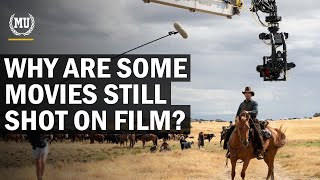
Why Directors Still Use Film
45sThis clip hooks viewers by contrasting modern digital cameras with the seemingly outdated choice of film, sparking curiosity and debate.
▶ Play Clip
[00:00] Have you ever wondered why some Hollywood
[00:05] and why not just make everything
[00:07] After all, today's digital cameras
[00:12] providing very crisp and vibrant images.
[00:16] Messing with film
[00:19] So why is film still a thing
[00:29] if you're watching this?
[00:30] Chances are you know that Christopher
[00:34] for shooting movies on film,
[00:39] However, he's not alone.
[00:41] Directors from movies
[00:44] Wonder Woman, 1985.
[00:46] Zack Snyder's Justice League, Jurassic
[00:51] all have portions of their movies shot
[00:54] But why is this?
[00:56] If you grew up in the early 2000s
[01:00] with film cameras,
[01:04] and using those was on the easy end.
[01:06] Things you just aimed clicked,
[01:09] took it to a store
[01:13] and hope the pictures you took turned out
[01:17] And that's just on the consumer end
[01:19] for a movie like Oppenheimer,
[01:22] there are considerable logistics
[01:25] Not to mention that film for large
[01:28] like IMAX, 65 millimeter
[01:31] Even before the cameras start
[01:35] of photography will need to choose
[01:39] Film for movies comes in a variety
[01:42] to capture light from daytime film
[01:46] These stocks will also have
[01:48] a predetermined amount
[01:51] These can further be adjusted on set
[01:55] Directors and crew have a plethora
[01:59] The for the film starts rolling.
[02:01] For one thing, once film is used,
[02:06] where you can just delete a film
[02:07] or have an unlimited amount of disk space
[02:11] This puts added stress to ensure
[02:16] This isn't to say there aren't reshoots,
[02:20] as you'd expect.
[02:21] Digital offers a plethora of advantages.
[02:23] Digital cameras are cheaper to use
[02:27] less likelihood of errors.
[02:28] Since there are less moving, parts
[02:30] can continuously roll versus
[02:34] While there are less chances of exposure,
[02:37] and what was just recorded can be watched
[02:42] is needed versus going through the hassle
[02:47] Probably the biggest
[02:48] reason why many directors choose
[02:51] feel film offers an esthetic quality
[02:55] With the look not being accurately
[03:00] Directors like Christopher
[03:03] they find the look of film
[03:07] and feel and is more visually appealing
[03:10] Both are very vocal advocates
[03:13] Film also has an added benefit of being
[03:18] which allows for more detail
[03:21] To learn more about dynamic range
[03:23] and wide color gamut, check out this video
[03:27] The other reason why directors choose
[03:31] While digital can capture around a 90%
[03:36] a lot of work in post-production
[03:40] Whereas film can capture the intended
[03:44] Finally, the type of camera used can help
[03:48] Movies such as John Wick chapter four,
[03:52] with digital cameras.
[03:54] The sharp edges and color
[03:56] help give them a modern feel.
[03:58] Whereas movies shot on film
[04:02] Dunkirk or Zack Snyder's Justice League
[04:07] on film, and help give their stories
[04:12] While directors may choose to use
[04:14] the film reels must still be converted
[04:18] Regardless.
[04:19] Film reels are skin and color
[04:23] and because of the amount of data
[04:27] a tremendous amount of disk space.
[04:29] However, this level of raw footage
[04:33] to achieve their desired look.
[04:34] These large files are usually converted
[04:40] of 35 millimeter footage taking up around
[04:45] Upon completion of editing,
[04:48] for playback at theaters or converted back
[04:53] which is pretty standard
[04:56] So while you can make a movie entirely
[05:00] it's hard to dispute that movies
[05:04] or A Quiet Place would feel the same
[05:08] Let me know your thoughts on digital
[05:13] This is no university education in cinema.
⚡ Saved you 0h 05m reading this? Transcribe any YouTube video for free — no signup needed.