
AI Summary
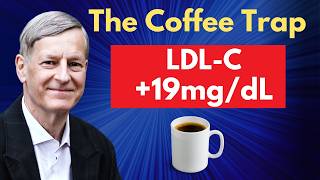
This video examines how coffee brewing methods affect cardiovascular health, focusing on diterpenes like cafestol and kahweol. It summarizes a 20-year Norwegian study of over 500,000 participants, showing that unfiltered coffee raises LDL cholesterol and cardiovascular mortality, while filtered coffee is linked to lower mortality. The video also explores the sensory trade-offs of different brewing methods and concludes with the creator's decision to switch back to paper filters.
Chapters
Coffee beans contain diterpenes, primarily cafestol and kahweol, which are extracted by hot water and affect clinical health markers.
A 20-year study of over 500,000 healthy participants in Norway tracked cardiovascular outcomes, independently funded with no competing interests.
Unfiltered coffee is associated with higher cardiovascular mortality, especially in men aged 60+, while filtered coffee is linked to lower mortality than no coffee.
Unfiltered coffee raises total cholesterol, LDL, and triglycerides; the difference in total cholesterol is about 0.49 mmol/L (18.95 mg/dL).
Cafestol causes a mild rise in ALT, indicating altered liver cell processing.
The study relies on observational data and self-reported questionnaires, and individual responses vary genetically.
Paper filters trap coffee oils, making drip/pour-over negligible in cafestol; instant coffee is also devoid. Metal filters and French press allow oils through, containing up to 30 times more diterpenes.
Espresso has high cafestol per ounce but is served in small shots, so absolute dose per serving is moderate; Americano has the same dose as its espresso shot.
Pod and capsule machines behave like espresso and contain lipid-raising substances.
Paper filters extract more flowery/caramel compounds but less body; metal filters yield sweeter, fuller cups with more body.
For managing cholesterol, switching to paper-filtered or instant coffee is an evidence-based intervention, trading some body for improved lipid markers.
The creator used a metal filter for years but is switching back to paper for health reasons, acknowledging a taste difference.
The choice of coffee brewing method significantly impacts cardiovascular health through diterpene exposure. Paper-filtered or instant coffee is a healthier option for those concerned about cholesterol, despite a trade-off in taste and body.
Mentioned in this Video
Study Flashcards (5)
What are the two main diterpenes in coffee that affect cholesterol?
easy
Click to reveal answer
What are the two main diterpenes in coffee that affect cholesterol?
Cafestol and kahweol.
00:24
What was the sample size and duration of the Norwegian study?
easy
Click to reveal answer
What was the sample size and duration of the Norwegian study?
Over 500,000 participants tracked for 20 years.
00:39
What is the difference in total cholesterol between unfiltered and filtered coffee drinkers?
medium
Click to reveal answer
What is the difference in total cholesterol between unfiltered and filtered coffee drinkers?
Approximately 0.49 mmol/L (18.95 mg/dL).
01:53
Which brewing methods allow the most diterpenes to pass into the brew?
medium
Click to reveal answer
Which brewing methods allow the most diterpenes to pass into the brew?
Metal filters, French press, and Scandinavian boiled coffee.
03:38
Why is espresso considered a paradox regarding cafestol?
hard
Click to reveal answer
Why is espresso considered a paradox regarding cafestol?
It has high concentration per ounce but small serving size, so absolute dose per serving is moderate.
03:52
💡 Key Takeaways
Unfiltered coffee raises mortality risk
Directly links brewing method to cardiovascular mortality, a key finding.
01:11Paper filters trap oils
Explains the mechanism behind the health difference.
02:54Espresso's moderate dose
Clarifies a common misconception about espresso's health impact.
03:38Evidence-based intervention
Provides actionable advice for those with high cholesterol.
05:32Full Transcript
[00:10] cholesterol, and in particular my LDL-C. And it all depends on how it's made. Let's have a look at why this is. Coffee is the world's most popular stimulant, but how you brew it drastically changes what ends up in your
[00:24] cup and your bloodstream. Inside coffee beans are natural lipid compounds called diterpenes, specifically cafestol and kahweol. While both are extracted by hot water, cafestol is the primary compound
[00:39] affecting clinical health markers. To establish the long-term impact of these compounds, researchers analyzed data from a massive 20-year study of over 500,000 participants in Norway. The cohort baseline data focused on
[00:56] healthy individuals tracked over the two decades to observe cardiovascular For transparency, the study was independently funded by public health grants, and the authors declared no competing commercial interests.
[01:11] When the scientists analyzed the long-term mortality data, the statistics revealed a clear trend regarding brewing methods. Drinking unfiltered coffee is associated with higher cardiovascular mortality,
[01:25] particularly in men aged 60 and older. Conversely, drinking filtered coffee is linked to lower mortality than not drinking coffee at all. The primary mechanism driving this risk is a predictable rise in total
[01:40] cholesterol, specifically low-density lipoprotein or LDL cholesterol, as well as triglycerides. The data from the paper reports that the difference in the total cholesterol levels between those consuming
[01:53] unfiltered coffee and those drinking coffee is approximately 0.49 mmol per liter, which translates to 18.95 mg per deciliter. These compounds also cause a mild rise
[02:08] in liver enzymes, specifically alanine aminotransferase or ALT, indicating that they actively alter the liver cells processing of As promising as the long-term data looks for filtered coffee, we have to look
[02:23] closely at the limitations of the study design. The research relies heavily on observational epidemiological data and self-reported dietary questionnaires, regarding exact daily consumption over 20 years.
[02:40] between unfiltered coffee and cardiovascular mortality is statistically significant, individual metabolic responses to cafestol vary based on genetic baselines.
[02:54] To understand how to manage this risk, we must look at how different brewing tools interact with these lipids. Paper filters function as a near-perfect trap for coffee oils. Drip coffee or pour-overs that use paper
[03:08] filters contain negligible amounts of cafestol, making them neutral in their impact on blood lipids. If you drink instant soluble coffee, the processing methods leave the final product almost entirely devoid of
[03:22] cafestol and kahweol, meaning it also has no impact on blood lipids. Methods that utilize metal meshes or no filters at all allow the oils to pass directly into the final brew. A French press or a Scandinavian boiled
[03:38] coffee contain up to 30 times more lipid-raising diterpenes than paper-filtered coffee. Espresso represents a unique technical paradox, as it packs very high concentrations of cafestol per ounce.
[03:52] However, because traditional espresso is served in small 25 to 50 ml shots, the absolute dose of diterpenes per serving remains moderate, meaning a few cups per
[04:05] day represent a low relative exposure. An Americano carries the exact same moderate cafestol dose as the espresso shot used to create it, as diluting the beverage with water does not remove the underlying oils. Pod and capsule
[04:20] machines generally behave similar to espresso methods and contain these lipid-raising substances. Removing these oils alters the volatile organic compounds that reach the cup, creating a direct trade-off between
[04:34] health markers and sensory profiles. Paper filters extract higher percentages of flowery and caramel-related compounds. Pour-over highlights the acidity of the beans, but because the paper traps the oils responsible for
[04:49] roundness, the resulting cup exhibits less body. With the floral and spicy notes comes sometimes a thinner mouthfeel. Metal filters and French press methods allow the oils and micro-grounds to pass
[05:03] through, creating a chemical profile rich in multi-fruity, nutty, and roasted chocolate aromas. These methods yield a sweeter cup with significantly more body, a smoother, fuller acidity. The shape of the filter
[05:18] also impacts extraction, as conical filters alter the flow rate differently than flat-bottomed or cylindrical filters, further shifting the aromatic profile. The data suggests a clear association
[05:32] between your choice of brewing equipment and your cardiovascular lipid profile. For individuals managing high cholesterol or looking to optimize long-term cardiovascular health, switching to paper-filtered coffee or
[05:46] instant coffee represent a practical evidence-based intervention. This adjustment trades some body and sweetness for a highly acidic cup and improved lipid markers. I've been using a metal filter for a few
[05:58] years now since I heard Dave Asprey say that it I'm used to it now, but I recall when I first tried it, I could tell the difference and I thought the taste was better. It was fuller and richer.
[06:11] But I'm going to switch back to a paper filter as that does seem the more healthy option. And I will see if I notice the taste when I go back the other way. This discovery opens up a lot of
[06:23] questions about how our daily brewing choices communicate with our long-term biology. What are your thoughts? If you're using a metal filter or a French press, will it persuade you to switch to paper
[06:37] Drop your perspectives in the comments below. Thank you for your attention and below. Thank you for your attention and I wish you all well.