
iPhone 1 vs 17: Shocking Camera Comparison
45sThe shocking visual comparison of iPhone cameras across generations sparks curiosity and debate about whether newer is always better.
▶ Play Clip"Title accurately reflects the video's core argument that newer cameras can look worse due to over-processing."
A comparison of photos taken with every iPhone generation from 1 to 17 reveals that newer smartphone cameras don't always produce better-looking images. While modern cameras excel in difficult conditions like low light and backlighting, they often over-process regular daylight photos, resulting in an unnatural, artificial look. The video argues that the pursuit of a 'perfect' camera has led to excessive computational photography that can make photos look worse than older models.
The creator took the same picture with every iPhone generation from 1 to 17, and the results show that the latest generation isn't always the best.
The first iPhone had a 2-megapixel camera with no autofocus, video recording, or selfie camera.
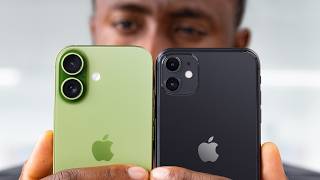
Photos from iPhone 11 and iPhone 17 look very similar in good lighting; improvements are now marginal.
Modern cameras differentiate themselves in difficult scenarios like low light, fast motion, and deep zoom.
A Pixel 10 photo in backlit conditions uses multi-frame HDR, tone mapping, and face detection to produce a usable image, while a Nexus 4 fails completely.
In pursuit of perfect photos, cameras apply heavy processing even to simple daylight shots, causing unnatural halos and flatness.
Comparing Galaxy S generations shows that newer models (S26) have over-processed, unnatural images compared to older ones (S23) which look more natural.
Camera companies need to know when to apply heavy processing (bad situations) and when to tone it down (good lighting).
Modern smartphone cameras are incredibly capable in challenging conditions, but their aggressive computational processing often ruins otherwise good photos. The best camera is one that knows when to apply its tricks and when to keep things natural.
What was the resolution of the first iPhone camera?
2 megapixels.
00:31
What features did the first iPhone camera lack?
Autofocus, video recording, and a selfie camera.
00:31
According to the video, around when did smartphone camera improvements become less dramatic?
Around the 2010s.
01:12
What is the main reason for diminishing returns in smartphone camera quality?
Physical space constraints limit sensor size and lens improvements.
01:12
What computational photography techniques does the Pixel 10 use in the backlit example?
Multi-frame HDR, tone mapping, exposure adjustment, and face detection.
02:50
What is the 'over-processed look' described in the video?
Unnatural halos, flatness, and excessive HDR that make photos look artificial.
04:02
Which Samsung Galaxy generation introduced multi-frame HDR?
Galaxy S9.
04:32
Which older Samsung Galaxy model does the creator prefer over the S26?
Galaxy S23.
05:14
Stuff Made Here Basketball Hoop Analogy
Compares modern smartphone cameras to a basketball hoop that never misses, illustrating how they always produce a good photo.
03:20Dislike for S26 Photo
The creator explicitly states they don't like the S26 photo due to over-processing, highlighting the core issue.
05:01Preference for Older Galaxy S23
The creator and commenters prefer the S23's more natural look over the newer S26, showing a counterintuitive trend.
05:28[00:03] something. I broke out every single iPhone generation from 1 to 17 and took the same picture with every single one of them back-to-back. And the results a couple of different phones in a couple different scenarios. And what ended up
[00:17] surprising me and quite a few other people is it doesn't always look like the latest generation is always far and away the best. And I'll tell you why. See, for years smartphone cameras have been focused on getting better and
[00:31] they were bad of course when it first started. The first iPhone camera was little pinhole 2-megapixel webcam type of thing. No autofocus, no video recording, didn't even have a selfie camera. But as people and culture valued
[00:47] pictures and videos more and more, you drastically on the back of our phones year over year. It would be a legitimate selling point that a camera on a new generation of phone is way better than
[00:59] the year before. [music] And so this continued as phones got bigger and better and cameras got a bit bigger and better until right around the 2010s. Phones did eventually stop getting way bigger. And camera bumps of course still
[01:12] grew, but now at this point we're basically maxing out how much phone you basically no more room left in here. It's physics. So the dramatic improvements were getting less dramatic. See these two photos?
[01:26] in and pixel peeping, they almost look like they could be taken with the same phone just with a little contrast curve, saturation bumped a little bit. This one was taken with the iPhone 17. And this one was taken with the iPhone 11. Now of
[01:41] course if you pixel peep, there are some more nuanced small differences. Like if already quickly notice that the 17 has a larger sensor. That's why the while the 11 has more in focus. But generally for most people, they both
[01:54] the past 5 years can take a perfectly usable photo in broad daylight perfect they're more focused on is getting better around the edges. Like the more difficult shooting scenarios. Low light, super fast moving subjects, deep zoom.
[02:11] Like these edge cases are where you can still see a bigger difference between a can start to see where this is going, right? Basically any phone these days can take a good enough quality photo in good lighting conditions, no matter what
[02:24] their price. That doesn't separate them anymore. So the real separation between a good and a bad smartphone camera comes when the user throws the absolute worst possible conditions at it. So something like this photo right here.
[02:38] Right? This To an untrained eye, this might look like a pretty normal photo, photographer in the room watching this video over your shoulder, they've probably already pointed out that this scene is literally entirely backlit. And
[02:50] that smartphone, which happens to be a Pixel 10, is doing a ton of clever computational photography, multi-frame HDR, tone mapping, and exposure adjustment, face detection. It's making sure somehow you can see my face and the
[03:07] black hoodie that I'm wearing and the blue sky behind me in one shot, which is actually insane. For some perspective, here's the same shot with a Nexus 4, coming along. So that's how terrible the scene is supposed to look. It's like one
[03:20] hoops that Stuff Made Here made, the YouTuber, where no matter where you throw the ball, it goes in the hoop. That is what a modern smartphone camera point the camera at, you'll get a good picture. It refuses to spit out a bad
[03:34] one. To the point where you think there's no way your skills could be that bad, cuz you never miss. But this is where it's started to get weird. I think that in pursuit of this perfect photo-taking machine where you can't
[03:48] miss no matter how insane the situation is, it's actually started to make regular daylight photos noticed the over-processed look before. You've probably seen it here and there.
[04:02] others. It's a little bit hard to articulate what it is, but I think in general, the more likely a brand or a phone camera is to throw photo, the more likely they are to throw all of
[04:17] those same tricks at a regular photo that doesn't really need it. See here, this is the progression of every Samsung Galaxy S ever taking the every Samsung Galaxy S ever taking the same photo from S1 to S2, S3, S4, S5,
[04:32] all the way to today. And yes, I did skip S10 to S20 to line up with the year, but you can specifically see around the Galaxy S8 when the window the introduction of multi-frame HDR with the S9, suddenly you can see the blue
[04:46] sky and everything else is preserved. Then keep going, S10, S20, S21, S22, all Then keep going, S10, S20, S21, S22, all the way to today's phone, the S26. And I uh I don't I don't like this photo anymore.
[05:01] Like this is the exact over-processed look I'm talking about. Yes, you can see the building and the sky outside, but there's also this kind of a haloing around the window and the plant next to the window now. And yes, you can see
[05:14] more details than ever in my face, but my face is not actually that light. So, my face is not actually that light. So, spin back to the Galaxy S23, and I don't think I'm the only one who prefers this older and maybe slightly worse photo
[05:28] because it just looks a little more natural. There's a little less shadow detail and a little less HDR, but there's also less haloing and less unnatural glowing and flatness, and it just overall looks better. And I'm not
[05:40] the comments on the short that I published with all these photos in them. A A of other people feel that way, too. So, this is now the balancing act of lot of these companies, they already know, you know, they pull a lot of these
[05:53] tricks, the tone mapping, the multi-frame HDR, the face detection, the exposure adjustments, and they know that that stuff in excess can look kind of weird on a regular photo. So, it's all about knowing when
[06:07] to turn it up and when to turn it down. If you need all of that stuff to save a bad situation, then turn it up, but if you don't need it, turn it down. Really, the easiest way to appreciate this, every modern smartphone camera has this
[06:21] viewfinder as you're about to take the photo, and then once you take the photo, and then that new looking photo. Some take longer than others to process, but you can always see it snap into place. And the more difficult the shooting
[06:36] And the more difficult the shooting scenario, the more dramatic that snap. talking about here. So, look, if the iPhone 11 has more natural color than iPhone 11 has more natural color than the iPhone 17, and the Galaxy S23 looks
[06:50] better in a lot of ways than the S26, then we know that some more tuning is really good apps on these phones that will let you turn down the completely off. I'll link some good ones below. Sometimes it works, sometimes
[07:04] you can try it if you want. Also, I'll link all the shorts down below where you can watch all of the generations of every smartphone through every single >> Thanks for watching. Catch you in the next one.
[07:16] Catch you in the next one. Peace.
⚡ Saved you 0h 07m reading this? Transcribe any YouTube video for free — no signup needed.