

Apple vs Xiaomi: Who Copied Who?
45sThe direct comparison and controversy over which company copied the other sparks immediate curiosity and debate.
▶ Play Clip"The title promises a comparison, and the video delivers exactly that with detailed analysis, though it includes a sponsor segment."
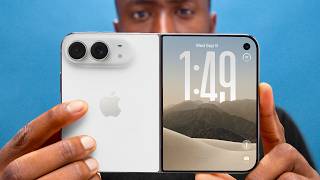
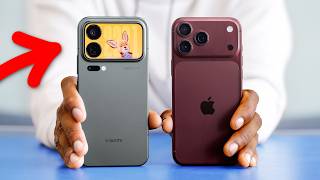
The video compares the Xiaomi Fold and the iPhone Duo, addressing the debate over who copied whom. It explains the supply chain dynamics that allowed Xiaomi to release first, then highlights Xiaomi's hardware advantages and software differences.
Xiaomi unveiled its foldable phone on September 7, 2026, two days before Apple's iPhone Duo on September 9, 2026, sparking a copying debate.
Apple's secrecy is maintained until it must engage with suppliers and factories, which are less secretive, leading to leaks that competitors like Xiaomi exploit.
Xiaomi is 30 grams lighter than the iPhone Duo, making it less fatiguing to hold, and features a 6,000 mAh silicon carbon battery with faster charging.
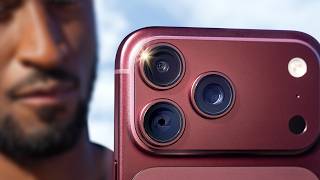
The Xiaomi Fold has a triple camera setup with a 200MP primary and 50MP 3.5x zoom, while the iPhone Duo has only two cameras without a zoom lens.
The iPhone Duo hides its selfie camera under the display, while Xiaomi uses a hole-punch cutout, which is better for image quality.
The iPhone Duo lights up the outside display when closing for fluid continuity, while Android phones assume you're done and require an action to continue.
Android foldables offer multi-window and bubble window multitasking, while the iPhone Duo only supports two apps side by side.
Android phones disable the back screen during selfies to prevent accidental touches, a feature the iPhone Duo lacks.
Supply Chain Leaks
Explains how Apple's secrecy breaks down during manufacturing, allowing competitors to preemptively release similar products.
00:01:18Battery and Charging Advantage
Highlights Xiaomi's superior battery capacity and charging speeds compared to the iPhone Duo.
00:04:13Camera System Comparison
Details the hardware differences in cameras, showing Xiaomi's advantage in zoom and sensor size.
00:05:32Software Behavior Differences
Illustrates how software design choices affect user experience, with Apple prioritizing continuity and Android prioritizing multitasking.
00:08:13[00:00] So this is not an iPhone Duo. This is the Xiaomi 18 Fold. What you're looking at is a folding
[00:23] phone with the exact same dimensions of the iPhone Duo, the exact same aspect ratio for the inside screen and the outside screen. It has a lot of the same features as the iPhone Duo,
[00:35] including this D-shaped display, but it has also one-upped it in several really key ways. I just want to start by answering a question that a lot of people get wrong on the internet right now, which is just, how does this happen? How do we have the iPhone Duo getting unveiled on
[00:49] September 9th, 2026, but this Xiaomi Fold was officially unveiled two days earlier on September 7th, 2026. There are people saying, wow, Apple actually copied Xiaomi, but then a whole bunch
[01:02] of other people saying, no, no, no, Xiaomi did still copy Apple, even though it came out first. But we also know that the development cycle of these tech products is many, many, many months, usually years. And yet, somehow these phones got unveiled two days from each other. So here's the
[01:18] deal. We know that these tech companies are very, very competitive. They're also very, very secretive. So a company like Apple, if they can help it, is going to try to develop their new products in complete secrecy as long as possible,
[01:31] so they can surprise people at launch. So of course, they've been watching the foldables market, and they finally have decided to jump in, and so they start developing and working on their folding iPhone. They will have these very strict rules for people working on these really, really secretive, unannounced products,
[01:46] just to try to keep things from leaking, to the point where, like, engineers go home at the end of the day, and they can't tell their families about the thing they worked on at work that day. So things actually stay pretty contained within Apple's walls, but eventually they have to go out and make the thing.
[02:00] And so they have to go and have those conversations with parts suppliers and factories and start probing and having those conversations and placing orders of parts to actually make the thing that they designed. And those other companies are not quite as secretive as Apple.
[02:16] So that's where information starts to leak, and people start to find out that Apple needs a bunch of folding OLEDs of this size, and a hinge that works in this exact way, and a chassis of these exact dimensions,
[02:28] so that they end up with any mock-ups and stuff with the exact dimensions of the new iPhone. Now, software stuff, notably, doesn't leak nearly as much, because it doesn have to go through that entire supply chain and so they actually typically able to surprise us a little bit more with the software features But yeah now it months before the release of the next iPhone and companies like Xiaomi you know they don have a CAD render of the exact new iPhone that going to come out
[02:51] but they do have enough to make their own version of the thing. And they have the advantage of speed. So they can go into Overdrive and commit to putting this thing together and putting it out before the predictable Apple event timing.
[03:06] And there's lots of examples of this happening before. You might remember last year, literally months before the iPhone Air September announcement, we got a teaser of this ultra-thin phone that Samsung was working on that turned out to be the S25 Edge that came out first.
[03:19] Same idea. And Xiaomi, as we know, is not exactly shy about borrowing Apple's aesthetic in an effort to try to borrow some of their customers. So yeah, this shouldn't exactly be a shock to us,
[03:31] a folding phone that is, to the millimeter, the exact same height and width and same aspect ratio as Apple's folding phone. But then they actually went out and one-upped the iPhone Duo in a couple
[03:46] of ways, too. So if you remember my first impressions of the iPhone Duo, the password size is nice, the shape is actually really reachable, but that is a heavy phone. It's actually the heaviest iPhone of all time, clocking in at 254 grams. And, you know, it feels substantial,
[04:00] and I think a lot of people I'm sure will associate that weight with high quality, but what a lot of the foldables people end up liking more is a lighter object to hold, just less fatiguing. And this Xiaomi Fold is a whole 30 grams lighter,
[04:13] much closer to the weight of a normal large slab phone. And that makes a huge difference. And they've managed to do this with a 6,000 mAh silicon carbon battery that also supports 67-watt fast charging and 50-watt wireless charging
[04:25] with the right accessory. We don't know the exact battery size of the iPhone Duo yet, But if I was guessing, and this is before the reviews that are, of course, coming soon, so get subscribed to see that. But if I was guessing, the battery might be either the weakest or second weakest part of that phone.
[04:42] Apple's famously pretty conservative with the physical battery capacity. They're not doing silicon carbon, and they're not doing super fast charging. And so people are estimating the Duo's battery to be somewhere around that 5,000 milliamp hour mark, combined between the two sides.
[04:56] That is smaller than the 18 Pro Max's battery. And we know the 820 Pro is great and everything, but there is also a massive 7.5 inch screen to power when it's open. The Z Fold 8 has the same limitation, it has a 4800 mAh battery, and if you use it with
[05:09] that screen open for long enough, it just drinks battery quite a bit faster than when it's closed. Xiaomi has never been shy about the super high capacity silicon carbon batteries, and I think a folding phone is the right place to put it It thinner there less volume you kind of splitting it up with a hinge in the middle but you have a huge screen so you want it to be able to last all day and putting 6 milliamp hours in there goes a long way But the other thing you probably
[05:32] noticed by now is those cameras. So in case you forgot with all the hype, the iPhone Duo has two cameras, the primary and ultra-wide. There is no Zen camera. The Xiaomi Fold back here has a camera bar with triple cameras around the back. There's a 200 megapixel primary, and it has an
[05:49] ultra-wide and a 50 megapixel 3.5x zoom camera as well. Now, we already know these foldables don't have the most Z-depth. They're ultra-thin because they're split in half on both sides, so that's why there's no face ID on the iPhone Duo, not enough room for it. But there also is always that
[06:05] challenge of not having a lot of room for actual flagship-size large camera sensors. But it does feel like Xiaomi still found a way to one-up the iPhone, at least on paper. I think our best guess for the iPhone Duo's camera is it's probably the iPhone 17E's main camera. You know, the descriptions
[06:22] on Apple's site are exactly the same. 48 megapixels, hybrid focus pixels. That sensor is much smaller than the one Xiaomi is using. It's a 1 over 2.55 inch sensor. And Xiaomi has a 200 megapixel,
[06:35] 1 over 1.56 inch sensor. So, you know, TBD on how well the iPhone Duo's camera actually performs, and if the A20 Pro's image signal processor can squeeze anything more out of it. But yeah, you can at least guarantee it gives Xiaomi the win in the zoom department for having a dedicated
[06:50] zoom camera. And I'll also throw in that I find this little camera bar is kind of nice to hold when I'm using the phone in portrait, kind of like a little handle. I'm probably smudging this a lot also, but it's nice. On the inside screen, you probably remember, the iPhone hid their selfie
[07:05] camera underneath the display. Xiaomi just went ahead with a standard hole-punch cutout in the corner, which, I mean, that's going to win by default for image quality. I don't really mind it in the corner up here either. It's out of the way. Obviously, the big, dramatic, uninterrupted surface with no crease and no cutouts is cool, and it resembles the iPad, but yeah, there's a
[07:22] cutout here with Xiaomi. Now, the Xiaomi does have a bit more crease here. It's not terrible, but there is no anti-glare finish and it can sometimes catch your eye once in a while but it's definitely not problematic. Like if the Duo and the Find N6 are 9 out of 10 for a crease delete
[07:38] this is at a 7. But there's also one more big difference between these phones which is that thing that doesn't really leak nearly as much which is that software. Now that's why things like that opening and closing glassy animation that Apple pulled off actually took us all by
[07:52] surprise and makes us feel a really big difference in how responsive and nice it feels to use an iPhone Duo. Now Android folding phones have also had these screen opening and closing animations for a while now but there are some differences First of all when you close basically any Android folding phone the default behavior is to just assume that you done with it and you shutting it
[08:13] And if you want to continue, then you have to act. You have to either swipe or wake up the outside display. And I've been using foldable for a while. I've really gotten used to that behavior. The iPhone does not do that. As soon as you're halfway done closing it, it lights up the outside display to maintain this sort of fluid continuity with the animation.
[08:32] And I don't hate that, but I want to point out two things that the Android foldable software has that I'm just wondering when the iPhone Duo will eventually add. So number one, more windows at once.
[08:44] Like, these are going to be multitasking machines. iPhone Duo famously only lets you do two apps side by side. And that's it. the Android world is full of multi-window, bubble window, overlay, triple app multitasking,
[08:57] all sorts of crazy stuff everywhere, as if you have a full-size tablet. And, you know, two screens side-by-side is not bad, but maybe there'll be a third at some point. But then two, so this is something Mr. Mobile brought up a few times with these folds, is the camera.
[09:13] So when you're taking a photo of yourself using the primary cameras, that back screen, These phones all specifically disable the back screen to prevent accidental touches. It's very clever.
[09:25] They've all kind of realized that this is a smart thing to do. The iPhone Duo actually doesn't seem to do this. And it would kind of shock me if they didn't realize sooner or later that they should do this. But we haven't seen that yet. That is definitely something I'm going to be keeping an eye on.
[09:39] Also, I am excited to finally announce that the desktop that we've made is finally actually on sale. We collaborated with OmniType. So if you know, you know. And we designed this brand new desk pad.
[09:52] And I think it's awesome. It's large. It's four millimeters thick. It has this nice stitching around the edges and rubber at the bottom to keep it soundly in place. And there's actually two versions of this on the site for those of you who really know ball.
[10:04] There's smooth and rough. Smooth will feel like a normal mouse pad. Rough has a little texture to it for more precise movements if you're into that. I think if you just want something you're familiar with, smooth is probably the way to go.
[10:16] But I really like the rough. all the mousepads I use have that texture, so if you know, if you want that, you can get it. Oh yeah, we're very happy to finally be launching this. It's on the site, on mkbhc.com. You can get one starting literally today, which is super sick. Let me know, shout out me on Twitter if you
[10:31] actually get one, what you think of it, send me those pictures. I want to see them. Anyway, that's it. Thank you for watching. Welcome to Techtober, and I'll see you very soon in the next one. Peace.
[10:47] you

⚡ Saved you 0h 10m reading this? Transcribe any YouTube video for free — no signup needed.