YouTube's New AI Content Rules Explained
44sClears up panic about AI monetization bans, directly addressing a hot topic for creators.
▶ Play Clip Prodvigate. Все о продвижении на YouTube
"Title is slightly exaggerated but mostly accurate; the update affects monetization of low-effort AI content, not all AI content."
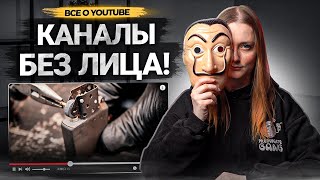
YouTube updated its monetization rules regarding duplicate content, now termed 'inauthentic content.' The update does not ban AI-generated or faceless videos outright but targets templated, repetitive content that offers no new value. Creators who add original commentary, analysis, or unique perspectives can still monetize.
Authors panicked thinking YouTube would ban all AI-created videos, but the update is less severe.
The vague 'duplicate content' category was replaced with clearer 'inauthentic content' rules.
The updated help page does not mention any ban on AI-generated content; it focuses on originality.
Serial, repetitive, templated, or mass-producible content that offers nothing new is considered inauthentic.
Videos with same intro but different content, or same format with different facts, are still monetizable.
Simply cutting clips together without explanation is not original; adding intros and reasons makes it monetizable.
Reading someone else's text without adding value, or audiobooks without analysis, are not monetizable.
Simply speeding up music or running slideshows without commentary is not original content.
Videos made with AI using templates without unique opinion are not monetizable.
Re-uploading others' videos without adding value is considered copied content, even with minor edits.
Critical reviews, parodies, reactions with commentary, and modified shorts can be monetized.
The update targets low-effort templated content, benefiting creators who invest in original work.
YouTube's update clarifies that inauthentic, templated content is not monetizable, but original, value-adding videos—including faceless or AI-assisted ones—remain eligible. Creators should focus on adding unique commentary and avoiding repetitive formats.
What did YouTube update regarding monetization rules?
YouTube updated the 'duplicate content' rule to 'inauthentic content' to clarify what is not original.
00:30
Does the update ban AI-generated content?
No, the update does not mention a ban on AI-generated content; it targets templated, repetitive content.
02:22
What is considered inauthentic content?
Serial, repetitive, templated, or mass-producible content that offers nothing new to viewers.
03:34
Can a video with the same intro but different content be monetized?
Yes, as long as the main content is different and original.
04:01
What is required to monetize a compilation of clips from old videos?
You must add intros, explain where each clip came from, and why you chose it.
05:15
Is reading someone else's text without adding analysis monetizable?
No, it is considered non-original content.
06:16
Can a slideshow with background music be monetized?
No, without commentary it is not original content.
09:16
What is required to monetize a reaction video?
You must add emotions, thoughts, jokes, explanations, or commentary, not just silently watch.
13:22
Does having permission from the copyright holder guarantee monetization?
No, YouTube checks if you added your own value, not just permission.
12:28
What is the main goal of YouTube's update?
To eradicate formulaic content that doesn't offer viewers anything new, keeping audience engaged.
09:30
No AI Ban
Clarifies that the update does not ban AI content, countering widespread panic.
02:22Compilations Need Context
Highlights the new requirement to add narrative to compilations for monetization.
05:15Platform's Goal
Explains YouTube's motivation to keep audience by removing low-value content.
09:30Good News for Creators
Positions the update as beneficial for original creators by reducing competition from low-effort content.
14:34[00:03] rules regarding the monetization of i-content. And for some reason, some kind of panic began among the authors. Is YouTube going to ban all videos created using artificial intelligence now? In
[00:16] the comments under our videos, I even encountered the opinion that any impersonal content would be banned. However, in reality, everything is not so scary. To reassure everyone and clarify what was actually banned and de-
[00:30] monetized, I suggest we examine this news in more detail. Until July 15th, YouTube's monetization information included a rather murky category: duplicate content. The wording itself was too vague. The discussion seemed to be about
[00:44] videos that were too similar, but what “ too similar” means is unclear. Does too similar” means is unclear. Does this include, for example, videos of knitting, where only hands are constantly in the frame , or maybe
[00:57] videos with identical faces on the covers? So why wasn't Mr. Beast just not banned, but also became the most popular YouTuber? But his face, with literally a couple of identical expressions, swings from cover to cover. That
[01:11] 's why YouTube decided to update this rule and adjust the wording. Let's take a look at the help itself and find out what kind of update he announced. If anything, I'll leave a link to it so you can
[01:26] study this reference on your own. So what does the platform claim? We've added a clarification to the rules regarding serial or repetitive content, now considered non-original, to make it easier to identify. Please note that
[01:42] monetization of such content has always been prohibited, as we only encourage the creation of original, unique videos. The rules regarding the use of other people's content, which apply to comments, clips, edits,
[01:56] and reaction videos, have not changed. Okay, now the duplicate content is no longer original, but that's only in the Russian-language help. If you look at it in English, the unoriginal content becomes a more
[02:10] appropriate expression, inauthentic. And it seems that only the terminology has changed . However, let's leaf through the information and delve into its contents. This
[02:22] category of monetization rules is divided into two parts: non-original content and the use of other people's content. And do you know what is not in both parts of the certificate? a single mention of the ban on content created using artificial
[02:36] intelligence. It turns out that the authors and videos are generally safe, yes, but not entirely. The problem isn't with neural videos, but with the type of videos you post. But before we get into dealing with inauthentic content, I
[02:52] want to remind you that you can always make your authentic content even more interesting with me in our closed video bloggers club. Here we actively discuss all the important news, help each other create
[03:06] attractive designs and interesting videos, and simply communicate and support each other. I also help each participant solve their problems individually, analyze channels, and, if necessary, individual
[03:21] videos. And if you want to join us, I'll leave a link in the join us, I'll leave a link in the description. Now let's get back to the video. So, what does YouTube consider to be unoriginal or inauthentic
[03:34] content? Serial or repetitive, templated or looking the same? Or one that can be easily mass-produced? Or one that doesn't
[03:46] give viewers anything new from video to video. With these definitions, the situation is n't particularly clear, so YouTube provides help examples of which videos can and cannot be monetized. Here are examples of content that can be
[04:01] monetized, even if it is partially repeated. A video with the same intro and ending, but different content. For example, if you always start your videos with, "Hi everyone, I'm Masha, and you're on my channel," then I
[04:15] strongly advise against doing that because it's completely lame. However, YouTube's rules do not prohibit this. Videos, each of which talks about specific qualities of different objects. It sounds confusing, but it's
[04:30] actually not that complicated. These are the kind of videos where you take the same format, for example, 10 strange facts about, and using the same structure, you make a different selection of facts each time. For example, in one video you have the top five
[04:45] The Witcher, and in another the top five most difficult characters from the game The Last of Us. Videos that combine short clips of similar objects and explain the relationship between them. It's
[04:59] a little more complicated here. This particular update could negatively impact a large number of authors. From now on, simply cutting videos is not enough. We need to connect them with meaning. tell a story. For example, if you cut together
[05:15] the best moments from your other videos, you can only monetize it if you add intros, explain where the moment came from, why you chose it, and who it's relevant for. That is, you literally say: “This is a selection of my
[05:30] worst fails of the year.” Let's start with how I screwed up the interview. And so on for each episode that you took from the old video. But if you simply used pieces from old videos and silently glued them together one after another to music,
[05:45] this is no longer considered original content, even if it was all filmed by you. The point is to make it clear to the platform that this is a new piece, and not just a remake of an old one. Now let 's look at examples of when videos
[06:00] cannot be monetized. A small remark needs to be made here. If your channel posts videos that are too similar overall, without any special editing, YouTube won't even enable monetization for you.
[06:16] And if you started churning out such content after enabling monetization, rest assured, it will be disabled. So, they are not subject to monetization. A video where someone else's text is simply read out. For example, you simply read articles from a
[06:32] website, news in the feed, and do not add any of your thoughts or any other value to it. And yes, bad news for those who made audiobooks on their channels. Reading books without editing them is also not original content from
[06:47] YouTube's perspective, even if you voice them beautifully with editing and music, because you're using someone else's text and not adding your own analysis, explanations, or commentary. If you still want to create this kind of content and
[07:01] make money from it, you need to add value, such as providing analytics along the way . Here the author talks about suffering. And that's why it's important to include discussion or analysis. Now let's discuss how this resonates with
[07:17] 20th-century philosophy. Severely shorten and adapt the text, turning it into a screenplay based on the book rather than a direct reading of the text. The next category of non-original content is music that hasn't been significantly altered, such as simply
[07:32] sped up or with a different key. And here it needs to be clarified that this only applies to that category of video where the author takes someone else's composition, changes the speed, adds a picture to the background and uploads it like that. If you're
[07:47] pulling this kind of scam to put a track in the background of your vlog, it's not prohibited. The content itself is original. True, this still won't save you from a copyright complaint . Let's continue. And inauthentic
[08:01] content is repetitive or meaningless content without any explanation and with low educational value. Original content, as we discussed above, is content that is created using a single template format, but
[08:15] always with different content. But if you have 50 videos based on a template, the top 10 films about, where you generate the same type of texts using the GPT chat in the style of: "Tenth place is this one, ninth place is that one." If all this is voiced by a neural network
[08:29] against the background of the same picture and your unique opinion is not there, then this is no longer authentic content. Continuing with this point, videos made using a template also cannot be monetized, especially if they are generated automatically or
[08:45] using AI. Yes. It is mentioned here, but please note that the use of such content itself is not prohibited. If your videos, whether made with neurons or without them , literally repeat each other,
[08:59] then goodbye, coin. And the last point here is a slideshow with pictures. It's not like it could be monetized before, but I'll explain it in detail again. If you just add background music and run the slides without commentary,
[09:16] it's not content, it's a presentation. There's nothing original here, so you won't get paid for it. Briefly on this part of the rules. YouTube's update regarding inauthentic content does not directly affect
[09:30] videos without faces or those created using neural networks. YouTube is trying to eradicate formulaic content that doesn't offer viewers anything new or interesting because it aims to keep its audience on the platform for as long as possible.
[09:46] But such meaningless videos hinder him from achieving his goal, because they repel viewers. And, frankly , this is the platform's way of clipping the wings of freeloaders, which should actually be a relief to the creators
[10:01] who toil day and night to create original content. Justice must prevail after all. Let's move on to analyzing the second part of the certificate. Let's move on to analyzing the second part of the certificate. Using someone else's content. And again,
[10:15] nothing new. Stealing other people's videos has always been punishable by the platform. However, there are some very interesting updates here too. YouTube is blunt: "If you upload content that's already been published elsewhere by someone else, but you haven't
[10:31] added anything of your own, it's considered copied or duplicate content. This applies even if that content was originally published on other platforms. If you're wondering how YouTube will verify this,
[10:44] I don't have an answer because the platform itself doesn't provide one." By the way, we're not just talking about downloading and posting someone else's content without any changes. Even if you took someone else's video, cropped it a bit, added a filter and that's it, it's not considered
[10:59] reworking. YouTube doesn't just check if you filmed it, they check if you made sense, if you added value. There should be comments, analysis, reactions, something that turns the video into a new piece of content, and not
[11:13] just a re-upload. And once again, I hasten to remind you that even if you rethought the content and made the same reaction to the video, this does not protect you from copyright infringement. This saves you from having your monetization disabled for
[11:27] using someone else's content. But the original author can still file a complaint against you and take away monetization for a specific video. Yes, that's the sad part, but you can challenge this claim on the grounds of fair use, but we'll
[11:43] talk about that another time. Let's run through the list of things that cannot be monetized. Compilations of other people's videos without commentary or with a minimal amount of it. Compilations of videos from other sites,
[11:56] collections of tracks from different artists, which are simply thrown together even with permission from the copyright holder. Videos that already exist on other channels, even if you re-uploaded them yourself. videos that aim to promote
[12:12] content created by others, even if you have permission to use it. Videos in which you have not added any visual or semantic changes. Wordless reactions where you just look and blink. Under
[12:28] these rules, YouTube does not check whether permission was granted by the original content's creator. He checks if you have added anything of your own. So what can be monetized? As I already mentioned, even if you do everything correctly in this part of the rules
[12:42] and do not violate anything, this does not mean that copyright holders will not come to you with complaints about copyright infringement. This is a different story, which concerns legislation, not platform rules. But let's return to the information
[12:56] about using someone else's content. A lot depends on how you format it. This is what is allowed to be monetized. Critical reviews with excerpts from other people's content. For example, you're doing a film analysis, playing a
[13:10] scene and commenting on what went wrong. Videos with films, but with voiceover and new text. For example, you re-dubbed a scene, did a parody, or
[13:22] told some alternative version of the reaction. But we're talking about a video with a full reaction, not just silently watching. YouTube is waiting for emotions, thoughts, jokes,
[13:34] explanations, commentary on sports broadcasts or excerpts. If you actually analyze and comment on what 's happening, and don't just post a clip, then it's possible. A short with modified content from someone else. For example, you added
[13:49] another track, text, effects, or embedded someone else's piece of shors into your plot. Videos where you yourself are on the screen. Showing yourself even on top of other people's videos is a sign that you are the author, especially if you explain why you added it.
[14:04] However, the video format where the author appears on half the screen doing nothing, and another person's video takes up half the screen, does not fall under this rule. You can't do this. This is considered another scam to
[14:19] deceive YouTube and make money for free. And what happens? It turns out that many people simply panicked in vain. YouTube has not banned or cancelled the faceless video. There are no plans to even deprive anyone of monetization . The platform made it clear:
[14:34] no one wants cookie-cutter content. Bring original author's videos. Monetization will definitely remain with those who invest, who add meaning, opinion, reaction, their point of view. But those who simply clone, churn out,
[14:49] read someone else's text without parsing, or reinterpret someone else's videos with minimal changes—sorry, you won't get paid. To be honest, I think this is good news, because those who really try will
[15:02] no longer have to compete with neural garbage and endless copy-pastas. So don't be afraid of faceless videos. Beware of being a template and constantly reworking what has already been reworked . And if you're a super-cool
[15:17] creator of original content, but for some reason your views are dropping, then I recommend watching this video. I actually talk in detail there about the massive decline in the performance of bloggers on YouTube.
[15:30] update this rule and adjust [music]
⚡ Saved you 0h 15m reading this? Transcribe any YouTube video for free — no signup needed.