
87% Don't Know These Car Hacks
45sThe shocking statistic and promise of saving thousands immediately grab attention, common among viral money-saving content.
▶ Play Clip"Title is slightly exaggerated but most hacks are legitimate and cost-saving."
This video reveals 15 car maintenance hacks that use common household items to save money on repairs and detailing. Each hack is presented as a secret that mechanics and detailers supposedly hide from customers, with step-by-step instructions and cost comparisons.
Use aluminum foil to remove rust from car surfaces. Scrunch foil, dip in water, scrub rusted area. Costs $2 vs $300-$500 body shop fee.
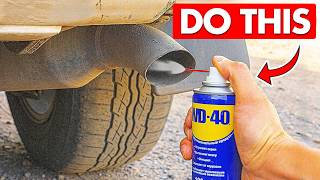
Spray WD-40 on exhaust tips, let soak 30 seconds, scrub with steel wool. Costs $5 vs $60-$100 detailing.
Rub graphite pencil on key, insert into lock, work in and out. Graphite lubricates without attracting dirt.
Apply petroleum jelly (Vaseline) to rubber pedals to restore flexibility and prevent cracking. Costs $3 vs $40-$80 replacement.
Apply cooking spray to wiper blade rubber to eliminate streaks and squeaks. Extends blade life 6-12 months.
Use shaving foam on fabric seats to remove stains. Let sit 5 minutes, then wipe. Costs $2 vs $100-$200 detailing.
Reset power window by holding down button 3 seconds at bottom, then up 3 seconds at top. Fixes calibration issues.
Apply lemon juice to battery terminals to dissolve corrosion. Costs <$1 vs $150-$300 battery replacement.
Stretch rubber bands on steering wheel spokes to hold phone. Free vs $20-$40 phone mount.
Dust baby powder on serpentine belt to stop squealing. Costs $3 vs $100-$200 belt replacement.
Use oil test strips to check oil condition. $10 for 10 strips vs unnecessary oil changes.
Roll down driver window, open/close passenger door rapidly to expel hot air. Cools car in 60 seconds.
Rub cut apple on windshield to remove film and water spots. Malic acid cleans glass. Costs <$1 vs $50-$100 detailing.
Spray cooking spray on door seals before winter to prevent freezing. Costs $3 vs $200-$400 seal replacement.
Fuel gauge arrow points to side of fuel door. Standard feature since early 2000s.
The video demonstrates 15 simple, low-cost car hacks using household items that can save hundreds of dollars in repairs and detailing. It emphasizes that many common car problems have easy DIY solutions that mechanics and detailers may not advertise.
What household item can remove rust from car surfaces without scratching?
Aluminum foil (scrunch into ball, dip in water, scrub).
00:27
How does WD-40 help clean exhaust tips?
It dissolves baked-on carbon buildup; spray, let soak 30 seconds, scrub with steel wool.
01:54
What is the dry lubricant used in lock cylinders that can be applied with a pencil?
Graphite.
03:12
What does petroleum jelly do for rubber pedals?
Penetrates rubber, restores flexibility, creates protective barrier against heat and cracking.
04:37
How can cooking spray extend wiper blade life?
Restores rubber flexibility, eliminates friction causing streaking and squeaking; extends life 6-12 months.
05:56
What ingredient in shaving foam makes it effective for stain removal?
Surfactant cleaning agents (same as professional upholstery cleaners).
07:31
How do you reset a power window's calibration?
Roll window all the way down and hold button 3 seconds, then all the way up and hold 3 seconds.
08:49
Why does lemon juice clean battery corrosion?
Citric acid neutralizes and dissolves alkaline corrosion buildup.
10:27
What is the cost of oil test strips and how many tests per pack?
$10 for a pack of 10 strips.
14:57
How does the cool ventilation hack work?
Roll down driver window, open/close passenger door rapidly 5-10 times to push hot air out.
16:16
What acid in apples cleans windshields?
Malic acid.
17:27
How does cooking spray prevent frozen door seals?
Creates a thin barrier that prevents moisture from bonding rubber to metal frame overnight.
18:40
What does the arrow next to the fuel gauge indicate?
The side of the car where the fuel door is located.
20:13
Aluminum foil rust removal
Demonstrates a cheap, effective alternative to expensive body shop rust treatment.
00:27Cooking spray for wiper blades
Extends wiper blade life significantly, challenging the common replacement cycle.
05:56Power window reset trick
Shows a simple calibration fix that can avoid costly diagnostic fees.
08:49DIY oil test strips
Empowers drivers to base oil changes on actual condition rather than mileage myths.
14:40Fuel arrow indicator
Reveals a little-known standard feature that prevents pulling up to the wrong pump side.
20:13[00:00] Over 87% of car owners don't even realize these car hacks actually work. But here is the shocking part. Just one could literally save you thousands in detailing bills. Chances are, you have ignored these car tricks your whole life.
[00:15] Before you spend another dollar, here are 15 hidden car hacks that can save you serious cash. Don't skip this. These easy hacks save you money. Let's jump right in. Hack number 15, the foil rust eraser.
[00:27] Your car has rust spots bubbling up on the bumper, doors or trim. And the body shop wants $300 to $500 to sand, treat and repaint the affected areas. But here is what mechanics don't tell you.
[00:40] Grab a sheet of aluminum foil from your kitchen, scrunch it into a ball and dip it in water. Now scrub it directly onto the rusted surface using small circular motions. The aluminum foil reacts chemically with the rust and lifts it right off the metal without scratching the surface underneath.
[00:56] A roll of aluminum foil costs $2 and can treat rust spots all over your car. Your surface looks clean, the rust is gone, and you did not pay hundreds for body shop treatment. Here is what they don't tell you.
[01:08] Aluminum foil is actually softer than the metal on your car, which means it scrubs away rust without leaving a single scratch behind. And here is the kicker. This same trick works on chrome trim, wheel rims, and any other metal surface with rust or oxidation.
[01:22] You have a universal rust fighter sitting in your kitchen drawer right now. Body shops profit from selling expensive rust treatments and follow-up paint jobs. A $2 sheet of foil eliminates that entire revenue stream, and that is exactly why they never suggest it.
[01:36] Now for a trick that will make your exhaust look brand new again. Hack number 14, the exhaust shine secret. Your exhaust tips are black, caked with carbon build-up, and looking completely neglected. The detailer wants $60 to $100 to clean and polish them back to a factory shine, but here is the secret.
[01:54] Grab a can of WD-40 from your garage and spray it generously directly onto your exhaust tip. Let it soak for 30 seconds to break down the carbon and grind, then scrub with a piece of steel wool or a rough cloth using circular motion.
[02:07] The WD-40 dissolves the baked-on carbon build-up that normal soap and water cannot touch. Your exhaust tips shine like they just came off the showroom floor. A can of WD-40 costs $5 and can clean all your exhaust tips multiple times over.
[02:21] Here is what they don't tell you. Carbon build-up on exhaust tips is just surface-level grime and has absolutely nothing to do with your engine health. Yet detailers use it to upsell expensive exhaust polishing services.
[02:33] And here is the kicker. WD-40 also leaves a thin protective coating on the metal that repels future carbon build-up and makes the next cleaning even easier. Detailers want you coming back every few months for exhaust cleaning.
[02:45] One can of WD-40 makes you completely self-sufficient and eliminates their easy recurring revenue. That is precisely why they push expensive specialty products instead. This next one will shock you and it costs practically nothing.
[02:58] Fact number 13, the sticky lock fix. Your car door lock is stiff, sticky or completely frozen. And the locksmith or dealership wants $50 to $150 to lubricate or replace the locked cylinder.
[03:12] But here is what most drivers never think to try. Grab a standard number two pencil from your desk and rub the graphite tip directly onto your key, coating both sides completely. Now insert the graphite covered key into the lock or ignition cylinder and work it in and out several times while turning it gently.
[03:30] The graphite transfers directly into the lock cylinder and lubricates every pin inside. Your lock operates smoothly and the stiffness disappears completely. A pencil costs practically nothing and can fix every lock on your entire vehicle.
[03:43] Here is what they don't tell you. Graphite is actually the same dry lubricant that professional locksmiths use inside lock cylinders, just sold in a spray can at a massive markup. And here is the kicker.
[03:56] Unlike oil-based lubricants that attract dirt and gum up your lock over time, graphite stays dry and keeps working for months without collecting debris. Locksmiths lose an easy service call every time you learn this trick.
[04:08] That is exactly why they never mention the pencil sitting on your desk that does the exact same job. Before we dive into the really mind-blowing stuff, do me a favor, smash that like button. We spent days researching these tricks that mechanics literally hide from customers, and
[04:22] your like helps us expose more of this stuff. Done. Perfect. Now, let's talk about something that could save you hundreds every year. Hack number 12, the pedal protector trick. Your brake and clutch pedals are squeaking every time you press them, and the rubber
[04:37] is cracking, drying out, and wearing down faster than it should. The mechanic recommends pedal pad replacements for $40 to $80 plus labor. But here is what they don't tell you. Grab a jar of petroleum jelly or Vaseline from your bathroom cabinet.
[04:52] Apply a thin layer directly onto the rubber pedal surfaces and work it into any cracks using your fingers. The petroleum jelly penetrates the rubber, restores flexibility, and creates a protective barrier against rare heat and cracking.
[05:04] A jar of Vaseline costs $3 and can treat every pedal in your car multiple times over. Your pedals are supple again. The squeaking is gone, and you just extended their lifespan without spending a dollar on replacements.
[05:16] Here is what they don't tell you. Rubber pedal pads dry out from constant heat and pressure cycles not from actual wear and conditioning them regularly completely prevents the cracking that leads to replacement And here is the kicker
[05:29] This same bastling treatment works on your steering wheel grip, gear shifter boot, and any other rubber surface inside your car that is starting to dry out or crack. Mechanics lose the easy parts sale every time you learn this trick.
[05:42] That is exactly why they recommend replacement instead of the $3 conditioning solution sitting in your bathroom. Now this next hack will make your wipers perform like brand new without spending a dollar. Hack number 11, the wiper blade reviver.
[05:56] Your windshield wipers are leaving streaks, skipping across the glass, or making that annoying squeaking noise every time it rains. The mechanic recommends new wiper blades for $30 to $60, claiming the rubber is worn out
[06:08] and needs replacement. But before you spend a single dollar, try this. Grab a can of cooking spray from your kitchen and apply a light coat directly onto the rubber edge of your wiper blade. Work it along the entire length of the blade with a cloth and
[06:21] then run your wipers once to distribute it evenly across the glass. The cooking spray restores flexibility to the rubber and eliminates the friction that causes streaking and squeaking. Your wipers glide smoothly and silently across your windshield like they just came out of
[06:36] a box. A can of cooking spray costs $2 and can restore every wiper blade on your car multiple times. Here is what they don't tell you. Most wiper problems are caused by dried out rubber and surface friction, not actual blade wear, and mechanics count on you not
[06:51] knowing the difference. And here is the kicker. This same cooking spray trick extends your wiper blade life by six months to a year, saving you multiple replacement cycles that shops push every single oil change visit.
[07:03] Auto shops push wiper blade replacements because they are high margin items that customers never question. A $3 can from your kitchen proves most replacements are completely unnecessary. That is exactly why they never suggest treating the blades you already have.
[07:17] Now, this next hack will fix your dirty car seats and make it look brand new again. Hack number 10, the seat stain eliminator. Your car seats have stains, odors, and grounding grime that interior detailing sprays cannot
[07:31] seem to fully remove. The detailer wants $100 to $200 for a full interior deep clean and shampoo service. But here is what most drivers never think to use. Grab a can of glass cleaner or shaving foam and apply a generous amount directly onto the stained seat surface.
[07:47] Work it into the fabric using a soft brush or cloth in circular motion and let it sit for five full minutes. The shaving foam penetrates deep into the fabric fibers, breaks down the stain at the source and lifts it to the surface.
[08:00] Wipe clean with a damp cloth and the stain comes right out. A can of shaving foam costs $2 and can treat your entire interior multiple times over. Here is what they don't tell you. Shaving foam contains the same surfactant cleaning agent found in professional upholstery creamers, just sold in a different aisle at a fraction of the price.
[08:18] And here is the kicker. This same shaving foam trick works on your carpet, floor mat, headliner and even leather seats to remove stains that have been sitting there for months. The detail is looming in interior cleaning revenues every time a customer discovers this trick.
[08:33] That is exactly why they never mention the $2 solution sitting in your bathroom that does the same job as their $150 service. Now, this next hack is one most people have done by accident without ever realizing it worked, and it saves you hundreds in car repairs.
[08:49] Hack number nine, the window reset trick. Your power window is acting up. It stops halfway, refuses to go all the way down, or the auto up and down feature suddenly stopped working completely. completely. The dealership wants to run diagnostics for $50 to $100, claiming you likely need
[09:04] a new window motor or regulator, but here is what they don't tell you. Your power window has a calibration setting built into it that occasionally loses its programmed travel limits, especially after a battery disconnect or a blown fuse. Roll the window all the way down
[09:18] and hold the button for three full seconds after it hits the bottom. Then roll it all the way up and hold the button again for three full seconds after it reaches the top. The Your window motor just re-learned its full range of travel from scratch.
[09:32] Your window operates perfectly again, the auto function is restored, and you just avoided a diagnostic fee for a problem that took 30 seconds to fix yourself. Here is what they don't tell you. Dealerships charge diagnostic fees just to perform this exact reset, because most drivers
[09:47] assume a malfunctioning window means a broken motor or a wiring problem, and here is the kicker. Hacking reset restores the auto-reverse safety feature that stops the window from closing on your hand or a child's fingers, which is one of the most important safety functions
[10:02] in your entire door panel. Mechanics lose the easy diagnostic revenue every time you learn this trick. That is exactly why they never mention the 30-second fix before booking you in for an appointment.
[10:14] Now, this next hack will save you from an expensive battery replacement using something sitting in your kitchen right now. Hack number eight, the battery corrosion eraser. Your car is sluggish to start and you notice white or blue crusty buildup around your battery
[10:27] terminals. The mechanic tells you the battery is failing and needs replacement for $150 to $300. Warning that the corrosion has damaged the terminals beyond cleaning. But here is what most drivers don't know. Grab a lemon from your kitchen and slice it in half.
[10:41] Squeeze the lemon juice directly onto the corroded terminals and let it sit for two minutes The citric acid in the lemon neutralizes and dissolves the alkaline corrosion buildup on contact Scrub with an old toothbrush wipe clean with a damp cloth and reconnect your cables
[10:56] Your car starts perfectly again, and the terminals look brand new. A lemon costs less than a dollar and can clean both terminals completely in under five minutes. Here is what they don't tell you. Corrosion on battery terminals perfectly mimics the symptoms of a dead battery,
[11:12] and mechanics count on you not knowing the difference between a dirty connection and an actual failed battery. And here is the kicker. Cleaning your battery terminals every six months with lemon juice prevents future corrosion completely and extends your battery lifespan by years, saving you hundreds in premature replacements.
[11:29] Mechanics lose the easy battery sale and future corrosion-related service calls every time you learn this trick. That is thousands in prevented revenue over the years, Which is exactly why they diagnose battery failure instead of suggesting this one-minute cleaning fix.
[11:43] Now, this next hack turns something you already have into a phone mount that costs $0. Hack number seven, the rubber band phone mount. You need your phone mounted for navigation, but you do not want to spend $20 to $40 on a phone mount that blocks your vents,
[11:58] scratches your dash, or falls off every time you hit a bump. But here is the trick that costs absolutely nothing. Grab two thick rubber bands from your desk drawer. Stretch one rubber band vertically around your steering wheel,
[12:11] spoke, and one horizontally to create a cross pattern. Slide your phone behind the horizontal band with the screen facing you. The rubber bands grip your phone firmly in place directly in your line of sight without blocking any vents or attaching anything to your dash.
[12:26] Your phone stays perfectly secure through turns, bumps, and hard braking, and you can see your navigation clearly without looking away from the road. Here is what they don't tell you. Phone mount companies spend millions on marketing to convince you that you need a specialized mounting solution
[12:41] when two rubber bands from your junk drawer do the exact same job for free. And here is the kicker. Unlike suction cup mounts that leave residue on your windshield or vent clips that break plastic things over time,
[12:53] rubber bands leave absolutely zero damage and cost you nothing to replace if they ever wear out. Accessory companies profit from selling you over-engineered solutions to a problem that rubber bands already solve.
[13:05] That is exactly why nobody in the automotive accessory industry ever suggests this trick. Now this next hack fixes one of the most annoying sounds your car can make for basically nothing. Hack number six, the belt squeal eliminator.
[13:17] Your serpentine belt is squealing every time you start the car, turn on the AC, or accelerate hard. The mechanic tells you the belt is worn and needs replacement for $100 to $200 including parts and labor. But before you replace it, try this.
[13:31] Grab a can of baby powder from your bathroom and dust it generously along the length of your serpentine belt while the engine is off. Start the engine and let it run for a minute to distribute the powder across the belt surface.
[13:43] The baby powder absorbs the moisture and reduces the friction that causes the squealing noise. Your belt runs completely silently and the noise disappears instantly. A can of baby powder costs $3 and fixes the problem in under 2 minutes.
[13:57] Here is what they don't tell you. Belt squeals are most commonly caused by moisture, glazing, or minor slippage. Not actual belt wear and mechanics count on you not knowing the difference between a worn belt and a noisy one.
[14:09] And here is the kicker. If the baby powder fixes the squeal permanently, you just saved $150 on a belt replacement that was never actually needed. If the noise comes back within a few days, then you know the belt is genuinely worn and the replacement is actually justified.
[14:23] justified. Mechanics would rather replace your belt immediately without testing because it is guaranteed revenue. A $3 can of baby powder proves whether the repair is needed or just a false diagnosis. That is exactly why they never suggest testing it first. Hack number five, the DIY oil
[14:40] test strip. Your mechanic tells you at every oil change that your oil is dangerously dirty and needs immediate replacement, even when you just changed it a few thousand miles ago. They want $50 to $100 for a full synthetic oil change you may not actually need yet, but here is what most drivers never know exists.
[14:57] You can buy a pack of DIY oil test strips online or at any auto parts store for about $10 for a pack of 10 strips. Dip a strip directly onto your dipstick and compare the color to the chart on the packaging.
[15:09] The strip tests your oil for acidity, contamination levels, and remaining additive life, telling you exactly whether your oil actually needs changing or has thousands of miles of life left in it. Your oil change schedule is now based on actual data instead of a mechanics word and a sticker on your windshield.
[15:26] Here is what they don't tell you. The oil change industry is built entirely on the 3,000 mile myth, and most modern synthetic oils are engineered to last 10,000 to 15,000 miles between changes. And here is the kicker.
[15:38] A $10 pack of test strips can save you hundreds of dollars per year in unnecessary oil changes and completely removes the mechanic's ability to pressure you into a service your car does not actually need yet. Mechanics lose one of their most reliable recurring revenue streams every time a customer discovers these strips exist.
[15:56] That is exactly why they never mention them and keep pushing interval-based changes instead of condition-based ones. Now this next hack solves a problem every driver deals with every single summer Hack number four the cool ventilation hack You have been sitting in a scorching hot car for 10 minutes waiting for the AC to cool it down blasting cold air into an oven while you sweat through your shirt
[16:16] The car feels like it will never cool down, no matter how high you crank the AC. But here is the trick that cools your car down in under 60 seconds without even running the AC. Roll down the window on the driver's side completely,
[16:28] then open and close the passenger door rapidly, five to ten times in a row. Each time you swing the door open and close, it acts like a giant fan that pushes the trapped hot air out of the car and pulls cooler outside air in to replace it.
[16:42] Your car interior drops dramatically in temperature before you even start the engine. Here is what they don't tell you. Hot air is trapped inside your car because it has nowhere to escape, and your AC spends the first several minutes fighting that trapped heat instead of actually cooling the interior down to a comfortable temperature.
[16:59] And here is the kicker. This trick works even faster if you crack the opposite window slightly while pumping the door, creating a cross-ventilation effect that flushes the hot air out in half the time. Now, this next hack is one that will make you never look at your windshield the same way again.
[17:15] Hack number three, the windshield apple fog free. Your windshield has a greasy film, stubborn water spots, or a hazy buildup that wiper fluid and paper towels cannot seem to cut through no matter how hard you scrub.
[17:27] The detailer wants $50 to $100 to decontaminate and polish your glass back to crystal clarity, but here is what most drivers never think to try. Grab an apple from your kitchen, slice it in half, and rub the cut side directly across your windshield in circular motions, covering the entire surface.
[17:45] The natural malic acid in the apple breaks down the mineral deposits, grease film, and environmental build-up bonded to the glass. Wipe clean with a damp microfiber cloth, and your windshield is completely clear. An apple costs less than a dollar and can clean your entire windshield front and back.
[18:01] Here is what they don't tell you. Malic acid is the same active ingredient found in expensive automotive glass decontamination products, just repackaged at a massive markup with a fancy label.
[18:13] And here is the kicker. This same trick works on your rear windshield, side windows, and even your mirrors to eliminate that stubborn haze that makes night driving genuinely dangerous. Detailers lose an easy upsell every time you learn this trick.
[18:26] That is exactly why they never mention the apple sitting in your kitchen that does the exact same job for free. This next hack prevents one of the most frustrating cold weather problems completely for free. Hack number two, the frozen door preventer.
[18:40] You walked out to your car on a freezing morning and your door seal is completely frozen to the frame. You are yanking on the handle, the seal is tearing and you are going to be late while your car sits there completely locked shut by ice.
[18:52] The dealership wants $200 to $400 per door to replace the rubber seals you just ripped trying to get inside, but here is the trick that prevents all of it completely for free. Grab a can of cooking spray from your kitchen before winter hits.
[19:05] Spray a light coat directly onto all of your door seals, trunk seals, and sunroof seals, wiping off any excess with a cloth. The cooking spray creates a thin barrier on the rubber surface that prevents moisture from bonding the seal to the metal frame overnight.
[19:20] The doors open perfectly every single morning no matter how cold it gets, and your seals stay completely intact all winter long. Here is what they don't tell you. Frozen door seals are caused by moisture getting trapped between the rubber and the metal frame
[19:34] and then freezing solid overnight, which is 100% preventable with a single coat of cooking spray applied before the cold weather arrives. And here is the kicker. This same cooking spray treatment conditions the rubber seals and prevents them from cracking
[19:48] and drying out from cold weather exposure, which means you are protecting a $200 to $400 replacement part with a $3 can from your kitchen. And finally, the number one hack that will change the way you stop at the gas station
[20:01] forever. Hack number one, the fuel arrow indicator. You've pulled up to the gas pump on the wrong side again. You are stretching the hose across your car, blocking other drivers, and feeling like an idiot while everyone watches.
[20:13] You have done this in rental cars, borrowed vehicles, and even your own car on a bad day. But here is what almost nobody notices. Look at your fuel gauge on your dashboard right now. There is a small arrow or triangle sitting right next to the fuel pump icon.
[20:27] That arrow points directly to the side of your car where your fuel door is located. Left arrow means your tank is on the left. Right arrow means your tank is on the right. Every single time, on every car you will ever drive, that arrow has been sitting on your dashboard your entire driving life,
[20:42] telling you exactly which side to pull up on, and most drivers never notice it exists. Here is what they don't tell you. This indicator is a federally standardized feature that has been required on every vehicle dashboard since the early 2000s.
[20:57] Yet not a single dealership covers it during the vehicle walkthrough because it is so simple it gets overlooked every time. And here is the kicker. This trick works on every rental car, every borrowed vehicle, and every car you will ever sit in for the rest of your driving life.
[21:11] you will never pull up to the wrong side of a gas pump again. If this video just saved you hundreds in mechanic fees, hit that subscribe button for more money saving car content that exposes the secrets they do not want you to know.
[21:23] Your bank account will thank you. Now mechanics are hiding even more expensive tricks from you that could save you fearless money. Click this next video. Trust me, you will wish you had known these years ago.
⚡ Saved you 0h 21m reading this? Transcribe any YouTube video for free — no signup needed.