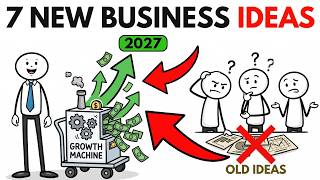

7 Business Ideas for the AI Era
45sHook viewers with a list of practical AI business opportunities that solve real problems, appealing to aspiring entrepreneurs.
▶ Play Clip"Delivers on the promise of seven business ideas, but each is described at a high level without deep actionable detail."
This video presents seven practical business opportunities built around problems that are becoming more important as technology, AI, costs, and customer expectations change. Each opportunity is described with a specific problem, a service concept, and a monetization model.
The video explores seven practical business opportunities built around problems that are becoming more important as technology, AI, costs, and customer expectations change.
Examines how work moves through a company, identifies repetitive steps, and builds small automations connecting existing software. Goal is removing wasted work, not selling AI. Charge for audit, implementation, and monthly maintenance.
Helps smaller companies create practical AI usage systems: identify approved tools, define what information cannot be uploaded, configure permissions, and create simple internal AI policies. Charge for assessments, training, quarterly reviews, and ongoing governance.
Install affordable sensors on important equipment to monitor temperature, vibration, electricity, etc., flagging unusual patterns before breakdowns. Works for restaurants, laundromats, workshops, etc. Charge installation fee plus recurring monitoring subscription.
Analyze recurring technology expenses to identify duplicate, unused, oversized, or poorly configured services. Charge fixed audit fee, monthly optimization fee, or percentage of verified savings.
Quality control layer between AI and final customer. Businesses send AI-generated work for human-assisted verification before publishing. Charge per document, packages, or monthly subscriptions.
Identify technology dependencies and create practical backup procedures: document critical systems, access requirements, alternative tools, data backups, emergency contacts, and recovery steps. Charge for audits, plan creation, drills, and reviews.
Convert scattered business data into a short weekly decision report with specific findings about sales, costs, customers, inventory, cash flow, marketing, and unusual changes. Charge a monthly subscription.
The video concludes by encouraging viewers to like, share, and subscribe for more practical business and finance videos.
Goal is removing wasted work
Reframes AI consulting from selling technology to solving a business problem, a key principle for service businesses.
00:58Specialization in everyday AI usage
Differentiates the service from traditional cybersecurity consulting by focusing on smaller organizations' daily AI use.
02:39Value proposition is easy to understand
Highlights the importance of clear ROI for consulting services, making the offering financially attractive.
05:25Selling operational resilience
Shifts the value from a software product to a business outcome, a strong positioning strategy.
07:56[00:00] Finding a business idea is easy. Finding one that solves a growing problem, has customers willing to pay, and is not already overcrowded is much harder. In this video, we will explore
[00:13] seven practical business opportunities built around problems that are becoming more important as technology, AI, costs, and customer expectations change.
[00:25] Number one, AI workflow repair service. Imagine a small online retailer using five different tools for orders, customer emails, inventory, invoices, and marketing.
[00:38] Employees repeatedly copy information between these systems, wasting hours every week, and creating avoidable mistakes. An AI workflow repair service would examine exactly how work moves through a company, identify repetitive steps, and build small automations connecting existing software.
[00:58] The goal is not selling AI. The goal is removing wasted work. For example, when a customer submits an inquiry, automation could categorize the request, create
[01:11] a CRM record, prepare a response draft, assign the correct employees, and schedule a follow-up without requiring five separate manual actions. You could charge for a workflow audit, implementation, and monthly maintenance.
[01:26] Start with one industry, such as accounting firms, property managers, clinics, wholesalers, or local service businesses. Then create repeatable automation packages for similar customers.
[01:41] Number two, small business AI safety setup. Imagine a 20-person company where employees regularly paste customer information, internal documents, contracts, and financial data into different AI tools.
[01:57] Management wants AI productivity, but nobody has established clear rules for using these tools safely. This creates an emerging business opportunity, helping smaller companies create practical AI usage systems.
[02:11] The service could identify approved tools, define what information employees cannot upload, configure permissions and create simple internal AI policies For example you could audit how a marketing agency currently uses AI discover where sensitive client information could be exposed establish safer workflows train employees and create an approved list of tools and procedures
[02:39] Unlike traditional cybersecurity consulting, this service would specialize specifically in everyday AI usage by smaller organizations. Customers could pay for initial assessments, employee training, quarterly reviews, policy updates, and ongoing AI governance support.
[02:59] 3. Equipment Downtime Prevention Service Imagine a small bakery losing thousands of dollars because an important refrigerator unexpectedly fails. The owner normally discovers equipment problems only after something stops working, forcing emergency repairs, and interrupting business operations.
[03:19] A downtime prevention service could install affordable sensors on important equipment and monitor temperature, vibration, electricity consumption, operating hours, or other relevant signals.
[03:33] Software could then flag unusual patterns before a serious breakdown occurs. The concept could work for restaurants, laundromats, workshops, small factories, gyms, farms, cold storage businesses, and commercial kitchens.
[03:49] You would not manufacture the sensors. Existing hardware could be combined with monitoring and maintenance services. For example, unusual power consumption from a commercial freezer could trigger an inspection recommendation.
[04:04] Customers could pay an installation fee plus a recurring monitoring subscription, creating predictable revenue while helping businesses avoid expensive emergency downtime.
[04:16] 4. Digital Waste Reduction Service Imagine a company paying every month for 30 software subscriptions, several cloud storage accounts, unused employee licenses, unnecessary data plans, and automation tools.
[04:32] Nobody knows which services actually generate enough value to justify their cost. A digital waste reduction service would analyze recurring technology expenses and identify duplicate, unused, oversized, or poorly configured services.
[04:49] Instead of traditional cost consulting the business would specialize specifically in reducing unnecessary digital operating expenses For example a 40 business might discover former employees still have paid software licenses
[05:05] two departments purchase overlapping applications, cloud storage contains unnecessary duplicate files, and expensive premium plans provide features nobody actually uses. You could charge a fixed audit fee, monthly optimization fee, or percentage of verified savings.
[05:25] The value proposition is easy to understand. If your service saves a company substantially more money than your fee, continuing becomes financially attractive. Number five, AI output verification service.
[05:38] Imagine a small accounting firm using AI to create reports, client summaries, research, and internal documents. AI saves employees hours, but someone still needs to check whether important facts, calculations, sources, and recommendations are accurate.
[05:58] An AI output verification service would become the quality control layer between AI and the final customer. Businesses could send important AI-generated work for human-assisted verification before publishing, delivering, or using it for decisions.
[06:16] For example, a marketing agency could submit an AI-created industry report. Your service would check statistics, sources, company names, calculations, contradictions, outdated information, and unsupported claims.
[06:32] Then return a verification report identifying potential problems. Start with one niche where accuracy matters, such as financial content, business research, e-commerce listings, or corporate reports.
[06:46] Charge per document, sell verification packages, or provide monthly subscriptions to businesses producing large volumes of AI-assisted content. 6. Small Business Digital Continuity Service
[07:00] Imagine a small company suddenly losing access to its main cloud software, payment system, employee accounts, or critical online files. Employees may know how to operate normally,
[07:13] but nobody knows what to do when technology stops working A digital continuity service would identify these technology dependencies and create practical backup procedures You would document critical systems access requirements
[07:30] alternative tools, data backups, emergency contacts, and step-by-step recovery procedures for important business operations. For example, a retailer dependent on cloud-based ordering
[07:44] could receive a backup process for taking orders, accessing essential customer information, communicating with employees, collecting payments, and restoring normal operations
[07:56] after the primary system becomes available again. The customer is buying operational resilience rather than another software product. You could charge for dependency audits, continuity plan creation, employee drills,
[08:11] backup testing, and recurring reviews of the customer's software, employees, vendors, and business processes change. Number seven, micro business intelligence service.
[08:25] Imagine a restaurant owner collecting information from sales software, delivery platforms, inventory systems, accounting software, customer reviews, and advertising platforms.
[08:37] The business has plenty of data, but the owner still struggles to decide what needs attention. A micro-business intelligence service would convert scattered business data into a short weekly decision report.
[08:51] Instead of complicated dashboards, customers receive specific findings about sales, costs, customers, inventory, cash flow, marketing, and unusual changes.
[09:03] For example, your system might discover that Friday revenue increased while profit declined because discounted orders and delivery commissions increased. The report could highlight the problem and show which products, channels, or expenses caused the change.
[09:20] You could specialize in restaurants, e-commerce stores, gyms, clinics, or service businesses. Combine existing analytics tools with AI and human review, then charge a monthly subscription
[09:33] for reports that tell owners what changed, why, and where to investigate. If you found these business ideas useful, like, share, and subscribe to the channel for more practical business and finance videos.
[09:47] Thank you for watching.


⚡ Saved you 0h 09m reading this? Transcribe any YouTube video for free — no signup needed.