[00:02]
starting a business only to discover that customers never really needed what you created. The biggest mistake entrepreneurs make is searching for exciting ideas instead of finding profitable opportunities.
[00:15]
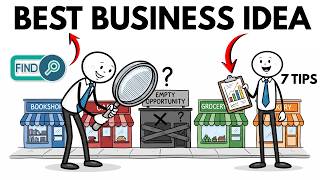
In this video, you will discover seven practical ways to find business ideas with real customer demand and strong financial potential. Number one, follow
[00:27]
the complaints. Every customer complaint is a potential business opportunity. Visit online reviews, industry forums, and customer discussion groups. Look for problems people repeatedly mention about
[00:42]
existing products or services. Imagine restaurant owners constantly complaining about expensive food delivery platforms. That frustration might reveal an opportunity for a lower-cost ordering system. The
[00:57]
important question is not whether people complain. It is whether they would pay for a better solution. Number two, find the expensive problem. Not every problem deserves a business. Some problems are annoying, while others
[01:12]
cost customers significant money, time, or productivity. Imagine a small manufacturing company losing thousands of dollars every month because machines unexpectedly stop working.
[01:25]
A business offering affordable preventive maintenance could solve a financially important problem. Search for problems where the cost of doing nothing is greater than the price of your solution. These opportunities
[01:38]
often have stronger earning potential because customers can clearly understand the financial benefit. Number three, explore the forgotten customer. Many industries focus heavily on their biggest and most profitable customers,
[01:54]
but smaller customers often struggle to find affordable solutions. For example, large accounting software companies may offer advanced financial established businesses. Meanwhile, freelancers and tiny
[02:10]
simpler. Instead of competing directly with industry leaders, identify customers who are underserved, overlooked, or priced Sometimes the best business idea comes from serving a smaller market
[02:25]
exceptionally well. Number four, study the money trail. Follow where businesses are already spending money. Every industry has recurring expenses, including equipment, maintenance, transportation, software,
[02:42]
packaging, and professional services. Imagine discovering that local bakeries regularly spend money on specialized packaging. could build a business supplying affordable packaging to dozens of
[02:56]
bakeries. This approach helps you identify existing demand rather than trying to create demand from nothing. Look for expenses customers already consider necessary, especially those
[03:09]
that repeat every month. Number five, connect two industries. Some business opportunities appear when you combine solutions from completely different industries. Consider how subscription models transformed software
[03:24]
businesses. Now imagine applying a similar approach to commercial equipment maintenance, office furniture, or specialized business supplies. Customers could pay monthly instead of
[03:36]
making large upfront purchases. The idea is not to invent something entirely new. Study successful business models in one industry and ask whether they could solve an important problem somewhere else.
[03:51]
A familiar solution in an unfamiliar market can become a valuable opportunity. Number six, search for the missing Number six, search for the missing middle. Many markets offer two extremes,
[04:03]
cheap products with limited features and expensive premium solutions. But, what between them? Imagine businesses choosing between basic bookkeeping tools and expensive financial management platforms.
[04:19]
A moderately priced solution offering essential financial reporting could attract customers dissatisfied with both options. Study product prices, features, and customer expectations. Look for gaps where customers are paying
[04:35]
too much for unnecessary features or sacrificing important functionality to save money. Number seven, sell before you build. A business idea is only a hypothesis until customers demonstrate real
[04:50]
interest. Before investing heavily, create a simple offer explaining the problem, solution, and expected price. Present it to potential customers and ask whether they would purchase it.
[05:04]
Better still, test demand through paid pilot projects, refundable deposits, or pre-orders with clear terms. Imagine 10 business owners praising your idea, but nobody agreeing to pay. That is valuable information.
[05:21]
Real purchasing behavior tells you more than compliments ever will. Finding a profitable business idea is not about waiting for inspiration. It is about identifying expensive problems, overlooked customers, existing spending,
[05:36]
and gaps in the market. Most importantly, test whether people will actually pay before committing significant money.