
AI Summary
In this interview, Patrick Nehl, a dominant figure in the World Cup Trading Championship, shares his journey from a 16-hour-a-day bookbinder to a world-renowned trader. He discusses his simple, relaxed trading approach, his PVD-based strategy, and the mindset that separates champions from the rest.
Chapters
Patrick Nehl is a legend in the World Cup Trading Championship, having dominated the leaderboard for six years in a row and reached the podium 12 times. He originally aimed to trade all day but eventually found that less trading improved his results.
Before trading full-time, Patrick ran his family's bookbinding company, working 16-hour days until spring 2018. He sold everything to trade, despite his family and friends initially calling it gambling. Just one year later, he was on the World Cup leaderboard.
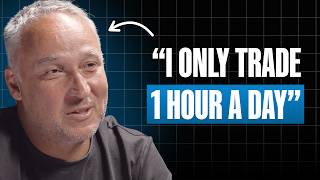
Patrick emphasizes that he only needs one hour in the morning to analyze the day and place his trades. He waits for the right setup instead of forcing trades, which contrasts with his earlier scalping attempts that created too much pressure.
Patrick's trading process involves using the market profile and volume profile to determine direction. He draws support and resistance zones, then waits for PVDs (Push, Volume, Drop) to align with his analysis before entering trades. He prefers the 50-minute chart for entries and the 4-hour chart for the bigger picture.
In the World Cup Championship, Patrick prefers a high win rate to avoid consecutive losses, whereas in his private trading, he favors higher risk-reward ratios. He also tends to close trades by evening to avoid overnight risk.
Patrick used to trade oil primarily, but the war changed the market's volatility, making it too unpredictable. He switched to trading the DAX, which he found more manageable. He experienced a significant loss in oil when the war began, as he had a short position over the weekend that went against him.
In the championship, Patrick risks 2-3% per trade and is comfortable with a 20-30% drawdown, though he's had more. This contrasts sharply with his private account, where he risks 0% per trade, highlighting different risk appetites for competition vs. personal accounts.
Patrick trades about 150 days a year, spending 2-4 hours a day when at home but only one hour when traveling. This relaxed schedule works for him because he has financial security from selling his company, which reduces pressure and helps his psychology.
Patrick credits his success to not having his life depend on trading. This financial buffer, along with other projects, helps him maintain a calm mindset. He also notes that becoming a father brought new anxiety and responsibility, making him more conservative.
The World Cup Championship has changed, with more newcomers making big gains temporarily but not sustaining success. Patrick notes that it now requires higher returns to stay on top, as the level of competition has increased.
Patrick's worst trade was an oil trade during the war's outbreak, resulting in a loss of 700-900 points. He stayed in the trade too long, losing another 100 points. This was a hard lesson in risk and event-driven volatility.
Patrick finds oil less volatile, with slower price movements, while the DAX can move thousands of points. He had to adapt his trading style, but now feels comfortable with both. He avoids order books and footprints, as they make him nervous and change his decisions.
Moving to Cyprus has changed Patrick's mindset, making him feel chiller and more relaxed compared to Germany. This positive environment contributes to his trading performance. He still collaborates with Serge, but they are more independent now.
Patrick recorded a masterclass for World Class Edge focusing on the structure of PVD setups, suitable for beginners. He shares trades from the championship and explains his thinking behind them. The masterclass is free for a limited time.
Mentioned in this Video
Tutorial Checklist
💡 Key Takeaways
Championship Dominance
Quantifies Patrick's exceptional track record, setting the stage for authority.
00:15One-Hour Trading Day
Challenges the common belief that successful trading requires constant screen time.
04:04Impact of War on Oil Trading
Shows a real-world example of external events disrupting markets and the need for adaptation.
09:24Financial Security's Role
Highlights a psychological advantage that helps avoid overtrading and pressure.
16:00Evolution of Competition
Shows the increasing difficulty and the need for consistent high ROI to stay on top.
18:37Full Transcript
[00:00] This German guy is Patrick Nehl and he's a legend in the World Cup Trading Championship. We're talking about the oldest, most famous trading competition on earth. In the beginning I wanted to trade the whole day and wanted to have 20, 40, 50 trades.
[00:15] And Patrick didn't just win it once with a shake of luck. He literally dominated. Six years in a row in the leaderboard, 12 times on the podium, numbers that most traders won't get in a limelight. You're still there in the leaderboard.
[00:28] This year I make the 100% in the Champions League. I have the market core for the volume base, for the directions. But here's the part that nobody expects. This man was a bookbinder. He ran his family company working 16-hour days till spring of 2018,
[00:42] when he sold everything to trade full-time. His family laughed at him, his friend called it gambling. One year later, he was on the World Cup leaderboard. One hour in the morning is enough. I wait for the right setup and then make my one or two trades and the day is over.
[00:57] Today, I'm sitting down with him to break down exactly how he did it, the strategy, the worst trade of his life, and what actually separates a world champion from the 99% who blow up. Welcome again to World Class Edge. This is Patrick Neal.
[01:12] Hi Patrick, welcome back to World Class Edge. Hi, nice to be here. Nice to be here again. And I want to start this podcast. He's done multiple interviews through the years. We've done the first one probably with 2023 or 2024.
[01:28] And then we did another one. And then we did one with RIS. And you started becoming from a trader in Reutlingen, Germany, into this international recognized trader and very famous trader.
[01:44] How does it feel now? Is it any different? It's really crazy. When we met for the first time, I was in Reutlingen. nobody knows me and just we come but now I'm traveling around the world.
[01:58] It's crazy. Were you planning this? It was part of the plan? Not at all, yeah. I only wanted to show my friends and my parents that I can trade. That was the reason I started. That's crazy. And yeah,
[02:12] it was the time when you come the first time it goes up and yeah, changed. Are you liking this so far? Being a teacher training influencer?
[02:26] I'm not really sure. No, I like it, but sometimes I think it's a little bit much. Yes, of course. It's a lot of work. Yeah, but I like traveling and so it's okay. I see.
[02:38] I think my wife and my kids, they say something else. Yeah, they don't like it so much as you. Right. Because every time I see you, every time you're increasingly more tense in your face.
[02:50] You're increasingly darker. For sure. Yeah, because it's like, this is the thing I like about you as a trader, that you just, you can trade literally anywhere. You trade from your phone. You have a very simple approach
[03:03] at the end of the day. And you can manage to trade, like as of now, you're still in the World Championship, right? How is the, you're currently trading in the, I think the annual Forex trading.
[03:15] I already traded there. And the last two, 2026, 2035, you're still there. This year it's really good, yeah. How do you do? This year I have much luck because I'm
[03:28] always on the stream when the markets are good for me. Last year it was not so. But it's good. The best thing
[03:40] for me is I'm on my office and then the next day I can trade with my telephone. That's okay. And so I can trade when I'm traveling. Perfect.
[03:52] But yeah, because you have this very laid-back approach to trading. It's not, you know, necessarily full-time trading all the time. You're very relaxed with your trading, yes. Yeah, that's true, yeah.
[04:04] One hour in the morning is enough. Yeah. And so you can analyze the day and put your trades and the day is over. Yeah. I think that's also a part of what makes you
[04:18] a successful swim trader in the beginning I wanted to trade the whole day and wanted to have like a backscalp on my 20, 40, 50 trades but
[04:30] it's much work and I thought it's better for me if I rave for the right setup and then make my one or two trades how was it at the beginning
[04:42] when you tried scouting and stuff with Tom and Serge. Oh, I had always... Yeah. And it was hard. For me, I was the whole day under pressure.
[04:55] And so I decided to make less and the results get better. Right. But it was interesting. When I started with Tom and Serge and saw how a scalper works
[05:08] and what is Tom, the middle finger fall, And yeah, it was an amazing experience. But you don't like scalping at all? No, not at all.
[05:21] Also I'm not a really good scalper. I don't see all things and it's too much work for me. And I'm too slow with my decisions. When I trade I have always one, two, three minutes to decide.
[05:38] And that's easy for me. But to decide in one second, it's too hard for me. And with stream trading, how do you take your decisions?
[05:51] How do you walk us through a little bit of the process that you do when you're in front of a chart? When I in my office I on the normal streams I have the market profile the volume page for the directions So for example you want to see value areas going up or up down
[06:14] Then I draw my zones, support and resist and say what you want. And then I go a little deeper and deeper and draw my PVDs.
[06:28] And if they match to the market profile and all come together, then I put my trades. So you take your zones with the market profile, right? Yes. The overall direction and support or support and resistance.
[06:44] And then you wait for PVD as your, let's say, entry pattern. Yes. Is that correct? That's my favorite, yes. To combine both. And if they are together, then it's for me good.
[06:56] Then I have two decisions. And is it mostly which timeframes you use it? I love 50 minutes. That's perfect for me.
[07:10] I look to 4 hours for the big picture and I trade in the 50 minute chart. And for those who maybe do not know, what's the PDD?
[07:23] Could you explain it briefly? It's a totally simple method. You wait for a big push and after the push there comes most times a range and you wait
[07:36] till you go out of the range to follow the trend or counter it and so you go into the market. Right. So with a P, what's your favorite type of setup?
[07:49] When you have a P normal you wait to follow the trend, but I love the counter trades and wait till it goes down.
[08:01] I love it. So for this decision you have a clear take profit and you can make the stop clear.
[08:13] You work more with high win rate or high risk to reward ratio? Well, it depends on the World Cup Championship. I prefer high win rate because you have more
[08:26] risk and so it's better you have not so many losses after each other. And on my private I love more high win rate. High risk reward. Risk reward, yes. Because you can earn more money if there's more risk reward.
[08:46] So you would prefer doing more risk reward in general? Yes, for sure. But in the World Cup I often end my trades in the evening because I don't want overnight
[08:59] risk and so on. So you have smaller trades. And you're mostly an oil trader, is that correct? I was mostly an oil trader, yes.
[09:12] What changed? The war. Right. How has it changed? I was here when the war began and it all changed.
[09:24] Like the price action changed? Or the oil market changed? How it moved? My training I was in positions for 4 hours to 5 days.
[09:38] And to this time, we don't know, hey, peace or not peace. It was so crazy, the moves were coming. And then I said, okay, I stopped trading oil and trade more ducks.
[09:52] Ducks. And it was really good. I won that, yeah. But I think now I will start oil trading another. It's calming down. Yeah. Yeah. I like the silent market.
[10:05] and now I hope it's better. Yeah. Yeah, it was crazy. I had a big loss when the war began because I didn't expect it and went short at Friday and at Monday.
[10:20] Yeah. It was an expensive weekend. A very expensive weekend. Not partying or anything. Just a short in oil, right?
[10:33] Yeah. It was not a big position but... In the championship or in your personal? In the championship, yeah. It was hard to come back. Yeah, right. How much was the gap?
[10:46] Uh, in dollar or...? In oil, yeah, I don't know, in points, whatever. I don't know exactly. 700, 900 points, it was really, really big.
[10:58] And at Monday I just, I wondered, for what happened and till I go out it was another 100 project it was so fast yeah but it's okay so now the more trading let's say the DAX yeah how is it how is it different do
[11:14] you apply the strategy differently based on the market or is it the same pattern it's the same pattern yeah but in in oil it's it doesn't take so much it's clear the thickness in oil or for me
[11:29] better yet. But this year I make all right because yeah I don't know 300% in the championship and yeah it was good.
[11:42] And do people see the performances you make in the trading cup and of course it's really big performance right it's like 200%, 300% blah blah blah is that what you would say
[11:55] because I think people maybe not know that then they expect that you can make that every single year in a personal account you know but the approach to risk is different right yeah it totally different I have in my private accounts I think 0 risk per trade and in the championships also two three four five percent five not so really but two or
[12:21] three percent. And how much drawdown are you comfortable taking in the championship? 20-30% But it was more this year with the oil trade.
[12:33] But I think 50% more on this day. Yeah, that could happen. Yeah, especially because you're trying to optimize the win. The position was not big, but if you lost 800 points, each position gets bigger.
[12:52] Yeah. And how do you manage it now, let's say your whole life? How much percentage of your time do you dedicate to training?
[13:05] It's less or less three, four hours a day. Three, four hours a day? Oh, still. Two or three hours a day. Two, three hours a day. When I'm traveling only one hour, when I'm at home three, four hours.
[13:23] So in one year, 365 days, how many of these days you trade? 150. 150, yeah? Yeah. You wouldn't say you're a full time trader, it's more part time trading?
[13:38] At the moment, yes. otherwise I trade every day because sure when I'm traveling I always trade. But I think it's good you know like it's not necessarily that to be a successful trader
[13:54] you have to trade a lot you know and this is something a lot of people think they have to trade all the time every day in front of the chart. With my trading side I see one two days
[14:06] in front if there come signals and then I have I need to trace when I know it's nothing for me so I don't have to sit in front of the screen.
[14:18] I can search other markets if I don't if I think nothing in drugs I can take oil, gold, gas anything else but
[14:30] I don't do it at the moment. What I like about you know I think it's inspiring of you as a trader and I think our viewers can appreciate as well is the fact that
[14:42] you know you don't need to spend all that time in front of your charts to be successful you can also you don't have to let's say force your trading style into you know hyper scalping
[14:54] 8 hours a day I mean you can find a way more relaxed way to trade a little more chill more swing trading more calm because everyone wants the dopamine you know wants the dopamine of trading fast I think you're a great example for new traders because of this.
[15:10] Even when you're traveling, sometimes you even trade for your phone because the strategy is so simple. There's no one way of doing trade. You can open your mind and trade however you want.
[15:24] And I think it's beautiful. Yes, I enjoy it. Sure, it's not really true when I say I trade with my telephone because I have the stones in my mind
[15:36] from the other life. But it's possible, yes. Yes. And how, let's say,
[15:48] how important is it in your experience to, when you trade, let's say, not having your life depending on your trading?
[16:00] Or maybe you have another source of income or you have some capital, from savings and you know you don't have all in you know in trading. When I started trading I had the luck that I was business owner in front and sold my company so
[16:21] I have much I didn't have to trade for my life and that's that was good and now it's a good feeling
[16:33] to sometimes I'm trading, gain money, sometimes I make other things and have so much other projects. I love it, you know. I think it's good because also you don't care too much about the trading. I think when it's
[16:46] all of your life and you just trade every single day, blah, blah, blah, it's very hard on your psychology, in my opinion. Like having multiple things helps you also distract, you know, when you're in a losing
[16:58] streak or something. I had it myself and When I got father the last time, it was the first time to get father when I was a trader.
[17:11] It changed all. I couldn't trade like the years before. I had fear. I was nervous and I got lots of... But I don't know why.
[17:24] And the same... I have a good friend in Dubai. He lives near you, Howard. And he said the same. When he got farther, it all changed.
[17:36] And he didn't know why. How did it change? He said he got this angst. Anxious? With anxiety, with unique feelings?
[17:48] He felt different. He didn't know why. There was no need, nothing. But it changed a little bit. What was the word?
[18:04] The antwortum? Antwortum? Yeah, responsibility. When this change... Yeah. You feel like you risk less now Oh yes Yeah You more conservative You chill more Yeah definitely
[18:23] Definitely. How was the championship for the last few years? Did it change? How is the competition now? It changed really, yeah. When I began, there was always the same names,
[18:37] and the whole year the same names. And after the years, there come the lucky punch men. They make 100% at one day, but three days later, they're away.
[18:53] And that changed. There's more visibility of the competition, and more people are trying to win. And you have to have more percentage to be on the top.
[19:06] Yeah, you're still winning. so not much now my most time to shake about that that place but this year it looks good yeah right what was your in the in the last two three years what was your worst trade in your best trade
[19:23] the best trade i really i don't know because i they are not so big in that trade yeah yeah but But the worst trade was the oil trade this year.
[19:37] And I was here when the war began. And yes, we were here together. Sure, yeah. Yeah? Crazy. This was the day.
[19:50] Ah, you had a trade open. Yeah. Crazy. I didn't expect it. Really not. And so how did you move from oil to DAX? Was it hard? No, it was okay. I always trade DAX and oil, but when I compare, I was much better in oil than in DAX.
[20:08] So, I thought it's harder. But this year, all was okay. How is the difference in your daily action? How do you adapt?
[20:21] I am slower in oil. Normally the cash is away from the daily range. It's $2, $3 in oil. I can really see if it's cheap or expensive before the war.
[20:38] And in the dark it can go for thousands of points. More volatile. That's nothing for me, or was nothing for me. after the war
[20:50] or during the war it was easy always when when Trump said hey we have freedom then you can raid and make the opposite
[21:02] yeah and do you still just volume profile and candlesticks right you don't use footprints you don't use books order books death of markets you don't it's then I get
[21:14] nervous and change my decisions Sometimes, you know, when I'm in the office, I speak with search and question, what do you think, shall I wait some minutes or it's okay to go into the trade?
[21:29] But that's all. For me, I don't use it. You mean, just for timing maybe, the entry times with search? Yes, the entry times. But so often we are not in the same room, so I can't question enough.
[21:44] How has it changed now? Because before you were all in Germany, now we're moving all to Cyprus. What's going on? It was a really nice decision, yeah. The weather is better, all is better.
[21:58] And, yeah, the mindset is totally different between Germany and Cyprus. Yeah, right? Yeah. Chiller. Much more chiller, yeah.
[22:10] Right. And you see all trade in the trading floor we see in Vatnak, right? Yeah. I'm not so often there. I live a little bit outside and travel a lot, but yeah, I'm there through here. I'm trading there, yeah.
[22:30] And you guys still trade together, like in the whole fund certificate thing? Well, not much anymore. No, it goes a little bit out of number. It's not so deep.
[22:46] So now you are more independent, each one plays their own now. Yes. But you still work together as a team as before or now it's more... No, that's the same, yes. But Tom and Serge, there is more education, there is not so much time and not always to the same extent.
[23:05] same. Yeah. And yeah, so you just recorded a masterclass for World Class Edge. Yes. What can people expect to see there? What are you going to teach and show? It's only the structure
[23:18] from the PVD setups. It's good for the beginners to see when they can trade and where not. And I think it's obvious, yeah. Nice. Nice. We can't wait to see the masterclass.
[23:35] I think people will love it. It's 100% for free for this time. So I think people will really love it. Yeah. I also tell some trades from the championship. Because when I search the trades, I really trade PTCs.
[23:52] Yeah. And yeah, I explain something to different trades. Nice. So you can basically learn some of your trades, how you do them,
[24:04] what you think behind them. Nice. Nice. Well, thank you for providing us this value in World Class Edge again. And we hope to see you next time. One more championship under the belt, or
[24:16] two more championships. I hope. We'll see you next time. Thank you, Patrick.