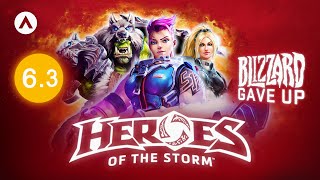

The Biggest Mistake in Blizzard's History?
60sIt highlights the tragic irony of Blizzard missing the MOBA boom, a topic that sparks debate among gamers.
▶ Play Clip"Delivers a thorough history of the game's rise and fall, matching the title's promise of tragedy."
This video explores the rise and fall of Heroes of the Storm, Blizzard's entry into the MOBA genre. It traces the game's development from a StarCraft 2 mod to a standalone title, its innovative design choices, and the factors that led to its eventual abandonment, including market competition, legal disputes, and shifting company priorities.
The MOBA genre originated from Defense of the Ancients, a mod for Warcraft 3. Blizzard announced its own MOBA at BlizzCon 2010, initially called Blizzard DOTA, later renamed due to legal issues.
After shipping StarCraft 2 in July 2010, Blizzard developers brainstormed a new project for BlizzCon. They decided to build a MOBA using StarCraft 2's tools, inspired by an arcade machine with Blizzard characters.
Blizzard aimed for an easy-to-learn, difficult-to-master MOBA with fast-paced action. A legal dispute with Valve over the Dota trademark led to a settlement, forcing Blizzard to rename the game to Blizzard All-Stars.
Blizzard removed the traditional Item Shop to reduce toxicity and differentiate the game. They introduced shared experience points and shorter matches (~20 minutes), rejecting the MOBA label in favor of 'team brawler'.
In 2013, the game was renamed Heroes of the Storm. It received resources from the canceled Titan MMO, and by 2014, over nine million people signed up for the open beta.
The game launched on June 2, 2015, with 30+ heroes and 7 battlegrounds. Critics praised its accessibility, but some criticized hero building and balancing.
The Heroes Global Championship launched with a $4 million prize pool. Despite updates, the game failed to dethrone League of Legends and Dota 2.
The 2.0 update in April 2017 revamped progression, removed level caps, reduced grind time, and introduced loot chests with cosmetics, aiming to attract lapsed and new players.
In 2018, Belgium ruled loot boxes as gambling, forcing Blizzard to remove paid loot boxes. In December 2018, Blizzard downsized the Heroes team and canceled the Esports circuit, sparking community backlash.
Former CEO Mike Morhaime admitted the game arrived too late. Blizzard missed the opportunity to capitalize on Dota's popularity early, and despite innovations, the game couldn't compete.
Heroes of the Storm serves as a cautionary tale of missed opportunities and market timing. Despite innovative design and a dedicated fanbase, Blizzard's late entry into the MOBA market and subsequent resource reallocation led to its eventual abandonment.
What game mod is considered the origin of the MOBA genre?
Defense of the Ancients (DotA), a mod for Warcraft 3.
00:10
Why was Blizzard DOTA renamed to Blizzard All-Stars?
Due to a legal dispute with Valve over the Dota trademark.
05:31
What design philosophy did Blizzard adopt for Heroes of the Storm?
Easy-to-learn, difficult-to-master, emphasizing aggression and fast-paced action.
05:01
Why did Blizzard remove the Item Shop from Heroes of the Storm?
To reduce toxic behavior and differentiate the game from other MOBAs.
07:10
What was the approximate match length in Heroes of the Storm?
Around 20 minutes.
07:26
How many people signed up for the open beta of Heroes of the Storm?
More than nine million.
09:06
What was the prize pool for the Heroes of the Storm Global Championship in 2016?
$4 million.
10:25
What did the 2.0 update reduce the time to level up from and to?
From 10-20 hours to 2-3 hours.
11:43
Why did Blizzard remove paid loot boxes from Heroes of the Storm in 2018?
Because the Belgium Gaming Commission ruled loot boxes violated gambling regulations.
13:43
What did Mike Morhaime say was the main problem with Heroes of the Storm?
The game arrived too late.
17:26
Morhaime's admission
The former CEO's candid explanation that the game was 'too little, too late' encapsulates the core reason for its failure.
17:26Removal of Item Shop
A bold design decision that set Heroes apart but also alienated some genre purists.
06:56Loot box regulation impact
Shows how external regulatory pressures can directly affect game monetization and operations.
13:11Esports cancellation backlash
Highlights the human cost of corporate decisions, as players and coaches were blindsided.
15:07[00:10] The genre that encompasses games such as Dota and League of Legends sprouted from Defense of the Ancients, a fan-developed mod designed within the framework of Warcraft 3. It seemed fitting,
[00:22] then, that Warcraft creator Blizzard Entertainment would announce a multiplayer online battle arena, or MOBA, of its own during BlizzCon 2010. A fully-fledged MOBA, the project bore many
[00:34] names and assumed multiple forms throughout its relatively brief lifecycle. It first appeared manifested as Blizzard DOTA, then adopted the title of Blizzard All-Stars due to a legal dispute, before the developer settled on Heroes of the Storm. But the name arguably mattered
[00:49] little overall, especially since players had made their preferences known by the time Blizzard tried cutting itself a piece of the battle arena pie. A couple delays and a production overhaul meant Heroes of the Storm wouldn t arrive until roughly five years after stealing the spotlight
[01:04] at BlizzCon in 2010. When its servers finally came online, Valve and Riot Games had cornered the market with Dota and League of Legends, respectively, leaving barely any room for another property to muscle its way inside. Still, Blizzard made an attempt, and succeeded to some degree.
[01:21] Heroes of the Storm challenged the familiar design paradigms of battle arenas, which allowed the Warcraft studio to carve out a unique space. Professional and collegiate-level Esports leagues even spawned from the endeavor, yet Heroes never quite reached the heights of its
[01:37] competitors. As a result, the game s few successes did nothing to stave off its early trip to the graveyard of discontinued online services. This is the tragedy of Heroes of the Storm.
[03:16] After approximately seven years of development, Blizzard shipped StarCraft 2 in July 2010, but a time of celebration and relaxation morphed into brainstorming sessions for a brand-new project. As Heroes of the Storm Game Director Dustin Browder explained to Polygon,
[03:31] some developers followed up the StarCraft 2 release with questions about what the team would showcase during that October s BlizzCon. Arguments that such discussions should wait fell by the wayside, dismissed when those who favored the idea contended that fans paid good money for
[03:47] quality entertainment at the annual convention. Despite the limited time frame, members of the StarCraft crew accepted the challenge. Given internal concerns as to whether the modding community would utilize the StarCraft sequel s robust toolset, Blizzard decided to build
[04:02] its next adventure with those selfsame tools. The beginnings of Blizzard DOTA blossomed from there, its content inspired by an in-house arcade machine packed with emulated games. Notably, the artwork wrapped around the cabinet depicted characters and imagery from Blizzard-owned
[04:17] properties. The vision for Blizzard DOTA followed this concept to the next logical step a MOBA wherein iconic Diablo, StarCraft, and Warcraft characters could battle each other on maps modeled after the digital worlds from which they originated. A BlizzCon 2010 audience
[04:32] watched a presentation of the game s earlier version and seemed enthused by the premise. Because it was initially conceived as a free StarCraft 2 add-on, Blizzard DOTA s production team around the time of its reveal included only two designers and a few artists who
[04:46] developed it intermittently. Player enthusiasm and work on StarCraft 2 s Heart of the Swarm expansion ultimately forced the company to postpone the Dota endeavor altogether. Blizzard DOTA returned to the BlizzCon stage in 2011, wearing a fresh coat of
[05:01] paint separating it from competing MOBAs. For starters, as opposed to implementing a demanding learning curve, Blizzard fostered an easy-to-learn, difficult-to-master philosophy, with gameplay elements emphasizing aggression and fast-paced action. The experience, once again,
[05:17] intrigued BlizzCon audiences, though this particular event would mark the game s last public appearance under the name Blizzard DOTA. A legal dispute with Valve over the Dota trademark ended in a settlement allowing the Half-Life maker to use the title commercially for its next project,
[05:31] Dota 2. Meanwhile, the terms of the agreement limited Blizzard s rights to user-created content in Warcraft 3 and StarCraft 2, thus heralding the age of Blizzard All-Stars.
[05:43] Details concerning the settlement went public in May 2012, a period in which Dustin Browder claimed other seeds of change began to take root for Blizzard All-Stars. Most importantly, this represented the juncture wherein developers started devising ways of monetizing
[05:57] the MOBA while maintaining its attachment to StarCraft 2. But the Blizzard Strike Team, staffers who tested games outside of their assigned projects, wanted more for All-Stars, believing the online experience demanded a release wholly independent of StarCraft. Blizzard
[06:12] All-Stars accordingly evolved from an unpaid add-on to a standalone free-to-play title. The transition heralded a few more alterations to Blizzard s initial plans for All-Stars. Though the StarCraft 2 engine powered the MOBA, a Strike Team member s insistence that it looked too much like
[06:28] another StarCraft mod culminated in somewhat of an art overhaul. Higher quality standards were placed on the free-to-play project, as well; in turn, the size of the All-Stars crew ballooned exponentially
[06:40] once Heart of the Swarm shipped in May 2013. Given the then unceasing popularity of League of Legends and the anticipation surrounding Dota 2, Blizzard felt compelled to entice prospective players with a unique offering. In pursuit of such ends, developers eventually
[06:56] jettisoned the All-Stars Item Shop, a system in League of Legends and Dota 2 featuring items that players utilized for buffing their characters. The decision required some convincing for other staffers who believed the Item Shop too critical an element of the
[07:10] genre. But discussions about the shop in Dota encouraging toxic behavior amongst the player base helped seal the deal All-Stars would forego the inclusion of a traditional Item Shop, despite the years spent testing that very system. As the crew reconsidered other core tenets
[07:26] of the genre, even more adjustments to the formula took hold. Blizzard developed a system whereby in-game teammates shared experience points, for example. In addition, matches lasted around 20 minutes, engendering aggressive play styles. The Warcraft creator,
[07:41] thus, rejected the MOBA label, instead deeming its Dota-esque title a team brawler. Fans ate it up, itching for any fresh details the development house could provide. Blizzard All-Stars would
[07:54] undergo yet another transitory period before the wider public could enter the Nexus, however.
[08:20] Weeks ahead of BlizzCon 2013, Blizzard debuted the crossover title s new name in an animated trailer produced by Jon Burton from CarbotAnimations. The game formerly known as Blizzard All-Stars
[08:32] suddenly bore the Heroes of the Storm title. Such news came in the months following publisher Activision Blizzard s earnings report for the second quarter of 2013, wherein Blizzard s then CEO and President, Mike Morhaime, divulged that resources from the since-canceled Titan MMO had
[08:49] shifted to internal projects the MOBA included. Most signs pointed to another Blizzard success story, and the studio couldn t have asked for better public interest-related figures on the back of generally positive reception from alpha testing and BlizzCon 2014. According to Activision
[09:06] Blizzard s fourth quarter statistics for 2014, more than nine million people had signed up to participate in the team brawler s open beta a presumed harbinger of good things to come. The full game hit PC on June 2, 2015, complete with 30-plus playable Heroes and seven different
[09:24] battlegrounds. Blizzard promised to support Heroes of the Storm long-term, its post-release plans centered around a trickling of iconic heroes, maps, and other additive content offerings. It scored well at launch in terms of critic reviews, with many applauding Blizzard
[09:40] for expertly weaving together an experience that felt both deep and relatively simple. Some dubbed the title a good entry into an overly complicated genre, due in part to Blizzard trimming away the fat to let players dive right into the fast-paced fun. Not everyone felt
[09:56] similarly moved, however. Perceived flaws in the hero building, leveling, and gameplay balancing departments divided critics and players alike. But these troubles did little to slow the title s post-launch momentum on the production side of things. By the end of 2015, Heroes of the Storm
[10:13] had received a treasure trove of updates, ranging from new maps such as the Diablo-themed Infernal Shrines to extra Heroes including Warcraft s Rexxar and the two-player-controlled Cho gall.
[10:25] 2016 proved an especially busy year for the Blizzard-branded MOBA. Most importantly, the Heroes of the Storm Global Championship Circuit kicked off, its prize pool of $4 million setting the stage for one of the biggest years in Esports history. Another set of Heroes,
[10:40] battlegrounds, and modes entered the Nexus, too, along with a Season 1 update in June that opened the door for a revamped ranking system, matchmaking improvements, and new rewards for Hero and Team players. But while Heroes of the Storm s first full year of availability enjoyed
[10:56] numerous victories, the game never managed to dethrone League of Legends and Dota 2. Game Director Dustin Browder exited Heroes of the Storm in December 2016,
[11:12] Technical Director Alan Dabiri assumed Browder s responsibilities, charged with shepherding the online title through an all-new era later known as Heroes of the Storm 2.0.
[11:27] The 2.0 update, which arrived in April 2017, introduced a significant overhaul to many of the MOBA s core systems. For one, Blizzard reworked progression and rewards, notably removing the level cap for hero and player levels. The patch also decreased the grind
[11:43] commitment between levels; whereas the old system required 10 to 20 hours to level up, Production Director Ka o Milker claimed similar progression would take a mere two to three hours under 2.0.
[11:56] Additional types of cosmetic items entered the mix through Overwatch-style loot chests, namely in the form of Announcer voice packs, Hero voice lines, sprays, and banners. This shift meant
[12:08] cosmetics previously locked behind a paywall were easier to obtain, thereby lowering the barrier to entry. Evidently, Blizzard aimed to reconstruct the battle arena for lapsed players, regulars, and
[12:21] newcomers, with Milker telling PC Gamer that 2.0 s improvements represented a step towards turning a great game into a great free-to-play game. Update 2.0 constituted but one of the many
[12:34] noteworthy additions to Heroes of the Storm in 2017. Overwatch s D.VA joined the fight in May; Blizzard unleashed StarCraft character Stukov not too long thereafter; and the Overwatch-themed
[12:46] Volskaya Foundry became a playable battleground that September. All told, 2017 seemed the most transformative for the MOBA but if its second full year saw Blizzard build upon existing foundations,
[12:59] the ensuing third year denoted the beginnings of said foundations being razed from the ground.
[13:11] The drama surrounding microtransactions in the 2017 releases of Middle-earth: Shadow of War and Star Wars: Battlefront II opened the floodgates in many respects, such that governments around the world began paying closer attention to in-game purchases.
[13:26] Gambling sat at the forefront of the issue, encouraging legislators in countries like Belgium to take swift action. After much deliberation, then, the Belgium Gaming Commission ruled that loot boxes violated gambling regulations. To conduct business in the region, Blizzard
[13:43] had no choice but to excise paid loot boxes from Heroes of the Storm and Overwatch in August 2018. The MOBA suffered yet another blow in December, just two months after President and Co-Founder
[13:56] Mike Morhaime resigned and was succeeded by Warcraft executive J. Allen Brack. In a December blog post, Brack and Chief Development Officer Ray Gresko announced a downsizing for the Heroes of
[14:08] the Storm group, which relocated numerous staffers to other internal projects. The choice came down to the proliferation of resources since Blizzard wanted the rest of its live titles and unannounced endeavors to receive ample development support. Still, Brack and Gresko assured players that,
[14:24] though the cadence would change, the crew planned to continue rolling out new content. A statement from Ka o Milker similarly attempted to set minds at ease, as the Production Director insisted that not all was lost. Akin to the community, though,
[14:39] he lamented the turn of events, expressing disappointment in the knowledge that Heroes hit its stride in 2018 but would have to endure the reshaping of previously laid plans for 2019.
[14:51] To the chagrin of many Blizzard faithful, the diminished resources were just the tip of the iceberg. The firm also terminated the title s Esports circuit, immediately inciting fury amongst pro and collegiate competitors. One professional player, Lauber, said he spent months
[15:07] training with new squadmates and even emailed Blizzard about the 2019 league, yet never heard anything about a cancelation beforehand. Kala, the Tempo Storm coach, highlighted the misfortune of people building their livelihoods around Heroes only to become blindsided by the sudden news.
[15:23] The coach further claimed to have spoken with developers at BlizzCon 2018, who told him the Global Championship would return the next year. Naturally, internet speculation spread like wildfire in the absence of firm details as to why Blizzard pumped the brakes. Popular
[15:39] theories posited that Brack either pulled the Esports plug or received word from Activision brass to enact cost-cutting measures. Blizzard s strategy would be called into question again with the deployment of a March 2019 update that removed the option to purchase randomized
[15:55] loot boxes with real money. The studio relayed the news via patch notes without explanation, though reason indicated pressure from gambling regulators constituted the motivating factor. In general, 2019 proved a rough year for Blizzard all-around. The Blitzchung ruling and controversy,
[16:12] in particular, marred the company s reputation. Three high-profile exits further depleted the public s faith in leadership. Heroes of the Storm s former Game Director, Dustin Browder, departed the development house, along with Hearthstone s Director and Production Director Eric Dodds and
[16:28] Jason Chayes. Oddly, the company didn't publicly acknowledge these veteran resignations until months after all three had already stepped away. Amid the dwindling public support, Blizzard occasionally delivered fresh Heroes of the Storm content to sate the lingering player
[16:44] base. It even received free unlocks for every character for a limited time in early 2020, a small sign of life for the MOBA that developers had all but abandoned. These methods were not enough to revive it. Consequently, the death knell rang in July 2022 upon the announcement
[17:01] of ceased development efforts. In line with other longstanding games such as StarCraft 2, Blizzard promised balance adjustments, bug fixes, and free hero rotations would persist unabated.
[17:13] stratosphere naturally inundated the web. Mike Morhaime offered an explanation in the months following his resignation. During a roundtable at Gamelab Barcelona in June 2019,
[17:26] the former CEO argued the Heroes team made a great game; the problem was that it arrived too late." Morhaime said the crew recognized the brilliance of the Defense of the Ancients mod at the time
[17:38] but didn t want to disrupt the community s stellar work. Instead, Blizzard prioritized the Warcraft IP s expansion, which Morhaime deemed the right call, yet maintained that, in retrospect, had the studio properly read the tea leaves, Dota s swell in popularity
[17:54] would ve signaled to executives the need for a small group devoted to a comparable project. Despite attempts at innovating the Dota formula, Blizzard sidestepping a golden opportunity to get in on the ground floor arguably hurt its chances of success the most. Heroes of the Storm, thus,
[18:11] exemplifies a classic case of too little too late, the kind of lesson the industry would do well to remember. Except the unending churn of live-service games suggests the title formerly known as Blizzard DOTA won t be the last of its kind.
⚡ Saved you 0h 19m reading this? Transcribe any YouTube video for free — no signup needed.