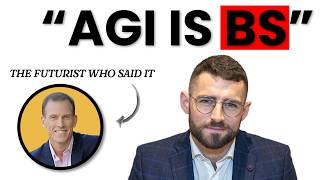

The Dip Before the Boom
51sTension between optimistic futures and painful transitions hooks viewers.
▶ Play Clip"The title accurately reflects the core controversial claim from the podcast, which is not a clickbait exaggeration but a clear statement made by the guest."
Futurist and author Jamie Metzl discusses the hype around Artificial General Intelligence (AGI), calling the concept "baloney" and emphasizing that humans possess unique skills machines cannot replicate. He advocates for "rational optimism"—acknowledging both the promise and perils of AI—and stresses the need to focus on human-centered transitions, radical transparency, and investing in human potential. The conversation covers his book 'The AI Ten Commandments', co-authored with GPT-5, and explores AI's impact on jobs, education, healthcare, and ethics.
Jamie Metzl asserts that the concept of AGI is a bunch of baloney, as humans are a magical species with skills and capabilities we don't fully understand ourselves.
He states that people using AI without clearly articulating how they are using it are committing fraud.
100 years ago, Italian futurists had a philosophy to forget the past, which was not coincidentally connected to the rise of fascism.
Metzl explains that being a rational optimist requires imagining both best-case and worst-case scenarios and creating plans to optimize benefits and minimize harms.
He warns that the AI revolution could cause harm in warfare, employment, dehumanization, and deskillification of humans.
Despite massive downs and abuses tied to technological innovations, history shows things are getting better over time, but there are big dips like the Black Plague and World War II.
Metzl acknowledges significant changes in employment will occur quickly, causing pain, but new industries will emerge that cannot be imagined yet.
He advocates for universal basic services (healthcare, education, safe housing) rather than universal basic income, and for government investment in retraining and facilitation.
AI change will happen at the task level, not industry level. Every job can be broken into tasks; some become machine tasks, some remain human tasks. The key is to help humans become the best possible humans.
He warns against forgetting the past; AI systems are a collection of humanity's cultural inheritance, not wisdom from Mars. Invest in ourselves and maintain technology-free zones.
Metzl describes his process: starting without AI to learn his voice, then using GPT-5 in an iterative, collaborative process, eventually editing comprehensively with a human editor. He credits GPT-5 as co-author for radical transparency.
He asked GPT-4/5: "Based on an assessment of the entirety of human recorded history and all our religious, spiritual, moral and ethical traditions, what are 10 principles that if followed by everyone would lead to the greatest amounts of peace, happiness and flourishing?" The result drew from all traditions, including obscure indigenous ones.
Metzl's favorite AI commandment is 'to live with awe, gratitude, and love' because it reminds us of our small place in the universe and animates other commandments.
He praises the pope's encyclical for saying technology must serve humanity but criticizes it for lacking the positive story of AI in healthcare, agriculture, and education, and for focusing too much on dangers.
Metzl notes that every technological transition has caused panic (fire, agriculture, industrialization) and that those fears were legitimate but the long-term outcomes were positive.
He is most excited about AI in education, unlocking potential in vulnerable communities worldwide, potentially revealing 'Einsteins and Mozarts' in poor areas.
Metzl believes AI agents are underrated because of their potential in scientific research and many other areas beyond simple tasks.
The future with AI is neither purely utopian nor dystopian; it requires rational optimism, proactive planning, and a deep commitment to human values. By focusing on task-level adaptation, radical transparency, and human-centered transitions, we can navigate the challenges and unlock AI's enormous potential to benefit everyone.
What does Jamie Metzl think about AGI?
He calls it a bunch of baloney (BS) because humans have skills and capabilities we don't fully understand ourselves.
According to Metzl, what is the 'favorite' of the AI Ten Commandments?
To live with awe, gratitude, and love.
32:24
What did Metzl use GPT-4/5 to generate?
The AI Ten Commandments based on an assessment of the entirety of human recorded history and all our religious, spiritual, moral and ethical traditions.
21:41
What is the 'J curve' in the context of technological transitions?
The idea that things go wrong for a couple of years (a dip) before improving.
7:51
What does Metzl advocate for instead of universal basic income?
Universal basic services: health care, education, safe housing, and safety/security.
11:07
What four-word commandment sums up the AI Ten Commandments' core?
Live with awe, gratitude, and love.
32:24
What lesson does Metzl draw from Italian futurism morphing into fascism?
Forget the past is dangerous; we must value our cultural and human tradition.
0:28
What does Metzl say about the panic around AI compared to historical panics?
Every transition (fire, agriculture, industrialization) has caused legitimate concerns, but long-term outcomes are positive.
41:25
What process did Metzl follow to write the book with GPT-5?
He created a detailed outline without AI, then used GPT-5 iteratively for sections, edited heavily, hired a human editor, and finally credited GPT-5 as co-author.
18:48
What is Metzl's view on using AI for writing without transparency?
He considers it fraud and insists on radical transparency.
29:15
AGI is Baloney
This directly challenges the dominant narrative in AI hype, asserting that human uniqueness cannot be replicated.
Rational Optimism Definition
Provides a nuanced framework for thinking about AI that avoids extremes of blind optimism or pessimism.
3:58Job Transition and New Industries
Acknowledges real pain from AI-driven job displacement while offering a forward-looking perspective on inevitable new roles.
9:02Human Values and Cultural Inheritance
Highlights the danger of forgetting the past and the importance of maintaining human connection and history.
16:38Radical Transparency in AI Use
Sets a strong ethical standard: anyone using AI must declare how, making this a significant stance for authenticity.
29:15Living with Awe, Gratitude, and Love
A poetic and grounded principle that resonates across traditions, emphasizing humility and connection.
32:24Most Exciting AI Breakthrough: Education
Ties AI's potential directly to unlocking human potential in underserved communities, offering a tangible, optimistic vision.
43:22Underrated: AI Agents
Offers a contrarian opinion that AI agents are undervalued, pointing to significant future applications.
46:16[00:00] concept of AGI is a bunch of baloney.
[00:02] Humans are this magical species with all
[00:05] of these skills and capabilities that we
[00:07] don't fully understand ourselves.
[00:09] >> Jamie and Matel, thank you so much for
[00:11] joining us.
[00:11] >> I think we're going to have sex robots,
[00:14] robots doing things that humans want and
[00:17] that's going to be crazy in the
[00:19] beginning and normalized over time. I
[00:22] think people who are using AI and not
[00:24] clearly articulating how they are using
[00:26] AI are committing fraud. 100 years ago,
[00:28] the Italian futurists had this
[00:30] philosophy, forget the past. And it was
[00:33] not coincidental that Italian futurism
[00:36] morphed into fascism. The future is
[00:39] going to be wonderful. It's going to
[00:40] create all this prosperity. There's
[00:42] sometimes a J curve, if you will. Things
[00:44] go wrong for a couple of years. That
[00:45] could be a really big problem. How do we
[00:47] get past a potential dip?
[00:49] >> We don't have the option of turning this
[00:51] off. If we did, it would be a terrible
[00:54] idea. We need to make sure that this
[00:56] transition is happening with everybody
[00:58] but not to everybody.
[01:02] Before you skip forward, I invite you to
[01:04] become a member of the rational optimist
[01:06] society. It's completely free. All you
[01:09] need to do is go to rational
[01:11] optimistocciety.substack.com
[01:14] and enter your email address. You'll
[01:16] receive our weekly diary that details
[01:18] the most exciting companies in Frontier
[01:20] Technology today. So please enjoy this
[01:22] conversation with futurist founder and
[01:24] author Jamie Metsel.
[01:27] My guest today has spent 25 years where
[01:30] biology, geopolitics, and AI all
[01:33] intersect. Drafting policy at the
[01:36] Clinton White House, sitting on the
[01:37] WHO's committee on human genome editing,
[01:40] and writing books that defined how we
[01:43] talk about hacking our own DNA. He
[01:46] recently did something that nobody has
[01:48] done before. He published the first
[01:51] major non-fiction book to credit AI as a
[01:54] co-author, the AI ten commandments.
[01:57] Jamie Metsel, welcome to the Rational
[01:59] Optimist podcast. Thank you so much for
[02:01] joining us.
[02:02] >> Thank you so much, Stephen. It's really
[02:04] a pleasure and honor to be with you.
[02:05] >> Jamie, before we get to your book, I
[02:07] want to talk about you on this show.
[02:10] We're obsessed about how people get so
[02:13] much done, how people do these amazing
[02:15] feats of accomplishment. Uh, I think I
[02:18] believe you've done 60 marathons, a
[02:20] dozen iron mans, 40 odd ultramarathons.
[02:22] You have a PhD, you've written six
[02:25] books. How the hell did you get so much
[02:27] done? Seven books. How How the hell did
[02:28] you get so much done?
[02:30] >> Well, I could give you a long answer
[02:33] that would talk about efficiency and
[02:37] focus and really thinking about what you
[02:40] want to do before you get rolling uh
[02:42] doing it. Um, but that would all be
[02:44] wrong because I'm 57 years old and I
[02:49] think 50% of it uh is that I don't have
[02:51] any kids. And when I look at people who
[02:55] have kids, which is a magnificent thing
[02:57] to do, that seems to take so much time.
[03:00] I'm blown away by how people raise one
[03:03] kid, let alone two kids. And I've I've
[03:06] heard um that you have to feed them
[03:08] every single day without fail. Jenny, if
[03:12] my career goes horribly wrong, I'm going
[03:14] to blame it on my three kids.
[03:16] >> Yeah, 100%. You should tell them every
[03:19] single day. Do you know what I've
[03:21] sacrificed for you? But, you know, I
[03:24] think that you're every one of those
[03:26] kids is like writing a hundred books.
[03:29] Uh, every one of the kids that you're
[03:31] putting your ideas and your love and
[03:33] your care. Uh, it's really fantastic.
[03:36] And and congratulations to you for
[03:38] having three kids. I'm sure they're
[03:40] great kids and I am hoping that they are
[03:43] wild and crazy optimists on the
[03:47] realistic side of optimism. Um, look,
[03:49] this show is called the rational
[03:51] optimist. I I read your book. I thought
[03:54] it was fascinating. Obviously, AI is the
[03:56] biggest thing in the world happening
[03:58] right now. I want you to set the table
[04:01] for us. What does earned cleareyed
[04:03] optimism, cleareyed rational optimism
[04:06] about AI actually look like for you? On
[04:09] one hand, we need to imagine all of the
[04:13] areas where AI and the related supercon
[04:15] converging uh using the title of my book
[04:18] technologies can can lead us. And in
[04:20] that book, I talk about the really
[04:23] exciting future of healthcare,
[04:25] agriculture, energy, advanced materials,
[04:28] data storage. And it's really exciting.
[04:30] my own father after my late father after
[04:33] his cancer diagnosis, I kind of took
[04:36] over working with his oncologist and we
[04:38] had a a very unconventional
[04:41] treatment uh plan based on the
[04:43] principles that I was writing about at
[04:45] the time in in the book and he had a
[04:48] one-year life expectancy and we extended
[04:50] it to three and we filled that time with
[04:52] love and joy and meaning and happiness
[04:55] and I had a big feature in AARP magazine
[04:59] uh on this and an action plan for what
[05:01] everybody can do. So, we should be
[05:03] really excited and I think a lot of
[05:06] people now because there's been this
[05:07] quick turn against emotional turn
[05:10] against AI, I think people are are many
[05:13] people are are losing their connection
[05:15] to the idea, the possibility, the wonder
[05:18] of what these technologies can do. But
[05:22] at the same time, if we are just blinded
[05:24] optimism optimists, that's actually
[05:27] going to be quite dangerous. There's a
[05:29] reason why we have fear and anxiety and
[05:33] why evolution has preserved those very
[05:37] human emotions. If those were just
[05:39] wasted emotions, probably they would
[05:41] have been selected out over the course
[05:43] of billions of years. But our fears and
[05:45] our anxieties are our way of telling
[05:49] ourselves that actually if we don't take
[05:52] the right steps, if we don't do
[05:53] everything we can to optimize potential
[05:55] benefits and minimize potential harms,
[05:58] then our worst fears can be realized.
[06:00] The AI revolution could do a lot of
[06:03] harm. Whether that's in warfare or
[06:05] employment or in dehumanization
[06:09] or deskkillification of of humans, there
[06:12] are a lot of very dangerous downsides.
[06:14] And so being an optimism, an optimist
[06:17] and a a rational optimist, it requires
[06:20] imagining what's the best case scenario.
[06:23] And it requires imagining what's the
[06:26] worstc case scenario. And it imagines
[06:28] everybody on every level, whether it's
[06:30] the individual level or family level or
[06:32] corporate level, national,
[06:34] international, whatever, coming up with
[06:36] a a plan, a set of principles for here's
[06:39] how I'm going to optimize the stuff I
[06:41] want, and here's how I'm going to work
[06:43] to minimize and hopefully prevent most
[06:46] of the things that I that I don't want
[06:48] to see. And no one alone can win this
[06:51] battle, but together, what we can do is
[06:54] drive toward a better world. And if you
[06:56] if people doubt that, you can just look
[06:58] at our whole history. We've had massive
[07:01] downs and we've had huge abuses that
[07:03] have come very significantly connected
[07:06] to to technological innovations. But if
[07:09] you follow the Matt Ridley principle or
[07:12] the Steven Pinker principle and you look
[07:15] at things from a broader perspective,
[07:18] you can see that things are are getting
[07:20] better over time. But that doesn't mean
[07:23] there are big dips. The black plague was
[07:26] a big dip. World War II was a big dip.
[07:30] And so those big dips, even if things
[07:31] are getting better, they're not going to
[07:33] get better on their own. It's that's the
[07:35] hard work of being a rational, committed
[07:38] optimist.
[07:39] >> I've talked to people like you and I
[07:41] that are rational optimists about AI and
[07:43] they say, "Hey, the future's going to be
[07:46] wonderful. It's going to create all this
[07:47] prosperity, all these jobs." But there's
[07:49] a, as you said, there's there's
[07:51] sometimes a dip, a J curve, if you will,
[07:53] that things go wrong for a couple of
[07:55] years, and it seems like in this day and
[07:57] age, things going wrong for one or two
[08:00] or five years or 10 years, that could be
[08:02] a really, really big problem. So, how in
[08:05] your view do we do we mitigate that?
[08:07] Future could be awesome. It's going to
[08:08] create all this amazing stuff, but how
[08:10] do we how do we get past a potential
[08:12] dip? Yeah, I think it's a very very
[08:15] important question because there's the
[08:16] dip in the sense that we are going to
[08:19] have significant changes in employment
[08:21] with this uh this technological
[08:24] quantum leap as we have had in other
[08:27] technological quantum leaps. All of our
[08:29] ancestors were hunter gatherers and then
[08:32] more and more of them became farmers and
[08:34] then people left the farms uh through
[08:36] industrialization and did all of these
[08:38] other jobs. Uh but those things have
[08:41] happened very gradually. Uh this change
[08:44] is happening very quickly. I was just
[08:46] the other day speaking with a very close
[08:48] friend of mine who's a real estate
[08:50] developer and he has about 50,000 uh
[08:53] apartments. He owns the buildings and
[08:55] and rents them out. And he was he was
[08:57] saying that that this is going to mean
[08:59] that he just needs a smaller headcount.
[09:02] And exactly as you said, there will be
[09:06] other entire industries that we can't
[09:09] even imagine. I mean, you and I are
[09:10] having this conversation remotely as a
[09:14] result of magnificent technological
[09:17] revolutions that made nobody 20 years
[09:21] ago would have imagined podcasting as a
[09:23] thing, let alone remote video uh
[09:27] podcasting. And so there'll be whole
[09:29] other um industries and and we can begin
[09:33] imagining them and I do actually about
[09:35] uh world building. I I'm also a novelist
[09:38] and I just think that the the one of the
[09:40] next generations of novels will be kind
[09:44] of like video games where you'll have
[09:46] maybe great novelists and everybody gets
[09:48] one character and you build out a whole
[09:51] backstory and a set of responses and
[09:54] just the character uh of your the
[09:57] character of your character that goes
[10:00] into this worldbuing novel. And maybe
[10:03] there's a central theme like kind of
[10:05] like Grand Theft Auto. And then people
[10:08] who are the equivalent of the readers of
[10:10] novels can wander through those worlds
[10:14] as they maybe tell a story like like
[10:17] here in New York we have a a um a
[10:19] theatrical installation called Sleep No
[10:22] More where people wander through the
[10:25] theater. And so it's so we that's just
[10:28] one idea. there will be thousands uh
[10:31] millions of new kind of crazy ideas that
[10:34] now seem nuts that will just become so
[10:38] normal. And coming back to your question
[10:40] though, there is pain and will be pain
[10:44] in this transition. And even if the
[10:45] benefits are societal, that doesn't mean
[10:48] which is the same with every other
[10:50] transition that we've ever had that all
[10:52] of the the losses will be evenly
[10:56] distributed. And that's why I believe
[10:59] societies have a massive obligation. Uh
[11:03] some people saying everything I said
[11:06] would say that's why I believe in
[11:08] universal basic income. That's not where
[11:10] I where I head. I believe in universal
[11:12] basic services, health care and
[11:14] education and safe housing and safety
[11:17] and security and all of those those
[11:19] things. I I don't think universal basic
[11:22] income is uh is the answer. And I think
[11:25] governments need to invest through
[11:27] unemployment insurance, through
[11:30] retraining, uh through facilitation. And
[11:33] we talked about these new industries
[11:35] giving small grants to help get a
[11:38] thousand a million new ideas off of the
[11:40] ground. Some of which will work and some
[11:43] won't work. And and finally, what I'll
[11:45] say is because I'm a humanist, I do not
[11:49] believe I people talk about artificial
[11:51] general intelligence, AGI, which is a
[11:54] time when AI systems will be able to do
[11:57] everything that humans can do. I have a
[12:00] sevenletter response to that. AGI is BS.
[12:03] I think AGI, the concept of AGI is a
[12:06] bunch of baloney. uh that humans are
[12:09] this magical species with all of these
[12:12] skills and capabilities that we don't
[12:14] fully understand ourselves. And I think
[12:15] that we're going to find that while
[12:17] machines and AI systems can do some
[12:19] remarkable things, uh there'll be a lot
[12:23] of things that machines can't do. And it
[12:26] how wonderful to have as many humans as
[12:29] possible doing highest level premium
[12:33] human activities. But there are a lot of
[12:34] people who are for example truck drivers
[12:38] um or street cleaners um and those jobs
[12:40] are going to change. We'll still have
[12:42] humans uh but the jobs are going to
[12:44] change and and the more that we can
[12:46] facilitate in a kind and loving and
[12:50] gracious and helpful way this transition
[12:52] the better off we'll be. We don't have
[12:54] the option of turning this off. If we
[12:56] did, we it would be a terrible idea to
[12:59] do it, but we need to make sure that the
[13:02] this transition is as human centered as
[13:05] as possible, that it's happening with
[13:08] everybody, but not to everybody.
[13:10] >> My my friend Tyler Cowan likes to frame
[13:12] things as what rises in status versus
[13:14] falls in status or or rises in value
[13:16] versus falls in value, zoom out in seven
[13:19] years, zoom out in their 10 years. what
[13:22] skills, what industries do you think are
[13:24] irreducibly human? Um what what core
[13:28] values, what core tasks can AI never
[13:30] touch? Another way of framing this is I
[13:32] guess if if you had uh my three kids
[13:35] sitting in front of you right now, what
[13:36] would you tell them to to go do?
[13:38] >> And so what I would say is I think this
[13:40] is going to happen at the task level,
[13:42] not at the industry level. That in every
[13:45] industry there are going to be human
[13:47] functions and machine functions. And and
[13:50] what we're have going to have to do is
[13:52] to break down not just every industry,
[13:54] but every job, whatever job you have,
[13:57] let's say you can break it down into 10
[14:00] tasks that are the core tasks that you
[14:02] do for your job. And for every one of
[14:05] those tasks, you can put it on a
[14:07] spectrum. um on one side of the spectrum
[14:10] is 5 or 10 years from now entirely a
[14:13] machine function and another side of the
[14:15] spectrum is entirely a human function or
[14:18] else somewhere in between. If your job
[14:21] when you go through it, all of those 10
[14:23] tasks are on the machine side, that
[14:27] means that your job is probably going to
[14:29] go away. And for you, the best thing is
[14:32] starting now to think about about
[14:34] transition because the last thing that
[14:36] we want is humans functioning as second
[14:39] rate machines. But in many kinds of
[14:43] jobs, there are going to be some machine
[14:45] tasks and some human tasks. And so for
[14:48] the machine tasks, the mission is to
[14:51] say, well, how can we best have machines
[14:53] doing those tasks as quickly and well as
[14:56] possible and not betting the store all
[14:58] at once, but through a a bunch of
[15:00] discrete examples uh of using these
[15:03] systems to solve specific definable
[15:06] tasks? And how can we overindex on
[15:09] helping humans become the best possible
[15:12] humans? And if it's somewhere in
[15:13] between, thinking about that
[15:15] relationship between humans and uh and
[15:18] machines. And I I for one, I don't think
[15:21] collectively there's going to be a job
[15:24] apocalypse, but I do think there will be
[15:27] some pretty big jobs that will be
[15:30] significantly reduced in numbers. And so
[15:33] coming to your kids, what I would say is
[15:36] to really be always thinking and and
[15:38] they're lucky to have you as their
[15:40] father who is always thinking about well
[15:42] where are we heading? And so we have to
[15:45] live I I write non-fiction and I write
[15:47] science fiction. And the reason I write
[15:49] science fiction is that the world is
[15:52] changing so rapidly that in order to
[15:54] think realistically
[15:56] about what's coming, uh we have to think
[15:59] kind of like science fiction writers
[16:00] because our brains have evolved in in a
[16:04] very uh linear way, a very practical way
[16:07] which has served our survival uh for for
[16:11] basically ever. But now we need to be p
[16:14] somewhat practical but we need to really
[16:17] imagine what's coming and even if
[16:20] whatever your whatever your job is going
[16:22] from cook to janitor to CEO to author to
[16:27] futurist uh just we really need to think
[16:30] about what's coming and really
[16:33] importantly we need to think about how
[16:36] much we value everything up to this
[16:38] point. 100 years ago, the Italian
[16:40] futurists had this philosophy. Forget
[16:42] the past. This is all about the
[16:45] mechanized future. And it was not
[16:47] coincidental that Italian futurism
[16:49] morphed into fascism. We have this
[16:53] wonderful human tradition. Our cultural
[16:56] evolution over thousands of years,
[17:00] longer than thousands of uh of years is
[17:03] spectacular. uh and and the these AI
[17:06] systems aren't this isn't wisdom coming
[17:09] from Mars. This is the collection of our
[17:15] cultural inheritance of all of our
[17:17] culture. And so there's this othering of
[17:19] AI. And what we really need to do is
[17:21] invest in ourselves. And so for your
[17:23] kids, I give a lot of talks both to
[17:26] companies and to uh education leaders.
[17:29] And I say that part of the future
[17:32] involves being as literate as possible
[17:35] in technological innovation and what we
[17:38] can do and what it means. But another
[17:41] part of it is turning everything off.
[17:44] Every single person, whether you're a
[17:46] kid, an adult, a professional, has to
[17:50] have some part of your life totally
[17:52] separate from all technology where you
[17:55] are reconnecting
[17:57] with you as a human, with the people
[17:59] around you as a uh as a human. And this
[18:03] isn't some kind of old old-fashioned
[18:06] um idea. Uh, I think that there is so
[18:10] much in humans that if we allow
[18:12] ourselves to be so distracted by all of
[18:15] these technologies, we're going to
[18:18] actually become less. Not just less as
[18:20] humans, but less effective at building a
[18:24] kind of future that we'd all like to
[18:26] inhabit.
[18:27] >> Jimmy, I want to talk about your book,
[18:30] the the the AI ten commandments.
[18:32] Fascinating book. You put GPT5 on the
[18:35] cover as a co-author. I'd love you to
[18:38] take us inside the actual collaboration,
[18:40] how you wrote a book with AI would have
[18:43] this been possible with the original
[18:45] chat GPT. Tell me everything about the
[18:47] uh the process.
[18:48] >> Yeah, thank you so much for asking,
[18:50] Stephen. So, it all started in my Walden
[18:53] Pond uh in the sense that two uh summers
[18:57] ago, two years ago, I was invited to
[18:59] this magical place in upstate New York
[19:02] called the Shiitakqua Institution, which
[19:04] is like a whole city that comes to life
[19:06] for 10 weeks in the summer. And they
[19:09] have music school and theater and an
[19:12] opera. And there's a big very famous
[19:15] lecture series in their in their famous
[19:18] 6,000 person outdoor amphitheater where
[19:20] six US presidents have spoken. So two
[19:23] years ago I was invited to give the lead
[19:26] keynote speech for the summer on the
[19:28] future of AI. I did it. I got a 6,000
[19:31] person standing ovation. They invited me
[19:33] back for the next summer and they said
[19:35] speak about anything you want. And I
[19:38] just I thought a lot about it and what I
[19:40] decided was to connect my views on the
[19:43] future of AI and other technologies and
[19:45] the history of Shiakqua which is
[19:48] 150year-old institution. It started out
[19:51] as a place for Methodist Sunday school
[19:53] teachers but it grew into a center for
[19:55] religious pluralism. And so I wanted to
[19:58] give a talk on AI and spirituality.
[20:01] And I did my Walden pond. I just, you
[20:04] know, I I went to the park and I just
[20:06] really reflected without any technology
[20:10] on what I wanted to say and then I put
[20:13] my thoughts together into an outline for
[20:16] that talk and I gave the talk and the
[20:18] talk was extremely wellreceived and in
[20:20] it I talked about the the intimate
[20:22] connection between our technological
[20:25] innovations and all of our religious and
[20:28] spiritual traditions, what we call our
[20:30] our Abrahamic traditions, our world our
[20:32] world religions are all agricultural
[20:35] faiths deeply connected to agriculture.
[20:38] Protestantism is unimaginable
[20:41] separate from the the printing press. So
[20:44] we we have that is our history and it
[20:45] what I said in that talk is that it's
[20:47] inevitable that AI will have significant
[20:51] implications for our religious and and
[20:53] spiritual lives. And then the question
[20:55] is how? And I went through a lot of
[20:57] different uh examples. And then I went
[21:00] through the uh biblical ten commandments
[21:03] uh one by one as written. And and when
[21:06] you read them literally uh nobody would
[21:10] agree literally to almost all you know
[21:13] maybe eight of the of the ten
[21:16] commandments. It's like yeah you
[21:17] shouldn't murder or sure you shouldn't
[21:19] kill unless you're landing on the
[21:22] beaches in Normandy. and then you know
[21:24] kill for good reason because you're
[21:26] you're you're ending the the you're
[21:28] defeating the Nazis and ending the
[21:30] ending the Holocaust.
[21:31] it it's complicated. And so in that talk
[21:34] I talked about my process of going to
[21:38] then uh GBT4 and ask and I really
[21:41] thought a lot about this uh this prompt
[21:44] um was asking based on an assessment of
[21:49] the entirety of human recorded history
[21:51] and all of our different religious,
[21:53] spiritual, moral and ethical traditions,
[21:55] what are 10 principles that if followed
[21:58] by everyone would lead to the greatest
[22:00] amounts of peace, happiness and and
[22:02] flourishing and it gave these beautiful
[22:05] AI ten commandments based on on us not
[22:09] based on AI's independent wisdom and
[22:12] then there I had thousands of back and
[22:14] forths interrogations
[22:16] with AI with the AI saying well where's
[22:19] this coming from and we dug and it it
[22:21] was so beautiful because it was coming
[22:23] from all of our traditions and all of
[22:25] our traditions are all trying to do the
[22:27] same thing to live moral ethical lives
[22:30] to try to find a right balance balance
[22:32] between the individual and and communal
[22:34] needs. And there were but not just the
[22:38] ones that are more familiar, but also
[22:40] these more obscure uh traditions,
[22:43] indigenous traditions from Africa and
[22:45] the Americas and elsewhere and it was
[22:47] really beautiful. So I gave that talk
[22:50] and then as I was walking around the
[22:52] campus, it's mostly older people. The
[22:54] old people kind of attacked me and they
[22:56] said, "Give us the AI ten commandments.
[22:59] They are so beautiful. we want we want
[23:01] them. And uh so that was and I said, you
[23:04] know, I'm going to write a book. And so
[23:06] when I decided to write a book, I knew I
[23:09] had to write it differently because I
[23:11] was writing about in at least in this
[23:14] part with AI Ten Commandments, a
[23:16] collaboration with AI. I mean, I I have
[23:19] a PhD in history and I do a a ton of
[23:24] reading, but I don't know everything
[23:27] about every tradition in all of of the
[23:30] world. And and no human could. It's just
[23:32] it's beyond our our grasp. And so what I
[23:35] did is I went back to metaphorical
[23:37] Walden Pond and I uh put together the
[23:40] oldfashioned way a very detailed outline
[23:43] of the book on my own. And then I went
[23:45] through the outline and I said found
[23:48] specific areas where maybe there were a
[23:51] few paragraphs where I was summarizing a
[23:53] vast field of knowledge. And this is a
[23:56] real example. I had a thesis statement.
[23:58] AI has the potential to see us
[24:00] collectively kind of like we have when
[24:03] looking down from above at an ant
[24:05] colony. And so then I trained GBT4 and
[24:08] then five on my writing style by
[24:11] uploading a bunch of my favorite
[24:13] writing. And then I said I so I started
[24:16] writing the book. And when I would get
[24:17] to one of these sections where I wanted
[24:19] to have this kind of insert, I would say
[24:22] to GPT5, here's the thesis statement.
[24:26] Write me three paragraphs in my writing
[24:29] style making these five points. And it
[24:31] would give me something that would be no
[24:32] good. And then I'd say, "Not quite
[24:35] right. Make these five changes. And not
[24:37] quite right. Make these changes." So a
[24:39] bunch of back and forth. And then there
[24:40] would be something that the argument was
[24:42] pretty good, but the writing wouldn't be
[24:44] very good. And then I would take it out,
[24:46] put it into Microsoft Word. I do a full
[24:48] edit of those three paragraphs. Then I
[24:50] would put it back into GPT5 and say,
[24:53] "Well, how can how can I make these
[24:55] three paragraphs better?" And it might
[24:57] say, "You're using this word twice or
[25:00] this sentence is a runon or or
[25:02] whatever." So then there'd be a bunch of
[25:03] back and forth. And then when it was
[25:05] kind of good enough, I would put it in
[25:07] the text and I would keep going. And so
[25:09] that's how I did the first draft. Then I
[25:11] went through I cut 40% of everything
[25:15] because and then I pretty much rewrote
[25:20] the entire manuscript and that took a
[25:23] lot of time. Then I hired a phenomenal
[25:26] human editor and we did a very very deep
[25:30] frankly edits as as people who've
[25:32] written books know are very painful
[25:33] because you think well I'm almost done
[25:35] and you're not almost done and it just a
[25:38] huge edit because you know I'm I'm a
[25:41] novelist as I said I I want every word
[25:43] to count and so that was where the the
[25:47] book came from and then when I was
[25:50] deciding like the about the publishing
[25:53] I just thought, well, because of the
[25:56] nature of this collaboration, if I put
[25:59] my name alone on the cover, I feel like
[26:02] that would be fraud. If I had like a
[26:05] genius,
[26:07] probably spectrumy human who was my
[26:10] writing partner and we interacted in all
[26:12] of this way. Let's just say that this
[26:14] spectrum human had actually my my friend
[26:18] AJ Jacobs has in fact read the entire
[26:21] encyclopedia. But let's just say this
[26:23] spectrum human had read every book in
[26:26] the world. And um but if I had that kind
[26:29] of collaboration, I would of course put
[26:32] that person's name alongside mine on the
[26:34] cover of the book. So, it just felt like
[26:36] it would be fraudulent for me to to not
[26:40] put AI GB5 as my named co-author. Now
[26:44] it's I I'm actually running into some
[26:46] headwinds on this because the public has
[26:50] very rapidly in many ways turned against
[26:53] AI and people have a hard time
[26:56] differentiating what I've just described
[26:58] which I feel was very um creative and
[27:02] collaborative and additive um and
[27:05] something that I couldn't have done
[27:06] alone and the AI couldn't have done
[27:09] alone. So that way I think it's special
[27:10] and people have a hard time
[27:12] differentiating that and from your high
[27:14] school kid you know cheating on their
[27:17] essay by just printing out something
[27:19] from chat GPT. And so that's it's been a
[27:21] little bit of a challenge getting the
[27:23] word out. Everybody who reads it then
[27:25] they they get it. So that's it's been
[27:28] very interesting to navigate what nine
[27:30] months ago there was so much optimism
[27:32] and the idea of collaborating with AI on
[27:36] a book. the idea of using AI in a unique
[27:39] way to mine the entirety of human uh
[27:42] recorded history was exciting to people
[27:44] and just very very quickly the public
[27:47] mood has turned and there's so much fear
[27:49] and anxiety and I hope that this book
[27:51] can be a statement like well I'm not
[27:54] discounting your fears but let's look at
[27:56] what AI can do in you know in this area
[28:00] and in other areas
[28:02] >> having being you're you're already an
[28:04] accomplished writer and have been for
[28:06] for many many years. What advice would
[28:09] you have for someone who is riding with
[28:12] AI either themselves an accomplished
[28:14] rider or just starting off? Where is the
[28:16] line between what's right and what's
[28:19] wrong? Because you can you can obviously
[28:20] take this too far as well.
[28:22] >> Yeah.
[28:22] >> So what I would say is first start
[28:25] without AI. The first and most important
[28:28] thing is learn your voice. If you're
[28:31] collaborating with AI, if GBT5 is your
[28:33] voice, you have no voice because GBD5 is
[28:37] a and and all these AI systems are
[28:39] averagers. So, you have to know your
[28:42] voice. And I think there's a real danger
[28:45] uh for younger people now that they're
[28:47] not going to have the space to find out
[28:50] who they are intellectually, who they
[28:52] are, what their voice sounds like. uh in
[28:55] part because we have AI systems that can
[28:57] do things for us and in part because
[29:00] people have these digital systems on all
[29:03] the time that are just pinging your
[29:05] heads and just disrupting everything and
[29:08] not giving people that that space. So
[29:10] that's number number one. Number two is
[29:13] however you are using uh AI, I'm for
[29:18] radical transparency. I think people who
[29:20] are using AI and not clearly
[29:23] articulating how they are using AI in my
[29:26] view are are committing fraud. I think
[29:27] every scientific paper should now have a
[29:30] section on the bottom not necessarily
[29:33] saying I didn't use AI in any of this
[29:36] but saying here's exactly how I used um
[29:40] used AI but I have a novel coming out in
[29:43] February called Virtuosa
[29:46] which is about the intersection of AI
[29:47] robotics and classical music and in that
[29:51] novel one of the characters is a robot a
[29:54] a next next next generation robot that's
[29:57] able to do miraculous things with with
[30:00] music. And so in a novel, if I have a
[30:03] character that has that's doing
[30:05] something that I don't do, you I'll go
[30:07] if I write I'm writing about a beekeeper
[30:09] and I'm not a beekeeper, I'll go and
[30:11] I'll find some beekeepers and I'll spend
[30:13] time with them and I'll ask them about
[30:15] their lives and and maybe ask them role
[30:18] plays of what would they do in a certain
[30:21] situation. So that's what I did with
[30:24] this character. I uh I wrote up the
[30:26] character and then I entered this text
[30:29] into chat GPT saying this is background
[30:32] for your character. Now, let's do a role
[30:35] play and I'm going to ask you some
[30:38] questions and respond from the from the
[30:41] perspective of this character. And
[30:42] again, it wasn't I didn't use this for
[30:44] the novel. It was background to
[30:46] understand that character. And we had
[30:48] these wonderful conversations that that
[30:51] when the book comes out, I'm I'm going
[30:53] to post them all on my uh on my website.
[30:57] And I'm the first science fiction writer
[30:59] in all of history who when writing about
[31:01] a robot is able to have a sustained
[31:05] background conversation with a machine.
[31:08] And so I think that's pretty incredible.
[31:11] And and so that's why again I think that
[31:13] there's there's a lot of fraud that is
[31:15] happening now of people who are having
[31:18] AI do stuff and putting their name on it
[31:21] and there's a little window of time when
[31:23] you can get away with it. Uh but I think
[31:26] that the real the best use of AI is
[31:29] going to be one people using it to do
[31:32] great things. And I talked about my my
[31:35] late father's cancer. I mean that was
[31:37] AI. I don't have the ability to an
[31:39] analyze a whole human genome on my own.
[31:42] Nobody does. So we would expect doctors
[31:45] to be using and healthcare providers to
[31:47] be using AI tools to optimize outcomes.
[31:51] And so I think that's it's great, but we
[31:53] need to define what it is and what do we
[31:56] want? What's the role for humans and
[31:58] whether it's human health care providers
[32:01] or artists and other creatives or or or
[32:04] really anything. And then we need
[32:06] radical transparency. And so that was
[32:08] for me one of the reasons why I insisted
[32:10] having GBT5 as my named co-author is I'm
[32:13] a I wanted to be a pioneer in this kind
[32:18] of radical transparency.
[32:20] >> Of your 10 AI commandments, do you have
[32:23] a favorite?
[32:24] >> Oh, you know, I think probably the last
[32:26] one to live with awe, gratitude, and
[32:29] love because we are so small. uh the AI
[32:33] ten commandments. It's kind of like the
[32:35] Aremis 2 astronauts looking back on
[32:38] Earth and when they look back they just
[32:40] see this little ball of life in this
[32:42] dark empty mostly
[32:46] lifeless universe even if there is and I
[32:48] think there probably is life someplace
[32:50] else. And so there we should have like a
[32:53] level of awe of of just where we are.
[32:58] And and and I think that when we do that
[33:01] can kind of awe and love and and respect
[33:04] animate so many of the uh of the other
[33:08] things. And so um but you I to tell you
[33:11] the truth I kind of love them all. And
[33:14] every person who I have read side by
[33:17] side the as written biblical ten
[33:20] commandments and the AI ten
[33:22] commandments, I have yet to meet a
[33:25] single person who says at least when
[33:28] read literally the biblical ones make
[33:31] more sense than the AI ones. and and
[33:33] then to say, well, given that these AI
[33:36] ten commandments are drawn on from all
[33:38] of our traditions, it's kind of a a
[33:41] wonderful message that we're all part of
[33:43] this this same thing, not just the same
[33:46] humanity, but this same experiment of
[33:49] life in in, you know, 3.8 billion years
[33:52] on this planet that connects us to each
[33:55] other and and all of life. And I think
[33:57] that that perspective um is something
[34:00] that's really beautiful and inspiring.
[34:04] >> I love it. A week or so ago, Pope Leo
[34:06] released his fourth encyclical which is
[34:08] Magnifica Humanitus. Uh as I understood
[34:12] it, the premise was technology is never
[34:15] moral. It was in large part about AI. As
[34:19] I read your book, it was kind of making
[34:21] the opposite case of that. So, if you
[34:23] could sit down with Pope Leo, what's the
[34:25] one question you would want to ask him
[34:28] or the thing that you would want to tell
[34:30] him about?
[34:30] >> Yeah,
[34:31] >> it's great. And I I actually did a long
[34:34] blog post on the papal papal encyclical
[34:38] um which maybe you can can link to in
[34:40] the uh in the show notes. And I have
[34:43] spoken at the Vatican. Uh, and as a
[34:45] matter of fact, I had a I was supposed
[34:47] to meet with Pope Francis, but I had to
[34:50] fly home uh to my original home in
[34:53] Kansas City. Now I live in New York
[34:55] because my uh my then 83year-old
[34:59] mother was having her bach mitzvah. And
[35:01] so I had to choose it was between my
[35:03] mother and Pope Francis. And I I chose
[35:05] my mother. But if I would have the honor
[35:08] of sitting down with Pope Leo, what I
[35:10] would say is I really loved the
[35:12] encyclical. I really loved this
[35:15] aspiration which I fully share to say
[35:18] that these technological innovations
[35:21] must serve humanity. They must serve
[35:25] human values. And that's not going to
[35:27] happen on its own. It's going to happen
[35:30] with a level of consciousness, with a
[35:33] level of aspiration. uh because no
[35:35] technology comes with its own built-in
[35:37] value system. It's up to us to infuse
[35:41] our best values including our most
[35:43] ancient and cherished values into the
[35:46] technologies that we are creating. But I
[35:49] had a couple of critiques uh of that in
[35:53] the in spite of my extreme praise and
[35:56] that was I felt like there wasn't that
[35:58] much in the encyclical about the
[36:02] incredible positive story of AI and and
[36:05] related technologies about what it can
[36:09] do to in health care and making our
[36:12] agriculture more uh more efficient and
[36:15] productive so we can feed more people
[36:18] better uh with fewer inputs of land and
[36:22] energy and and fertilizer and other
[36:25] things and not to mention uh the
[36:27] terrible risk and and the terrible cost
[36:29] in suffering and pandemic threat and
[36:32] antibiotic resistance of industrial
[36:35] animal agriculture. So that was my my
[36:38] biggest thing was to say let's it's
[36:43] great to focus on the dangers and the
[36:45] values and I certainly agree with both
[36:47] but it felt a little bit unbalanced that
[36:51] it didn't say how exciting these are and
[36:55] that it is in my view and and I think
[36:57] even in the church's view it's it's all
[37:00] of our responsibility like if we had
[37:02] health care providers who were slowing
[37:05] down in treating cancer
[37:07] because AI happened to be a technology
[37:10] that was facilitating cancer care. I
[37:13] would see that as a harm. At the same
[37:16] time, you mentioned in your introduction
[37:18] of me that I was a member of the World
[37:20] Health Organization expert advisory
[37:22] committee on human genome editing. As a
[37:24] matter of fact, I was invited to the
[37:26] Vatican to talk about that and was
[37:28] invited to to uh write a a paper for the
[37:33] Pontipical Council of Culture which they
[37:35] which they published. And so that human
[37:38] genome editing was made possible through
[37:41] these revolutionary tools. And although
[37:44] it is my strong view that we will have
[37:48] genome edited human embryos that will
[37:50] become humans in the future and we will
[37:53] want to have it and it will be highly
[37:55] moral and ethical to do it. Particularly
[37:58] if we can change a 2-year life of
[38:01] somebody born with a terrible deadly
[38:03] genetic disorder into a 90 or 100year
[38:08] fully realized life of somebody who the
[38:10] same person who just doesn't have that
[38:13] that single harmful harmful mutation.
[38:19] But our conclusion of our committee was
[38:22] we're not ready for it now. And so that
[38:24] what happened in China in 2018 and 2019
[38:27] in my view was Nermberg style human
[38:30] experimentation and I'm against that.
[38:32] And so that's why I think there's this
[38:33] danger to feel like the question being
[38:36] asked is technology yes or no. And I
[38:40] think that's really the wrong question.
[38:41] The the question is technology how best?
[38:44] And we have different perspectives. The
[38:46] church is coming from one perspective.
[38:48] I'm not a Catholic. I'm a I'm like many
[38:51] others in in New York City. I'm a Jewish
[38:54] atheist with Buddhist leanings. And so,
[38:57] you know, I I you know, do I think that
[39:00] the very traditional dictates of
[39:03] Catholicism
[39:04] um are are going to be our our core
[39:08] guiding principles? No, I I do not. But
[39:10] do I think that there are values not
[39:13] just of the Catholic tradition but of
[39:15] all traditions that can contribute to
[39:19] letting our ethics guide our journey in
[39:21] into this very radical future? I think
[39:24] it's it's very important and that many
[39:26] traditions have that and many like the
[39:28] Catholic Church. I thought it was great
[39:30] that the pope um used this opportunity
[39:33] to sneak in an apology for the Catholic
[39:36] Church condoning slavery and
[39:39] colonialism. It was just a paragraph. It
[39:41] didn't have to be there, but it was
[39:43] clear that Pope Leo wanted to find a way
[39:46] to say that. And so I thought that was
[39:48] that was very positive. But I think that
[39:50] it's the important thing is balancing
[39:52] it. It's not if a mean this is rational
[39:55] optimism. It's not blind optimism. Blind
[39:58] optimism can actually be quite dangerous
[40:02] and blind pessimism, overwhelming
[40:04] pessimism in my in my view can be quite
[40:07] dangerous. But rational optimism,
[40:10] measured optimism, thoughtful optimism,
[40:13] I think that's what's required. And I do
[40:15] I do think actually that this encyclical
[40:17] was very very different uh from the the
[40:21] um Catholic Church treatment of
[40:23] Capernacus or Galileo or frankly even of
[40:26] stem cell research which I think the the
[40:29] Catholic Church is is getting wrong and
[40:31] I've been very public including at the
[40:33] Vatican saying that. Um, but I think
[40:36] it's very positive and I hope that it
[40:38] inspires people from other traditions
[40:41] and other backgrounds and other
[40:43] organizations to start putting out their
[40:45] principles. I thought that the the
[40:47] anthropic AI constitution was helpful.
[40:51] None of these things single-handedly are
[40:53] going to be transformative, but
[40:54] collectively I think they can be very uh
[40:57] constructive and and additive. You have
[40:59] a PhD in history. You also mentioned
[41:02] there's the seed of a panic around AI
[41:05] right now. There's a certain backlash
[41:07] against the building of data centers,
[41:09] what AI will do uh to jobs, all that
[41:12] stuff. As you think back through your
[41:14] knowledge of history, do you have a a
[41:18] favorite or a a panic from throughout
[41:20] history that most reminds you of what's
[41:23] happening with AI right now? You know,
[41:25] there is always a panic at every
[41:29] transition. I'm sure that there was a
[41:32] panic a million years ago when people
[41:34] started to control fire. I'm sure there
[41:36] was a panic uh 12,000 years ago with
[41:40] agriculture when life lives and and
[41:42] lifestyles
[41:44] started to change. Obviously, we're
[41:46] familiar with the with the lites uh with
[41:50] with industrialization. I don't know if
[41:52] I have a favorite, but I do think that
[41:55] all of these fears are actually founded
[41:59] that, you know, the people who were
[42:01] worried about giving up their hunter
[42:03] gathering nomadic lifestyles. I think
[42:06] that was a legitimate concern actually
[42:08] in for many thousands of years in
[42:11] agriculture. the people who were doing
[42:13] agriculture were were less healthy in
[42:16] many many ways than their hunter
[42:19] gatherer nomadic uh nomadic
[42:22] counterparts. There were a lot of people
[42:24] who were harmed by industrialization.
[42:28] But when we look back actually
[42:30] industrialization was really great. It's
[42:33] not coincidental that industrialization
[42:36] rose and slavery ended at roughly the
[42:40] same time because humans we had a lot of
[42:42] stuff that we wanted done and it
[42:45] required power and whether that was
[42:47] human power or animal power or machine
[42:50] power we still needed the power. So all
[42:54] of these these changes come with with
[42:58] upsides and downsides. you you mentioned
[43:00] in both super convergence and your new
[43:03] book the AI ten commandments how I how
[43:06] AI can help us do all these amazing
[43:08] things the AI opportunities if you will
[43:11] is there one specific breakthrough in
[43:14] healthcare in medicine in education that
[43:16] makes you really stand up and say wow
[43:19] that's going to it's going to change the
[43:20] world over the next 5 to 10 years yes so
[43:24] in every one of those areas but probably
[43:26] the one that I'm most excited about is
[43:29] education. Uh you and I, Stephen, have
[43:32] great educations. We come from places
[43:34] where there's a a lot of opportunity,
[43:36] but there's a whole lot of people who
[43:39] don't have great educations, who are in
[43:41] places where there isn't a lot of of
[43:43] opportunity. And that doesn't just suck
[43:46] for them. It sucks for us because we are
[43:49] beneficiaries of this cultural
[43:53] inheritance, this scientific
[43:55] inheritance, which is an inheritance of
[43:57] humanity. You and I are speaking now in
[44:00] English a language which we didn't
[44:03] invent but we have this wonderful
[44:05] language and has all these words that
[44:06] help us form our thoughts into these
[44:09] sharable forms. And so if and young
[44:13] people around the world now through
[44:16] smartphones which many many people have
[44:19] uh can access AI tutors along hopefully
[44:23] alongside wise human tutors and wise
[44:25] human elders who are helping guide and
[44:28] and instill values and morals and and
[44:31] ethics. I think we're going to unlock
[44:34] such amazing human potential that is
[44:38] going to benefit everybody and that so I
[44:42] just couldn't be more excited. And so
[44:44] for me the most exciting applications of
[44:48] all of these technologies are about
[44:51] helping the world's most vulnerable
[44:53] people. And so yes, I'm excited about
[44:55] the future of oncology. And yes, we're
[44:58] already making incredible innovations
[45:01] now with pancreatic cancer for example
[45:03] that people thought well that was a long
[45:05] a long way off. Alphafold is now in
[45:09] pretty much every country in the world.
[45:12] At last record there were something like
[45:14] two million labs had used it to advance
[45:18] their research. And that's incredibly
[45:19] exciting. But what I'm most excited
[45:21] about is all of these people in all of
[45:24] these poor places and slums and and
[45:28] remote poor agricultural communities.
[45:31] How many Einsteins and Mozarts and
[45:34] Beethovens are in those places? And so I
[45:38] think to unlock that that human
[45:40] potential
[45:41] >> is just an unbelievable gift not just to
[45:44] them but to all of us. I think these
[45:45] technologies if we work in that
[45:49] direction can can help make that happen.
[45:51] >> Jimmy, this has been a truly fascinating
[45:54] conversation. What I'd like to do is
[45:55] close the podcast with a quick lightning
[45:58] round, a game of overrated and
[46:00] underrated. So, what I'm going to do is
[46:02] I'm going to name 10 things that kind of
[46:05] fall within your wheelhouse and you can
[46:07] respond to each one of them. Overrated
[46:09] or underrated. Great.
[46:10] >> What for you?
[46:11] >> Uh, let's let's roll them.
[46:12] >> Okay. First one, AI agents
[46:16] underrated. It's going to be such an
[46:18] exciting thing. We're just at the
[46:20] beginning of what AI systems can do and
[46:22] people are talking about making hotel
[46:25] reservations, but there's so much that
[46:27] can happen in scientific research and
[46:29] and so many other areas. There will be
[46:31] downsides. Bad things will happen along
[46:33] the way, but I think they're underrated
[46:35] because I'm really excited about them.
[46:38] >> China's AI capabilities.
[46:40] >> I think it's underrated. I mean, China
[46:42] is really focused. Uh they've put a lot
[46:45] of energy into AI. They have a really
[46:48] smart smart people.
[46:51] They are not yet. China isn't yet at the
[46:54] level uh certainly of of the United
[46:56] States, but it's catching up pretty
[46:59] quickly and it's focused on on catching
[47:02] up. So, I think still underrated.
[47:04] >> In the same vein, open- source models.
[47:07] >> I think underrated. I mean, that's the
[47:09] big gamble. China is using the same
[47:13] strategy that Google used with Android
[47:17] to break the Apple monopoly. So they
[47:20] thought, well, we're not going to win
[47:21] the foundation model race, but we're
[47:23] going to use an open- source model. And
[47:26] frankly, they they were beneficiaries
[47:28] when Meta was also losing AI. They said,
[47:32] "We're going to go open source." So the
[47:34] second place person always goes open
[47:36] source. Uh and there's a a lot of
[47:39] opportunity. I I still believe in
[47:40] foundation models. I think, you know,
[47:42] our great companies are doing amazing
[47:45] things. Uh and I'm not saying that the
[47:47] future belongs to to open source. You
[47:51] know, people, you know, Apple did pretty
[47:53] well by creating a walled garden uh
[47:57] ecosystem. Um but I think there's a a
[48:00] long runway for open source
[48:03] >> human genetic enhancement.
[48:06] I think it again I this is this optimism
[48:09] I think it's underrated. No, I think
[48:10] it's underrated in the sense you people
[48:13] believe now that we're capable. People's
[48:16] like oh you should engineer your your
[48:19] kids to play chess or it's really
[48:22] complicated. We are at the very very
[48:24] early stages of this. We understand such
[48:28] a tiny fraction of the full complexity
[48:30] of human biology. And so um but this is
[48:34] a a fundamental technology. We're going
[48:38] to use it more and more in animal
[48:39] agriculture and plant agriculture and
[48:41] that's already happening. Multipplex
[48:44] edits will allow us to do more changes
[48:47] at once. Um, but our ignorance, our
[48:50] relative ignorance of what of genetics
[48:53] make it so that if we're doing a lot of
[48:55] changes, even if we correctly identify
[48:58] that making these changes in a human
[49:01] will lead toward these outcomes, we
[49:03] don't know nearly enough about what the
[49:06] potential downside risks because it's
[49:08] not like one gene is doing one thing.
[49:10] Uh, our bodies are very very complex and
[49:13] interactive and we we we don't know what
[49:15] we don't know, but we know that it's a
[49:17] lot. So I think that people are
[49:19] overestimating what's possible now. Uh
[49:22] but at this rate of innovation, I think
[49:24] exciting things will happen in in the
[49:26] future. But I but I do think that when
[49:29] when engineers and computer science
[49:32] people talk about engineering biology,
[49:35] they're thinking think thinking of it
[49:37] like an engineering task. But those of
[49:39] us who are enscconced in the biology
[49:41] world know just how complicated biology
[49:44] is and how how little we know. So, I
[49:47] think it's it's going to be slower than
[49:49] people anticipate, but I think
[49:51] fundamentally transformative over time.
[49:54] >> A Matt Ridley favorite of Amara's law on
[49:56] that one. Maybe
[49:57] >> Amara's law is you you overestimate the
[49:59] short term and underestimate long term.
[50:01] Yeah. Uh number five, humanoids.
[50:04] Humanoid robots.
[50:06] >> You know, I think um I seem to have just
[50:08] the same answer. So, I think humanoid
[50:10] robots are realistic. Humanoid robots
[50:13] are a bit far away, farther away than
[50:16] people seem uh people believe. But I
[50:19] think we're going to have huge advances.
[50:21] And my I mentioned my new novel Virtuosa
[50:24] is all about this and and it's what it
[50:26] feels like for humans when they
[50:28] experience a humanoid robot that doesn't
[50:30] look like a human, but it's a humanoid
[50:32] robot that can do magical things with
[50:34] classical music that is emotionally
[50:36] resonant for humans. And I do think I do
[50:39] believe that we are going to have AI
[50:42] systems that can write their own code,
[50:44] which is the case in my novel, that can
[50:46] imagine goals and work toward creating
[50:50] them. So I I I I think we're going to
[50:52] have humanoid robots. They probably
[50:54] aren't going to look like humans. I
[50:55] mean, we I have an amazing uh robot in
[50:58] my house. After dinner, I put my dishes
[51:00] inside of this robot and add soap and
[51:04] press a button. And so we we may have a
[51:06] bunch of um of robots that are
[51:10] structured for specific tasks, but we
[51:14] live in a world that is organized around
[51:16] our form. And so there there will be
[51:18] cases where we want to have humanoid
[51:20] robots. And I'll just say this as for
[51:23] anybody who's uh who's listened all the
[51:25] way in this in this podcast. Yeah. I I
[51:28] think we're going to have sex robots. I
[51:30] mean, we're going to have robots doing
[51:32] things that humans want, and that's
[51:36] going to be crazy in the beginning and
[51:38] normalized over time, like IVF and kind
[51:42] of everything else that we're scared of
[51:43] and then becomes normal.
[51:45] >> I'm going to end with two, Jamie. Yes.
[51:47] First one, data centers in space,
[51:51] >> you know, that I I don't I don't feel
[51:53] like I know enough to fully make a bet.
[51:56] I like the idea and there are good
[51:59] reasons to put data centers in space. It
[52:01] solves certainly one of the big problems
[52:04] of cooling and we can get a lot of data
[52:08] back and forth on on satellites. So in
[52:11] principle I'm excited about it. Um but
[52:15] it's one of those things where it's
[52:18] going to be harder. I mean when you're
[52:20] writing science fiction you can just
[52:22] imagine it's there. But when you're
[52:24] building the thing at scale and it needs
[52:27] to be cost effective that that's
[52:30] actually a big task. But I I think it it
[52:33] could work and ought to work and maybe
[52:34] not for everything but for certain tasks
[52:37] and I think it it will be positive.
[52:40] >> Last one which is very relevant to you
[52:43] writing books in the age of AI so
[52:47] important and so hard. I mean, I, as I
[52:50] said before, being a human, doing core
[52:55] human stuff is going to be more
[52:58] important than ever before. And our
[53:00] greatest artists who touch the core of
[53:03] their humanity and our humanity will be
[53:07] more important than ever before. And I
[53:09] think societies are going to have to
[53:11] really invest in making space for human
[53:15] artists being humans. We also need to
[53:18] make a space for human creators
[53:20] collaborating with technologies in new
[53:23] and innovative ways that will will blow
[53:25] our mind. But we really the the human
[53:28] artist, the human soul, human
[53:30] imagination, human uh creativity is so
[53:35] important in and of itself and for
[53:38] building the best possible future and
[53:42] for actually having technology that
[53:44] serves human needs. Jamie Medsel, thank
[53:47] you so much for taking the time to sit
[53:49] down with us. I want to give you a
[53:50] chance to tell everyone where they can
[53:52] find out more about your book, where
[53:53] they can buy the book, where they can
[53:55] follow all your work.
[53:56] >> Oh, thank you so much. Uh, so the
[53:58] easiest way to get everything is through
[53:59] my website, jammetzel.com.
[54:02] jamm.com.
[54:06] Don't put a second e in my last name.
[54:08] People have been trying it for years and
[54:10] it's wrong. Uh, and you can get the
[54:12] book. I mean, there's there's links on
[54:14] that site. You can get the books on on
[54:15] really anywhere, Amazon, your um your
[54:18] local bookstore. I have a newsletter, so
[54:20] if you go to my site, you can sign up
[54:22] for my free newsletter, and I'm happy to
[54:25] share my thoughts, such as they are,
[54:27] with with anyone who signs up.
[54:30] >> Jamie, thanks so much for your time, and
[54:31] I hope we can do it again soon.
[54:33] >> Thank you so much, Stephen. It's really
[54:34] been a pleasure.
⚡ Saved you 0h 54m reading this? Transcribe any YouTube video for free — no signup needed.