
Can You Beat Keno?
45sThe hook challenges the audience's belief in beating a lottery system, sparking curiosity and debate.
▶ Play Clip"Title accurately promises simple analysis of Keno lottery; delivers statistical insights without hype."
This video analyzes the Keno lottery, providing a statistical approach to understanding its mechanics and randomness. The creator examines historical draw data, frequency patterns, and sum distributions to offer insights for players, while emphasizing that lotteries are games of chance, not reliable income sources.
The video aims to systematize lottery play using available tools, without endorsing or criticizing any lottery. The creator stresses that information is publicly available and that random number generators are used, but notes potential for manipulation.
In Keno, 20 numbers are drawn from 80. Players choose 1 to 10 numbers per ticket, with the same ticket price regardless of selection count. Rewards increase with more numbers chosen.
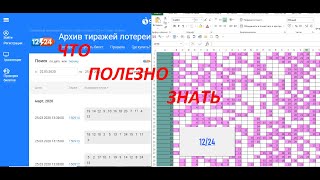
The creator accessed draw archives, finding the oldest surviving draw number 23100. Draws occurred once daily initially, then increased to twice daily, then twice hourly, and now every 15 minutes continuously.
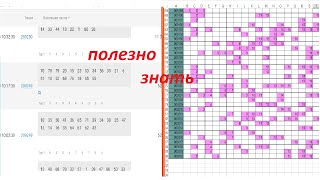
Analysis of 6080 draws shows that consecutive numbers (horizontal spikes) are rare, with pairs being most common, followed by fewer triples and quadruples. Vertical spikes also show similar patterns.
Dividing the field into channels (8 channels of 10 numbers or 16 of 5) and betting sequentially over 100 draws yields winnings not exceeding half the spent amount. Covering the entire field is not profitable.
The ratio of even to odd numbers in draws is typically balanced, with 10 even and 10 odd numbers appearing rarely. No draws consist solely of even or odd numbers.
The average sum of drawn numbers is calculated as 810 (midpoint of min and max possible sums). Sums near this average indicate uniform distribution across the field. The trend line remains close to 810.
By dividing the array length by 4, the creator shows how each number's frequency deviates from the average. Relative frequencies vary, indicating some numbers appear more or less often.
The creator encourages studying the game before spending money, noting that lotteries are for entertainment, not income. Budget should not suffer from this hobby.
The video demonstrates that while Keno draws exhibit statistical patterns like balanced even/odd ratios and sum averages near 810, no betting strategy guarantees profit. The creator advises treating lotteries as entertainment and avoiding financial harm.
How many numbers are drawn in Keno from a pool of 80?
20 numbers are drawn.
00:55
What is the average sum of numbers in a Keno draw?
810
03:26
How often are Keno draws held currently?
Every 15 minutes continuously.
01:33
What is the most common type of 'spike' (consecutive numbers) in Keno draws?
Pairs of consecutive numbers are most common.
02:16
What is the ratio of even to odd numbers typically observed in Keno draws?
10 even and 10 odd numbers.
03:13
What does a sum of drawn numbers near 810 indicate?
Numbers are uniformly distributed across the field or closer to the middle.
03:38
Systematic Approach to Lotteries
Introduces a data-driven method for analyzing lottery games, encouraging informed play.
00:03Historical Draw Frequency Changes
Reveals how draw frequency evolved from daily to every 15 minutes, showing operational changes.
01:20Average Sum Calculation
Provides a simple formula to calculate expected sum, useful for statistical analysis.
03:26Lottery as Entertainment
Reminds viewers that lotteries are games of chance, not income sources, promoting responsible gambling.
04:32[00:03] touch. This short video may be useful for those interested in lotteries. I suggest approaching the Lotus game wisely. I will say right away that I am not advertising or criticizing any lottery or its organizers. I am not
[00:15] going to. I am only suggesting using available tools to at least slightly systematize the game process. You also need to understand that he trusted the information from the site before assuming its growth accuracy. All the information
[00:28] mentioned in this video is publicly available, such as top100. A random number generator is used for games and movies. It is very likely that it exists. We know that these devices produce highly random results, but
[00:42] the presence of a random operator in the code will not deprive you of the opportunity to filter out the desired results. For example, a hypothetical lottery organizer could take into account the bets made and skip results only with a win of
[00:55] no more than a certain amount. We hope that the world is not like that, so we analyze the theme. In this game, 20 numbers out of 80 are given to the player. The player is asked to 20 numbers out of 80 are given to the player. The player is asked to choose the bet size from 1 to 10
[01:07] numbers. A ticket for one number costs the same as for 10. The reward amount The for 10. The reward amount The 10 numbers in one bet is the rule of the world. The size of the
[01:20] draw array for processing. I decided to check how large it can be by typing in the browser the address of the first draw. We find that such a page does not exist. By poking the buttons on the keyboard, I found the oldest of the
[01:33] surviving draws, it has the number 23100. I downloaded several hundred draws, starting with the one mentioned when draws were held once a day, then they began to be held twice, then they reached twice an hour. Now the interval has been
[01:48] reduced to 15 minutes, and the draws take place without breaks and any fees. For ease of processing, I did not download all 180 thousand draws. I download all 180 thousand draws. I limited myself to 6080 numbers and will give you this
[02:01] means that the playing field can be covered in 4 there's, for example, in the numbers do not form so-called horizontal spikes, that is, we see that the entire array of draws is replete with vertical and
[02:16] horizontal spikes in these tables, I counted how many spikes are present in the selected range, most often these are pairs of numbers 4 times less than threes, even less spikes of 4 numbers with horizontal spikes, the same
[02:30] picture, most often pairs of several double spikes, but besides them, this makes bets in general on consecutive numbers for cinema not very effective, let's divide the playing field into 8 channels of 10 or 16
[02:46] channels of 5 numbers, let's try to bet sequentially in our range, having invested a draw, say, for 100 draws, the winnings on one channel will not exceed half the money spent when covering the entire field with such bets, we
[02:58] also do not take this into account the money spent, however, it can lead as here, but this is pure luck, and in this small table of even and odd numbers dropped from as you can see, the ratio is different 10 even 10 odd numbers squared very
[03:13] rarely at the same time we do not Let's find no draws in which only black or only odd numbers would come up in this column. The sum of the numbers by draw. To calculate the average value of the sum, we can add the
[03:26] maximum possible value to the minimum possible value and divide the resulting sum in half. For the keno lottery, the average calculated sum will be 810. Knowing this indicator, we can judge the arrangement of the numbers on the field. They are all at
[03:38] the beginning of the field. The sum is minimal. If we strive for the average calculated sum, the numbers that come up are located uniformly along the field or closer to the middle. Movie draws. The red trend line is located
[03:53] near the average value that we just calculated. It's important to note that the further the sum is from the average, the more often it occurs on the same time on the trend line itself. The value of respect for betting can be
[04:06] taken into account. If the field overlaps over 4 draws, we can divide the length of the array by 4 and see how often each number comes up. The cell indices in this table indicate how much the frequency of
[04:19] each number differs from the average, that is, how often or rarely it is repeated. Please note that the relative frequency of numbers is not can stop here for a more detailed analysis. Programs and websites have been developed.
[04:32] I just wanted to show that you can study the game yourself before mindlessly spending money on them. In any case, this is a game about Korea, not a means of earning money. We play for fun, but don't forget that the budget shouldn't
[04:45] suffer from this hobbit. I'll try to look at the others inside as soon as possible. I wish everyone good health and total luck.
⚡ Saved you 0h 04m reading this? Transcribe any YouTube video for free — no signup needed.