
Lottery Generator Not Random
45sRevealing that lottery draws aren't truly random sparks curiosity and debate among viewers.
▶ Play Clip"Title promises useful observations and delivers a data-driven analysis of lottery patterns."
This video analyzes the Russian instant lottery '12/24', examining number frequency, sum distributions, and betting strategies using historical draw data. The presenter uses macros to calculate repeatability, hot/cold numbers, and the effectiveness of various betting systems, concluding that most strategies yield losses over time.
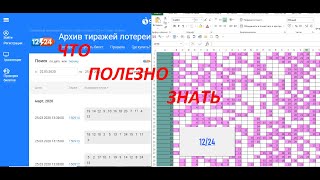
The 12/24 lottery has 24 numbers, players choose up to 12. Wins occur for matching 8, 9, 10, or 11 numbers, or for matching none (0). A random number generator is used.
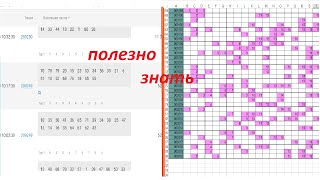
A macro calculates how often each number appears over 10 draws. The sum of deviations is zero. Colors in the table show persistent hot or cold numbers over time.
Using even/odd combinations, with bets of 60,000 rubles over 100 draws, winnings were 24,000 rubles. Over 100 draws with 6,000 rubles bet, winnings were 3,660 rubles.
Betting only on numbers 1-12 or 13-24 resulted in worse outcomes: 6,000 rubles bet yielded only 1,620 rubles in winnings.
The average sum of drawn numbers is 150. Values near 150 are common, but exactly 150 is rare. Deviations from 150 are less frequent as distance increases.
Betting on the combination from the previous draw for 100 draws resulted in winnings of 2,040 rubles on 6,000 rubles bet. Betting after one draw gap gave 1,740 rubles. All strategies yielded less than 50% return.
Using the 10 most frequent (hot) or least frequent (cold) numbers from the last 10 draws, betting 6,000 rubles resulted in winnings of 2,460 rubles. Placing results in the middle of the array gave even worse results (1,380 rubles).
Combining even/odd separation with hot/cold analysis did not improve results; winnings remained at 2,460 rubles for 6,000 rubles bet.
The lottery allows postponing a draw for 15 minutes or an hour. Example: draw #150524 was postponed for an hour.
The video demonstrates that common lottery strategies like betting on hot/cold numbers, even/odd combinations, or previous draws consistently yield losses over time. The presenter advises playing more intelligently rather than avoiding the lottery entirely.
What is the range of numbers in the 12/24 lottery?
24 numbers, from 1 to 24.
00:15
How many numbers can a player select on a ticket?
Up to 12 numbers.
00:15
Which match counts yield a prize in the 12/24 lottery?
Matching 8, 9, 10, or 11 numbers, or matching none (0).
00:27
What is the average sum of the drawn numbers?
150.
03:47
What was the total winnings from betting 60,000 rubles using even/odd combinations over 100 draws?
24,000 rubles.
02:34
What was the winnings from betting 6,000 rubles on numbers from one half of the field?
1,620 rubles.
03:18
What was the winnings from betting on the previous draw's combination for 100 draws with 6,000 rubles?
2,040 rubles.
05:12
What was the winnings from using hot/cold numbers strategy with 6,000 rubles bet?
2,460 rubles.
06:26
How long can a draw be postponed?
15 minutes or one hour.
07:37
Persistent Number Repeatability
Shows that certain numbers maintain hot or cold status over long periods, contradicting true randomness.
01:08Sum Distribution Around 150
Demonstrates that the sum of drawn numbers clusters near the average, with exact 150 being rare.
03:47Ineffectiveness of Previous Draw Betting
Quantifies that betting on previous draw combinations yields less than 50% return, debunking a common strategy.
04:42Hot/Cold Numbers Underperform
Even focusing on extreme frequency numbers fails to produce consistent profits.
05:39[00:02] is publicly available on the official website of the table from. Since you are watching this video, it means you are interested in the topic of batteries. In the next few minutes, I propose discussing some features of one of them, a
[00:15] battery of 12 to 24. Briefly about the lottery itself, consisting of twenty-four numbers and up to 12, this is the playing field. This is how we mark the numbers to
[00:27] insert. Everything is easy to move. A convenient big win is promised to us completely match or completely do not match the dropped or completely do not match the dropped numbers. Then for 8, 9, 10, and 11 guessed or
[00:42] not guessed, a Cecil is also provided and a reward is what you can win. About the just add that a random number generator is used as a lottery drum. is used as a lottery drum.
[00:54] computer cannot produce a truly random number. Another thing is that in the outside world, they are not visible to an outsider. The principle of the generator’s operation is described here are examples. It is not randomness, randomness from our random number generator. 1 and wanted to talk about the
[01:08] could ideally become a situation with two combinations, draws, thus we can calculate the number of thus we can calculate the number of repetitions of each number in this case,
[01:22] for 10 draws, each word was given five times in reality, everything is much more complicated now a simple macro will calculate how the real repeatability of numbers differs from the calculated one, the macro calculated how often or
[01:36] rarely each number came up at the time of each draw if we calculate the sum of the numbers received for each draw, we get 0 for ease of perception, I formatted the result and for each
[01:51] draw if we zoom out, we will see 100 colors are preserved for a fairly long time, this means that the numbers corresponding to these columns maintain their repeatability, that is, they
[02:04] are repeated often or rarely throughout the entire two periods if the numbers were repeated also evenly and constantly as in our example, then in this entire table we would see only zeros and the light was distributed
[02:19] evenly across the entire field well, I think with this a little clear, let's move on in my example I used even and odd numbers in different combinations in reality already in the amount
[02:34] Let me remind you that 5, 6, and 7 matches are not rewarded. The winnings amounted to 24 rewarded. The winnings amounted to 24 thousand with bets of 60,000. If we take a smaller sample with bets on 100 draws, we will spend 6,000 and win
[02:51] 100 draws, we will spend 6,000 and win 3,660. Out of a hundred draws, there was only one draw where the balance was shifted quite strongly, that is, we could win 1,200 rubles. The total winning combination out of a hundred draws was 27 for three thousand six hundred and
[03:04] seventy rubles. What if we fill out the ticket only with the numbers from one half of the field about this table? All the same taxes and the ratios of the first and second halves of the field up to and including 12 and 2 24
[03:18] results are calculated. As you can see, it's even worse. Having bought tickets for 6,000 rubles, we could have Having bought tickets for 6,000 rubles, we could have won 1,620. This is really sad. One of the indicators of the distribution of numbers on the field is the sum. It is obvious that if the dropped
[03:32] numbers are located at the beginning of the field, then in all of them the sum will be less than the average, and if at the end, that is, in the right half, then the sum There will be more columns, z supplied the sum for each past draw. I did
[03:47] abyss. It reported that its average value is confidently held at one hundred and fifty, and this is the average calculated sum for the beginning of the tray, which we get by adding up all the numbers on the playing field and dividing the sum in half.
[04:02] Among the sum values, we can only talk about the balance of positive and negative deviations. The graph shows the sums from our array of draws. In terms of trend, it lies precisely at the 150 mark. We can notice that the further from this mark the
[04:15] sum value is, the less often this value occurs. At the same time, the value almost never occurs at the 150 mark. This indicates that in sum is located near the average value, while maintaining a
[04:30] average value, while maintaining a sum equal to 150 is almost never. If the sum differs so much, then perhaps the combinations of the closest draws are quite different from each other. In this table, I compared the closest draws
[04:42] presented in rubles so that it is clear how effective it is to play according to this system. I asked the macro to count in reverse order with you. Table It didn't work out obliquely. The thing is, when approaching the edge of the array, the macro didn't have
[04:56] sufficient input data, and therefore the table would have turned out oblique. Let's say we bet on the combination of the just-completed draw for 100 draws. What can I say? The results are not at all encouraging. We
[05:12] could have won 2040 rubles on the 6000 ruble consoles. The next time, after one terrace, we would have won 1740 rubles. The remaining amount is not much different, but nowhere near
[05:24] 50 percent of the bet. Therefore, the game scheme can be considered ineffective. There is certainly a win, but all of them do not exceed 240 rubles. If you read how often numbers repeat over several draws to reach the
[05:39] on the hottest or coldest numbers. We will calculate 100 draws. For the calculation, we will take 10 draws before the current one. In the table, we see the numbers arranged in descending order by frequency over the
[05:53] last 10 draws. Specifically, the last draw, the number 15, was repeated over our 10 There were most draws, 11, respectively, highlighted half of the borders in blue to make it clearer. I marked the numbers
[06:09] that came up in the next draw. If we had bet on the same numbers in the previous draw, either hot or cold, then you played 240 rubles. Let's look at the statistics and bets of 6,000 rubles. You played two
[06:26] thousand four hundred and sixty rubles. Again, this is not important. But in this table, Again, this is not important. But in this table, I placed the result in the middle of this array. It's I placed the result in the middle of this array. It's even worse: 1380, very rare,
[06:39] even worse: 1380, very rare, yes, even 60 rubles. We can calculate the draws and make a sample of 100. The result hasn't changed much. Besides, as we remember, even and odd numbers come up in approximately equal
[06:54] quantities. We can take this into account, that is, we can also calculate the repetition of numbers by capturing the selected number of Teresas. Let 's say we read "Pay Roses" and then 100 again. Here are the results: even and odd numbers are sorted by the
[07:08] number of repetitions separately from each other. Insert 6,000 by 100. Take your winnings on the same stocks already. 2460, of course, without taking into account the last draw, the result of which I don't know yet, and
[07:22] another very fleeting second, he said that he hit 12-24, pass every 15 minutes to the bottom and not give, and once it can be postponed, this is written in the rules. You see these gray stripes. I marked the name of the
[07:37] postponed draw. It will be useful for someone to know that the battery can be postponed for either 15 minutes or a whole hour. Terrace number one hundred and fifty 524 was postponed for a whole hour. This is approximately what a
[07:53] quick analysis in the tray looks like. 12 to 24. I am by no means dissuading you from playing the lottery, I just want to suggest you do it more intelligently. On this, I say goodbye. I will try to sort out the others in the tray as soon as possible. Good luck to
[08:10] everyone, total good health.
⚡ Saved you 0h 08m reading this? Transcribe any YouTube video for free — no signup needed.