
Fasting vs Starvation: Key Difference
45sClears up a common misconception with a simple, empowering definition that viewers can immediately understand and share.
▶ Play Clip"The title accurately reflects the content, which is a genuine beginner's guide to intermittent fasting by Dr. Jason Fung."
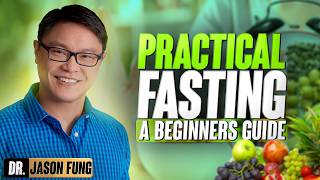
This video provides a comprehensive beginner's guide to intermittent fasting, covering its definition, benefits, safety considerations, and practical tips for getting started. Dr. Jason Fung emphasizes that fasting is a voluntary and controlled practice, distinct from starvation, and offers a flexible approach to improving health and managing weight.
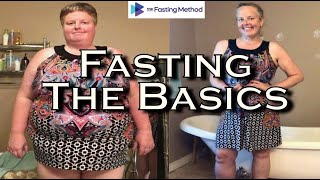
The video aims to cover the who, what, when, where, and why of fasting, with tips from The Fasting Method used to help Stephanie lose weight.
Fasting is defined as voluntary abstinence from food for spiritual, health, or religious reasons, with the key difference being control. Starvation is involuntary due to lack of food availability.
Children, pregnant or breastfeeding women, underweight or malnourished individuals should avoid long fasts due to nutrient needs. Those on medications or with a history of eating disorders should consult a doctor.
Fasting can be done at any frequency (yearly, monthly, weekly, daily) and for any duration, from 12-14 hours to multiple days. The world record is 382 days.
Key benefits include weight loss, reversing type 2 diabetes, reducing risk of heart disease, stroke, and cancer, increased energy, mental clarity, saving time and money, and spiritual/religious reasons.
Classic fast is water only, but variations include green tea, herbal teas, black tea, coffee (with or without cream), and bone broth. These are not classic fasts but can still be effective.
Time-restricted eating (16:8) involves fasting for 16 hours and eating during an 8-hour window. A 24-hour fast (one meal a day) is another popular option, typically done 3-4 times per week.
Recommendation: Start by cutting out snacks for a week, then progress to a 16-hour fast. Allow green tea, herbal teas, or coffee with cream (no sweetener). Adjust based on results.
Consistency is key. Like adjusting to a bright room, fasting becomes easier with practice. Skipping breakfast becomes a habit, leading to automatic weight loss.
Intermittent fasting is a flexible, voluntary practice with numerous health benefits. By starting slowly and making it a habit, anyone can successfully incorporate fasting into their lifestyle.
What is the key difference between fasting and starvation?
Fasting is voluntary and controlled, while starvation is involuntary due to lack of food.
00:30
Who are the groups of people who should not do long fasts?
Children, pregnant or breastfeeding women, underweight or malnourished individuals.
01:48
What is the world record for the longest fast?
382 days.
03:13
What is time-restricted eating (16:8)?
Fasting for 16 hours and eating during an 8-hour window.
05:51
What is a 24-hour fast also called?
One meal a day (OMAD).
06:26
What is recommended for beginners to start fasting?
Cut out snacks for a week, then progress to a 16-hour fast.
07:00
What is the tip from Stephanie for successful fasting?
Make it a habit by repeating it consistently.
07:50
Fasting vs. Starvation
Clarifies a common misconception, establishing the voluntary nature of fasting.
00:30Who Should Not Fast
Provides essential safety guidelines for vulnerable populations.
01:48Health Benefits of Fasting
Lists multiple benefits including weight loss, diabetes reversal, and disease risk reduction.
03:59Making Fasting a Habit
Offers a practical, psychological tip for long-term adherence.
07:50[00:00] Welcome back, everybody. Today we're going to get back to basics with fasting, the who, what, when, where, and why. And make sure you like the video for more. And stick
[00:12] around to the end where I'm going to share some tips that we use at the fasting method to help Stephanie lose her weight. Because that's what we're here for. We're here to learn from each other, to help each other and inspire each other. So let's get right into it.
[00:30] Isn't fasting just starvation? I hear this question all the time. So it's important to be clear. What is fasting? So fasting is defined as the voluntary abstinence of
[00:47] food for spiritual, health, religious, or other reasons. And the keyword here is voluntary. You're always in control when you fast. What it means is that there's food available,
[01:03] but you choose not to eat it. And the reasons are up to you. Starvation on the other hand is when you don't know when food is going to be available. That's not what fasting is.
[01:17] This is a conscious decision on your part to not eat. Don't forget that you're always in control of this process. You can start fasting at any time. You can stop fasting with
[01:30] time. If you don't feel well, you can stop. If you do feel well, you can start. You can do more or less. It's always voluntary. And that's the key difference between fasting and starvation. There are some people who shouldn't fast. Remember, when you're fasting, you're
[01:48] not eating. So there's no nutrients. And in certain conditions, you want to make sure you're getting enough nutrients. That is, if you're a child, that is your growing, or if you're pregnant or breastfeeding, then it's very important to get enough nutrients. So
[02:02] those people should not do long fast, for example. There's also other situations. If people are underweight, or if they're malnourished for any reason, of course, then again, nutrients
[02:14] are very important. And those are situations where you don't want to fast. However, in most other cases, for adults, anybody can fast. In some situations, you should really talk
[02:26] to your doctor. If you're taking medications, for example, some need to be taken with food. And in those cases, you should talk to your doctor about how you should adjust your medications so that you can fast. The other situation is if you're on medications that are going to
[02:42] affect your blood sugar. So make sure that you talk to your doctor if you're really taking any medications at all. If you have a history of eating disorders or anorexia nervosa, then you might want to be careful and also speak to your doctor. You can fast any time you feel
[03:01] like it. So you can fast once a year, you can do it once a month, once a week, or even every day. And how long you fast for is completely up to you. You could just fast from dinner until
[03:13] breakfast the next day. That's 12 or 14 hours. You could go to 16 hours, which is called time-restricted eating. You could go to 24 hours, like a 1 meal a day schedule, or you can do multiple day fast. The world record for fasting is 382 days. So there's really no upper limit
[03:33] to fasting. And you can also vary it up. So if you're on holidays, going on crude, or it's Christmas time, you can fast if you want to, or you can stop fasting. Maybe after Christmas,
[03:46] you might do some more just to lose some of the weight. So you can turn it on, turn it off, start, stop, whatever you feel like. It's completely up to you. There are many great reasons to fast.
[03:59] Probably the most obvious one is to lose weight. And it's a great way to lose weight. After all, if you don't eat, you're going to lose weight. But there's a lot of other health benefits to fasting.
[04:13] You can reverse your type 2 diabetes. So if you don't eat, your blood sugars will fall. And that's going to let you manage your blood sugars without taking medications. And if you reduce your weight
[04:26] and reverse your type 2 diabetes, that's going to put you at far less risk of all types of diseases, like heart disease, stroke, cancer. And these are the biggest problems that we face in health
[04:39] today. But other than that, lots of people feel better when they're fasting. That's why people often say it's a cleansing period or a detoxification. So a lot of people feel that they have more
[04:52] energy when they're fasting. And they feel that they can think more clearly. And there's good reasons why that might be. But there's also other, more practical reasons. It's a way to save time.
[05:04] It's a way to save money. It's a way to simplify your life. And that's not even to mention a lot of spiritual and religious reasons to fast. Fasting is really just any period of time that you don't eat. And it can
[05:20] differ along two major pathways. One is what is allowed during the fasting period. A classic fast is water only. But there's many different ways to change that. Many variations. You can allow, for example,
[05:36] green tea, herbal teas, black tea, coffee, coffee with cream, or even bone broth. And while these are not classic fast, you can still do very well with these fast, so don't rule them out. You can really fast for
[05:51] any period of time. But there's two very popular regimens. One popular regimen is called time restricted eating. It's also called a 16-8. And what it means is that you fast for 16 hours and you eat during an
[06:07] eight-hour window. So, for example, you might decide to start eating at 11 a.m. and eat only until 7 p.m. And then after 7 p.m. you'll stop. Another popular regimen is a 24-hour fast, which is sometimes also called a one-meal a day. Here you
[06:26] might eat from breakfast to breakfast or dinner to dinner, for example, giving you close to a 24-hour period where you're not eating. These fasts are very popular, and generally the longer fast, you might do less often. So, while a time
[06:43] restricted eating, it might do six to seven days per week. One meal a day schedule, most people will do three to four times a week. But there's nothing stopping you from doing more or less according to your needs. So, if you're just starting to fast, what would
[07:00] I recommend? I would start by cutting out snacks for a week, just eating breakfast, lunch, and dinner. And then you can progress to a 16-hour fast or time restricted eating. And during that period of time, you might allow green tea, herbal teas, and coffee with a little bit of cream, but no
[07:20] sweetener. This is a very lax variation, just to let you get used to it. If you're getting great results, then continue. There's no reason to stop. If you're not getting the results you're hoping for, then you can slowly change it to a longer fast, or maybe more of a classic
[07:38] water only fast. But remember, whatever you do, make sure that you're staying safe and healthy while you're doing it, you're feeling well and keep on
[07:50] going. So, here's a tip from Stephanie that we used at The Fasting Method dot com. Make it a habit. So, just remember that everything is hard when you get started. You're not used to it. Everything seems so difficult. But if you keep doing it over and over again, you get used to it. This isn't just true for
[08:12] everything. If you go into a very bright room, for example, you're going to be blinded at first, but then you're going to get used to it. Same thing for fasting. At first, it's going to feel very strange not to eat, but the more you do it, the more you get into the habit of it. For example, I don't eat breakfast very much. And it's really easy for me to skip breakfast, because I'm in that habit. It doesn't feel strange for me to skip breakfast. It feels strange for me to have breakfast.
[08:41] So, when I have it, it's a real treat that something I don't often get. But most of the time, I just don't go. I just have a coffee, I have a tea, I just go on without it. If you make it a habit, you're going to be able to do it day after day after day without even thinking about it. And that was the secret in the 1970s. When they ate dinner at 6 o'clock, and they didn't eat again until 8 o'clock, it was a habit.
[09:09] So, they always got 12 to 14 hours of fasting without even thinking about it. If they wanted to do more, they could simply tack it on. But if you make it a habit, you're going to have automatic weight loss.
[09:23] And that's the basics of fasting to get you started. Make sure you like, comment and subscribe below, and turn on the bell for notifications, and check out the other videos in this fasting playlist.
[09:36] Bye everybody.
⚡ Saved you 0h 09m reading this? Transcribe any YouTube video for free — no signup needed.