
Stop AI Boring Frameworks!
45sThe creator's blunt, direct feedback to the AI about its boring framework names and his demand for more creative options is highly relatable and engaging for viewers frustrated with generic AI outputs.
▶ Play Clip"The title promises a live stream with Q&A and tool demos, which the video delivers, though it's heavily promotional."
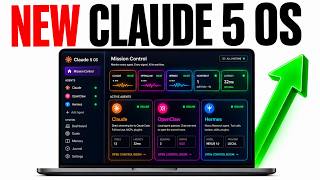
This video is a live stream where the creator demonstrates and discusses various AI automation tools built into their 'Agent Operating System' (Agent OS). The core focus is on showcasing new features like Hermes Cloud (a 24/7 cloud-based AI agent), the 'Lost Click Machine' (an SEO tool that finds zero-click keywords), the 'Dual Engine Coder' (integrating GPT-5.6 with Claude Code), and the 'Apollo Voice Command Engine' (a voice-controlled agent). The creator also emphasizes the importance of iterative improvement of AI prompts and frameworks, and promotes their paid community, the AI Profit Boardroom, where these tools are available.
The creator criticizes the AI's framework names as 'boring' and 'cringe', demanding more imaginative names like 'Infinite Context Engine' and insisting on lists of 15-20 options.
Demonstrates an existing outreach engine within Agent OS that can find leads via Hunter API and send emails, automating sales prospecting.
Confirms that Agent OS can be hosted on a VPS, with tutorials available in the community. The creator offers a ready-to-use download for plug-and-play installation.
Requests a filter in the SEO tool to find keywords with high impressions but zero clicks, and the ability to view keyword data across all websites at once.
Emphasizes that guides must include screenshots, visual elements, and a clean, bullet-pointed call-to-action. The CTA should be the framework itself.
Describes the 'Infinite Content Engine' that uses Notebook LM to generate short videos, podcasts, infographics, slide decks, and reports from a single source, all organized in galleries.
Announces that Claude's Fable 5 access has been extended to July 19th, speculating it may become permanent due to competition from GPT-5.6.
Shares a testimonial from a member who built their own Agent OS based on the creator's setup, customizing it with Fable 5 and adding their own workflows.
Introduces Hermes Cloud as a 60-second deployable AI employee that runs 24/7 in a sandboxed container, accessible via Telegram, Discord, and Agent OS, with pay-per-use pricing.
Demonstrates the 'Lost Click Machine' that finds keywords with impressions but no clicks from Google Search Console data, allowing one-click content creation and deployment to capture lost traffic.
Shows how to integrate GPT-5.6 with Claude Code, allowing users to switch between models mid-build, use GPT-5.6's image generation, and avoid token limits of Fable 5.
Demonstrates a voice-controlled agent that can open apps, build websites, and perform tasks hands-free using ChatGPT's real-time API, with a wake word and low latency.
Explains how the system uses Notebook LM MCP to generate five content formats from one research session, with galleries for each format and files saved to Obsidian vault.
Promotes the AI Profit Boardroom community, offering the Agent OS, coaching calls, daily tutorials, and a map to connect with local AI builders.
The video showcases a comprehensive suite of AI automation tools built into the Agent OS, emphasizing efficiency gains in SEO, content creation, coding, and voice control. The creator positions their paid community as the gateway to accessing these pre-configured systems and ongoing support.
What is the main problem with AI framework names according to the creator?
They are boring, cringe, and not imaginative.
How does the Hermes outreach engine find leads?
It uses the Hunter API to find emails.
01:30
What is the 'Lost Click Machine'?
An SEO tool that finds keywords with high impressions but zero clicks from Google Search Console data.
18:00
How long does it take to deploy a Hermes Cloud agent?
60 seconds.
16:00
What is the 'Dual Engine Coder'?
A system that integrates GPT-5.6 with Claude Code, allowing users to switch between models mid-build.
20:00
What API does the Apollo Voice Command Engine use?
ChatGPT's real-time API.
22:00
How many content formats can the Infinite Content Engine generate from one research session?
Five: short videos, podcasts, infographics, slide decks, and reports.
24:00
What is the recommended way to present a call-to-action in a guide?
Use bullet points, clean formatting, and make the CTA the framework itself.
08:00
Why does the creator prefer using GPT-5.6 over Fable 5?
GPT-5.6 gives more tokens on subscription and is not going to be charged extra.
12:00
What is the 'Infinite Context Engine'?
The creator's memory system for organizing all AI interactions.
26:00
Framework Naming Critique
Highlights the iterative process of refining AI outputs and the importance of creative naming.
Hermes Cloud 60-Second Deployment
Demonstrates a significant reduction in setup time for AI agents, making them accessible to non-technical users.
16:00Lost Click Machine SEO Strategy
Introduces a novel approach to SEO by targeting zero-click keywords, turning impressions into traffic.
18:00Dual Engine Coder Integration
Shows a practical workaround for token limits by combining GPT-5.6 with Claude Code.
20:00Apollo Voice Command Engine
Demonstrates a hands-free, real-time voice agent that can perform complex tasks, reducing reliance on keyboard.
22:00[00:00] I need you to come up with better frameworks cuz the ones that you've given are pretty boring and not that useful. You want to think of something more imaginative for example like infinite context engine. Can you delete the Just woke up. Ready. Go. Serve me well. How many hours did you have it running? Delete Hermes cloud. needs to be more simple and easier to understand. No, but for example like Hermes infinite context engineer Heat. Heat. Let's
[00:55] get it, Volteran. Heat. Heat. Hi, Julian. Julian here. It's me, another Julian. Update your skill for coming up with frameworks based on this. Always give me a list of like 20 with the sentence description of each as well and how it fits naturally. Avoid cringe stuff. Update your skill so you never forget this again. Then give me more frameworks for Hermes. I am indeed Jason. Let's go. Can you build a prospecting and sales agent in the
[01:50] OS. We actually already have it. Uh so let me show you this. So if you go to Hermes over here, then you're going to go to the outreach engine over here. And to prospect, all you do is you go to the lead section and you tell it what type of leads you want. It will find the emails with your Hunter API key and it can also send the emails as well. So, we already have the Hermes
[02:45] sales and prospecting engine inside here. Lazarus says, "I got my treadmill monitor set up, too." Yeah, it's so good. So good. I think I'm on Let's see how many steps I've done today. 7 and a half thousand. Not too bad. It's about 7:30 in the morning. Feels good as well. Do you have a guide on her cloud already? Hermes cloud. Yeah, you can host the agent OS on a a VPS as well. Um, we've got a
[03:40] lot of tutorials on that inside the aircraft boardroom. So there's like two or three members that have shared how they set it up on VPS and then you can see what they did. But yeah, you can set up the HOS on VPS. Welcome here. We just did a 1hour course on chat cheap work yesterday. Is it tedious to build tools like this? So we have the if you just want to get my setup. I mean, I
[04:35] spend about three to four hours improving it every day. But if you want to get my setup ready to go, it's inside the air profitable boardroom. And you can just get my uh download of this so that you can just install it plug and play. You don't need to mess around with it. So you can just use my system and and take it from me. That's inside the profit volume link in the comments description or go
[05:30] to the apiprofit.com. Also, can you come up with a better framework name. Yeah. Uh Riches, if you want to go to aiprofitboarding.com, that's where it is inside our community. So, I've already updated your skill for framework. So, you should be giving me like 15 to 20. I don't know why you just giving me five. No, not really. I I don't really um do much of the GBP optimization, but you can use the system for local SEO
[06:25] for sure. Thanks for joining. Nice. I notice that every single name in your framework says engine. This is super boring and not useful at all. doesn't capture the imagination anyway. These are all really boring titles that don't actually help. You need to come up with more relevant topics to the topic. So if the topic is about cloud per cloud, then you need to find something interesting that captivates and creates Give me 15 to 20 more ideas.
[07:20] Make sure that when you have the sentence next to each, I can tell like even the way you're responding, for example, using words like bold outcome, it's just super boring. Um, and then also like the never offline engine. These are really cringe titles. So update your skill to avoid these mistakes. Give me 15 more. Don't make these mistakes again. for the SEO tool with Hermes with the keyword research and Google search console connected. Can you allow
[08:15] me to configure it so that I can look through the keywords that have no clicks but are getting a lot of impressions? So, it's like an extra filter. And then also, can you allow me to have a look at the keyword data across all of our websites at once using this system? new SEO tool. See, these are better. But you see how you've not really given it a proper name. Hello T2 got open. Nice. I can
[09:10] see you're using Hermes agent. We do. We use a lot of that. Nice. I have to duct tape my keyboard and mouse to the treadmill. That's wild. Make sure that GPT516 is a default or maybe you could even have a drop down where you can switch between them. Then add your builds with GPT 5.6 into the workspace for that. Make sure the conversation history is saved. Make sure you test it and then create a guide on
[10:05] it as well. Uh, make sure when you're building it out that you have GPT 5.6 with Oorth using codecs that we've got installed locally to build it out. GPT 5.6 and claw code. Um, yeah. So we've got I mean like for example daily usage. So we have a voice agent with Hermes agent. We have a builder that can do SEO. We have Hermes Asteros so it can pull in the latest news, the latest topics, etc. So
[11:00] we've got all of that built into the agent OS and we just switch between it. Lazarov I finally got to spot in project. I can type and walk. Feels like this day almost. What uh you can check out the aircraft for boarding link in the comments description if you want to see more details on that. There you go. It's a good course. Yeah, the new codeex much better now for sure. Okay, perfect. Now create a guide
[11:55] on it. So when you're doing these guides, you always need to include screenshots and explanations of the guide, too, to make it more visual. So update your skill so you never forget that again. And also add them in. Notebook LM can you add separate tabs and also create a more visual guide and gallery inside each section. So for example in the short video section add a gallery of everything that we've created with short videos using notebook
[12:50] and then add a section for infographics for presentations for podcasts etc. And also generate assets for each part with a gallery so we can quickly like have a look what we've seen and what we've created etc. And create a guide for all of it too. Wow. No, I've not heard of that recently honestly. If I was you, I'd probably just try and create another one. Hey, you need to stop just giving me three options. So, I've
[13:45] already told you twice today to stop doing this. So, when you give me options for frameworks, you need to make sure you give me like 15 to 20 ideas. So, stop messing around on that. Make sure you update your skill and make sure you improve in the future. Is there a way to make the guides look more visual and beautiful? They just feel a little bit boring when I scroll through them. What can you do to
[14:40] improve this guide and future guides? Agent OS has turned out. Yeah, for sure. I've seen a lot of people creating them lately, which is good. You know, everyone's learning and growing together. That's what we like. I think as well at that point if you have that situation just switch over to chat GPT. I would just use GPT 5.6 instead. It's it's just as good if not better. And that way you don't need to worry about it,
[15:35] you know. There's like two screenshots in this and they literally show nothing. So, the screenshots are the same and they're super boring as well. So, you need to make sure you improve that in future. Update your skill for guides so you stop messing up on that. See the attached CTA? You see how it's just a long boring paragraph? You do not want that. The CTA should be like the attach. So, you want nice bullet points, very
[16:30] clean, easy to read, uh, nicely formatted as well. Add some nice quotes throughout as well. So, update your skill to remember that. And then also, if you check out the guide, and I'll link to it right now, you see how there's like really nice animated frameworks throughout. That's what you want. Do you see how on this page as Oh, everything's a bit bigger, so it's easier to see everything. See the CTA and also the CTA is
[17:25] the framework itself. So, update your skills so you make sure that the pin CTA at the top and the CTA throughout is the framework itself that you get inside the HOS. Update skills so you don't forget that again. Update your skill so you don't forget this var. Yeah, fair enough. Fair enough. Sometimes it's just uh you just got to be very very clear and assertive with AI in terms of okay, here's what it needs to improve.
[18:20] Here's where it needs to level up. Awesome. It looks better. Can you update your skill for guides so you don't forget this? Heat. Heat. Heat. Heat. Pork says, "How long did it take you to get the memory galaxy visual? How you like it?" Probably took me about an hour of coding. Yeah. So, I spent about an hour just coding it out. But again, if you want to get my setup just ready to go where you don't
[19:15] need to configure it and you don't need to build for an hour, then you can get it inside the air buffer board. Thank you. Uh we have a team that helps us with that, but we've got a lot of training inside the app volume on how to do that too. Open up my analytics. Open up my analytics. Lazarus. Can't believe it's already 9:00 p.m. Rich says, "Thank you. It was nice to meet you. Many projects." Nice.
[20:10] Yeah. So, I use the GPT 5.6 inside the agent OS. So, for me, it's pretty good cuz, you know, everything's just built inside there. So, if you want to get that, it's inside the proper volume. But essentially, that will save you a lot of time. So, if you're struggling to use it or anything like that, just just check it out. This is uh the agent OS that we're building here. Yeah, usually early morning in Titan for
[21:05] these videos. Heat. Heat. Heat. Hey, Heat. Hey. always. not seeing a response. I've replied to every single response here. Every single comment I've replied to. Um, and I will continue to do so, my friend. Uh, no. I tried to look. It didn't work. There's a bar on cord. It didn't work when I when I tried to update it. So, I can't update it. What are you building? We are building uh a few things here. So, we
[22:00] got GPT 5.6 Six and claw code, Hermes cloud, Hermes Apollo, a new SEO tool, and some new setup for No Glam as well. I am seeing You babysit Claude. Uh, no, no, it's running in the background here. We got loads of loop systems just running in the background. Don't worry about that, Sunshine. Heat. Heat. That's rough. I did a test and burned through my Fable 5 on pro plan in under 30 minutes. That is crazy. But
[22:55] funny too. Yeah, I think you do get a lot more. I mean, we've got token minimization uh playbooks inside the aircraft board, but also, you know, I think Chiefty 5.6 is a lot more generous with tokens than Claude for sure. When do you use fugu instead of fable? Uh if you want to use multiple agents together, right? So for example, fugu is really good for combining multiple agents if you need multiple answers. Um, but that at
[23:50] this point I don't use Fugu that much honestly cuz Fable 5 and GT5.6 are are so good. And also it's quite slow to build with Fugu or for example Fusion. Whereas for example if you're using Fable 5 or GF 5.6 these are way faster and you can go back and forth with them quicker. So we have the system inside the agent OS but for me personally do I build with it every single day? No. Made it
[24:45] build 2000. Yeah I can imagine then. Yeah. So, it's building out a lot All right, peeps. Just going to take a little break. Back in five minutes. Heat. Heat. Heat. Heat. down. Let's see what we got on the questions here. API limited by Hermes agent despite HY3. Then you just switch. So for example, if you if you run out of um tokens on one API, just switch to the next free API. So for example, you can
[25:40] switch to omni route or something like that. Today we're going to be answering some of the latest questions on our agent operating system, how to use it, etc. And this is a powerful system where we can combine all our favorite tools, all our most powerful workflows, build and automate anything. So for example, we have a memory system here. We can orchestrate teams of agents using paperclip. We have for example notebook LM plugged into the system so
[26:35] that we can generate videos and podcasts and infographics and slide decks and reports and have a full studio whenever we need it, whenever we're ready to go with that. We also have for example all of our favorite agents like for example Hermes agent and even if you have cloud-based profiles like you see right here we can use that with our agent OS and we can use this for lead generation and all sorts of cool things. So
[27:30] every day what happens inside the community is people ask me questions and then I answer them inside this community with video tutorial like this just to help you as much as I can and to make sure that you get your questions answered. So let's answer the first one here. This is from John and John only asked this 60 minutes ago. So, we we're getting uh very very fast at this right now. So, let's have a look
[28:25] here. So, John says, "I'm a recruiter and every week I have a pile of LinkedIn messages sitting unanswered. I want Hermes to pull everyone I message 7 days ago, never responded, organize them into a clean sheet, run them through Apollo, and send me a list." Can it do that? Absolutely it can. So the best way to do this is basically give that stepby-step set of instructions that you've just given to us and ask Hermes to set
[29:20] up for you. What it will do from there is ask for certain APIs and ask for certain access to different tools and from there you can start building it out. We actually have something similar inside the agent operating system where we do this just for outreach emails. So we can send emails, we can create leads, we can generate leads, we can follow up with people automatically inside our outreach tool in the Hermes agent OS. And for
[30:15] you, you could build the same thing using LinkedIn as well. I've actually seen there's some tools like for example Composio that works with Hermes agent. So that might help too. Elsa was asking about Fables. Fable 5 got extended again. So, if you haven't seen that already, basically Claude have extended Fable 5 access through to July the 19th. So, Fable 5 is included inside your Claude subscription for another week, which is great news. And I think it's
[31:10] going to get extended again. I think it's going to get extended again simply because it's already been extended like three times. And also they're in serious trouble here because they were going to try and charge for the API. But if they do that then the problem is the GPT 5.6 number one it gives you more tokens on the subscription anyway and number two they're not going to charge for it. So I think if they want to
[32:05] stay competitive and if they don't want everyone to switch over to chat GPT which will people will because they're not really loyal to either AI then they have to keep extending it to the point where they're like okay everyone can have access forever for now. Either that or they have to bring out Opus 5 and Opus 5 needs to be better than GPT516 which I can't see happening either Now, a lot of people are using our
[33:00] setup for the agent OS and then installing it themselves cuz we give our agent OS away inside the air prof. So you can see here Carl, he said he just built his own agent OS based on Julian's setup and then he went into Fable 5 plan mode inside terminal, customized it for himself and added his own functions. He said it looks and feels beautiful. This is really amazing. So you can see here you got Claude, you
[33:55] open claw, Hermes, etc. And also he's added his own custom workflows over here. Looks and feels really nice. And then also it's in German as well. I think that's German. So, it might be Yeah, I think I'm pretty sure that's German unless it's Dutch, but yeah. And uh that is looking great. So, well done for setting it up. And that's a great idea to use Fable 5 to customize it as well. You can really make it
[34:50] look and feel its own. And then also, I like the fact that you've switched over the language as well. So, great work. Thanks for sharing. And also, it's good to see that Fable 5 has been extended now, so you can build even more cool stuff into it. The secret posted a heartfelt thank you to Julian and this amazing community. I will say this is like this is what keeps me going when I see stuff like this
[35:45] inside the air profit boardroom and I see like all the wins and the amazing uh testimonials that we get like every single day. You know, you've just seen two today already. Like it it makes everything work. It um you know for example like the agent OS that we build usually takes me about 3 to four hours a day and just seeing people win and learn and enjoy the process is fantastic. So makes a huge difference. Got
[36:40] a question from M. Jordan, which is, "What is Higsfield? Uh, what is the hype of it and how does it work?" For me personally, I don't use Higfield. I tend to find like it's quite slow, but it does create some amazing stuff. I also just don't generate that much short videos with Higsfield and I found like Higsfield is just good for short videos and short images and additionally as soon as Chat GPT image 2.0 came out
[37:35] I found it better to just go directly to Chat GPT instead of using Hicksfield. So I don't really get the hyper tool. I think it's very flashy on the outside but I just don't use it that much dayto-day. However, it's a cool tool if you're a beginner or if you just want to create a lot of short videos. Got a question from Sylvia. AI models. I'm currently building an online course doing marketing research. Which AI models
[38:30] offer direct access up to-date web information whilst ensuring the protection of the knowhow and nothing else? So, pretty much every single model now has access to web search. So all of them have access to up-to-date web information. You just need to enable web search. So chat GPT, Claude, Hermes, they can all use web search and have the latest information. And if you want to actually create the videos for your course, we have a module on how
[39:25] to do that inside the air profit boarding too which I think will help you a lot. There's actually quite a few course creators inside the air for boarding who are building their own courses using these systems. And the great thing about like AI AFAR videos at this point is it's more interesting better than human content like most of the time. like it's very very hard for me to out compete my own avatar which is sad but
[40:20] that's the state of the world. Uh and also you know like these these workflows are just overpowered too powerful And that is every single question answered. So, thanks so much for watching. That is the Asian. If you want to ask your questions and um get me to answer them and also give you as much advice I can. And also like inside this community is great because number one, it's really positive. Number two, there's always people online
[41:15] 24/7. Number three, you can ask questions and get help from me and the whole community. And then also inside the classroom you get access to all of our trainings, learnings and inside the new daily update section you can also see you can get our agent OS you can get all the new latest trainings from these systems as well. Inside the calendar you can jump on weekly coaching calls, get help and support in real time and then
[42:10] inside the map you can meet people in your local area who are building with AI agents like you. Plus you can direct message me and ask me any questions as well. We actually have over 198 pages of testimonials and wins from people crushing it inside this community. So, if you want to join us, hope to see you inside there. Thanks for watching. Bye-bye. Hermes Cloud has just dropped. And this is a really easy way to basically
[43:05] set up Hermes agent in the cloud, have it running 24/7. It takes a couple of clicks and then 60 seconds later, your agent is live. So you can build an AI employee in 60 seconds. In fact, we call this the 62 AI employee. So, this research just put Hermes in the cloud. This is an always on agent that never sleeps, remembers everything it learns, and it researches and um it can reach you on every single platform.
[44:00] I actually set it up as a profile and wired it into our agent OS. And I'm going to show you exactly how to get the most out of this. Now, if we have a look, for example, we've got Hermes agent built inside our agent OS and we can chat with it over here. It's very quick and easy to use. And the thing with Hermes right now is like there's a bit of a closed lid problem. So
[44:55] imagine hiring the perfect employee. They work brilliantly right up until you close your laptop. Lid down, they stop mid task, mid-sentence every single time. That's basically every agent. Um, and you know, the problem is that it can get stuck. It can break. If it's not in the cloud, then it can sometimes run out APIs. And also, if you're not behind your computer and you need to fix something, that can be a bit of a problem. Now
[45:50] what you can actually use is this cloud setup and you might say you know cloud sounds expensive and technical actually you just pick a name and a model it's online in seconds and you can also set it up with free models as well. So there's a doorway with an agent that never clicks clocks off and it can basically speak to you on every single channel that you actually use. So the doorway is news portal right it's
[46:45] one login that serves over 200 models plus a tool gateway web search image generation etc. Then you've got the agent itself which is a cloud agent so you can give it a name pick model and it gets it own hardened container which is also good because then it's sandboxed and protected in the cloud its own persistent workspace and it runs 24/7 on those portable servers instead of your Mac. So when it's idle um the meter only
[47:40] ticks when it's actually working. So if you stop it then it's not going to use anything and it reaches across every channel. So you have one cloud agent, one memory reachable from Telegram, from Discord, from your agent OS and everything else. And that's how the whole system works. Now you might wonder, okay, what happens when you actually deploy one? So it's pretty simple and easy like you just name it, you pick a model, then it gets
[48:35] put inside a sandbox, the dashboard goes live, it works whilst you sleep. Um, and you know, for example, we can give it a task over here and then it can work in the cloud completely in a separate container. So that's always on. So if you're wondering how to deploy it, you can just go to the cloud over here and then you just sign in and set it up. And it literally takes like 2 minutes to set
[49:30] up. It's pretty simple and easy. So there is a cloud portal here and then you can set up from there. It's like two clicks. I've already set mine up so I can't really show you. But yeah, so the cool thing about this is like every time I was running the agent OS, you know, sometimes it would stop. If it was running on local models, you could uh stop your computer and it stopped running. Also, for example,
[50:25] sometimes something would break inside the Hermes setup or the API would run out and it's like, okay, well, how do I fix it? I have to go back to my computer. I have to set everything up again. Whereas with this setup, we've got our agent running in the cloud and it's ready to go. And it's pretty fast as well. That's the other cool thing. And you can get this set up in like 60 day uh 60
[51:20] seconds, right? So 60 seconds you set up your AI employee and it never asks for a day off. Now, if you're wondering how to build the setup here, we can use a Hermes cloud profile and then we can plug it into your agent OS. So, this is what it looks like when you're set up. You can do it yourself inside the cloud portal and then you can create an isolated profile as well. Now, you might say
[52:15] at this point, okay, I already have Hermes in my Mac. Why bother with the cloud? Cuz your Mac um can break. Sometimes you want a Hermes agent that's sandboxed in a separate container isolated so that it's safer. And then also, if you close your agent OS, it can still run in the background as well. So, it's pretty powerful. You might also say, "Doesn't it use like a lot of tokens?" But actually, you can set this up
[53:10] with a free API or you can use a free model or a cheap model and that way it's it's better. Now, bear in mind like you can have Hermes running in the background. So, even if you don't have a cloud setup, it can run in the background. But the thing is then you have to go back into your actual device to fix it and edit it. And if it stops working, then if you're out and about,
[54:05] you can't go and fix that. Whereas with the cloud model, you can just log into the portal online. It's in the cloud and you can edit it. And also, some people don't want to install Hermes agent on their device because they've got files they don't want the agent to touch. And so if that's the case, then instead what you can do is just have it in the cloud. So let's test this out now. So this is
[55:00] Hermes cloud. I'm going to say okay come with some cute ideas for AI automation. It's going to start building here. The other good thing as well when you're using Hermes is like if you use it inside an agent OS like this then it's plugged into your memory so it understands you your business uh your memory and everything else everything inside one place so that it can use that for context and come up with better ideas. Also,
[55:55] what I will say is it's very very fast to respond. Way faster um than a lot of APIs. For example, when I'm using like Grock 4.5, Grock 4.5 was took like a minute to do something like this. Whereas with the cloud setup, it seems to be really fast and responds quickly, which is awesome as well. So, that's basically it. That's the whole setup. That's how to use uh Hermes Cloud, how to get it set up. Again,
[56:50] if you're wondering how to get it set up, you just go to portal.newsresarchearch.com/cloud. Why would you use it? Because it's always on. It can run with pl with over 200 models. It's easy to set up in like 60 seconds. And also if you're not if you're not technical then you might not want to set up her miss yourself and so if you just use the cloud instead it's easier and also it can work on like jobs
[57:45] overnight even whilst your machines off and everything else plus there's no servers that you need to mess around with and it's a it's a really easy way to just get the most out of Hermes. So that's basically the whole system. What did you learn today? You got an agent that never sleeps. You only pay when it works. You can reach it everywhere. You can try it for free first as well. You could learned how to put
[58:40] it inside your agent OS has a memory that can bounce and improves and you now have a 60-second AI employee that you can use with Hermes. So the cool thing about this as well, we've actually built it into our agent operating system and we've got a whole section for Hermes. So for example, we have goal mode over here. We have chat talk. We have a Hermes Apollo voice agent that we can control with our voice and
[59:35] get it to do stuff and build things. And we can see all our history and everything that we built over here. Then we have Hermes Oracle that pulls in the latest news on a daily basis and gives us the most trending news. We have Hermes Asteros that looks at our competitors and does keyword research. We have our outreach tool with Hermes agent that can do outreach and find leads and generate leads and send emails for us.
[1:00:30] Basically every powerful feature that's inside Hermes plus some custom workflows will built into this system. So if you want to get that, it's inside the AI profit boardroom. Plus we have loads of trainings and courses on Hermes agent. So you can get that in the air forum link in the comments description or go to the airoff.com and inside that community you can ask questions, get help with support. So you can post questions inside the community here
[1:01:25] and I personally answer them with daily video tutorials inside the calendar. You can jump on four weekly coaching calls, get help and support inside the classroom. You can actually get access to all of our best trainings. And if you're complete beginner, you can go from beginner to expert over here. If you want to get our new daily updates, you can get that over here. If you want to get our agent OS system with Hermes and Hermes
[1:02:20] cloud builtin, you can get that here with a video tutorial, the last update date, a full guide, and a zip file to install. And you can also meet people in your local area who are using AI agents like Hermes and others. So feel free to get that link in the comments description or go to the profform.com. Today I'm going to show you a system that's powerful for SEO that helps you rank number one. And this is
[1:03:15] how to automate basically keyword research in a way that I've never seen before. Right? So you can see this has helped this website go from like zero to 29 clicks per day and that is growing on a nice trajectory here. And the system that we're using is something I call the lost click machine. Now this is basically a powerful workflow with AI automation that we've built into our agent operating system. So what we can do over
[1:04:10] here is we can do the research and we can look across all the websites I have combined and then we can look at like the last 28 days and we can actually find keywords that we are getting impressions for but not getting any clicks for. So keywords that people are actively searching for because we're getting this from our keyword data. So we know okay we're getting impressions for these keywords but we don't actively have a page
[1:05:05] for it already. And what this is is a content gap machine. And this helps us get more keywords. And we can find keywords that nobody else knows about because this is unique data to us. Now you can see for example this keyword here is getting 500 impressions, zero clicks and basically the AI is analyzing our keyword data looking through our Google search console finding the content gaps and we can easily filter this. We can also find
[1:06:00] filter to keywords that just need a little bit more optimization. keywords with low CTR and keywords with a complete content gap. So if we look at this keyword for example, as you can see, quite a longtail keyword. You wouldn't find that in something like HFS, it's just not going to tell you. But obviously, if it's getting 500 impressions with SEO, then it's clearly a keyword that people are actively searching for. However, if you try to find
[1:06:55] that inside HERS, you can see that there's no impressions over the last 28 days, right? And so this keyword tool is giving you new keywords you will not find anywhere else. You can't find it inside like there's no data for this keyword but it's actively a keyword that people are searching for. Now what we can do is based on that keyword data we can click on use this topic plug in the keyword plug in the top
[1:07:50] uh the case study generate five articles of information gain and it actually deploy it to our website. So if we actually have a look here we did that exact workflow just 30 minutes ago and in one single click I can generate the content. It's all personalized to me. It uses my case studies and it targets that keyword. Plus, everything is optimized and deployed to my website. One single click. Also has these really nice tables. It's a
[1:08:45] nice listical. And this is the keyword strategy that I'm going for right now because it's so easy to do. And so, in one single click, we find new keywords. In one single click, we get the content deployed. And it's all automated with AI and optimized exactly how we want it. So, I call this the lost click machine because right now Google is showing your site to people who never click. Not because you rank badly, you rank
[1:09:40] fine, my friend, but because the content doesn't earn the click, it's not relevant. And that's a leak and it's the fastest win in SEO right now. So, here's the agent OS filter that finds every le leaking keyword across all your sites at once and helps you win back clicks. So, the problem right now is like a lot of people have leaky rankings. So basically, imagine like you have a billboard on the busiest road in town. Thousands
[1:10:35] of cars drive past every single day and not one of them ever pulls in. That is what a zero-click keyword is. Google puts your page in front of thousands of people. They see you, they read your title, and they scroll past to click to someone else. You did the hard part. You actually got um impressions for your keywords, but you're not getting any traffic because your keyword is not relevant. Your content is not relevant. And so
[1:11:30] you're already ranking, you're just not getting the click. So impressions means Google has already picked you. Impression means your page showed up in someone's search. The filter finds the leaks inside the agent OS system as you can see right here. So we just go to no click keywords and then you just make sure that you rewrite the content and you create a new page for that keyword because if you're getting impressions but no clicks, what you
[1:12:25] need to do is create the system as well. Right? And so from here we're getting impressions. We filter through to which ones get no clicks and we get those clicks back by creating a new dedicated page for that keyword that we found but don't have a page for. You already did the hard part. You just never collected. This is what it's about collecting. So if you're wondering how to find the leak um basically you open up
[1:13:20] the SEO research tab inside our agent OS system inside the aircraft volume link in the comments description or go to the aircraft.com. You're going to pick all sites combined like so. As you can see here, all sites combined and you can just plug in any websites you have into the system. You tap the no clicks high impressions filter which we have over here and then you read the keywords. So if we scroll down here, what other
[1:14:15] keywords could we go for that we are getting impressions for but no clicks? Well, that page is relevant to that keyword. So we don't need to worry about that. But for example, like Hermes change log, we're getting a lot of impressions, no clicks. Let's create a page about Hermes change log. You know, that's how simple and easy it is. And so, just look through this list and be like, okay, what keywords can we go for? What
[1:15:10] keywords are going to rank pretty quickly? And then you filter everything through and you find the best keywords that nobody else knows about. And this is an example of my results. And also, we have a lot of pages that get a lot of impressions, but get no clicks at all. Now, you also might say, "Okay, you know, I've got lots of sites. Checking each one is a lot of work." That's why we actually allow you to
[1:16:05] combine all of your sites and check the keyword data across all of your sites. Um, and also like if you look at this system, the old way versus the new way, right, is that people don't even know about the leak. Like it's so much work to look through your Google search console and find this stuff. This is way way faster and easier. So the old way is like you post a blog, you you see some clicks
[1:17:00] coming through, you think it's all working, but you can't analyze which pages and which keywords are showing up that you're not getting any uh clicks for and you're not getting traffic for. Whereas with this system, the lost click machine, you can close a leak, take the click, uh you create new content for the pages that you don't have a page for, and you start ranking as well. And we have like six different websites plugged into the
[1:17:55] system. You could plug as many as you want into that. You know, we have another system with like 10 websites plugged in and then we can create content for all of them. So that's basically the system, how it works, etc. Some people going to say uh you know zero clicks means how can we get traffic for it? But usually you're not getting traffic for that keyword because Google trusts your content enough to show it but it's
[1:18:50] not getting clicks because it's not relevant to the topic. So for example if we look at this page here best AI agent that is not relevant to AI agent platform. AI agent platform is a totally different keyword. So that's why we're getting impressions but no clicks for that keyword. and uh 0% CTR. And so, how do we fix that? Well, if we create content for this keyword that targets the keyword that we're getting no clicks for,
[1:19:45] but impressions for, well, Google trusts our content enough to show it. And so, if we create a new dedicated page for it, we actually get clicks through and we'll get more traffic to our website. That's what this is about. Also, people say, "Well, I don't want to check all my data and go through this and manage it myself." That's why we have this tool. It saves so much time. It literally saves like an hour of analysis
[1:20:40] and an hour of like just messing around as well. Um, and you also might say, well, this stuff sounds technical. Like, is it hard work to set up an agent OS? So, you could build your own, but if you want to get my system, you can get it inside the prof link in the comments description. You can see, for example, like Kyle has built his own. He was absolutely loving it. You've got, for example, so many
[1:21:35] people loving the community and enjoying it. Gary absolutely loving the community. Loads of people setting up their own agent OS. We have over 198 pages of testimonials of wins from people learning and growing with this system. So I know like if loads of people using it and they're non technical and I'm not technical, then it doesn't take a lot of work to do this, right? So what did you learn today? You learned how to find the
[1:22:30] invisible traffic. You learned how to win back the clicks. You learned how to check all of your sites at once. You learned how to use your own free data from Google Search Console. You learned how to close the loop. And you learned how to stop guessing with keyword research and using generic keyword tools that don't actually help you. And you learned how to find your own fastest wins in SEO. So if you want to get the
[1:23:25] lost click machine that is available inside the SEO section of the agent operating system, this is the dashboard that I've run my whole business on. If you join the air profom, you get the SEO research tab, GPT 5.6 rooted into there. You get our content pipelines. um all here and you can get that link in the comments description or go to the aprofit.com. Inside this community, we have loads of training on AI SEO. We have the
[1:24:20] full lostclick machine inside the agent OS as well. So you can see all of our best trainings on A SEO here. And also inside the new daily update section, you can find our agent OS system with a video tutorial, a full step-by-step guide and a zip file to install it. And then we have new daily trainings based on what's actually useful inside the community. We have loads of SEOs and you can also post inside the community,
[1:25:15] get help and support in real time. Inside the calendar, you can jump on weekly coaching calls, uh, share your screen, ask questions and inside the map, you can meet people in your local area who are building with AI agents like you and that's all available inside the offering. Also, if you want to get a free SEO strategy session, you can get that link in the comments description or go to goldie. agency. And on that free SEO
[1:26:10] strategy session, we'll show you how we take websites from zero to thousands of traffic with SEO. We'll give you a free SEO domination plan where you'll get a custom tailored link building plan so you can generate more leads uh from Google. You'll discover the secrets to SEO link building. We answer any questions on the call onetoone. You'll learn the best link building strategy for your website, plus how to quickly outrank your competitors with link building. So
[1:27:05] feel free to get that link in the comments description or go to goldie. agency. >> Quark says, "Does your agent OS show the weekly limits?" You could build that in if you want to show that. You could build that in. Uh and anything that you have an idea for inside the agent OS. It's like, okay, just add that, you know, like you you can just build that in later and um customize it exactly how you want.
[1:28:00] So, that's the power of it. If you have a great idea, it's like you can build that Today I'm going to show you a powerful system where you can plug in GBT 5.6 into Claude code to get the best agent harness which is Claude code and then you can plug in the brain which is GPT 5.6. And the beautiful thing about that as well is that you don't have to worry about Fable 5 going away or
[1:28:55] any Frontier models going away because you can just plug in your existing setup with Chat GPT in your subscription to build and automate whatever you want. Also, the great thing about this as well is that you can actually switch between, for example, like GLM 51.2 and you can toggle any sort of model inside here. So you could even plug in free APIs into clawed code using this. Now GPT 5.6 is a really powerful model. It's also
[1:29:50] a lot more generous on the API tokens you get with this whereas for example Fable runs out and we don't know how long Fable 5 is going to be available on the subscription at some point. They've just extended it today but at some point they are going to remove the option to have Fable 5 on the subscription which means you have to pay extra for it. So with this system, I call it the dual engine coder.
[1:30:45] You have one coding tab, two frontier engines and GPT 5.6 with your oorthth login, which also means you can create images and get the full power of GPT 5.6 inside claude. And you can flip between them mid build. You can have them building into your workspace. And you can see an example of it working right here. So we said build out a beautiful SEO website. And it's like, yeah, I've set the direction. Here's what we're going
[1:31:40] to do. And we're going to use five point text to build that out. Also, you can use this for generating images because GPT 5.6 can generate images for you. Now, you might say, okay, why would you do this? Well, I call this the tool juggling problem. You want to build with AI. So, you open a tab, then another for the cheaper model, and then another for whatever drop this week. And each one has its own login,
[1:32:35] it own window, it own build. And to use GT for real building, they tell you to get an API key and start a second subscription. So, now you're using the model in two different places. It gets messy. And also, you're worried about Fable 5 and the token limits. with this system that breaks out because you have GLM 5.2, you have uh GPT 5.6 plugged into Claude code as well or whatever you want. And also you can
[1:33:30] switch to the claw tab over here. And so you have everything inside one system and you can switch between all your favorite Frontier models and get the most out of each one. And you might say, well, I'll just pick Fable 5 and live with that. But the thing is that at some point you're going to run out of tokens on Fable 5 or Fable 5 won't be included in the subscription and this is an easy way
[1:34:25] to get around it. So you can see now that the page is created and we've just built out with Claude code using GT516 inside the system. The other thing that I like about this is you get a UI that you're familiar with and also everything that you're doing right here is saved into the workspace. So you don't miss out on anything. You got previews everything you built. I mean, you can see all the amazing stuff that
[1:35:20] we've built with this system, and it's pretty easy and simple to do. We've even, for example, like created this um amazing game, as you can see, and you can look around and you can preview everything that you've built inside one place. Beautiful. And if you build anything new, goes into the workspace, so you can save it for later. You can also switch between GM 5.2 and GT 5.6 Soul over here and then go back to the
[1:36:15] terminal and start coding again. Pretty amazing stuff. And it doesn't cost you anything extra cuz you're using your OOTH login with Chat GBT which is unbelievable. So what this actually is, this is an AI coder um that writes files for you, right? So you ask, you flip the switch and it starts building out for you. And you can switch between builders. You don't have to worry about tokens. Everything is saved in one place. And also the
[1:37:10] other thing I would say here is like before I had a different tab for every AI that could code. One for GPT, one for a cheaper model, one for whatever was new that week and I'd build something great, switch tools and never find it again. And to use GPT for real building, I was, you know, quite often people need like an API key and that sort of thing. Now there's just one code tab inside the agent
[1:38:05] OS. GPT 5.6 is a default. We can switch between claude, GLM 5.2, whatever code we want to use. And you might also say this sounds technical, but we've helped loads of people set up their own agent OS using a similar system like this. So people learn it. We've got over 198 pages of testimonials and wins inside the air profit boardroom. And the system is is unbelievable. It's really really powerful. So what do you get with a
[1:39:00] dual engine coder? Well, you get two engines in one tab. You get GPT 5.6 is the default. You can switch midbu one shared workspace and also history inside the session as well. So we can see what we've built and we've got the saved history over here and we can ask it to build anything at any time. So we could say okay build out a app for habit tracking. So now it's going to start building that habit
[1:39:55] tracking app and it's just working in the background whilst I'm talking to you. And you've also got the code tab. So over here you can switch between the two different models GM 5.2 or GPT 5.6 soul. And if you look at the old way versus the new way before you would have like five tabs and five login. So you had a separate window for every AI that can code a different log login and API bill for
[1:40:50] each one and API key um scattered around all your downloads and your tabs and your folders. All super messy. And then you switch tools and lose the context every time as well. And also you have no memory. So you have to explain the your project again on every session. Like if I go to my terminal now and I want to launch claude code and then have GPT 5.6 synced to it, it's going to be very very
[1:41:45] difficult. Whereas for example, if I go back to the agent OS, everything is synced inside one system. We have our memory galaxy over here and everything is just plugged in and linked to each other. that is much easier to build and to organize. So that's the difference between all this stuff. You have one tab, one system, everything linked together, memory built in, history persists, and also this sit sits next to Claude to Hermes to Grock inside
[1:42:40] one dashboard. And we have the workspace as well. You might also say, why not just use one model for everything? But the thing is like every model has its own weaknesses and strengths. Every model has limited number of tokens on your subscription and also every model is different at better at different things, right? It's better at different things. So that's why it's important to make sure that you're testing them all out and also you know you
[1:43:35] may have for example situations like Fable 5 where it went down and if you don't have a good system then all your workflows break. If you have a system like this instead then it doesn't matter for example Fable 5 goes down or GT5.6 gets pulled back. Whatever happens, you've got a system that improves every time you use it and it gets better and better over time. And also the great thing about GP516 is that you get
[1:44:30] a frontier model aka soul and you can plug that with a warf using the account that you already have a subscription for. So you don't need to get API keys. You can just use your codec cli with gt 5.6 six soul and then everything you build is saved inside your workspace and it all runs directly here as you can see and you can see a bunch of stuff that we've built over here. We've actually tested GT
[1:45:25] 5.6 with 50 different builds on Goldiebench and it is by far one of the most powerful models I've ever used. So it's very very good. You also might say well this actually worked for me but whatever subscription you have whatever tools you use can plug into the system. So even if for example you don't use GPT 5.6 soul maybe use for example GM 5.2 you can plug it in. If you use claude uh then you can
[1:46:20] plug that in instead. If you use for example Grock 4.5 you could use that instead right everything that you want to build with this every system that you want to use every model that you want to use as well is all plugged inside one system. So that's basically it. That is the dual engine coder. Now, if you want to get the full system from me, you can get it inside the air profit boardroom link in the
[1:47:15] comments description or go to the air profom.com and you get the dual engine coder system, one shared workspace, safety history, one dashboard for every model. Um, the goal mode AI mastermind where it's a group chat with your agents that can talk to each other and 4,000 founders inside there with me who are learning and growing just like you can see today. Also, you might say, does this use a lot of tokens? So we we actually have
[1:48:10] playbooks for token minimization to save you the amount of tokens that you're using and that way you can keep using systems like the agent OS but you don't burn through the tokens. Other people say well to use cheap 5.6 for real building I need an API key. Actually you don't you can just use your o login and that doesn't cost you anything extra. Other people say well two models means two tools two tabs twice a mess.
[1:49:05] But actually not if you've got it like this and you can just switch between them really easily and simply. And we've got the habit tracker built like so. And that was just built in the background using this tool as I was talking to you. Everything is saved inside the workspace. We can come back to it later. And that way we don't lose it, right? Whereas for example, if you're using chat GBT locally like this, how do
[1:50:00] you preview your projects? How do you find everything you built? How do you find uh what you've created previously? How do you remember what you built last week? You can't, right? Uh whereas, for example, with this system, that solves that very, very quickly. And other people say, well, if it's like if it doesn't cost anything extra, like surely it doesn't create good stuff. But you can see like the stuff that it's creating here with the apps
[1:50:55] and the websites and the games, it's all really amazing like frontier level stuff. So using it this way works very well and it's very efficient and neatly organized as well, which is what we want. So thanks so much for watching. Hope to see you inside the AI profit boardroom. If you want to get the agent OS system, you can get that here. Go to the classroom, then go to new daily updates, and you'll find the agent
[1:51:50] OS system here with the latest update. We update that daily, and you'll get a guide, video, tutorial, and the zip file to install. And then we add new daily guides. So, for example, if you're worried about using tokens with GC 5.6 or Fable 5, we have a token minimization playbook here with 10 strategies to reduce the amount of tokens you use. And we got loads of other playbooks here, too, based on what's actually useful. Now, inside
[1:52:45] the community, I answer people's questions every single day with a video tutorial. And the whole community has 3,900 members, which means there's always people online ready to help you whenever you need to. And then inside the calendar, you can jump on weekly coaching calls, ask questions, meet other people using the agent operating system, and get help in real time. Inside the classroom, you can get access to all of our best trainings. And inside the map, you
[1:53:40] can meet people in your local area who are building with AI agents like you. So, feel free to get that. Hope to see you inside there. link in the comments description or go to the apiprofitborn.com. Uh not sure what you sent, but feel free to DM me if you're a profit boarding member and I can take a look for you. And then we got another one which is did you build your own agentic OS from scratch?
[1:54:35] Yes, I did. Yeah. Uh and then I just, you know, I built it from scratch and then I spent about 3 to four hours a day over the last two months just building it out and improving it and making it better and better. But you don't need to do all that. Like you can just get the the system from me inside the AR profit volume. Hey, you there. How's it going? I'm doing very well. test. Hey,
[1:55:30] how's your day going? Yeah, I'm doing great. Could you uh give me some ideas for like keywords for SEO? Actually, stop. Can you just open up Google? Perfect. Can you tell me a joke now? Can you teach me a couple of phrases in Italian? Fantastic. I tell you what, could you just build me out a website for my SEO agency? So, I'm just going to mute that for now. But you can see here that it's building
[1:56:25] out the setup. As you can see, I'm going to switch that off now. But essentially, what this can do, this is Hermes Apollo, which is a a custommade voice agent that we've built into our agent operating system. We can put it in wall mode, so we can have it in full screen. We can see everything that we've spoken to it about. We can see the latency details over here, and it looks really beautiful. We can also
[1:57:20] switch real time on and off. And we can have a wake word which means for example we can say uh for example Apollo and then it will wake up automatically instead of having it listen and reply to everything that I want whenever we want. Over here you can see that we've got the full script of us going back and forth. And then we have everything that we've built with the AI agent as well. So it is
[1:58:15] very very quick to reply the fastest I've seen. And we're using something called chat GPT realtime API to build this system. And this system is something I call the Apollo voice command agent. So what we have here is Hermes plugged into my Apollo voice agent, which is basically a butler that lives in your agent OS and it can run your computer by voice, right? So you can talk to it, it can act, it can open up
[1:59:10] websites, it can open up apps, uh it can build real working apps, games, tools, apps, uh or or whatever you want whilst you watch handsree in real time with no clicks. And there's no lag on it as well. So, here's exactly how it works. Now, the first thing that I would say here is that there's a bit of a keyboard problem going on right now with AI. So, we all know what we want with AI, but
[2:00:05] typing and everything else is a bit of a drag. And then also, if you're like doing something else in the background, you know, quite often we're we're coding with like multiple terminals, multiple agents, and that sort of thing. With this system, really, the way that I would look at it is that you can run your whole day without having a keyboard. So think about like the last hour at your desk for example. Maybe you wanted something
[2:01:00] uh maybe you wanted to create a tool, check something, spin up a quick website, whatever it is, and you have to type it. Uh whereas with this system, you don't need to worry about that, right? So when you actually do want to make something, you're you're not staring at a a blank editor with your hands on the keyboard. You are just instantly commanding your agent to go off and do stuff for you. Now, some people say
[2:01:55] like, you know, voice agents, aren't they just a gimmick? But this one is actually built inside a system that you can use every single day, right? So, we've got the agent OS, we've got all of our different tools over here. So, for example, we have GT5.6 plugged into cloud code. We have Hermes agent with the chat over here. We have Hermes Oracle that's refreshing every 24 hours and coming up with the latest news headlines and researching
[2:02:50] my competitors and latest keywords inside my niche. And then we have Hermes Apollo that can reply to me in real time. And so this is a voice, a fast brain, and a pair of hands. Um, there's three pieces to this. So number one is your voice, the input. You just talk out loud like you talk to an assistant in the room. There's no wake word to remember, no button to hold. Apollo is just always listening whilst
[2:03:45] the panel is open. Then you have a real-time brain in the middle. Now real time means there's no awkward pauses. With most AI voice agents, it's super awkward. Uh, you type, you wait, you read a reply. Apollo is basically like a live phone call style conversation. The moment you stop talking, it's already answering a natural butler's voice. So under the hood is open eyes newest live voice model, but you never touch any of that. You just
[2:04:40] speak. And then also you have a pair of hands, the output. So this is the part that makes it more than just like your typical agent or your typical back and forth chat. Apollo can actually do things on your computer. So if you say open Obsidian, it'll open up. If you say, for example, pull up Google, it'll actually open up Google. If you say, build a landing page for my course, it will actually build and write
[2:05:35] the whole thing and then show it inside the gallery. So, it doesn't just talk about doing it actually does things, which is something I've seen no other voice agent do. You see some examples of the commands that you can do that. And the other thing as well, like you can just talk to it in a very conversational way. You can interrupt it at any point. It replies very, very quickly. And you can go between like idea
[2:06:30] to getting something done very very quickly which is pretty amazing. So you speak, it hears live, it picks a tool, it acts, it confirms. What we also have inside Hermes Apollo is the option to switch between agent mode and just auto mode. So auto mode was what I showed you before. There's also agent mode that can even like for example write files and uh use different tools and everything else locally for you. And you can switch
[2:07:25] between the voices over here as well. So it's really really powerful. It's a full system here. So you don't type the command anymore. You just say it and the machine does the rest. Now this is already inside the agent OS as well, which means that the great thing about this is if you're using a voice agent or if you're using claude and then chat GPT, especially with the new updates, like I I've seen people getting confused
[2:08:20] with all of these systems. With this setup, you have everything ready to go inside the Agent OS. So, you don't need to worry about getting confused about different features. You can switch between tabs very quickly. You can hide stuff if you don't want to see it anymore. And then, if you want to go to Apollo, you just go to the Apollo tab. Super easy and simple to do. And you can just do that in one click.
[2:09:15] Now, you also might say, "Is this listening to me all day?" No, because you can switch it off. And if you switch between tabs, it will automatically switch off. So it's only activated when you want it activated. It's only listening when you want it to listen. And the great thing about this is for the small stuff, you know, I don't need to use my keyboard. I can just have this voice agent running in the background. It's
[2:10:10] working whenever I open up and it's good to go, right? So it's a butler working for you in real time 24/7. So this is the Apollo voice command engine. So the voices, you stop typing and clicking. You just talk handsfree. No wake word, no button. Then you've got the real time with chat GPT uh live API. Then you have the hands. You stop doing yourself uh stop doing things yourself. So if we switch this back on,
[2:11:05] for example, we'll switch on real time here. And if I say something like open up obsidian, it opens up right very very quickly. So it replies very quickly and we can just switch off the real time so it stops listening to us as well. And then we also have the hands you stop doing things yourself like it can open up the apps and also if we go to the memory section over here everything that we do
[2:12:00] with Hermes Apollo is logged inside this section. So that full conversation that we just had is logged inside our obsidian vault and that fills out the knowledge inside our memory galaxy. So it's all linked um beautifully organized inside one place. You also might say, well, doesn't this use a lot of tokens? So, you can actually run the agent OS itself on free models and free systems if you prefer. So, for example, we've got the memory galaxy
[2:12:55] and that uses Obsidian which is free. We've got Hermes agent and that can use HY3 which is another free API. So, like if you prefer to use just free APIs and go around it that way, you can, right? You don't have to worry about tokens that way. And if you look at the old way versus the new way here, the old way is like every small task, you have to type, click, repeat, and you've got like
[2:13:50] thousands of tiny clicks just quietly eating up your whole day. But you feel like sometimes you just clicking between tabs and typing stuff, and that takes up a lot of time and energy. Then also, for example, if you want a quick tool, you have to go back to an IDE or you have to open up Claude or whatever and mess around with it. Whereas with this system, you can say open that and it opens. The voice
[2:14:45] replies very very quickly, faster than any other AI that I've seen really when it comes to voice agents. You can say build me something and it actually just build it in about 90 seconds. It's completely hands-free. So you could be drinking your coffee and it will still keep in flow mode. And also everything is saved inside the memory. So you can see everything that you've built, right? So, for example, if we want to go back and
[2:15:40] see our recent creations with Hermes Apollo, all we do is we just scroll down and you can see everything that we've created over here, right? So, that page that we were just talking about a minute ago is already built and we can actually open that up in full. But the great thing about this is we never lose anything, right? Because it's all saved inside one place and it's ready to go and it's much easier to organize.
[2:16:35] This is far more organized than if I was going into CL and then chat GP and then Google and everything else, right? way faster. You also might say, well, is it real time or does it lag like Siri? This is way faster than anything else I've seen using this API. And you might also say, you know, I'm non-technical. Can I actually set this up? So, all you need is the API key from chat, which is, you
[2:17:30] know, anyone could do that. And then for the agent OS system, we have 198 pages of people building this stuff out and getting amazing results with it. So, for example, Carl, he built his own agent OS. He just joined recently. You can see for example that loads of people are building out the agent OS and getting awesome results with it. Like for example Shin, he was saying the agent OS system is by far beyond the worth
[2:18:25] the value it provides. Rick said he joined the school and within 30 minutes he set up the agent OS. So like loads of people are using our system. I'm non technical as well. I'm not a coder and I can build this out as well. So if you want to get it all all it's inside the forborn community. Um, other people say, "Well, talking to the computer is a gimmick." But this is way faster and it actually
[2:19:20] works. Like I've proven in many different uh scenarios, it works and it's way more powerful and neat neatly organized as well. And then some people think like you actually have to sit down and code to build apps, but actually you can build apps in like one single voice command as you saw with this website we just built a second ago. So if you want to get this whole system, you can get it inside the AI profit
[2:20:15] boardroom. You get the Apollo voice command engine. You get the full agent operating system zip file so you can install it with Apollo and every tool pre-wired in ready to talk to. You get coaching calls where we can set up the voice butler together step by step. Get free local models as well, a room of 3,900 operators running this exact stack and daily tutorials, a 30-day road map and a member map for your city. So you
[2:21:10] can get all inside the app foruming. If you want the agent OS, just go to the classroom, then go to agent OS over here for the full system. And then you can see we add new daily tutorials based on what's actually useful. Inside the community, you can ask questions, get help and support real time. And then inside the calendar, you can jump on weekly coaching calls, share your screen, ask questions, meet other members. Inside the classroom,
[2:22:05] you also get all of our best trainings. And then in the map, you can meet people in your local area who are building with the agent OS and other systems like it. So, thanks for watching. That is Hermes Poly Apollo and feel free to get it. Raj says, "Won't you get confused with all those features?" No, I mean like you just use the ones you want and then if you if you don't use something, just hide
[2:23:00] it or delete it, right? Like if if you are confused, it's cuz you have too many features. And if you're if you have too many features, you just need to delete the ones you don't actually use. And yeah, no, I find it easier to organize this and anything else. Like imagine if you going into Claude and then into chat GPT and then here and then here and like it would be super messy, right? Whereas with this
[2:23:55] system way easier, way faster. Today I want to show you a powerful system where you can use notebook lamb inside your agent OS to generate short videos. You can create podcasts, you can create infographics for free in one single click. You can even create amazing slide decks as you can see with research reports and you can create reports here. Plus, we have a studio to generate and build anything that we want in one single click using
[2:24:50] notebook. You can do all this for free. You can even create like longer format videos and you can see everything inside one workspace. So, this is a system that was set up. I call it the infinite content engine which basically means you have one notebook in uh in using notebook and then you have like five different content formats pulled out. Basically I rebuilt the notebook LM section of our agent OS around a simple idea. Every content
[2:25:45] format gets its own tab, its own generator, its own gallery of everything ever made. So you can drop sources in and then you can get powerful outputs out in terms of the content. This fantastic for creating content. Now let's talk about the problem that this solves. So I call this the content treadmill problem which is like imagine spending a whole day researching a topic that you know from cold. You turn it into one video. Video does
[2:26:40] okay then it's gone then the next the treadmill resets. New post needed. New research. New script. New editing session. The podcast people want a podcast. LinkedIn wants an infographic. A client wants a deck. Each one is a separate project built from scratch in a different tool. And so the problem is you pick one format, ship one piece, and let the other four just, you know, you can't, you don't have time to do it all. With this
[2:27:35] system, you avoid that treadmill. And so this breaks that cycle for good. So what is the infinite content machine? Well, basically you can use notebookm superpower, which is that it works from your sources and your topics. You load a notebook in and then you can generate content out. So you have one notebook and then you can create shorts. You can create podcasts, infographics, decks and reports all inside notebook. Now you might say as well, why don't
[2:28:30] you just go directly to notebook to use this tool? Like why don't you just go directly here? But the problem with that is like it's not neatly organized. It's very difficult to see what you've created and also like where's your gallery? How do you see everything you've built? How do you quickly create something in one single click? If I had a notebook that I wanted to create about a certain topic from like a year ago, it's
[2:29:25] just going to be almost impossible to find. And then even if I do, it's like, okay, well, you know, how do I go back and see everything that I've created? How do I know which notebooks have stuff generated? I can't. Whereas with this system, I can even easily see everything that I've built inside one place. I've got the studio. If I need to generate more stuff, I can quickly select one single notebook here inside the library,
[2:30:20] pull that into the studio, and then generate a slide deck. It's just way faster, way easier, and also everything that you do inside the agent operating system, well, it links to your memory, it links to your other agents. It's all plugged into one place. It all connects beautifully together. And that solves a massive problem. Now, you might also say, okay, how did you do this? So, we actually plugged in the MCP for notebookmic operating system. And
[2:31:15] then with a combination of notebookm and the MCP, we can generate content whenever we need to, which is pretty powerful. And so we just research, import it, generate the format, pull that into our gallery and then we can publish content. So for example, if we have a look at our library here, we have the agent OS or we have like for example Hermes Astros or we have a a notebook on openclaw here. So we can pull
[2:32:10] that in, click on that and then we could go over to the studio and we could generate a video in like one single click about open claw just like that. That's how easy it is. And then if we go back to our reports, we've got this report section where we can generate stuff. We've got slide decks where we can generate these whenever we want. We can actually add a focus here. So we can change the focus
[2:33:05] of the report. So we could be like, okay, openclaw versus Hermes like so. Hit generate. That can generate a slide deck in the background. We can see all our previous research here, all our infographics, all our podcasts. And this is all free to do, which is pretty insane in itself. So you basically have a tab for every format and a gallery in every tab. And this is what we've rebuilt here. So for example, for shorts we
[2:34:00] can see all our um previously created videos. For podcasts we can see all our previously created podcasts. We have for example infographics where we can pull in the infographics, the slide decks and everything else inside one system that's just ready to go. You might also say well where do the files all live? So they just live inside your vault. We have the Agentic OS section inside my Obsidian and that has everything saved into one place. So
[2:34:55] it's all saved into a memory system. And the great thing about that is it syncs up across all our agents. So if we go inside Hermes and we're like, "Okay, check out that notebook infographic." And then post it to Twitter, it can actually do that for us using this full system. That's that's how it all links together. That's how you create uh a team of agents that are basically unstoppable and run 24/7 for you. And the
[2:35:50] way you can get access to this is we've got the a I mean you could build this from scratch, but if you want to get my system, my setup, it's inside the AI profit boardroom link in the comments in description or go to the profitabroom.com. And you might say, okay, what's the difference here? Well, if you look at the old way, like creating content was very manual. So you'd have to research again from scratch for every
[2:36:45] format. Write the script, record, put it all together, get a team together, design the infographic in a design tool, build the deck in a slide deck, um, in a different tool side by side or do it manually. Each format is its own separate project. And old work as well gets scattered across all these different places that you can never find again. And that might take like two days per piece of content. With the new way, with
[2:37:40] the infinite content machine, you have in 10 minutes per piece, you have the research done, five different formats generated, one optional focus, so you can steer the notebook in the direction you want using the setup as we talked about before. So, you can actually guide it using the studio here and you can just tell it exactly what you want to do. So, if we go to the studio, we can guide it here and steer it in
[2:38:35] the right direction. And then also with one click, you've got it saved inside your gallery. So everything is saved inside here. And if we're like, okay, I just want to see the shorts I've created. No problem. Go inside the short section. So, okay, I just want to see the podcast I've created. No problem. We've got it all here. As everything's just neatly organized and very easy to to keep it together. Now, some people say, you know,
[2:39:30] AI content is not very good. But actually what I found is since we started using AI content like we we we've grown so much. I mean for example on X yesterday using a combination of like infographics to social media content and everything else. We reached 593,000 people in one single day using this system. So it's pretty powerful. And people would say well you know another dashboard to maintain that's a lot of work. But the thing is
[2:40:25] this is much easier than using any other tool cuz everything syncs in. It's like okay if we want to use GPT 5.6 let's go to codeex. We want to see what we built with GPT 5.6 we've got it all over here. If we want to see uh Claude we've got it over here. If we want to organize all our agents together we've got it in the paperclip. Right. And so like everything is inside one beautiful dashboard
[2:41:20] and it's very very easy and neat and tidy to organize. That's what I prefer. I don't want everything messy because otherwise you're just going to spend all your time trying to organize and find stuff that you lost before. So that is the whole system in terms of how it works. You've got different sources for each piece of content. You got the format tabs. You have the galleries where you can preview everything. And you got the vault
[2:42:15] where every file lands into your Obsidian memory. So if you want to get the full infinite content machine ready to go, you can get that inside the AR profitable volume link in the comments description or go to the arrform.com. You get the full agent OS with the infinite content machine plugged in. You get the notebook playbook. So we have coaching calls where you can set up your content machine with the rest of the community. We've got
[2:43:10] a room of 3,900 operators running this exact stack and the prompts, the SAPs in the agent library to get the most out of this stuff. And the thing that I would say is like one good research session could feed your whole content pipeline for like a month, right? One good session with no bookm can give you so much content. And the thing I would say as well is like the bottleneck was never ideas. You've probably got
[2:44:05] loads of ideas when it comes to content. It was really production and now production is solved. So just to recap, you research once, you generate five different formats, you gallery everything and then you rinse and repeat that once per week. So, if you want to get that along with everything else I've shown you today, you can get that inside the AI proper boardroom community. This is my community for helping you scale, learn, and grow with AI
[2:45:00] automation. If you want the full Notebook LM system with the agent OS, you can get that over here. It's a zip file that you can install. You get the video, you get the full step-by-step guide, the zip file down here as well. We update it regularly so that you get new updates for this stuff as well. You also get all of our best training. So, for example, we have new uh a new like full 1hour course
[2:45:55] on GP51.6 playbooks for token minimization, how to use like 10 cent free API. Uh you can ask questions inside the community and I create a video tutorial for you every single day answering your questions. Plus, our whole community helps each other as well. So, you can see how much the rest of the community has helped each other as well. And then also inside the classroom, you can check out all of our new trainings, our new courses.
[2:46:50] If you're a complete beginner, you can go from beginner to expert here. If you want to learn how to grow an agency, you got that here. If you want agent OS, that's over here. We've got the four weekly coaching calls where you get help and support in real time. And then inside the map, you can meet people in your local area who are building with AI agents like you. So, feel free to get that. Hope to
[2:47:45] see you inside there. Plus, you can direct message me and ask me any questions at any time. Raj says, "You're juggling a lot of things. That's crazy impressive. Thank you very much. How did you manage to get such a solid memory system? I use something called the infinite context engine. So the infinite context engine is how I organize all this and you can get that over here, right? So it's inside the classroom here. It breaks down
[2:48:40] step by step exactly how it works, how to use it, how to implement it with a video tutorial. But yeah, I use the infinite context engine and it works beautifully for me. So thanks everyone for watching. I will see you on the next one peeps. Cheers. Bye-bye.
⚡ Saved you 2h 49m reading this? Transcribe any YouTube video for free — no signup needed.