
Why Japanese Savory Dishes Use Sugar
43sExplains a surprising cooking technique that adds moisture and sweetness to savory dishes, making viewers rethink their pantry.
▶ Play Clip"The title promises a beginner's guide to Japanese cooking and supermarket navigation, which the video delivers by explaining 7 essential condiments and a key cooking rule."
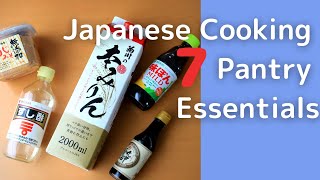
This video is a beginner's guide to Japanese cooking, focusing on seven essential condiments: sugar, salt, soy sauce, vinegar, miso, mirin, and sake. The creator explains the purpose and recommended types of each, and shares a crucial cooking tip from her mother about the correct order to add seasonings.
Sugar is used in savory dishes like teriyaki and soba sauce for sweetness and moisture retention. Kibisato, a natural cane sugar, is recommended.
Sea salt is standard in Japan. It's used for drawing out moisture, preserving color, and reducing fishy smells. Choose salt with minimal additives.
Four types are recommended: regular (everyday), premium (for sashimi), light (saltier, less color), and tamari (gluten-free).
Rice vinegar is mild; ponzu has citrus; sushi vinegar is pre-mixed with salt and sugar. Don't confuse rice vinegar with sushi vinegar.
Lighter miso is sweeter. Yellow miso is a versatile family staple. Miso is used in soups, marinades, stir-fries, and more.
Mirin adds sweetness, gloss, and helps ingredients hold shape. Use hon-mirin (true mirin) for best flavor.
Sake tenderizes, reduces smells, and enhances umami. Cheap drinking sake is better than cooking wine.
The 'Sashi Su Se So' rule: add sugar first, then salt, vinegar, soy sauce, and miso last. This prevents the dish from becoming too salty and preserves fermented condiments.
Kokoro Care Package
service
Kibisato (natural cane sugar)
tool
Sea salt (minimal additives)
tool
Regular soy sauce (koikuchi shoyu)
tool
Premium soy sauce
tool
Light soy sauce (usukuchi shoyu)
tool
Tamari soy sauce
tool
Rice vinegar
tool
Ponzu
tool
Sushi vinegar
tool
Yellow miso
tool
Hon-mirin (true mirin)
tool
Cheap sake (drinking sake)
tool
What is the recommended type of sugar for Japanese cooking?
Kibisato, a natural cane sugar between refined and brown sugar.
00:43
What are three uses of salt in Japanese cuisine beyond seasoning?
To draw out moisture, preserve color, and reduce fishy smells.
01:22
Which type of soy sauce is saltier but lighter in color?
Light soy sauce (usukuchi).
03:39
What is the difference between rice vinegar and sushi vinegar?
Rice vinegar is pure; sushi vinegar is rice vinegar mixed with salt and sugar.
04:48
What is the basic rule for miso color and taste?
The lighter the color, the sweeter the taste.
05:42
What are three functions of mirin in cooking?
It adds sweetness, gloss, and helps ingredients hold their shape.
06:38
What is the difference between cooking rice wine and sake?
Cooking rice wine contains salt; sake does not and has better flavor.
07:48
What is the correct order of adding seasonings according to the 'Sashi Su Se So' rule?
Sugar, Salt, Vinegar, Soy Sauce, Miso.
08:37
Why should sugar be added before salt in Japanese cooking?
Because sugar particles are larger; adding salt first blocks sugar from penetrating, making the dish too salty.
08:51
Sashi Su Se So Order
Provides a simple, memorable rule for seasoning order that prevents dishes from becoming too salty and preserves fermented condiment benefits.
08:37Sugar in Savory Dishes
Reveals that sugar is a key component in many popular Japanese savory dishes, not just desserts.
00:28Efficient Use of Salt
Highlights the multi-functional role of salt in Japanese cuisine beyond seasoning, including preservation and color retention.
01:22Miso Color-Taste Rule
A simple principle that helps beginners choose the right miso based on desired sweetness.
05:42[00:00] If I was just venturing into the world of Japanese cooking, I divided 7 condiments. At the end of this video, I'll share the cooking tips which my mom told me at the very beginning of my Japanese cooking journey.
[00:13] It's very simple but crucial to remember. Starting with sugar. Now you may think the sugar for savory dishes know for baking. When you think of Japanese popular dishes, many of them have a sweet note to the taste.
[00:28] For example, teriyaki sauce, soba noodle sauce, shiitake, they all contain sugar as a key component. Sugar is not only for the sweetness but also for helping to keep the moisture of ingredients.
[00:43] My favorite sugar is kibisato. It's kind of like between the refined sugar and brown sugar. The flavor and texture are not as strong and wet as brown sugar, but it still has a slightly mellow taste behind it.
[00:56] So that's what I like about. Moving on, salt. Again, the basic condiments for any cuisine, but I can't overlook this one when I come for salt in my recipe.
[01:08] 99% indicates the sea salt. Mine has a fine sound like consistency and not fakie at all. Since Japan is surrounded by ocean, almost all domestic salt we have in Japan is sea salt.
[01:22] I believe Japanese cuisine uses salt very efficiently, like drawing the moisture out of ingredients for the preservation purpose or retaining the color of ingredients, or reducing the stink
[01:35] smell of fish. My favorite salt is the one that is only sea water written on the label. I always go for the minimal list on the label because usually less additives are contained.
[01:49] It's the living in Tokyo and having two kids costs a lot, so I can't always afford expensive high-quality ingredients, but I try to find one as natural as possible. Let's talk about the most popular one, soy sauce.
[02:03] Soy sauce is made out of soybeans, barley, salt and water. They have been fermented together. I always keep four kinds of soy sauce in my fridge, regular soy sauce, no one's quick to show you in Japanese. This one is inexpensive, which I use for cooking most often, and this one is more on the
[02:19] pricey side, but the taste is amazing. If you want to elevate the taste without doing anything complicated, try this one. I only use it for something very simple, like dressing on top of the runny egg rice for
[02:32] eating with sashimi, anything you want to directly enjoy the deep umami soy sauce taste. I use just a tiny bit of it each time because it's a good quality and I want to enjoy it for
[02:44] a longer period of time. I'm a little stingy here. If you want one for yourself, there is a link on the description box, and let me be honest with you guys. If you purchase through the link, I will get the small commission from it, but even though
[03:00] I'm not partnering with this company called Kokoro Kea Package, I still highly recommend their subscription box. I know how much they are making an effort to create the authentic Japanese goodies, delivering
[03:14] from Japanese local producers to your door. I really trust them, therefore I can recommend you guys. They carry the salted fried small too which I love and I use a lot in the channel, so if
[03:27] you are missing Japan, please visit their website. Alright, back on soy sauce, I also have a light soy sauce. Don't be deceived with the color, it's actually saltier than regular soy sauce.
[03:39] Plus, the fermented term is usually shorter, and so it has a less flavor. When I want to add a saltiness, but don't want to ruin the color, I use light soy sauce. Just like I used in the vegan Japanese clear soup.
[03:53] And another one is temari soy sauce. I don't use it often, but temari soy sauce is usually good and free, so whenever I invite the guest, it's always safe to have an option for any dietary requirement.
[04:07] If you want to stock up just one kind, I would say go for quick to show you quick soy sauce which is regular soy sauce. Vinegar. I personally have four different types of vinegar.
[04:21] The most frequently used one is rice vinegar. It is less tangy compared to the other type of vinegar, thanks to the natural sweetness from the rice. And I made a sweet and sour dressing for the fried tofu which I have a video on my channel.
[04:36] I also have this ponzu which I already contains a citrus tangy flavor to it. It's tasty as it is, so you can just drizzle over the salad or enjoy as a dipping sauce for the hot pot.
[04:48] Very convenient to have on hand. One thing I want to mention here is the differences between the sushi vinegar and rice vinegar. The rice vinegar is just a pure vinegar, nothing is added.
[05:00] On the other hand, sushi vinegar is the mixture of rice vinegar, salt and sugar. I remember my friend in UK made sushi by using rice vinegar and the sushi ended up super
[05:12] tangy and couldn't eat it, so please close it, look at the label. The links of all of my recommended condiments can be found on the description box below, and almost all the recipes I'm showing in this video has a recipe on my web or YouTube.
[05:29] Miso. Miso is made of soy beans, rice malt, salt and broley that's been fermented. Not all products are made from all of them, having you noticed the differences in colors, what
[05:42] ingredients it contains makes a huge difference in color and taste. Very basic rule is the lighter the color gets, the sweeter the taste becomes. In my kitchen, I always have three different types of miso.
[05:56] The most frequently used one is a yellow miso, it has a neutral flavor and mild saltiness, so kids love this type the most, so means automatically becomes my family stable.
[06:08] We love miso soup, miso pasta, miso marinade, miso stir fry, miso rice bowl and many more. I have lots of recipe using miso, so I put all the recipe link in description box again.
[06:23] By the way, if you need any deeper information about the Japanese condiments, I'm talking a lot more details on different videos, so please watch more on that. That's gonna be a lot of links listed in description box for this time.
[06:38] And mirin, mirin is a sweetened rice wine, it's made of rice, rice balls, sugar, also known as distilled liquor that's been fermented, it will add sweetness of course, but also
[06:50] degrades the sauce and helps to hold the shape of ingredients. For example, you can use it for teriyaki sauce, add it to the homemade tomato sauce to remove the edge of its sarnice, mirin is not only for the Japanese cooking, you can always try to
[07:07] look for many uses in different type of cuisine, in a way your mirin won't end up being left in the back of your pantry. I buy this huge jug, but somehow it's gone in a month.
[07:20] I try to eliminate the sugar in my cooking, so mirin comes to play very often as a substitution of sugar. And also my advice, please get one, it's said homemade, not mirin future video, mirin future
[07:33] video is added to resemble the taste of home mirin, so it's usually cheaper but you won't get the same flavor as home mirin has. And the last one guys, sake, most frequently asked question is, is the cooking rice wines
[07:48] and sake different? The answer is yes and no, both contain alcohol in it, but the cooking rice wine contains salt. Price is usually cheaper than sake, and in my opinion this cooking rice wine has a less
[08:03] flavor and aroma compared to sake, so I always buy cheap sake. In a way you can still enjoy the decent aroma, but it doesn't hurt your bank. Both help to tenderize the ingredients and reduce the unnecessary sticky smell from the ingredients
[08:19] and enhances the umami flavor. Since you guys are watching this far, let me show the cooking tips my mom taught me when I was 60 years old, it's a sashi sashi salt rules. This indicates the basic order to add the seasoning when you are cooking, salt refers to sugar,
[08:37] g is salt, su is rice vinegar, say it soy sauce, so it's miso. When the recipe calls for all the ingredients, it's better to add the sugar first, because
[08:51] the salt has a small particles and sugar, if you add the salt first, there is no more space for sugar to be penetrated into the fiber structures of ingredients after all, so as a result the salt will stand out and the dish often ends up too salty.
[09:09] For vinegar, soy sauce, miso are all fermented condiments, I don't want to cook it for a long time so that the bacteria can be absorbed efficiently by the body plus you can retain the aroma.
[09:22] There are some exceptions, but some tips to remember for your Japanese cooking. It was a little tough topic to explain in my limited English vocabulary, and I feel like
[09:35] I only scratched the surface. I have a lot more condiments to share with you guys, like salted rice mold or amazake, which is I use as a sugar substitutions, and I will slowly share them in the future video,
[09:49] and please let me know what you want me to elaborate also, and don't forget to subscribe and please share with your family and friends who just start to cook in Japanese food. Thank you very much for watching and see you on the next video.
[10:03] Bye bye, mata ne!
⚡ Saved you 0h 10m reading this? Transcribe any YouTube video for free — no signup needed.