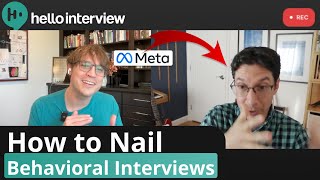

Behavioral Interviews Are Underrated
45sChallenges common belief that technical skills trump behavioral interviews, offering a fresh perspective that sparks debate.
▶ Play Clip"Delivers a solid, in-depth discussion on behavioral interviews with actionable advice, though it's a conversation rather than a step-by-step guide."
In this interview, Austin McDonald, a former senior engineering manager at Meta and hiring committee chair for iOS and Android, discusses the importance of behavioral interviews. He emphasizes that behavioral interviews are often underprepared for and can significantly impact hiring and leveling decisions, especially for senior roles. The conversation covers evaluation criteria, preparation strategies, and common pitfalls.
Austin notes that behavioral interviews are the most underprepared part of the interview process. Candidates often think their experience speaks for itself, but without proper preparation, they fail to shine.
Practicing behavioral interviewing helps you become a better engineer by forcing reflection on what made projects successful, enabling you to repeat those successes.
For senior engineers (staff and above), behavioral interviews are crucial because they assess past behaviors as predictors of future performance, especially for projects involving many people and cross-team collaboration.
Austin has seen many candidates get downleveled (e.g., staff to senior) because they underperform in behavioral interviews, which are key for leveling decisions.
Austin, with over 200 coaching sessions, says candidates often underestimate the value of their own experiences. There are likely great nuggets in their past projects.
Interviewers evaluate candidates on signals like initiative, handling ambiguity, perseverance, conflict resolution, growth mindset, and communication skills.
The same signal (e.g., initiative) looks different at different levels. A mid-level engineer might seek work, while a staff engineer identifies and solves long-term company-wide problems.
Austin admits that likeability and rapport influence interviewers, despite attempts at structured processes. Candidates should focus on building rapport and confidence.
Create a brag document listing your accomplishments and projects. This helps you reflect on your career and prepare stories aligned with company values.
Use three axes: personal involvement, business impact, and scope. This helps choose the best projects to discuss, especially for questions like 'tell me about a project you're proud of.'
Austin prefers CARL (Context, Action, Result, Learnings) over STAR because it includes learnings and avoids spending too much time on setup.
The depth of insights in the 'learnings' part reveals your level. Junior engineers reflect on mistakes; senior engineers reflect on systemic improvements.
Admitting a weakness and showing how you learned from it is a great signal. Candidates who claim no weaknesses seem dishonest.
Candidates often say 'we built it' without detailing their specific actions. Interviewers need to see the repeatable behaviors you demonstrated.
Providing excessive context delays the signal. Most projects fit archetypes, so interviewers don't need extensive background. Get to your actions quickly.
The first 5-10 minutes, especially the 'tell me about yourself' and 'favorite project' questions, set the tone. Interviewers often make up their minds early.
1) Brief personal intro (name, role, years, specialty, passion). 2) List of accomplishments with business impact. 3) Forward-looking statement about what you want next, passing the ball back.
Prepare by creating a brag document, aligning stories to company values, and practicing three key questions: tell me about yourself, favorite project, and conflict story.
Record yourself answering questions using the CARL format. Review and improve. Mock interviews with friends or coaches are also valuable.
Ask insightful questions about product direction, management style, or how the manager helps engineers grow. Avoid generic questions like 'day in the life.'
Behavioral interviews are a critical component of the hiring process, especially for senior roles. By preparing thoroughly, using frameworks like CARL, and practicing your stories, you can significantly improve your performance and avoid downleveling.
What is the CARL framework for behavioral interview responses?
Context, Action, Result, Learnings.
17:47
What are the three axes to rate projects for behavioral interviews?
Personal involvement, business impact, and scope.
15:34
What is the three-part framework for answering 'Tell me about yourself'?
1) Brief personal intro, 2) List of accomplishments, 3) Forward-looking statement.
29:02
What are common signals interviewers look for in behavioral interviews?
Initiative, handling ambiguity, perseverance, conflict resolution, growth mindset, communication skills.
07:34
Why is revealing a weakness in a behavioral interview beneficial?
It shows the ability to reflect and grow, which is a positive signal.
21:18
What is a common pitfall candidates make in behavioral interviews?
Not providing enough clear repeatable actions or providing too much context.
23:09
How does the expected scope of initiative differ between a mid-level and staff engineer?
Mid-level: seek work when out of tasks. Staff: identify and solve long-term company-wide problems.
09:11
Behavioral Interviewing Improves Engineering Skills
Reframing behavioral prep as a career development tool, not just interview practice.
01:51Downleveling Due to Behavioral Interviews
Highlights the real stakes of behavioral interviews for senior candidates.
04:03CARL Framework
Provides a concrete, improved alternative to the common STAR method.
17:47Revealing Weaknesses as a Positive Signal
Challenges the common fear of admitting mistakes, showing it can build trust.
21:18Three-Part Framework for 'Tell Me About Yourself'
Offers a clear, actionable structure for a critical opening question.
29:02[00:02] instance of hello interviews very clever name where we're interviewing about interviews I I kind of love the idea here uh today I'm I'm really excited to introduce you guys to Austin McDonald uh Austin is a friend of mine he's also a
[00:16] former senior engineering manager at meta Facebook where he was actually working as the hiring committee chair for IOS and Android pipeline so very recruiting tools is that right yeah that's right my my last four years that
[00:30] recruiters and the sorcerers and even the candidates would use every day for their interviews so I can't think of anyone more qualified to tell us about the interviewing process uh than you Austin also has a a passion for
[00:44] Behavioral interviews and I know on this channel we really haven't gone into that enough we really focused a lot of our content on system design uh so I'm really excited to kind of talk with him uh about behavioral interviewing and
[00:56] learning more I'll leave it in the description but Austin has a great substack where he shares tips and advice on you know how you can actually think preparation steps and things definitely worth a a subscribe and a and a check
[01:10] out if you haven't looked at it already I sometimes hear from candidates and they say oh you know I'm good uh I can talk about my experience or you know I don't think that's as important as my technical interviews why should
[01:23] interviews if they've got a lot of good experience isn't that good enough yeah classic response and I hear this a lot so to me behavioral interviews is the
[01:35] underprepared for and I think if you've you know just gone online and read some whatever that is not going to be enough I think for you to really shine and so I things I tell candidates so number one thing is if you get good at behavioral
[01:51] interviewing if you really understand what it means to communicate your successful way you will actually become a better engineer so uh you know with limitations I I would say that uh practicing coding interviews is not
[02:04] going to necessarily make you a better engineer on a day-to-day basis I think might make you better but really if you career and what's made all those projects that you've done successful you
[02:16] will be able to repeat those things and be a much better engineer so one this kind of like the reflections on your own career and kind of that framing is than just the interview is that what you're saying yeah totally exactly so I
[02:29] your performance review and you're thinking about what's what made your project successful for That season I think that's going to enable you to to when you're preparing for a behavioral interview a lot of it is thinking about
[02:42] what you've done and what you've accomplished and how you went about go and you do that reflection it really helps you understand oh like this is was point this is where I really added value and then you can take that forward and
[02:56] apply that to the Future project so I think that's number one in terms of why you should invest I think number two is that it really is an important part of the hiring process it's like important for the companies as they are evaluating
[03:08] you especially for senior Engineers where every senior engineer starts to than previous senior engineers and so they give us opportunity to really showcase what your specific skills and what you you've brought to the table and
[03:21] you're sitting down thinking about why am I giving this behavioral interview you're really assessing whether or not this candidate has in the past demonstrated behaviors or actions where they uh have been successful at building
[03:35] hiring manager are hiring someone to do predictor of future results with people like not necessarily with your stock portfolio but with people then when you assess the past performance of a person
[03:49] not they will employ those kinds of repeatable actions repeatable behaviors in whatever new environment you put them in I see tons of candidates who are getting down leveled from like uh staff to senior senior to midlevel a lot of
[04:03] showing up here is this something that you're seeing as well oh huge well as a hiring committee chair what we would do is we would sit down with the packets you know phone screen all the way through the onsides any kind of
[04:16] make a higher decision but we would also make a level decision and certainly for level five level six so senior engineer staff engineer or above the behavioral interviews become start to become really really important when you're a staff
[04:29] level engineer enger you're somebody who is uh working on projects that last a time that involve a lot of different people the actions that that that staff person takes outside of their kind of own code and their own you know
[04:42] technical contribution is really what makes or breaks the success of that person so I would say that we would often see situations where the system the system design interview for a level six would kind of look the same like hey
[04:55] sort of looks the smells the same maybe it's a little bit more complete for the six or maybe maybe the six has some some some depth that they display in the be totally different because the level five person would be working on a
[05:08] project with one or two other people of a couple of months and they would be someone else whereas the level six is working across the company or across who is setting Direction picking the metrics partnering with the engineering
[05:22] manager so that kind of big difference is really seen in the behavioral interview and not the other ones awesome well I think you've sold me behavioral interview is very important tell me a little bit more about this evaluation
[05:34] process like as a hiring committee as a an interviewer what are people looking for in these behavioral interviews because if I can try to reflect a position that I feel like many of our audience has it's that well I've got you
[05:48] know experience I have some things I'm not sure actually how to present what I have that lines up with what the interviewer is looking for can you explain a little bit more about how interviewers are evaluating behavioral
[06:02] interviews sure yeah I have so much to say about this I think one thing I would better than you think they are almost every person I've done over 200 in the last year I think uh coaching sessions
[06:14] with other with with candidates who are practicing their behavioral and I can your stories are more interesting than you think they are so like please don't that you're not ready for that next level job or that next level uh company
[06:28] there's probably really great nuggets talk about how a behavioral inter interviewer someone on the hiring you got to think about what what is their mindset their mindset is look I
[06:40] have a team I have a company I have a position that I'm hiring for that person going to be doing some projects they're they're doing as a software engineer what does that person need to have what
[06:53] are those qualities that that person needs to have in order to be successful they're at a bigger company and across the entire company and so um a lot of this in general the idea is that this hiring manager or this interviewer has
[07:08] an idea of what's most important things about a candidate these are things like initiative perseverance conflict resolution leadership communication skills those those kinds of things big bucket and often sof those categories
[07:20] that those are at least for me when I was first getting started interviewing felt to me like a an unlaw that in general interviewers are trying to those signals to make a hiring determination can you talk us through
[07:34] like what that Dynamic looks like what are those signals and why do they use them yeah and actually there's even in a whole like uh field of industrial psychology called selection science where people get phds and assessing
[07:48] employees and understanding like what are the key elements of success for this company or this team or this this role um but let's talk through you know a few across lots of different companies so one of them is initiative so are you
[08:01] and then you go after solving that problem another one might be handling ambiguity so if you are going to be able to uh you know look at a problem that is step is and you go and you figure out what to do in that situation
[08:16] perseverance you know pushing through challenges and difficulties conflict with other people and especially at higher levels we may be required to make trade-offs or resolve conflicts that come along the way I think that uh a lot
[08:29] people having a growth mindset so are you able to take feedback well provide feedback to others and then respond actively to to the feedback that you received um communication skills so are you able to uh communicate in a written
[08:43] verbal way are you able to know when to send a message or when to write a those are all skills that a hiring manager is is is looking for in general is a hiring manager going yes or no on initiative or is there like a scale that
[08:57] they're certainly thinking about it as a scale because the initiative that say uh initiative that a staff engineer might the initiative is like I've run out of work I need to go find work let me go
[09:11] talk to the senior engineer or the you know the uh uh uh the hiring manager or do next but for a staff engineer this might be I see this problem in the for many years I'm going to figure out a way to solve that problem so like the
[09:26] initiative is the same action but it's very different it looks very different and this is part of how the hiring manager is deciding what level they want to hire this candidate at it's based on at which scope actions are you taking
[09:38] they're looking at each of these signals according to the various levels of response which is kind of a mid-level response might look different than a staff level response totally totally when hiring managers are looking at this
[09:51] how much of this is a sniff test how much of this is they they like me and out to see someone who's like them versus they're this objective spock-like approach to try to figure out initiative levels and and so on and so forth yes
[10:05] right so I think this is a really good point and I do think unfortunately that likeability does play a big role I think we're as humans we're naturally oriented this person you know do we like them do they feel like us and I think that these
[10:20] companies would structure what they're looking for is actually an an attempt to get a beer with this candidate right which is a very bad way to hire people and I think that uh but I at the same time as a candidate I think you
[10:34] interview where you're establishing Rapport and you're telling talking about maybe a favorite project so being impactful that you've done I think how whether or not you come across as confident whether or not you come across
[10:47] a difference and probably more of a difference than most hiring managers would would it interesting yeah it does feel like there is maybe a a bit of a a standard that we'd all like to aspire to
[11:00] which is this unbiased objective process where we find the best talent and then interviewers are humans they kind of see themselves and other people and that impacts their subjective assessments of
[11:12] mean these structured interviewing approaches where you identify what's important in candidates and then you assess them based on those signal areas that we were talking about have been proven Su scientifically via psychology
[11:25] why you see the the best run companies a structured approach you can often times see this when you're a candidate when you can see them move from sort of one signal area to another or the question
[11:39] that they ask fits in with a totally different of part aspect of of of systems are really good I think they do at times uh cause interviewers to jump around instead of having a conversation and keeping the candidate at ease they
[11:53] conflict resolution now on to growth you know I think that that kind of uh who's not skilled and who's not good at helping the candidate uh you know feel at ease can can feel a little bit you know block you know jerky to the to the
[12:07] candidate yeah well so this is a a helpful foundation so we've got these looking for both to make a leveling determination and to decide whether come in obviously with their own experience the real question I think for
[12:20] most people is all right how do I present my experience the projects that I've worked on the things that I care about in the way that best gives the interviewer what they need in order to make a good decision do you have some
[12:33] suggestions on how candidates can support this I would say first really understanding you and understanding what you've accomplished in your career and I think that this is aware something like a brag document or a y document that you
[12:46] during your career can be really valuable so spending time as a behavioral interview candidates thinking through what are the projects that I've you know what do I feel like I would I would love to tell a hiring manager and
[12:59] then being able to use some list of signal areas or maybe even company what's important to them and then aligning those kinds of projects to to those company values becomes I think the First Step Beyond trying to jump into
[13:12] questions or what do you say I think that's actually a pretty interesting place to start because this brag document comes unnaturally for a number of candidates like I certainly talk with a bunch of Engineers who say I haven't
[13:24] done anything technically interesting I've never built something at scale I've never led a team before how can I possibly uh you know present myself in these settings what should people like that do how should they reframe or or
[13:36] think about how they set up that brag document or how they can start to think about how they form these stories that they're going to present yeah great question I mean I think that if you are an engineer in a work setting right now
[13:48] a week or once a month and thinking about what have I accomplished what are projects that I've done I think this gives you this record which will not but also help you writing your resume Etc if you do if you are working in a
[14:00] place that has any kind of formal uh performance reviews most big companies are great resources to see you know what you have done in the past and I would really encourage folks who are still in those jobs to get that information out
[14:13] of the HR System and put it someplace where you can keep it uh in case you're you're if you're not in the situation and you need to come up with these ideas I think asking yourself some questions right so things that that uh where did
[14:25] what did you build what have you built what you worked on what where's a place measurable metric whether that's engagement time or revenue or costs performance like these places where there's some uh measurable impact tend
[14:40] to be the places where uh that turn into really good stories I think that uh you time so like what what did you work on for a really long time and now sometimes it's because it's complicated and
[14:53] way and those become really interesting projects to talk about that's a good point points yeah I think at least from my side there is this benefit to separating out the objective what happened from the do I think that this
[15:06] is impressive or not a lot of candidates try to merge those two and as a result come up with stories but they find it actually pretty easy to list all those go and rank those and we can decide what's going to be most important so I
[15:19] yourself questions about what happened before you go and kind of try to judge in an area yeah and you talk about picking projects to talk about and so one of the worksheets that I provide on the uh on the uh substack uh be able to
[15:34] rate your projects by personal in interaction like personal involvement involved in a really interesting project maybe that's not the best project to talk about and then there's one uh AIS of business impact so like how much of a
[15:46] difference did this project make and then um you know the other AIS is uh in terms of scope so like how large of a project this was sometimes you know one line can make you are in heavily invested in in making a on line change
[15:59] but wouldn't necessarily be the best project to talk about because it doesn't repeatable actions that a hiring manager might be interested in so if you can uh categorize the projects that you worked on along those three axes you can figure
[16:13] out which ones are the most interesting ones to talk about and specifically you oftentimes the second question in the interview is talk about something you picking that one can be difficult for people and I think using those three
[16:27] axes can help them choose the right one perfect yes so I think after you've laid perfect yes so I think after you've laid this groundwork you know in terms of uh think it's helpful for you to start journaling about and sort of preparing a
[16:41] small response like a a draft response of what you might say and this is where heard about in the past come in really helpful so there's one that's very very popular it's called star situation task action result and so the idea is that if
[16:56] the situation then you tell the tasks that you had then you tell them about them about what happened in the end this becomes a natural sort of story flow and and one that gives people upfront some context to understand what uh what what
[17:09] you did and what you produced where you are demonstrating these repeatable actions that could be replicated on the hiring manager team and then sort of business impact or what's the the bang
[17:21] that's a really natural approach to to telling a story I think that this leaves out a couple of um really important parts I think that especially for senior Engineers the idea that that the candidate can reflect back on their
[17:35] project and give me some kind of insight into what they learned what they would take away to the next project or even just even just talking to me about how they thought the project went is can be really valuable and a way to establish
[17:47] themselves a person who has acquired this knowledge over time I prefer this format called Carl which is context action result learnings and this this also solves another common problem where people spend too much time on the setup
[18:01] that takes a while and I'm going to talk about the task that I did and really that's just context kind of all wrapped up in one thing and so I think it's more helpful for people who are just getting started to think about context action
[18:13] result learnings and then that's the way that you frame the the response for for being asked and to be clear these are the ones where someone asks you a question like tell me about a time when you did blah right I think it fits
[18:25] so Carl it sounds like the the main thing is grouping together some of the situation task and then this addition of the L what kind of learnings would you Reflections are you looking for here as a Hing manager yeah really good question
[18:40] managers are looking to understand your level and your scope is by how deep of insights that you can provide so a junior engineer might provide insights like well you know maybe I should have talked to the designer before I built
[18:53] this feature and then that would have helped me avoid building this thing which the the the designer didn't like right sometimes that can be something I think whenever you have a mistake inside of a project it's okay to to
[19:08] share that you learn from it and then you share that oh on the next time I designer in advance so I think that kind of learning where you're reflecting on mistakes that you made is a really really common one I think another one
[19:20] might be uh reflecting for more senior Engineers might be reflecting more on um first place right sometimes the the story is about like oh we have performance problem or reliability problem inside of the codebase and then
[19:32] we did XYZ to fix it and sometimes I think it's helpful for me to know you this situation if we had had changed this culture or adjusted this metric or if we had done something differently and I think that um the sometimes the
[19:46] learning so something like well uh we did that we shipped this feature but then the next step we noticed XYZ and then we needed to go and and make this changes to the Future in the future right so that kind of forward-looking
[19:59] reflection can also be something that fits in the learning category that's super helpful I I love the emphasis on kind of insight and wisdom because those are theoretically harder earned and as a result can correlate more strongly with
[20:12] experience I think for some candidates this learning gets a bit uncomfortable because it kind of implies in some ways a mistake or weakness it's like I didn't get this to the first time how do you feel about how candidates can kind of
[20:25] reveal mistakes or things that they would do differently what the right way yeah it's really interesting and I think this is where having a interview coach is really helpful because sometimes when you reveal certain weaknesses an
[20:39] you should have known that and then there's certain weaknesses like for example like um well you know what I just shipped this feature to 100% without running any kind of you know a graduated experiment or 1% roll out or
[20:53] end up with this bug and then you tell me the story about how you solve the bug yourself as someone who is not super senior because you didn't know this right I think as a junior candidate maybe this is okay especially if you
[21:05] follow this up with hey like I learned this thing and then the future projects I didn't do that so I think that some of this depends on the on the the kind of weakness or this the the depth of the weakness that you're that you're you're
[21:18] revealing however I will say that revealing a weakness and then revealing that you learn from it is is a really great signal I love to see this in fact if someone does not admit to me any weakness or does not tell me about any
[21:30] can't think of any way that this project could have been better this is like the the you know fairy tale ending right to the project now I don't believe you concerns right where I'm not sure that you're being totally honest with me so I
[21:43] places where the project didn't go as expected that is signal of your ability to reflect and your ability to grow I think it just depends a little bit on think this is where having a more experienced friend or mock interview can
[22:00] really be helpful yeah love it yeah vulnerability and authenticity I think are actually really important techniques to employ you know as a an interviewer when K it sounds like a sales pitch or some sort of manufactured story I've got
[22:13] two options either a I go and I disbelieve it you know I don't this isn't a story that I'm going to take it face value or B I'm GNA dig in really make sure I'm actually getting the truth and in both cases the candidate probably
[22:27] doesn't want that response bonds and so in a lot of cases actually being truthful and honest and coming across as authentic can really help to avoid kind of these pathological behaviors from interviewers or worst case the
[22:39] they don't believe you so I I love the the learning aspect that you've introduced here I think this is actually probably a good segue like I want to our audience and I'd love to talk about some of the things that you see in
[22:54] practice from candidates that might be red flags or potholes like where would candidates screwing up and maybe we can go into a little bit of what that category is and then like what people should be doing instead yeah sure so I
[23:09] think there're really clear ones and um the number one one I would say is is not providing enough clear repeatable actions that you did so this comes up a lot with Junior Engineers so they tell me like oh we have this feature they
[23:22] they tell me we built it and we shipped it right and it's like all the you kind of yada yada y over which is this like what are the repeatable actions like what are the things that you did that's the biggest one I think
[23:34] um the number two one would probably be not providing the right level of detail providing too much context so spending too much time before you get to the actions that you took uh a lot of people think that the hiring manager needs a
[23:48] lot of context in order to understand a project however most projects fit within some kind of archetype um like oh hey you know business feature is needed by like performance or reliability challenge or whatever it is or even even
[24:02] conflicts oftentimes fit into these kind of Architects like conflict archetypes conflict with an architect conflict with a manager conflict with uh you know a co-worker over some technical choice and the the manager has a a general
[24:15] how that that problem or how that project might go down and so providing a ton of context isn't really valuable for the for the hiring manager so I think any context that you're adding is just delaying the signal that I'm acquiring
[24:28] situation and so it is a fine art to figure out okay how much context is required for the h manager to believe that this is an important thing to do or that I'm making the right choices as I'm making these actions um but I think that
[24:41] this is where also writing things down in advance and thinking about them help from a mock interviewer can be really helpful in you honing honing how much context to apply yeah this is a really interesting one because I think
[24:54] it's hard to evaluate uh independently unless you have some experience but in much pattern matching happens in a behavioral interview like you said and now that I've established that this is a story about this archetype I kind
[25:09] of know what are the interesting parts that I want you to go into those whereas me technical jargon about you know some specific things a I probably don't understand it and B I'm not sure it's very important but I think for many
[25:23] candidates they interpret this feedback as saying I need to explain all of the context of my project like I'm like the interviewer five I need to simplify things so dramatically that I'm spoon feeding them U I don't think this is the
[25:38] take on this there's kind of two directions to like sufficient context and one of them seems to assume kind of negatively on the interviewer yeah yeah explain it to like if this person that you're talking to especially at a large
[25:53] three levels above the level that you are being hired for and so they have probably seen you know potentially twice as much or three times as much uh many little versions of the software development life cycle than possibly you
[26:07] you have to explain to them like like they're five is is not helpful I think person the interviewer is very likely to just stop you and ask for more contexts if they need it I think that is something that you can rely on um and I
[26:21] wouldn't I wouldn't try to provide too much and give them too much of a crutch I would try to get as fast as you can to the actions that you're taking in fact that you frontload it depending on the question and say something like well you
[26:34] know in this project I did these three things let me tell you a little bit that project I think that that's sort of frontloading what you want the person to take away from uh from the response love it and I I love being able to rely on
[26:47] your interviewer to ask additional questions you as a candidate don't everything you can leave some ear marks and then let them dig in where where they see uh necessary I stopped you short you were going through some really
[27:00] there other ones that come to top of mind we were talking earlier about think that there are two questions that are really really common uh and maybe which happen typically the very first part of the interview and that's tell me
[27:15] favorite project or most impactful project or whatever however it's phrased and I think with these two questions you really have the opportunity to set the the first thing you're saying so the interviewer is likely uh the most
[27:29] attentive that they're going to be this is when they establishing your your uh remember what you say in the very beginning minute 34 like I don't know don't but that first five 10 minutes is is something that they will really latch
[27:43] on to and so for you to be able to set the stage of who you are describing who you are and then talking about a project which is really matches the level that you're you're applying for and and demonstrates a lot of strong behaviors
[27:55] that you had in that project that to me is uh you know is is critical and then downhill like the interviewer might be assessing your other axes and of role um but they probably have made their decision in that first five 10
[28:09] minutes based on what you're saying so that one is a huge one that's a good point I I think especially for staff level Engineers managers that tell me about yourself project or uh question will will give you a pretty good
[28:21] indication as to whether this person has a handle on where their career is going are really strong they know exact what they do best and they know exactly how they're able to tie those two together for candidates who come in and it's not
[28:35] they haven't figured it out yet it's harder to see them being effective and at those more senior levels I I think you're you're totally on to something with you know how you can set that up what are other things that people should
[28:49] keep in mind for making that first impression there's a lot of ways I can go and tell me about myself like what's a framework for me thinking about the respon here so I like a three-part framework and the first one is just a
[29:02] like put yourself into some bucket inside the person's mind with a personal name is Austin I'm a senior engineer with five years experience I spend most time on the back end and I'm really passionate about performance right so I
[29:15] think that this gives me some kind of General sense of you know who this and it also gives me something personal about them that maybe I want to look for or ask about later so that's the first part the second part is a list of
[29:27] accomplishments so this is where you talk about does does the candidate they've accomplished and and how how they've gone about adding value so that you've done that has brought about business value so me as a hiring manager
[29:41] I'm solving you I'm hiring you to solve some business problem in my organization I want to get real world impact from the code that you're producing and so I want world impact in past rool this could be something like you know my previous role
[29:54] something like you know my previous role took on this you know uh like endtoend loading problem where we reduced uh you know reduced loading Time by 50% right would this really help the users um experience a better product right so
[30:06] which is kind of like a bullets off your resume in a sense right I definitely do people will give me this thing where they're like I first started as an this company then I went to this company and I think that that gets old really
[30:20] really fast and adds no value about you like I'm not understand I'm not taking away anything as a as an interviewer and you can imagine how like crazes might be from a 20 or 30 year career right uh that gets pretty intense so that's the
[30:33] U it's oftentimes people just kind of Peter out after this so sometimes people of like um uh you know and they sort of stop and I think this is where if you end really strongly by passing the the ball back to the interviewer and you you
[30:47] say some forward-looking statement about how you what you want to get out of your I'm going looking for an opportunity to lead people in my next role because I career in the future something like that ideally this is about the role itself
[31:00] or about the role that that uh the hiring manager is hiring for something product like this company because of some reason um to me that's a really easy way to pass the ball back to the to the interviewer and end your tell me
[31:14] should be like two two minutes it should be pretty quick right um this is something that's certainly worth practicing uh if you read it that's impression on the person and and they can tell that you're reading it um but
[31:28] going to give it a lot you're going to give it to the paper interview you're during the team selection you're can you could give it to a a recruiter there's a uh this kind of pitch could be worth your time that's great yeah I think as a
[31:41] hiring manager I'm like licking my chops if somebody tells me about experience team and they tell me that the challenges that they want to solve are solves and I'm going I can already see you on my team you know let me let me
[31:55] figure out what evidence I need to get in order to make happen I think that's the best impression you can leave uh in these yeah great way to frame it let's preparation and and kind of you you mentioned obviously you don't want to
[32:07] just be reading off a script it doesn't sound very contemporaneous but I think there's a lot of our audience who naturally are more introverted they're not public speakers they actually you know they're going to be super nervous
[32:19] setting what kind of things should they do in order to make sure that day they of their experience yeah a lot of aspects there I think a preparing for Behavioral interviews in a similar way than they might prepare for
[32:34] find a list of problems on the internet and then you know questions on the internet and I'm going to like practice those responses and I think that that has limited value to be to be honest so I think it's much more important like we
[32:46] you have added to organizations in the past so spend your time at first accomplished aligning those projects to Common signal areas especially if the
[32:58] company that you're applying for has any kind of published values so Amazon has principles and you know matter has their values and a lot of companies have making sure that you've aligned those uh in advance and you have some sort of
[33:12] collection of stories that you have spent a little bit of time preparing whatever you choose so that you have some idea of how to present these things I think that's the first step then um then I I know I said earlier that uh you
[33:24] but I think that it is worth preparing for for three specific questions so one we talked about earlier the next one is to make sure that you have a really solid story about your favorite project and uh this can be expanding on that
[33:38] Carl format so that you you can spend you can spend five even seven minutes if you're a good speaker and if you're organized in what you're communicating and the final uh the final question is a conflict Story I mean I can say you know
[33:50] four NES what five NES maybe you're likely to get some question about a time behavioral interview and having some well prepared and well thought out response to that really makes sense I would say that You' talked about how
[34:02] maybe this maybe the candidate is not a a trained speaker and how do you prepare for them practice for that right so I do think this is something that comes with practice and I think the best way to do this is actually to go back and do what
[34:16] list of of stories and then see if you can respond to them on a video so give where you're recording yourself and practice answering the question using that that Carl form format that uh that we talked about earlier and it probably
[34:30] won't be that great in the beginning and that's okay right I think that's okay I practice this kind of extemporaneous speaking you'll get you'll get better and better at it I would say after that getting a friend right getting either
[34:42] experienced hiring manager that's probably the best way but then also even feedback on how you're communicating whether you're clear and can ask you some some simple follow-up questions that can be really valuable too aome it
[34:57] seems like you a lot there it it sounds like for the kind of early stage Al basically just need to assemble some stories kind of rank them flesh them out to be talking about but your recommendation here is don't prepare for
[35:10] specific questions prepare for categories that are going to be useful in a broad variety of questions it sounds like you've got some worksheets for this but generally speaking I think
[35:22] candidates aren't doing and it would definitely improve it sounds like you would also recommend preparing you know some responses for a couple common questions or three common questions and then this final uh idea of trying to
[35:36] answer some simulated questions in front of a a camera or ideally in a mock interview if you guys would like to check it out is a really great way to either self-critique or get your own feedback I do find also that sometimes
[35:51] candidates are are helped by creating a few flash cards with those questions not kind of random in and seeing whether they can think on their feet and apply the stories that they've already created many candidates will be a little bit
[36:04] question that they weren't anticipating which they should very much expect but if they can practice that it reduces the level of anxiety that comes into that interview setting if you know that you're going to be getting things of the
[36:17] form that you've seen before uh then you're much more likely to succeed yeah briefly I think if you since so many interviews nowadays are remote then if you did make this list of projects and you did create these axes like we talked
[36:30] about signal areas like the worksheet that I talked about then you can s of interview is asking you and say oh it's a question about feed you know growth the story that I want to choose because sometimes like you said there is a sense
[36:43] remember all the things right so if you have it in front of you categorized it's going to be really uh you know really valuable I think that um one one part of the interview process that people frequently under prepare for is um the
[36:57] kind of end of the interview where the the interviewer asks you what questions do you have and I would I would um I would assess candidates based on what they ask me so if they ask me tell about a day in the life of an engineer or
[37:10] not super valuable right every most companies the day of life with kind of work on stuff you know go to a meeting go home right so it's not it's not like that's a super insightful question I appreciated times when candidates ask me
[37:23] something about the the product direction that my team is taking or having or uh if you are interviewing with a hiring manager somebody that you know you're going to directly report to then uh I really appreciate candidates
[37:36] management style how have I helped people grow you know how what have been the the most important parts of of making Engineers successful and how have along the way so those kinds of questions can reflect back to me how
[37:49] much thinking you've done on uh about the company and about the role that's a great Point especially I think a lot of people are thinking also about team invention Google's been doing this for a while meta started doing this it used to
[38:01] be part of the boot camp process but functionally these are meetings that you have with a hiring manager they're technically not an interview but the reality for most people is they are an interview and in those cases the
[38:13] questions that you ask are really indicative and and very much color the conversation with the hiring manager and so questions about leadership style and Team Dynamics are fantastic but also if you can do even a shallow of research
[38:28] about the team or the space that they're operating in and ask them questions things are going there's a good chance that you're going to be completely off base just because nobody without extensive experience is going to ask a
[38:40] there that you put in the effort and then you actually considered it for a bit is actually very powerful for a hiring manager and immediately they see tee which is an impression that I think is very valuable and cultivating I would
[38:55] say this team match thing you it is probably 5050 whether or not the hiring manager expects you to drive the interview so I think you could sit be in the situation where you're expected to have question after after question and
[39:07] for the last five minutes of the interview is really important for that team match phase very very useful Austin this has been tremendously valuable I I've certainly learned a lot and I hope everyone um has in the chat if you all
[39:19] want to leave any comments or questions um I will definitely be there to answer little bit of time as well I would substack he's got plenty of interesting resources there if you're interested in
[39:32] working with a coach who's actually done behavioral interviews and can give you about on hello interview uh we've got resources there and we also have a an AI tool we call storybuilder which asks you Socratic questions about your experience
[39:46] anecdotes that Austin's been talking about that'll be useful for some of those subsequent stages of preparation so behavioral interview not something to especially for those more senior roles and interns for what it's worth it seems
[40:01] to be a a thread that we didn't get a chance to get into um but Austin really appreciate your time yeah thanks Evan appreciate it thanks for having me

⚡ Saved you 0h 40m reading this? Transcribe any YouTube video for free — no signup needed.