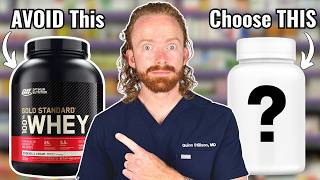

70% of Protein Powders Are Toxic?
45sShocking statistic grabs attention and raises concern.
▶ Play Clip"The title accurately reflects the content, delivering a detailed guide on protein powders, dosing, and timing for muscle and longevity."
This video provides a comprehensive guide to choosing the best protein powder for muscle growth and longevity. It covers the importance of total daily protein intake, optimal dosing and timing, and compares different types of protein powders, including animal-based vs. plant-based, and whey concentrate vs. isolate. The video also highlights red flags to avoid on ingredient labels and discusses the importance of third-party testing for contaminants.
Multiple studies show that total daily protein intake is the most important variable for muscle growth, far more important than the timing of protein consumption.
For optimal muscle growth, consume 1.6 to 2.2 grams of protein per kilogram of body weight per day. Active individuals, older adults, and those with more training experience should aim for the higher end of this range.
During a cutting phase or severe caloric restriction, protein needs may increase to 2.3 to 3.1 grams per kilogram of fat-free mass to preserve muscle.
Spreading protein intake evenly across about four meals per day (0.4 to 0.55 g/kg per meal) is the most important timing consideration, due to the ceiling and refractory period of muscle protein synthesis (MPS).
The 'anabolic window' for post-workout protein is much longer than initially thought (up to 24-48 hours), especially if not training fasted. Immediate post-workout protein provides only a marginal benefit.
The hierarchy is: 1) Total daily protein intake, 2) Even distribution across 4 meals, 3) Pre- and post-workout protein (marginal), 4) Pre-sleep protein (most marginal).
Animal-based proteins (whey, casein, egg) are slightly better for muscle growth than plant-based proteins, but the difference is marginal. Soy protein is equivalent to whey, while other plant proteins are slightly inferior.
Whey concentrate (80% protein) retains beneficial bioactive peptides (lactoferrin, immunoglobulins) lost in whey isolate (90-95% protein). Isolate is better for lactose intolerance or severe calorie restriction.
Avoid protein powders containing artificial flavors, natural flavors (due to undisclosed carriers/emulsifiers), soy lecithin, and artificial sweeteners (acesulfame potassium, sucralose, aspartame).
The Clean Label Project found 70% of protein powders have detectable lead and 74% have cadmium. Also, 55% are contaminated with BPA. Look for third-party certifications like Clean Label Project or NSF to ensure purity.
The optimal protein powder for most people is a grass-fed, cold-processed, undenatured whey concentrate that is third-party tested for contaminants and free of artificial ingredients. Prioritize total daily protein intake and even distribution over precise timing for the best results.
What is the most important variable for muscle growth according to recent studies?
Total protein intake throughout the day.
00:55
What is the recommended daily protein intake for optimal muscle growth?
1.6 to 2.2 grams per kilogram of body weight.
01:07
What is anabolic resistance?
The phenomenon where older individuals and those with more training experience require more protein to stimulate muscle growth because their muscles become more resistant to an anabolic stimulus.
01:36
What is the ceiling of muscle protein synthesis (MPS) in terms of leucine?
3 to 4 grams of leucine.
04:13
How much high-quality protein provides 3 to 4 grams of leucine?
30 to 40 grams.
04:27
What is the refractory period of muscle protein synthesis?
After maximal stimulation, you must wait 3 to 4 hours before you can stimulate MPS again.
05:13
How long does the anabolic window extend after a workout if you are not fasted?
Up to 24 to 48 hours.
06:23
What is the main advantage of whey concentrate over whey isolate?
Whey concentrate retains beneficial bioactive peptides like lactoferrin and immunoglobulins, which are largely lost in whey isolate.
15:07
What is the best type of protein to take before sleep for muscle growth?
Casein protein, because it digests slowly over 6-8 hours.
13:31
What percentage of protein powders were found to have detectable levels of lead according to the Clean Label Project?
70%.
24:44
Name three artificial sweeteners to avoid in protein powders.
Acesulfame potassium, sucralose, and aspartame.
21:34
What is the recommended alternative to artificial sweeteners in protein powders?
Monk fruit or stevia.
22:12
What is the main concern with BPA contamination in protein powders?
BPA is an endocrine disruptor that can lead to hormonally related diseases and suboptimal testosterone and estrogen signaling.
25:52
Total Protein is King
Establishes the foundational principle that total daily intake trumps timing for muscle growth.
00:55The 4-Meal Protein Strategy
Provides a practical, evidence-based guideline for distributing protein to maximize muscle protein synthesis.
03:35Animal vs. Plant Protein: Marginal Difference
Offers a nuanced, evidence-based conclusion that while animal protein is slightly superior, plant-based options are still effective, especially soy.
10:23Bioactive Peptides in Whey Concentrate
Highlights the often-overlooked health benefits (immunity, gut health) of choosing whey concentrate over more processed isolates.
15:07The Contaminant Reality Check
Cites alarming statistics from the Clean Label Project, emphasizing the critical need for third-party testing to avoid heavy metals, BPA, and pesticides.
24:20[00:00] A large study from the Clean Label
[00:01] Project demonstrated that 70% of protein
[00:04] powders are contaminated with heavy
[00:05] metals. And even if your protein powder
[00:07] is clean, recent studies have also
[00:09] demonstrated that not all types of
[00:11] protein powder are equal. Some types are
[00:13] better at muscle growth and at long-term
[00:16] health than other types. And if you're
[00:18] like me, hearing this triggered a
[00:19] million questions in your head, such as,
[00:21] "How do I know my protein powder is
[00:23] clean? And what ingredients should I be
[00:25] avoiding? Should I be taking whey
[00:26] isolate or concentrate or a plant-based?
[00:29] Does grass-fed matter? And how much
[00:30] protein should I take and when? Well, as
[00:32] a licensed medical doctor and certified
[00:34] strength and conditioning specialist,
[00:35] I'm here to answer all these questions
[00:37] and more so you can choose the optimal
[00:39] protein powder for you for muscle health
[00:42] and longevity. But to really determine
[00:44] which protein powder is best, we first
[00:45] have to talk about the true importance
[00:47] of dosing and timing of protein.
[00:49] Multiple recent studies have
[00:51] demonstrated that total protein intake
[00:52] throughout the day is hands down the
[00:55] most important variable for muscle
[00:56] growth. In other words, your total
[00:58] protein content is much more important
[01:00] than the time at which you take that
[01:02] protein throughout the day. And studies
[01:03] again are pretty consistent on how much
[01:05] protein you need for that optimal muscle
[01:07] growth. Studies note that you need 1.6
[01:09] to 2.2 g of protein per kilogram of body
[01:14] weight per day for optimal muscle
[01:15] growth. So, if you're a 175 lb male or
[01:18] 80 kg, you would need 128 to 176 g of
[01:22] protein per day. If you have a very
[01:25] active lifestyle, you move towards the
[01:27] higher end of this range. And the older
[01:29] you are and the more training
[01:30] experience, you'll also move towards the
[01:32] higher end of this range. Reason for
[01:34] this is something called anabolic
[01:35] resistance. Essentially, the older you
[01:37] are and the more training experience,
[01:39] the more resistant your muscles get to
[01:41] an anabolic stimulus to build muscle.
[01:44] You'll need more and more protein in
[01:45] order to continue to maintain that
[01:48] muscle growth. And if you're in a
[01:49] cutting season or trying to lose fat
[01:51] mass while still maintaining your muscle
[01:54] mass, you might need even more than that
[01:56] 2.2 g per kilogram. Studies have noted
[01:58] that you might need even up to 2.3 to
[02:00] 3.1 g per kilogram of fat-free mass,
[02:04] which is a ton of protein, in order to
[02:06] maintain muscle mass in times of severe
[02:08] caloric restriction. However, it's not
[02:10] just the more the better when it comes
[02:12] to protein. Too much protein can also be
[02:14] a bad thing. High high protein diets
[02:17] increase nitrogen load that the liver
[02:19] and kidneys have to process out and
[02:21] excrete and this can strain these
[02:23] organs. Studies have shown that chronic
[02:25] protein intakes of greater than 2 g per
[02:28] kilogram per day can cause these risks.
[02:31] However, this is generally in
[02:32] individuals with chronic kidney disease
[02:34] or gastrointestinal problems.
[02:36] Conversely, patients who are otherwise
[02:38] healthy and have a very active lifestyle
[02:40] generally require more protein in order
[02:43] to maintain proper muscle function and
[02:45] muscle growth. And for this reason,
[02:47] research indicates that short-term
[02:49] protein intakes of even up to 3.5 g per
[02:52] kilogram in these individuals are
[02:54] generally safe and well tolerated. All
[02:56] that being said, my general
[02:57] recommendation for protein intake is to
[02:59] keep it around 2 g per kilogram per day
[03:02] in order to avoid the risks of high
[03:04] nitrogen load and to still get optimal
[03:07] muscle growth from a generally high
[03:09] protein diet. However, if you're in a
[03:11] season where you're cutting weight, then
[03:13] short-term higher amounts of protein up
[03:15] to 3.5 g per kilogram can be okay in the
[03:18] short term. But for the long term, keep
[03:20] it around that 2 g per kilogram level.
[03:22] So, does it even matter when you take in
[03:24] all that protein? Well, while it doesn't
[03:26] matter as much as total protein intake,
[03:28] timing does matter somewhat. And hands
[03:30] down the most important timing
[03:32] consideration is to spread your protein
[03:34] out evenly throughout the day.
[03:36] Specifically, studies note that it would
[03:37] be ideal to spread your protein out to
[03:39] about four meals throughout the day. So,
[03:42] for a total protein intake of 1.6 to 2.2
[03:45] g per kilogram, that would amount to
[03:46] about 04 to 0.55 g per kilogram per
[03:50] those four meals throughout the day. The
[03:52] reason this makes sense scientifically
[03:53] is due to the fact that muscle protein
[03:55] synthesis or MPS has both a ceiling and
[03:59] a refractory period. The ceiling
[04:01] essentially means that there is a point
[04:03] at which giving additional protein won't
[04:05] really stimulate muscle growth further.
[04:07] In other words, once you maximally
[04:09] stimulate MPS, giving additional protein
[04:12] won't build more muscle. And this point
[04:14] of maximally stimulating NPS is thought
[04:17] to be at about 3 to 4 g of leucine or
[04:20] the most important amino acid for muscle
[04:22] growth. And 3 to 4 g of lucine is found
[04:24] in about 30 to 40 g of high quality
[04:26] protein which happens to be about4 to.55
[04:30] g per kilogram for the average weight
[04:33] individual. And it's also worth noting
[04:34] that anabolic resistance also plays a
[04:36] role here. So, if you're younger and
[04:38] have not trained as much, then you might
[04:39] be a able to maximally stimulate MPS
[04:42] with only 2.5 grams of leucine or 25
[04:44] grams of high quality protein. But
[04:46] regardless, whether it's 2.5 or 4 g of
[04:49] lucine, giving anything past this point.
[04:51] So, giving 50, 60, 70 g of protein is
[04:54] not going to be much different for
[04:56] optimal muscle growth compared to just
[04:58] giving that 40 g. So, now you might be
[05:00] saying, okay, what if I just give 40
[05:02] gram every hour on the hour? Well, the
[05:04] reason that doesn't work is the
[05:06] refractory period. Essentially, once you
[05:08] stimulate MPS maximally with that 30 to
[05:11] 40 g of protein, then you have to wait 3
[05:13] to 4 hours before you can stimulate it
[05:15] again. And here again then is where we
[05:17] arrive at 04 to 0.55 g per kilogram of
[05:21] protein spread out every 3 to 4 hours
[05:24] throughout your day for about four
[05:25] protein heavy meals throughout the day.
[05:27] But what about timing protein intake
[05:28] around your workout? Does that also
[05:30] matter? Well, resistance training also
[05:32] stimulates muscle protein synthesis and
[05:34] also causes temporary muscle breakdown.
[05:36] So, it's thought that there's this
[05:38] anabolic window or window of opportunity
[05:41] in which after you work out, it becomes
[05:43] then super important to give protein
[05:45] during this window so you can maximally
[05:47] stimulate muscle growth. However, how
[05:49] long this anabolic window lasts and how
[05:52] important it is to actually take in
[05:53] protein during it has been heavily
[05:55] debated as of late. Initial studies
[05:57] demonstrated that there was an anabolic
[05:59] window that lasted only 30 to 60 minutes
[06:02] after you exercise. So, it was super
[06:04] important to take in protein during this
[06:06] time to maximally stimulate muscle
[06:08] growth. However, it's come to light that
[06:10] all of these studies were done in fasted
[06:12] subjects. And outside of this
[06:14] circumstance, in which you're performing
[06:16] a workout fasted, the anabolic window
[06:18] actually extends up to 24 to even 48
[06:21] hours after you work out. So, recent
[06:24] studies have concluded that there's no
[06:25] longer evidence that you need to get
[06:27] that protein in immediately after your
[06:29] workout. All that being said, that
[06:30] doesn't mean that there isn't a marginal
[06:32] effect for taking in protein immediately
[06:35] after your workout. It could be that
[06:36] these studies just don't have enough
[06:38] subjects to show that there is a very
[06:41] small effect in taking in protein
[06:43] immediately after your workout compared
[06:45] to taking it 4 hours after your workout,
[06:47] for instance. And there's definitely no
[06:48] harm in taking protein immediately after
[06:50] your workout. So, it's my opinion that
[06:52] as long as you're adhering to number
[06:54] one, getting the total amount of protein
[06:56] correct, and number two, spreading your
[06:57] protein out evenly throughout the day,
[06:59] if you still want even more a little bit
[07:01] marginal gain, then taking protein after
[07:04] your workout could help. And studies
[07:06] even note that taking protein preworkout
[07:09] is just as important as taking it
[07:11] post-workout. So to really get this very
[07:13] optimal, you would be spreading your
[07:15] protein out about four times throughout
[07:16] the day. And two of those times would be
[07:18] pre-workout about 1 to two hours before
[07:21] and post-workout within an hour after.
[07:23] However, the timing around the workout
[07:25] is really only going to provide
[07:26] marginable benefit and will probably be
[07:29] more important if you have that anabolic
[07:31] resistance if you're older or have much
[07:33] more training experience. And finally,
[07:35] the most marginal effect that you can
[07:37] add on in regards to protein timing is
[07:39] taking some protein prior to sleep.
[07:41] Studies have noted that if you take 20
[07:43] to 40 gram of slow digesting protein
[07:45] prior to sleep, that also can slightly
[07:47] increase muscle growth. However, again,
[07:49] the effect is very, very marginal. And
[07:51] this is also going to destroy any
[07:54] intermittent fasting or periods of
[07:55] autophagy that you might be experiencing
[07:57] that could also help promote longevity.
[07:59] So, to me, I would really only take in
[08:01] protein prior to sleep. If you're a
[08:02] bodybuilder preparing for competition or
[08:04] if you're just someone trying to squeeze
[08:06] out every single ounce of muscle growth
[08:08] and you don't really care about
[08:09] longevity at all. But if you're really
[08:10] more focused on longevity and overall
[08:12] health, I would skip this prior to sleep
[08:14] protein. Basically, we've just created a
[08:16] hierarchy of importance when it comes to
[08:18] protein. The most important base level
[08:20] is getting that total amount right, that
[08:22] 1.6 to 2.2 g per kilogram. The next most
[08:25] important is spreading that out evenly
[08:27] four times throughout the day. Then the
[08:29] next most important, and this is only a
[08:31] marginal benefit, is taking your protein
[08:33] pre and post-workout. And then finally,
[08:35] the most marginal benefit if you want to
[08:37] squeeze out everything is taking protein
[08:39] prior to sleep. So based on that
[08:41] hierarchy of importance, let's start
[08:43] breaking down which protein powder is
[08:45] best for you. But first off, is there
[08:47] really any difference in getting your
[08:48] protein from a powder versus whole
[08:50] foods? Well, I generally recommend that
[08:52] you get as much of your protein from
[08:54] whole foods as possible to try to hit
[08:56] that 2 g per kilogram goal. And reason
[08:58] for this is that whole foods have a
[09:00] bunch of extra bioactive peptides, a
[09:03] bunch of extra micronutrients that are
[09:05] not only important for overall health
[09:06] and longevity, but studies have shown
[09:08] that they could also provide a
[09:10] synergistic effect in regards to
[09:12] promoting muscle growth. However, it
[09:14] really is very difficult to get to 2 g
[09:16] per kilogram of protein just by whole
[09:19] foods alone. And this is where protein
[09:21] powders can really be a helpful
[09:22] addition. Also, they are generally
[09:24] faster digesting than whole foods, which
[09:27] if you want that marginal benefit post
[09:28] exercise, could be helpful. So, for the
[09:30] rest of this video, we're going to talk
[09:32] about which protein powder is best.
[09:34] Well, for powders, the first question is
[09:36] plant-based versus animal-based powders.
[09:38] It's generally thought that animal-based
[09:39] protein powders are going to be better
[09:41] for a couple reasons. One is they have
[09:43] all those essential amino acids,
[09:44] including the ever so important leucine,
[09:47] in sufficient quantities. This allows
[09:49] them to score very high in markers of
[09:50] protein quality. And two, animal
[09:52] proteins are also more easily digestible
[09:55] than plant proteins generally, which
[09:57] allows them to be quickly taken up,
[09:58] absorbed, and stimulate muscle protein
[10:00] synthesis. On the flip side, plant-based
[10:02] proteins with the exception of soy are
[10:04] generally incomplete proteins. They
[10:06] don't contain all the essential amino
[10:08] acids in sufficient quantities and also
[10:10] they are harder to digest and absorb and
[10:13] then making them slower to stimulate
[10:15] muscle protein synthesis. However, do
[10:17] the studies actually prove that
[10:18] animal-based protein powders are better
[10:20] than plant-based protein powders for
[10:22] building muscle? Well, a 2025 systematic
[10:24] review demonstrated that soy protein is
[10:27] actually equivalent to whey in regards
[10:29] to muscle growth. However, it did
[10:31] demonstrate that whey protein was
[10:33] greater than non- soy plant-based
[10:35] alternatives for muscle. The same study
[10:37] also demonstrated that there was no
[10:39] difference in strength markers or
[10:41] performance markers amongst any
[10:43] different type of protein powder. On the
[10:44] other hand, a different 2024 systematic
[10:46] review demonstrated that whey was better
[10:48] than all plant-based protein powders for
[10:50] muscle growth. However, this effect was
[10:52] marginal. So, my overall read on the
[10:54] data is that animal-based protein
[10:56] powders such as whey or casein or egg
[10:59] are better than plant-based protein
[11:00] powders such as rice, pea, or soy.
[11:02] However, it's definitely marginal. And
[11:04] this makes sense because again, if total
[11:06] protein throughout the day is the most
[11:08] important variable, it doesn't really
[11:10] matter as much how easily digestible the
[11:12] protein is, or it doesn't matter as much
[11:15] what the leucine content is. So, these
[11:17] detriments of plant-based protein aren't
[11:19] hurting us as much as we maybe once
[11:21] thought. That being said, if you really
[11:23] going for the optimal, I would choose an
[11:25] animal-based protein powder. However, if
[11:27] you're vegan or adhering to a
[11:28] plant-based diet for whatever reason,
[11:30] then you're not going to miss out on too
[11:32] many gains from taking a plant-based
[11:34] protein. If you are going to use a
[11:36] plant-based protein, couple tips. One is
[11:38] you're probably going to have to
[11:40] increase the total protein intake that
[11:42] you have. Again, reason being is that
[11:44] leucine content. You're going to have
[11:45] less lucine and less essential amino
[11:47] acids in the plantbased protein. So, to
[11:50] make up for that, you just need to
[11:52] increase the total amount. So instead of
[11:53] taking 30 to 40 grams of a whey protein
[11:56] to maximally stimulate MPS, you might be
[11:58] taking 45 to 60 grams of a rice and pea
[12:02] blend. And then the second main tip if
[12:03] you're going to go plant-based is I
[12:05] would go with a rice and pea protein
[12:07] blend over a soybased powder. Reason
[12:09] being is that soy is one of the top
[12:11] eight most allergen-causing foods. And
[12:13] in my practice, I definitely very
[12:15] commonly see people being sensitive to
[12:17] soy as well, causing gut problems and
[12:19] just overall low-grade systemic
[12:21] inflammation. So, if you are going to go
[12:23] plant-based, increase your total intake
[12:25] and go with a rice and pea blend. But if
[12:27] you are going to go with that
[12:29] animal-based protein for optimal gains,
[12:32] which one should you go with? Well, when
[12:33] it comes to animal-based protein
[12:35] powders, there are some studies that
[12:36] demonstrate that there's no difference
[12:37] between any of the types of animal-based
[12:39] powders. However, there are also a lot
[12:41] of studies that demonstrate that whey
[12:43] protein is superior to all other types
[12:45] of animal-based protein powders. For
[12:46] instance, this study demonstrated that
[12:48] whey protein outperforms both casein and
[12:51] milk proteins. And then this study also
[12:54] demonstrated that whey protein
[12:55] outperforms eggbased proteins. And on
[12:57] the flip side, there are never really
[12:59] any studies that demonstrate that any
[13:01] other animal-based protein outperforms
[13:03] whey. So, while the effect is marginal
[13:05] and total protein content definitely
[13:07] matters the most, you are going to get
[13:09] some extra benefit from using a whey
[13:11] based protein compared to any other type
[13:13] of protein likely due to the full amino
[13:16] acid profile of whey as well as its easy
[13:18] digestibility to get that marginal
[13:20] benefit of taking the protein
[13:22] post-workout. That being said, if you
[13:24] are going to squeeze out that extra
[13:26] ounce of muscle gain from taking the
[13:27] protein pre-L, you should really take
[13:30] case protein. It absorbs over a 6 to
[13:32] eight hour period compared to the 1 to
[13:34] two hour period of whey. So if you're
[13:36] looking for the continued muscle growth
[13:38] throughout the night, then casein
[13:40] protein is definitely your best bet
[13:42] compared to taking whey prior to sleep.
[13:44] But if you are going to take whey as
[13:45] your main protein powder, which type of
[13:47] whey should you go with? Well, the main
[13:49] types of whey protein are whey
[13:51] concentrate, whey isolate, and hydrayed
[13:53] whey proteins. And to answer which is
[13:55] best, we got to discuss how these
[13:57] products are actually made. Weey itself
[13:59] is actually just a byproduct of yogurt
[14:01] and cheese creation from milk. And then
[14:03] to get to weey concentrate, essentially
[14:05] what you do is filter out water,
[14:08] lactose, and some fats from that whey
[14:11] byproduct. And then voila, you now have
[14:13] whey concentrate, which is generally
[14:15] about 80% whey proteins, and then 20%
[14:17] carbs, fat, and other bioactive
[14:19] peptides. To get whey isolate, you then
[14:21] do further filtration steps to now get
[14:24] to greater than 90 to 95% whey protein.
[14:27] This really takes out almost all of the
[14:29] lactose, most of the fats, and most of
[14:32] the bioactive peptides and allows that
[14:34] protein to be digested even faster. So
[14:36] whey concentrate might take 1 to two
[14:38] hours to be absorbed, while a whey
[14:40] isolate can be absorbed in 60 to 90
[14:42] minutes. And then hydrayzeed whey is
[14:45] basically taking that whey isolate and
[14:47] hydraying it or breaking it down into
[14:49] even smaller pieces so that the protein
[14:52] can be absorbed even faster now in only
[14:54] 30 to 60 minutes. However, all this
[14:56] filtration and processing of whey
[14:58] isolates and hydrayzeed whey causes us
[15:01] to miss out on important bioactive
[15:03] peptides that would otherwise be found
[15:05] in a cold processed undenatured whey
[15:08] concentrate. Specifically, these
[15:09] bioactive peptides include things such
[15:11] as lactoerin, which is a super great
[15:14] antimicrobial to help ward off against
[15:16] infection. We're also missing out on
[15:17] things such as immunog globulins, which
[15:20] are great again at improving immunity
[15:22] and fighting off infection. They're also
[15:24] super important for improving the gut
[15:25] barrier and also super important for
[15:28] lowering inflammation due to binding up
[15:31] inflammatory molecules such as LPS. And
[15:33] finally, we're also missing out on
[15:35] bioactive peptides such as bioactive
[15:37] cyine, which allows us to create more
[15:39] glutathione, which is a super important
[15:41] antioxidant. And again, a lot of whey
[15:43] isolates and hydrayed whey totally take
[15:46] out all of these bioactive peptides
[15:48] through poor filtration methods such as
[15:50] ion exchange. However, some whey
[15:52] isolates use filtration methods known as
[15:55] CFM or cross flow micro filtration which
[15:58] have been shown to maintain some of
[16:00] these bioactive peptides. However, that
[16:01] being said, even when using CFM, you're
[16:04] not going to get near as much bioactive
[16:06] peptides as you would in just a simple
[16:08] cold processed undenatured whey
[16:11] concentrate. So, all that being said,
[16:12] which way should you choose? Well, in my
[16:14] opinion, the reason to go with a whey
[16:16] isolate or a hydrayzeed whey is if you
[16:18] are lactose intolerant, as all those
[16:20] extra filtration steps filter out most
[16:22] of the lactose or if you are severely
[16:24] restricting calories in which every
[16:26] single extra carb and every single extra
[16:29] fat gram counts. In that case, a whey
[16:31] isolate or a hydrayzeed whey is
[16:33] beneficial. However, the fact that it's
[16:36] more rapidly absorbing compared to a
[16:38] whey concentrate doesn't intrigue me
[16:39] that much because we already talked
[16:41] about that being a very marginal
[16:42] difference in regards to the importance
[16:44] of taking protein post-workout. So,
[16:46] absorbing in 30 to 60 minutes for a
[16:48] hydrayed whey compared 2 hours for a
[16:51] whey concentrate doesn't really intrigue
[16:53] me that much. And generally, whey
[16:54] isolates and hydrayzeed whey are much
[16:56] more expensive than whey concentrate if
[16:59] we're talking equivalent quality of
[17:01] products. So, for me, as long as you can
[17:02] handle lactose and you're not severely
[17:05] restricting calories, I would go with a
[17:07] cold processed, undenatured whey
[17:09] concentrate as the best protein powder
[17:11] for optimal health and longevity and
[17:13] muscle building. You're still getting a
[17:15] high amount of high-quality protein that
[17:17] is rapidly digestible compared to most
[17:19] other types of protein, and you're also
[17:21] getting all those important bioactive
[17:23] peptides that we talked about earlier,
[17:25] and all in a more cost-effective option.
[17:27] If you're going with the whey
[17:28] concentrate, I would actually go with
[17:29] the grass-fed option. Reason being is
[17:31] that grass-fed beef has been shown to
[17:33] have higher amounts of omega-3s,
[17:35] conjugated linoleic acid, and vitamin A
[17:38] and E compared to grain-fed beef. Also,
[17:40] grass-fed beef is less likely to have
[17:42] contaminants in it given the fact that
[17:44] grain-fed beef is more generally raised
[17:46] with hormones and antibiotics. So, for
[17:48] these reasons, I'm going with a
[17:50] grass-fed, cold processed, undenatured
[17:53] whey concentrate for my optimal protein
[17:55] powder. However, there can be reasons as
[17:58] we discussed to go with a cross flow
[18:00] micro filtration whey isolate or a rice
[18:03] or pea blend in certain circumstances.
[18:05] However, if you are going to go with
[18:06] whey isolate, make sure that it's
[18:08] filtered with CFM instead of ion
[18:10] exchange so you can get some of those
[18:12] bioactive peptides. So, now you've
[18:13] chosen which type of protein powder you
[18:15] want to supplement your diet with. But
[18:17] you're not done yet because you also
[18:18] have to look at all the extra
[18:20] ingredients listed on the label because
[18:22] sometimes these additional ingredients
[18:24] can be super detrimental to our health.
[18:26] So let's walk through some of the
[18:27] biggest red flags to avoid on a protein
[18:30] powder label. The first is artificial
[18:32] flavors. The reason that this one is
[18:34] scary is that it can legally include
[18:36] many things that are not directly listed
[18:38] then on the label. What they generally
[18:40] include is a one synthetic flavor
[18:42] compound such as ethyl vanillin. This is
[18:45] the thing that actually gives the
[18:47] artificial flavor the flavor. This part
[18:50] of the artificial flavor is actually
[18:52] much less problematic. There's not many
[18:54] studies demonstrating harmful effects of
[18:56] the flavoring compound itself. However,
[18:59] also included in this artificial flavors
[19:01] are carriers and emulsifiers. And these
[19:04] are what are generally problematic.
[19:06] Carriers essentially increase the
[19:07] solubility and stability of the flavor
[19:10] compound itself. And carriers are things
[19:12] such as maltodextrin, propyline glycol,
[19:15] or modified starch. And these definitely
[19:17] have been proven to have detrimental
[19:19] health effects. For instance,
[19:20] maltodextrin has been proven in studies
[19:22] to impair the gut barrier and also cause
[19:25] detrimental effects to the gut
[19:27] microbiome. And also, maltodextrin has a
[19:29] high glycemic index, which might spike
[19:32] insulin higher than what you would want.
[19:33] And the emulsifiers are again also
[19:36] problematic. They essentially make sure
[19:37] that the artificial flavor compound is
[19:40] evenly distributed throughout the water
[19:42] or milk or whatever you mix it in. And
[19:44] examples include CMC or cellulose gum or
[19:47] caroxymethyl cellulose and polyorbate
[19:50] 80. Polyorbate 80 for instance has been
[19:52] shown to increase markers of cognitive
[19:54] decline with age. It has also been shown
[19:57] to promote markers of leaky gut which
[19:59] causes further inflammation throughout
[20:01] the entire body. And then CMC or
[20:03] cellulose gum has also been shown in the
[20:05] studies to increase inflammatory
[20:06] markers. So moral of the story is I
[20:08] would stay away from any protein powder
[20:10] that lists artificial flavors on the
[20:12] ingredient label. And truthfully, I'm
[20:14] even sticking away from protein powders
[20:16] that list natural flavors on the label.
[20:19] And this again because I don't know
[20:20] exactly what's in my protein powder.
[20:22] Then while it generally contains a
[20:24] natural flavor additive, sometimes
[20:26] synthetic emulsifiers or carriers are
[20:29] still included in natural flavors. So,
[20:31] I'm sticking away from any protein
[20:32] powder that lists artificial or natural
[20:34] flavors. The next red flag to look out
[20:36] for on the label is soy lecithin. And
[20:39] lecithin is essentially a mixture of
[20:41] phosphoippids to keep fat and water from
[20:44] separating. And there are two main
[20:45] lethins that are used in protein
[20:47] powders. Soy lethin and sunflower
[20:50] lethin. Soy lecithan is chemically
[20:52] extracted from GMO soy. Soy leithin is
[20:55] generally cheaper, which is why it's
[20:56] used in a lot of cheap protein powders.
[20:58] And it's chemically extracted from GMO
[21:00] soy, which could even contain some
[21:02] phytoestrogens.
[21:04] And because soy is also one of the most
[21:07] common foods again that people have
[21:08] immune reactions to, I really like to
[21:11] stick away from any protein powder that
[21:13] has soy less than in it. Compare this to
[21:15] sunflower leithin, which I much more
[21:17] favor, which is more mechanically
[21:19] extracted from non-GMO plants and has
[21:22] much lower risk of causing gut
[21:24] inflammation from disregulated immune
[21:26] responses from that GMO soy. The last
[21:29] and maybe most important thing to watch
[21:30] out for are artificial sweeteners. And
[21:33] there are many that are used. So, I
[21:35] would recommend looking anything up if
[21:36] you're unsure. But the main ones to look
[21:38] out for and avoid are asoflame potassium
[21:41] which has been shown in studies to cause
[21:43] microbiome disruption and increase
[21:46] inflammation. You also want to watch out
[21:47] for sucralose which basically has been
[21:49] shown in studies to do the same thing
[21:51] increase inflammation, destroy the gut
[21:53] microbiome, and even cause increased
[21:54] risk for metabolic disease. And finally,
[21:56] and probably the most problematic, is
[21:58] aspartame. Aspartame has been linked in
[22:00] some studies to a possible increased
[22:02] cancer risk and has definitely been
[22:04] linked to increased inflammation and a
[22:06] gut dispiosis. So instead of these
[22:08] artificial sweeteners, if your protein
[22:10] powder has a sweetener in it, you want
[22:11] it to be a natural alternative such as
[22:14] monk fruit, which has been demonstrated
[22:16] in no studies to have negative health
[22:18] effects, or stevia, which again has not
[22:20] been demonstrated to have any negative
[22:22] effects and its effects are positive if
[22:24] anything. So those are the main
[22:25] ingredients to watch out for. artificial
[22:27] or natural flavors, soy lecithin, and
[22:30] any artificial sweetener. However, if
[22:32] you also have gut symptoms such as
[22:34] bloating diarrhea constipation etc.
[22:37] then I would also watch out for any
[22:39] protein powders that contain thickeners
[22:41] or sugar alcohols. Thickeners are
[22:42] essentially things that give the protein
[22:44] powder a milkshake like consistency when
[22:46] you mix it up with water or milk.
[22:48] They're things such as zanthan gum or
[22:50] guar gum. While these aren't problematic
[22:53] in and of themselves, they are
[22:54] fermentable by gut bacteria. So, if you
[22:57] have gut symptoms, these will likely
[23:00] make those symptoms worse. So, I
[23:02] generally stay away from these and
[23:03] especially you should stay away from
[23:05] these if you have gut symptoms. And
[23:07] finally, on the same token, are sugar
[23:09] alcohols such as sorbital, xylitol, or
[23:12] arythritol. Kind of same thing here.
[23:14] They don't cause problems in and of
[23:16] themselves. However, they are
[23:18] fermentable, so could worsen your gut
[23:20] symptoms if you have them. And the final
[23:22] ingredients to talk about that could be
[23:24] on the label are citric acid and malic
[23:26] acid. These are used in the now ever so
[23:29] popular clear protein powders because
[23:31] they increase the acidity to make the
[23:33] protein even more soluble and more
[23:34] clear. There are no really negative
[23:36] studies on citric acid or malic acid, so
[23:39] they're likely okay. However, they can
[23:41] cause tooth enamel decay. So, you really
[23:43] want to be sure that you're maintaining
[23:46] proper teeth hygiene if you are using
[23:48] one of these clear protein powders with
[23:50] citric or malic acid in it. However, I
[23:52] generally try to stay away from clear
[23:54] protein powders as one, they're isolates
[23:56] and hydrayzeed whey, which I don't
[23:58] prefer, and they also very commonly
[24:01] contain sucralose, one of those
[24:02] artificial sweeteners that we're trying
[24:04] to avoid. So, that is the roundup on all
[24:06] the extra ingredients that you really
[24:07] need to be on the lookout for in your
[24:09] protein powder. However, even if you do
[24:11] that, you're still not done because
[24:14] there actually could be contaminants in
[24:16] your protein powder that are obviously
[24:17] not listed on the ingredient label. And
[24:20] this is a super important step to look
[24:22] out for because the Clean Label Project
[24:24] tested 134 of the top selling protein
[24:28] powders and found that 3/4 of them have
[24:31] contaminants in them. And the first
[24:33] contaminant to watch out for are heavy
[24:35] metals such as lead, cadmium, arsenic,
[24:38] and mercury. These heavy metals cause
[24:39] oxidative stress over time that can lead
[24:41] to more inflammation and chronic
[24:43] diseases. And the Clean Label Project
[24:45] noted that 70% of protein powders had
[24:48] detectable levels of lead in them and
[24:50] 74% had detectable levels of cadmium.
[24:53] And they also noted that plant-based
[24:54] powders were actually more likely than
[24:57] animal-based powders to have these heavy
[24:59] metals in them. This is due to the fact
[25:00] that the heavy metals often come from
[25:03] the soil in which the plants are grown.
[25:04] And this is another reason as why I
[25:06] generally prefer whey over the rice and
[25:09] pea blends despite the fact that whey
[25:11] might cause more immune reactions than a
[25:13] rice and pea blend. However, heavy
[25:14] metals can also come from processing the
[25:16] powder. So, we have to look out for it
[25:18] regardless of which type we use. So, how
[25:20] do we look out for it? How do we avoid
[25:22] protein powders that have these
[25:23] potential contaminants in them? Well,
[25:24] it's all about third party testing. To
[25:27] me, I look for protein powders that are
[25:28] certified by either Clean Label Project
[25:30] or NSF, both of which are testing for
[25:33] heavy metals extensively in the products
[25:36] that they test. However, if you're going
[25:37] for another product, I would at least
[25:39] make sure that they have transparent
[25:41] third-party testing posted on their
[25:43] website so you can see for sure that
[25:44] there are no heavy metals in that
[25:45] protein powder. The second thing we need
[25:47] to be wary of are contaminants from
[25:49] plastics such as BPA. And this is an
[25:52] important one because BPA is an
[25:54] endocrine disruptor, meaning that it
[25:55] could potentially lead to hormonally
[25:57] related diseases and cause suboptimal
[25:59] testosterone and estrogen signaling.
[26:01] Again, the Clean Label Project noted
[26:03] that 55% of the most popular protein
[26:06] powders are contaminated with BPA. This
[26:09] can come from plastic packaging. So,
[26:11] ideally, choose a protein powder that
[26:13] has the least plastic in its packaging
[26:15] as possible. It could also just come
[26:16] from again that manufacturing process.
[26:18] So, we really need to get protein
[26:21] powders which are certified to not
[26:23] contain plastic contaminants. Clean
[26:25] Label Project certification is great at
[26:28] making sure this is the case. But if you
[26:30] go with a product that is not Clean
[26:31] Label Project certified, you need to
[26:33] make sure that they test for not only
[26:34] BPA, but also BPF and BPS. Recent
[26:38] studies have demonstrated that these
[26:39] contaminants from plastics are just as
[26:42] bad as BPA when it comes to endocrine
[26:44] disruption. And finally, the last main
[26:46] toxin to look out for is glyphosate,
[26:48] which is found in pesticides. Glyphosate
[26:51] can lead to a host of downstream
[26:53] negative health effects, all stemming
[26:54] from the fact that it causes increased
[26:56] inflammation and a disregulated immune
[26:58] response. It's most likely to be found
[27:00] in non-organic plant-based protein
[27:02] powders, which had probably the use of
[27:04] pesticides to grow the plants. However,
[27:07] again, important to look out for in all
[27:08] the protein powders that you might buy.
[27:10] So, I would ideally look for protein
[27:12] powders that are either again clean
[27:15] label project certified or those that
[27:17] have transparent third-party testing
[27:19] that mentions testing for glyphosate.
[27:21] So, what are my favorite brands of
[27:22] protein powder that meet all these
[27:24] criteria? They're contaminant-free,
[27:26] contain no harmful extra ingredients,
[27:28] and for my preference are a grass-fed,
[27:30] undenatured, cold processed whey
[27:32] concentrate with as much of those
[27:34] bioactive peptides as possible. Well,
[27:36] first I just want to make it clear that
[27:38] I'm never going to accept sponsorship
[27:40] for any supplements or protein powders
[27:43] that I would recommend because I don't
[27:45] really want money to cloud the picture.
[27:46] I want you to be able to trust these
[27:47] recommendations. So, without further
[27:50] ado, my first favorite brand for protein
[27:52] powders is Levels. It is Clean Label
[27:55] Project certified, so you can trust it
[27:57] has no contaminants. It's a great
[27:59] grass-fed, cold processed, undenatured
[28:01] whey concentrate without any of those
[28:04] harmful ingredients. They also have a
[28:06] casein protein, which would be great if
[28:08] again you're trying to squeeze out that
[28:10] extra ounce of muscle mass by taking
[28:12] protein before you go to sleep. Another
[28:14] whey concentrate I really like is
[28:16] Promix. It is NSF certified and also
[28:18] contains additional transparent
[28:20] third-party testing. They have great
[28:22] grass-fed, cold processed, undenatured
[28:24] whey concentrates. They even have a
[28:26] singleingredient whey concentrate which
[28:28] I really, really like. And finally, if
[28:30] you are looking for a whey isolate, I do
[28:32] like Momentous. It's an NSF certified,
[28:34] very high quality product for those that
[28:36] are lactose intolerant or again on a
[28:38] very severe caloric restriction. And
[28:40] there are obviously other powders that
[28:42] would meet all the criteria. So, if
[28:43] you're interested in a certain powder or
[28:46] a certain brand, drop it in the comments
[28:48] below and I'll let you know what I
[28:49] think. And in the meantime, check out
[28:50] this video on the top five exercises
[28:52] that you can pair with the protein
[28:54] powder for optimal muscle growth and
[28:56] longevity.
⚡ Saved you 0h 29m reading this? Transcribe any YouTube video for free — no signup needed.