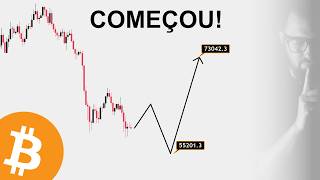

Bitcoin Bear Market Confirmed?
45sDirectly challenges the common narrative that the bottom is near, sparking debate among crypto enthusiasts.
▶ Play Clip"Delivers a bearish analysis with some data, but the title overpromises a 'major liquidation' that is more speculative than confirmed."
The video analyzes Bitcoin's current bear market, arguing that the bottom has not yet been reached and that a major liquidation is underway. The presenter uses technical analysis, futures market data, and on-chain metrics to support the bearish outlook while cautioning against extreme biases and highlighting long-term buying zones.
Bitcoin is in a clear bear market, having fallen more than 50% from its high. The weekly close is expected to be the lowest of the cycle, invalidating bullish structures.
Closing below previous lows invalidates the liquidity search analysis, indicating a move to invalidate underlying structures rather than just a liquidity grab.
Avoid the bias of not buying at all. While further drops are possible, current levels are long-term buying zones with favorable risk-reward.
Bear market structures last a long time. Don't fear missing a massive bull run; historically, bottoms take time to consolidate.
Waiting for specific lower prices (e.g., 50k) often leads to not buying at all, as the market doesn't signal the bottom clearly.
Long/Short Ratio (LSR) shows account counts, not capital. Open interest has evaporated, indicating lack of leveraged buying pressure.
Liquidity is concentrated up to the 50,000 mark, but this doesn't guarantee the price will reach there. Strong trends leave liquidity behind.
For short-term trades, a base around 59,300 exists, but risk-reward is poor (1:1.5 to 2:1). Avoid unrealistic stop-loss expectations.
For medium/long-term, no stop-loss needed; wait for confirmation to increase exposure. Avoid aggressive averaging down.
Miners' Bitcoin reserves show a short-term correlation with price. When reserves rise, price tends to bottom; when they sell, price peaks.
Mining difficulty and hash rate remain high, indicating continued interest. Bitcoin's fundamentals are stable, unlike some altcoins.
As market cap grows, volatility decreases. Expecting to become a multimillionaire from small investments is unrealistic; focus on smaller moves.
Bitcoin is likely to continue falling in the short term, but long-term buying zones are forming. Avoid biases, monitor miners' reserves, and focus on structured risk management.
What does a weekly close below previous lows indicate?
It invalidates the liquidity search analysis and signals a move to invalidate underlying structures.
00:57
What is the Long/Short Ratio (LSR) and what does it measure?
It measures the number of accounts long vs. short, not the amount of capital.
08:04
What does a decrease in open interest indicate?
It indicates a lack of leveraged buying pressure and reduced market participation.
09:11
How do miners' reserves correlate with Bitcoin price?
When miners' reserves rise, price tends to bottom; when they sell, price peaks.
14:41
Why is waiting for a specific lower price (e.g., 50k) often a mistake?
Because the market doesn't signal the bottom clearly, and you may not buy when it gets there.
05:02
Bear Market Confirmed
Clearly states the market is in a bear trend with over 50% decline, setting the tone for the analysis.
00:03Avoid Bias
Warns against the common bias of not buying at all, emphasizing long-term buying zones.
03:22The Trap of Waiting
Highlights a psychological trap where waiting for lower prices leads to missing the actual bottom.
05:02Miners' Reserves Correlation
Provides a concrete on-chain metric that can be used to time entries and exits.
14:41Bitcoin Fundamentals Intact
Uses mining difficulty and hash rate to argue that Bitcoin is not dead, countering bearish narratives.
17:02[00:03] Bitcoiners, is it? That's because it seems like the bottom is always next, right? We have n't been able to consolidate a bottom; we have n't yet been able to actually show buying pressure entering the market. This week, we're heading
[00:18] towards a weekly closing, a lower weekly closing this year and consequently, the lowest closing closing of this bemarket period, despite there still being a lot of lunatics arguing, saying that we're not
[00:32] yet in bemarket, for God's sake . Yes, we are in BMAR, yes, we are in a clear downward trend, we have already fallen more than 50% from the say that we maintain a bullish structure, we still maintain the
[00:44] possibility of a super extended cycle and everything else. That's not what the price is telling us. And this week we're coming to a closing, a we're coming to a closing, a really ugly closing, very sales-oriented, right?
[00:57] Normally, this type of closing below lows simply invalidates the liquidity search analysis. Because what happens, folks, is that often we have movements where, for example, it comes in, makes a bottom, right? It makes a
[01:10] bottom movement, it structures itself, makes a pullback, relieves the market a bit , right? The market tensions, which is also extremely normal. We will never have a 100% directional trend. And when I say 100% directional, I mean it only
[01:24] goes up or it only goes down, okay? We have breathing room, pullbacks along the way to close inefficiencies, right? It often falls too much or rises too much, opening 's very common, for example, for the price to plummet sharply, and people end up
[01:40] buying, not expecting a huge recovery, but buying because the market has become very inefficient, it's become absurd. To put it in simpler terms, the risk-
[01:54] buy only for a brief recovery. And the fact that many people analyze it this way makes the market a precisely because of this buying pressure, but eventually we'll see a
[02:09] pullback movement and after that we'll have the continuation of the selling pressure. But what happens, folks, in between ? There are a lot of stop-loss orders generated below these lows, right? And when the
[02:23] price comes in, it captures that region, right? It creates a liquidity trap and then recovers. Guys, we can't say that the fund has been invalidated, right? It was just a search for liquidity, but the moment we close
[02:38] right? We did seek liquidity, that's true, we did seek liquidity, but so it wasn't just a search for liquidity, right? It's actually a movement that aims to invalidate these previous underlying structures, okay? So, at this
[02:54] is telling me on the weekly chart. He comes to invalidate, to say, oh, this wasn't the bottom, the bottom is always the next one, isn't it? So, at this evaluating here, there are still 6 hours left from the time this video was recorded,
[03:09] but everything indicates that we're going to continue falling within the Bitcoin market. The only point of attention, the only reservation I have for you, right? I think it 's no surprise to anyone that Bitcoin is weak, that Bitcoin tends to fall further,
[03:22] right? This analysis is not new. However, be careful not to fall into biases. What biases? The bias is simply not buying anymore, okay? Yes, we can fall further, yes, that's true. For short-term operations, folks, we
[03:39] don't have a good basis for stop-loss orders, do we? Why? Because it tends to fall more. But if we analyze it as a whole, folks, Bitcoin is in buying zones, and these are long-term buying zones. So, for our dear
[03:52] cryptocurrency holder, right, the people who like cryogenics, who want to freeze themselves, who want to store their satoshis for 250 years, here is a position, a buying region, okay, for the medium and long term, a purchase that tends to be very profitable,
[04:06] right, obviously in the market there is no certainty, but here the probability, the mathematics, the statistics, say that this is interesting. And another point, folks, notice that in the last cycle we were also in a bemarketing structure.
[04:20] repetitive again in my analysis, but it's always important to emphasize this, folks. These structures don't last a short time, okay? So, for those who are afraid of thinking, "Oh my God, I'm not going to buy
[04:33] now and then I'll miss the biggest bull market rally," right? The biggest bull market come here and go straight to 150,000. Calm down, okay? All the Bemark movements I've experienced so far, folks, don't show me that. Not even in the
[04:48] crypto market, much less so here in Bitcoin, they tend to be more prolonged. But here's where a bias comes in, the bias of someone who will never rise again. So people wait to buy at the next low. For
[05:02] example, we're in a buying area, OK? It could fall further, it could fall further. But simply not buying, waiting for it to drop to 55,000,000, 50,000, I'm going to simplify your life right now. When you get to these regions where it costs
[05:16] 55,000 or 50,000, you probably won't buy anything. Why? Because the market market isn't going to come here all nice and tell everyone, send a pop-up to your phone and say, "Look, buy Bitcoin because this
[05:30] is the bottom line of marketing." The market doesn't do that. He doesn't show it to us that way, does he? For example, he did n't show us this here. Ah, here we've also realize that this candle here was awful, but this was the
[05:43] lowest point of the previous be-market, right? There weren't any buyers at all, right? Obviously, looking at it now, after the graph went up, it's easy, right? But at that moment , folks, I wasn't
[05:56] buying anything here at all, okay? That's why it's so difficult to hit the very bottom, right? The say. Why? Because the market doesn't show it to us that way, it's not such an exact science, right? But you need to trust that we have the odds, that we have
[06:11] a good risk-reward ratio, and that it's worthwhile. But even so, even buying here in this region, folks, you 'll still be stuck for a long time, just in this 17-18 area, okay? Up until 20,000, we stayed practically 70
[06:25] days, two and a half months, after all this barbarity had already fallen here, right? car, selling your mother-in-law, selling everything you own to invest in Bitcoin, betting on Bitcoin, out of fear , out of FOMO, of missing out on a
[06:41] We're still very new, we 're still at the very beginning of a okay? We're not at the beginning of business marketing, obviously, but we're
[06:53] starting to consolidate the fund, okay? So, be careful with this idea of, "Oh, I'll only buy Bitcoin if it reaches 40,000." 000 45,000 30,000. Be careful, because if you get there, you probably won't buy anything, and you might not even get
[07:08] there. That's the whole point, right? The only thing you need to adapt here is the type of operation, what operational procedure you're going to perform, okay? right? down this far, as I mentioned earlier,
[07:23] 're there placing your stop loss in a liquidity zone, you're practically begging the market, for God's sake , to stop me, right? It's not ideal for by analyzing the weekly chart, right? A 4-hour chart, it even gives us
[07:37] some hope, right? For example, lots of absorption, high any triggers yet, guys, to be completely honest, right? Translating this into the quantitative aspect, we can refine the price analysis, right?
[07:51] Remember, here we identify price movements and investor behavior, okay? But we have other data that we can contribute richer, right? Facilitating our decision-making, for example, in the
[08:04] quantitative aspect. What do I analyze in the quantitative part? I'll analyze the LSR part, okay? So I want to see how many accounts are operating long, right? necessarily mean it's the most pressure, okay? People sometimes
[08:19] confuse this issue of long short rate, for example, if the long is wow, I have a lot of buyer pressure. No, why? Because this is the number of accounts, okay? And not necessarily the amount of capital.
[08:32] I can have a short position, and that short position alone could be equivalent to the capital of 500 long positions, okay? So, it doesn't necessarily mean that, but it gives us a good idea of what the retailer is doing, okay? We also have some
[08:45] liquidation climaxes to analyze to see if the movement was indeed a movement that captured a lot of liquidity, or if it's a healthier movement , okay? So this quantitative aspect helps a lot, and
[08:58] especially, right, folks, the open access, what is open access? It is leveraged capital within the market. Do you agree with me that if, well, I'm confident, I'm betting that this will go up, I'll have an increase in my open market capitalization, I'll have an
[09:11] increase in my leveraged capital, right? This is a basic assumption for an upward movement. I can fall if the opener goes up, that's possible, but going up without leveraged capital doesn't make sense within the logic of the market. At
[09:25] that point, we realize that the open interest simply evaporated in the market, right? Obviously, on weekends we have a natural drop in OP interest, even a natural drop in volume, but in general, if I look
[09:38] we see that we don't have a recovery, right? Looking at the diary here, for example, we can clearly see that the open bar isn't coming to the party anymore, right? Even during pullbacks, it can't keep up with
[09:50] price volatility, right? So we don't have buyer interest showing me that at this moment this probably isn't the master fund, okay? Now, identifying just how complex, okay? Right now, what liquidity do we have here?
[10:06] Analyzing the movement of the futures market, okay? Liquidating positions, okay? We have a lot of liquidity concentrated up to approximately the 50,000 mark , okay? So, we can safely say that the price will simply move
[10:20] from where it is now, okay? In the region of 59 at the time of recording and it's already going straight to 50,000? No, okay? But there is interest, there is liquidity, there is liquidation up to this point. There are sales on items up to age 40 right now. Not at all.
[10:34] That's why you have to be careful about this issue of bias. It also means, right? It's a very common, very serious mistake people make, that they're going to reach that region of 50,000, right? Very strong trend movements,
[10:47] folks, they leave liquidity behind, it's perfectly normal, okay? Even more so okay? In shorter timeframes, such as 5 minutes, we do have different convergences, okay? He usually captures the liquidity, right? For example,
[11:01] will eventually be captured, and it doesn't need a bullish recovery movement to capture this trend , okay? So, in the short term, folks, it makes sense for you to keep searching here for a long time, right? I'm going to look for a long position here; the
[11:15] short stop-loss, in my opinion, is n't worth it, okay? No, if you have a stop here in this region, it's obvious that you're going to make smaller trades, right? A scalp trade, right? That's a different thing, but you probably won't
[11:29] different thing, but you probably won't use that stop-loss base, right? this video, we have a very interesting base formed here in the region of 59,300, okay? Yes, here, but it's a
[11:41] looking for a much lower risk-reward ratio, okay? It's a different operation; it doesn't even have such a clear trigger, okay? I wouldn't get into this type of operation, for example, but to one, 1.5 to two to one at most, okay ? That nonsense that a lot of
[11:55] people talk about on the internet, about you're going to do a trade with a tiny stop loss, right? You'll lose by the spoonful, win by the bucketful, that 10, 15 to one, folks. This looks
[12:07] really nice on a static graph, okay? But in practice, right? Good management, a First, he's going to eliminate the risk; he's reached a one-to-one situation here, so the first okay? And after that, it won't extend much further into regions of higher liquidity
[12:20] , okay? Not in these graphical times. If the trigger is us, the target is us. If the be at a certain time, okay? We have to market, right? Many people end up ignoring this, and then it's just one problem after another
[12:35] , okay? So, at this point, for medium to long-term operations, you won't need to place a stop-loss order, okay? Why? Because it's a medium- to long-term operation. It's already quite interesting, with the caveat that you're not going to give the
[12:50] win, right? There's no reason to give the win, especially given the time elapsed, okay? We tend to become a bit more established, so we can afford to wait a little longer, right? And then, after a little more
[13:05] confirmation, we can start to increase our market exposure a bit more , okay? Remember that the most aggressive moves, guys, are needed during an upward trend, right? Be very careful with the midfielder going backwards, okay?
[13:19] DCA backwards. Within structured operations, right? This is one of the the market. We have the midfielder dropping back to defend the position, but it's a very structured area, right? There's a whole management process involved behind the scenes
[13:34] . But the profitability of this operation, folks, is actually the complete opposite. Profitability is in the medium to high range, within a more consolidated trend, okay? So, a lot of people end up doing the
[13:48] opposite, right? We simply move the average price backwards, and then when it goes up, we 're stuck in the market, right? And that's what greatly reduces the profitability of many forward trading, often not knowing how
[14:02] to use the futures market itself to do forward trading, okay? So these are context, folks, it's simply not worth it to get aggressive here in any way, right? The interesting thing at this moment is to wait for the
[14:15] movement. And an important point I want to bring up here, which is more on-chain data, okay everyone? We have a very interesting correlation with the issue of miners, okay? This chart
[14:28] shows us the Bitcoin reserves of the miners, and notice a very interesting short- term correlation, okay, everyone? This isn't something cyclical, it's not something you'll take as truth for your life, but right now
[14:41] as truth for your life, but right now , in this market environment, it's very interesting correlation. I realize that when the price hits a certain bottom and mining reserves, you know, the miners' reserves go up, we have an
[14:57] indication of an upward trend, and notice that it starts to sell before the peak, okay? What does this show me, guys? The market is so weak in terms of supply and demand, so weak in terms of operations, that the miners themselves are able to
[15:11] manipulate the market, simply by reducing supply. So, thus increasing their inventory, their reserves, but then they start distributing when the retail market gets involved. So, for example, like this, I don't sell,
[15:27] sales pressure, nobody's selling to me, not in a massive way, right? Selling your 15,000 1,000 satoshes isn't going to change the market price, is it? Now, large mining companies already have that power. They simply withdraw the offer,
[15:42] right? It's driving the price up, but artificially, because in very high demand. It's going up simply because nobody is selling. And when FOMO starts to kick in , when retail starts to feel like, "
[15:54] Now it's the moon, now it's this and that," it starts selling, and reaching the peak. He doesn't distribute it up there , he starts selling it beforehand, okay? happening for quite some time now, okay? Over the
[16:08] interesting correlation for you to keep an eye on in your operations, okay? Where to buy it, right? stopped at the reserve, okay? There's a really big surge in water reserves coming up here, right? selling. What can we identify, right? Let's assume that,
[16:25] oops, we might end up consolidating a temporary bottom, we might have a price increase, and you can follow that increase, you can chase that increase along with them, and the moment they start distributing,
[16:37] you start raising your stop-loss, you start managing your operation, or even closing it out, you know, taking partial profits on your operation, because this correlation, at least in this last year, has n't proven to be flawed yet, okay? So, it's worth
[16:50] , we're consolidating, you know, moment this reserve starts to rise, we can keep an eye on it, because here we've really consolidated a fund, okay? And before you say, "Ah,
[17:02] but I like it, Bitcoin is dead." Just look at how difficult it is to mine our beloved Bitcoin, okay? It's still high, right? It's true that it has dropped a little since its all-time high, that's perfectly normal, right? Profitability drops, and
[17:16] older machines, right? Because it doesn't make sense to spend energy on something that isn't very profitable right now, but is somehow holding up very well, right? If we compare the price range, folks, the last time we
[17:31] were in this price range was back in September 2024, and the mining difficulty was much lower than it is now, right? We can also analyze the hash rate and everything else here, but what conclusion do I want you all to reach by
[17:45] analyzing this? The thing is, there's still interest; Bitcoin itself, folks, is holding its own within the cycle, okay? It's not that Bitcoin is now dead, it's just that institutional investors have blown Bitcoin, no. Bitcoin itself, and I'm not
[17:59] talking about altcoins, remains very stable, right? The fundamental part of Bitcoin remains intact. That's why miners, even after halving, continue investing and keep their machines
[18:13] running, right? Both the hash rate and the difficulty remain at their normal levels. Temperature and pressure are normal inside the Bitcoin. I have no reason to despair, or simply no, I will never invest in Bitcoin again. If you
[18:25] have that opinion and never invest in, for example, Ethereum again, I completely agree, right? Etheréum, at this moment, does n't come with such great stability in the fundamental aspect, right? The fundamentalist side of Ethereum isn't looking so
[18:38] good, and the price is even worse. And even though yes, we have an interesting symmetry, folks, it's not always worth it , right? Buying from Magalu and buying from the great deal, right? So we need to have this discernment, but simply
[18:51] stating definitively that Bitcoin is now dead and will never return and that it's not worth trading is not an option. I think that's a false proposition at this point. I don't think false proposition at this point. I don't think
[19:05] time goes by, with the growth of the market, with the increase in the market capitalization of BTC, volatility decreases. If you're expecting to buy R$500 worth of Bitcoin now, at this price point, and be a multimillionaire in 10 years,
[19:18] sorry, but you're going to be disappointed. That 's not how it works. It's easier for you to follow the market, to look for small price movements, okay? And it's better to profit from that than to try and find the perfect strategy and just
[19:32] very frustrated. Back in the day, you could invest R$10,000 in Bitcoin and become a multimillionaire. Everyone's already gone, okay? Today, the most likely scenario is that it will become much less volatile, right? That their movements be more
[19:47] restrained, right? But to say definitively that he's dead, I think that's very premature. And be very careful about bias, okay? Although things are n't so great in the short term, showed, we have a lot of liquidity up to the 50,000 mark. It doesn't
[20:00] necessarily mean you'll go there, okay? profitable right now, are they? They're not that efficient in terms of risk management, but for the medium to long term, as I've shown in
[20:15] may take a while, although yes, it may fall a little more, folks, in my opinion, we're already building the structure that will consolidate the we have a very high probability, there's no
[20:28] otherwise, of having a price recovery. Ah, but the quantum computer, time, okay? Don't put the cart before the horse, otherwise in this market. And if you enjoyed this analysis, don't forget to leave a
[20:42] like and subscribe to the channel. Thank you very much. Thanks and goodbye.




⚡ Saved you 0h 20m reading this? Transcribe any YouTube video for free — no signup needed.