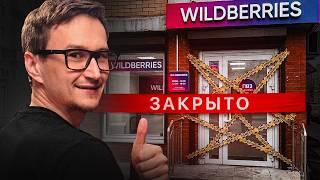

Don't Start a Business in 2026? Shocking Numbers
44sOpening with a contrarian warning and 233,000 business closures instantly hooks viewers skeptical of entrepreneurship hype.
▶ Play Clip"Delivers on its promise with hard data and a concrete tax example, though the hype-heavy intro oversells the neutral title."
The video is a data-driven warning to Russians considering starting a small business in 2026. The host, Artem Zvezdin, uses 2025 company closure data, the 2026 tax reform, and a concrete financial example to argue that the tax burden has doubled and costs have soared. He then offers alternatives: self-employment, blue-collar retraining, remote international work, and financial markets, and recommends diversification and waiting out the storm.
In 2025, 233,000 companies closed in Russia while 173,000 opened — 26% more closures than openings, the largest decline in new businesses in 14 years.
173,000 new legal entities were registered in 2025, 20% less than in 2024, while liquidations increased by 15%. The CCI said starting a business was a 'particularly balanced decision.'
The Central Bank rate hovered around 21% in 2025, making business loans cost at least 25–30% per annum. A 5 million ruble loan means paying back 6.5 million in a year.
Class A office rents in Moscow rose 56% in two years, Class B rose 26%, and building materials went up 15–20%. Other business expenses increased by 10–30%.
Unemployment is at a historical minimum of 2.3%, so market wages have skyrocketed. Small business owners cannot afford employees without doubling final product prices.
In 2024, Anton with 24 million rubles turnover paid ~1.85 million in taxes. In 2026, the same business costs ~3.54 million — the tax burden doubles with the same income.
The VAT exemption threshold for simplified tax system payers dropped from 60 to 20 million rubles. Anton now automatically pays 5% VAT on turnover, with no right to deduct input VAT.
The base VAT rate increased from 20% to 22%, and corporate income tax rose from 20% to 25%. The patent system's income limits will shrink to 15 million in 2027 and 10 million in 2028.
15.2 million Russians are self-employed, up 25% in a year. Tax is 4% for individuals and 6% for legal entities, with no VAT, no accounting, and an income limit of 2.4 million rubles per year.
The Ministry of Labor predicts a shortage of 3.1 million workers in 2026, two-thirds blue-collar. Welders earn up to 200,000 rubles, electricians 180,000, turners and milling operators from 330,000.
Designers, developers, marketers, and analysts can find remote work on Upwork or TopTal, paid in foreign currency, with crypto as a bridge from Russia.
Corporate bonds yield around 20–23% per annum; the Moscow Exchange index has averaged 15% annual return over the past five years including dividends. Active trading is possible but requires serious training.
The best 2026 strategy is diversification: stable income from employment or self-employment, plus learning to save, invest, and understand markets. Open a business later with a safety cushion.
Given doubled taxes, expensive credit, rising costs, and weak consumer demand, the video advises against starting a traditional small business in Russia in 2026. It recommends waiting, diversifying income, and developing high-demand skills or financial market knowledge instead.
Artem Zvezdin
person
Yazoshev Budin
person
Finexpertiza
service
Federal Tax Service
service
Chamber of Commerce and Industry
service
Katyrin
person
Opora Rossii
service
Andrey Shubin
person
Konsol
service
HeadHunter (hh.ru)
service
Rosstat
service
Kommersant
service
Upwork
service
TopTal
service
YouTube
service
Telegram
service
VKontakte
service
What were the company closure and opening figures in Russia in 2025?
233,000 companies closed and 173,000 opened; closures exceeded openings by 26%.
00:02
What was the Central Bank key rate in 2025, and what did it make business loans cost?
Around 21%, making business loans cost at least 25–30% per annum.
02:42
By how much did Class A office rents in Moscow increase in two years?
56%.
04:12
What is Russia's unemployment rate mentioned in the video?
2.3%, a historical minimum.
04:42
What is the VAT exemption threshold for the simplified tax system in 2026?
It dropped from 60 million to 20 million rubles of turnover.
07:56
What is the preferential VAT rate for simplified tax system payers in 2026, and can they deduct input VAT?
5% of turnover, with no right to deduct input VAT.
08:12
How much did Anton's tax burden change from 2024 to 2026 on the same 24 million rubles turnover?
It doubled from ~1.85 million to ~3.54 million rubles.
10:04
What tax rates do self-employed individuals and legal entities pay in Russia?
4% for individuals and 6% for legal entities, with no VAT or accounting.
17:42
What is the self-employment income limit per year?
2.4 million rubles per year (200,000 per month).
17:54
What does the Ministry of Labor predict for 2026 worker shortage?
A shortage of 3.1 million workers, two-thirds blue-collar.
18:25
What is the average annual return of the Moscow Exchange index over the past five years including dividends?
15%.
21:14
Business death statistics
Concrete official data shows closures outpacing openings by 26% — the worst ratio in 14 years.
00:02Tax reform doubles burden
A realistic example proves that the same business now owes the state twice as much, changing the entire profitability equation.
06:10VAT deduction trap
The preferential 5% VAT rate gives no input VAT deduction — a hidden cost that catches many small businesses off guard.
08:12Self-employment as a safe harbor
15.2 million self-employed, 25% growth, and a flat 4% tax with no VAT make this the least risky path in 2026.
16:49Diversify and wait
The core strategic advice: combine stable income, build capital, and open a business later with a safety cushion.
23:14[00:02] don't start a business in 2026. In 2025, 233,000 companies closed in Russia, while 173 opened. There were 26% more closures than openings. And this is the largest decline in new businesses in the
[00:17] last 14 years. But, as it turned out, this was just the tip of the iceberg. The twenty-sixth year has essentially only just begun, but it is already breaking records. Today I'll tell you and prove why starting a business in 2026 is the best idea
[00:32] if you want to spend all your money and get into debt. You're on the channel of Artem Zvezdin, a qualified investor and financial markets specialist. Let's figure it out. So, what's going on anyway? Just yesterday, everyone was
[00:46] shouting: "Start a business, be an entrepreneur." I think you've all heard of Yazoshev Budin, who had a business school and who is also called an infotsigan and who is now in prison. So, his entire business was
[01:00] built on people opening other businesses. And he was very well targeted to that group in that era. Bloggers were selling business courses, and everyone was opening coffee shops, mini-nail salons,
[01:14] car resale shops, clothing brands, niche on, and so on. That is, opening a business was, well, fashionable, if you say so. So what results, so to speak, did we get? According to
[01:28] Finexpertiza, based on open data from the Federal Tax Service, it calculated that 173,000 new legal entities were registered in 2025. This is 20% less than in 2024. At the same time, 233,000 were liquidated
[01:44] , meaning the growth in liquidations increased by 15%. Chamber of Commerce and Industry, stated bluntly: "Starting a business under these conditions was a particularly balanced decision." It seems to me that if he could
[02:00] say, so to speak, off the record, I think the wording would be a little different. You have to be completely insane to get into business these days. But perhaps comrade Katyrin is wrong and is faking it, so to
[02:14] speak, that it is a fake, as they like to say, so that, so to speak, all the people go to the factory and, so to speak, increase the defense order. But not really this time. Central industries are closing en masse. Trade, construction,
[02:27] manufacturing, catering, non-food products. That is, these are not some kind of exotic niches, but the most ordinary, well, ordinary everyday real business. Why does this happen? There are several reasons. The first
[02:42] is loans. For the entire twenty-fifth year, the Central Bank rate hovered around 21%. This means that a business loan cost at least 25-30% per annum. This is for specific target tasks. For non-specific target tasks,
[02:57] you would get about 50 percent. Well, let's take 25-30%. That is, you take out a 5% million loan and in a year you will have to pay back 6.5 million. in a year you will have to pay back 6.5 million.
[03:13] no one knows what kind of business in the service or trade sector provides such marginality. It's March at the time of recording , and at the end of March , and at the end of March 2026 the rate was reduced to 15%. But it is still , in fact, space. And in 2019 the rate was 6.5%,
[03:28] in case any of you forgot. In 2014, the Central Bank raised the rate and then began to lower it, lower it, lower it. I didn't have time to finally lower it to an adequate 2-3% and geopolitical situations started again, let's say.
[03:43] geopolitical situations started again, let's say. So, if we go back to 2019, the rate was 6.5%, and the loan cost about 10-12%. In those conditions, to discover something, to invent something. Plus, consumers were much more
[03:59] willing to part with their money. That is, there was some demand. Now the level of complexity of doing business has increased, well, it seems to me, two or three times. seems to me, two or three times. The second reason is costs.
[04:12] Class A office rents—good offices in Moscow—have increased by 56% in two years. Moscow—have increased by 56% in two years. Class B is slightly worse, at 26%. Even if you rent a small space somewhere in a residential area, prices
[04:28] more expensive, real estate has become more expensive, and building materials have gone up in price by 15-20%. Again, it's just real estate. I'm not talking about all the other expenses, which also increased by
[04:42] 10-20-30%. And the third reason is the wage fund . There are no people now, physically none. That is, our unemployment is now at a historical minimum. 2.3%. If you want to hire a normal employee,
[04:57] you need to pay a market salary. And market wages have skyrocketed so much in the last two years that small business owners simply can't afford them. Their eyes just twitch because the final cost of the product in this
[05:12] case would have to be twice what the consumer could what the consumer could afford. Andrey Shubin of Opora Rossii, the entrepreneurial association today, puts it bluntly: "Businessmen
[05:27] are now focusing on preserving existing projects rather than launching new ones. That is, those already in business aren't expanding, but are trying to maintain at least the same level of turnover they had before." So, do you think, in the current conditions, it would be interesting for
[05:42] you to start from scratch and somehow expand? Of course not. Okay, all I said was, well, that's true, that's how it was. Expensive loans, expensive people, expensive rent. This was back in 25, and
[05:55] now pay attention, since January of 26 . Askomenna has already been filled with tax reform. Let's talk to her again and count. In fact, the tax reform had already begun in 1925. It's just that now it
[06:10] has expanded and will continue to expand, believe me. I'm not going to tell you theory now, I'm going to count specific money, your money as a future businessman, if, of course, after watching this video, you still want to
[06:22] open this business and dive headfirst, so to speak. Let's take a specific speak. Let's take a specific example. Let's say you're, say, Anton, you're 30 years old, and you've decided to open a small clothing showroom, or a
[06:38] repair shop, or a coffee shop, for example, it doesn't matter, the essence is always the same. Your for example, it doesn't matter, the essence is always the same. Your annual turnover is approximately 24 million rubles. 2 million per month. This is not profit, as many people think, but rather turnover. That is, for a
[06:51] small business, 2 million rubles is a normal average result. a little, a lot, average. This is what it looked like in 1924. Anton uses the simplified tax system (STS), which is the tax rate, and paid 6% of his turnover in
[07:08] taxes. Let's calculate Usain's tax, that is, he has a beard of 24 million a year, 6% tax, so he paid 1,440,000 in taxes in total. Plus insurance contributions for individual entrepreneurs are about 60,000 fixed plus 1% of income above 300,000 - This is
[07:26] a pension of approximately 297,000 rubles. At the same time, Anton does not pay VAT, because he is exempt from it up to 60 million. That is, Anton did not even come close to this vice. Anton
[07:39] doesn't need an accountant. He hires an outsourced auntie and pays 10,000 rubles for this auntie . per month, which gives approximately 120,000 rubles. per year. The total tax burden is approximately 1,850,000 rubles. Now let's take the year twenty-six.
[07:56] The same 24 million beards. The same Anton, the same business. The first change is the business. The first change is the exemption from VAT for the simplified tax system. It dropped from 60 to 20 million, that is, three times. Anton, with his 24 million, is now automatically
[08:12] Anton, with his 24 million, is now automatically considered a VAT payer. Nobody asked Anton whether he wanted it or not. He started paying VAT automatically. Let's count together. He has a preferential VAT rate of 5% of turnover. That is, 24 million plus
[08:28] 5% of turnover. That is, 24 million plus 5% 1.200 is VAT. And please note, there will be no deductions here. The preferential rate does not give him the right to deduct input VAT. That is, you pay 5% of everything that, well, goes through your
[08:42] turnover. And the fact that you paid this VAT to suppliers is your problem. Of course, you won't be able to return anything. The simplified tax system tax is still the same: 1,440,000
[08:54] rubles. Plus insurance premiums, they have, of course, increased. The maximum limit for additional of course, increased. The maximum limit for additional contributions is 321,818 contributions is 321,818 rubles. Instead of the previous 300.88
[09:07] rubles. Plus Fixa also grew to about 370,000 rubles. And let's not forget the accountant either. Auntie 10,000 rubles. Of course, it doesn't work anymore. We need a specialist with experience in VAT accounting, plus the introduction of
[09:22] purchase ledgers, sales ledgers, and quarterly VAT filing in electronic format, preferably through an EDO operator. This is at least another 40-50,000 rubles. So, well, about half a million a year. Plus EDO itself. We add another
[09:39] 20-30,000 rubles. So let's count it together. We have VAT 1.200, simplified tax system count it together. We have VAT 1.200, simplified tax system 1.440,000 rubles, contributions 370,000 rubles.
[09:52] An accountant plus Eda will cost us 530,000 rubles. Total 3,540,000 rubles. We have a tax burden. So, we used to have
[10:04] 1,850,000, now it’s 3,540,000. The tax burden has doubled. And this is with the same income. That is, we don’t take into account that Anton will earn more there . No, this is with the same
[10:19] income, with the same business. The same Anton, the same premises, the same clients. But now you essentially owe the state twice as much per year. And that, of course, is not all. And the basic VAT rate also increased from 20 to 22%. I would like to point out
[10:34] VAT rate also increased from 20 to 22%. I would like to point out that VAT has been 20% since 1993. Then it decreased, but then we started dealing with geopolitics, and now our VAT has become 22%. And although the government says that this is a
[10:49] temporary measure, there is, of course, no hope that this is a temporary measure. They will lie, as usual. True, you will never get anything from them . They always just lie. What does this 2% mean? This means that all suppliers have increased their
[11:01] prices by that same 2%. The corporate income tax also increased from 20 to 25%. also increased from 20 to 25%. If you are, for example, not an individual entrepreneur, but an LLC owner, then a quarter of the profit goes to the state. The patent, which was previously the last
[11:16] refuge for small businesses, was also removed. Now the maximum income for an individual entrepreneur with a patent in 2026 is 20 million rubles. In 2027, it will be 15 rubles. In 2027, it will be 15 million, and in 2028, it will be 10 million. That
[11:31] is, in two years, the patent will be available only to, well, a select few, only to some micro-businesses, like tutors or anyone with a small income. Well, that's the icing on the cake. In June of 25, the government was given
[11:46] an order to work out, so to speak, a phased abolition of VAT for retail and wholesale trade. This hasn't been accepted yet, but the direction is clear. The simplified tax system for trade may be removed altogether. And trade today accounts for approximately 70% of small
[12:03] businesses in the country. While you're writing to me in the comments: "What the hell is going on in our country?", I urge you to think about who started this. This person has a specific last name, first name and patronymic. Please write in
[12:17] the comments, because if I write this, I will be jailed. Here is Anton, his 24 million beard a year. What is his net profit? Let's count. But in the best case scenario, 15-20% of turnover. And this is still a good margin. That is approximately
[12:33] good margin. That is approximately 3.5-4.5 million rubles. per year. And his mandatory tax payments amount to 3.5 million. That is, Anton gives the state approximately as much as he earns himself. So what's the point of
[12:46] running a business like this? Tell me, is it interesting to do business in a country where you have a beard of 24 million and don’t really earn anything? Moreover, you are still limited by endless prohibitions and fines, so you will build, for example,
[13:00] business funnels around, for example, a YouTube blog. YouTube blog bam and blocks. You go to a Telegram channel, start developing it there, and bam, they kill it. You decide to put your product on a marketplace, for example, and suddenly they
[13:14] raise the price in one day. Or they freeze, for example, your profit for 14 days. And they're also raising taxes. And all this against the backdrop of low public demand. and the frankly poor population, in which women often even
[13:29] manage to save on sanitary pads. I understand that this emotional delivery, it may, you know, somehow, ah, somehow distance, but it’s really boiling over, it’s just boiling over, because I myself, being an entrepreneur, understand everything perfectly.
[13:43] 2025, and in 2025, not in 2026, it doubled, and since the beginning of this year it has increased by half. So you think, that is, well, it’s not interesting to run a business at all. And all this against the backdrop of falling demand. That is, people have
[13:57] little money. Everything has gone up in price, not by, you know, 5%, but by 40, 50% over the last few years. And any housewife will tell you this. At the same time, real incomes seem to be growing there by two, three, four percent, and prices,
[14:13] you can see for yourself how much they have risen. The average monthly income of half of the self-employed in the country is approximately 25-30,000 rubles. And the average bill for services provided by the 25-30,000 rubles. And the average bill for services provided by the self-employed decreased from 1,478
[14:28] rubles. up to 1.218. This is data from Rosstat. This means that people pay less for each means that people pay less for each purchase. People have no money. The entire catering industry is falling apart. Kommersant wrote about a series of bar and restaurant closures in Moscow.
[14:44] The average bill in Moscow, in cafes and restaurants, is falling. That is, people are simply switching to some kind of homemade food there in the slow lane. Restaurants that had n't closed before are cutting their menus and switching to cheaper items. And what does this
[14:59] mean for your specific business? Your potential client saves money. He won't come to you just like that. He won’t buy it just because you have a pretty sign, a pretty wrapper, or some good YouTube blog. He still
[15:13] needs to find this block. Taking into account the blockages, this is oh so difficult to do. The client will count every ruble. And if it is possible, for example, not to buy your probably tell me: "Well, I'll build a business on something that's impossible to live on.
[15:26] Well, for example, I'll open a pharmacy, retail stores. Do you have enough strength for have enough, go for it, but I feel like it's not enough. So, taxes have gone up, loans are expensive, rent is expensive, employees are expensive, and the client has become poorer. The walrus is being taken
[15:40] from both sides, expenses are growing on top, revenue is falling on the bottom, and on top of that, they're constantly prohibiting you from doing anything, constantly destroying everything. I'll say it again, I can give you my own example. That is, I have a YouTube blog, I have an
[15:55] online school, we found clients through the YouTube blog, first YouTube shut me down . Then we moved to Telegram, and Telegram shut me down too. You'll tell me: "Please move to VKontakte, there in Max" E. The problem is that neither
[16:08] VKontakte nor Max provide promotion. There is no recommendation there. Functions. The government created a TV there. That is, it's like a kind of television, where they show you what the government benefits from. But I'm not connected to politics,
[16:21] you understand? And I do n't need any of your political games. I need to find a client, and government platforms don't let me do that. And all this happens when the client is getting poor. Okay, you know, I'm not one of those people
[16:34] who will, you know, say, "Like, we're in deep [ __ ]" and leave, right? Let's talk about what specifically to do if you want to earn more, but are afraid to get into business . And, of course, it's right to be afraid. Now is clearly not the time, not the
[16:49] self-employment. And no, this is not only for those who, you know, want to make some kind of gimmick in the garage or rent out some storage space. 15.2 million
[17:01] people in Russia today are self-employed. A 25% increase over the year. Total income for the twenty-fifth year is more than 3 A trillion rubles. The most profitable
[17:13] niches, selected and identified by platforms like Konsol and Opory Rossii, are exhibition construction and advertising structures. The average bill there is approximately 100,000 rubles per project. Consulting brings in approximately 87,000 rubles per project.
[17:30] Real estate agent services are approximately 73,000 rubles per transaction. Tutoring services include copywriting, design, and SMM services. The bills are, of course, lower here, but the entry barrier is, to put it
[17:42] mildly, near zero. The key, of course, is that there is no VAT. The of course, is that there is no VAT. The tax is 4% for individuals and 6% for legal entities. No
[17:54] accounting, no cash register. The income limit is 2.4 million rubles per year—that's 200,000 rubles per month. If you earn 200,000 rubles per month as earn 200,000 rubles per month as self-employed and pay 4% tax, that's
[18:09] 8,000 rubles. 8,000. Anton from our example earned twice as much, but was paid 290,000 rubles per month. So, feel the difference, as they say , yes. Secondly, the skills that are really paid. If you think that
[18:25] only programmers earn money, then you're somewhere in the last century. somewhere in the last century. And the Ministry of Labor predicts a shortage of 3.1 million workers in 2026. And two-thirds of this shortage are blue-collar
[18:40] workers. That is, welders in Moscow, for example, earn up to in Moscow, for example, earn up to 200,000 rubles. Electricians 180,000 rubles. Turners and milling machine operators earn from 330,000 rubles. Category E drivers
[18:54] from 330,000 rubles. Category E drivers 150,000 rubles. If something doesn't add up with your amounts, please don't spit on me. This data is from HDHunter, the largest portal in the country with vacancies. Maybe you should go
[19:07] and see for yourself, maybe Maybe they started paying more there. These are the figures. If you want, you can retrain in 3.6 months through the employment center. There, it will be completely free. That is, you can
[19:19] get a specialty for free, for which in six months you will be earning about 200,000 rubles. That is, without VAT, without rent, without a cash register, studying at the expense of the state, so to speak. Let them pay for it, let them pay for
[19:32] your education. Well, the third option is remote work for international companies. Of course, it has become more difficult to work from Russia, but fortunately, there is cryptocurrency, for now you can use it. And the market, besides, is huge. If you, for example, are a designer,
[19:46] developer, marketer, data analyst, there is UPWork or TopTA, these are projects, services where you can find remote work. They pay in foreign currency. I haven't checked it myself, of course, because in general I work in financial markets and
[20:01] make money from it, but the reviews are quite good and positive. And financial markets. It's definitely not worth diving into without preparation. But if you have the knowledge and talent, I'm at your
[20:15] service. I work in financial markets and teach others. Regarding financial markets, let's take bonds, for example. There are many ways to make money there. I'll look at the options that seem more
[20:30] promising and reliable. First, there are bonds. Corporate bonds currently yield around 20-23% per annum. The rate will decrease over time . 1.5 million of your reserves at 20%
[20:46] . 1.5 million of your reserves at 20% is 300,000 rubles per year. That's 25,000 rubles per month. No rent, no employees, no VAT. Yes, 25,000 isn't employees, no VAT. Yes, 25,000 isn't much. It's like a pension of 272.
[20:59] But it's passive income. That means the money is working, inflation isn't eating it up, and you get extra money. Is that bad? Next up are stocks. The Moscow Exchange index has averaged a 15% annual return over the past five years,
[21:14] including dividends. This isn't a guarantee, as stocks can rise as well as fall. But over a 5-10-year horizon, stocks have historically outperformed inflation. The next step is active trading.
[21:29] This isn't passive; it's a full-time job. You analyze the market, look for entry points, and manage positions. This, of course, requires training, and serious training at that, not just watching
[21:43] channel. You must learn consistently. But when you begin to understand market structures, you start earning money without being tied to a job, without employees, and without paying 3.5 million rubles in taxes. I've been trading
[21:59] since 2008, so how long is that? 18 years. It's a profession. And like any profession, it requires preparation. For those who want to understand how it works, we have free courses on this QR code.
[22:14] There are also paid courses on this QR code. It's your choice. I just want you to know that an alternative to business exists, and it doesn't require millions in rent, VAT, or other investments. It's clear, yes, that I'm a little crazy, but what keeps
[22:28] me from going completely crazy is the fact that I make money in the financial already closed my doors to my mother, because running a business has become unprofitable. I think it's necessary to combine. The best strategy in
[22:44] 2026 is diversification. This is a combination where you work for an employee or as a self-employed person and receive a stable income. At the same time, learn to manage money, save, invest, and understand the financial
[22:59] markets. In a year or two, you'll already have decent capital and skills. And then, if you want, you can open a business, but with With a safety cushion, with understanding, with financial literacy, and not with your last money. Let's
[23:14] sum it up, guys. Well, here's the situation. I'm not saying that business is, you know, evil, a nightmare. Business is, of course, great, but starting a business from scratch in Russia in 26 is a tough business . Wait until
[23:26] the wind dies down a bit and this direction changes, until something changes. wait it out. We will wait it out . We will sit it out, guys, that's 100%. People don't live that long. We just need to wait it out.
[23:41] We will wait it out. The tax burden has doubled, and loans are at 20% and higher, plus rent, plus clients who skimp on everything, plus the most important thing - bans and lack of stability. And I didn't come up with this, Rosstat says so. You
[23:56] can check all this data. The main problem is bans and lack of stability. Any business wants stability. That's it. And opening a business at a time like this is ridiculous, of course. This It's funny. I generally believe that the smart one is
[24:11] n't the one who does things, but the one who knows how to do them. So subscribe to the channel. I'll tell you how. Please forward this video to people who want to open a shawarma place with their last money, even with a loan. Maybe it
[24:25] will save someone a couple of million. Maybe it's a defect, maybe million. Maybe it's a defect, maybe not. Until then, keep earning.
⚡ Saved you 0h 24m reading this? Transcribe any YouTube video for free — no signup needed.