
Scoop Drill: Train Your Card Counting
38sDemonstrates a unique and practical training method that viewers can immediately try.
▶ Play Clip"Title hints at a comprehensive high-low technique tutorial, but the content is a single drill without explanation or context on theory, making it niche and likely confusing for beginners."
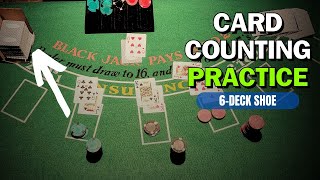
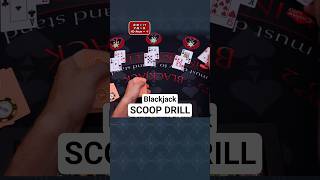
In this instructional video, the presenter demonstrates a focused drill for practicing the 'high-low' card counting technique, using a three-card 'scoop drill'. The drill is designed to sharpen the ability to maintain a running count while dealing and removing cards, emphasizing accuracy in counting the 'scoop' card.
The presenter introduces a favorite drill to practice high-low card counting. They take a deck, shuffle, and remove three cards (placed under a poker chip) to be used later. The drill is played across three spots.
Counting begins as soon as the second card drops. The presenter shows the basic counting: 'D1' (down) or minus one for low cards, then back to zero. The count is a running count.
The 'scoop drill' name comes from counting the card used to scoop up the played cards. When the count is D1, they count the scoop card (taking it to zero) and then discard the scoop pile.
The presenter continues dealing and adjusting the running count (D1, D2, D3, D2, D1, D2...), stressing the importance of maintaining an accurate running total.
Emphasizes that the scoop card must be counted each time. The count remains at two, then increases with cards (three, four, five, six...) and decreases back down, showing precise adjustment.
After setting the count to zero, the presenter checks that the three removed cards (the high, low, and neutral cards) would indeed sum to zero in the count, confirming the drill's accuracy.
What does 'D1' stand for in the running count?
Down minus one.
00:14
Why is the drill called the 'scoop drill'?
Because you count the card that you scoop up the played cards with.
00:26
What is the final step to verify the running count is correct?
Check that the three removed cards also sum to zero.
01:20
Scoop Card Counting
Shows a unique technique that forces the practicer to maintain accuracy even while discarding cards.
00:26Verification Method
Provides a simple way to confirm the accuracy of the running count by checking the removed cards.
01:20[00:00] One of my favorite drills to practice high-low card kind is to take a deck of cards, give them a quick shuffle, and then we're going to take out three cards. I call this my scoop drill. It doesn't matter which three cards we take out. Since they're cut, I can just take out those, keep them nice and safe under a poker chip here.
[00:14] Otherwise, we're going to play in these three spots. I'm going to start counting as soon as the second card drops right here. So I'd say D1, D for down, or minus one. All right, back. I'm going to keep it a running count. So now back to zero.
[00:26] D1. Now this is called a scoop drill because if we're currently at D1, I'm going to count the card that I'm going to scoop it up with. So it was at D1, now it's back to zero. And I'm going to go scoop, scoop, scoop and throw those off to the side.
[00:38] All right, now the count's at zero. I'm going to keep a running count. D1, D2, D3, D2, D1, D2. And then just keep going. It was at D2, D1, 0, 1, 2, 3, 2.
[00:53] Be sure to count that scoop card. Starts at two, still two, still two, three, four, five, six, five, four, three,
[01:08] two, one, zero, one. Last round, counts at one, still one, still one, zero, D one, zero. All right, so I've set a count of zero.
[01:20] If that's true, then these also need to be zero. And yeah, we have a high, a low, and a neutral.
⚡ Saved you 0h 01m reading this? Transcribe any YouTube video for free — no signup needed.