

Stop Loss: Your Money Saver in Futures
42sImmediately addresses a common fear (losing all money) and promises a solution, hooking traders who are risk-averse.
▶ Play Clip"Title accurately promises a step-by-step guide on using stop loss on Binance Futures, which the video delivers."
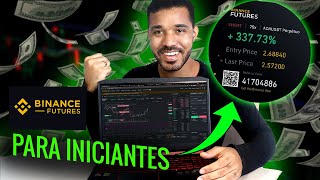
This video provides a comprehensive tutorial on using stop loss orders in the Binance Futures market. The presenter explains the importance of stop loss for risk management, how to determine optimal placement based on support and resistance levels, and demonstrates the step-by-step process of setting up stop loss and take profit orders on the Binance platform.
Without knowing how to use stop loss in futures trading, you risk losing all your money. Proper stop loss placement minimizes losses when a trade goes wrong.
The video teaches not just how to configure stop loss, but where to place it based on entry signals and support/resistance levels.
A stop loss is an automatic order to close a position at a predetermined price to limit losses if the market moves against you.
Taking a stop loss is not bad; it protects your capital and signals that your analysis may be wrong. It's better to lose a small amount than all your capital.
Before entering a trade, analyze potential gains and losses. Identify resistance zones above and support zones below to determine risk-reward ratio.
Use the ruler tool to measure distances between entry point, support, and resistance. This helps assess risk-reward ratio.
Stop loss placement depends on entry point and leverage. The closer the entry to a support zone, the lower the risk and better the risk-reward ratio.
Higher leverage increases risk. For example, 10x leverage means a 10% move against you can result in total loss.
Always place stop loss below an important support level to avoid being stopped out by market noise.
Demonstrates how to set a limit order, stop loss, and take profit on Binance Futures interface.
Take profit is an automatic sell order at a target price to lock in profits. Both stop loss and take profit can be set simultaneously.
As the trade moves in your favor, you can adjust stop loss to breakeven or higher to protect profits.
Proper use of stop loss is essential for risk management in futures trading. By placing stop loss below key support levels and considering entry point and leverage, traders can protect their capital and improve their risk-reward ratio.
What is a stop loss order?
An automatic order to close a position at a predetermined price to limit losses if the market moves against you.
03:02
Why is it important to place stop loss below a support level?
To avoid being stopped out by market noise and to protect against false breakouts.
15:13
What two factors does stop loss placement depend on?
Entry point and leverage.
11:03
How does higher leverage affect stop loss placement?
Higher leverage increases risk; the liquidation price is closer, so stop loss must be placed more carefully.
12:34
What is a take profit order?
An automatic sell order at a target price to lock in profits when the market reaches that level.
18:02
How can you adjust stop loss as a trade moves in your favor?
You can cancel the original stop loss and set a new one at breakeven or higher to protect profits.
20:05
What is the risk-reward ratio?
The ratio of potential loss to potential gain in a trade, used to assess whether a trade is worth taking.
09:18
What should you analyze before entering a trade?
Resistance zones above and support zones below the current price to determine potential gains and losses.
07:01
Stop Loss Protects Capital
Emphasizes that taking a small loss is better than losing all capital, a key risk management principle.
05:27Entry Point Affects Risk
Explains that entering near support reduces risk and improves risk-reward ratio.
11:03Place Stop Loss Below Support
A practical tip to avoid being stopped out by market noise.
15:13Adjust Stop Loss to Breakeven
Shows how to protect profits by moving stop loss as trade moves in your favor.
20:05[00:02] futures market operation. If you don't know how to use stop loss in the futures market, you'll lose all your money, no matter talk about knowing the players' perspectives, I'm not just referring to going into
[00:16] the trading floor and setting up the tabloids, knowing which button to press, but rather the right way to use stop loss. Where to position the stop loss in a way that minimizes your losses if the operation goes wrong, or at least minimizes the
[00:28] learn about osteoporosis in the futures market, we'll sit down and grab a pen, write a note, and play that little tune inside, look, let's embrace the crisis, success, that little tune from the neighborhood, I only
[00:44] neighborhood, I only work there, which are similar to the ones that my work there, which are similar to the ones that my faction has a lot of reach, it's eating I Will Only Have a Good Life, your Mac Word,
[00:59] hi, hi, how are you? My name is Henrique, in this video I'm going to teach you how to use futures market. I'm not just talking about teaching you how to configure the stop loss. I'm also going to teach
[01:13] you how to use stop loss correctly, without knowing where to place the stop loss signals when you enter a trade, so you have an entering a position, and not just placing stop loss at any
[01:26] you think is worthwhile. And if you don't understand what the futures market is or watch this short video here where I explain everything about the futures market, money even investing little, and all the details about the futures market. And
[01:40] if you want to learn how to trade the futures market with me step-by-step, as I explain this video there will be a waiting list for the next class of future market lawyers. I'll teach you all my secrets of the futures market step-by-
[01:52] step, everything from scratch until you can trade, and all the strategies I use. I'll leave some screenshots here with feedback from the people. Okay, speaking of which, subscribe to the channel. Follow me on Instagram, the link to the list is...
[02:05] I think I'll release approximately 200 spots in the first group, but now, enough stalling, editor of that little weight, and let's get straight to the content on my computer screen, in practice. How does a
[02:19] you use this? Well, if you already know what osteoporosis is and just want to see click on the index below, which has the video chapters, and you can see each you're a complete beginner and really don't know anything about capillaries, I'll
[02:34] obstacles, because that's all for today. You just need to go to the chart, mark charts, the State report, logically, organize your losses from within the futures market, whatdap store in the face, futures, and as they say, I'm going to
[02:48] who arrive here are beginners and landed here by parachute. So, if you landed by stop loss is, when we're in the operation and it starts to go up, we make money, but when it's the As things go down, we lose money. So let's go to the
[03:02] screen. This here is an order to automatically close your operation to mitigate your losses if you make a mistake in the operation, if you make a mistake in the analysis. So, it will start to depreciate in relation to your position.
[03:14] This is in the case if you bought it betting on the rise, or if you bet on the fall. If it starts to rise, you also lose. If you don't short, or going long, I recommend you watch this video about
[03:27] the futures market. But to make your life easier, imagine you bought the currency, rise, and you bet on the rise. If it starts to fall, you will have a loss, constantly on the computer screen waiting to close the operation if things go wrong. But if
[03:40] it starts to depreciate, you can use the stop loss. This is an automatic order, so we define the value, and when it hits that value, the operation is automatically possible loss. So, you can bet on the rise or bet on the fall. This is
[03:54] I hope it exists in case it exists. There are no assisted watchers, listening, and futures markets are a little bit practical here for you to see, it's better what I told you. I'm on the chart of a, look here, called Dotz, which we
[04:06] bought. At this exact point, it's here betting on the rise to 24, it's the origin, and well, we bought it, or we made a long bet, expecting it to appreciate and go to 27. So, if we bought here, and I'll mark
[04:19] a dotted line, video. This is our entry point. If we don't want it here and it goes up here, we 'll have an appreciation of 12-13 percent. But if it falls to the box (I'll put the red line so you
[04:32] understand it's negative), if it goes further down, you'll have a loss of 5 percent. That's if you had entered the currency and placed this pillar at 5 percent, you understand? But if you operate without a stop loss, what
[04:45] extra money from this here will fall there and the bomb will hit the ground, and you'll lose almost all your capital. So the stop loss serves to mitigate the loss, you understand? In case the operation starts wrong, when it reaches an undetermined level, it
[04:59] automatically. Because imagine you placed an operation before going to sleep and all night waiting for the operation to maybe go up or down. So this makes you understand that it's an automatic order that we're going to put on the
[05:14] a lot of money, even together. This is a loss or loss for people who know about trading. Portuguese comment below: I'm terrible at this, I only ever studied Portuguese in school. Let's go, how to use stop loss. It 's not bad to take a stop loss; it
[05:27] protects your assets and shows you that maybe you forgot to update something when you entered the market. So, you have like to lose money, but you're entering the market, and I guarantee you
[05:41] but the point is that you have to lose a little bit, a lot, a little bit, you know? I'm not saying stop loss isn't bad anymore. The bad thing is losing all your capital. If you take the stock, you protect your money. The bad thing
[05:54] make the money you put in, then understand that your friend, the tabloids, protect your hair and show you that maybe you made a mistake, and that's part of learning, it's part of the process, you
[06:08] understand? I even imagined you had entered with, like, R$1000. My stop loss will be activated when you lose that 750. So, you lost 750, like, it reached that value that hit a loss. The operation automatically closes at 750.
[06:22] But I don't want to lose 150, so you don't place it, it's for us, so you ask for two thousand, you understand? Up to 250 played, defend 205, I said it right, I said it. Imagine you had a thousand and only wanted to learn, 250, hit 150, that's the maximum
[06:35] you could lose automatically, wrong operations. What would happen if you didn't be out of the game. You would be out of the market, you learn, all your capital to be able to operate more, you understand? So the stop loss is your little friend that's there, it
[06:48] protects your money, it shows you, little friend, you made a mistake here, stop and look now with a clear head at what you did wrong, you understand? So think use the stop loss when you enter and analyze. Let's give an
[07:01] example of this brand here, Dotz, you always, always, always have to look at think about how much they can win, but people don't think about how much they can lose within the operation, so first you look at how much you can win within.
[07:14] you is to analyze the resistance zones above the chart. If you don't know what support and what I'm talking about, watch the videos for beginners here, thinking about support
[07:28] here will also be in the description. If you're a complete beginner and really don't understand this, watch the videos here. There's a playlist from scratch, you understand? Watch them, is for the person who's already started, who's already halfway there and does
[07:42] n't quite know how to use them. So, you draw the resistance zones near the chart. Don't abort Paddock. At this moment it's $24 here. I was going to say 24°, oh, what a fool, give it a zero, what a fool, give it a zero. So, at this
[07:57] point here, what's the next resistance? Are the previous highs or lows that are above the current price? So we can draw this as resistance, understand? Oh, the low here is a little bit, we can
[08:10] we can have this here, as there was resistance, you understand? So here we've already marked three resistances above the price, and below we mark the close to the support. I'll put it in green to understand that it's the support, and below
[08:24] this, below this 10, will be the strongest support. So at this moment you analyze the context, right? It's falling, falling, falling. It seems like hold here. It held once, held another time, and it's right, it will hold, you
[08:37] understand? We don't know, do the following, right? Then go to the Dote chart, and we're on December 17th, then answer me, are you going to play afdah.to on this coin, polkadot neighborhood ST, and answer me, and if you post, it held, you understand? I'm
[08:50] December 17th, so this here, like an increase, can hold a price to the support region, but then you have to have resistances behind and supports below because you understand how far the operation can go, if it goes up, and how far it can go if it goes up.
[09:03] So you draw the next resistances and you draw... These are the next closest support levels, so you can see how far it can go, destination. So you use this tool here called a ruler to measure
[09:18] You'll understand what this has to do with stock at this moment. The support is at about 1 percent, you understand? So this would be an saying to enter the trade, you understand? I'm just analyzing the situation beforehand. I'm
[09:32] not doing anything completely wrong. This 3 percent rise would be the first target, 7 percent if it were in the audio, and 3 percent is the next target. You can also use this tool here called a long position.
[09:44] You mark the entry point, you understand? And mark here, multi-support, mark the point. At each entry point, you mark here, a little below the support, it's 1 percent to maybe gain 1 percent, but initially, it's
[09:56] almost 2 to 1. So you can use this tool to check the distance between the nearest support and the nearest resistance. And then your position is... It will depend on two factors, you
[10:09] understand? You can't just go straight into the heart of the market and set the strongest support and stability levels to understand where the you enter the trade, you can't just set your stop loss.
[10:22] You have to know if the stop loss is right before entering the heart of the market. So, later on, put it into practice. But I'm giving you all the points here that he taught, you need to know before placing your order or entering the trade. It
[10:36] an important factor here that I haven't even mentioned yet. It also depends on whether you've already trying to get you to pay attention, man. I'm here working on creating subscribe to this channel, man. There's been so much content here, not a single real has passed, you understand? If you don't
[10:50] comment, share with someone. I have a lot of content on this channel to help you, and just with the content here, look at the results of the people. That 's it. Here's the result from the "You know how many free" section, you understand? So, well,
[11:03] you tattoo... It depends on two factors: it depends on your entry point, you understand? It depends on where you're going to enter. So, the closer to a support zone, the lower your risk-reward ratio in the operation will be. The
[11:15] less you'll lose if you end up losing money, and the greater your gain will be. I'm talking about this here, right? Look, we're in this region here, this is the price. One piece in this region, we're going to take a 1 percent chance, and maybe
[11:27] hold here, and we win because of those percent. So, the critical Delta is... just for it to start going up more. We're already risking one to... Oh, this goes up another foot, 13... an excellent operation, right? Thinking about it... When I get
[11:42] just in case, and I'll show you, for example. So, this is an excellent risk-reward ratio that's risking one to 6, 13... you understand? This operation like this right, you understand? In the whole variation of following this
[11:55] risk-reward pattern, you... You can lose three times and still end up with understand? So it all depends on your entry point. The closer to the buying zone, the better. Some and notice that I recognize it. It touched here, it leaves a wick, it held. I
[12:09] falling, it's going to touch here, which is what it will probably do. What is it probably? Probably, maybe it will hold. I'll analyze it calmly when I get home, but I think you're using the captive market, right?
[12:21] So it all depends on your entry point and your leverage. After the futures market, if you're leveraging your capital, the more leveraged you are, the lower your settlement price will be and the riskier
[12:34] leverage. In some cases, the lower your settlement price will be and the riskier your trade will be. If you enter at the price of the buying zone, if you enter near the buying zone, the settlement price will
[12:49] protected there, you understand? There are some confluences that are perhaps safe. I leverage, I'll give a very quick example here for the lesson. For example, you have $100, you're going to make a $100 entry. If you don't understand
[13:04] leverage, the family that watches the futures markets video, and this video is then watch it. Here's another example: you make a $100 entry without seeing some leverage. If it comes in with 10 times leverage, that means that for you to
[13:18] be liquidated, the liquidation price is 10 percent. Remember that the same capital. So if you're stopping with $100, leverage 10 times, and the currency rises 10 percent, you will gain 10 percent of your capital, which is another $100.
[13:32] So, for example, for every hundred dollars, leverage 10 times, I can sit at the price percent. And then comes what I told you: the closer the entry is to the support region, the shorter your Stop Loss will be and the better
[13:46] now let's go to the example here. Imagine we're trading here. Leveraged 10 times, if we enter here to be liquidated and lose 100, right? The price would have to fall by 22, you know, fall. I've finished the analysis of the currency
[14:01] completely here, and then you have an analysis, you understand? But I'm working with to 22, if it were liquidated, it loses all the money, but that's only if you have leveraged 10 times, right? You don't need to wait for the currency to fall
[14:16] If you were relying on this support here and it has already broken this support, there's a Stop Loss, you can stay here, it's 2.5 percent below the support, you understand? fraction of your capital, approximately 25%,
[14:31] right? Because if you lose 50 percent, and if it falls 2.5 entry value. So if you had entered with $100 in this operation, you would be risking losing $25, maybe you'll gain more than $130 here, right?
[14:47] you're a coin going up here, like ten percent without the consensus, you'll exit with 200, understand? So you're risking 25 here, you're crossing off 25. Maybe more will come, so that's it. Okay, you're risking exiting with 200 from the
[15:01] 'll always come with more. If you enter with 200, if you lose, you understand? This is excellent risk analysis around, so write this down here,
[15:13] ours below, okay? Leave your Stop Loss below an important region, my friend, you'll avoid being alienated, understand? It's that when the price goes down, it takes your Stop Loss and goes back up, okay? Imagine you
[15:26] let me pay this, imagine you had placed it here, you know, here at 25, and the price did this, right? Because it falls, it stays at 25, and you closed your operation, it didn't get 3 tops, one went up, it's infuriating. Oh my God, what's happening to anyone?
[15:42] If this has happened to anyone, please comment. Stay with me, it used to because I have two strategies that did n't work at all, you n't work at all, you
[16:07] the closer you buy to the support zone and leave it here below, the more protected you will be. It's simply this: I summarize three of them in my course in this video, you understand? But did you understand? Now let's go, how to
[16:20] When you get inside the bar, place the stop loss. Let's go, it's like this: I this coin here, Dot, right? Let's go, let's say people want to enter it now with all this, a capital, I'm only putting this here, for example, you understand? I'm opening the
[16:35] heart, for example, here, so I'm going to put a prayer to the market price that's automatically set with this, placing your limit order, limit means. When you define the price you want to enter, each time you press it,
[16:48] it automatically enters. But it will enter at this price here, 24,000, market, buy long, betting on the rise. I'm leveraged 20 times, right? With a crossover, and then I'll explain it in another lesson, you understand? But in the video on the
[17:02] futures market, I'll explain this here. My heart, just refresh here to show the practice. Another thing, is it possible to thank you. I'm with a positive dollar, when it's positive. So, you can
[17:18] place an automatic sell order, like this: for example, if you entered here, if you tried here at 24, and you want it to automatically sell when it reaches 26, you can leave an order to close your operation if it
[17:33] the operation, if it appreciates, because imagine if you go to sleep, you go to sleep and this is... You're sleeping, and then when you come back it's negative. That's when you wake up and realize it went up and down, and you didn't make any money, you understand?
[17:47] So there's also a way to set up an automatic sell order, which is the Take Profit. I'll teach you how; it's very simple. For example, I'm making money in dollars. #two dollars are going up. The case was supposed to have entered with me, right? I'm just kidding
[18:02] you guys here, I don't know, young lady, right? Don't show yourself, current, without heartache. You're going to come here, look, there's a PSL, which is fake profits, to take profit, Stop loss. So let's go now, for example, enter here at 24, right? I want to leave my
[18:17] Stop here at 24, it's exactly 24 here at 2467, enter at 24 2463, I want to leave it at exactly 24. So 24, when this currency will be at 24, and
[18:30] shows how much I would lose, right? Because it 's 30 hours if it hit 24 because it devalued, you understand? And well, up here You would place the profit take order, you understand? It's two hours where you place the stop order and the
[18:44] take profit order. So let's suppose you analyzed it, you put it I'll put it in the middle of this, you've already defined that up here would be a target of debate at 2643, so you come here and put this here, this is what I
[18:57] want to seek, you understand? I want to gain this strength, and not to go up there, it needs another six percent, let's put our take profit at 2643. So here, 26, 40, and three, that is, what you're seeing
[19:10] here, this already shows how much you're going to gain in the operation. So if the operation goes up, I'll lose 30 hours, if it goes up and I don't have time, the computer will automatically close the position and take the profit, it will
[19:22] guarantee the profit of 86. And then, just press here to confirm, done, the order was created here, order here, it really could have entered the trade, you understand? I did one side here, it's quick, it has to be at home, but then there were two orders, a
[19:34] stop order. Loss in 24, you understand? If I know it reaches 24, if I know it reaches 24, wrong operations, or if it reaches 26, it is closed. So you leave two orders, and the first one that was executed, right? The other
[19:50] cancel one, the other you execute the stop loss, cancel the uncle here, look, I did this, that's what the take profit is, cancel the stop loss, you understand? Because which of the two executes first and takes profit? And Another thing you can do is see that it's going up a lot and
[20:05] will go up more, you can cancel, you understand? Cancel the orders and then But now, if the currency has gone up a little, now it goes up to here, up to 25, then you can put your stop loss at 25, you can come here and put the stops at 25 because
[20:20] if you take a stop loss, you will already take a logical profit equal a stop loss. Or if you have a stop loss but you didn't take any, you won money because it was closed And then you can put even higher. If you can set the
[20:33] profit taker at 30, then if the ink goes up to $30, we win $258. And that's what you see, right? When you win the trade, you understand? That's very, very, very interesting. Just click confirm, right? I'm not going to click confirm here because if
[20:47] close, you understand? And then you close it. If you want to close the trade normally, just click here, and the market to close manually. Another thing you can do, right? You can come here and set and place an order.
[21:00] I want to enter the trade when it hits 24. Then you go here, 24, you understand? You put in how much you want to enter, whether it's 10, 20, 30, or you can already put it before entering the out position, you understand? So if you
[21:15] analyze the chart here, the three-shipment order, you understand? And you already know that see the buy order, the stop order, and the look order at the same time, like this: I want to enter at 24, I want that if it reaches 23, the operation is
[21:29] closed. And if it reaches 10, it will be my profit realization. Then you press buy long or sell short, right? And then the orders, the orders will stay here, look, executed, with around there, which was executed automatically, the other two orders
[21:43] will be executed, you know? Your stock will stay there in the corner, that is, and I know that you put it, it will stay up there. So it's very simple to put the capillaries, but people don't know how to use this, you understand? There are several
[21:57] here, but it got huge. I hope I helped you. Waiting list for the master futures low attack if you want to do it with me, next class 200 spots released in February, one more notice. Once again, the publisher is doing great
[22:10] here! Subscribe to this channel and leave a like, my friend. Thank you so much and we'll see each other somewhere in the world, maybe in Dubai. We're together, and moving nicely, you understand? Let's finish the video.



⚡ Saved you 0h 22m reading this? Transcribe any YouTube video for free — no signup needed.