

Crypto Crash: Don't Panic!
45sHigh emotional trigger with recent price drops and a promise of hidden opportunities.
▶ Play Clip"The title promises a revelation about what works now, but the video delivers a generic history lesson and a masterclass pitch—solid but oversold."
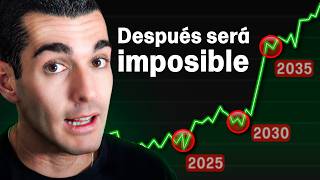
The video addresses the recent crypto market crash in early 2026, arguing that it's part of a historical cycle rather than the end of crypto. It explains five structural changes that have made the market more mature and professional, and offers scenarios for the year ahead.
Bitcoin fell to $60,000, Ethereum to $1,900, and gold and silver plummeted after all-time highs.
The market behaves in 4-year cycles, driven by Bitcoin's halving event, which reduces supply and can push prices up.
In 2018, the market fell by more than 80%, with Bitcoin dropping from nearly $20,000 to around $3,000.
In March 2020, Bitcoin fell more than 50% in days, but this was the start of the strongest bull market.
In 2022, the bankruptcy of a major exchange shattered confidence, and Bitcoin fell over 70% from highs.
The market transfers money from the impatient to the patient.
The market is now dominated by institutional investors, with regulated ETFs and companies holding Bitcoin.
Higher interest rates and restrictive monetary policy make capital more selective, acting as a purge.
Regulation is more defined, providing legitimacy and attracting serious capital.
The market is more professional with derivatives and algorithmic trading, rewarding strategy over improvisation.
Great bottoms are formed when there is apathy and negative headlines, not euphoria.
Institutional entry may accelerate on dips, as smart capital acts contrary to collective emotion.
The market will continue to purge those who entered without conviction, separating emotional from strategic investors.
What does the market do with money according to the video?
The market transfers money from the impatient to the patient.
03:38
How much did Bitcoin fall in 2018?
Bitcoin fell by more than 80% in 2018.
02:14
What happened to Bitcoin in March 2020?
In March 2020, Bitcoin fell more than 50% in a matter of days.
02:44
What event in 2022 shattered market confidence?
In 2022, the bankruptcy of one of the world's largest exchanges shattered market confidence.
03:10
What are the five structural changes mentioned in the video?
The five changes are: institutional adoption, global liquidity, regulation, professionalization, and market maturity.
05:11
What does regulation provide in the medium and long term?
Regulation provides legitimacy, which attracts serious capital.
07:32
When are great bottoms formed according to the video?
Great bottoms are formed when there is apathy, weariness, and negative headlines.
09:23
Market Transfers Wealth
This is a core principle that reframes market crashes as opportunities for patient investors.
03:38Institutional Adoption
The shift from retail to institutional investors is a fundamental change that alters market dynamics.
05:11Bottoms Form in Discomfort
This insight helps investors recognize that negative sentiment often precedes the best buying opportunities.
09:23Strategic Accumulation
The video emphasizes a clear strategy over guessing the exact bottom, which is actionable advice.
11:13[00:02] These first few days of the year have been an absolute disaster. Bitcoin has fallen to absolute disaster. Bitcoin has fallen to $60,000, Ethereum to $1,900, and other assets such as gold and silver have plummeted after reaching
[00:15] all-time highs. Given this situation, it's normal to wonder, should I really invest my money in crypto in 2026 considering how the year has started ? And the truth is that nobody knows for sure, but what I can
[00:28] tell you is that it's not the first time the crypto market has behaved this way. Those of us who have been involved for a long time understand that the market behaves in cycles, specifically 4-year cycles . And according to this pattern, what
[00:41] . And according to this pattern, what is happening now is an absolute problem is not that the market has died, the problem is that the pattern, the cycles have changed, and that didn't happen by magic. It has happened
[00:55] because of five specific things that have changed everything forever. Five things that, if you understand them, will show you why the crypto market is not dead and could actually provide one of the best opportunities in history
[01:07] to create generational wealth. The first thing you have to understand is that what we are seeing now is not new, it is not something that is happening for the first time, it is not a historical anomaly, it is uncomfortable, yes, it is scary
[01:20] we talk about the famous crypto market cycles, most people repeat the phrase about 4-year cycles as if it were an immutable physical law . And it's not exactly like that. What has historically happened is that
[01:34] Bitcoin has had an event called Halvin approximately every 4 years. This event reduces the issuance of new bitcoins, and by pure supply and demand logic, when demand remains the same or grows and supply is halved,
[01:48] the price tends to rise. That has generated a fairly clear pattern for over a decade, but that pattern isn't magic, it's repeated human behavior. In 2017 we experienced a euphoria that seemed endless. Everything was
[02:01] going up; projects without a product, team, or business model were multiplying their price simply because they had the word blockchain in their name. It was a collective madness. And when that euphoria ended
[02:14] in 2018, the market fell by more than 80%. Bitcoin went from almost $1,000 to around $ 3,000, and that's when thousands of people left the market convinced that it had been just another bubble in history. Two years later, those same
[02:29] people saw the price far exceed the previous highs. In far exceed the previous highs. In March 2020 we experienced something even more complete standstill and traditional markets collapsed. Bitcoin fell more than 50% in a
[02:44] matter of days and the fear was absolute. It wasn't fear of the price falling, it was fear of the entire financial system . At that time, the dominant narrative was that Bitcoin did not serve as a safe haven, that it had failed as an
[02:57] alternative asset. And the reality is that this collapse was the beginning of the strongest bull market cycle we had experienced up to that point . And in 2022 we experienced another historic moment. The bankruptcy of one of the world's largest exchanges
[03:10] shattered market confidence. Many investors lost all their money and Bitcoin fell back more than 70% from its highs. The same old speech again. Now it's really over for good. But what always happens
[03:24] in these moments is that most people make decisions based on emotions and not on structure. And here's the key point. The market does not destroy money. The market transfers money from the impatient to the patient. What we are seeing in
[03:38] 2026 fits within that same emotional pattern. The difference is that now the market is bigger, more complex, and more professional. But human psychology remains the same. When the price falls, it seems like all is lost,
[03:52] and when the price rises, it seems like it will never fall again. And in both cases, the majority makes the wrong decisions. That's why it's so important to understand that what's happening now doesn't mean crypto is dead; it means we
[04:06] 're going through an uncomfortable phase of the cycle, a phase where the noise is louder than the clarity and where negative headlines carry much more weight than structural data. And this is where many go wrong because they
[04:19] confuse price with value, volatility with failure, and correction with death. If 2018, 2020, and 2022 have taught us anything, it's that the
[04:31] moments when everything seems to be falling apart are precisely the moments when the next great opportunities are built. Now, I important. Although the general pattern repeats itself, the market has changed in
[04:46] several fundamental aspects, and if we don't understand what has changed, we can apply old strategies to a completely new environment, and that can be quite costly. So the right question is no longer, is
[04:58] crypto dead? The right question is, what has really changed in the market? And how do we adapt to that? However, although the emotional behavior of the market is repeating itself, there is something that is different compared to 2018, 2020 or
[05:11] even 2022. The market is no longer the same and this is fundamental to understand. During the early cycles, crypto was a market dominated almost exclusively by retail investors. People like you, like me, people who came in with
[05:25] ignorance, and the institutional capital was practically non-existent. Banks didn't talk about Bitcoin, funds didn't touch it, and large companies literally looked at it with suspicion. That is no longer the case. Today there
[05:40] are regulated ETFs that allow traditional investment funds to gain exposure to Bitcoin without having to manage wallets or private keys. Today there are listed companies that have Bitcoin on their balance sheet and today there are asset
[05:53] managers that analyze Ethereum as if it were a technological infrastructure and not simply a speculative cryptocurrency. That completely changes , the market becomes deeper, more strategic, and less
[06:08] volatility; it means there are more players operating with information, with a long time horizon, and with much larger capital structures. The second major change has to do with global liquidity. In 2020 and 2021 we experienced
[06:23] . Central banks injected massive amounts of money into the system to support the economy, with near-zero interest rates, near-zero interest rates, fiscal stimulus, and abundant liquidity;
[06:37] risk assets like Bitcoin. When money is cheap, capital flows into technology, innovation, and emerging assets like crypto. But the current scenario is different. Interest rates have been somewhat higher,
[06:51] monetary policy has been more restrictive, and this makes money more selective. Not just any project gets funded anymore, not just any token goes up in value simply for existing. That's not bad news, it's a purge. And
[07:05] regulation. In the early cycles, crypto was a territory with virtually no clear rules. Lots of innovation, yes, but also a lot of disorder. Today the regulatory framework is much more defined. In Europe, for example,
[07:18] very specific rules have been established for the sector. In the United States, although there are debates, the framework is becoming increasingly concrete. When a sector begins to be regulated, it is usually interpreted as something negative in the short term because it imposes
[07:32] limits, but in the medium and long term, and this is a reality, it provides something fundamental which is legitimacy. And legitimacy attracts serious capital. The fourth change has to do with the professionalization of the market itself.
[07:45] Today there are derivatives, options, futures, algorithmic bots, hedging tools. The market's technical level is vastly superior to that of 2017. This makes movements more complex, leads to more liquidations
[08:00] when the price moves quickly, and amplifies volatility due to more sophisticated financial structures . But again, that doesn't mean the market is dying, it means it's maturing. And this is
[08:12] where I want you to pay close attention, because when a market matures, it stops rewarding improvisation, it stops rewarding empty FOMO and starts rewarding strategy, patience and risk management. In 2021, many people
[08:26] going up; it was hard to do wrong. In a more professional environment, that no longer happens. Now we need to select better, understand better, and execute intelligently. That's why it seems like everything has changed, because
[08:40] doing the same thing that worked in the euphoria phase or in the famous All Seasons no longer works. important part. If the market has changed structurally, then the right question is not whether it will go up or down tomorrow. The right question is
[08:54] how to position ourselves in this new environment. And this is where the possible scenarios that, from my point of view, could shape 2026 come in. Not as an absolute certainty, but as a hypothesis. reasoned arguments based on the history,
[09:08] structure, and behavior of capital. The first is that this year could very The first is that this year could very that tomorrow will be the exact minimum, nobody can know that. But if we analyze
[09:23] financial history, great bottoms are not formed when there is euphoria, they are formed when there is apathy, when there is weariness, when general interest falls and when the headlines are negative. Great opportunities are not born from
[09:37] collective enthusiasm, they are born from discomfort. And if anything characterizes the current moment, it is precisely that discomfort. Many people are tired, many people have doubts, and this market altogether. Historically, these moments have been
[09:53] areas of silent accumulation. The second possibility is that institutional entry will not only continue, but will accelerate due to the declines. infrastructure only to abandon it at the first sign of trouble. ETFs are not launched
[10:07] to last 6 months, and companies that have integrated digital assets into their strategy have not done so to speculate for a few weeks. Smart capital often acts contrary to collective emotion. When
[10:19] the noise is loud and fear dominates, the price often offers better valuations, and patient capital understands that. The third is that Alarmist headlines, strict regulations, occasional bankruptcies, projects
[10:34] that will disappear, and each of these news items will generate panic in those who do not have the training or mental structure to withstand it. This has also occurred in all previous bear markets . Each cycle needs to expel those
[10:46] who entered without conviction or knowledge, and it is part of the market purification process. And this is where two very clear profiles diverge. The one who acts on emotion will enter late, sell in a panic, and return
[11:00] when everything has gone up. And the one who understands the context, manages capital to accumulate, accumulates patiently and thinks in years and not in weeks. Whether 2026 ends up being the year of the bottom or simply the
[11:13] transition year to the next big move, what will make the difference is not guessing the exact day of the low, but having a clear strategy regardless of volatility, because the market may take months to
[11:27] stabilize, it may move sideways, it may continue to be scary, but what doesn't change is that technological innovation and blockchain continue to advance, that the infrastructure continues to be built, and that
[11:40] serious capital continues to watch. Crypto is not dead. What has died is the phase in which everything went up without any criteria, and that, although it hurts, is a sign of market maturity. And now the question is, are you going to stay out of fear or are you going to
[11:54] understand the new game? If you want to learn exactly how we execute our strategies from scratch, how we structure entries and how we manage risk, and how you can start even with little
[12:06] capital to generate extra income regardless of the market, I've included a free 15-minute masterclass in the first line of the description. It's short, direct, and totally practical. It teaches you
[12:20] step by step how to start with structure and not emotion, because the market can change, cycles can evolve, but training and strategy always, always, always make the difference, and in this new
[12:35] environment that is more important than ever. So there you have the masterclass. See you inside and in the next video. A decentralized hug. decentralized hug. [music]



⚡ Saved you 0h 12m reading this? Transcribe any YouTube video for free — no signup needed.