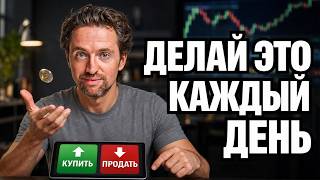

Why Demo Trading Fails
43sHighlights a common trading mistake with a relatable analogy, sparking curiosity and debate.
▶ Play Clip"The title promises a warning about demo trading, and the content delivers a clear, albeit brief, argument with a practical solution—solid but not exceptional."
The video argues that practicing on a demo trading account is counterproductive because it fails to prepare traders for the emotional pressures of real trading. It suggests that the confidence gained from demo trading often collapses when real money is at stake, leading to poor decisions and losses. The solution proposed is to start with a small amount of real money to experience genuine emotions while keeping risk manageable.
Traders who spend months on demo accounts feel confident, but their strategies fall apart when they switch to real accounts because demo trading lacks the emotional pressure of real money.
A demo account is compared to imagining bench pressing: you can visualize it, but your muscles (skills) don't actually grow. It doesn't prepare you for the emotions that affect real trading decisions.
Emotions are not just a factor in trading; they are what trading is. Real trading creates a completely different psychological pressure, making decisions feel more consequential.
The recommended approach is to enter the market with real money but a very small amount—enough to feel the loss and stay calm, allowing you to follow your plan while experiencing genuine emotions.
The video concludes that demo trading gives a false sense of security, and the only way to truly learn trading is to start with small real-money trades that evoke real emotions, ensuring you can manage both your strategy and your psychology.
What is the main drawback of demo trading according to the video?
It doesn't prepare you for the emotional pressure of real trading, so your strategies often fail when you switch to a real account.
00:02
How does the video compare demo trading to bench pressing?
It's like imagining bench pressing: you can visualize it, but your muscles don't grow—similarly, demo trading doesn't build the skills needed for real trading.
00:17
What does the video say about emotions in trading?
Emotions are what trading is; they are the core challenge, and real trading creates a completely different psychological pressure.
00:30
What is the recommended alternative to demo trading?
Start with real money but a very small amount—enough to feel the loss and stay calm, so you can follow your plan while experiencing genuine emotions.
00:44
Demo Trading is Like Imaginary Bench Press
This analogy effectively illustrates that demo trading doesn't build real skills, making it a memorable and insightful point.
00:17Emotions Are Trading
This statement reframes trading as an emotional challenge, which is a key principle for understanding why demo practice fails.
00:30Start Small with Real Money
This practical advice offers a concrete solution to the demo trading problem, making it actionable for viewers.
00:44[00:02] spend months on a demo account before actually entering the market. They seem to be testing strategies, getting used to them and feeling extremely confident. But then they open a real account, and their whole strategy, their whole practice falls apart like a house of cards,
[00:17] because a demo account is like bench press, just in your imagination. You can imagine a thousand times how cool you are to bench press , but, you understand, your muscles won’t grow from this. And the thing is that a demo account doesn’t really give you what’s bothering you in the
[00:30] doesn’t really give you what’s bothering you in the market. It's an emotion. But emotions in trading are trading, as many say. No, emotions are what trading is. When trading is real, the pressure on you is completely different. And every time before
[00:44] making a decision you're like, "Wow, that's really mature." Okay, what to do with all this? Look, the solution is super simple. Enter with real money, but with a very small amount. Moreover, the size should be such that
[00:58] you really remain calm and can follow the plan, but at the same time follow the plan, but at the same time sufficient so that the loss is already felt.
⚡ Saved you 0h 01m reading this? Transcribe any YouTube video for free — no signup needed.